
350 Madison Plans Protest March to Demand that University of Wisconsin Divest from Fossil Fuels, Noon, Friday

The organization 350,Madison.org has announced it has scheduled the following:
———————————–
MARCH FOR FOSSIL FUEL DIVESTMENT!
April 29, 2016, 12:00–1:00pm
Randall St. at Union South, UW–Madison
Please join us on Friday, April 29, in marching to the UW Foundation and presenting the governing board with an open letter urging divestment from fossil fuels. We also will be presenting the board with a large “check” representing $7,000 in donations diverted from the Foundation and invested instead in fossil-free funds.
Let’s come together to call on the governing board of the UW Foundation to divest from fossil fuels and develop new investment strategies that prioritize renewable energy sources and clean technologies!
WHAT: March for Fossil Fuel Divestment
WHEN: Friday, April 29, 12:00pm
WHERE: Gather outside Union South (Randall St. entrance). We’ll march down University Ave. to hold a rally in front of the UW Foundation (1848 University Ave.).
Meanwhile, Tensions Rise Between Sanders and Clinton over Fossil Fuel Financing …

Fossil fuel money being used to finance presidential campaigns? Does that surprise anyone? During an event at State University of New York at Purchase last week, Hillary Clinton accused the Sanders campaign of lying about her when she was confronted by a Greenpeace activist, who asked whether Clinton would continue to accept money from fossil fuel companies. In response, Sanders called on the Clinton campaign to apologize during a rally in Sheboygan, Wisconsin.
Sen. Bernie Sanders: “The truth is that Secretary Clinton has relied heavily on funds from lobbyists working for the oil, gas and coal industry. According to an analysis done by Greenpeace, Hillary Clinton’s campaign and her super PAC have received more than $4.5 million from the fossil fuel industry. In fact, 57 oil, gas and coal industry lobbyists have directly contributed to her campaign, with 43 of them contributing the maximum allowed for the primary. And these are not just workers in the fossil fuel industry, these are paid registered lobbyists. Secretary Clinton, you owe our campaign an apology. We were telling the truth.”
Source: http://www.democracynow.org/
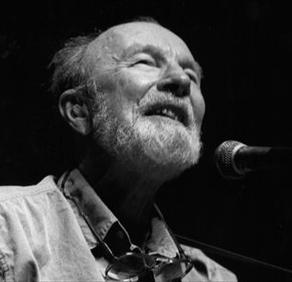
Pete Seeger’s Activism Just as Urgent (or more) Today Than It was in 1963, When Seeger Performed with his Audience at His Historic “We Shall Overcome Concert” in New York

I listened to this live recording of Pete Seeger’s “We Shall Overcome Concert at Carnegie Hall, June 8, 1963” yesterday afternoon. The concert was recorded live by Columbia Records. I loved it. The concert shows just how much Black Lives Mattered to those good people who attended this historic event in our nation’s history. It is criminal that more has not been done to atone for the wrongs that were perpetuated by our government and the wealthy.
I’ve heard it said that Seeger was blacklisted by the government as a result doing the concert. I don’t know for a fact that that was the reason for his blacklisting but more than likely it was I would think.
Pete Seeger is still fighting “the good fight” that he was so effective at doing with the crowd over 50 years ago now – with this recording. It confirms the “Black Lives Matter” movement will live on until the spell is broken and reparations for slavery are awarded to an entire population who were used to make this country great but never given credit or paid properly for their generations upon generations of forced labor by the plantation owners.
Read Dr. Seuss’s Book, “The Lorax”, to Celebrate Dr. Seuss’s Birthday,n or Better Yet – Read it to a Child or Friend

March 2nd is Dr. Seuss’s birthday, he would be 112 this year. While he is no longer with us, his legacy lives on in the pages of his books. A book that all parents might want to read to their children is Dr. Seuss’s “The Lorax”. It’s message is most applicable to finally being recognized environmental crisis of global warming and climate change, which continues to worsen.
Children should know we humans have already saturated Earth’s atmosphere with the residuals from excessive burning of earth’s fuels, the effect of which, together with the cutting down of the carbon dioxide sequestering tropical rain forest, has lead to an unhealthy and unnatural buildup of carbon dioxide and other greenhouse gases in Earth’s atmosphere, which means that more of the Sun’s radiant heat is being trapped near Earth’s surface, which has already caused destabilized the earth’s climate systems, to the suffering and harm to many living species, including millions and ultimately billions of the human population, in areas which have experienced major and significant changes in weather events, more severe storms and flooding in some areas, but not enough rain for others.
Long before saving the earth became a global concern, Dr. Seuss, speaking through his character the Lorax, warned against mindless progress and the danger it posed to the earth’s natural beauty.
A boy living in a polluted town visits a strange isolated man called the Once-ler “at the far end of town where the Grickle-grass grows… [on] the Street of the Lifted Lorax”, who never appears fully in illustrations; only his arms are shown. The boy pays the Once-ler fifteen cents, a nail, and the shell of a great-great-great grandfather snail to explain why the area is in such a run-down state. The Once-ler explains to the boy (shown in flashback) how he once arrived in a beautiful, pristine valley containing happy, playful fauna (Brown Bar-ba-loots, Swomee Swans, and Humming Fish) that spent their days romping around blissfully among “Truffula trees”. The Once-ler proceeded to cut down the Truffula trees to gather raw material to knit “Thneeds,” a ridiculously versatile invention of his, “which everyone needs”. Thneeds could be used as a shirt, a sock, a glove, a hat, a carpet, a pillow, a sheet, a curtain, a seat cover, and countless other things.
By cutting down the tree, he summoned the titular Lorax to appear from the stump of a Truffula tree. He “speaks for the trees, for the trees have no tongues” and warned the Once-ler of the consequences of cutting down the truffula trees, but the Once-ler ignored him, instead contacting all his relatives to help him with his business.
The Once-ler’s small shop soon grew into a factory and new equipment was made to keep up with the demand for more Thneeds, and signs of damage to the Truffula Forest became evident to the Lorax. The Lorax first complained to the Once-ler that the Truffula trees, being chopped down, were also the food source of the Bar-ba-Loots, who are now facing a terrible food shortage and a disease called “the Crummies because of gas and no food in their tummies.” To save them, the Lorax sent them off to find another food source. At first, the Once-ler only showed a little remorse, but still focused on expanding his business.
Soon, the Once-ler’s Thneed-making business expanded tenfold and now used delivery trucks to take out the shipments. The Lorax eventually came back complaining to the Once-ler that the factories were belching out so much “smogulous smoke” that it was giving the Swomee Swans sore throats, leaving them unable to sing. After the Lorax sent them off, he also complained to the Once-ler about his machinery making a goo by-product called “Gluppity Glup” and “Shloppity Shlop,” and how it was being dumped into the ponds where the Humming Fish live, leaving them unable to hum and forcing the Lorax to send them away too.
The Once-ler, disgruntled by this, still dismissed the Lorax’s pleadings and declared his intention to keep “biggering” his operations, but at that very moment, the “The very last Truffula tree of them all” falls. Without raw materials, his factory shut down; without the factory, his relatives left. Then the Lorax, silently, with one “very sad, sad backward glance”, lifted himself by the seat of his pants and flew away through the clouds.
The Once-ler lingered on in his crumbling residence, living in seclusion and remorse, while pondering over a message the Lorax left behind: a stone slab etched with the word “Unless”. In the present, he now realizes what the Lorax meant. He tells the boy, “Unless someone like you cares a whole awful lot, nothing is going to get better. It’s not.” The Once-ler then gives the boy the last Truffula seed and tells him to plant it, saying that if the boy grows a whole forest of the trees and keeps them protected from logging, “the Lorax, and all of his friends may come back.”
CBS News Special: “Earth Day – A Question of Survival”, with News Anchor Walter Cronkite
The first Earth Day in the United States was held on April 22, 1970. CBS-TV aired it as a 13-part CBS news special. It was a time when the vast majority of Americans generally counted on the major television network news anchors to accurately inform them of the important news of the day, and CBS’s Walter Cronkite was considered the most honest of them all. National news reporting was viewed as having no relationship whatsoever to money provided by networks’ sponsors, and instead was information that viewers could count on as being accurate and true concerning the national events and threats that were occurring in the country and what American viewers would want to know to keep themselves well informed of the country’s news. While Madison’s Gaylord Nelson Institute at the University of Wisconsin states that the CBS news report which aired that night didn’t do justice to much of the participation in the events that were held on the first Earth Day in 1970, the fact that it documented many of the other people concerns that Americans had about the state of the environment in 1970 is worth noting.
The first earth day came about because people were really fed-up with the undeniable pollution of the waters, air and land around them, some even getting sick, while others feared things were likely to get worse and worse because the pollution was getting worse and worse. The following ten years of federal and state law making and enforcement to prevent the continued degradation of U.S. drinking and surface waters, air in the U.S., wetlands and land protection, too, led many to later call the decade of the 1970s “the environmental decade”.
This was also a time of great concern because of the large amount of the country’s money was going for military purposes in fighting the Vietnam War, money which could have gone to keeping the county’s important natural resources clean and healthy, and improving living conditions in “the urban ghettos” including homes for the homeless. A “teach in” was being held across the United States by anti-war advocates at the same time when Senator Gaylord Nelson from Wisconsin came up with the idea of having a similar day set aside for a teach-in about the need for change to ensure a healthy future for the planet, including the nation’s people who were suffering in the ghettos. View all 13 parts of the CBS’s special news report, anchored by Walter Cronkite, of the first Earth Day here.
This CBS special news report for Earth Day is well worth the investment of everyone’s time viewing it, or reading the transcript of the report. A similar degree of response is what is needed now to prevent an even worse and tragic consequence of human and animal life lost and suffering as we continue to add more and more quantities of greenhouse gases to the atmosphere by continuing to burn vast quantities of fossil fuel, for electric power generation, heating and long distance or daily travel requiring oil burning, and many countries continuing to pave over the landscape with concrete, and most every country suffers from a lack of an appropriate adaptation plan in the likely case now that the worse of the climate extremes will ultimately result, and that the inundation of the world’s currently most populous coastal cities will also result, and that many island nations will require resettlement, as the ones that are presently livable are predicted to become submerged completely if major and significant change is not made soon by the most highly developed countries. Our U.S. Congress continuing its refusal to enact laws to reduce greenhouse gas emissions, let alone refusing to alert the American people of the grave unfortunate results of ignoring all climate experts’ warnings means that it’s almost certain the worst predictions are ultimately likely to occur from our lawmakers’ inaction, and the similar expected inaction by many other countries that might otherwise follow our lead, and the paving of the remaining green space on the planet, is unconscionable. If our political office holders are not interested in doing this for us living here today, they should not leave the full burden of living on our likely inhospitable planet to fall on today’s and tomorrow’s children, including those who reside here, as well as elsewhere.
What is Wrong with Our People in Washington D.C.?
So what if the price of oil falls to its lowest point in 12 years! Our federal lawmakers in Washington already gave in to the oil industry by removing the 40-year old crude oil export ban, and now they are talking about expediting the process for exporting liquefied natural gas, subsidizing private infrastructure with U.S. taxpayer money including money for upgrading pipelines, transmission lines, rails and roads, to “help our industry compete” by allowing energy to get to market “more quickly and cheaply” by “loosening environmental and other regulations”.
Our governmental officials in Washington D.C. say they will work towards continuing and giving more U.S. taxpayer money to reward already wealthy companies like ExxonMobil and other highly profitable energy companies who have already profited greatly with the U.S. Government financial assistance over a number of decades with ill effects on millions of us already, and many more millions of us who will be so unfortunate as to succeed us on a planet rocked by ever increasing and ever more deadly extreme weather tragedies, that is, of course, if they manage to keep their heads above earth’s rising ocean levels, which have submerged some island countries already. Exxon’s own scientific studies predicted all these bad things would result if humans continued to recklessly burn more and more fossil fuels for energy, sending the concentrations of many greenhouse gases, such as carbon dioxide and methane to evermore dangerous levels in our Earth’s atmosphere, oceans and water bodies. Yet still they kept their research to themselves, hiding the many catastrophic consequences of global warming, and funded global warming denial campaigns, which allowed them to continue to enrich themselves at the world and future world’s expense!
Where is the justice in all of this? There isn’t any. Not here, there or anywhere. And certainly not in the chambers in Washington D.C.. Change has got to come, now, before it’s too late. And it has to be the RIGHT kind of change – the equitable kind. It has to be a change that will help all of us who currently and in the future call Earth our home. There is no other hospitable place we can go.
Our Representatives and Senators in Washington D.C. need to wake up to the scientific reality that confronts all of us – that we have already exceeded the safe level of heat trapping gases in the atmosphere. Not only must we stop adding more and more greenhouse gases to the atmosphere, but we must also accept the moral responsibility of helping those likely to be hurt the most by Earth’s rising seas and other adverse and compounding realities stemming from human-caused changes in the climate, especially those who can least afford appropriate adaption measures that will allow them to humanely live with the changes, particularly those who have contributed the least to the problem that now confronts us all.
Those presently in Washington D.C. who are continuing to act as though the threats and costs of global warming and climate change resulting from human activity are nonexistent should go do something else.
Human Rights Day 2015

As representatives of 196 world countries conclude their two-week long meeting in Paris, France this week – the 21st annual United Nations Framework Convention on Climate Change Conference of the Parties meeting (COP 21), it is noteworthy that “Human Rights Day” occurs 10 December every year, which is the day on which, in 1948, the United Nations General Assembly adopted the Universal Declaration of Human Rights. In 1950, the Assembly passed resolution 423 (V), inviting all States and interested organizations to observe 10 December of each year as Human Rights Day.
This year’s Human Rights Day is devoted to the launch of a year-long campaign for the 50th anniversary of the two International Covenants on Human Rights: the International Covenant on Economic, Social and Cultural Rights and the International Covenant on Civil and Political Rights, which were adopted by the United Nations General Assembly on 16 December 1966.
The two Covenants, together with the Universal Declaration of Human Rights, form the International Bill of Human Rights, setting out the civil, political, cultural, economic, and social rights that are the birth right of all human beings.
“Our Rights. Our Freedoms. Always.” aims to promote and raise awareness of the two Covenants on their 50th anniversary. The year-long campaign revolves around the theme of rights and freedoms — freedom of speech, freedom of worship, freedom from want, and freedom from fear — which underpin the International Bill of Human Rights are as relevant today as they were when the Covenants were adopted 50 years ago.
So, too, are the lyrics to The Steve Miller Band’s 1976 song Fly Like An Eagle (Recording)The revolution is the solution, provided too much time is NOT allowed to slip away before Earth’s people take the now critical actions without delay to lesson the human global footprint on Earth’s biosphere, while ensuring that all current and future human populations have clean water to drink, food to eat; shoes on their feet; and do not have to live on the street. It is therefore of the utmost importance that Earth’s land, soil, air, water, plant and animal life are preserved in a life-sustaining state for not just today’s human population but also for all future generations of people.
Watch and hear Ta’Kaiya Blaney a 14-year-old activist, singer and actress from the Tla’amin First Nation, north of Vancouver, Canada, perform her song “Turn the World Around” at the International Tribunal on the Rights of Nature in Paris, France. She told Democracy Now! that a Haida elder told her that “to turn the world around, you have to turn it upside down” after singing her song in Paris Saturday, December 5, 2015.
President Obama Should Request U.S. Congress to Issue Declaration of War to Fight Global Warming
On December 8, 1941, the United States Congress declared war on the Empire of Japan in response to its surprise attack on Pearl Harbor, the United States naval base at Pearl Harbor in the U.S. Territory (soon to become state) of Hawaii the morning of December 7, 1941.
The Declaration of War was formulated an hour after President Franklin D. Roosevelt’s famous Infamy Speech at 12:30 pm on December 8, 1941. The declaration quickly passed the Senate and then the House at 1:10 p.m the same day. Roosevelt signed the declaration at 4:10 p.m., December 8, 1941. The power to declare war is assigned exclusively to Congress in the United States Constitution; however, the president’s signature was symbolically powerful and resolved any doubts.
Two days later, a similar war declaration against Germany and Italy passed both the Senate and the House of Representatives.
In the Joint Resolutions declaring war against the Imperial Government of Japan, Germany and Italy, the Congress pledged “all the resources of the country of the United States” … “and the president is hereby authorized and directed to employ the entire naval and military forces of the United States and the resources of the government to carry on war … to bring the conflict to a successful termination.”
The magnitude of the threat of accelerating global warming and a rapidly changing climate that would undeniably accompany the continued and increasing accumulation of greenhouse gases in the atmosphere, as a direct consequence of human actions, mainly from too much fossil fuel burning and continuing and increased deforestation, especially in the tropics, upon the United States of America and the rest of the world, both now and into the future, easily dwarfs the loss of life, injury and misery to humans and animals wrought by all known wars, and therefore justifies a declaration of war by all countries of the world to slow and ultimately halt global warming and climate change, worldwide. Such declarations should be made now, without delay, to ensure an hospitable and safe world for all Earth’s current and future generations.
It is morally essential that Government, businesses, individuals and families begin to meet this challenge of increasing global warming and climate change that has already begun to cause loss of human lives, other species living in the world, and brought pain and misery to so many. To ignore and campaign against actions that reduce this growing threat, which will unquestionably hurt the people of the world’s poorer countries and Earth’s millions and millions of species, is utterly and morally reprehensible and is a practice that ought stop immediately because it needlessly delays progress in attacking this major problem of untold negative consequences for centuries to come.
Obama and Nebraska Residents, Assisted by Neil Young and Willie Nelson, Reject Keystone Tar Sands Crude Oil Pipeline

By New York Times Writer Chas Danner
Nov. 9, 2015
Following a seven-year stint in political and regulatory purgatory, the Keystone XL project finally met its end last week when President Obama, eyeing the upcoming U.N. climate talks in Paris, formally rejected TransCanada’s request to build the cross-border oil pipeline. Climate activists [with help from two longtime progressive American artists/musicians who didn’t really need the exposure – Neil Young and Willie Nelson and who also opposed the plan] are celebrating their victory and already attempting to parlay the momentum into more wins. Proponents of the pipeline — a group that at this point consists mainly of Republicans and Republican presidential candidates, energy-industry lobbyists, and some labor unions who were looking forward to tens of thousands of temporary construction jobs — are decrying Obama’s decision and writing the whole thing off as a hallmark of irresponsible political capitulation….
Meanwhile, Bill McKibben, one of the central leaders of the anti-KXL fight, writes in The New Yorker that he now believes he and his allies, because of their new tactics, finally have fossil-fuel companies on the defensive:
[T]he Keystone rallying cry [has] quickly spread to protests against other fossil-fuel projects. One industry executive summed it up nicely this spring, when he told a conference of his peers that they had to figure out how to stop the “Keystone-ization” of all their plans. … [And] this fall, the governor of the Bank of England, Mark Carney, speaking to members of the insurance industry at Lloyds of London, used [“leave it in the ground“] language to tell them that they faced a “huge risk” from “unburnable carbon” that would become “stranded assets.” No one’s argued with the math, and that math indicates that the business plans of the fossil-fuel giants are no longer sane. Word is spreading: portfolios and endowments worth a total of $2.6 trillion in assets have begun to divest from fossil fuels. The smart money is heading elsewhere.
We won’t close that gap between politics and physics at the global climate talks next month in Paris. […] In many ways, the developments of the past two days are more important than any pledges and promises for the future, because they show the ways in which political and economic power has already started to shift. If we can accelerate that shift, we have a chance. It’s impossible, in the hottest year that humans have ever measured, to feel optimistic. But it’s also impossible to miss the real shift in this battle. [End of Danner text]
The nearly 1,200-mile (2,000-km) pipeline would carry 830,000 barrels a day of mostly Canadian oil sands crude to Nebraska en route to refineries and ports along the U.S. Gulf Coast.
Read more at Reutershttp://www.reuters.com/article/2015/11/05/us-transcanada-keystone-state-idUSKCN0ST2VX20151105#PXYjkPeuAjeDlY1G.99However, Enbridge Company pipeline projects permitted by Wisconsin Governor Scott Walker’s Department of Natural Resources, are planning on pumping 1.2 million barrels of tar sands crude across Wisconsin for processing into gasoline, diesel fuel and jet fuel, soon, and are planning on pumping another 600 million barrels of tar sands crude oil through a second parallel pipe from Alberta to Illinois in the not too distant future. Burning that much fuel will certainly add to the planet’s global warming troubles, probably sooner than most of us earthlings burning all those fossil fuels had anticipated.
Also see: Obama Urged to reject Keystone XL
One-year Anniversary of “Planet Earth: It Needs Our Help Now More Than Ever”, Broadcast on WORT-FM’s Public Access Hour on Labor Day 2014
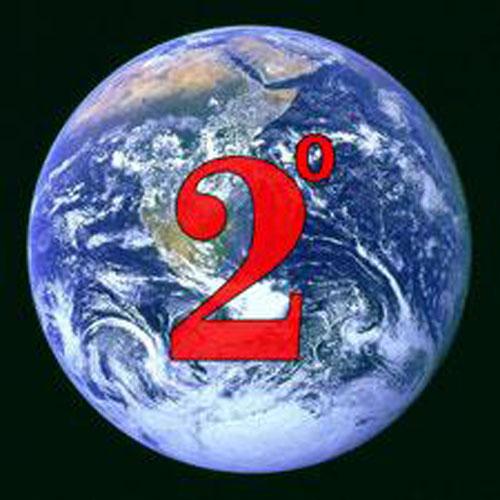
Last year on Labor Day WORT-FM in Madison, Wisconsin I had the privilege of recording an hour of music and commentary on a subject I have researched for going on 16 years now: the likely effects of rising greenhouse gas concentrations in the atmosphere, in the oceans, on the landscape; in other words, our planet earth. Since other than president Obama, Pope Francis, the environmental community and the state of California are about the only ones talking seriously about starting to do something to head off what is certain to be catastrophic effects upon our planet and all its livings things in decades and centuries to come, it only seem appropriate to remind folks who would like to listen to the show again. Here it is. Planet Earth – It Needs Our Help More than Ever!
Touring Alaska last month to shine a spotlight on global warming, President Obama warned that “climate change is no longer some far-off problem. It is happening here; it is happening now. Climate change is already disrupting our agriculture and ecosystems, our water and food supplies, our energy, our infrastructure, human health, human safety. Now. Today.”
This wasn’t supposed to happen. In 2009, 114 countries signed the Copenhagen Accord, agreeing “to stabilize greenhouse gas concentration in the atmosphere at a level that would prevent dangerous anthropogenic interference with the climate system;” “recognizing the scientific view” that the increase in global temperature should be held to no more than 2 degrees Celsius” (3.6 degrees Fahrenheit) above the pre-industrial level; and promising greater “long-term cooperative action to combat climate change.”
Paradoxically, an accord that should have spurred the world to immediate action instead seemed to offer some breathing room. Two degrees was meant to be a ceiling, but repeated references to an internationally agreed-upon “threshold” led many people to believe that nothing really bad could happen below 2 degrees—or worse yet, that the number itself was negotiable. Perhaps the biggest failure of the Copenhagen Accord was its pact for “long-term” action. Forty years ago, climate change was a “long-term” problem. Today it’s an emergency.
As we’re coming ever so close to the dreaded 2-degree mark, which will have devastating effects especially on people and families less economically fortunate, everywhere, Pope Francis last week called upon the members of the U.S. Congress to find solutions to the problems of growing poverty, everywhere, and climate change, including warming and acidification of the oceans. As civilization’s industrial machinery marches on, we’re already at 400 ppm of carbon dioxide, and likely to go much higher and faster under current “business as usual” practices continue.
Such numbers may mean little to the general public, but they matter a lot to negotiators who will be at Paris climate change talks in December. Unfortunately, the numbers that these negotiators plan to propose will only be part of non-legally-binding pledges—and they represent only what is achievable without too much difficulty, rather than the drastic austerity measures needed to stabilize emissions. In fact, 2 degrees is not an upper limit that the nations of the world recognize and respect, only a target that negotiators know they will overshoot with their expected pledges. The very idea that the Paris conference is a negotiation is ridiculous. You can’t negotiate with the atmosphere.
What were they thinking? As Naomi Klein points out in her book This Changes Everything, the 2 degree goal “has always been a highly political choice that has more to do with minimizing economic disruption than with protecting the greatest number of people.” In theory, the Copenhagen Accord relied on the best available science of the time—an international scientific symposium held in 2005 and assessment reports published by the Intergovernmental Panel on Climate Change (IPCC) in 2007 and earlier, which in turn were based on even older scientific studies. You can trace the 2 degrees notion all the way back to a 1977 paper by Yale economist William D. Nordhaus.
In hindsight, though, the idea that even 2 degrees of warming would be tolerable is baffling. Homo sapiens have never lived in a world that hot. In an excellent series of special reports for CNN on what 2 degrees of global warming would mean, John D. Sutter lists some of the expected impacts: a melting Arctic, enormous wildfires, more intense hurricanes, water shortages, reduced crop yields, and animals and plants at risk of extinction. Even if warming can be held to 2 degrees, scientists predict that global sea level will rise by at least 20 feet as a result.
The Climate Vulnerable Forum, a coalition of 20 nations that expect severe global-warming effects, has called the 2-degree goal “inadequate” to protect fundamental human rights. “How can we possibly subscribe to more than double the current warming?” asked Mary Ann Lucille L. Sering, secretary of the Philippines Climate Change Commission.
Although the 2-degree target was endorsed in Copenhagen in 2009, and again in Cancún the following year, the parties also agreed to periodically review the adequacy of the target and to consider strengthening it. The majority of countries that have signed and ratified the United Nations Framework Convention on Climate Change now support a lower target of 1.5 degrees, and a review process reported that the lower limit would be “preferable” but that the science supporting it is “less robust.”
What is feasible? The World Bank has warned that a 1.5-degree rise is “locked in,” and that we’re headed toward a warming of 4 degrees by the end of the century. “Scientists, policy-makers and the public already accept that progress will not be enough to keep global average temperature rise within the 2°C limit,” wrote Oliver Geden, head of the EU Research Division at the German Institute for International and Security Affairs, in a recent Nature commentary. “The negotiations’ goal has become what is politically possible, not what is environmentally desirable.”
If you add up the pledges that have been made so far, and nations keep their promises, the world is in for about 3 degrees of warming by 2100. Limiting the warming to 2 degrees would require rapid emissions reductions over the next few decades, declining to zero net emissions shortly after 2050.
It is still possible to limit global warming to 1.5 degrees by 2100 (after a temporary overshoot), according to a paper published in Nature Climate Change a few months ago. But it would mean becoming carbon neutral even earlier than required for a 2-degree scenario.
A national security approach. President Obama made headlines in Alaska—and before that, New Orleans—with fervent talk about the urgency of the climate problem, the need to make communities more resilient, and the “failure of government to look out for its own citizens.” Can this be the same president who, a few months earlier, gave Royal Dutch Shell permission to begin drilling for oil off the coast of Alaska? Developing fossil fuel resources in the Arctic is “incommensurate with efforts to limit average global warming to 2°C,” according to a study by scientists at University College London.
There is an alternative to meaningless numbers and endless negotiations: going to war against climate change. If the United States can spend nearly $1.7 trillion on the “war on terror,”surely we can spend at least that much to keep our planet from overheating.
The 2-degree goal was chosen based on what was considered to be a scientific consensus about the most likely scenario for climate change. That is not how national security risks are evaluated. “When we think about keeping our country safe, we always consider the worst case scenarios,” said British Foreign Office Minister Baroness Joyce Anelay in a statement introducing a new climate risk assessment commissioned by her office. “That is what guides our policies on nuclear non-proliferation, counter-terrorism, and conflict prevention. We have to think about climate change the same way.”
In a foreword to the report, Anelay writes: “We must remember that in one way, climate change differs from any other subject of diplomatic negotiation: It is governed by a physical process. A process where the risk increases over time, and will continue to do so until we have entirely dealt with its cause.”
Increased risk is not an abstraction. It is record-setting heat, year after year. It is coastal erosion washing away villages in Alaska. It is massive wildfires raging in the American West. “We have to attack these at the source, which is carbon pollution,” Washington Gov. Jay Inslee told the Northwest News Network after flying over the worst fires in his state’s history. “It is difficult to comprehend a central fact of these fires,” Inslee said, “which is nature bats last.” Unfortunately, there won’t be any extra innings.
By Dawn Stover, from Bulleten of Atomic Scientists
Stover is a science writer based in the Pacific Northwest and is a contributing editor at the Bulletin. Her work has appeared in Scientific American, Conservation, Popular Science, New Scientist, The New York Times, and other publications. One of her articles is included in the 2010 Best American Science and Nature Writing, and another article was awarded a special citation by the Knight-Risser Prize for Western Environmental Journalism.
 All Things Environmental
Recent Comments