
A Guide to the Lima Climate Change Talks

Representatives from more than 190 nations are meeting for talks in Lima, Peru (Dec. 1 – Dec. 14) to hammer out the draft of the first truly global pact to avoid the worst effects of climate change. The ultimate goal: signing a treaty a year from now in Paris. If successful, it would be the world’s most complex and encompassing treaty ever devised. The last attempt was in 2009 at the Copenhagen climate talks.
We already face significant and widespread climate change risks from the carbon pollution that has been accumulating in our atmosphere and oceans since the Industrial Revolution. Thanks largely to emissions from burning fossil fuels, the Earth is on pace to have its hottest year ever recorded, and warming of at least 1.5 degrees Celsius above pre-industrial levels is already locked in, according to a new World Bank report. Countries agreed to limit warming to 2 degrees, a level assumed to be relatively safe. Without steep cuts in fossil fuel use, people around the world will likely face catastrophic and irreversible repercussions by 2030 or 2040. In human terms, that’s about when today’s babies finish college.
Key Dates:
Dec 1–12, 2014—Negotiations in Lima, Peru
March 31, 2015—The target date for countries to present their plans for curbing climate change.
Nov. 30 – Dec. 11, 2015—Negotiations in Paris, where countries hope to sign an historic climate treaty.
The United States, China and the European Union are responsible for about half of the world’s climate changing emissions, so their actions have a huge impact.
India, as a rapidly growing source of harmful emissions, has to make a quicker shift to low-emission energy for any climate treaty to work. The country has not announced what it’s willing to do as part of the climate accord.
The developing countries bloc (LMDC) represents half the world’s population and most of the world’s poor. It’s a powerful counter-force to the United States and other wealthy nations. The group, which includes China, India, Pakistan, Saudi Arabia and more than 20 others, has pushed the U.S. and Europe to make much larger emissions cuts and to provide substantial funding and technological assistance to its member nations.
The big-money crowd, which includes global corporations, the World Bank, the International Monetary Fund and other international financial institutions, will be influential because they hold sway over many economies and the global flow of cash. That makes them key players in financing the global energy transition and in funneling aid to poor countries that need help adapting to climate change.
The World Resources Institute, Friends of the Earth, Oxfam and many other major environmental and social justice groups are important non-institutionalized voices and some are deeply involved in trying to shape a balanced and workable treaty.
A growing contingent of investment groups, foundations and major corporations, all of them with substantial funds at their disposal, is pushing for unequivocal action on climate change and making the argument that climate action is an opportunity not economic punishment.
For years, a split between rich and poor nations dimmed hopes at UN climate talks. Broadly put: Poorer countries want wealthier ones to promise deeper cuts in carbon emissions, and they want sufficient cash to kick start climate action they can’t afford. At Lima, it’s the same story. Here are the big issues countries must solve:
What’s a fair way to divide the costs and investments needed to limit greenhouse gas emissions and help countries adapt to climate change? Emission reductions and climate aid contributions are meant to be based on relative responsibility for climate change—but views differ on how to translate a “fair share” approach into concrete pledges from individual countries. There’s also ongoing tension over whether the treaty should increase its focus on adaptation, possibly by including pledges of financial and technological aid to help nations adapt to climate change effects that can’t be avoided.
How should island and poorer nations be compensated for the devastation they are already experiencing from climate change caused by other nations? The Philippines and many others want such “loss and damage” funds to be provided for in the treaty, while the U.S. and others have objected to that.
Should the climate treaty commitments be binding or voluntary? The United States, for example, wants the pact to be non-binding, while the Europe Union and developing countries want an enforceable treaty.
Should the world put a price on carbon through an international carbon-trading system to create a stronger incentive to shift away from fossil fuels.
The talks gained momentum after the United States, China and the European Union—all major polluters —made encouraging emission-reduction pledges ahead of the Lima talks. Some saw the fact that the U.S. and China announced their actions together as a sign that the two countries would not end up in a face-off during negotiations.
Others also found hope in the almost $10 billion in initial pledges for the Green Climate Fund, considered a critical factor in convincing developing nations to offer ambitious emission limits.
India could render the treaty ineffective if it opts to make an uninspired pledge toward limiting carbon emissions, or if it continues its aggressive build-out of new coal-fired power plants.
Countries rich in fossil fuels—Australia, OPEC nations, Russia and Canada—could block any effort that would reduce demand for their oil, gas and coal.
Least-developed nations or the Like-Minded Developing Countries could lose faith in the treaty talks, especially if they believe their needs and views are being given short shrift by developed nations, or if they think wealthy nations are not making commitments commensurate with their role in causing climate change. If that happens, the Lima conference could end with major issues unresolved, putting a Paris accord in jeopardy.
Fast for the Climate—A global demonstration on the first day of every month where people refuse to eat as a show of solidarity for people affected by climate change. On Dec. 1, the first day of climate talks in Lima, it was declared the world’s largest fast for the climate. Pacific Islanders—who face widespread destruction from rising seas—were heavily represented, with most residents of tiny Tuvalu participating, organizers said. Dec. 1 also marked the beginning of a tag-team fast, where climate leaders around the world take turns fasting for a day until the Paris talks next December.
Fossil of the Day—This shaming award from Climate Action Network International, first presented at climate talks in 1999, is bestowed on countries deemed to have done their “best” to block progress during negotiations. In Lima so far, the award has thus far been given to Australia, Austria, Belgium and Ireland for not contributing to the Green Climate Fund to help poorer nations; to Japan, for using climate funds to build coal plants in developing countries; to Switzerland for opposing legally binding finance commitments and warning that the issue could derail the treaty; to Australia, for opposing separate compensation for climate-related loss and damage (from extra-fierce typhoons, for example).
People’s Summit on Climate Change—A parallel event from Dec. 1-12 to remind negotiators that a global climate accord must respect the rights and wishes of citizens and social organizations. It’s a forum focused on climate justice, deforestation, social movements, farming, climate finance and other topics.
Light for Lima prayer vigil—A global, multi-faith prayer vigil illuminated by solar lamps to remind negotiators that the people are watching and praying for action on climate change. Digital vigil began Dec. 1, worldwide.
People’s March—A Dec. 10 protest march organized by the activist group Avaaz through the streets of Lima for “International Climatic Justice and Defense of Life Day.” The day is also International Human Rights Day.
Source: Elizabeth Douglass, Inside Climate News, Dec 6, 2014
Governments from Around the World Meeting in Lima, Peru to Lay Foundation for Addressing Climate Change, Wisconsin Governor Scott Walker Sends U.S. EPA Letter Opposing Climate Change Regulations

Building on the groundswell of worldwide climate action, and in preparation for concluding its Framework Convention of Climate Change in Paris in 2015, the United Nations and its participating governments from around the world have begun meeting 1 December, 2014 in Lima, Peru, and scheduled to close on 12 December, 2014, to lay the foundation for an effective new, universal climate change agreement in Paris in 2015 while also raising immediate ambition to act on climate change in advance of the agreement coming into effect in 2020.
The UN’s Intergovernmental Panel on Climate Change has this year warned against rising sea levels, storms and droughts as a result of unchecked greenhouse gas emissions, and highlighted the many opportunities of taking climate action.
Last week, the UN Environment Programme underscored the need for global emissions to peak within the decade and then to rapidly decline so that the world can reach climate neutrality – also termed zero net emissions – in the second half of the century.
Christiana Figueres, Executive Secretary of the UN Climate Convention said:
“Never before have the risks of climate change been so obvious and the impacts so visible. Never before have we seen such a desire at all levels of society to take climate action. Never before has society had all the smart policy and technology resources to curb greenhouse gas emissions and build resilience. All of this means we can be confident we will have a productive meeting in Lima, which will lead to an effective outcome in Paris next year.”
Meanwhile, Wisconsin Governor Scott Walker submitted comments this week in opposition of the Environmental Protection Agency’s (EPA) Clean Power Plan, which proposes increased regulations aimed at reducing carbon dioxide emission from Wisconsin’s power plants in Wisconsin. Walker’s letter claims that the proposed regulations would have a detrimental effect on Wisconsin’s manufacturing-based economy, as well as household ratepayers.
Walker says the Wisconsin Department of Natural Resources and Public Service Commission of Wisconsin have spent months reviewing the rule and seeking input from those who would be affected since its proposal in June of this year.
Governor Walker has asked the EPA to reconsider the rule based on the impact the rule will have on the cost and reliability of electricity, not only to Wisconsin’s manufacturing sector and the 455,000 people it employs, but on every ratepayer in the state and the nation.
In Lima, governments meeting under the “Ad Hoc Work Group on the Durban Platform for Enhanced Action” (ADP) need to define the scope and the type of contributions they will provide to the Paris agreement, along with clarity on how finance, technology and capacity building will be handled.
Countries will put forward what they plan to contribute to the 2015 agreement in the form of Intended Nationally Determined Contributions (INDCs) by the first quarter of 2015, well in advance of the Paris conference in December of next year.
The Lima conference needs to provide final clarity on what the INDCs need to contain, including for developing countries who are likely to have a range of options from, for example, sector-wide emission curbs to energy intensity goals.
Ms. Figueres welcomed the leadership of the EU, the US and China, who have publically announced their post-2020 climate targets and visions.
“It is hugely encouraging that well ahead of next year’s first quarter deadline, countries have already been outlining what they intend to contribute to the Paris agreement. This is also a clear sign that countries are determined to find common ground and maximize the potential of international cooperation,” she said.
“Countries are working hard to increase emission reductions before 2020, when the Paris agreement is set to enter into effect. Pathways on how to accomplish this will also be a key issue before nations in Lima,” she added.
Governments need to work towards streamlining elements of a draft agreement for Paris 2015 and explore common ground on unresolved issues in order to achieve a balanced, well-structured, coherent draft for the next round of work on the text in February next year.
In addition to progress made to date towards a Paris agreement, the political will of countries to provide climate finance is increasingly coming to the fore.
At a recent pledging conference held in Berlin, Germany, countries made pledges towards the initial capitalization of the Green Climate Fund totaling nearly $ 9.3 billion USD. Subsequent pledges took this figure to $ 9.6 billion, so that the $ 10 billion milestone is within reach.
“This shows that countries are determined to build trust and to provide the finance that developing countries need to move forward towards decarbonizing their economies and building resilience”, Ms. Figueres said.
In the course of the 2014, governments have been exploring how to raise immediate climate ambition in areas with the greatest potential to curb emissions, ranging from renewable energy to cities.
As part of the “Lima Action Agenda”, countries will decide how to maintain and accelerate cooperation on climate change by all actors, including those flowing from the Climate Summit in September, where many climate action pledges were made.
“We have seen an amazing groundswell of momentum building this year. One of the main deliverables of the Lima conference will be ways to build on this momentum and further mobilize action across all levels of society. Society-wide action in concert with government contributions to the Paris agreement are crucial to meet the agreed goal of limiting global temperature rise to less than two degrees Celsius, and to safeguard this and future generations,” Ms. Figueres said.
As climate change impacts worsen and impact the poor and most vulnerable, governments urgently need to scale up adaptation to climate change. The conference needs to agree on how National Adaptation Plans of developing countries will be funded and turned into reality on the ground. Countries will also work to agree a work program for the Executive Committee of the Warsaw International Mechanism for Loss and Damage, and elect the members of its Executive Committee.
Governments will work to scale up and coordinate the delivery of climate finance and of the various existing funds. A focus will be on identifying ways to accelerate finance for adaptation to climate change. Governments will also recognize the initial capitalization of the GCF, which is expected to reach USD $ 10 billion by the close of the Lima conference.
Countries meeting in Lima will further work to provide support to avoid deforestation. Several developing countries are expected to submit information which would make it possible for them to obtain funding for forest protection.
Governments meeting in Lima are expected to clarify the role of carbon markets in the 2015 global agreement and set a work program for next year to design and develop operations for implementing new market mechanisms.
As part of the efforts by countries to accelerate pre-2020 climate action, the secretariat is organizing a fair 5, 8 and 9 December in Lima to showcase how action is being scaled up and how many countries and non-state actors are taking action and setting an example.
White House and China Set Historic Greenhouse Gas Emissions Levels
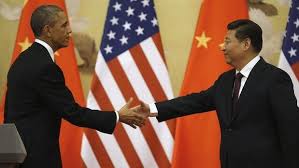
Beijing (CNN) — At the end of the APEC trade summit in China, U.S. President Barack Obama announced a climate change agreement with Chinese President Xi Jinping that would cut both countries’ greenhouse gas emissions by close to a third over the next two decades.
Under the deal, the United States would cut its carbon emissions between 26-28% — from levels established in 2005 — by 2025. China would peak its carbon emissions no later than 2030 and would also increase the use of non-fossil fuels to 20% by 2030.
“As the world’s two largest economies, energy consumers and emitters of greenhouse gases, we have a special responsibility to lead the global effort against climate change,” Obama said Wednesday in a joint press conference with Xi.
Obama said he hopes the announcement will spur other nations to tackle climate change. “We hope to encourage all major economies to be ambitious — all countries, developing and developed — to work across some of the old divides, so we can conclude a strong global climate agreement next year,” Obama said.
The White House said the ultimate target is to “achieve deep economy-wide reductions on the order of 80% by 2050.”
A senior administration official calls the goals both “ambitious and achievable,” but also acknowledged that U.S. domestic politics could put a damper on the announcement. Saying “leading climate deniers” in the GOP might try to stop the initiative, the official hinted the President may act alone if necessary.
“Congress may try to stop us, but we believe that with control of Congress changing hands we can proceed with the authority we already have.” The official added, “This is really the crusade of a narrow group of people who are politically motivated and have made this a cause celebre, but we believe we will be successful.”
The administration hopes to sell the plan back home by touting the anticipated savings on energy costs. “Consumers and businesses will save literally billions of dollars” a senior administration official said. The plan offers initiatives and incentives to develop more solar and wind power across both countries, the official said.
Another official said the agreement “won’t all fall together in five minutes,” but hopes this will demonstrate to other nations that working together to reduce carbon emissions would prove that “we can work together to enhance deployment of sustainable clean technologies.”
The White House said the announcement marks the first time China has agreed to cut its carbon emissions, and said the Chinese are calling for “an energy revolution” that would include a broad economic reform program that would address air pollution.
China has agreed to provide an “additional 800-1,000 gigawatts of nuclear, wind, solar and other zero emission generation capacity by 2030, more than all the coal-fired power plants that exist in China today and close to total current electricity generation capacity.
During Obama’s visit, the Chinese government closed factories and gave employees time off to reduce car traffic and, ultimately, emissions in Beijing. The reduction of smog and the appearance of blue skies was noted by media throughout the APEC Summit.
Another senior administration official said that historically, the United States and China have often been seen as antagonists, so this “should send a powerful message,” and “will usher in a new day, where the U.S. and China can work as partners. We have a special responsibility to lead the global effort against climate change.”
On top of historic climate change agreement, Obama and Xi also agreed on the importance of cybersecurity, the denuclearization of the Korean peninsula, strengthening military relations and increasing trade.
By Matt Hoye, CNN Politics Senior White House Producer, 11/12/2014
 All Things Environmental
Recent Comments