
White House Study: Increasing Number of Deadly Heat Waves Inevitable with More Global Warming

A new U.S. government study is predicting tens of thousands of people in the United States will die prematurely each year from heat waves and other extreme weather events like hurricanes and floods unless the world takes urgent steps to address the climate crisis said the United States President Barack Obama’s senior science adviser,\John Holdren, on Monday, April 4, 2016 at the White House in Washington D.C..
Said Holdren: “The report projects that under middle-of-the-road emissions scenarios, we can see from thousands to tens of thousands additional heat-related deaths in the United States each summer. And the numbers are really very striking.”
Man-made global warming is making America sicker, and it’s only going to get worse, according to a new federal government report.
The 332-page report issued Monday by the Obama administration said global warming will make the air dirtier, water more contaminated and food more tainted. It warned of diseases, such as those spread by ticks and mosquitoes, longer allergy seasons, and thousands of heat wave deaths.
Environmental Protection Agency chief Gina McCarthy said if that’s not enough, climate change affects people’s mental health, too.
“It’s not just about polar bears and melting ice caps. It’s about our families. It’s about our future,” McCarthy said at a White House event unveiling the report.
Climate change affects more people in more ways than anything doctors have seen in the past, said Surgeon General Vivek Murthy. He said the report allows doctors to better quantify “the sheer number of pathways through which climate affects health.”
That includes air pollution worsened from power plants, pollen and even wildfires, he said.
“Not being able to breathe is one of the most frightening experience” for people, Murthy said. “We’re talking about scary moments for parents and children.”
Asthma is already the No. 1 cause of children going to the hospital and “now we’re seeing it worsening because of the heat, the allergens,” and air pollution, said Lynn Goldman, dean of the George Washington University’s public health school.
White House science adviser John Holdren highlighted heat waves, saying that even with some reduction in emissions of heat-trapping gases globally, “we can see thousands to tens of thousands of heat-related deaths in the United States each summer.”
Centers of Disease Control and Prevention computer simulations of 209 cities show that extra summer heat deaths will outweigh fewer winter cold deaths from climate change, said CDC’s Shubhayu Saha, a study lead author.
Holdren said the report is based on more than 1,800 published scientific studies and new federal research, and was reviewed by the National Academies of Sciences.
“The report clearly establishes that climate change is a major threat to public health in the United States,” said Howard Frumkin, dean of the University of Washington’s public health school, who wasn’t part of the report. He said the government isn’t doing enough. “There is a vast disconnect between the magnitude of the problem, as outlined by this report, and the response of government health agencies”, he said.
Source: from an AP news story by Seth Borenstein, AP science writer – Washington D.C..
With a Forecast of Sea Level Rising 5-6 Feet Under “Business-as-Usual” Conditions, Media and Others Ought Ask Presidential Contenders What Steps the Country and Its People Ought Be Taking to Reduce this Major Threat to Humanity!

The latest study in the prestigious Journal Nature predicts the world’s oceans will rise 5 or 6 feet by the end of this century without major changes to end fossil fuel burning – NOW! We are causing irreparable harm to the earth’s climate and its physical and biological systems – including warming and acidification of the oceans as well as rising sea levels – processes that have already begun and will not be possible to reverse even if humans stop burning fossil fuels today.
So all we can do is slow the rate of change and help those most likely to be affected to prepare for the worst. It’s the least we can do.
The League of Conservation Voters has a continually updated report “In Own Words” on each remaining 2016 presidential candidates’ past statements on climate change . Non of the candidates statements reflect the study on sea level rise released last week.
Unseasonably Warm Weather in Wisconsin

Below is the Wisconsin Department of Natural Resources’ (DNR) Outdoor Report summary for March 10, 2016. However, conspicuous by absence is any mention that Wisconsin’s unusually warm weather this month is at all related to human activities that cause climate change. Some of the many sources of fossil and other fuel combustion that emit greenhouse gases to the atmosphere in Wisconsin include: fossil fuel burning in highway motor vehicles (gasoline and diesel oil); jet aircraft (refined oil/jet fuel); electric power producing plants (primarily coal, and natural gas – methane); natural gas burning for heating homes, buildings, churches and other buildings, recreational utility vehicles; road construction vehicles; in cement and asphalt manufacturing; in snowmobiles, boats, motor vehicles used in tractors and other agricultural machinery, in lawn mowing, in logging, and in other miscellaneous motorized products that burn fuel. Other greenhouse gas emissions may come from mining operations including sand and gravel mining and mining for metals, and from animal livestock propagation for food sales.
Despite the findings and recommendations from the United Nations’ Intergovernmental Panel on Climate Change (IPCC), which concludes the climate change problem is “urgent”, as does President Obama, Wisconsin’s Republican Governor Scott Walker and the state’s Republican lawmakers have refused to even hold a citizen hearing regarding the growing threat of climate change, not just to Wisconsin’s future economy, but also the quality of life future residents and visitor to Wisconsin will be provided, as well as the threats of a changing climate to animal and plant life in Wisconsin for generations to come.
Unseasonably warm weather melts snow cover, slows maple tapping efforts
Wisconsin has experienced some unseasonably warm weather in the last week with daytime temperatures in the 50s and 60s and even a low 70 reported in Milwaukee. The warm weather has melted most of the snow cover statewide, with just snow surviving in some forested areas of the Northwoods. Snowmobile and cross-country ski trails are now closed statewide and most will remain so even if the state does experience a late season snowfall.
State park and forest trails that were groomed for skiing are now open again to hiking, but most properties are reporting that rail-trail, mountain bike and horse trails are closed, as conditions are soft and muddy and use of trails in these conditions can cause significant damage to trail surfaces.
With the general inland game fish season now closed except on those waters open to game fishing year-round, only a few panfish anglers have been venturing out, but ice conditions are rapidly deteriorating and many shorelines in southern and central Wisconsin are opening up, making access difficult and dangerous.
Most anglers on Green Bay are removing fishing shelters prior to this Sunday’s deadline as waters are rapidly opening up. Anglers were out in high numbers around Sturgeon Bay last weekend with many limits for whitefish reported. Anglers were open water fishing the Fox River at Voyageur Park for walleye but success rates have been low, though with the warmer weather that is expect this to change.
Raccoon, skunk, muskrat, mink, and opossum activity has increased as temperatures have increased and snow has departed. Wild turkeys have been strutting and starting their spring courtship. Flocks are breaking up and the large groups of toms and jakes have already decreased in size as they establish their spring pecking order.
With the warm weather and south winds there has been a significant increase in spring migrants sighted this week, including red-winged blackbirds, killdeer, robins, song sparrows, swamp sparrows, bluebirds, turkey vultures and more. Other early migrants returning to breeding territories include American woodcock, great blue herons and eastern meadowlarks. There was a heavy waterfowl migration across the southern half of the state, including common goldeneyes, all three mergansers, green-winged teal, pintail, wood ducks, and many others. Greater white-fronted geese are moving through in numbers, as are large flocks of Canada geese and occasional cackling, snow, and Ross’s geese. Canada geese are staking out territory and will begin nesting soon. Sandhill cranes are courting and dancing. Bald eagles are incubating eggs and some great horned owls already have chicks.
Maple syrup season has gotten off to a very slow start due to mild temperatures, especially overnight lows staying above freezing. One producer placed out 670 taps late last week and harvested 370 gallons of sap on Monday. The 10-day forecast does not show any significant changes to overnight lows. The concern is that trees will bud out soon resulting in an early end of the season.
A number of observers reported seeing leopard frogs, spring peepers have been heard in the south and salamanders were active with the warm temperatures. Unfortunately the warm weather has also brought out reports from shed hunters and maple tappers finding the first ticks crawling around on them.
Read Dr. Seuss’s Book, “The Lorax”, to Celebrate Dr. Seuss’s Birthday,n or Better Yet – Read it to a Child or Friend

March 2nd is Dr. Seuss’s birthday, he would be 112 this year. While he is no longer with us, his legacy lives on in the pages of his books. A book that all parents might want to read to their children is Dr. Seuss’s “The Lorax”. It’s message is most applicable to finally being recognized environmental crisis of global warming and climate change, which continues to worsen.
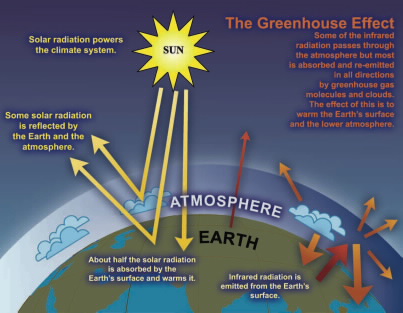
Children should know we humans have already saturated Earth’s atmosphere with the residuals from excessive burning of earth’s fuels, the effect of which, together with the cutting down of the carbon dioxide sequestering tropical rain forest, has lead to an unhealthy and unnatural buildup of carbon dioxide and other greenhouse gases in Earth’s atmosphere, which means that more of the Sun’s radiant heat is being trapped near Earth’s surface, which has already caused destabilized the earth’s climate systems, to the suffering and harm to many living species, including millions and ultimately billions of the human population, in areas which have experienced major and significant changes in weather events, more severe storms and flooding in some areas, but not enough rain for others.
Long before saving the earth became a global concern, Dr. Seuss, speaking through his character the Lorax, warned against mindless progress and the danger it posed to the earth’s natural beauty.
A boy living in a polluted town visits a strange isolated man called the Once-ler “at the far end of town where the Grickle-grass grows… [on] the Street of the Lifted Lorax”, who never appears fully in illustrations; only his arms are shown. The boy pays the Once-ler fifteen cents, a nail, and the shell of a great-great-great grandfather snail to explain why the area is in such a run-down state. The Once-ler explains to the boy (shown in flashback) how he once arrived in a beautiful, pristine valley containing happy, playful fauna (Brown Bar-ba-loots, Swomee Swans, and Humming Fish) that spent their days romping around blissfully among “Truffula trees”. The Once-ler proceeded to cut down the Truffula trees to gather raw material to knit “Thneeds,” a ridiculously versatile invention of his, “which everyone needs”. Thneeds could be used as a shirt, a sock, a glove, a hat, a carpet, a pillow, a sheet, a curtain, a seat cover, and countless other things.
By cutting down the tree, he summoned the titular Lorax to appear from the stump of a Truffula tree. He “speaks for the trees, for the trees have no tongues” and warned the Once-ler of the consequences of cutting down the truffula trees, but the Once-ler ignored him, instead contacting all his relatives to help him with his business.
The Once-ler’s small shop soon grew into a factory and new equipment was made to keep up with the demand for more Thneeds, and signs of damage to the Truffula Forest became evident to the Lorax. The Lorax first complained to the Once-ler that the Truffula trees, being chopped down, were also the food source of the Bar-ba-Loots, who are now facing a terrible food shortage and a disease called “the Crummies because of gas and no food in their tummies.” To save them, the Lorax sent them off to find another food source. At first, the Once-ler only showed a little remorse, but still focused on expanding his business.
Soon, the Once-ler’s Thneed-making business expanded tenfold and now used delivery trucks to take out the shipments. The Lorax eventually came back complaining to the Once-ler that the factories were belching out so much “smogulous smoke” that it was giving the Swomee Swans sore throats, leaving them unable to sing. After the Lorax sent them off, he also complained to the Once-ler about his machinery making a goo by-product called “Gluppity Glup” and “Shloppity Shlop,” and how it was being dumped into the ponds where the Humming Fish live, leaving them unable to hum and forcing the Lorax to send them away too.
The Once-ler, disgruntled by this, still dismissed the Lorax’s pleadings and declared his intention to keep “biggering” his operations, but at that very moment, the “The very last Truffula tree of them all” falls. Without raw materials, his factory shut down; without the factory, his relatives left. Then the Lorax, silently, with one “very sad, sad backward glance”, lifted himself by the seat of his pants and flew away through the clouds.
The Once-ler lingered on in his crumbling residence, living in seclusion and remorse, while pondering over a message the Lorax left behind: a stone slab etched with the word “Unless”. In the present, he now realizes what the Lorax meant. He tells the boy, “Unless someone like you cares a whole awful lot, nothing is going to get better. It’s not.” The Once-ler then gives the boy the last Truffula seed and tells him to plant it, saying that if the boy grows a whole forest of the trees and keeps them protected from logging, “the Lorax, and all of his friends may come back.”
In Wake of Flint, Michigan’s Lead in Its Drinking Water, U.S. EPA Sends Letters to All State Governors to Ensure Protection of Public from Lead in Its Drinking Water
As with many environmental pollution and resource destruction activities, once the problem reaches a crisis stage, which might also be called “the tipping point”, the impacts or “unintended consequences become essentially “irreversible” — that is, the damage is done and there is no way to return things to the earlier preconditions.
The problem of excessive greenhouse gases in our atmosphere from too much fossil fuel burning by humans over the past 100+ years is a comparable situation, but is occurring on a much larger scale, of course. There will be essentially no going back to previous conditions that existed on earth before global warming from human activities began sticking up its ugly head.
To return to the lead in drinking water problem, the U.S. Environmental Protection Agency (EPA) on February 29th sent letters to all state governors and water regulators across the U.S. promising greater enforcement of rules to protect citizens from lead in their drinking water, in the wake of the drinking water contamination crisis in Flint, Michigan, where many children tested extremely high concentrations of lead in their bodies, high enough to cause irreversible brain damage. The EPA is urging every state in the U.S. to locate all water lines in their jurisdiction that could potentially be distributing lead-contaminated drinking water to the public, which apparently was already required of every state in the U.S..
As reported in the Detroit Free Press Sunday, millions of lead service lines remain buried in cities across the nation, but in many cases water utilities are uncertain where those lines are, making it difficult for EPA to monitor many utilities’ compliance with the lead testing requirement, even at locations most likely suspected to have high concentrations of lead already in their public’s drinking water coming out of the tap.
The EPA, having already been criticized by some for not moving more quickly in Flint after learning of the elevated lead level in at least one home in February, 2015, and two months later, found to be not practicing corrosion control as was required, said it is now increasing its regulatory oversight over state programs – “to identify and address any deficiencies.”
The EPA outlined its plans in two letters sent Monday: One, from agency Administrator Gina McCarthy to governors in 49 states; and a second, with more detail, from Deputy Assistant Administrator Joel Beauvais in the EPA Office of Water, to state regulators. The state of Wyoming did not get letters because it has not taken primary responsibility for drinking water, so it remains with EPA.
In January, McCarthy issued an emergency order taking over testing and putting other requirements on Michigan and the city of Flint, saying they were delaying implementation of recommendations made by the federal agency. That came, however, some 20 months after Flint switched water sources and the state Department of Environmental Quality, with primary responsibility, failed to require corrosion control, which apparently allowed lead to leach from aging lines into residents’ taps.
While the state DEQ has borne most of the blame, the EPA has been criticized for not moving more decisively to restore corrosion control and react to fears of widespread lead contamination after the state acknowledged in April of last year that it did not believe it had to require corrosion control under the 25-year-old Lead and Copper Rule at that point. It has since acknowledged the mistake.
McCarthy said in her letter that her staff “will be meeting with every state drinking water program across the country to ensure that states are taking appropriate action to identify and address” any issues of lead levels being above acceptable levels.
She also called for states to do more to ensure that the public receives “better and quicker” information on lead risks, and said her agency will be working with states to make sure there is “adequate and sustained investment” in regulatory oversight of drinking water laws. She said EPA will be looking to help find financing for the “upgrading and replacement of aging infrastructure, especially for poor and overburdened communities.”
A Day to Remember – February 29, 2016
I could not allow this day – Feb. 29 – to pass without comment. Leap year – a year having an extra day in February – occurs only every four years.
So, is that good or bad?
It’s not good, in fact it’s DISASTROUS, because yet ANOTHER day, and year, and decade has gone by while our elected officials in the State of Wisconsin Legislature, and the U.S. Congress, and the population of our state and country, refuse to take the threat, and now reality, of global warming caused by too much fossil fuel burning – in cars, trucks, airplanes, electric power producing plants that burn fossil fuels, seriously, despite alarming increases in sea levels.
Too much fuel burning primarily coal, methane (natural gas), and oil products, have been burned by humans over the past decades and centuries for the energy that has been produced, resulting in the emission and accumulation of elevated concentrations of “greenhouse gases” in earth’s atmosphere, resulting in global warming, the rise in the elevation levels of earth’s oceans, due to the melting of the earth’s Arctic and Antarctic Circle’s land ice and snow, the shrinking of earth’s mountainous glaciers, a thawing of the earth’s permafrost region (one-fifth of the earth’s land surface), causing a warming, expansion, and acidification of earth’s oceans, leading to a dangerous rise in sea level.
The warming is already wreaking of havoc on earth’s biological systems, including humans, most notably in poorer, tropical countries, many of which are already experiencing grave losses due to extreme weather events, such as drought, heat waves and severe storms, along with unprecedented flooding, all of which had been scientifically predicted well over a century ago!
The warming has been compounded by the increasing loss of vegetation, particularly the loss of the tropical rainforests, which had been naturally sequestering carbon dioxide from the atmosphere, but not anymore, by the ones which have been replaced by other forms of development or money producing mono-culture agriculture.
Global warming from human causes is not rocket science, despite what the flat earth believers may still be claiming. However, saying that human-caused global warming is not occurring, because it has not been “proven” to be happening – as of this February 29, 2016, is utterly preposterous, and those who claim human-caused global warming is not happening are either fools or worse yet – liars.
CBS News Special: “Earth Day – A Question of Survival”, with News Anchor Walter Cronkite
The first Earth Day in the United States was held on April 22, 1970. CBS-TV aired it as a 13-part CBS news special. It was a time when the vast majority of Americans generally counted on the major television network news anchors to accurately inform them of the important news of the day, and CBS’s Walter Cronkite was considered the most honest of them all. National news reporting was viewed as having no relationship whatsoever to money provided by networks’ sponsors, and instead was information that viewers could count on as being accurate and true concerning the national events and threats that were occurring in the country and what American viewers would want to know to keep themselves well informed of the country’s news. While Madison’s Gaylord Nelson Institute at the University of Wisconsin states that the CBS news report which aired that night didn’t do justice to much of the participation in the events that were held on the first Earth Day in 1970, the fact that it documented many of the other people concerns that Americans had about the state of the environment in 1970 is worth noting.
The first earth day came about because people were really fed-up with the undeniable pollution of the waters, air and land around them, some even getting sick, while others feared things were likely to get worse and worse because the pollution was getting worse and worse. The following ten years of federal and state law making and enforcement to prevent the continued degradation of U.S. drinking and surface waters, air in the U.S., wetlands and land protection, too, led many to later call the decade of the 1970s “the environmental decade”.
This was also a time of great concern because of the large amount of the country’s money was going for military purposes in fighting the Vietnam War, money which could have gone to keeping the county’s important natural resources clean and healthy, and improving living conditions in “the urban ghettos” including homes for the homeless. A “teach in” was being held across the United States by anti-war advocates at the same time when Senator Gaylord Nelson from Wisconsin came up with the idea of having a similar day set aside for a teach-in about the need for change to ensure a healthy future for the planet, including the nation’s people who were suffering in the ghettos. View all 13 parts of the CBS’s special news report, anchored by Walter Cronkite, of the first Earth Day here.
This CBS special news report for Earth Day is well worth the investment of everyone’s time viewing it, or reading the transcript of the report. A similar degree of response is what is needed now to prevent an even worse and tragic consequence of human and animal life lost and suffering as we continue to add more and more quantities of greenhouse gases to the atmosphere by continuing to burn vast quantities of fossil fuel, for electric power generation, heating and long distance or daily travel requiring oil burning, and many countries continuing to pave over the landscape with concrete, and most every country suffers from a lack of an appropriate adaptation plan in the likely case now that the worse of the climate extremes will ultimately result, and that the inundation of the world’s currently most populous coastal cities will also result, and that many island nations will require resettlement, as the ones that are presently livable are predicted to become submerged completely if major and significant change is not made soon by the most highly developed countries. Our U.S. Congress continuing its refusal to enact laws to reduce greenhouse gas emissions, let alone refusing to alert the American people of the grave unfortunate results of ignoring all climate experts’ warnings means that it’s almost certain the worst predictions are ultimately likely to occur from our lawmakers’ inaction, and the similar expected inaction by many other countries that might otherwise follow our lead, and the paving of the remaining green space on the planet, is unconscionable. If our political office holders are not interested in doing this for us living here today, they should not leave the full burden of living on our likely inhospitable planet to fall on today’s and tomorrow’s children, including those who reside here, as well as elsewhere.
 All Things Environmental

Recent Comments