
President Obama’s Executive Order Committing Federal Government to Cutting Its Greenhouse Gas Emissions

President Barack Obama signed an executive order on Thursday committing the federal government to cutting its own emissions 40 percent by 2025 and pledging to increase the amount of renewable energy used by federal agencies to 30 percent.
-
[This is a good addition but still not nearly enough. States and everyday Americans all have to greatly reduce the things they do that contribute to their daily and annual greenhouse gas emissions, as does the rest of the world. The U.S. still has the highest per capita GHG emissions. Forty percent of world travel by air (a large emitter of GHGs) is by American recreation and business travel pursuits. This has to change! Click on: “About this Blog” to read about how our government really could help make this happen – Power to the People]
The executive order builds on a previous administration directive to cut emissions from federal agencies 28 percent by 2020, compared with 2008 levels. “We are well on our way to meet that goal,” Brian Deese, senior adviser to the president, said in a call with reporters Thursday. “That’s what’s motivating us today to chart out a new and even more aggressive goal going forward.”
The administration is also setting a goal of cutting the per-mile emissions from the agencies’ vehicle fleet 30 percent, it said. It estimates the total commitment across the federal agencies will save taxpayers $18 billion — funds that won’t be spent on energy.
Christy Goldfuss, managing director of the Council on Environmental Quality, said that by the end of 2014, the federal government had cut emissions 17 percent since 2008, putting it well on the way to meeting Obama’s earlier goal. Much of that has come through energy efficiency improvements in federal buildings and with the installation of renewables.
As of the end of 2014, renewable energy accounted for 9 percent of the federal government’s energy use, and Thursday’s directive wants to increase that to 30 percent by 2025. The Department of Defense has set its own goal of deploying 3 gigawatts of solar energy on its installations around the world by 2025.
The federal government is the single largest energy user in the United States, Goldfuss said, with 360,000 buildings and 650,000 vehicles. “Not only is our footprint expansive, our impact is as well,” she said.
The administration also argued that the push to reduce emissions in the federal government has effects across the private sector as well. To that end, the administration also released a scorecard to track emissions from major federal contractors such as Lockheed Martin, Boeing and General Dynamics, which the administration is also calling on to make reductions.
The White House estimates that with reductions from the agency and those of private suppliers, the administration can cut greenhouse gas emissions by 26 million metric tons in the next 10 years.
“These goals will make sure the federal government is leading by example and pushing the envelope on cutting emissions,” said Deese, adding that it will “demonstrate that we are going to stay on offense in pushing our clean energy and climate change objectives.”
Emperor Walker Wearing No Clothes When It Comes to Wisconsin’s Natural Resources

Actually, this emperor has no clothes.
Wisconsin citizens have got to realize that Wisconsin’s governor has not had the best interests of the state at heart when it comes to natural resources issues, including the effects of rising greenhouse gas concentrations in the atmosphere’s significance to Wisconsin’s natural, economic and human resources in the absence of timely action by their governmental officials.
This politician looks only ahead to the next election. Our part-time governor has his attention turned to Iowa, New Hampshire and any road leading to Washington, D.C.
His tracks are the proposed budget that will leave scars on the state.
For a state with the legacy of people like Aldo Leopold, John Muir, Gaylord Nelson, and Warren Knowles, it is an embarrassment that Gov. Walker would submit a budget that:
• Strips the Natural Resources board of its authority, making it advisory only to the DNR – leaving all decisions up to the DNR secretary;
• Eliminates 18 research scientists from the DNR Sciences Services Bureau;
• Eliminates environmental education programs;
• Places a moratorium on land buying through the Stewardship Fund.
The problem is that politicians care about money brought into their campaigns, and getting re-elected.
That is why the Natural Resources Board was established originally: to keep natural resources governance at arm’s length from politicians. The NRB (citizens who in the past came together to put natural interests foremost), can make decisions taking into account biological and sociological information.
The NRB was also charged with hiring a DNR secretary, but Tommy Thompson and Jim Doyle looked to their self-interest and changed a system that worked well since 1927.
Now Scott Walker has manipulated the system, put politicians in charge of the DNR, silenced scientists, and changed agency priorities from natural resource protection to job creation.
How long can people who hunt, fish, trap, bird watch, hike, camp, and enjoy the state’s scenery, sit on their hands while the governor trashes our state?
Source: original article by Tim Eisele, Wisconsin Outdoor News, February 28, 2015
Note: “Emperor’s New Clothes” is an old children’s story by Hans Christian Andersen about an emperor who pays a lot of money for some new magic clothes which can only be seen by wise people. The clothes do not really exist, but the emperor does not admit he cannot see them, because he does not want to seem stupid. Everyone else pretends to see the clothes too, until a child shouts, “The Emperor has no clothes on!”
Need for a Land Ethic: The Aldo Leopold Legacy

“The land ethic simply enlarges the boundaries of the community to include soils, waters, plants, and animals, or collectively: the land.”- Aldo Leopold
Published in 1949 as the finale to his book “A Sand County Almanac”, Leopold’s “land ethic” defined a new relationship between people and nature and set the stage for the modern conservation movement.
Leopold understood that ethics direct individuals to cooperate with each other for the mutual benefit of all. One of his philosophical achievements was the idea that this ‘community’ should be enlarged to include non-human elements such as soils, waters, weather, plants, and animals, “or collectively: the land.”
“That land is a community is the basic concept of ecology, but that land is to be loved and respected is an extension of ethics”, he said. This recognition, according to Leopold, implies individuals play an important role in protecting and preserving the health of this expanded definition of a community.
“A land ethic, then, reflects the existence of an ecological conscience, and this in turn reflects a conviction of individual responsibility for the health of land”, Leopold said. Central to Leopold’s philosophy is the assertion to “quit thinking about decent land use as solely an economic problem.” While recognizing the influence economics have on decisions, Leopold understood that ultimately, our economic well being could not be separated from the well being of our environment. Therefore, he believed it was critical that people have a close personal connection to the land.
“We can be ethical only in relation to something we can see, feel, understand, love, or otherwise have faith in”, he said.
Leopold’s “A Sand County Almanac” has prompted generations of people to take better notice – and care – of the natural environment. Aldo Leopold (January 11, 1887 – April 21, 1948) was the first research director at the University of Wisconsin Madison Arboretum and was closely involved in its design.
Madison Reads Leopold begins at 9:30 am at the Arboretum this Saturday, March 7, 2015 and is free and open to the public. Light refreshments will be available in the visitor center lobby. Brown-bagging is permitted but food must remain in the Visitor Center.
Madison Reads Leopold is a community celebration organized for to celebrate the life and legacy of Aldo Leopold and is sponsored by the Aldo Leopold Foundation.
The name “Aldo Leopold Weekend” has its roots in Wisconsin, where it is held annually the first full weekend of March has that official designation and Wisconsin communities across the state coordinate events that all happen at the same time. Leopold-themed events have spread far beyond the borders of Wisconsin since the event’s inception in 2000, and are now celebrated across the nation in various ways and at various times throughout the year! Events planned for the Madison celebration include a showing of the Green Fire film., an excellent documentary on the history of the environmental movement in the United States. At the Madison UW Arboretum there will also be readings from “A Sand County Almanac”, Leopold bench building workshops, round table discussions followed by hikes through the Arboretum itself. In short, lots of great things! The event in Madison is scheduled to go to 4 PM Saturday.
Wisconsin Legislature Votes to Call “Extraordinary Sessions” for Wrong Reasons
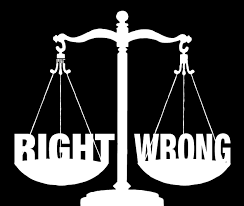
Organizing committees of both the Wisconsin Senate and Wisconsin Assembly called both houses of the Wisconsin legislature into extraordinary sessions this week to pass a “right-to-work” bill, making it illegal for employers and labor unions to charge their employees and any new employees union dues as a condition of accepting employment. The Wisconsin State Journal reported in today’s newspaper edition that the full Senate could vote on this highly charged legislation (Senate Bill 44) as early as Wednesday and the Wisconsin Assembly could vote on this legislation (AB 61) as soon as Monday.
Governor Scott Walker has said he would sign the bill into law.
The Senate and Assembly organizing committees ought have called their “extraordinary” sessions to address what the State of Wisconsin ought do to protect its citizens from global warming and climate change instead. Greenhouse gas emissions, global warming and climate change are far more significant to the future of Wisconsin than are unions charging union dues in the state.
Positive Incentives Plan Wages Three-Prong-Attack Against Climate Change

Please refer to “About this Blog” before proceeding.
The planet Venus is on the left; Earth is on the right. Nobody wants to see Earth go the route its that its commonly called twin planet Venus took, eons ago. You see Venus once had oceans of water, too, just like Earth does. But something went very wrong on the surface of Venus (possibly it is because the Sun got hotter), which started a “runaway greenhouse effect”. The oceans of water Venus once had boiled away. As temperatures began rising ocean water converted to water vapor, also a strong greenhouse gas. The water vapor increased the effectiveness of heat trapping and accelerated the greenhouse effect, which caused the temperature at the surface to rise further, thus causing the oceans to evaporate faster, etc., etc. This type of runaway is also called a “positive feedback loop”. When the oceans were gone the atmosphere finally stabilized at a much higher temperature and at much higher density, making the planet uninhabitable.
The sobering warning for us is obvious: we have to be extremely concerned about processes such as burning of fossil fuels in large volumes that might have the potential to trigger a runaway greenhouse effect and produce on the Earth atmospheric conditions that are incapable of supporting life.
That is why it is so essential that we initiate actions now, worldwide, to curb all forms of unnecessary activity that causes the greenhouse effect in our atmosphere to strengthen (meaning an increase concentrations of greenhouse gases). Carbon dioxide (CO2), a greenhouse gas, has increased in concentration in the atmosphere from 280 parts per million (ppm) in the 1880’s to 400 ppm today – mainly the result of humans burning coal, oil. and natural gas, the combustion producing significant amounts of (invisible) CO2.
As a result, the global average annual temperature of the Earth at the surface has risen, the temperature of Earth’s oceans have been increasing and, as a result of the ice melting off of the island of Greenland, the continent of Antarctica, and water runs down the mountainous glaciers on practically all the continents, and the property of the thermal expansion of water, Earth’s oceans levels are rising.
Meanwhile, the Earth’s once solid permafrost region, which is approximately 1/5 of the Earth’s surface, is now thawing in many places, decomposing,and releasing methane to the atmosphere, a greenhouse gas 37 times as strong as CO2 in trapping heat.
Furthermore, replacement of large areas of ice and white snow surface (ice cap) on the Arctic Ocean means the open Arctic ocean water absorbs more of the radiant heat from the Sun, causing the ice and snow to melt even faster still, an so on. If it were not for the vast amounts of ice in the Arctic Ocean, the water would warm even faster.
It is essential that people and businesses, the world over, especially those in countries burning vast quantities of fossil fuels, in power generation, motorized transportation and jet travel, for human travel and shipping, find alternatives that don’t burn fossil fuels for their pursuits. Presently, citizens from the United States fly 40% more than citizens from other countries, and more U.S. citizens are buying gas guzzling SUVs and pickup trucks than more fuel efficient vehicles – because gas is “cheap” again, They remain apathetic about global warming, or are members of the “Earth is flat” society. As John Lennon once said, “apathy is it”. The Earth is also round. Above all, we need to Conserve, NOW!
Wisconsin Must Join the All Out World Effort to Fight Global Climate Change Without Delay, BEFORE Time Runs Out

Wisconsin has traditionally prided itself as being a state that “cares”. Wisconsin residents care about its wild and domestic animals, its fish, birds and butterflies; its plants, trees, and its forests; its tens of thousands of lakes, streams and rivers, and the quality of its wetlands, groundwater and air; its mighty bluffs and gorges, its remaining prairies, and the state’s overall majestic scenic beauty.
Wisconsin has traditionally had a strong manufacturing economy, a top notch agricultural industry, a public education system second to none, a world class university system, and an equally top notch private schools, colleges, and other educational institutions. Wisconsin also boasts an excellent highway, airport, and bicycle transportation system, and communities that are walking and wheelchair friendly. It has always held all visitors to the state in high regards and treated them with respect the production and sustainability of its farms, the well being of its human population, without regard for race, heritage or creed. Wisconsinites treat visitors to their state with respect and dignity,satisfaction of its visitors and transients alike, and, perhaps above all, in leaving its land, water and its economy better condition than they received it. In a nutshell, that’s a statement of Wisconsin’s traditions and value, as I have come to know them.
Wisconsin residents often boast, and rightly so, that Wisconsin was the home of such renown conservationists and humanists as John Muir, Aldo Leopold, Senator Gaylord Nelson, Midge Miller and Vel Phillips. In the 1970s, Wisconsin was emulated by other states as the state to look at for developing effective environmental protection regulations to safeguard its treasures. With Wisconsin Departmental Resource Secretary Anthony “Tony” Earl at the helm, who would later become Wisconsin’s governor, and George “Knute” Knudson as its chief naturalist, Wisconsin natural resources were in good hands.
It is no exaggeration to say that all this is at risk the longer our Wisconsin Legislature, our governor, other state legislatures and governors, and the people’s representatives in the United States Congress continue to kick the issue of excess fossil fuel burning and greenhouse gas production by Americans down the road. What we don’t need is more highway development and expansion and more airport capacity expansion that encourage even more fossil fuel burning by the public. What we don’t need is more trade with distant countries that requires more fuel for shipping and flying. What we don’t need are more coal and natural gas burning power plants and the thousands of miles of high voltage transmission lines that go with them, and not Wisconsin power companies who restructure their rates in favor of more fossil fuel burning, thus discouraging their customers from investing in solar energy panels for their homes and businesses, and having the governor’s appointed Wisconsin Public Service Commission (the PSC) “rubber stamps” the fossil-fuel-dependent utilities’ proposals.
We are wasting valuable time and money by not relying less and less on fossil fuel dependent energy, and more on either energy conservation or on conversion to solar and wind generated power, in our homes, businesses and institutions; and that we desperately need to reduce aggregate driving and flying, which rely almost exclusively on burning fossil fuels that, when subject to combustion, release large quantities of greenhouse gases, especially carbon dioxide (CO2), to the atmosphere. Most of the greenhouse gases, such as CO2, remain in the atmosphere for centuries, accumulating to increasingly more ominous concentration levels, or they get absorbed in the oceans, making the earth’s ocean water more acidic, harming the biological species in the oceans.
But scientists the world over are in agreement that the rising concentrations of greenhouse gases from significantly increased fossil fuel burning by humans since the time of the Industrial Revolution (early 1800’s) have remained in earth’s atmosphere, trapping more and more of the Sun’s radiant energy and changing it into heat energy, causing the earth’s surface to warm, melting more of the polar ice caps and mountain glaciers, causing the vast permafrost region to thaw, releasing more and more methane gas, another greenhouse gas that’s known to have 37 times the heat-trapping power of CO2.
Scientists don’t know when global warming could begin accelerating, but it could be any day now. What they do know is that there are higher concentrations of greenhouse gases in the atmosphere now to push global surface temperatures much higher than what we have experienced thus far. Time is of the essence for the world’s populations who are relying on fossil fuel burning for energy to stop adding even higher concentration levels of greenhouse gases to the atmosphere, risking setting off positive feedback mechanisms in the system that could worsen the situation and amplify the weather extremes global warming has already caused in earth’s climate.
WORT-FM Radio Show “Planet Earth: It Needs Our Help Now More Than Ever”
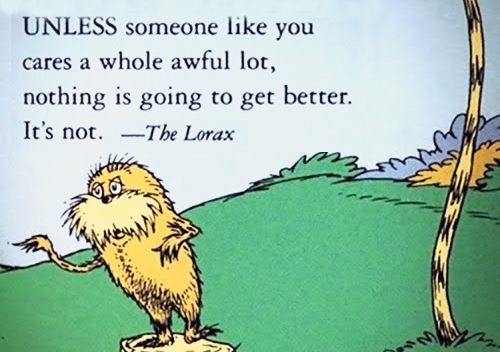
This past Labor Day, WORT-FM (89.9 FM), Madison (www.wortfm.org), broadcasted my proposed solution for reducing global warming & climate change. The program would offer government-provided positive financial incentives ($) to encourages people and families in Wisconsin who chose to minimize their global footprint by driving less than the average Wisconsin individual or family (or not driving at all), by not flying at all, and by using less fossil fuel derived energy during the year. The “Conserve, NOW program is further described in about this blog.
The Labor Day Access Hour show “Planet Earth: It Needs Our Help Now More Than Ever” starts with a brief introduction announcing the program followed by several songs containing lyrics applicable to the subject and further information on the program and sources of funding for carrying out. The thought is that much of the funding would eventually be paid back by reducing governmental spending on major environmentally disrupting infrastructure capacity expansions (highway developments, power plants and transmission line construction, airport runway construction and new airports), state and federally funded personnel such as highway and airport and transmission line planners and air traffic controllers. There would also be less cost and harm due to fewer motor vehicle crashes and airplane crashes due to heavier traffic.
Because it provides more income for individuals and families, it would also reduce the need for reliance on poverty assistance programs that provide food and subsidized housing, it would reduce homelessness, and by reducing these impediments, this would eliminate factors detrimental to education of young children.
Click here to listen to the show. It lasts a total of one hour.
Of course there are many other ways individuals, communities, nongovernmental organizations, business interests and others can reduce their annual global footprint in addition to driving and flying less
and using less energy derived from fossil fuels. Some of these include buying fewer consumer products most of which require fuel burning and mining or drilling in their development or use; buying locally produced products whenever possible (less energy used in transport); buying already used products and supporting organizations which only use recycled products; eating less or no meat products; supporting planned parenthood and humane societies that provide rescue animals for pets rather than buying from breeders; supporting organizations that promote reforestation not deforestation, and removal of paved surfaces and replacing them with green space, where ever feasible. Cities and businesses that attract large numbers of daily commuters should provide daily mass transit services to those locations, and the state should subsidize those municipalities who provide those services to outside-the-city locations – rather than put more even money into cement (greenhouse gas emitted in its production and application)for providing highway capacity expansion (which promotes even more driving).
The state, universities, public radio stations and other organization should stop coordinating long distance air travel trips to tourist spots around the world and events such as professional sports, actor/actress movie and music awards shows should be terminated. Major amounts of money, worldwide but especially by the U.S., should stop being funneled into fossil fuel using vehicles including most military airplanes. The U.S. should limit and eventually eliminate sending troops to foreign soils and establishing military bases and headquarters overseas.
– The Lorax
Black Lives Matter in Madison and Wisconsin, If they Don’t Now, THEY WILL

A new generation of human rights activists mounted a passion-filled, peaceful march in South Madison Friday, tapping the energy around race issues sweeping the country to funnel it to local issues.
“Young black men are being murdered. It is a national problem,” organizer Brandi Grayson told the crowd that gathered at the Metro bus hub at South Park Street and West Badger Road. “It is time to educate ourselves, it is time to educate our neighbors, it is time to educate our employers. It is time, my people.”
“Black Lives Matter,” was the banner slogan and rallying cry of the action led by the Young Gifted and Black Coalition, as up to 150 demonstrators marched in traffic lanes a half-mile up South Park Street to North Ave., then back to the South District Police Station on Hughes Place for short speeches, poems and chants.
The crowd’s final march took them down Park Street up to, but not onto, the ramp to the west-bound Beltline as they held a silent vigil for four-and-a-half minutes to honor Michael Brown, whose body lay for four-and-a-half hours on a street in Ferguson, Missouri, after he was fatally shot by a white police officer in August.
The local activist group emerged following a grand jury decision not to indict Darren Wilson in Brown’s killing, in response to which they organized a rally and march around the Capitol Square last week. Like other race rights actions cropping up in the latest round of public outrage over the killing of black men by white police officers, the Madison coalition turned the failure of another grand jury this week to return an indictment in the killing of Eric Garner in New York City into an opportunity to demonstrate the depth of concern over civil rights.
Demonstrations over the lack of an indictment in the Garner case continued Friday in cities across the country.
The Young Gifted and Black Coalition of Madison is clearly organizing for the long haul.
The coalition points often to the disparities in education, incarceration and other aspects of life, documented in the Race to Equity report, as proof that even absent fatal police violence against blacks, racial inequities are rife in Dane County. The group is demanding an end to plans to build a new Dane County jail, immediate release of people incarcerated for crimes of poverty and investment in community initiatives.
Leaders called on demonstrators to join a planned protest Tuesday at a Dane County Board committee hearing on a proposal to spend $8 million for a study on the need for a new jail that could cost $150 million, and to participate in a community building and planning session next Friday evening at the South Madison Public Library.
“The civil rights movement brought change, but it didn’t happen because people were sitting down,” Grayson told the crowd. “Change happened because people were committed to change and were willing to sacrifice themselves and their time.”
The crowd demonstrating Friday was mixed racially and ethnically, but overwhelmingly young. Grayson said that older civil rights advocates and those whose work is enmeshed with majority establishment organizations are stepping back to let a younger generation take the lead on protests. “They can’t say the things we can say. We can take the action in the street; hopefully they will help make the policy.”
Will Williams, a long-time activist with Vietnam Vets for Peace and other local movements, watched the march take shape from the sidelines. “Old folks need to turn the baton over,” Williams said.”We have young people with the fire who understand what going on with racism overall and with cops who are murdering black people and not being held accountable.”
A handful of other older advocates were present on the edges of the demonstration, as well such leaders on race equity matters as Floyd Rose, president of 100 Black Men of Madison, and Mayor Paul Soglin.
The demonstrators chanted as they marched: “No Justice, No Peace! No Racist Police!” When they paused at North Avenue, the gathering took on something of the feel of a revival meeting where participants were called on to raise their fists and pledge to take up the fight for human rights.
“It starts with you, it starts with you, it starts with you, it starts with you, it starts with you, it starts with you, it starts with you, it starts with you, it starts with us,” Grayson shouted, pointing to individuals in the rapt and silent crowd.
“We are here to show what solidarity looks like. You are absolutely beautiful, don’t let anyone tell you anything different,” she said. “We are conditioned to fear black men; we are conditioned to think every black person is innately violent.”
Madison Police Chief Mike Koval watched from across Park Street, noted that marching in the traffic right-of-way was an act of civil disobedience, and spoke to the protesters rights to do so. “This is the First Amendment in action. This is how it’s supposed to work,” Koval said. “And the police in a free society should be here to facilitate it. This is democracy in action.”
Outside of the police station, protesters chanted slogans punctuated by trombone blasts and heard speeches and poems, one of which named many of those killed by police and lamented: “There is not enough skin to tattoo the names…We are black lives and we matter.”
The group fell into formation for the final march down Park Street just as darkness fell. “I came out to support everyone,” said one 20-something protester. “Human rights matter.”
Countries in Lima, Peru Ought to Declare World War III Against Global Warming and Catestrophic Climate Change
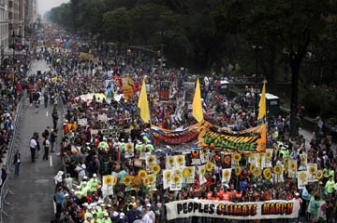
A day after December 7, 1941, the day U.S. President Franklin Delano Roosevelt said “will live in infamy” when Imperial Japan attacked the U.S.naval base at Pearl Harbor, Hawaii, the United States entered World War II as the U.S.Congress declared against the Empire of Japan, which aimed to dominate Asia and the Pacific and was already at war with the Republic of China in 1937. World War II had already been initiated by the invasion of Poland by Germany and subsequent declarations of war on Germany by France and the United Kingdom. From late 1939 to early 1941, Germany conquered or controlled much of continental Europe, and formed the Axis alliance with Italy and Japan. In June 1941, the Axis alliance launched an invasion of the Soviet Union. Japan attacked the United States that December, European territories in the Pacific Ocean, and the Empire of Japan quickly conquered much of the Western Pacific.
But during 1944 and 1945 the Japanese suffered major reverses in mainland Asia in South Central China and Burma, while the Allies crippled the Japanese Navy and captured key Western Pacific islands and the war in Europe ended with an invasion of Germany by the Western Allies and the Soviet Union culminating in the capture of Berlin by Soviet and Polish troops and the subsequent German unconditional surrender on 8 May 1945. Following the Potsdam Declaration by the Allies on 26 July 1945, the United States dropped atomic bombs on the Japanese cities of Hiroshima and Nagasaki on 6 August and 9 August, 1945, respectively.
The Axis advance halted in 1942 when Japan lost the critical Battle of Midway, near Hawaii, and Germany was defeated in North Africa and then, decisively, at Stalingrad in the Soviet Union. In 1943, with a series of German defeats on the Eastern Front, the Allied invasion of Italy which brought about Italian surrender, and Allied victories in the Pacific, the Axis lost the initiative and undertook strategic retreat on all fronts. In 1944, the Western Allies invaded France, while the Soviet Union regained all of its territorial losses and invaded Germany and its allies.
The war in Europe ended with an invasion of Germany by the Western Allies and the Soviet Union culminating in the capture of Berlin by Soviet and Polish troops and the subsequent German unconditional surrender on 8 May 1945. With an invasion of the Japanese imminent, the possibility of additional atomic bombings, and the Soviet Union’s declaration of war on Japan and invasion of Manchuria; Japan surrendered on 15 August 1945. Thus ended the war in Asia, and the final destruction of the Axis bloc. During 1944 and 1945 the Japanese suffered major reverses in mainland Asia in South Central China and Burma, while the Allies crippled the Japanese Navy and captured key Western Pacific islands.Following the Potsdam Declaration by the Allies on 26 July 1945, the United States dropped atomic bombs on the Japanese cities of Hiroshima and Nagasaki on 6 August and 9 August respectively. With an invasion of the Japanese archipelago imminent, the possibility of additional atomic bombings, and the Soviet Union’s declaration of war on Japan and invasion of Manchuria, Japan surrendered on 15 August 1945. Thus ended the war in Asia, and the final destruction of the Axis bloc.
World War II altered the political alignment and social structure of the world. The United Nations (UN) was established to foster international co-operation and prevent future conflicts.
World War II altered the political alignment and social structure of the world. The United Nations (UN) was established to foster international co-operation and prevent future conflicts.
World War II was the most widespread war in history, it directly involved more than 100 million people from over 30 countries, and the major participants threw their entire economic, industrial and scientific capabilities behind the war effort, erasing the distinction between civilian and military resources. An estimated 50 to 85 million fatalities, including the Holocaust during which approximately 11 million civilian people, including more than 6 millions Jews, were killed. Up until, now, World War II was the deadliest conflict in human history.
Many thousands of people have already lost their lives and homes and businesses, those of their family, friends, and communities to extreme weather events brought about by the excessive collective burning of fossil fuels by humans over the last century which, coupled with excessive deforestation by humans, especially in the tropics, have resulted in unnaturally high concentrations of carbon dioxide and other greenhouse gas in the atmosphere, causing global warming, rising sea levels, a warmer and more acidic ocean and the loss of arctic sea ice and melting glaciers. The number of lives lost as a result of human-caused global warming will ultimately number in the billions, probably more. To be continued …
Governments from Around the World Meeting in Lima, Peru to Lay Foundation for Addressing Climate Change, Wisconsin Governor Scott Walker Sends U.S. EPA Letter Opposing Climate Change Regulations

Building on the groundswell of worldwide climate action, and in preparation for concluding its Framework Convention of Climate Change in Paris in 2015, the United Nations and its participating governments from around the world have begun meeting 1 December, 2014 in Lima, Peru, and scheduled to close on 12 December, 2014, to lay the foundation for an effective new, universal climate change agreement in Paris in 2015 while also raising immediate ambition to act on climate change in advance of the agreement coming into effect in 2020.
The UN’s Intergovernmental Panel on Climate Change has this year warned against rising sea levels, storms and droughts as a result of unchecked greenhouse gas emissions, and highlighted the many opportunities of taking climate action.
Last week, the UN Environment Programme underscored the need for global emissions to peak within the decade and then to rapidly decline so that the world can reach climate neutrality – also termed zero net emissions – in the second half of the century.
Christiana Figueres, Executive Secretary of the UN Climate Convention said:
“Never before have the risks of climate change been so obvious and the impacts so visible. Never before have we seen such a desire at all levels of society to take climate action. Never before has society had all the smart policy and technology resources to curb greenhouse gas emissions and build resilience. All of this means we can be confident we will have a productive meeting in Lima, which will lead to an effective outcome in Paris next year.”
Meanwhile, Wisconsin Governor Scott Walker submitted comments this week in opposition of the Environmental Protection Agency’s (EPA) Clean Power Plan, which proposes increased regulations aimed at reducing carbon dioxide emission from Wisconsin’s power plants in Wisconsin. Walker’s letter claims that the proposed regulations would have a detrimental effect on Wisconsin’s manufacturing-based economy, as well as household ratepayers.
Walker says the Wisconsin Department of Natural Resources and Public Service Commission of Wisconsin have spent months reviewing the rule and seeking input from those who would be affected since its proposal in June of this year.
Governor Walker has asked the EPA to reconsider the rule based on the impact the rule will have on the cost and reliability of electricity, not only to Wisconsin’s manufacturing sector and the 455,000 people it employs, but on every ratepayer in the state and the nation.
In Lima, governments meeting under the “Ad Hoc Work Group on the Durban Platform for Enhanced Action” (ADP) need to define the scope and the type of contributions they will provide to the Paris agreement, along with clarity on how finance, technology and capacity building will be handled.
Countries will put forward what they plan to contribute to the 2015 agreement in the form of Intended Nationally Determined Contributions (INDCs) by the first quarter of 2015, well in advance of the Paris conference in December of next year.
The Lima conference needs to provide final clarity on what the INDCs need to contain, including for developing countries who are likely to have a range of options from, for example, sector-wide emission curbs to energy intensity goals.
Ms. Figueres welcomed the leadership of the EU, the US and China, who have publically announced their post-2020 climate targets and visions.
“It is hugely encouraging that well ahead of next year’s first quarter deadline, countries have already been outlining what they intend to contribute to the Paris agreement. This is also a clear sign that countries are determined to find common ground and maximize the potential of international cooperation,” she said.
“Countries are working hard to increase emission reductions before 2020, when the Paris agreement is set to enter into effect. Pathways on how to accomplish this will also be a key issue before nations in Lima,” she added.
Governments need to work towards streamlining elements of a draft agreement for Paris 2015 and explore common ground on unresolved issues in order to achieve a balanced, well-structured, coherent draft for the next round of work on the text in February next year.
In addition to progress made to date towards a Paris agreement, the political will of countries to provide climate finance is increasingly coming to the fore.
At a recent pledging conference held in Berlin, Germany, countries made pledges towards the initial capitalization of the Green Climate Fund totaling nearly $ 9.3 billion USD. Subsequent pledges took this figure to $ 9.6 billion, so that the $ 10 billion milestone is within reach.
“This shows that countries are determined to build trust and to provide the finance that developing countries need to move forward towards decarbonizing their economies and building resilience”, Ms. Figueres said.
In the course of the 2014, governments have been exploring how to raise immediate climate ambition in areas with the greatest potential to curb emissions, ranging from renewable energy to cities.
As part of the “Lima Action Agenda”, countries will decide how to maintain and accelerate cooperation on climate change by all actors, including those flowing from the Climate Summit in September, where many climate action pledges were made.
“We have seen an amazing groundswell of momentum building this year. One of the main deliverables of the Lima conference will be ways to build on this momentum and further mobilize action across all levels of society. Society-wide action in concert with government contributions to the Paris agreement are crucial to meet the agreed goal of limiting global temperature rise to less than two degrees Celsius, and to safeguard this and future generations,” Ms. Figueres said.
As climate change impacts worsen and impact the poor and most vulnerable, governments urgently need to scale up adaptation to climate change. The conference needs to agree on how National Adaptation Plans of developing countries will be funded and turned into reality on the ground. Countries will also work to agree a work program for the Executive Committee of the Warsaw International Mechanism for Loss and Damage, and elect the members of its Executive Committee.
Governments will work to scale up and coordinate the delivery of climate finance and of the various existing funds. A focus will be on identifying ways to accelerate finance for adaptation to climate change. Governments will also recognize the initial capitalization of the GCF, which is expected to reach USD $ 10 billion by the close of the Lima conference.
Countries meeting in Lima will further work to provide support to avoid deforestation. Several developing countries are expected to submit information which would make it possible for them to obtain funding for forest protection.
Governments meeting in Lima are expected to clarify the role of carbon markets in the 2015 global agreement and set a work program for next year to design and develop operations for implementing new market mechanisms.
As part of the efforts by countries to accelerate pre-2020 climate action, the secretariat is organizing a fair 5, 8 and 9 December in Lima to showcase how action is being scaled up and how many countries and non-state actors are taking action and setting an example.
 All Things Environmental
Recent Comments