
California Up in Flames — Global-Warming-Induced Climate Change the Likely Cause

“With California mired in its worst drought on record, it was only a matter of time before something, or someone, sparked more fires in the tinder that now covers the state”, says Eric Zerkel of The Weather Channel. Now firefighters just hope that they can contain the latest round of blazes before more homes and livelihoods are lost.
The Sand Fire, sparked July 25 by a vehicle that drove over dry brush, has already claimed 17 structures, including 10 homes, in an area to the east of Sacramento, California. The fire, fueled by hot, dry, windy conditions ballooned to around 4,000 acres and was 35 percent contained Sunday, in an area five miles north of the town of Plymouth, California, despite a show of force by firefighters.
Nearly 1,500 firefighters, along with aircraft, battled the flames as they encroached upon the community of River Pines Estates in Amador County, California. More than 500 homes in the community were evacuated Saturday under the lingering threat from the fire.
“The fire’s moving in and around homes in the area,” Lynn Tolmachoff, a spokesperson for the California Department of Forestry and Fire Protection, told the Associated Press. “The leading edge is bumping up against residences as we speak.”
According to weather.com meteorologist Ari Sarsalari, the forecast might not help firefighters contain the inferno.
“Unfortunately there’s no rain in the forecast for the area over the next several days, with temperatures approaching triple digits,” said Sarsalari. “The good news is that winds have died down, which could aid containment efforts.”
Another 200 people were evacuated in Yosemite National Park when a new fire developed Saturday afternoon, scorching 2,100-plus acres of terrain around the Foresta, California, community, the Fresno Bee reports. All 45 homes in Foresta were included within the evacuation order as the blaze moved northeast toward the community.
The cause of the fire is under investigation. However, one resident in the area told the Fresno Bee that they heard “an electric line shorting” and shortly thereafter spotted the flames from the fire.
Both fires come on the heels of the announcement of the full containment of the Bully Fire, which scorched more than 12,500 acres of Shasta County, California, land over a 15 day period. Earlier this year at least 10 wildfires broke out in the San Diego area, burning at least 47 homes along with businesses and an apartment complex.
And with California’s record-setting drought only worsening and triple digit temperatures, more disastrous fires seem inevitable for the state.
All Good Things Don’t Have to Come to and End

Unfortunately, our government officials in the U.S. Congress are acting like kangaroos by continuing with their “business as usual” policies and programs which not only underestimate the current existence and future calamity of more global warming, but they continue to subsidize it by giving tax relief to the already rich fossil fuel industry.
The current cost of this years climate change is reflected by the numerous areas of drought and massive wildfires occurring in many western U.S. states:
Arizona (6)
California (2)
Colorado (2)
Idaho (2)
Nevada (3)
Oregon (15)
Utah (5)
Washington (4)
The Carlton Complex fire in the state of Washington, the largest wildfire in the state’s history is a collection of four fires burning in north-central Washington since July 14. Nearly 3,000 firefighters from around the U.S. are working to contain the blaze, which has already burned up more than 150 homes. Another fire near the city of Leavonworth, Washington, has burned 12,000 acres and has 1,000 firefighters working to contain the blaze the scene.
The National Interagency Fire Center predicts above normal fire potential in August, for most of California, Nevada, Oregon, Washington and Idaho.
As the world heats up, Australia on July 17 became the first country to repeal a carbon tax.
According to an article by Julia Baird of The New York Times, posted by St. Paul’s Star Tribune on July 25, 2014, the deputy leader of the Greens Party, Adam Bandt, said it was “the Australian Parliament’s asbestos moment, our tobacco moment – when we knew what we were doing was harmful, but went ahead and did it anyway.”
The tax, or carbon-pricing mechanism, had defined three elections, destabilized three Australian prime ministers and dominated public debate in for eight years. Finally, the leader of the center-right Liberal Party, Tony Abbott, fought the last election on a pledge to “ax the tax.” Abbott is famous for his fitness and his muscular approach. As a student at Oxford, he won a “blue” at boxing for the university and was known for his all-out, flailing attacks. When the carbon pricing scheme was cast in law in 2011, he vowed to lead a “people’s revolt” and “fight this tax every second of every minute of every day.” It worked.
His political success was not, in fact, a result of the failure of the policy. The scheme was, in at least the most important sense, working, since emissions were declining. The initial public opposition was fading. But the Labor government that introduced it had failed to sell the policy. Critics portrayed it as an onerous burden that would hurt businesses and cost households, instead of one that would cut pollution and ensure a more secure future for our children. It was the misleading old cliché – the economy versus the environment – but politicians staked their careers on it, and won.
In 2010, the Labor prime minister, Julia Gillard, said she would look at carbon-pricing proposals, but also promised, “There will be no carbon tax under the government I lead.” Then, under pressure to form a minority government, she made a deal with the Greens and agreed to legislate a carbon price: a tax by any other name.
The heat, anger and vitriol directed at her as a leader – and as Australia’s first woman to be prime minister – coalesced around the promise and the tax. It grew strangely nasty. She was branded by a right-wing shockjock as “Ju-Liar,” a moniker she struggled to shake. The political cynicism surrounding the carbon tax certainly reduced Gillard’s political capital, but it was a perceived lack of conviction in the policy itself that damaged the pricing scheme’s credibility.
Business leaders opposed what Abbott called a “useless, destructive tax,” even though just 0.02 percent of Australia’s 3 million businesses were affected (the top 500 polluters). But Australia is one of the world’s biggest producers of coal, and the industry is worth about $60 billion and supports an estimated 200,000 jobs. A powerful triumvirate campaigned against the law: mining companies, the conservative coalition parties and Rupert Murdoch’s newspapers. A study found that 82 percent of articles on the carbon tax in News Corporation’s Australian papers were negative.
Gillard now believes she made a crucial error in framing. After losing office in June 2013, she wrote: “I erred by not contesting the label ‘tax’ for the fixed price period of the emissions trading scheme I introduced.” With Labor plummeting in the polls, her leadership was challenged and she lost the vote to the party’s previous leader, Kevin Rudd. (Rudd’s victory was short-lived; less than three months later, he was defeated in the general election by Abbott.) “I made the wrong choice,” Gillard ruefully conceded, “and, politically, it hurt me terribly.”
Opposition to the carbon tax trailed off after Gillard’s ouster, and public concern about climate change has grown. A recent poll found that almost two-thirds of Australians believe there should be carbon pricing for major emitters, but 42 percent agreed with the repeal of the tax (against 36 percent who did not). We did, after all, elect a government that promised to ax it. So we’re a hot mess of contradictions.
Abbott’s claim that households will be better off by 550 Australian dollars, or $520, a year following the repeal has been greeted with skepticism. Electricity prices did go up after carbon pricing came in, but this was mostly because of investment in infrastructure. Consumers are likely to see no effect now – unless they’re paying less simply because they’re using less electricity. An Australian National University study reported that carbon dioxide emissions from the power generation sector had been cut by 1 to 2 percent as a result of the tax.
So carbon pricing was working, yet the law was repealed. Now Australia has no clear climate policy, even though Abbott says climate change is occurring and he takes it “very seriously.”
What’s clear is that Australia has proved again that politicians rarely choose to take the lead on tackling climate change. When the public is conflicted, our leaders too often whip up fear, and reason and evidence go out the window. The shame is that when the tax was axed, so were the facts.
Meanwhile, our U.S. Congress has one more week to go until it takes a month long break in August. It is unlikely to pass any legislation that shows it’s up to the task of leading any fight against global warming. But it should know that the time to act is running short; it needs to act now, and show its citizens and citizens of other countries that the U.S. has the courage to join in on the fight against global warming. Maybe if the U.S. had acted more responsibly to the growing threats associated with global warming, Australia would not have repealed its tax on carbon?
Governor Walker has been Asleep at the Switch on Climate Change Threat

Overall, it has cost the state more than $5.75 million to protect Scott Walker during his first term as Wisconsin’s governor, the Milwaukee Journal Sentinel reported last week.
The figure is the costs associated with providing security for Walker on at least 110 out-of-state trips — including travel for official, campaign and personal reasons — during his first three years in office.
Walker even reportedly took a state trooper to provide security on his family’s week long vacation flight to the Bahamas last August. Many other trips required airline flight, which Elisabeth Rosenthal of The New York Times has called our “biggest carbon sin”, dwarfing most families’ other total annual greenhouse gas emissions.
A large part of Governor Walker’s increase in spending on security came as a result of Walker’s decision to outlaw collective bargaining for most public employees under Act 10.
A Milwaukee Journal Sentinel reporter interviewed Walker for the report, which appeared in the newspaper’s July 12, 2014 edition. “Have you been asleep for the past three years?” Walker said when pressed about his rising security budget and his perceived need for increased tax-payer funded security on his out of the state trips and for his family’s vacation.
The same question ought be asked of Governor Walker – if he has been asleep the last three years that climate change, resulting from global warming brought on by too much fossil fuel burning, has become a reality and a much greater threat to the planet than just 3 years ago? So why is it then that he continues to see the need to travel so much despite the obvious hefty costs on our budget and the sustainability of our planet? In addition to that, why does he not set a better example for everybody by spending his vacation dollars here in his own state which could use those dollars rather than in some exotic location?
Moon Landing, Meeting Current Needs, Ensuring Earth Remains Sustainable
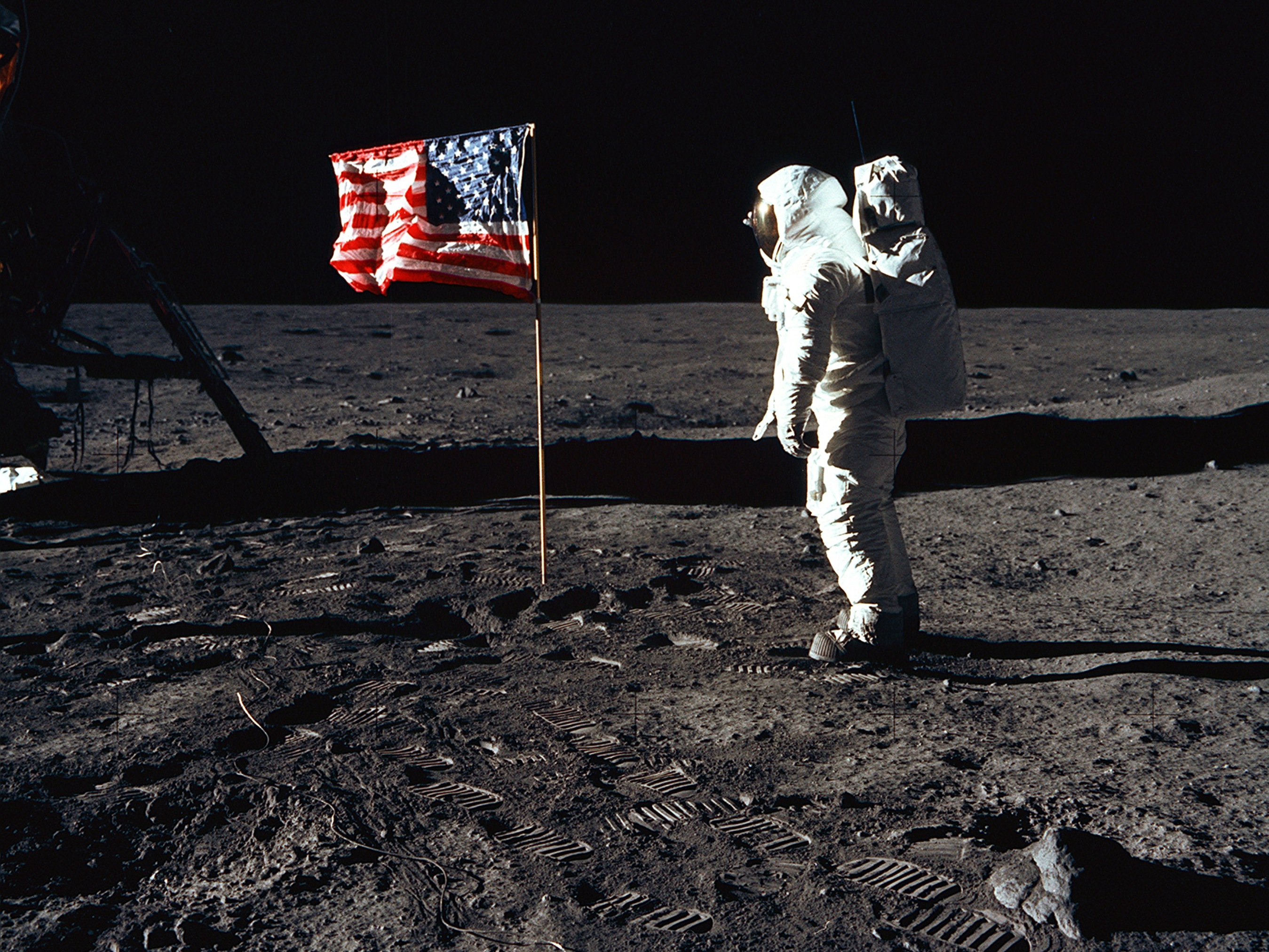
Apollo 11 moon landing. Astronaut Edwin E. “Buzz” Aldrin Jr. poses for a photograph beside the U.S. flag. Photo taken by Neil Armstrong.
We put a man on the moon 45 years ago. Apollo 11 was the spaceflight that landed the first humans on the Moon on July 20, 1969. Six hours later, U.S. Astronaut Neil Armstrong became the first human being to step down onto the lunar surface, on July 21. As he stepped down from the space ship onto the surface, Armstrong declared “one small step for (a) man, one giant leap for mankind.” Astronaut Buzz Aldrin followed and spent slightly less than six hours on the Moon’s surface. Astronaut Michael Collins piloted the command spacecraft alone in lunar orbit until Armstrong and Aldrin returned to the space ship for the trip back to Earth. They returned to Earth and landed in the Pacific Ocean on July 24. That’s the last time the United States set out to accomplish something really big in the world – something that had never been done before – and it succeeded, with flying colors!
Happy 4th of July to all!
We proclaimed ourselves to be a nation by publishing the Declaration of Independence on July 4, 1776.
THE DECLARATION OF INDEPENDENCE
“When in the course of human events, it becomes necessary for one people to dissolve the political bands which have connected them with another, and to assume among the powers of the earth, the separate and equal station to which the Laws of Nature and of Nature’s God entitle them, a decent respect to the opinions of mankind requires that they should declare the causes which impel them to the separation.
We hold these truths to be self-evident, that all men are created equal, that they are endowed by their Creator with certain unalienable Rights, that among these are Life, Liberty and the pursuit of Happiness, That to secure these rights, Governments are instituted among Men, deriving their just powers from the consent of the governed, That whenever any Form of Government becomes destructive of these ends, it is the Right of the People to alter or to abolish it, and to institute new Government, laying its foundation on such principles and organizing its powers in such form, as to them shall seem most likely to effect their Safety and Happiness….”
THE PLEDGE OF ALLEGIANCE TO THE FLAG
We have been citing “The Pledge of Allegiance” since it was formally adopted by our representatives in the U.S. Congress in 1942. It reads as follows: “I pledge of Allegiance to the Flag of the United States of America, and to the Republic for which it stands, one Nation under God, indivisible, with liberty and justice for all”.
The Pledge of Allegiance was written by Francis Julius Bellamy, who wrote it as a young man while traveling in Massachusetts. He submitted it to a patriotic circular he became aware of called “Youth’s Companion”. “The Pledge” was published in the circular on September 8, 1892. Following its publication, Bellamy described his reasons for writing it and for its “careful wording”:
“It began as an intensive communing with salient points of our national history, from the Declaration of Independence; with the makings of the Constitution; with the meaning of the Civil War; with the aspiration of the people…”. “The true reason for reciting allegiance to the Flag is … to make it clear that we are “One Nation” – the One Nation which the Civil War was fought to prove. To make that One Nation idea clear, we must specify that it is indivisible, as Webster and Lincoln used to repeat in their great speeches.”
Francis Julius Bellamy was born on May 18, 1855 in Mount Morris, NY. He became a First Baptist Church minister and married Harriet Benton in Newark, NY in 1881, raised two sons, and spent most of the last years of his life living and working in Tampa, FL where he died on August 28, 1931 at the age of 76.
Now, in 2014, few U.S. citizens and others living in the U.S. and abroad seem satisfied with where the United States of America stands in the world on many issues of concern. Wars are still raging on, with or without U.S. involvement it seems everywhere, and U.S. soldiers, foreign civilians, foreign soldiers, and even young children are dying, or being maimed, needlessly.
Billions of people in the world live in poverty, including millions of U.S. citizens and non U.S. citizen and young children living in the U.S.. Yet we hear in the media that there are more millionaires now in the United States than ever before, and that income inequality in the U.S. has reached an all-time high, especially adversely affecting African-American and Latino youth populations in the U.S. the most. Yet it seems clear the majority of our representatives in the U.S. Congress, and the men and women serving in our state Legislature, and Governor Scott Walker, must be content with the deplorable situation this country finds itself in in spite of the above ideals embodied in our country’s broad declarations.
And while this injustice continues to take place in America and in Wisconsin, [“Injustice anywhere is a threat to justice everywhere”, said Dr. Martin Luther King, Jr. in his “Letter from a Birmingham Jail”, dated 16 April 1963], human-caused global warming of our planet’s atmosphere and oceans and the resulting climate catastrophes, [California’s long-standing drought and high wildfire numbers; Hurricane Katrina devastation; Midwest flooding; Hurricane Sandy; Supertyphoon Haiyan …] which many credible scientists have said are linked to a warming climate and oceans, are evidence enough that we ought as society begin to act in major ways to begin significantly reducing our collective greenhouse gas emissions to the urgent degree that what’s happening to our planet now demands. Because the crisis that is emerging worldwide is the result of decades and even centuries of a collectively massive amount of fossil fuels being burned, and therefore equally massive volumes of greenhouse gases being released to the atmosphere from the combustion – combustion of oil, natural gas, diesel fuel, and coal in power plants, jet engines, automobiles, trucks, ships, motorized recreational and work-related equipment, generators, food processing facilities, and other transportation and recreational devises, mostly by those who can afford it, as well as increases in emissions of other potent greenhouse gases (eg. methane releases from natural gas pipes and oil drilling and fracking activities, where they are allowed), and the positive feedback releases resulting from a warming planet even more (thawing rotting permafrost region from warming temperature releases powerful greenhouse gas methane in larger and larger quantities, resulting in even more warming, even more thawing and rotting permafrost, and so on…; it is essential that we act now before it’s too late.
This problem should not be viewed as insolvable. However, the likely impacts should be planned for and ample adaptation measures taken by all. In doing this, we can be guided by the words of President John F. Kennedy spoken on September 12, 1962 before a crowd of 35,000 people in the football stadium at Rice University in Houston, Texas:
“We choose to go to the moon in this decade and do the other things, not because they are easy, but because they are hard, because that goal will serve to organize and measure the best of our energies and skills, because that challenge is one that we are willing to accept, one we are unwilling to postpone, and one which we intend to win, and the others, too.”

As Albert Einstein said: “The significant problems we face today cannot be solved at the same level of thinking we were at when we created them.” Click on “About this Blog” to read about a socially just approach aimed at reducing greenhouse gas emissions while at the same time reducing economic inequality and poverty for people and families in the U.S. who demonstrate they burn significantly fewer fossil fuels over the course of a year than the average American.
This type of program (Conserve, NOW!) is doable and could be funded from reductions in capacity expansion of highways bridges, airports, power plants and major transmission lines, since the need (economic demand) for these costly and environmentally damaging tax-payer financed boondoggle projects would be reduced as a result of decreased use of fossil fuel derived energy by the public in driving cars, jet travel, home heating, electricity use, etc.. If need be, a carbon tax could also be applied to all fossil fuel combustion, no matter the use, to generate additional revenues for offering financial incentives to the everyone in the U.S. to reduce activities they engage in that require fuel burning.
In an April 23, 2013 interview with Space.com contributor Elizabeth Howell, Astronaut Eugene Cernan, who became the last man to walk on the Moon (in December 1972), shared his thoughts on how the Apollo missions achieved such grand success: “When Kennedy challenged us to go to the moon we didn’t know beans about it. “I was just a young lieutenant flying out in the West Pacific off aircraft carriers, and at that time I believed – and I think most other people did too – that they were asking us to do something that was impossible. And then all of a sudden we got involved – all of us. And the rest is history. Don’t tell me I can’t do it: I think that’s the America I grew up in.”
As Cernan prepared to climb up the lunar ladder for the last time on the Apollo 17 mission, the last maned spaceflight mission to the Moon, he paused and spoke these words:
“As I take man’s last step from the surface, back home for some time to come – but we believe not too long into the future – I’d like to just (say) what I believe history will record. That America’s challenge of today has forged man’s destiny of tomorrow. And, as we leave the Moon at Taurus–Littrow, we leave as we came and, God willing, as we shall return, with peace and hope for all mankind. Godspeed the crew of Apollo 17.”
He and his crewmates returned to Earth on Dec. 19, 1972.
The cost of not proceeding with any major Congressionally approved program to massively conserve on burning fossil fuels, NOW, will surely ultimately be astronomical. The costs will not only skyrocket, ending up in the trillions of dollars, and but the number of human and other animal lives lost will likely end up in the billions, all because we already have and we are continuing to burn unsafe quantity levels of fossil fuels, which is now scientifically linked to rising atmospheric greenhouse gas accumulations, rising surface and ocean temperatures, worldwide, and which is also scientifically linked to ultra-extreme weather climate disasters, such as the one presently being experienced at Okinawa, Japan. What more will it take for our government officials in the U.S. to begin taking appropriate scale actions?
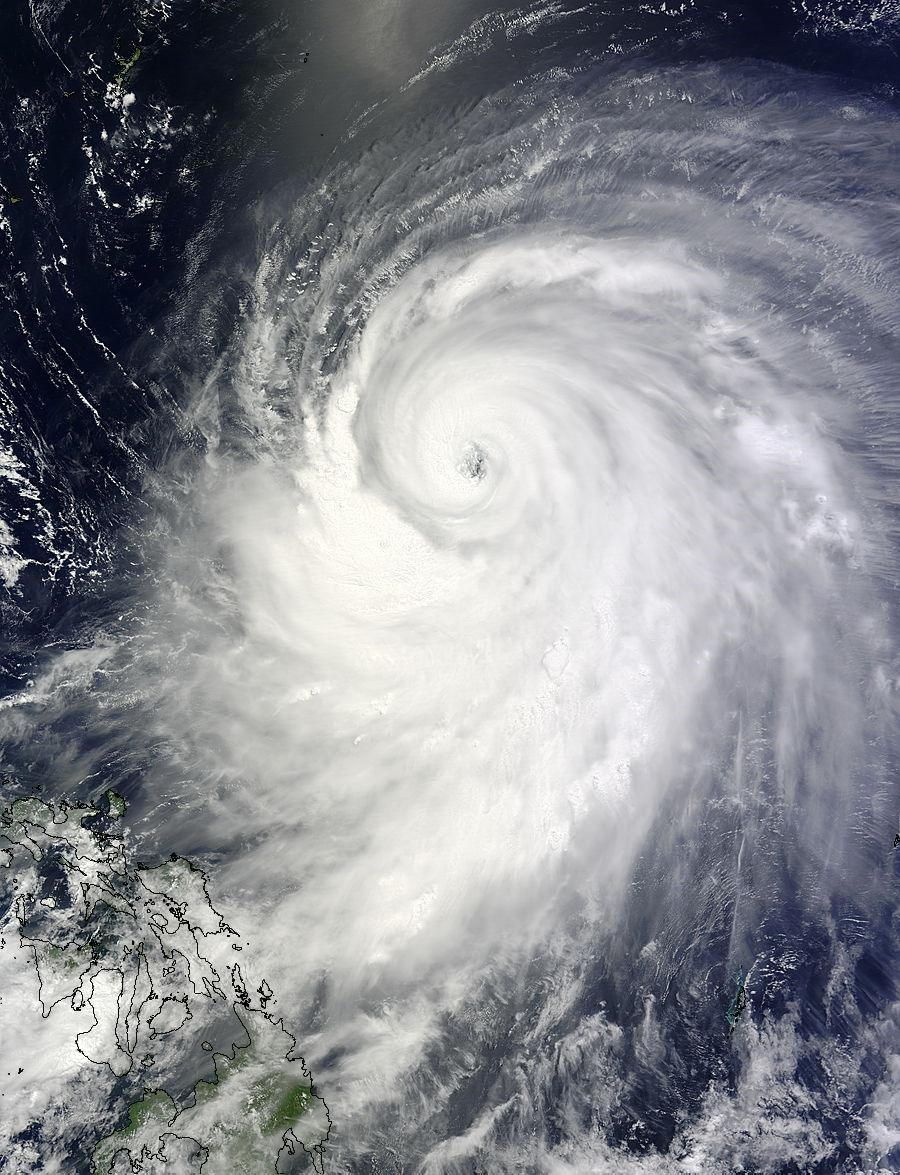
International Monetary Fund (IMF) Managing Director Blames Climate Change for Slow Economic Recovery

At a news conference Monday in Washington D.C., the IMF’s managing director, Christine Lagard, suggested climate change might be a factor in the U.S.’s slow economic recovery the past several years, and that it could make economic predictions more difficult in the future. Years of disappointing growth mean the economy might not reach full employment – which many economists say is when the unemployment rate is between 5 and 5.5 percent – for three more years, according to an Associated Press report on the IMF’s latest predictions.
In releasing the predictions, Lagard said: “extreme weather occurrences have repeated much more frequently in the past 20 years than the previous century,” she stressed. “That’s a reason to wonder about climate change and how to deal with it.”
Meanwhile, in Wisconsin, home state of former Senator Gaylord Nelson, who founded Earth Day and was a presidential “Medal of Freedom” recipient in 1995, the Wisconsin Department of Natural Resources (DNR) approved steps last week to allow a controversial Canadian tar sands crude oil pipeline expansion through Wisconsin closer to reality, according to a Wisconsin State Journal news report by Samara Kalk Derby. “The move immediately drew criticism from environmentalist”, said the report.
The crude bitumen contained in the Canadian oil sands is described by the National Energy Board of Canada as “a highly viscous mixture of hydrocarbons heavier than pentanes which, in its natural state, is not usually recoverable at a commercial rate through a well because it is too thick to flow.” Crude bitumen is a thick, sticky form of crude oil, so heavy and viscous (thick) that it will not flow unless heated or diluted with lighter hydrocarbons such as light crude oil or natural-gas condensate. At room temperature, it is much like cold molasses. Producing a barrel of oil from the oil sands produces three times more greenhouse gas emissions than a barrel of conventional oil, due to the heating and energy required to process and transport the heavy crude.
The DNR approved an air construction permit for expanding crude oil storage capacity at a Superior oil terminal owned by Houston Based Enbridge Energy Company, and located on the shore of Lake Superior, despite receiving more than 200 written comments and about 3,400 emails from the public on the proposed action.
Lake Superior is the upper most of the 5 Great Lakes and the largest freshwater lake by area in the world. According to a study by professors at the University of Minnesota Duluth, Lake Superior average water temperatures have increased by about 4.5 °F (2.5 °C) since 1979, compared with an approximately 2.7 °F (1.5 °C) increase in the surrounding average air temperature [Marshall, Jessica. (2007-05-30.) “Global warming is shrinking the Great Lakes.” New Scientist, via newscientist.com.]
The Sierra Club said the proposal triples the present capacity of the pipeline, creating the largest tar sands pipeline in the United States, according Kalk Derby’s report.
The DNR said it did environmental assessments for the pipeline companies projects in 2006 and in 2009. However, it did not do the more extensive “Environmental Impact Statement”, which requires a an a more detailed and in depth analysis as well as a series of public hearings, and which is required by the state Wisconsin Environmental Policy Act” of 1972 for all major projects “significantly affecting the quality of the environment”. The Wisconsin Environmental Policy Act (WEPA) is a state law designed to encourage environmentally sensitive decision-making by Wisconsin state agencies.
Gaylord Nelson: “Our goal is not just an environment of clean air and water and scenic beauty. The objective is an environment of decency, quality and mutual respect for all other human beings and all other living creatures.” [Part of Earth Day speech, April 22, 1970 – 1st Earth Day]
WMO: CO2 Concentrations Top 400 Parts per Million throughout Northern Hemisphere

Carbon dioxide levels throughout the northern hemisphere hit 400 parts per million (ppm) for the first time in human history in April, an ominous threshold for climate change, the World Meteorological Organization said on Monday.
The 400 ppm level in the atmosphere, up 40 percent since wide use of fossil fuels began with the Industrial Revolution, is rapidly spreading southwards. First recorded in 2012 in the Arctic, it has since become the norm for the Arctic spring.
The WMO expects the global annual average carbon dioxide concentration to be above 400 ppm in 2015 or 2016. Rising concentrations of the heat-trapping gas raise risks of more heatwaves, droughts and rising sea levels.
“Time is running out,” WMO Secretary-General Michel Jarraud said in a statement.
“This should serve as yet another wake-up call about the constantly rising levels of greenhouse gases which are driving climate change. If we are to preserve our planet for future generations, we need urgent action to curb new emissions of these heat-trapping gases.”
Almost 200 governments have agreed to work out a deal by the end of 2015 to slow climate change as part of efforts to limit the average temperature increase to two degrees Celsius (3.6 degrees Fahrenheit) above pre-industrial times.
Temperatures have already risen about 0.8C (1.4F).
In April, the U.N.’s panel of climate experts said that greenhouse gas concentrations, led by carbon dioxide, would have to be kept below 450 ppm to give a good chance of achieving the 2C goal.
The level of carbon dioxide in the atmosphere is seasonal, since plants absorb more in the summer months, causing a peak in the spring. The northern hemisphere, with more human-related sources of the gas, has a more pronounced seasonal cycle.
Carbon dioxide remains in the atmosphere for hundreds of years. It is emitted by fossil-fueled vehicles and coal-fired factories and power plants as well as by natural activities such as breathing.
During the last 800,000 years, the level of atmospheric carbon dioxide fluctuated between 180 ppm and 280 ppm, and has probably not been above 400 ppm for millions of years, scientists say.
With the widespread burning of coal and oil during the Industrial Revolution, the concentration of carbon dioxide rose to about 290 ppm by the end of the 19th century.
That accelerated last century, with levels between 370 and 380 ppm by the year 2000.
Mayday! Mayday! Mayday!

May 1, called May Day, historically was a fun-filled day for people to say goodbye to the long, cold winter and welcoming warmer weather, by gathering flowers, singing, and dancing.
May Day has also become know as also known as International Workers’ Day, Unions and union locals in the United States — especially in urban areas with strong support for organized labor — have maintained a connection with labor traditions through their own unofficial observances on May 1. Some of the largest examples of this occurred during the Great Depression of the 1930s, when hundreds of thousands of workers marched in May Day parades in New York’s Union Square.
International Workers’ Day is also the commemoration of the May 4, 1886 Haymarket affair in Chicago. The police were trying to disperse a public assembly during a general strike for the eight-hour workday when an unidentified person threw something at the police. The police responded by firing on the workers, killing four demonstrators. “Reliable witnesses testified that all the pistol flashes came from the center of the street, where the police were standing, and none from the crowd. Moreover, initial newspaper reports made no mention of firing by civilians. A telegraph pole at the scene was filled with bullet holes, all coming from the direction of the police On May 1, 2012, tens of thousands marched in the streets of New York and around the US to commemorate May Day as the worker’s holiday and to protest the dismal state of the economy, the growing divide between the rich and the poor and the status quo of economic inequality. Members of Occupy Wall Street and labor unions held protests together in a number of cities in the United States and Canada on May 1, 2012 to commemorate May Day.
This afternoon in Madison there is a May Day march and rally to the State Capitol for immigrant justice, worker’s rights, and a living wage for all, hosted by the Immigrant Worker’s Union. Marcher’s will be meeting at 3 pm at Brittingham Park of Monona Bay, Madison.
Tonight, the Industrial Workers of the World host a May Day celebration with live music, ols fashion labor singing, food, literature and solidarity from 6 – 10 pm at the Wilmar Center, 953 Jennifer Street.
“Mayday”, voiced three consecutive times, as done in the title, “Mayday! Mayday! Mayday!”, is a call for help used in maritime and aviation operations to broadcast that, unless we take major, significant, and TIMELY ALTERNATIVE ACTIONS (quickly), that reverse course – away from the3 status quo (business as usual), imminent doom for the planet and its inhabitants is inevitable.
Thus, a “Mayday! Mayday! Mayday!” call has collectively been sounded by the thousands of the United Nation’s Intergovernmental Panel of scientists who make up the IPCC and wrote and published the latest dire report on the status of our changing climate. What follows are some remarks they and others made following the report’s public release:
(Additions coming shortly.)
Earth’s future ability to sustain life will be directly incumbent are the success of us here today in reducing enough fossil fuel burning, fast enough, and in reversing the deforestation and paving of the earth with cement. We must contact our governmental officials, who we collectively chose to represent our interests, and demand they take immediate major actions to begin to combat not only global warming, but also income inequality, poverty and hunger and other condition of human injustice.
Energy efficiency is a key way to reduce the state’s carbon footprint and make customer energy bills more affordable. Innovative efficiency strategies, coupled with smart use of renewable resources, could position Wisconsin as a leader in climate and energy strategies for the 21st century.
See “Conserve, NOW” conservation solution which rewards those who burn less fossils fuels on an annual basis. Click on “About this blog” on page 1 for more information.
EARTH DAY ACTIONS – Madison, Wisconsin, and Washington DC

Madison, Wisconsin
As part of an organizing action of Global Climate Convergence and Wisconsin Wave, University of Wisconsin students, professors, teachers and other members of Madison area community marched down Madison’s State Street on the 44th Earth Day, Tuesday, April 22, 2014, with the purpose being to add to the public’s growing awareness and concern regarding the grave environmental threats and social injustices going on around them. The continuing and reckless mining and overuse of the earth’s valuable natural resources, often primarily for the profit of a few, was a common theme expressed at the march in posters and verbal forms. There was an overriding concern about the overuse of fossil fuels, metals, sand and gravel, to the great harm being inflicted upon the earth’s clean water and limited atmosphere, which are showing signs everywhere that they have reached the limit of sustainability for all of the earth’s future populations.
As reported in a April 23 article by Dana Kampa in The Daily Cardinal, titled “Madison environmental, social justice advocates converged on Earth Day” to “Protect our Water–Reject the Mines and Pipelines!”, mining in Wisconsin was cited as one of several significant environmental issues the protesters voiced concerned about.
Wisconsin used to be an environmental leader. It was the home of naturalist and writer Aldo Leopold; it was the first state in the country to ban the use of DDT as a pesticide on farmland; and it was the birthplace and home of U.S. Senator Gaylord Nelson, who founded Earth Day in 1970 and was instrumental in waking up the nation’s awareness of the damaging ecological, health and economic costs of air and water pollution and the need for tough federal and state laws and regulations to minimize it. The State of Wisconsin did just that in the decades that followed, maintaining and protecting its natural resources throughout the decades that followed.
But natural resource protection in Wisconsin took an about face in Wisconsin in November 2010 with the election of Republican Governor Scott Walker. After passage of a bill into law that allows for significant environmental degradation from ore mining in the state, an environmentally sensitive area of northern Wisconsin could ultimately become the home of the world’s largest open-pit iron ore mine. Wisconsin’s once strong environmental laws and regulations have been weakened, and environmentally conscious people throughout the state are rising up and taking notice.
The mine is proposed to be built by Gogebic Taconite and is currently undergoing review for development in the Penokee Hills, despite the fact that the mine would destroy a vast, water-rich ecosystem that President John F. Kennedy in 1963 called “a central and significant portion of the freshwater assets of this country” after his visit there.
The $1.5 billion mine would initially be close to four miles long, up to a half-mile wide and nearly 1,000 feet deep, but it could be extended as long as 21 miles. It lies in the headwaters of the Bad River, which flows into Lake Superior, the largest freshwater lake in the world. Six miles downstream from the site is the reservation of the Bad River Band of Lake Superior Chippewa, whose livelihood is threatened by the mine. Environmentally conscious citizens of Wisconsin are protesting, as evidenced by the Earth Day march in Madison.
The protesters also voiced strong concerns for the overall degradation being inflicted on Wisconsin’s landscape by frac sand mining, as well as the human health concerns which occur over time when people breath in silica sand fragments, and the noise and dust from the various digging, processing and trucking of the sand from the mining sites to drilling sites, located out-of-state, mostly in North Dakota. But student marchers also expressed major concerns about the overall future and well-being of the entire planet earth, as its oceans are warming, becoming more acid, while sea levels are arising, from melting ice and snow on land masses and due to the thermal expansion that occurs when water warms, and as the air at the surface continues its record warming. The adverse effects on people and animals from the increasing weather extremes associated with the warming (longer and more dangerous heat waves, worse flooding in some areas and larger areas of drought in others; more and higher coastal flooding with stronger and stronger storms); in other words, more devastation of human and animal life and real estate as the earth continues to heat up. Property and life insurance rates the world over are rising as a result.
The protesters began the march at Madion’s Monona Terrace building, which is Madison’s Convention Center (designed by architect Frank Lloyd Wright), and marched past the Wisconsin’s State Capitol Building, and then down State Street, where they convened at the UW campus Library Mall.
At the mall, several speakers referenced the latest projections made by the Intergovernmental Panel on Climate Change (IPCC), citing numerous examples of recent environmentally injurious governmental decisions of late, not just by our own state senators and representatives in the Wisconsin Legislature, but by current Wisconsin Republican Governor Scott Walker.
As most Wisconsinites know, Wisconsin has tens of thousands of individual and families living in poverty in the state, most who have been been able to just barely get by on the low income jobs they’ve been working up to now. Yet just this last November, the U.S. Congress voted to end the 2009 Recovery Act’s modest monetary increase in food share benefits (food stamps), by its failing to continue funding the Supplemental Nutrition Assistance Program (SNAP) benefits for poor individuals and families, cutting the funding source of the food budget for many thousands of Wisconsin individuals, families and their children on November 1, 2013. This action by our Congress resulted in a benefit cut for nearly every household receiving food share benefits. For families of three, the cuts amounted to $29 a month — November 2013 through September 2014, totaling a $319 for families of three for that period.
The Center on Budget and Policy Priorities said that the cut amounted to “a serious loss, especially in light of the very low amount of basic SNAP benefits available”, and that “without the Recovery Act’s boost, SNAP benefits will average less than $1.40 per person per meal in 2014”. Unfortunately, it is individuals and families eligible for receiving SNAP funding – a large percentage who are Blacks of African and American descent who live in Milwaukee or Dane (Madison area) counties, as well as many thousands of rural preschool age children, and minority families who have children enrolled in public elementary, middle or high schools throughout Wisconsin – who were hurt the most by the November 2013 federal SNAP program cut. Studies show these are the times of human life that are most essential for the child to receive proper nutrition – when their bodies demand the largest amount of good food to grow properly and function well while in school as well as play. When children of any race are deprived of good, nutritious food in their preschool and school age years they are more likely to be more anxious and distracted in school and elsewhere, and they are thus more prone to act in ways get them into trouble in school and elsewhere.
Studies show that when deprived of good, nutritious food at a very young age (2 – 6 years of age), any child, regardless of their race or ethnicity, will be impaired for life as those years are key in proper brain development. When family poverty results in these young children being fed less than nutritious food, or not enough food, during the ages of 2 to 6 years of age, it saddles these young children with impaired mental capabilities, making it more difficult for them to succeed when they enter school, and ultimately reduces their ability to compete for good grades and reduces their chances of succeeding in school and the work place, which can increase their risk of getting into trouble with the authorities and land in prison. To generate this sequence of events for children of families having limited income, in a country as wealthy as the U.S., is an American tragedy of intolerable proportions. Yet, inflationary food pricing brought on by likely global-warming-caused drought in large portions of the western United States, southwestern California in particular, over the past 3 years, and the harsh political decisions affecting Wisconsin’s poor families by our Wisconsin political representative have made this situation worse, especially for the large African-American and Latino populations living in and around Wisconsin’s two largest urban areas – Milwaukee and Dane Counties in particular.
Many who marched this Earth Day (Tuesday) in Madison claimed that they were totally outraged by the fact our own U.S. Representatives and Senators in the Congress have hugely shirked their responsibilities as government employees and public office holders by their continued refusal to initiate or act on legislation to significantly bring down annual U.S. emissions of greenhouse gases (GHG) to the atmosphere, both by each individual state, as well as the country as a whole, and fund the development of community strategies to adapt existing and needed infrastructure to handle higher flood waters and drier and hotter condition affecting water supply and air conditioning during heat waves for those who can’t afford it; while creating alert systems and emergency response networking as extreme weather events become more extreme and potentially deadly,as is predicted in the coming decades due to human-caused global warming.
Not only is there now clear evidence of global warming, nearly everywhere, but studies also show the warming is likely to accelerate, the longer countries, such as the high carbon dioxide emitting, or those projected to become high annual greenhouse gas emitters: United States, Canada, China; India; Australia; European counties; Southeast Asia countries, Brazil, and many of the more prosperous South and Central American countries that rely heavily on the tremendous greenhouse gas emitting aviation industry, as well as the many countries having large numbers of military transport vehicles, ships and aircraft and who them on a regular basis, for training purposes and in war, and the very lucrative cruise and airline tourist industries, all who continue to fail at drastically cutting their annual GHG emissions, to the detriment of future decades.
Scientists the world over have already essentially issued a RED ALERT and sounded the alarm bells on the looming state, national and worldwide threats that are now becoming reality as rapid global warming becomes reality. Economists have reported that major industries which depend greatly on a stable climate are unlikely to prosper when they begin to experience heavy losses as they already have because of increasingly severe droughts, unusually fast and heavy rainfalls causing terrible flooding.
It is a fact that every time someone on the planet burns fossil fuels, whether the fuel is gasoline that gets burned up in a car or a lawn mower, ATV, boat jet ski, snowmobile; or if its diesel fuel for running a truck, train, bus or generator, or whether its aviation (jet) fuel from a plane; or natural gas, oil, propane or any other fuel source burned in one’s furnace; more carbon dioxide is emitted into the atmosphere, where it mixes with the other GHG’s already present in the atmosphere.
During their march down State Street in Madison, participants chanted phrases such as “keep the oil in the soil, keep the coal in the hole,” “people power, not corporate power” and “beat back the frack attack, we’re gonna say no mine, GTAC” to promote their individual and collective goals.
Trudi Jenny, a 350 Madison member, said she thought the main message of the march was to “protect our waters.” She said she opposes climate disruption and pipelines.
“We hope that [people attending the rally] learn to become active in the climate change arena,” Jenny said.
Jenny also said she hopes people will write to their congresspeople about creating legislation to keep the planet healthy, promote a carbon tax and oppose a pipeline coming through Minnesota, and support divestment from fossil fuel industries.
Madison Action for Mining Alternatives member Carol Buelow said frack sand mines need more regulation, and bills altering iron mining regulation need to be repealed.
“I think people need to pay attention to the threats to our environment and do what they can to stop them,” Buelow said. “[Iron and frack sand mining] are very destructive to the environment, and they’re very poorly regulated, if at all. The state is doing a totally inadequate job of protecting the environment.”
Environmental advocate Brandi Browskowski-Durow, a public school teacher and University of Wisconsin-Madison School of Education graduate student, said she wants to see more environmental education in schools.
Browskowski-Durow added one of her biggest concerns about the frack sand mining industry is the development of silicosis, which is the accumulation of fine sand in the lungs.
“Right now, [the government is] allowing permits to be more lenient, especially in Wisconsin, and that’s not going to be good for future generations,” Browskowski-Durow said.
Self-described “raging granny” Rebecca Alwin said she thought the rally was a convergence of issues and uniting of progressive groups.
“Raging grannies typically don’t like walking this far, but I’ve got my good walking shoes on,” Alwin said.
Multiple peace marshals walked with the group to help the large group comply with the law and stay safe around traffic.
After the march, several speakers voiced their environmental concerns in a rally.
Federation of United Tribes spokesperson Larry Littlegeorge said he would like to see a complete stop to sand mine construction. He said he got involved when he heard about the potential creation of a 5,000-acre sand mine.
Littlegeorge connected his current concerns to Andrew Jackson’s Indian Removal Act moving all Native Americans west of the Mississippi River.
“Now in 2014, we have another forced removal,” Littlegeorge said. “The Federation of United Tribes is commissioned by the elders and their beliefs to stand up and be accountable for the rights of Mother Earth and for the people who are not in harmony and balance with one another.”
Speakers then led a traditional Native American dance, encouraging people to join hands in a line that eventually converged in the center of Library Mall.
350 Madison spokesperson Beth Esser addressed climate change policy for future generations, specifically her children at the rally.
“Like every parent out there, I want so many wonderful things for their future, but most importantly, I want a healthy, vibrant planet for them to live on,” Esser said. “The time has come to move beyond changing light bulbs.”
Esser also spoke of the fossil fuel divestment program on UW-Madison campus.
“If it is wrong to wreck the planet, surely it is wrong to benefit financially from doing so,” Esser said. “Together, we can put people, planet and peace over profit.”
Finally, Carl Whiting spoke of the No Keystone XL Pledge of Resistance’s opposition to building a pipeline through the Midwest to transport crude oil with civil disobedience.
“It’s high time we all got together, celebrating our collective vision for a healthy planet and flexing our collective muscle,” Whiting said. “All of us here are deeply concerned about the future, and rightly so.”
A rally coordinator said despite the smaller-than-expected turnout, the positive energy of the crowd was encouraging and empowering.
More Info:
For more information about the Global Climate Convergence in Wisconsin, go to https://wisconsinwave.org/global-climate-convergence-wisconsin-0
Regarding Earth Day news in Washington DC, USA Today journalist Paul Singer, who gives weekly reports to Wisconsin Public Radio’s “Central Times” show on Congressional activities, said nothing special for Earth Day was happening there, and that Earth Day is seldom celebrated in the nation’s capital, as it is perceived mostly as an celebration only by Democrats.

Our Children’s Future is being Sabotaged by the Failure of U.S. Congress and Wisconsin Politicians to Act NOW to Reduce Greenhouse Gases

Things have gone real bad for our natural and human environment in Wisconsin, and especially for poor Black children in the state, under the governorship of Scott Walker. There may still be time to fix things, but scientists the world over say now that “major action is needed and fast” – from everyday people, from all businesses, and especially from all current and acting government officials. It is morally wrong for them not to act now, both meaningfully and without delay, for the sake of today’s children. It is they who will face the brunt of global warming impacts as this century progresses.
The effects of rising greenhouse gas concentration level in the atmosphere are latent and slow to develop. But once they do – and they are beginning to do that now – those effects are long-lasting. Decades and centuries, not just years. And more warming also creates chain reactions, producing positive feedbacks that lead to more warming;for example, reducing snow and ice cover at the poles leads to a reduction in albedo (reflection of Sun’s rays back out to space). Because less of the Sun’s radiation is reflected, more is absorbed by the darker (than snow) ocean, thus warming the ocean waters, which causes more snow and ice on the ocean to melt, reducing albedo at the poles even more, warming the water even more and so on. This has already been measured as happening now.
Another example of the positive feedbacks of more warming is that the Permafrost region, which covers one-fifth of the earth’s surface, is now thawing. The thawing of eons of organic material in the Permafrost causes the production and release of methane gas, which is another greenhouse gas (in addition to carbon dioxide and several others) that has 37-times the heat absorbing power of carbon dioxide in the earth atmosphere. This will add to the warming that is already occurring. Add the additional warming will cause even more methane to be released by the thawing Permafrost region. And so on. This dangerous compounding and reoccurring effect has already started as well.
It’s time to Conserve, Now! – for all children living today, and especially for those who follow them. Maybe by that time humans will find a way to safely combat the warming temperatures and rising oceans. But there is much yet that has to happen. The latest reports from the Intergovernmental Panel on Climate Change are out, and farming and consumption as practiced in the U.S. must change in many ways. Researchers say climate change has already cut yields of wheat and corn, reducing gains achieved by better farming technology. Meat and dairy production consumes vast amount of fossil fuel derived energy, and animal waste adds more methane to the atmosphere.
Making matters worse, world population is expected to hit nine billion by 2050. The world’s population needs to be reduced, not allowed to grow more rapidly. To do that, aid and education will need to be given to countries having out of control population explosions. We are morally obligated to help them on this for the sake of all humanity. Future and distant future populations need to be given a chance. To achieve that, all the world’s countries need to drastically reduce all activities causing the most greenhouse gases to be emitted by their people and industries, while everyone should be encouraging activities that will sequester greenhouse gases from the atmosphere (growing plants and trees, primarily). Some of this is starting now and such initiatives should be amplified in number and be heavily financed by countries that have historically deforested the world while burning up the most fossil fuels.
There should be only a minimum number of fossil fuel development projects developed, and only the most clean and energy efficient fuel should be taken from the earth for combustion. The goal should be to obtain as much power from wind, solar and and renewable energies as possible.

 All Things Environmental
Recent Comments