
Preserve Our Climate Petition to Protect U.S. Citizenry from Runaway Greenhouse Effect

Petition requesting the U.S. Congress members and President Barack Obama to adopt the proposal called “Conserve, NOW” which would reduce greenhouse gas emissions from the United States and create jobs in the areas of adding to and reconstructing infrastructure in cities and counties of the U.S. to accommodate and encourage less fossil fuel burning in transportation and fossil fuel derived energy presently used in homes.
U.S. Officially Submits Its Target 2025 Annual Greenhouse Gas Emissions to the United Nations, as Called for by the Framework Convention on Climate Change
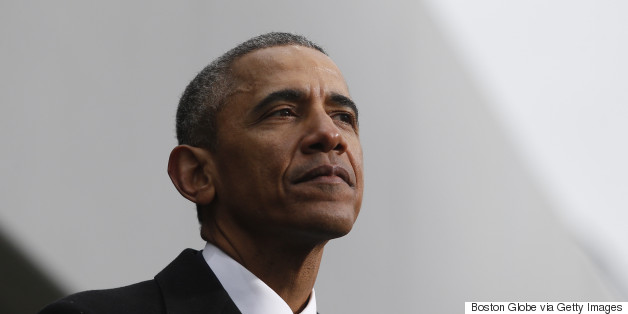
WASHINGTON – The United States officially submitted its emissions-cutting target to the United Nations on Tuesday morning, formalizing its commitment to reducing emissions 26 to 28 percent below 2005 levels by 2025.
The Obama administration had previously announced the goal in its work with China on a bilateral climate agreement. The Tuesday submission makes the pledge official.
“With today’s submission of the U.S. target, countries accounting for more than half of total carbon pollution from the energy sector have submitted or announced what they will do in the post-2020 period to combat climate change,” wrote Brian Deese, senior adviser to the president, in a blog post Tuesday morning.
Under a system established through the United Nations Framework Convention on Climate Change, individual countries are putting forward their own emissions commitments, referred to as Intended Nationally Determined Contributions, or INDCs. Countries are supposed to submit their INDCs to the U.N. by March 31. The submissions will be the basis for an international climate agreement, which leaders expect to reach at the upcoming negotiation session in Paris at the end of 2015.
The U.S. described its target as “fair and ambitious” in the U.N. document, and said that the country has already undertaken “substantial policy action to reduce its emissions.” The submission says that the U.S. is already on a path to reach its previously submitted goal of cutting emissions 17 percent by 2020, and the new commitment will require the country to speed up its rate of emissions reduction.
The European Union, Norway and Mexico submitted their commitments last week.
The Bicameral Task Force on Climate Change, which includes 34 Democratic senators and 83 Democratic House members, sent a letter to President Barack Obama on Tuesday praising the commitment. “One of the three pillars of the Climate Action Plan is to lead international efforts to address global climate change. As a nation that has contributed more than a quarter of all global carbon pollution, it is our responsibility to lead,” they wrote. “As a nation already feeling the effects and costs of climate change, it is also in our national interest to do so.”
Jennifer Morgan, global director of the climate program at the World Resources Institute, called the U.S. target “a serious and achievable commitment” in a statement. Based on WRI’s research, the U.S. can meet the goal by using existing federal authority, and make even further reductions as technology advances, Morgan said.
Other environmental groups were more critical of the submission, arguing that the U.S. could make a more ambitious commitment. Greenpeace legislative representative Kyle Ash said in a statement that the pledge “begins to treat the wound, but does not stop the bleeding.” “As the world’s second largest emitter, the US must strengthen its commitment to climate solutions before Paris to ensure an agreement that immediately spurs the necessary transition away from fossil fuels and towards 100 percent renewable energy,” said Ash.
The Obama administration is expected to face staunch opposition from the Republican-led Congress to any sort of international climate agreement. It remains unclear at this point whether the international agreement will be finalized as a treaty, which would require Senate approval, or take some other legal form that does not require approval. The Obama administration has long sought an alternative format to try to avoid a battle with the Senate.
By: kate.sheppard@huffingtonpost.com
Governor Walker’s Proposed 2015 -2017 State of Wisconsin Budget

Following are the comments I submitted by email on the governor’s proposed budget for July 1, 2015 to June 30, 2017.
Bad things can happen to good people. It happens all the time, and has occurred all throughout history. So when bad things, or threats, are predicted to occur or seem reasonably likely to occur, it’s best for one to take action, and involve others in removing the oncoming threat, before it gets realized and significant damage to life and our environment occurs.
Governor Walker’s biennial budget plan for Wisconsin for the next two years contains numerous threats to the people of Wisconsin and the state of Wisconsin’s natural resources. Some of those threats could have devastating and harmful impacts if they are allowed to occur without any attempts to prevent or ameliorate them.
Governor Walker’s budget plan as written will cause a great deal of harm for many thousands of Wisconsin’s people and their families. Some people who have worked their entire life at University of Wisconsin or UW-extension will likely lose their jobs, and the public who those people serve will lose out as well. Wisconsin’s elderly and disabled population, and families having children enrolled in Wisconsin’s excellent public school system will also suffer loses. Many hard working and dedicated school teachers and educational assistants serving special needs children will be without a job next fall if this budget is not revamped.
The governor’s budget also hurts those who watch over and protect our precious natural resources, both now and in the coming years, by cutting positions and land stewardship funds.
But really the worst thing about the governor’s budget is not what’s in it but rather what’s NOT IN IT BUT SHOULD IN IT. For example, despite Wisconsin’s aging population and increasing number of people who prefer not to drive, or who can’t drive because of the high cost of owning, maintaining and driving an automobile, the Walker budget proposes nothing new to help with mobility in the state, transit in particular. Rather, it borrows hundreds of millions of dollars to expand an already too large highway system at great environmental harm to the state, and for no good reason.
Numerous observations demonstrate that the climate of the Great Lakes Region, including Wisconsin’s climate, is changing. Average temperatures are getting warmer and extreme heat events are occurring more frequently. Total precipitation is increasing and heavy precipitation events are becoming more common. Winters are getting shorter and the duration of lake ice cover is decreasing over time. As a state, we should already be doing as much as we can to drastically cut back on our burning of fossil fuels but we seem to be doing almost the opposite. This tragedy grows in magnitude the longer it takes for our country and other countries to wean themselves off burning fossil fuels. There are many other unintended consequences of living in a fossil fuel burning dependent society.
But ironically, rather than then increasing substantially the funding of transit systems and the funding of positive financial incentive programs aimed at reducing greenhouse gas emissions and encourage walking and use of nonmotorized travel by state residents and businesses, the governor’s budget promotes more highway expansion. Instead, the state should reward those who drive less (miles), don’t fly, and minimizing their use of fossil fuel derived energy over the year. Use the money that Governor Walker’s budget borrows to fund a bigger highway system and a big new professional basketball arena instead – expenditures that not only subject state taxpayer to great financial risks but also promote adding millions more tons of greenhouse gases to the atmosphere including promoting jet airplanes flying of visiting teams and fans to the games.
Wisconsin Public Radio (part of state’s UW-extension) plans vacationing trips to Scotland and Australia, trips that not only release hundreds of millions of tons of greenhouse gases to the atmosphere but also give nothing back to the state’s own tourism businesses.
Governor Walker’s budgets include more trade promotions with foreign countries despite the fact that shipping products and working with foreign business interests similarly add millions and millions more tons of greenhouse gases to the atmosphere.
My plan would increase Wisconsin families’ and individuals’ annual income for polluting less and reducing the global warming threat, rather than adding to it. It would encourage Wisconsinites and Americans to buy from local entrepreneurs, whenever possible.
Governor Walker’s plan is to require a monthly drug test of food share (too low to begin with) recipients and proof of their having worked at least 80 hours at a place of employment before their receiving the meager food share benefits. It would do nothing to curb the rising income and employment inequalities and racial disparities in the state. The numbers of families and children living in poverty already will not be helped by Governor Walker’s budget. It is a fact that children of families living in poverty start their lives with a handicap because of many reason but the worst is that they do not receive adequate nutrition before and after they enter their school years. The governor’s budget insufficiently funds Wisconsin public schools and the families that live in poverty are disadvantaged in those schools from day one. Yet the governor’s budget does nothing to make up for previous cuts to public schools and add more financial stress for them by requiring them to pay vouchers for children attending private schools.
The budget should also refund the planned parenthood clinics the state had before Scott Walker took office. Certainly we ought not be adding to our human population pressures on the environment if we don’t have to.
Thank for the opportunity to submit my comments on the proposed state budget. For addition background on my concerns expressed here, please visit my blog at: http://www.allthingsenvironmental.com.
Antarctica’s Melting Getting Worse

We’d heard that the Western Antarctic glacier was rapidly melting. And if it does, it could raise the word’s ocean levels 11 feet.
Now comes news that the Eastern ice sheet may be headed in that direction, too. That would release the same amount of water, giving our grand children a lot of waterfront property where there isn’t any now.
A hundred years from now, humans may remember 2014 as the year that we first learned that we may have irreversibly destabilized the great ice sheet of West Antarctica, and thus set in motion more than 10 feet of sea level rise.
Meanwhile, 2015 could be the year of the double whammy — when we learned the same about one gigantic glacier of East Antarctica, which could set in motion roughly the same amount all over again. Northern Hemisphere residents and Americans in particular should take note — when the bottom of the world loses vast amounts of ice, those of us living closer to its top get more sea level rise than the rest of the planet, thanks to the law of gravity.
The findings about East Antarctica emerge from a new paper just out in Nature Geoscience by an international team of scientists representing the United States, Britain, France and Australia. They flew a number of research flights over the Totten Glacier of East Antarctica — the fastest-thinning sector of the world’s largest ice sheet — and took a variety of measurements to try to figure out the reasons behind its retreat. And the news wasn’t good: It appears that Totten, too, is losing ice because warm ocean water is getting underneath it.
“The idea of warm ocean water eroding the ice in West Antarctica, what we’re finding is that may well be applicable in East Antarctica as well,” says Martin Siegert, a co-author of the study and who is based at the Grantham Institute at Imperial College London.
The floating ice shelf of the Totten Glacier covers an area of 90 miles by 22 miles. It it is losing an amount of ice “equivalent to 100 times the volume of Sydney Harbour every year,” notes the Australian Antarctic Division.
That’s alarming, because the glacier holds back a much more vast catchment of ice that, were its vulnerable parts to flow into the ocean, could produce a sea level rise of more than 11 feet — which is comparable to the impact from a loss of the West Antarctica ice sheet. And that’s “a conservative lower limit,” says lead study author Jamin Greenbaum, a PhD candidate at the University of Texas at Austin.
In its alignment with the land and the sea, the Totten Glacier is similar to the West Antarctic glaciers, which also feature ice shelves that slope out from the vast sheet of ice on land and extend into the water. These ice shelves are a key source of instability, because if ocean waters beneath them warm, they can lose ice rapidly, allowing the ice sheet behind them to flow more quickly into the sea.
The researchers used three separate types of measurements taken during their flights — gravitational measurements, radar and laser altimetry — to get a glimpse of what might be happening beneath the massive glacier, whose ice shelves are more than 1,600 feet thick in places. Using radar, they could measure the ice’s thickness. Meanwhile, by measuring the pull of the Earth’s gravity on the airplane in different places, the scientists were able to determine just how far below that ice the seafloor was.
The result was the discovery of two undersea troughs or valleys beneath the ice shelf — regions where the seafloor slopes downward, allowing a greater depth of water beneath the floating ice. These cavities or subsea valleys, the researchers suggest, may explain the glacier’s retreat — they could allow warmer deep waters to get underneath the ice shelf, accelerating its melting.
In this particular area of Antarctica, Greenbaum says, a warmer layer of ocean water offshore is actually deeper than the colder layers above it, because of the saltwater content of the warm water (which increases its density). And the canyons may allow that warm water access to the glacier base. “What we found here is that there are seafloor valleys deeper than the depth of the maximum temperature measured near the glacier,” Greenbaum says.
One of these canyons is three miles wide, in a region that was previously believed to simply hold ice lying atop solid earth. On the contrary, the new study suggests the ice is instead afloat.
The availability of warm water, and the observed melting, notes the study, “support the idea that the behaviour of Totten Glacier is an East Antarctic analogue to ocean-driven retreat underway in the West Antarctic Ice Sheet (WAIS). The global sea level potential of 3.5 m flowing through Totten Glacier alone is of similar magnitude to the entire probable contribution of the WAIS.”
For Richard Alley, a glaciologist at Penn State University, the new research hints at a possible solution to a question that scientists have long had about the planet’s past — and in particular the Pliocene epoch, beginning 5.3 million years ago, when sea levels were dramatically higher, by as much as 40 meters.
“The sea-level indicators from the Pliocene have suggested that an important amount of ice came out of East Antarctica into the ocean,” says Alley. “Sedimentary records offshore pointed in the same way, and recent modeling…shows the strong potential for this to have happened. This new paper adds to the evidence — the pieces are fitting together.”
One limitation of the study is that the scientists were not able to directly measure the temperature of ocean water that is reaching the glacier itself. While this could be done with robotic underwater vehicles or other methods, that wasn’t part of the study at this time. Thus, the conclusions are more focused on inferring the vulnerability of the glacier based on a number of different pieces of evidence — topped off by the fact that the glacier is, indeed, retreating.
“What we need now is a confirmation of the findings of the paper from oceanographic data, because it is one thing to find potential pathways for warm water to intrude the cavity, it is another to show that this is actually happening,” observes Eric Rignot, an Antarctica expert at the University of California, Irvine. “This paper comes short of the latter, but other research efforts are underway to get critical oceanographic information near Totten.”
For residents of the United States — and indeed, the entire Northern Hemisphere — the impact of major ice loss from Antarctica could be dire. If Antarctica loses volumes of ice that would translate into major contributions to sea level rise, that rise would not be distributed evenly around the globe. The reason is the force of gravity. Antarctica is so massive that it pulls the ocean toward it, but if it loses ice, that gravitational pull will relax, and the ocean will slosh back toward the Northern Hemisphere — which will experience additional sea level rise.
For the United States, the amount of sea level rise could be 25 percent or more than the global average.
[The U.S. has caused more global warming than any other country. Here’s how the Earth will get its revenge.]
Much as with the ocean-abutting glaciers of West Antarctica, just because a retreat has been observed — and because the entirety of the region implies a sea level rise of 11 or more feet were all ice to end up in the ocean — does not mean that we’ll see anything near that much sea level rise in our lifetimes. These processes generally are expected to play out over hundreds of years or more. They would reshape the face of the Earth – but we may never see it.
The problem, then, is more the world we’re leaving to our children and grandchildren — because once such a gigantic geophysical process begins, it’s hard to see how it comes to a halt. “With warming oceans, it’s difficult to see how a process that starts now would be reversed, or reversible, in a warming world,” Siegert says.
Update: This article was updated to correct the size of the Totten Glacier. According to Greenbaum, its floating portion (or ice shelf) is 90 miles by 22 miles in size.
The problem, then, is more the world we’re leaving to our children and grandchildren — because once such a gigantic geophysical process begins, it’s hard to see how it comes to a halt. “With warming oceans, it’s difficult to see how a process that starts now would be reversed, or reversible, in a warming world,” Siegert says.
By Chris Mooney March 16. 2015 in The Washington Post
President Obama’s Executive Order Committing Federal Government to Cutting Its Greenhouse Gas Emissions

President Barack Obama signed an executive order on Thursday committing the federal government to cutting its own emissions 40 percent by 2025 and pledging to increase the amount of renewable energy used by federal agencies to 30 percent.
-
[This is a good addition but still not nearly enough. States and everyday Americans all have to greatly reduce the things they do that contribute to their daily and annual greenhouse gas emissions, as does the rest of the world. The U.S. still has the highest per capita GHG emissions. Forty percent of world travel by air (a large emitter of GHGs) is by American recreation and business travel pursuits. This has to change! Click on: “About this Blog” to read about how our government really could help make this happen – Power to the People]
The executive order builds on a previous administration directive to cut emissions from federal agencies 28 percent by 2020, compared with 2008 levels. “We are well on our way to meet that goal,” Brian Deese, senior adviser to the president, said in a call with reporters Thursday. “That’s what’s motivating us today to chart out a new and even more aggressive goal going forward.”
The administration is also setting a goal of cutting the per-mile emissions from the agencies’ vehicle fleet 30 percent, it said. It estimates the total commitment across the federal agencies will save taxpayers $18 billion — funds that won’t be spent on energy.
Christy Goldfuss, managing director of the Council on Environmental Quality, said that by the end of 2014, the federal government had cut emissions 17 percent since 2008, putting it well on the way to meeting Obama’s earlier goal. Much of that has come through energy efficiency improvements in federal buildings and with the installation of renewables.
As of the end of 2014, renewable energy accounted for 9 percent of the federal government’s energy use, and Thursday’s directive wants to increase that to 30 percent by 2025. The Department of Defense has set its own goal of deploying 3 gigawatts of solar energy on its installations around the world by 2025.
The federal government is the single largest energy user in the United States, Goldfuss said, with 360,000 buildings and 650,000 vehicles. “Not only is our footprint expansive, our impact is as well,” she said.
The administration also argued that the push to reduce emissions in the federal government has effects across the private sector as well. To that end, the administration also released a scorecard to track emissions from major federal contractors such as Lockheed Martin, Boeing and General Dynamics, which the administration is also calling on to make reductions.
The White House estimates that with reductions from the agency and those of private suppliers, the administration can cut greenhouse gas emissions by 26 million metric tons in the next 10 years.
“These goals will make sure the federal government is leading by example and pushing the envelope on cutting emissions,” said Deese, adding that it will “demonstrate that we are going to stay on offense in pushing our clean energy and climate change objectives.”
John Kerry Calls Out Florida’s Ban On Saying ‘Climate Change’

Secretary of State John Kerry, challenging climate change deniers to face reality, not-so-subtly called out Florida Gov. Rick Scott’s (R) administration on Thursday for banning the term “climate change” from all government communications.
“We literally do not have the time to waste debating whether we can say ‘climate change,'” Kerry said in a speech hosted by the Atlantic Council. “We have to talk about how we solve climate change. Because no matter how much people want to bury their heads in the sand, it will not alter the fact that 97 percent of peer-reviewed climate studies confirm that climate change is happening and that human activity is largely responsible.”
News of Florida’a ban, which also extends to the term “global warming,” came to light over the weekend in a report by the Florida Center for Investigative Reporting.
Scott in May declined to say whether he believed in climate change, but has said repeatedly that he is is not convinced by the science.
Such thinking is far too prevalent in Washington, and politicians who ignore the facts will not be remembered favorably by those who will face global warming’s worst perils, Kerry said in his speech.
“If we fail, future generations will not and should not forgive those who ignore this moment, no matter their reasoning,” Kerry said. “Future generations will judge our effort not just as a policy failure, but as a collective moral failure of historic consequence. And they will want to know how world leaders could possibly have been so blind or so ignorant or so ideological or so dysfunctional and, frankly, so stubborn.”
Kerry called for transitioning away from “dirty sources of energy.” But, as Politico noted, he didn’t mention whether he would approve the proposed Keystone XL oil pipeline, which would link Canada’s oil sands to the U.S. Gulf Coast. The project, which needs State Department approval to cross an international border, has been awaiting Kerry’s decision since early February. He will hand his recommendation to President Barack Obama, who will make the final decision on the project.
Environmental groups opposed to the pipeline said Kerry’s failure to mention it may be a positive sign.
“While Kerry didn’t bring up Keystone, he sure brought up more and more reasons why it should be rejected,” Sierra Club legislative director Melinda Pierce told Politico. “And he’s absolutely right: Burning fossil fuels has long-term costs that have to be at the front of our minds when evaluating both the pipeline project and development of the tar sands.”
The Huffington Post | By Lydia O’Connor
Wisconsin Legislature Votes to Call “Extraordinary Sessions” for Wrong Reasons

Organizing committees of both the Wisconsin Senate and Wisconsin Assembly called both houses of the Wisconsin legislature into extraordinary sessions this week to pass a “right-to-work” bill, making it illegal for employers and labor unions to charge their employees and any new employees union dues as a condition of accepting employment. The Wisconsin State Journal reported in today’s newspaper edition that the full Senate could vote on this highly charged legislation (Senate Bill 44) as early as Wednesday and the Wisconsin Assembly could vote on this legislation (AB 61) as soon as Monday.
Governor Scott Walker has said he would sign the bill into law.
The Senate and Assembly organizing committees ought have called their “extraordinary” sessions to address what the State of Wisconsin ought do to protect its citizens from global warming and climate change instead. Greenhouse gas emissions, global warming and climate change are far more significant to the future of Wisconsin than are unions charging union dues in the state.
Governor Scott Walker Punts on Taking On Climate Change in Wisconsin’s State Budget and Other Walker Administration Decisions
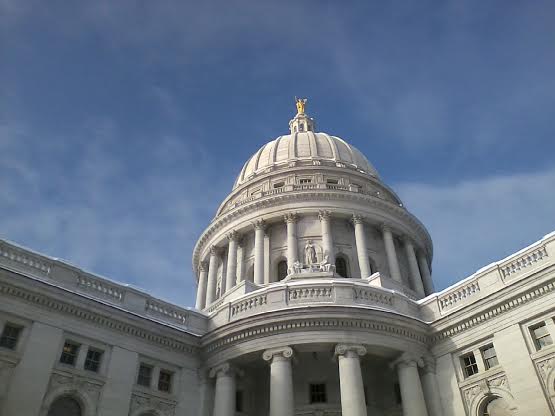
While other countries and U.S. states struggle with the deadly and extremely negative economic costs of dangerous storms made worse by warming oceans and rising sea levels caused by increasing greenhouse gases concentrations in the atmosphere, Wisconsin Governor Scott Walker has taken a pass on including anything in his two-year budget about how or to what degree the State of Wisconsin might reduce its annual greenhouse gases emissions and better adapt to the changing climate predicted for the future in Wisconsin. Governor Walker’s two-year state budget was forwarded to the Wisconsin Legislature earlier this month for adoption by July 1, 2015.
Much of what the governor’s budget proposes for the state will exacerbate the world’s chances of ever reducing climate change, or global warming, to a safe level. Scientists now say the changing climate around the world (global warming) is overwhelmingly human-caused and will be disastrous for the planet if the amounts of fossil fuels (coal, oil, natural gas) we are now burning are not significantly reduced and in a timely manner – now! – worldwide, and deforestation, over has been done over the last 100 – 150 years is stopped. Forests sequester carbon dioxide (CO2) as they grow, which is also the most abundant of the greenhouse gases emitted during fuel combustion.
While Wisconsin did experience a costly drought two years ago, and suffered through two recent killing heat waves in 1995 and 2011, the state has generally been spared from such massive destruction and loss of life as occurred in the Philippine Islands caused by Typhoon Haiyan U.S. states under hit by Hurricanes Sandy Sandy, Katrina and Ike, Hurricane Irene and increasing torrential rains and flooding around the world, heavier snowfalls, and long lasting droughts in California, other western states, and other areas around the world.
The economic costs of these catastrophes, especially those occurring in the United States, negatively effects all states in the U.S. through increased prices of goods, higher insurance rates, and the overall health of the U.S. economy.
Instead of addressing the inevitable economic and environmental effects of climate change and its causes in Wisconsin, Governor Walker instead chose to include in his two year budget proposal for the state many action items that, if enacted into law by the Wisconsin Legislature will, without question, add to the already abhorrently high human, economic and environmental costs of change climate here in Wisconsin and throughout the rest of the world. For example, Governor Walker’s two-year budget, which would begin taking effect in July 2015, expands numerous major highways in the state to increase their capacity to accommodate increased driving of cars and trucks, the vast majority of which burn fossil fuels. The governor’s budget proposes to contribute millions of dollars in state bonding to help the privately owned Milwaukee Bucks build a new arena for NBA games, games that require thousands of miles of jet travel each year for each visiting team as well as their fans and supporting personnel, adding measurably to rising volumes of greenhouse gases linked with global warming.
Furthermore, by not proposing other actions, many additional sources of greenhouse gases and pollution will continue and undoubtedly increase significantly in the next two years under the Walker administration and the current Republican legislature. Due to the lower price of crude oil, prices of fuel at the pump have dropped, leading to the purchase of less fuel efficient SUVs and trucks.
Americans and Wisconsinites need to drastically reduce their annual driving miles, and Governor Walker’s budget should have included positive financial benefits to encourage people to drive fewer and fewer miles each year, and compensate those individuals and Wisconsin families who manage to drive less miles, annually, than average – especially those individuals and families who don’t drive personal automobiles or fly airplanes (jet fuel is a fossil fuel and jets burn tons of fuel on each trip) during the year. The emission of greenhouse gases (GHGs) to the atmosphere from motorized transportation, jets, other internal combustion engines, as well as GHGs emitted from coal, oil, and natural gas burning power plants and household and business furnaces is “cumulative”, meaning the various emission of those gases accumulate in the atmosphere over time, rising to higher and higher levels of concentration in the atmosphere.
Scientists the world over have reached a level of consensus that the amount of GHGs present in the atmosphere are becoming increasingly of concern, more threatening each year that global warming worsens. Eventually, global warming could reach, or is close to reaching, its “tipping point” in the atmosphere – a level of accumulation of GHGs in the atmosphere after which the earth’s natural systems could keep adding more and more GHGs into the atmosphere, the point at which continued warming would become inevitable, regardless of what we humans do to reduce our GHG emissions. For example, as the permafrost region of the planet thaws (1/5 of earth’s surface exists in the form of permafrost), the GHG methane is released from the rotting permafrost. Methane is a much more potent GHG than CO2, and when the permafrost begins to thaw extensively, it will be releasing massive amounts of methane to the atmosphere, This would make matters much worse, because global warming would become less responsive, if responsive at all, to the amount of GHGs we humans cause to be emitted (or not to be emitted).
Positive Incentives Plan Wages Three-Prong-Attack Against Climate Change

Please refer to “About this Blog” before proceeding.
The planet Venus is on the left; Earth is on the right. Nobody wants to see Earth go the route its that its commonly called twin planet Venus took, eons ago. You see Venus once had oceans of water, too, just like Earth does. But something went very wrong on the surface of Venus (possibly it is because the Sun got hotter), which started a “runaway greenhouse effect”. The oceans of water Venus once had boiled away. As temperatures began rising ocean water converted to water vapor, also a strong greenhouse gas. The water vapor increased the effectiveness of heat trapping and accelerated the greenhouse effect, which caused the temperature at the surface to rise further, thus causing the oceans to evaporate faster, etc., etc. This type of runaway is also called a “positive feedback loop”. When the oceans were gone the atmosphere finally stabilized at a much higher temperature and at much higher density, making the planet uninhabitable.
The sobering warning for us is obvious: we have to be extremely concerned about processes such as burning of fossil fuels in large volumes that might have the potential to trigger a runaway greenhouse effect and produce on the Earth atmospheric conditions that are incapable of supporting life.
That is why it is so essential that we initiate actions now, worldwide, to curb all forms of unnecessary activity that causes the greenhouse effect in our atmosphere to strengthen (meaning an increase concentrations of greenhouse gases). Carbon dioxide (CO2), a greenhouse gas, has increased in concentration in the atmosphere from 280 parts per million (ppm) in the 1880’s to 400 ppm today – mainly the result of humans burning coal, oil. and natural gas, the combustion producing significant amounts of (invisible) CO2.
As a result, the global average annual temperature of the Earth at the surface has risen, the temperature of Earth’s oceans have been increasing and, as a result of the ice melting off of the island of Greenland, the continent of Antarctica, and water runs down the mountainous glaciers on practically all the continents, and the property of the thermal expansion of water, Earth’s oceans levels are rising.
Meanwhile, the Earth’s once solid permafrost region, which is approximately 1/5 of the Earth’s surface, is now thawing in many places, decomposing,and releasing methane to the atmosphere, a greenhouse gas 37 times as strong as CO2 in trapping heat.
Furthermore, replacement of large areas of ice and white snow surface (ice cap) on the Arctic Ocean means the open Arctic ocean water absorbs more of the radiant heat from the Sun, causing the ice and snow to melt even faster still, an so on. If it were not for the vast amounts of ice in the Arctic Ocean, the water would warm even faster.
It is essential that people and businesses, the world over, especially those in countries burning vast quantities of fossil fuels, in power generation, motorized transportation and jet travel, for human travel and shipping, find alternatives that don’t burn fossil fuels for their pursuits. Presently, citizens from the United States fly 40% more than citizens from other countries, and more U.S. citizens are buying gas guzzling SUVs and pickup trucks than more fuel efficient vehicles – because gas is “cheap” again, They remain apathetic about global warming, or are members of the “Earth is flat” society. As John Lennon once said, “apathy is it”. The Earth is also round. Above all, we need to Conserve, NOW!
Wisconsin Must Join the All Out World Effort to Fight Global Climate Change Without Delay, BEFORE Time Runs Out

Wisconsin has traditionally prided itself as being a state that “cares”. Wisconsin residents care about its wild and domestic animals, its fish, birds and butterflies; its plants, trees, and its forests; its tens of thousands of lakes, streams and rivers, and the quality of its wetlands, groundwater and air; its mighty bluffs and gorges, its remaining prairies, and the state’s overall majestic scenic beauty.
Wisconsin has traditionally had a strong manufacturing economy, a top notch agricultural industry, a public education system second to none, a world class university system, and an equally top notch private schools, colleges, and other educational institutions. Wisconsin also boasts an excellent highway, airport, and bicycle transportation system, and communities that are walking and wheelchair friendly. It has always held all visitors to the state in high regards and treated them with respect the production and sustainability of its farms, the well being of its human population, without regard for race, heritage or creed. Wisconsinites treat visitors to their state with respect and dignity,satisfaction of its visitors and transients alike, and, perhaps above all, in leaving its land, water and its economy better condition than they received it. In a nutshell, that’s a statement of Wisconsin’s traditions and value, as I have come to know them.
Wisconsin residents often boast, and rightly so, that Wisconsin was the home of such renown conservationists and humanists as John Muir, Aldo Leopold, Senator Gaylord Nelson, Midge Miller and Vel Phillips. In the 1970s, Wisconsin was emulated by other states as the state to look at for developing effective environmental protection regulations to safeguard its treasures. With Wisconsin Departmental Resource Secretary Anthony “Tony” Earl at the helm, who would later become Wisconsin’s governor, and George “Knute” Knudson as its chief naturalist, Wisconsin natural resources were in good hands.
It is no exaggeration to say that all this is at risk the longer our Wisconsin Legislature, our governor, other state legislatures and governors, and the people’s representatives in the United States Congress continue to kick the issue of excess fossil fuel burning and greenhouse gas production by Americans down the road. What we don’t need is more highway development and expansion and more airport capacity expansion that encourage even more fossil fuel burning by the public. What we don’t need is more trade with distant countries that requires more fuel for shipping and flying. What we don’t need are more coal and natural gas burning power plants and the thousands of miles of high voltage transmission lines that go with them, and not Wisconsin power companies who restructure their rates in favor of more fossil fuel burning, thus discouraging their customers from investing in solar energy panels for their homes and businesses, and having the governor’s appointed Wisconsin Public Service Commission (the PSC) “rubber stamps” the fossil-fuel-dependent utilities’ proposals.
We are wasting valuable time and money by not relying less and less on fossil fuel dependent energy, and more on either energy conservation or on conversion to solar and wind generated power, in our homes, businesses and institutions; and that we desperately need to reduce aggregate driving and flying, which rely almost exclusively on burning fossil fuels that, when subject to combustion, release large quantities of greenhouse gases, especially carbon dioxide (CO2), to the atmosphere. Most of the greenhouse gases, such as CO2, remain in the atmosphere for centuries, accumulating to increasingly more ominous concentration levels, or they get absorbed in the oceans, making the earth’s ocean water more acidic, harming the biological species in the oceans.
But scientists the world over are in agreement that the rising concentrations of greenhouse gases from significantly increased fossil fuel burning by humans since the time of the Industrial Revolution (early 1800’s) have remained in earth’s atmosphere, trapping more and more of the Sun’s radiant energy and changing it into heat energy, causing the earth’s surface to warm, melting more of the polar ice caps and mountain glaciers, causing the vast permafrost region to thaw, releasing more and more methane gas, another greenhouse gas that’s known to have 37 times the heat-trapping power of CO2.
Scientists don’t know when global warming could begin accelerating, but it could be any day now. What they do know is that there are higher concentrations of greenhouse gases in the atmosphere now to push global surface temperatures much higher than what we have experienced thus far. Time is of the essence for the world’s populations who are relying on fossil fuel burning for energy to stop adding even higher concentration levels of greenhouse gases to the atmosphere, risking setting off positive feedback mechanisms in the system that could worsen the situation and amplify the weather extremes global warming has already caused in earth’s climate.
 All Things Environmental
Recent Comments