
Positive Incentives Plan Wages Three-Prong-Attack Against Climate Change

Please refer to “About this Blog” before proceeding.
The planet Venus is on the left; Earth is on the right. Nobody wants to see Earth go the route its that its commonly called twin planet Venus took, eons ago. You see Venus once had oceans of water, too, just like Earth does. But something went very wrong on the surface of Venus (possibly it is because the Sun got hotter), which started a “runaway greenhouse effect”. The oceans of water Venus once had boiled away. As temperatures began rising ocean water converted to water vapor, also a strong greenhouse gas. The water vapor increased the effectiveness of heat trapping and accelerated the greenhouse effect, which caused the temperature at the surface to rise further, thus causing the oceans to evaporate faster, etc., etc. This type of runaway is also called a “positive feedback loop”. When the oceans were gone the atmosphere finally stabilized at a much higher temperature and at much higher density, making the planet uninhabitable.
The sobering warning for us is obvious: we have to be extremely concerned about processes such as burning of fossil fuels in large volumes that might have the potential to trigger a runaway greenhouse effect and produce on the Earth atmospheric conditions that are incapable of supporting life.
That is why it is so essential that we initiate actions now, worldwide, to curb all forms of unnecessary activity that causes the greenhouse effect in our atmosphere to strengthen (meaning an increase concentrations of greenhouse gases). Carbon dioxide (CO2), a greenhouse gas, has increased in concentration in the atmosphere from 280 parts per million (ppm) in the 1880’s to 400 ppm today – mainly the result of humans burning coal, oil. and natural gas, the combustion producing significant amounts of (invisible) CO2.
As a result, the global average annual temperature of the Earth at the surface has risen, the temperature of Earth’s oceans have been increasing and, as a result of the ice melting off of the island of Greenland, the continent of Antarctica, and water runs down the mountainous glaciers on practically all the continents, and the property of the thermal expansion of water, Earth’s oceans levels are rising.
Meanwhile, the Earth’s once solid permafrost region, which is approximately 1/5 of the Earth’s surface, is now thawing in many places, decomposing,and releasing methane to the atmosphere, a greenhouse gas 37 times as strong as CO2 in trapping heat.
Furthermore, replacement of large areas of ice and white snow surface (ice cap) on the Arctic Ocean means the open Arctic ocean water absorbs more of the radiant heat from the Sun, causing the ice and snow to melt even faster still, an so on. If it were not for the vast amounts of ice in the Arctic Ocean, the water would warm even faster.
It is essential that people and businesses, the world over, especially those in countries burning vast quantities of fossil fuels, in power generation, motorized transportation and jet travel, for human travel and shipping, find alternatives that don’t burn fossil fuels for their pursuits. Presently, citizens from the United States fly 40% more than citizens from other countries, and more U.S. citizens are buying gas guzzling SUVs and pickup trucks than more fuel efficient vehicles – because gas is “cheap” again, They remain apathetic about global warming, or are members of the “Earth is flat” society. As John Lennon once said, “apathy is it”. The Earth is also round. Above all, we need to Conserve, NOW!
Wisconsin Must Join the All Out World Effort to Fight Global Climate Change Without Delay, BEFORE Time Runs Out

Wisconsin has traditionally prided itself as being a state that “cares”. Wisconsin residents care about its wild and domestic animals, its fish, birds and butterflies; its plants, trees, and its forests; its tens of thousands of lakes, streams and rivers, and the quality of its wetlands, groundwater and air; its mighty bluffs and gorges, its remaining prairies, and the state’s overall majestic scenic beauty.
Wisconsin has traditionally had a strong manufacturing economy, a top notch agricultural industry, a public education system second to none, a world class university system, and an equally top notch private schools, colleges, and other educational institutions. Wisconsin also boasts an excellent highway, airport, and bicycle transportation system, and communities that are walking and wheelchair friendly. It has always held all visitors to the state in high regards and treated them with respect the production and sustainability of its farms, the well being of its human population, without regard for race, heritage or creed. Wisconsinites treat visitors to their state with respect and dignity,satisfaction of its visitors and transients alike, and, perhaps above all, in leaving its land, water and its economy better condition than they received it. In a nutshell, that’s a statement of Wisconsin’s traditions and value, as I have come to know them.
Wisconsin residents often boast, and rightly so, that Wisconsin was the home of such renown conservationists and humanists as John Muir, Aldo Leopold, Senator Gaylord Nelson, Midge Miller and Vel Phillips. In the 1970s, Wisconsin was emulated by other states as the state to look at for developing effective environmental protection regulations to safeguard its treasures. With Wisconsin Departmental Resource Secretary Anthony “Tony” Earl at the helm, who would later become Wisconsin’s governor, and George “Knute” Knudson as its chief naturalist, Wisconsin natural resources were in good hands.
It is no exaggeration to say that all this is at risk the longer our Wisconsin Legislature, our governor, other state legislatures and governors, and the people’s representatives in the United States Congress continue to kick the issue of excess fossil fuel burning and greenhouse gas production by Americans down the road. What we don’t need is more highway development and expansion and more airport capacity expansion that encourage even more fossil fuel burning by the public. What we don’t need is more trade with distant countries that requires more fuel for shipping and flying. What we don’t need are more coal and natural gas burning power plants and the thousands of miles of high voltage transmission lines that go with them, and not Wisconsin power companies who restructure their rates in favor of more fossil fuel burning, thus discouraging their customers from investing in solar energy panels for their homes and businesses, and having the governor’s appointed Wisconsin Public Service Commission (the PSC) “rubber stamps” the fossil-fuel-dependent utilities’ proposals.
We are wasting valuable time and money by not relying less and less on fossil fuel dependent energy, and more on either energy conservation or on conversion to solar and wind generated power, in our homes, businesses and institutions; and that we desperately need to reduce aggregate driving and flying, which rely almost exclusively on burning fossil fuels that, when subject to combustion, release large quantities of greenhouse gases, especially carbon dioxide (CO2), to the atmosphere. Most of the greenhouse gases, such as CO2, remain in the atmosphere for centuries, accumulating to increasingly more ominous concentration levels, or they get absorbed in the oceans, making the earth’s ocean water more acidic, harming the biological species in the oceans.
But scientists the world over are in agreement that the rising concentrations of greenhouse gases from significantly increased fossil fuel burning by humans since the time of the Industrial Revolution (early 1800’s) have remained in earth’s atmosphere, trapping more and more of the Sun’s radiant energy and changing it into heat energy, causing the earth’s surface to warm, melting more of the polar ice caps and mountain glaciers, causing the vast permafrost region to thaw, releasing more and more methane gas, another greenhouse gas that’s known to have 37 times the heat-trapping power of CO2.
Scientists don’t know when global warming could begin accelerating, but it could be any day now. What they do know is that there are higher concentrations of greenhouse gases in the atmosphere now to push global surface temperatures much higher than what we have experienced thus far. Time is of the essence for the world’s populations who are relying on fossil fuel burning for energy to stop adding even higher concentration levels of greenhouse gases to the atmosphere, risking setting off positive feedback mechanisms in the system that could worsen the situation and amplify the weather extremes global warming has already caused in earth’s climate.
Confirmed: 2014 Was Earth’s Hottest Year on Record
Ever since the horrendous loss of life, property and the desolation caused by Hurricane Katrina, which ravaged New Orleans and much of the Gulf of Mexico’s northern coastal lands and inland states in the U.S., and caused many deaths and injuries over the last few days of August 2005, people everywhere have become increasingly concerned about global warming causing more violent storms and causing other kinds of extreme weather (floods, droughts, heat waves), with the effects worsening and becoming more pronounced over time. For example, the gas carbon dioxide (CO2), which is a powerful GHG (and is invisible so we don’t see it) is emitted to the atmosphere in large quantities whenever large quantities of fossil fuels – such as coal, oil and natural gas – are combusted for heating or energy. CO2’s concentration level in the atmosphere has grown in magnitude from 280 parts per million (ppm) in the atmosphere during the 1800’s to 400 ppm in 2014, a 42% increase. Other GHGs have also accumulated along with rising CO2 concentrations, and their combined accumulated effect has caused the earth’s climate to change, now noticeably so, and mostly for the worse. Much of the change so far has been in the form of worsening extreme weather, such as stronger storms, heavier downpours and flooding, rising seas and warming surface waters. Other areas might be experiencing, hotter, longer and more deadly heat waves, and horrendous drought, such as the drought that has been taken place in the Southwestern U.S. over much of the last several years.
Hurricane Katrina, Hurricane Sandy, Super Typhoon Haiyan, severe rainfall and numerous tornadoes – all likely fueled by a warmer than normal atmosphere and warmer ocean water (plus the higher sea level) – are examples of what we can expect seeing more of in the future, if a moratorium were put in place worldwide today. [Hurricane Katrina was the deadliest and most destructive Atlantic tropical cyclone of the 2005 Atlantic hurricane season. It is U.S.’s costliest natural disaster, as well as one of the five deadliest hurricanes to hit U.S. land. At least 1,833 people died in the hurricane and subsequent floods and total property damage from Hurricane Katrina was estimated at $108 billion.] Greenhouse gas would continue to rise regardless of actions, increasing the costs, damages, human and animal lives lost due to the more hostile earth of the future. But things could get 10 times worse, and occur sooner if no action is taken. And things will get unbelievably bad the less we take action now to reduce overall GHGs added to the atmosphere, ever month.
Scientifically speaking, the greenhouse gases in the atmosphere keep our planet warm by absorbing and emitting radiation from the Sun through the process called the “greenhouse effect”. Without them, planet earth would be in a permanent frozen state, devoid of life. While a certain amount of some GHGs such as CO2 are necessary for life to prosper on earth, over the past few hundred years, humans have been adding to volume of GHGs in the atmosphere by increasing amounts, resulting primarily as a byproduct of their burning immense of fossil fuels, by extensive deforestation, and by their creation of immense amounts of methane from waste products, many from human waste disposal practices and from animal production and waste disposal. A melting permafrost region, which amounts to a fifth of the earth’s surface, is likely also contributing GHGs from anaerobic digestion.
The shear number of humans: billions of people who contribute only minor amounts of GHGs to the earth’s greenhouse effect because of the undeveloped nature of their economies, their lack of motorized travel, electricity, meat production, and consumption of foreign goods that require fossil fuel burning for shipment; and the millions who currently continue to cause the emission of billions of tons of greenhouse gases to our atmosphere, as if our atmosphere were just one large sewer, requiring no user fees for those who make massive GHG deposits over their lifetime.
As a result, the earth’s atmosphere is subject to what economist Garret Hardin called “the tragedy of the commons”. The tragedy of the commons occurs in situations in which multiple individuals, acting independently and rationally and in their own self-interest (in this case, burning fossil fuels in cars, airplanes, boats, buying products requiring mining, drilling, motorized transport, clear cutting…) ultimately deplete a shared limited resource (in this case, our atmosphere) even though it has become clear that it is not in anyone’s long-term interest, particularly for all future earth inhabitants, for this to happen. Ecologists and environmentalists often use the phrase “there is no free lunch” when people ignore the reality of the tragedy of the commons, and often expect Government to place limits on the activities that will otherwise lead to tragic consequences.
The year 2014 ranks as Earth’s warmest since 1880, according to two separate analyses by NASA and National Oceanic and Atmospheric Administration (NOAA) scientists released last Friday (Jan. 16). The 10 warmest years in the instrumental record, with the exception of 1998, have now occurred since 2000. This trend continues a long-term warming of the planet, according to an analysis of surface temperature measurements by scientists at NASA’s Goddard Institute of Space Studies (GISS) in New York.
In an independent analysis of the raw data, NOAA scientists also found 2014 to be the warmest on record. “NASA is at the forefront of the scientific investigation of the dynamics of the Earth’s climate on a global scale,” said John Grunsfeld, associate administrator for the Science Mission Directorate at NASA Headquarters in Washington. “The observed long-term warming trend and the ranking of 2014 as the warmest year on record reinforces the importance for NASA to study Earth as a complete system, and particularly to understand the role and impacts of human activity.”
Since 1880, Earth’s average surface temperature has warmed by about 1.4 degrees Fahrenheit (0.8 degrees Celsius), a trend that is largely driven by the increase in carbon dioxide and other human emissions into the planet’s atmosphere. The majority of that warming has occurred in the past three decades.
“This is the latest in a series of warm years, in a series of warm decades.
While the ranking of individual years can be affected by chaotic weather patterns, the long-term trends are attributable to drivers of climate change that right now are dominated by human emissions of greenhouse gases,” said GISS Director Gavin Schmidt.
While 2014 temperatures continue the planet’s long-term warming trend, scientists still expect to see year-to-year fluctuations in average global temperature caused by phenomena such as El Niño or La Niña. These phenomena warm or cool the tropical Pacific and are thought to have played a role in the flattening of the long-term warming trend over the past 15 years. However, 2014’s record warmth occurred during an El Niño-neutral year.
The GISS analysis incorporates surface temperature measurements from 6,300 weather stations, ship- and buoy-based observations of sea surface temperatures, and temperature measurements from Antarctic research stations. This raw data is analyzed using an algorithm that takes into account the varied spacing of temperature stations around the globe and urban heating effects that could skew the calculation. The result is an estimate of the global average temperature difference from a baseline period of 1951 to 1980.
RELEASE 15-01 – NASA, NOAA Find 2014 Warmest Year in Modern Record
Pope Speaks Out Against Global Warming

NBC News reports that Pope Francis is convinced that global warming is “mostly” man-made and that he hopes his upcoming encyclical on the environment will encourage negotiators at a climate change meeting in Paris to make “courageous” decisions to protect God’s creation. He explained the basis for his conclusion while en route to the Philippine Islands, where he is meeting this weekend with survivors of the 2013 Super Typhoon Haiyan, which the government has said was an example of the extreme weather conditions that global warming has wrought. Pope Francis, who has spoken out often about the “culture of waste” that has imperiled our environment, said “I don’t know if it (human activity) is the only cause, but mostly, in great part, it is man who has slapped nature in the face,” he said. “We have in a sense taken over nature”, he exclaimed.
“I think we have exploited nature too much,” the Pope said, citing deforestation and monoculture among the many human instigated causes. “Thanks be to God that today there are voices, so many people who are speaking out about it”, Francis said, adding that he pledged on the day of his installation as pope to make the environment a priority.
The Pope is the head of the Catholic Church which numbers 1.2 billion people around the world over. Catholics believe the Pope is infallible in his authority to make decisions for the Church, meaning he is incapable of making mistakes or being wrong.
Pope Francis is expected to public release his encyclical on ecology by June or July, 2015. He said he wanted it out in plenty of time to be read and absorbed before the next and final set of Intergovernmental Panel of Climate Change negotiations which opens in Paris in November 2015, especially considering that the last round of meeting in Lima, Peru, failed to reach an agreement.
The ultimate goal of U.N. climate negotiations is to stabilize greenhouse gases at a level that keeps global warming below 2 degrees C (3.6 F), compared with pre-industrial times.
WORT-FM Radio Show “Planet Earth: It Needs Our Help Now More Than Ever”

This past Labor Day, WORT-FM (89.9 FM), Madison (www.wortfm.org), broadcasted my proposed solution for reducing global warming & climate change. The program would offer government-provided positive financial incentives ($) to encourages people and families in Wisconsin who chose to minimize their global footprint by driving less than the average Wisconsin individual or family (or not driving at all), by not flying at all, and by using less fossil fuel derived energy during the year. The “Conserve, NOW program is further described in about this blog.
The Labor Day Access Hour show “Planet Earth: It Needs Our Help Now More Than Ever” starts with a brief introduction announcing the program followed by several songs containing lyrics applicable to the subject and further information on the program and sources of funding for carrying out. The thought is that much of the funding would eventually be paid back by reducing governmental spending on major environmentally disrupting infrastructure capacity expansions (highway developments, power plants and transmission line construction, airport runway construction and new airports), state and federally funded personnel such as highway and airport and transmission line planners and air traffic controllers. There would also be less cost and harm due to fewer motor vehicle crashes and airplane crashes due to heavier traffic.
Because it provides more income for individuals and families, it would also reduce the need for reliance on poverty assistance programs that provide food and subsidized housing, it would reduce homelessness, and by reducing these impediments, this would eliminate factors detrimental to education of young children.
Click here to listen to the show. It lasts a total of one hour.
Of course there are many other ways individuals, communities, nongovernmental organizations, business interests and others can reduce their annual global footprint in addition to driving and flying less
and using less energy derived from fossil fuels. Some of these include buying fewer consumer products most of which require fuel burning and mining or drilling in their development or use; buying locally produced products whenever possible (less energy used in transport); buying already used products and supporting organizations which only use recycled products; eating less or no meat products; supporting planned parenthood and humane societies that provide rescue animals for pets rather than buying from breeders; supporting organizations that promote reforestation not deforestation, and removal of paved surfaces and replacing them with green space, where ever feasible. Cities and businesses that attract large numbers of daily commuters should provide daily mass transit services to those locations, and the state should subsidize those municipalities who provide those services to outside-the-city locations – rather than put more even money into cement (greenhouse gas emitted in its production and application)for providing highway capacity expansion (which promotes even more driving).
The state, universities, public radio stations and other organization should stop coordinating long distance air travel trips to tourist spots around the world and events such as professional sports, actor/actress movie and music awards shows should be terminated. Major amounts of money, worldwide but especially by the U.S., should stop being funneled into fossil fuel using vehicles including most military airplanes. The U.S. should limit and eventually eliminate sending troops to foreign soils and establishing military bases and headquarters overseas.
– The Lorax
Study Recommends Fossil Fuels be Left in the Ground
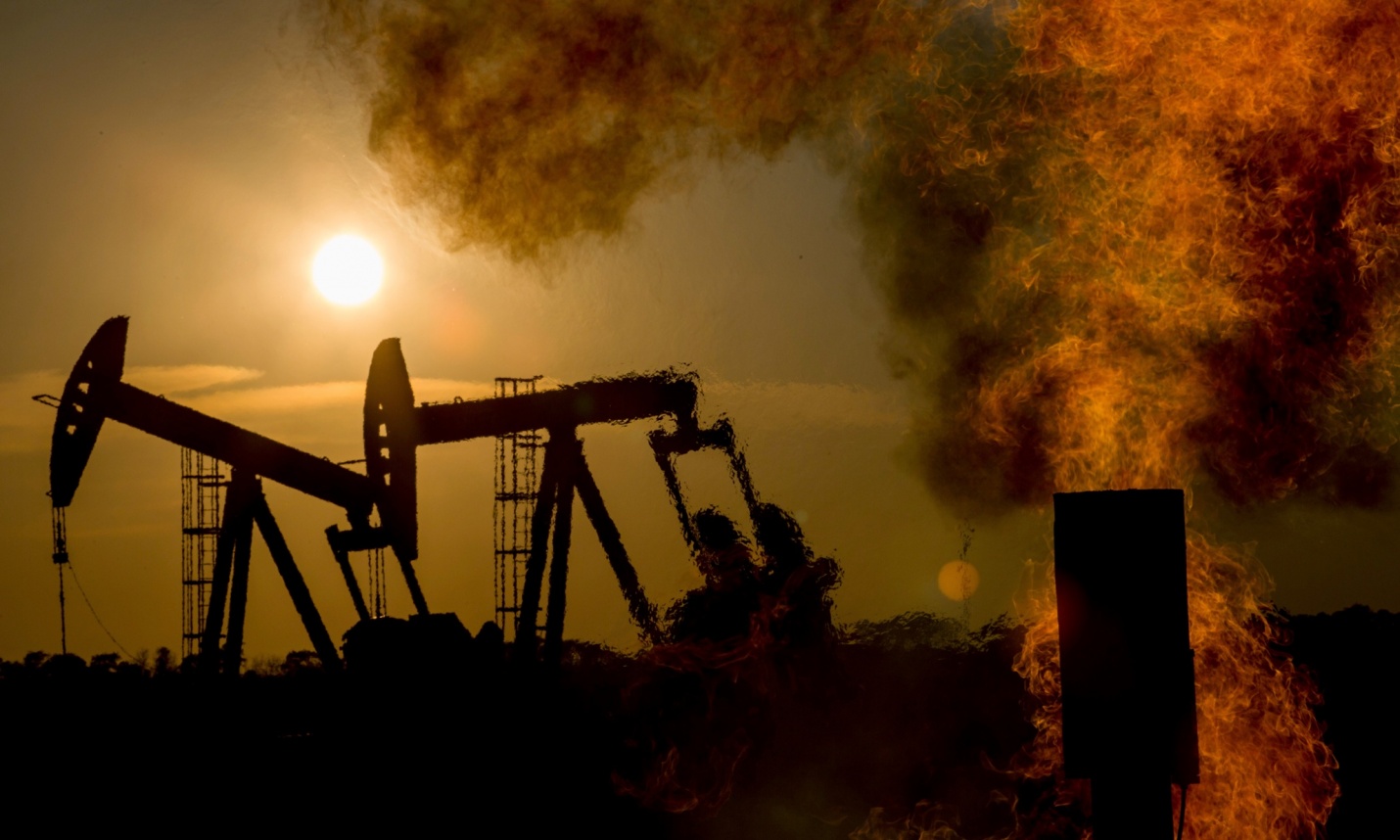
Trillions of dollars of known and extractable coal, oil and gas cannot be exploited if the global temperature rise is to be kept under the 2 degrees centigrade safety limit, a new report published in the journal Nature.
New research identifies which fossil fuel reserves must not be burned to keep global temperature rise under 2 degrees Celsius (3.6 degrees Fahrenheit), including over 90% of US and Australian coal and almost all Canadian tar sands. Trillions of dollars of known and extractable coal, oil and gas cannot be exploited if the global temperature rise is to be kept under the 2C safety limit, says a new report.
Vast amounts of oil in the Middle East, coal in the US, Australia and China and many other fossil fuel reserves will have to be left in the ground to prevent dangerous climate change, according to the first analysis to identify which existing reserves cannot be burned.
The new work reveals the profound geopolitical and economic implications of tackling global warming for both countries and major companies that are reliant on fossil fuel wealth. It shows trillions of dollars of known and extractable coal, oil and gas, including most Canadian tar sands, all Arctic oil and gas and much potential shale gas, cannot be exploited if the global temperature rise is to be kept under the 2C safety limit agreed by the world’s nations. Currently, the world is heading for a catastrophic 5C of warming and the deadline to seal a global climate deal comes in December at a crunch UN summit in Paris.
“We’ve now got tangible figures of the quantities and locations of fossil fuels that should remain unused in trying to keep within the 2C temperature limit,” said Christophe McGlade, at University College London (UCL), and who led the new research published in the journal Nature. The work, using detailed data and well-established economic models, assumed cost effective climate policies would use the cheapest fossil fuels first, with more expensive fuels priced out of a world in which carbon emissions were strictly limited. For example, the model predicts that significant cheap-to-produce conventional oil would be burned but that the carbon limit would be reached before more expensive tar sands oil could be used.
It was already known that there is about three times more fossil fuel in reserves that could be exploited today than is compatible with 2C, and over 10 times more fossil fuel resource that could be exploited in future. But the new study is the first to reveal which fuels from which countries would have to be abandoned. It also shows that technology to capture and bury carbon emissions, touted by some as a way to continue substantial fossil fuel use in power stations, makes surprisingly little difference to the amount of coal, oil and gas deemed unburnable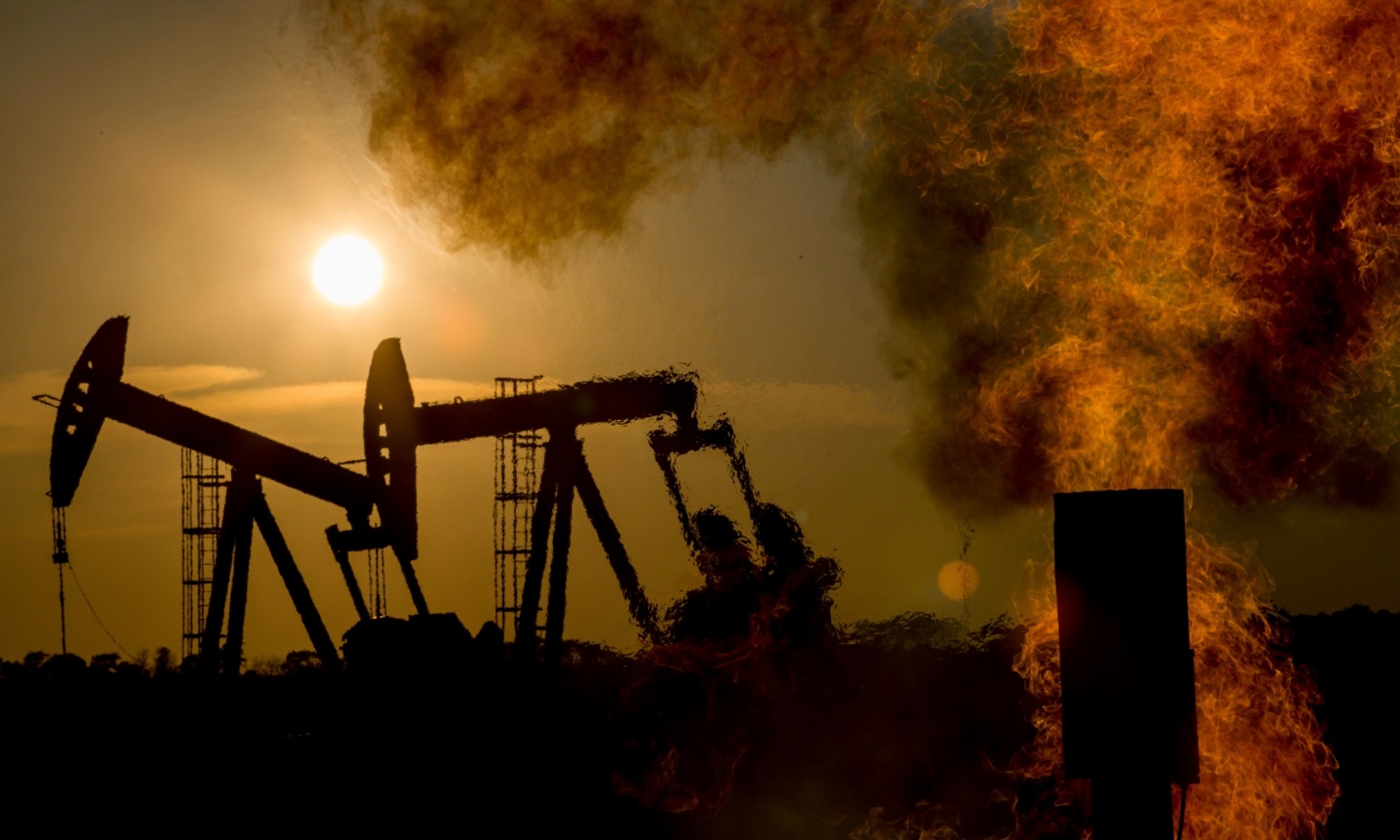 .
.
Countries in Lima, Peru Ought to Declare World War III Against Global Warming and Catestrophic Climate Change
A day after December 7, 1941, the day U.S. President Franklin Delano Roosevelt said “will live in infamy” when Imperial Japan attacked the U.S.naval base at Pearl Harbor, Hawaii, the United States entered World War II as the U.S.Congress declared against the Empire of Japan, which aimed to dominate Asia and the Pacific and was already at war with the Republic of China in 1937. World War II had already been initiated by the invasion of Poland by Germany and subsequent declarations of war on Germany by France and the United Kingdom. From late 1939 to early 1941, Germany conquered or controlled much of continental Europe, and formed the Axis alliance with Italy and Japan. In June 1941, the Axis alliance launched an invasion of the Soviet Union. Japan attacked the United States that December, European territories in the Pacific Ocean, and the Empire of Japan quickly conquered much of the Western Pacific.
But during 1944 and 1945 the Japanese suffered major reverses in mainland Asia in South Central China and Burma, while the Allies crippled the Japanese Navy and captured key Western Pacific islands and the war in Europe ended with an invasion of Germany by the Western Allies and the Soviet Union culminating in the capture of Berlin by Soviet and Polish troops and the subsequent German unconditional surrender on 8 May 1945. Following the Potsdam Declaration by the Allies on 26 July 1945, the United States dropped atomic bombs on the Japanese cities of Hiroshima and Nagasaki on 6 August and 9 August, 1945, respectively.
The Axis advance halted in 1942 when Japan lost the critical Battle of Midway, near Hawaii, and Germany was defeated in North Africa and then, decisively, at Stalingrad in the Soviet Union. In 1943, with a series of German defeats on the Eastern Front, the Allied invasion of Italy which brought about Italian surrender, and Allied victories in the Pacific, the Axis lost the initiative and undertook strategic retreat on all fronts. In 1944, the Western Allies invaded France, while the Soviet Union regained all of its territorial losses and invaded Germany and its allies.
The war in Europe ended with an invasion of Germany by the Western Allies and the Soviet Union culminating in the capture of Berlin by Soviet and Polish troops and the subsequent German unconditional surrender on 8 May 1945. With an invasion of the Japanese imminent, the possibility of additional atomic bombings, and the Soviet Union’s declaration of war on Japan and invasion of Manchuria; Japan surrendered on 15 August 1945. Thus ended the war in Asia, and the final destruction of the Axis bloc. During 1944 and 1945 the Japanese suffered major reverses in mainland Asia in South Central China and Burma, while the Allies crippled the Japanese Navy and captured key Western Pacific islands.Following the Potsdam Declaration by the Allies on 26 July 1945, the United States dropped atomic bombs on the Japanese cities of Hiroshima and Nagasaki on 6 August and 9 August respectively. With an invasion of the Japanese archipelago imminent, the possibility of additional atomic bombings, and the Soviet Union’s declaration of war on Japan and invasion of Manchuria, Japan surrendered on 15 August 1945. Thus ended the war in Asia, and the final destruction of the Axis bloc.
World War II altered the political alignment and social structure of the world. The United Nations (UN) was established to foster international co-operation and prevent future conflicts.
World War II altered the political alignment and social structure of the world. The United Nations (UN) was established to foster international co-operation and prevent future conflicts.
World War II was the most widespread war in history, it directly involved more than 100 million people from over 30 countries, and the major participants threw their entire economic, industrial and scientific capabilities behind the war effort, erasing the distinction between civilian and military resources. An estimated 50 to 85 million fatalities, including the Holocaust during which approximately 11 million civilian people, including more than 6 millions Jews, were killed. Up until, now, World War II was the deadliest conflict in human history.
Many thousands of people have already lost their lives and homes and businesses, those of their family, friends, and communities to extreme weather events brought about by the excessive collective burning of fossil fuels by humans over the last century which, coupled with excessive deforestation by humans, especially in the tropics, have resulted in unnaturally high concentrations of carbon dioxide and other greenhouse gas in the atmosphere, causing global warming, rising sea levels, a warmer and more acidic ocean and the loss of arctic sea ice and melting glaciers. The number of lives lost as a result of human-caused global warming will ultimately number in the billions, probably more. To be continued …
A Guide to the Lima Climate Change Talks

Representatives from more than 190 nations are meeting for talks in Lima, Peru (Dec. 1 – Dec. 14) to hammer out the draft of the first truly global pact to avoid the worst effects of climate change. The ultimate goal: signing a treaty a year from now in Paris. If successful, it would be the world’s most complex and encompassing treaty ever devised. The last attempt was in 2009 at the Copenhagen climate talks.
We already face significant and widespread climate change risks from the carbon pollution that has been accumulating in our atmosphere and oceans since the Industrial Revolution. Thanks largely to emissions from burning fossil fuels, the Earth is on pace to have its hottest year ever recorded, and warming of at least 1.5 degrees Celsius above pre-industrial levels is already locked in, according to a new World Bank report. Countries agreed to limit warming to 2 degrees, a level assumed to be relatively safe. Without steep cuts in fossil fuel use, people around the world will likely face catastrophic and irreversible repercussions by 2030 or 2040. In human terms, that’s about when today’s babies finish college.
Key Dates:
Dec 1–12, 2014—Negotiations in Lima, Peru
March 31, 2015—The target date for countries to present their plans for curbing climate change.
Nov. 30 – Dec. 11, 2015—Negotiations in Paris, where countries hope to sign an historic climate treaty.
The United States, China and the European Union are responsible for about half of the world’s climate changing emissions, so their actions have a huge impact.
India, as a rapidly growing source of harmful emissions, has to make a quicker shift to low-emission energy for any climate treaty to work. The country has not announced what it’s willing to do as part of the climate accord.
The developing countries bloc (LMDC) represents half the world’s population and most of the world’s poor. It’s a powerful counter-force to the United States and other wealthy nations. The group, which includes China, India, Pakistan, Saudi Arabia and more than 20 others, has pushed the U.S. and Europe to make much larger emissions cuts and to provide substantial funding and technological assistance to its member nations.
The big-money crowd, which includes global corporations, the World Bank, the International Monetary Fund and other international financial institutions, will be influential because they hold sway over many economies and the global flow of cash. That makes them key players in financing the global energy transition and in funneling aid to poor countries that need help adapting to climate change.
The World Resources Institute, Friends of the Earth, Oxfam and many other major environmental and social justice groups are important non-institutionalized voices and some are deeply involved in trying to shape a balanced and workable treaty.
A growing contingent of investment groups, foundations and major corporations, all of them with substantial funds at their disposal, is pushing for unequivocal action on climate change and making the argument that climate action is an opportunity not economic punishment.
For years, a split between rich and poor nations dimmed hopes at UN climate talks. Broadly put: Poorer countries want wealthier ones to promise deeper cuts in carbon emissions, and they want sufficient cash to kick start climate action they can’t afford. At Lima, it’s the same story. Here are the big issues countries must solve:
What’s a fair way to divide the costs and investments needed to limit greenhouse gas emissions and help countries adapt to climate change? Emission reductions and climate aid contributions are meant to be based on relative responsibility for climate change—but views differ on how to translate a “fair share” approach into concrete pledges from individual countries. There’s also ongoing tension over whether the treaty should increase its focus on adaptation, possibly by including pledges of financial and technological aid to help nations adapt to climate change effects that can’t be avoided.
How should island and poorer nations be compensated for the devastation they are already experiencing from climate change caused by other nations? The Philippines and many others want such “loss and damage” funds to be provided for in the treaty, while the U.S. and others have objected to that.
Should the climate treaty commitments be binding or voluntary? The United States, for example, wants the pact to be non-binding, while the Europe Union and developing countries want an enforceable treaty.
Should the world put a price on carbon through an international carbon-trading system to create a stronger incentive to shift away from fossil fuels.
The talks gained momentum after the United States, China and the European Union—all major polluters —made encouraging emission-reduction pledges ahead of the Lima talks. Some saw the fact that the U.S. and China announced their actions together as a sign that the two countries would not end up in a face-off during negotiations.
Others also found hope in the almost $10 billion in initial pledges for the Green Climate Fund, considered a critical factor in convincing developing nations to offer ambitious emission limits.
India could render the treaty ineffective if it opts to make an uninspired pledge toward limiting carbon emissions, or if it continues its aggressive build-out of new coal-fired power plants.
Countries rich in fossil fuels—Australia, OPEC nations, Russia and Canada—could block any effort that would reduce demand for their oil, gas and coal.
Least-developed nations or the Like-Minded Developing Countries could lose faith in the treaty talks, especially if they believe their needs and views are being given short shrift by developed nations, or if they think wealthy nations are not making commitments commensurate with their role in causing climate change. If that happens, the Lima conference could end with major issues unresolved, putting a Paris accord in jeopardy.
Fast for the Climate—A global demonstration on the first day of every month where people refuse to eat as a show of solidarity for people affected by climate change. On Dec. 1, the first day of climate talks in Lima, it was declared the world’s largest fast for the climate. Pacific Islanders—who face widespread destruction from rising seas—were heavily represented, with most residents of tiny Tuvalu participating, organizers said. Dec. 1 also marked the beginning of a tag-team fast, where climate leaders around the world take turns fasting for a day until the Paris talks next December.
Fossil of the Day—This shaming award from Climate Action Network International, first presented at climate talks in 1999, is bestowed on countries deemed to have done their “best” to block progress during negotiations. In Lima so far, the award has thus far been given to Australia, Austria, Belgium and Ireland for not contributing to the Green Climate Fund to help poorer nations; to Japan, for using climate funds to build coal plants in developing countries; to Switzerland for opposing legally binding finance commitments and warning that the issue could derail the treaty; to Australia, for opposing separate compensation for climate-related loss and damage (from extra-fierce typhoons, for example).
People’s Summit on Climate Change—A parallel event from Dec. 1-12 to remind negotiators that a global climate accord must respect the rights and wishes of citizens and social organizations. It’s a forum focused on climate justice, deforestation, social movements, farming, climate finance and other topics.
Light for Lima prayer vigil—A global, multi-faith prayer vigil illuminated by solar lamps to remind negotiators that the people are watching and praying for action on climate change. Digital vigil began Dec. 1, worldwide.
People’s March—A Dec. 10 protest march organized by the activist group Avaaz through the streets of Lima for “International Climatic Justice and Defense of Life Day.” The day is also International Human Rights Day.
Source: Elizabeth Douglass, Inside Climate News, Dec 6, 2014
Governments from Around the World Meeting in Lima, Peru to Lay Foundation for Addressing Climate Change, Wisconsin Governor Scott Walker Sends U.S. EPA Letter Opposing Climate Change Regulations

Building on the groundswell of worldwide climate action, and in preparation for concluding its Framework Convention of Climate Change in Paris in 2015, the United Nations and its participating governments from around the world have begun meeting 1 December, 2014 in Lima, Peru, and scheduled to close on 12 December, 2014, to lay the foundation for an effective new, universal climate change agreement in Paris in 2015 while also raising immediate ambition to act on climate change in advance of the agreement coming into effect in 2020.
The UN’s Intergovernmental Panel on Climate Change has this year warned against rising sea levels, storms and droughts as a result of unchecked greenhouse gas emissions, and highlighted the many opportunities of taking climate action.
Last week, the UN Environment Programme underscored the need for global emissions to peak within the decade and then to rapidly decline so that the world can reach climate neutrality – also termed zero net emissions – in the second half of the century.
Christiana Figueres, Executive Secretary of the UN Climate Convention said:
“Never before have the risks of climate change been so obvious and the impacts so visible. Never before have we seen such a desire at all levels of society to take climate action. Never before has society had all the smart policy and technology resources to curb greenhouse gas emissions and build resilience. All of this means we can be confident we will have a productive meeting in Lima, which will lead to an effective outcome in Paris next year.”
Meanwhile, Wisconsin Governor Scott Walker submitted comments this week in opposition of the Environmental Protection Agency’s (EPA) Clean Power Plan, which proposes increased regulations aimed at reducing carbon dioxide emission from Wisconsin’s power plants in Wisconsin. Walker’s letter claims that the proposed regulations would have a detrimental effect on Wisconsin’s manufacturing-based economy, as well as household ratepayers.
Walker says the Wisconsin Department of Natural Resources and Public Service Commission of Wisconsin have spent months reviewing the rule and seeking input from those who would be affected since its proposal in June of this year.
Governor Walker has asked the EPA to reconsider the rule based on the impact the rule will have on the cost and reliability of electricity, not only to Wisconsin’s manufacturing sector and the 455,000 people it employs, but on every ratepayer in the state and the nation.
In Lima, governments meeting under the “Ad Hoc Work Group on the Durban Platform for Enhanced Action” (ADP) need to define the scope and the type of contributions they will provide to the Paris agreement, along with clarity on how finance, technology and capacity building will be handled.
Countries will put forward what they plan to contribute to the 2015 agreement in the form of Intended Nationally Determined Contributions (INDCs) by the first quarter of 2015, well in advance of the Paris conference in December of next year.
The Lima conference needs to provide final clarity on what the INDCs need to contain, including for developing countries who are likely to have a range of options from, for example, sector-wide emission curbs to energy intensity goals.
Ms. Figueres welcomed the leadership of the EU, the US and China, who have publically announced their post-2020 climate targets and visions.
“It is hugely encouraging that well ahead of next year’s first quarter deadline, countries have already been outlining what they intend to contribute to the Paris agreement. This is also a clear sign that countries are determined to find common ground and maximize the potential of international cooperation,” she said.
“Countries are working hard to increase emission reductions before 2020, when the Paris agreement is set to enter into effect. Pathways on how to accomplish this will also be a key issue before nations in Lima,” she added.
Governments need to work towards streamlining elements of a draft agreement for Paris 2015 and explore common ground on unresolved issues in order to achieve a balanced, well-structured, coherent draft for the next round of work on the text in February next year.
In addition to progress made to date towards a Paris agreement, the political will of countries to provide climate finance is increasingly coming to the fore.
At a recent pledging conference held in Berlin, Germany, countries made pledges towards the initial capitalization of the Green Climate Fund totaling nearly $ 9.3 billion USD. Subsequent pledges took this figure to $ 9.6 billion, so that the $ 10 billion milestone is within reach.
“This shows that countries are determined to build trust and to provide the finance that developing countries need to move forward towards decarbonizing their economies and building resilience”, Ms. Figueres said.
In the course of the 2014, governments have been exploring how to raise immediate climate ambition in areas with the greatest potential to curb emissions, ranging from renewable energy to cities.
As part of the “Lima Action Agenda”, countries will decide how to maintain and accelerate cooperation on climate change by all actors, including those flowing from the Climate Summit in September, where many climate action pledges were made.
“We have seen an amazing groundswell of momentum building this year. One of the main deliverables of the Lima conference will be ways to build on this momentum and further mobilize action across all levels of society. Society-wide action in concert with government contributions to the Paris agreement are crucial to meet the agreed goal of limiting global temperature rise to less than two degrees Celsius, and to safeguard this and future generations,” Ms. Figueres said.
As climate change impacts worsen and impact the poor and most vulnerable, governments urgently need to scale up adaptation to climate change. The conference needs to agree on how National Adaptation Plans of developing countries will be funded and turned into reality on the ground. Countries will also work to agree a work program for the Executive Committee of the Warsaw International Mechanism for Loss and Damage, and elect the members of its Executive Committee.
Governments will work to scale up and coordinate the delivery of climate finance and of the various existing funds. A focus will be on identifying ways to accelerate finance for adaptation to climate change. Governments will also recognize the initial capitalization of the GCF, which is expected to reach USD $ 10 billion by the close of the Lima conference.
Countries meeting in Lima will further work to provide support to avoid deforestation. Several developing countries are expected to submit information which would make it possible for them to obtain funding for forest protection.
Governments meeting in Lima are expected to clarify the role of carbon markets in the 2015 global agreement and set a work program for next year to design and develop operations for implementing new market mechanisms.
As part of the efforts by countries to accelerate pre-2020 climate action, the secretariat is organizing a fair 5, 8 and 9 December in Lima to showcase how action is being scaled up and how many countries and non-state actors are taking action and setting an example.
Walker’s PSC Pitches Shutout for Wisconsin Utilities Against Public and Environment

Madisonians received a Thanksgiving greeting by Governor Scott Walker today in the form of increased monthly electric rates and reduced incentives for conserving on electricity in their homes. The Public Service Commission of Wisconsin (PSC), with two of its three commissioners appointed by Governor Scott Walker, granted its approval to the private utility Madison Gas & Electric’s (MG&E) proposal to significantly increase the monthly fixed charges its customers must pay, and its request to reduce the monetary benefits customer’s will save by conserving more on their power use.
This is the third major utility monopoly in the state to be granted such an approval by the state’s chief energy regulatory agency. Please see November 18, 2014 post “Public Service Commission of Wisconsin Doing Public a Disservice” for details on PSC’s approvals of the other two utilities’ requests (one for We Energies Corporation and the other for the Green Bay area Wisconsin Public Service Corp..
Despite PSC being given the mission “to protect the environment, the public interest and the public health and welfare of Wisconsin citizens” in its decisions, the Governor Walker’s appointed PSC commissioners Phil Montgomery and Ellen Nowak voted to make it more of a financial hardship for low income families and individuals to pay their energy bills. Eric Callisto, a Governor Doyle appointee to the Commission, voted no to all three utility proposals, which will also have negative impacts on everybody in the form of faster global warming and climate change because they slow the payback on residents of the state who invest in solar panels thus conserving on fossil fuel burning.
The MG&E decision will more than double the monthly fixed rate for Madisonians, from $10.50 a month to $19, while decreasing the charge for kilowatt-hour of power used. The increase is similar to two other two state utilities the PSC has already approved, one for the Wisconsin Public Service Corp., the other for We Energies.
As reported in Thursday’s issue of the Wisconsin State Journal, Callisto chastised fellow commissioners Montgomery and Nowak for supporting the new rate structure, saying they have ignored the comments of 1,100 people (including testimony) who have submitted comments urging the PSC to reject the MG&E plan, including people from the cities of Madison, Middleton and Monona, and other in Dane County.
“Shame on us”, Callisto said. “We have plainly disregarded our opportunity to protect the public interest.”
Madison Mayor Paul Soglin said “MG&E ‘s approved rate design is contrary to the city’s interests and will undermine energy conservation efforts, energy efficiency investments, and the newable energy investments in our community”, the State Journal reported.
Don Wichert, who helped organize RePower Madison, a citizens group opposed to the MG&E plan, said “our commission is now the worst commission in the country. It is clearly not the ‘public’ service commission”. the Wisconsin State Journal reported November 27th.
 All Things Environmental
Recent Comments