
Antarctica’s Melting Getting Worse

We’d heard that the Western Antarctic glacier was rapidly melting. And if it does, it could raise the word’s ocean levels 11 feet.
Now comes news that the Eastern ice sheet may be headed in that direction, too. That would release the same amount of water, giving our grand children a lot of waterfront property where there isn’t any now.
A hundred years from now, humans may remember 2014 as the year that we first learned that we may have irreversibly destabilized the great ice sheet of West Antarctica, and thus set in motion more than 10 feet of sea level rise.
Meanwhile, 2015 could be the year of the double whammy — when we learned the same about one gigantic glacier of East Antarctica, which could set in motion roughly the same amount all over again. Northern Hemisphere residents and Americans in particular should take note — when the bottom of the world loses vast amounts of ice, those of us living closer to its top get more sea level rise than the rest of the planet, thanks to the law of gravity.
The findings about East Antarctica emerge from a new paper just out in Nature Geoscience by an international team of scientists representing the United States, Britain, France and Australia. They flew a number of research flights over the Totten Glacier of East Antarctica — the fastest-thinning sector of the world’s largest ice sheet — and took a variety of measurements to try to figure out the reasons behind its retreat. And the news wasn’t good: It appears that Totten, too, is losing ice because warm ocean water is getting underneath it.
“The idea of warm ocean water eroding the ice in West Antarctica, what we’re finding is that may well be applicable in East Antarctica as well,” says Martin Siegert, a co-author of the study and who is based at the Grantham Institute at Imperial College London.
The floating ice shelf of the Totten Glacier covers an area of 90 miles by 22 miles. It it is losing an amount of ice “equivalent to 100 times the volume of Sydney Harbour every year,” notes the Australian Antarctic Division.
That’s alarming, because the glacier holds back a much more vast catchment of ice that, were its vulnerable parts to flow into the ocean, could produce a sea level rise of more than 11 feet — which is comparable to the impact from a loss of the West Antarctica ice sheet. And that’s “a conservative lower limit,” says lead study author Jamin Greenbaum, a PhD candidate at the University of Texas at Austin.
In its alignment with the land and the sea, the Totten Glacier is similar to the West Antarctic glaciers, which also feature ice shelves that slope out from the vast sheet of ice on land and extend into the water. These ice shelves are a key source of instability, because if ocean waters beneath them warm, they can lose ice rapidly, allowing the ice sheet behind them to flow more quickly into the sea.
The researchers used three separate types of measurements taken during their flights — gravitational measurements, radar and laser altimetry — to get a glimpse of what might be happening beneath the massive glacier, whose ice shelves are more than 1,600 feet thick in places. Using radar, they could measure the ice’s thickness. Meanwhile, by measuring the pull of the Earth’s gravity on the airplane in different places, the scientists were able to determine just how far below that ice the seafloor was.
The result was the discovery of two undersea troughs or valleys beneath the ice shelf — regions where the seafloor slopes downward, allowing a greater depth of water beneath the floating ice. These cavities or subsea valleys, the researchers suggest, may explain the glacier’s retreat — they could allow warmer deep waters to get underneath the ice shelf, accelerating its melting.
In this particular area of Antarctica, Greenbaum says, a warmer layer of ocean water offshore is actually deeper than the colder layers above it, because of the saltwater content of the warm water (which increases its density). And the canyons may allow that warm water access to the glacier base. “What we found here is that there are seafloor valleys deeper than the depth of the maximum temperature measured near the glacier,” Greenbaum says.
One of these canyons is three miles wide, in a region that was previously believed to simply hold ice lying atop solid earth. On the contrary, the new study suggests the ice is instead afloat.
The availability of warm water, and the observed melting, notes the study, “support the idea that the behaviour of Totten Glacier is an East Antarctic analogue to ocean-driven retreat underway in the West Antarctic Ice Sheet (WAIS). The global sea level potential of 3.5 m flowing through Totten Glacier alone is of similar magnitude to the entire probable contribution of the WAIS.”
For Richard Alley, a glaciologist at Penn State University, the new research hints at a possible solution to a question that scientists have long had about the planet’s past — and in particular the Pliocene epoch, beginning 5.3 million years ago, when sea levels were dramatically higher, by as much as 40 meters.
“The sea-level indicators from the Pliocene have suggested that an important amount of ice came out of East Antarctica into the ocean,” says Alley. “Sedimentary records offshore pointed in the same way, and recent modeling…shows the strong potential for this to have happened. This new paper adds to the evidence — the pieces are fitting together.”
One limitation of the study is that the scientists were not able to directly measure the temperature of ocean water that is reaching the glacier itself. While this could be done with robotic underwater vehicles or other methods, that wasn’t part of the study at this time. Thus, the conclusions are more focused on inferring the vulnerability of the glacier based on a number of different pieces of evidence — topped off by the fact that the glacier is, indeed, retreating.
“What we need now is a confirmation of the findings of the paper from oceanographic data, because it is one thing to find potential pathways for warm water to intrude the cavity, it is another to show that this is actually happening,” observes Eric Rignot, an Antarctica expert at the University of California, Irvine. “This paper comes short of the latter, but other research efforts are underway to get critical oceanographic information near Totten.”
For residents of the United States — and indeed, the entire Northern Hemisphere — the impact of major ice loss from Antarctica could be dire. If Antarctica loses volumes of ice that would translate into major contributions to sea level rise, that rise would not be distributed evenly around the globe. The reason is the force of gravity. Antarctica is so massive that it pulls the ocean toward it, but if it loses ice, that gravitational pull will relax, and the ocean will slosh back toward the Northern Hemisphere — which will experience additional sea level rise.
For the United States, the amount of sea level rise could be 25 percent or more than the global average.
[The U.S. has caused more global warming than any other country. Here’s how the Earth will get its revenge.]
Much as with the ocean-abutting glaciers of West Antarctica, just because a retreat has been observed — and because the entirety of the region implies a sea level rise of 11 or more feet were all ice to end up in the ocean — does not mean that we’ll see anything near that much sea level rise in our lifetimes. These processes generally are expected to play out over hundreds of years or more. They would reshape the face of the Earth – but we may never see it.
The problem, then, is more the world we’re leaving to our children and grandchildren — because once such a gigantic geophysical process begins, it’s hard to see how it comes to a halt. “With warming oceans, it’s difficult to see how a process that starts now would be reversed, or reversible, in a warming world,” Siegert says.
Update: This article was updated to correct the size of the Totten Glacier. According to Greenbaum, its floating portion (or ice shelf) is 90 miles by 22 miles in size.
The problem, then, is more the world we’re leaving to our children and grandchildren — because once such a gigantic geophysical process begins, it’s hard to see how it comes to a halt. “With warming oceans, it’s difficult to see how a process that starts now would be reversed, or reversible, in a warming world,” Siegert says.
By Chris Mooney March 16. 2015 in The Washington Post
Cyclone Pam Is Just the Start
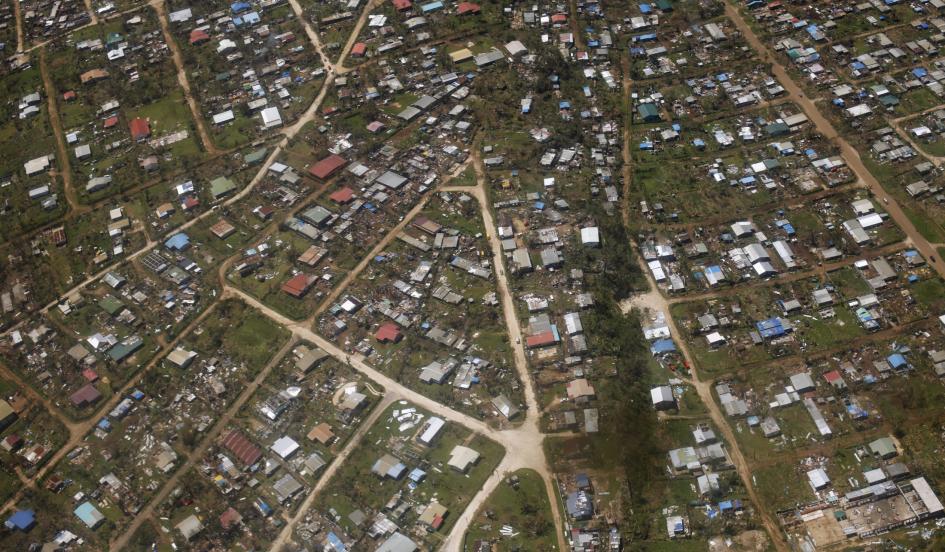
In the wake of island nation Vanuatu’s devastation by Cyclone Pam, in which 320 mile-per-hour winds killed dozens of people and destroyed 90 percent of the buildings in the capital city of Port Vila, public health experts fear that the country’s ruined infrastructure will result in mass starvation and epidemics of disease.
An aerial view of the destruction after Cyclone Pam hit Port Vila, capital city of the Pacific island nation of Vanuatu, on March 17, 2015. EDGAR SU/REUTERS
As the rate of global climate change continues to increase, such tragedies will become more and more common around the world. Vanuatu is not alone. New Yorkers, for example, received a dire warning recently from the New York City Panel on Climate Change: Sea levels and temperatures have risen dramatically over the past few decades, and that rise will only accelerate more rapidly in the coming years, putting the city at serious risk for flooding.
According to the report, mean annual temperatures have increased 3.4 degrees Fahrenheit in the past century, precipitation has increased 8 inches over the same time period, and sea levels in New York City have risen over a foot, which is twice the global rate of rising.
While these changes in temperature may seem insubstantial—none of us might notice, for example, if room temperature changed by a few degrees Fahrenheit—these changes have enormous implications for the environment and its inhabitants, particularly humans.
Take a look. Temperatures are projected to increase by nearly 6 degrees by 2050; heat waves will be more common; precipitation will increase up to 11 percent by 2050; and sea levels will rise up to 21 inches by 2050, up to 39 inches by 2080 and a worst-case situation of six feet by 2100.
As a result of climate change that has already occurred, we are now experiencing more powerful storms, resulting in more city damage. In Brooklyn, thousands of families were displaced by Hurricane Sandy, which flooded entire neighborhoods and ruined many homes, some of which have not been rebuilt. Worryingly, many experts now believe that a worse storm could occur within the next few years.
We cannot allow this to continue. The problem of global climate change requires a global solution. We must work with other nations and their people to support the development of renewable energy and to reduce emissions of carbon dioxide that contribute to drastic changes in our climate.
We already have much of the technology we will need. We have electric cars, commercially available in the United States at prices that decrease every year. We have wind turbines and solar panels, which continue to increase in capacity. None of these policies will, by itself, reverse the effects of climate change. But a flexible approach to the problem, in which we consider all of the possibilities, offers us considerable hope for the future.
This flexible approach to climate change is not a Republican or a Democratic idea. Regardless of our partisan affiliation, we all have a responsibility to protect our earth and its people, as well as a profound concern for the generations that will follow us.
Yet today there are still dinosaurs roaming the halls of Congress, who insist that we burn fossil fuels, and nothing other than fossil fuels, to produce our energy, a policy that will only exacerbate the problem.
Despite the challenges that exist, we remain optimistic. The women and men determining national policy on renewable energy and climate change are ultimately elected. If we raise our voices and organize on behalf of the broad interests of society as a whole, rather than the narrow interests of fossil fuel producers, we will influence the debate of climate change and elect leaders who are committed to this effort.
As the United Nations this year brings together representatives from every country to work toward a solution that accounts for the different needs of nations, we have a real opportunity to lead that process. President Barack Obama’s historic agreement with Taiwan and his recent trip to India, to emphasize and commit to greenhouse gas emission reductions, have the potential to provide a model for the entire world. This is an all-hands-on-deck approach to developing policies that reduce our dependence on fossil fuels and expand our capacity to create energy from renewable resources. No one is exempt.
We cannot afford delay, especially as Vanuatu-type storms become more common. With each year, the problem becomes more serious, and the range of potential solutions more limited.
We encourage you to demand action from your elected officials on this issue. We have the ability to mitigate the effects of climate change. We need only the resolve to act. Now is the time.
Yvette Clarke represents the 9th Congressional District of New York and serves on the House Energy and Commerce Committee. Dr. Michael Shank is director of media strategy at Climate Nexus and an adjunct faculty member at George Mason University’s School for Conflict Analysis and Resolution.
BY YVETTE CLARKE AND DR. MICHAEL SHANK 3/19/15
Newsweek
President Obama’s Executive Order Committing Federal Government to Cutting Its Greenhouse Gas Emissions

President Barack Obama signed an executive order on Thursday committing the federal government to cutting its own emissions 40 percent by 2025 and pledging to increase the amount of renewable energy used by federal agencies to 30 percent.
-
[This is a good addition but still not nearly enough. States and everyday Americans all have to greatly reduce the things they do that contribute to their daily and annual greenhouse gas emissions, as does the rest of the world. The U.S. still has the highest per capita GHG emissions. Forty percent of world travel by air (a large emitter of GHGs) is by American recreation and business travel pursuits. This has to change! Click on: “About this Blog” to read about how our government really could help make this happen – Power to the People]
The executive order builds on a previous administration directive to cut emissions from federal agencies 28 percent by 2020, compared with 2008 levels. “We are well on our way to meet that goal,” Brian Deese, senior adviser to the president, said in a call with reporters Thursday. “That’s what’s motivating us today to chart out a new and even more aggressive goal going forward.”
The administration is also setting a goal of cutting the per-mile emissions from the agencies’ vehicle fleet 30 percent, it said. It estimates the total commitment across the federal agencies will save taxpayers $18 billion — funds that won’t be spent on energy.
Christy Goldfuss, managing director of the Council on Environmental Quality, said that by the end of 2014, the federal government had cut emissions 17 percent since 2008, putting it well on the way to meeting Obama’s earlier goal. Much of that has come through energy efficiency improvements in federal buildings and with the installation of renewables.
As of the end of 2014, renewable energy accounted for 9 percent of the federal government’s energy use, and Thursday’s directive wants to increase that to 30 percent by 2025. The Department of Defense has set its own goal of deploying 3 gigawatts of solar energy on its installations around the world by 2025.
The federal government is the single largest energy user in the United States, Goldfuss said, with 360,000 buildings and 650,000 vehicles. “Not only is our footprint expansive, our impact is as well,” she said.
The administration also argued that the push to reduce emissions in the federal government has effects across the private sector as well. To that end, the administration also released a scorecard to track emissions from major federal contractors such as Lockheed Martin, Boeing and General Dynamics, which the administration is also calling on to make reductions.
The White House estimates that with reductions from the agency and those of private suppliers, the administration can cut greenhouse gas emissions by 26 million metric tons in the next 10 years.
“These goals will make sure the federal government is leading by example and pushing the envelope on cutting emissions,” said Deese, adding that it will “demonstrate that we are going to stay on offense in pushing our clean energy and climate change objectives.”
‘Green The Church’ Seeks To Mobilize Black Churches On Climate Change

Van Jones, founder of Green for All, is one of the leaders of a new effort to help organize black churches for action on climate change. (Photo by Chris Pizzello/Invision/AP)
Leaders of the “Green The Church” movement launched a new effort this week to help 1,000 African-American congregations take action on climate change.
Green The Church, its organizers said, “aims to bring the benefits of sustainability directly to black communities.” It includes a partnership between Green For All, the California-based environment and social justice organization, and the U.S. Green Building Council, which will work with churches on renewable energy and energy efficiency projects. It also seeks to “tap into the power of the African-American church as a moral leader and a force for social change,” through education and outreach to millions of black church-goers across the country.
“The black church has always joined hands with other faith traditions and stood on the front lines, as they did on ‘Bloody Sunday’ in Selma 50 years ago,” the Rev. Dr. Ambrose Carroll, a California-based pastor who founded Green The Church, said in a call with reporters Thursday. “So they must with climate change.”
Carroll said a lot of progress, such as efficiency retrofits and urban farming initiatives, can be made at the churches themselves. “We may not own a lot of real estate, but we do own church buildings,” he said.
The Rev. Dr. Otis Moss III, the senior pastor at Chicago’s Trinity United Church of Christ, said his church has already purchased 27 acres of land on which to build a new urban farm, housing, and health, education, and wellness centers. “It will be green from the ground up,” he said, adding that they want to promote the message that it’s “not only, ‘Say it loud, I’m black and I’m proud,’ but, ‘Say it loud, I’m green and I’m proud.'”
Green For All said it found in recent polling that three-quarters of minority voters expressed an interest in climate change and wanted to know more about it. Sixty-eight percent said they thought climate change threatens their communities.
“We get hit first and worst by everything negative in the pollution-based economy,” said Van Jones, the founder of Green For All and a current CNN contributor. Green The Church will advocate for “equal protection from the worst, and access to the best.”
By: kate.sheppard@huffingtonpost.com
John Kerry Calls Out Florida’s Ban On Saying ‘Climate Change’

Secretary of State John Kerry, challenging climate change deniers to face reality, not-so-subtly called out Florida Gov. Rick Scott’s (R) administration on Thursday for banning the term “climate change” from all government communications.
“We literally do not have the time to waste debating whether we can say ‘climate change,'” Kerry said in a speech hosted by the Atlantic Council. “We have to talk about how we solve climate change. Because no matter how much people want to bury their heads in the sand, it will not alter the fact that 97 percent of peer-reviewed climate studies confirm that climate change is happening and that human activity is largely responsible.”
News of Florida’a ban, which also extends to the term “global warming,” came to light over the weekend in a report by the Florida Center for Investigative Reporting.
Scott in May declined to say whether he believed in climate change, but has said repeatedly that he is is not convinced by the science.
Such thinking is far too prevalent in Washington, and politicians who ignore the facts will not be remembered favorably by those who will face global warming’s worst perils, Kerry said in his speech.
“If we fail, future generations will not and should not forgive those who ignore this moment, no matter their reasoning,” Kerry said. “Future generations will judge our effort not just as a policy failure, but as a collective moral failure of historic consequence. And they will want to know how world leaders could possibly have been so blind or so ignorant or so ideological or so dysfunctional and, frankly, so stubborn.”
Kerry called for transitioning away from “dirty sources of energy.” But, as Politico noted, he didn’t mention whether he would approve the proposed Keystone XL oil pipeline, which would link Canada’s oil sands to the U.S. Gulf Coast. The project, which needs State Department approval to cross an international border, has been awaiting Kerry’s decision since early February. He will hand his recommendation to President Barack Obama, who will make the final decision on the project.
Environmental groups opposed to the pipeline said Kerry’s failure to mention it may be a positive sign.
“While Kerry didn’t bring up Keystone, he sure brought up more and more reasons why it should be rejected,” Sierra Club legislative director Melinda Pierce told Politico. “And he’s absolutely right: Burning fossil fuels has long-term costs that have to be at the front of our minds when evaluating both the pipeline project and development of the tar sands.”
The Huffington Post | By Lydia O’Connor
Pete Seeger’s “My Rainbow Race” – His Award Winning Environmental Song

I hadn’t heard many of Pete Seeger’s songs over the years, not having followed folk music as intensely as I have followed rock and roll music. I knew he sang with Woody Guthrie, who wrote and made “This Land is Your Land”. I knew he was always an activist fighting for unions, social justice, civil rights, and environmental causes later in his life. So when I heard that he died, I tuned into http://www.WORTFM.org community radio, because I knew they would be playing many of his songs. I knew that, because I remember when John Lennon was killed in 1980 in NYC, I was listening to WORT when it was announced. It was sad, it was quiet for awhile, and then it was NON-STOP John Lennon and Beatles music the rest of the night on the radio for me. No commercials and very little other talk as well. But I digress. Anyway, of course they were playing Pete Seeger – “If I had a Hammer“.
Recently, I checked out a Seeger CD at the library simply called “Pete”. The music was recorded in the 1960’s. It had a song called “My Rainbow Race” which caught my attention. I read the liner notes from Pete Seeger on the booklet that came with the CD and he said he wrote the song in response to seeing and ad for people to submit song lyrics and the songwriter whose lyrics were chosen the winner would win an all expenses paid trip to Japan. Unfortunately, his song (“My Rainbow race”) didn’t win because he never heard back but he was glad he wrote the song anyway because he included it in his concerts the following 20 years!
Pete Seeger (May 3, 1919 – January 27, 2014) was inducted into the Rock and Roll Hall of Fame in 1996. He is credited with reviving and ensuring the survival of folk music. With the possible exception of Woody Guthrie, Seeger is the greatest influence on folk music of the last century. Born in New York City, he was the son of musicologist Charles Seeger. He took up the banjo in his teens and in 1938, at the age of 19, assisted noted folk archivist and field recorder Alan Lomax on his song-collecting trips through the American South. He soon began performing on banjo, guitar and vocals. In 1940, he formed a highly politicized folk trio, the Almanac Singers, which recorded union songs and antiwar anthems. They toured the country, performing at union halls for gas money, and recorded three albums. Woody Guthrie joined in 1941.
The Almanac Singers broke up with the advent of World War II. After a short stint in the army, Seeger formed the Weavers in 1948. They were a popular concert attraction who were at one point America’s favorite singing group. Their best-known numbers include such singalongs as “The Roving Kind,” “On Top of Old Smoky,” “Kisses Sweeter than Wine,” “Goodnight Irene” and “Wimoweh” (a.k.a. “The Lion Sleeps Tonight”). Their popularity cut across all boundaries. As American poet Carl Sandberg attested, “The Weavers are out of the grassroots of America. When I hear America singing, the Weavers are there.”
During the communist witch-hunts of the early Fifties, however, the Weavers were blacklisted, resulting in canceled concert dates and the loss of their recording contract with Decca Records. Under congressional subpoena to testify before the House Un-American Activities Committee, Seeger asserted his First Amendment rights, scolding the committee, “I am not going to answer any questions as to my associations, my philosophical or my religious beliefs, or how I voted in any election or any of these private affairs. I think these are very improper questions for any American to be asked.” Unlike many entertainers and writers who careers were ruined in the McCarthy era, Seeger stood his ground and persevered – even though he was sent to jail, albeit briefly, for defending his beliefs.
After leaving the Weavers in 1959, Seeger was signed to Columbia Records. He recorded prolifically for the label. His popularity hit a new peak with We Shall Overcome, a live album recorded at Carnegie Hall that is estimated to have sold half a million copies. Seeger is responsible for such folk standards as “If I Had a Hammer” (originally written by Seeger and Lee Hays of the Weavers as “The Hammer Song”) and “Where Have All the Flowers Gone.” Seeger’s one dalliance with the pop charts came in 1964, when his version of folksinger Malvina Reynolds’ exercise in suburban mockery, “Little Boxes,” reached #70. Seeger’s songs were also popularized by others, principally Peter, Paul and Mary (“If I Had a Hammer,” “Where Have All the Flowers Gone”) and the Byrds (“Turn! Turn! Turn!,” “The Bells of Rhymney”).
Though he had objected to Dylan’s use of electric instruments at the Newport Folk Festival in July 1965, Seeger himself recorded with electric guitarist Danny Kalb (of the Blues Project) two years later on his album Waist Deep in the Big Muddy and Other Love Songs. Seeger, with his outspoken commitment to the peace movement, often wrote directly or metaphorically of the Vietnam war in the Sixties. A tireless champion of causes, Seeger has devoted himself to environmental issues, particularly the cleanup of his beloved Hudson River.
In Seeger’s capable hands, from the Forties to the present day, a concert isn’t regarded as a one-way proceeding but a group singalong. Indeed, Seeger’s gently assertive insistence that his audience sing out can be read as a larger metaphor for the necessary involvement of citizens to insure the healthy functioning of democracy in America. Seeger has recorded and performed tirelessly throughout his career, honoring the folksingers’ timeless commitment to spread the word and involve an audience. “My ability lies in being able to get a crowd to sing along with me,” he said in a 1971 interview. “When I get upon a stage, I look on my job as trying to tell a story. I use songs to illustrate my story and dialogue between songs to carry the story forward.”
Pete Seeger passed away on January 27, 2014. He was 94.
One blue sky above us, one ocean lapping all our shore
One earth so green and round, who could ask for more?
And because I love you I’ll give it one more try
To show my rainbow race, it’s too soon to die
Some folks want to be like an ostrich
Bury their heads in the sand
Some hope that plastic dreams
Can unclench all those greedy hands
Some hope to take the easy way
Poisons, bombs, they think we need ’em
Don’t you know you can’t kill all the unbelievers?
There’s no shortcut to freedom
One blue sky above us, one ocean lapping all our shore
One earth so green and round, who could ask for more?
And because I love you I’ll give it one more try
To show my rainbow race, it’s too soon to die
Go tell, go tell all the little children
Tell all the mothers and fathers too
Now’s our last chance to learn to share
What’s been given to me and you
One blue sky above us, one ocean lapping all our shore
One earth so green and round, who could ask for more?
And because I love you I’ll give it one more try
To show my rainbow race, it’s too soon to die
One blue sky above us, one ocean lapping all our shore
One earth so green and round, who could ask for more?
Woody Guthrie – This Land is Your land
Friends of Woody Guthrie sing This Land is Your Land
Need for a Land Ethic: The Aldo Leopold Legacy

“The land ethic simply enlarges the boundaries of the community to include soils, waters, plants, and animals, or collectively: the land.”- Aldo Leopold
Published in 1949 as the finale to his book “A Sand County Almanac”, Leopold’s “land ethic” defined a new relationship between people and nature and set the stage for the modern conservation movement.
Leopold understood that ethics direct individuals to cooperate with each other for the mutual benefit of all. One of his philosophical achievements was the idea that this ‘community’ should be enlarged to include non-human elements such as soils, waters, weather, plants, and animals, “or collectively: the land.”
“That land is a community is the basic concept of ecology, but that land is to be loved and respected is an extension of ethics”, he said. This recognition, according to Leopold, implies individuals play an important role in protecting and preserving the health of this expanded definition of a community.
“A land ethic, then, reflects the existence of an ecological conscience, and this in turn reflects a conviction of individual responsibility for the health of land”, Leopold said. Central to Leopold’s philosophy is the assertion to “quit thinking about decent land use as solely an economic problem.” While recognizing the influence economics have on decisions, Leopold understood that ultimately, our economic well being could not be separated from the well being of our environment. Therefore, he believed it was critical that people have a close personal connection to the land.
“We can be ethical only in relation to something we can see, feel, understand, love, or otherwise have faith in”, he said.
Leopold’s “A Sand County Almanac” has prompted generations of people to take better notice – and care – of the natural environment. Aldo Leopold (January 11, 1887 – April 21, 1948) was the first research director at the University of Wisconsin Madison Arboretum and was closely involved in its design.
Madison Reads Leopold begins at 9:30 am at the Arboretum this Saturday, March 7, 2015 and is free and open to the public. Light refreshments will be available in the visitor center lobby. Brown-bagging is permitted but food must remain in the Visitor Center.
Madison Reads Leopold is a community celebration organized for to celebrate the life and legacy of Aldo Leopold and is sponsored by the Aldo Leopold Foundation.
The name “Aldo Leopold Weekend” has its roots in Wisconsin, where it is held annually the first full weekend of March has that official designation and Wisconsin communities across the state coordinate events that all happen at the same time. Leopold-themed events have spread far beyond the borders of Wisconsin since the event’s inception in 2000, and are now celebrated across the nation in various ways and at various times throughout the year! Events planned for the Madison celebration include a showing of the Green Fire film., an excellent documentary on the history of the environmental movement in the United States. At the Madison UW Arboretum there will also be readings from “A Sand County Almanac”, Leopold bench building workshops, round table discussions followed by hikes through the Arboretum itself. In short, lots of great things! The event in Madison is scheduled to go to 4 PM Saturday.
Study Finds 4,000 Lynchings in Jim Crow South

A new report has uncovered shocking details about the history of lynchings in the United States and their legacy today. After five years of exhaustive research and interviews with local historians and descendants of lynching victims, the Equal Justice Initiative found white Southerners lynched nearly 4,000 black men, women and children between 1877 and 1950 — a total far higher than previously known.
The report details a 1916 attack in which a mob lynched Jeff Brown for accidentally bumping into a white girl as he ran to catch a train. In an example from 1940, a crowd lynched Jesse Thornton for not addressing a white police officer as “mister.”
In many cases, the lynchings were attended by the entire white community in an area. The Equal Justice Initiative’s (EJI) “Lynching in America: Confronting the Legacy of Racial Terror” documents EJI’s multi-year investigation into lynching in twelve Southern states during the period between the Reconstruction and World War II. EJI researchers documented 3959 racial terror lynchings of African Americans in Alabama, Arkansas, Florida, Georgia, Kentucky, Louisiana, Mississippi, North Carolina, South Carolina, Tennessee, Texas, and Virginia between 1877 and 1950 – at least 700 more lynchings of black people in these states than previously reported in the most comprehensive work done on lynching to date.
Lynching in America makes the case that lynching of African Americans was terrorism, a widely supported phenomenon used to enforce racial subordination and segregation. Lynchings were violent and public events that traumatized black people throughout the country and were largely tolerated by state and federal officials. This was not “frontier justice” carried out by a few marginalized vigilantes or extremists. Instead, many African Americans who were never accused of any crime were tortured and murdered in front of picnicking spectators (including elected officials and prominent citizens) for bumping into a white person, or wearing their military uniforms after World War I, or not using the appropriate title when addressing a white person. People who participated in lynchings were celebrated and acted with impunity. Not a single white person was convicted of murder for lynching a black person in America during this period.
The report explores the ways in which lynching profoundly impacted race relations in this country and shaped the contemporary geographic, political, social, and economic conditions of African Americans. Most importantly, lynching reinforced a narrative of racial difference and a legacy of racial inequality that is readily apparent in our criminal justice system today. Mass incarceration, racially biased capital punishment, excessive sentencing, disproportionate sentencing of racial minorities, and police abuse of people of color reveal problems in American society that were shaped by the terror era.
No prominent public memorial or monument commemorates the thousands of African Americans who were lynched in America. Lynching in America argues that is a powerful statement about our failure to value the black lives lost in this brutal campaign of racial violence. Research on mass violence, trauma, and transitional justice underscores the urgent need to engage in public conversations about racial history that begin a process of truth and reconciliation in this country.
“We cannot heal the deep wounds inflicted during the era of racial terrorism until we tell the truth about it,” said EJI Director Bryan Stevenson. “The geographic, political, economic, and social consequences of decades of terror lynchings can still be seen in many communities today and the damage created by lynching needs to be confronted and discussed. Only then can we meaningfully address the contemporary problems that are lynching’s legacy.” Report Summary
Hear famous jazz singer Billey Holiday sing “Strange Fruit”.
Wisconsin Legislature Votes to Call “Extraordinary Sessions” for Wrong Reasons
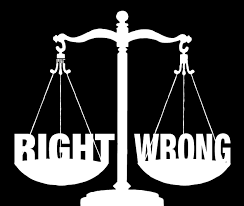
Organizing committees of both the Wisconsin Senate and Wisconsin Assembly called both houses of the Wisconsin legislature into extraordinary sessions this week to pass a “right-to-work” bill, making it illegal for employers and labor unions to charge their employees and any new employees union dues as a condition of accepting employment. The Wisconsin State Journal reported in today’s newspaper edition that the full Senate could vote on this highly charged legislation (Senate Bill 44) as early as Wednesday and the Wisconsin Assembly could vote on this legislation (AB 61) as soon as Monday.
Governor Scott Walker has said he would sign the bill into law.
The Senate and Assembly organizing committees ought have called their “extraordinary” sessions to address what the State of Wisconsin ought do to protect its citizens from global warming and climate change instead. Greenhouse gas emissions, global warming and climate change are far more significant to the future of Wisconsin than are unions charging union dues in the state.
Governor Scott Walker Punts on Taking On Climate Change in Wisconsin’s State Budget and Other Walker Administration Decisions
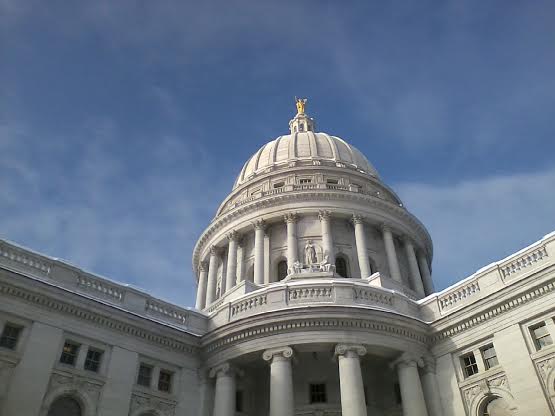
While other countries and U.S. states struggle with the deadly and extremely negative economic costs of dangerous storms made worse by warming oceans and rising sea levels caused by increasing greenhouse gases concentrations in the atmosphere, Wisconsin Governor Scott Walker has taken a pass on including anything in his two-year budget about how or to what degree the State of Wisconsin might reduce its annual greenhouse gases emissions and better adapt to the changing climate predicted for the future in Wisconsin. Governor Walker’s two-year state budget was forwarded to the Wisconsin Legislature earlier this month for adoption by July 1, 2015.
Much of what the governor’s budget proposes for the state will exacerbate the world’s chances of ever reducing climate change, or global warming, to a safe level. Scientists now say the changing climate around the world (global warming) is overwhelmingly human-caused and will be disastrous for the planet if the amounts of fossil fuels (coal, oil, natural gas) we are now burning are not significantly reduced and in a timely manner – now! – worldwide, and deforestation, over has been done over the last 100 – 150 years is stopped. Forests sequester carbon dioxide (CO2) as they grow, which is also the most abundant of the greenhouse gases emitted during fuel combustion.
While Wisconsin did experience a costly drought two years ago, and suffered through two recent killing heat waves in 1995 and 2011, the state has generally been spared from such massive destruction and loss of life as occurred in the Philippine Islands caused by Typhoon Haiyan U.S. states under hit by Hurricanes Sandy Sandy, Katrina and Ike, Hurricane Irene and increasing torrential rains and flooding around the world, heavier snowfalls, and long lasting droughts in California, other western states, and other areas around the world.
The economic costs of these catastrophes, especially those occurring in the United States, negatively effects all states in the U.S. through increased prices of goods, higher insurance rates, and the overall health of the U.S. economy.
Instead of addressing the inevitable economic and environmental effects of climate change and its causes in Wisconsin, Governor Walker instead chose to include in his two year budget proposal for the state many action items that, if enacted into law by the Wisconsin Legislature will, without question, add to the already abhorrently high human, economic and environmental costs of change climate here in Wisconsin and throughout the rest of the world. For example, Governor Walker’s two-year budget, which would begin taking effect in July 2015, expands numerous major highways in the state to increase their capacity to accommodate increased driving of cars and trucks, the vast majority of which burn fossil fuels. The governor’s budget proposes to contribute millions of dollars in state bonding to help the privately owned Milwaukee Bucks build a new arena for NBA games, games that require thousands of miles of jet travel each year for each visiting team as well as their fans and supporting personnel, adding measurably to rising volumes of greenhouse gases linked with global warming.
Furthermore, by not proposing other actions, many additional sources of greenhouse gases and pollution will continue and undoubtedly increase significantly in the next two years under the Walker administration and the current Republican legislature. Due to the lower price of crude oil, prices of fuel at the pump have dropped, leading to the purchase of less fuel efficient SUVs and trucks.
Americans and Wisconsinites need to drastically reduce their annual driving miles, and Governor Walker’s budget should have included positive financial benefits to encourage people to drive fewer and fewer miles each year, and compensate those individuals and Wisconsin families who manage to drive less miles, annually, than average – especially those individuals and families who don’t drive personal automobiles or fly airplanes (jet fuel is a fossil fuel and jets burn tons of fuel on each trip) during the year. The emission of greenhouse gases (GHGs) to the atmosphere from motorized transportation, jets, other internal combustion engines, as well as GHGs emitted from coal, oil, and natural gas burning power plants and household and business furnaces is “cumulative”, meaning the various emission of those gases accumulate in the atmosphere over time, rising to higher and higher levels of concentration in the atmosphere.
Scientists the world over have reached a level of consensus that the amount of GHGs present in the atmosphere are becoming increasingly of concern, more threatening each year that global warming worsens. Eventually, global warming could reach, or is close to reaching, its “tipping point” in the atmosphere – a level of accumulation of GHGs in the atmosphere after which the earth’s natural systems could keep adding more and more GHGs into the atmosphere, the point at which continued warming would become inevitable, regardless of what we humans do to reduce our GHG emissions. For example, as the permafrost region of the planet thaws (1/5 of earth’s surface exists in the form of permafrost), the GHG methane is released from the rotting permafrost. Methane is a much more potent GHG than CO2, and when the permafrost begins to thaw extensively, it will be releasing massive amounts of methane to the atmosphere, This would make matters much worse, because global warming would become less responsive, if responsive at all, to the amount of GHGs we humans cause to be emitted (or not to be emitted).
 All Things Environmental
Recent Comments