Archive | The Future RSS for this section

Keystone XL Pipeline: Lame-Duck Congress Fast-Tracks Legislation

141113-keystone-3-1307_dfde7d4870b13f038e9e0099af08e80e.nbcnews-fp-1440-600

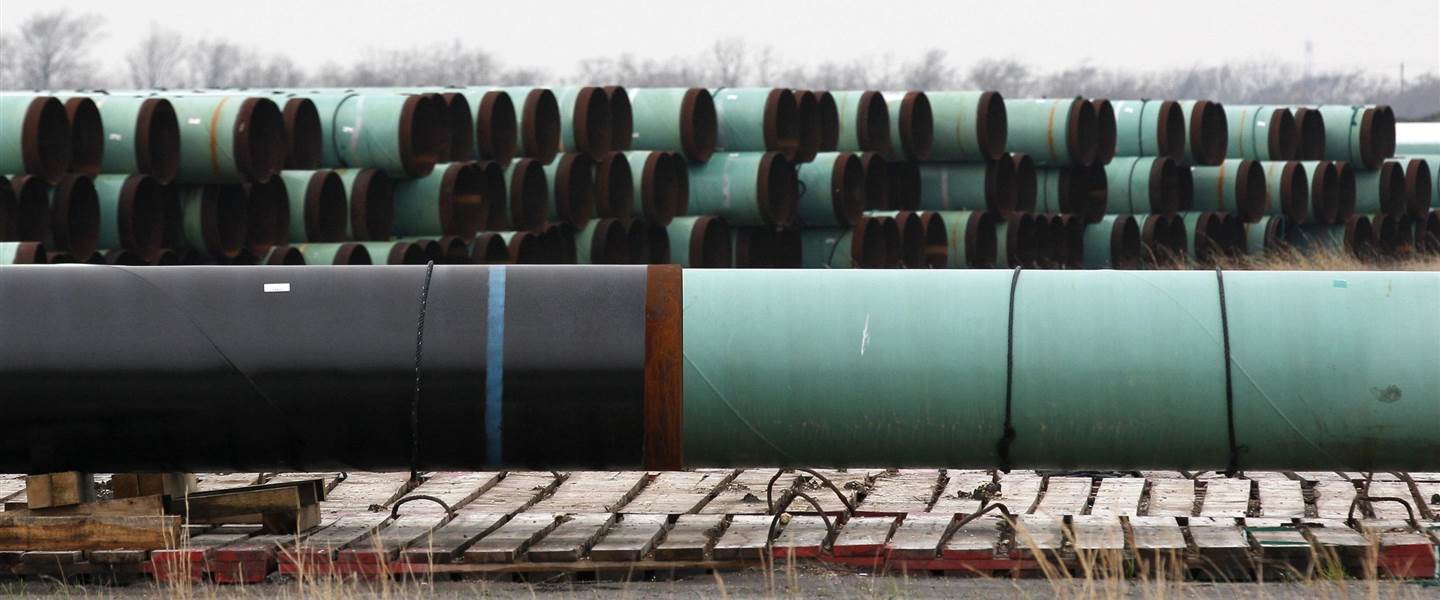
The tortuous six-year fight over a controversial proposal to funnel oil from Canada to the Gulf Coast took another turn this week after both houses of the lame-duck Congress moved to vote on the Keystone XL pipeline.

As the legislation barrels through Congress and heads to the Oval Office, President Barack Obama may soon settle one of the most politically charged debates of the decade. The White House appeared to downplay the congressional maneuvering Wednesday, saying it takes a “dim view of these kinds of legislative proposals.”

But if the Senate passes the bill as early as next Tuesday, Obama would likely be forced to either sign it into law or veto it. He has said the project needs his approval because it crosses an international border.

Here’s a look at what the Keystone XL pipeline would mean for the country and why it’s so contentious:

National Audubon Society Reports Impacts of Climate Change on North America’s Birds

burrowing_owl_sq
Burrowing Owl – According to the National Audubon Society, by 2080, this diurnal owl species could lose 77 percent of its breeding range.

The National Audubon Society recently released a comprehensive study of the impact of climate change on birds, detailing the prospects for 588 species found in Alaska, Canada and the continental U.S.

The forecast isn’t good, according to Chad Wilsey, one of the study’s authors. Of the species covered in the report, “more than half are likely to be in trouble,” said Wilsey. “Our models indicate that 314 species will lose more than 50 percent of their current climatic range by 2080.”

Nearly 60% of the 305 relatively widely distributed bird species found in North America in winter are on the move, shifting their ranges northward by an average of 35 miles. Audubon scientists analyzed 40 years of citizen-science Christmas Bird Count data — and their findings provide new and powerful evidence that global warming is having a serious impact on natural systems.

Northward movement was detected among species of every type, including more than 70 percent of highly adaptable forest and feeder birds.

Only grassland species were an exception – with only 38 percent mirroring the northward trend. But far from being good news for species like Eastern Meadowlark and Henslow’s Sparrow, this reflects the grim reality of severely-depleted grassland habitat and suggests that these species now face a double threat from the combined stresses of habitat loss and climate adaptation.

The data was collected from two different widespread and ongoing compilations of information submitted by birders: the Audubon Christmas Bird Count and the U.S. Geological Survey’s North American Breeding Bird Survey.

The importance of the contributions from citizen scientists and amateur ornithologists to those surveys can’t be overestimated, according to Matt Reetz, the executive director of the Madison chapter of the Audubon Society.

“These are data that were collected by average, everyday citizens throughout the U.S. and Canada,” he said. “And a lot of folks in Wisconsin contributed to this data set over the years.”

Reliable data is important, but the real challenge is to apply it for meaningful results.

“We get to take the results of this work and apply it to conservation on the ground,” Reetz said.

Sometimes the effects of climate change can seem distant — for example, when Pacific Ocean islands are at risk of being submerged. But Reetz said that the consequences are also much closer to home.

“There are real, major impacts on some of the bird species that we as Wisconsinites grew up loving,” he said. “We are very familiar with them, they’re species that are embedded in our culture and they are at risk here.”

Wisconsin Conserve, NOW Proposal Would Reduce the Need to Raise the Minimum Wage

minwage

The federally required minimum wage is $7:25 per hour of work performed, which everyone agrees is insufficient to maintain a nonpoverty lifestyle in Wisconsin without government subsidies or having to work two or more jobs. Some state governments have have elected to increase the required minimum wage per hour that employers in their state must pay their employees; however, Wisconsin is not one of them.

Paying individuals and families who minimize their annual global footprint could add significantly to an individuals or family’s annual income. Depending on how successful each individual or family was at minimizing their driving mileage and flying, and minimizing their energy use in their home, they could earn up to $22,800 in a year. African-American individuals and families would be eligible to earn a higher maximum of $30,400 per year.

Although the above amounts would be the maximum one could earn by not driving a motor vehicle or flying at all throughout a year, most Wisconsinites would find it difficult to max out in the residential home heating and use of fossil fuel derived electricity, since few homes exclusively use solar or wind power. But most homes in Wisconsin could be better insulated, use less hot water, or kept a few degrees cooler (winter/spring/fall) or warmer (summer, using less air conditioning) than their residents might be use to, so they could add to their income by having to pay less in energy costs plus whatever income they might earn, by using less energy than the typical Wisconsin household of the same size.

Have you signed the petition yet?

IPCC Releases Final Report on Global Warming and Climate Change

IPCClast

In a word: “dire” – the Intergovernmental Panel on Climate Change. The window of opportunity for doing something positive about it – closing. The time to start action on quickly reducing human causes releases of greenhouse gases – NOW!

From the Huffington Post (November 3, 2014):

COPENHAGEN, Denmark (AP) — Climate change is happening, it’s almost entirely man’s fault and limiting its impacts may require reducing greenhouse gas emissions to zero this century, the U.N.’s panel on climate science said Sunday.

The fourth and final volume of the Intergovernmental Panel on Climate Change’s giant climate assessment offered no surprises, nor was it expected to since it combined the findings of three reports released in the past 13 months.

But it underlined the scope of the climate challenge in stark terms. Emissions, mainly from the burning of fossil fuels, may need to drop to zero by the end of this century for the world to have a decent chance of keeping the temperature rise below a level that many consider dangerous.

The IPCC didn’t say exactly what such a world would look like but it would likely require a massive shift to renewable sources to power homes, cars and industries combined with new technologies to suck greenhouse gases from the atmosphere.

The report warned that failure to reduce emissions could lock the world on a trajectory with “irreversible” impact on people and the environment. Some impacts already being observed included rising sea levels, a warmer and more acidic ocean, melting glaciers and Arctic sea ice and more frequent and intense heat waves.

The science has spoken. There is no ambiguity in their message. Leaders must act. Time is not on our side,” U.N. Secretary-General Ban Ki-moon said at the report’s launch in Copenhagen.

Amid its grim projections, the report said the tools are there to set the world on a low-emissions path and break the addiction to burning oil, coal and gas which pollute the atmosphere with heat-trapping CO2, the chief greenhouse gas.

“All we need is the will to change, which we trust will be motivated by knowledge and an understanding of the science of climate change,” IPCC chairman Rajendra Pachauri said.

The IPCC was set up in 1988 to assess global warming and its impacts. The report released Sunday caps its latest assessment, a mega-review of 30,000 climate change studies that establishes with 95-percent certainty that most of the warming seen since the 1950s is man-made. The IPCC’s best estimate is that just about all of it is man-made, but it can’t say that with the same degree of certainty.

Today only a small minority of scientists challenge the mainstream conclusion that climate change is linked to human activity.

Global Climate Change, a NASA website, says 97 percent of climate scientists agree that warming trends over the past century are very likely due to human activities.

The American public isn’t as convinced. A year-old survey by Pew Research showed 67 percent of Americans believed global warming is occurring and 44 percent said the earth is warming mostly because of human activity. More recently, a New York Times poll said 42 percent of Republicans say global warming won’t have a serious impact, a view held by 12 percent of Democrats and 22 percent of independents.

Sleep-deprived delegates approved the final documents Saturday after a weeklong line-by-line review that underscored that the IPCC process is not just about science. The reports must be approved both by scientists and governments, which means political issues from U.N. climate negotiations, which are nearing a 2015 deadline for a global agreement, inevitably affect the outcome.

The rift between developed and developing countries in the U.N. talks opened up in Copenhagen over a passage on what levels of warming could be considered dangerous. After a protracted battle, the text was dropped from a key summary for policy-makers — to the disappointment of some scientists.

“If the governments are going to expect the IPCC to do their job,” said Princeton professor Michael Oppenheimer, a lead author of the IPCC’s second report, they shouldn’t “get caught up in fights that have nothing to do with the IPCC.”

The omission meant the word “dangerous” disappeared from the summary altogether. It appeared only twice in a longer underlying report compared to seven times in a draft produced before the Copenhagen session. The less loaded word “risk” was mentioned 65 times in the final 40-page summary.

“Rising rates and magnitudes of warming and other changes in the climate system, accompanied by ocean acidification, increase the risk of severe, pervasive, and in some cases irreversible detrimental impacts,” the report said.

World governments in 2009 set a goal of keeping the temperature rise below 2 degrees C (3.6 F) compared to before the industrial revolution. Temperatures have gone up about 0.8 C (1.4 F) since the 19th century.

Emissions have risen so fast in recent years that the world has used up two-thirds of its carbon budget, the maximum amount of CO2 that can be emitted to have a likely chance of avoiding 2 degrees of warming, the IPCC report said.

“This report makes it clear that if you are serious about the 2-degree goal … there is nowhere to hide,” said Alden Meyer of the Union of Concerned Scientists, an advocacy group. “You can’t wait several decades to address this issue.”

U.S. Secretary of State John Kerry said the report demands “ambitious, decisive and immediate action.”

“Those who choose to ignore or dispute the science so clearly laid out in this report do so at great risk for all of us and for our kids and grandkids,” Kerry said in a statement.

The IPCC said the cost of actions such as shifting to solar and wind power and other renewable sources and improving energy efficiency would reduce economic growth only by 0.06 percent annually.

Pachauri said that should be measured against the implications of doing nothing, putting “all species that live on this planet” at peril.

The report is meant as a scientific roadmap for the U.N. climate negotiations, which continue next month in Lima, Peru. That’s the last major conference before a summit in Paris next year, where a global agreement on climate action is supposed to be adopted.

The biggest hurdle is deciding who should do what. Rich countries are calling on China and other major developing countries to set ambitious targets; developing countries saying the rich have a historical responsibility to lead the fight against warming and to help poorer nations cope with its impacts. The IPCC avoided taking sides, saying the risks of climate change “are generally greater for disadvantaged people and communities in countries at all levels of development.”

AP: By KARL RITTER
Posted: 11/02/2014 7:35 am EST Updated: 11/03/2014 12:59 pm EST

IPCC Sounds Fresh Alarm as Fossil Fuel Interests Tighten Grip on Congress

The contrast between the increasingly partisan American political divide and the increasingly solid international scientific consensus couldn’t be starker.

By John H. Cushman Jr., InsideClimate News   November 3, 2014   Inside Climate

The leading international network of climate scientists is urging a rapid shift away from fossil fuels, just as allies of coal, oil and natural gas industries in the United States appear poised to tighten their grip on Congress—where opposition to cleaner energy is already entrenched.

That outcome of Tuesday’s midterm election would spell trouble for advocates of a strong international climate accord. Treaty negotiations are supposed to pick up in the next few months and culminate in Paris just over a year from now.

This weekend, the UN’s Intergovernmental Panel on Climate Change issued a synthesis report that sums up its years-long review of the climate crisis and what to do about it. The report called for the near-complete elimination of fossil fuel-burning by the end of the century. This, it said, is what is needed to have a reasonable chance of avoiding the most severe risks of man-made changes to the world’s climate.

Nothing could be further from the agenda of Sen. Mitch McConnell of Kentucky, the coal-state Republican who on the eve of the election appears to have significantly better than even odds of becoming the next majority leader. (Though, as the IPCC might put it, until the last votes are tallied any forecast of which party will prevail deserves only “medium confidence.”)

Even if the Republicans don’t gain a majority in the Senate on Nov. 4, they are likely to gain strength in that chamber as well as in the House—an election outcome that would undermine President Obama’s entire climate agenda, not just his influence in the Paris talks.

From the Keystone XL pipeline decision and so-called “war on coal,” to a carbon tax and the very foundations of climate science, Congressional Republicans have opposed Obama on anything having to do with global warming from his first days in office.

Just last year, on the day the IPCC released one of three exhaustive treatments that formed the basis of this week’s synthesis report, McConnell co-sponsored an amendment to block the EPA from regulating fossil fuels in electric power plants, the largest single source of carbon emissions in this country.

His co-sponsor, Sen. James Inhofe of Oklahoma, offered another amendment at the same time. It would have prohibited the administration from participating in international climate negotiations “unless the U.S. offers an addendum to the latest IPCC report stating that anthropogenic climate change is a scientifically unproven theory.” Inhofe, who reportedly aspires to be chairman of the environment committee in a Republican Senate, calls the whole IPCC enterprisea “conspiracy” and “a hoax.”

Their ascent would alarm participants in the climate talks who agree with IPCC chairman, Rajendra Pachauri, that the climate crisis could be solved if action is quick and decisive. “All we need,” Pachauri said as he released the new synthesis report, “is the will to change, which we trust will be motivated by knowledge and an understanding of the science of climate change.”

Emissions must fall by 40 to 70 percent between 2010 and 2050, and then to zero by 2100, he explained at a news conference.

Those are fighting words to anyone committed to defending the coal industry in Kentucky, the oil and gas industry in Oklahoma, or campaigning in any fossil fuel stronghold—from the Marcellus shale to the Bakken light oil play. And it helps explain why the politics of carbon are a feature of so many swing elections in states like West Virginia, Colorado, Louisiana and Alaska.

The contrast between this increasingly partisan American political divide and the increasingly solid international scientific consensus could hardly be starker.

“The scientists have done their jobs and then some,” said Alden Meyer of the Union of Concerned Scientists, who has tracked the negotiations for decades. “Politicians can either dramatically reduce emissions or they can spend the rest of their careers running from climate disaster to climate disaster.”

Other environmental advocates, too, issued statements emphasizing that the synthesis report—including its summary for policymakers, expressly designed to guide them toward early action —was as significant politically as it was scientifically.

“The report is alarming and should be a wake-up call to government leaders,” said Mindy Lubber, president of Ceres, a group that encourages businesses to show leadership on climate issues. Her statement called on them to “ramp up the pressure…especially in Washington.”

“The critical missing link is the oil and gas industry, which is doing its best to thwart concrete action,” she said.

The Sierra Club’s Michael Brune aimed a jibe at the Koch brothers and their favored candidates, saying that “we don’t have any more time to coddle fossil fuel billionaires or politicians who will eschew responsibility at every corner.”

Big environmental groups have spent heavily in this campaign, too—$85 million on state and federal races, according to Daniel Weiss of the League of Conservation Voters, including $40 million on just six key Senate races. And in the closing days, they were knocking on millions of doors to bring out a green vote.

The organizations released results from a Hart Research Associates poll taken in late October in swing states suggesting that the climate issue could break in their favor.

“The survey suggests that Republican candidates are losing ground as a result of their climate science denial and opposition to climate pollution reductions,” Hart reported. “This is true among independent swing voters, and particularly among women and younger voters.”

But only about 40 percent of those surveyed said they had heard much of candidates’ views on climate. A majority had heard about energy issues, but far more about abortion, jobs and Obamacare.

Leaked Final Draft Of U.N. Climate Report Shows Dire Global Warming Predictions

earth-from-spaceEinstein-Quotes-1BY ARI PHILLIPS, POSTED ON OCTOBER 27, 2014

Delegates from more than 100 governments and many of the world’s top climate scientists are meeting in Copenhagen this week to finalize a report that will be used as a foundation for important upcoming climate summits. The leaked United Nations draft report, due to be published on Nov. 2nd, says climate change may have “serious, pervasive and irreversible” impacts on human society and nature.
Hopes are set on a new, post-Kyoto Protocol global climate agreement to be reached at the Paris summit at the end of 2015. There will a major climate meeting in Lima, Peru at the end of this year to help set the framework for the 2015 gathering.

“The report will be a guide for us,” Peruvian Environment Minister Manuel Pulgar-Vidal, told Reuters.
This final report is a synthesis of three comprehensive IPCC reports published over the course of the last year. Those reports focused on the physical science; impacts, adaptation and vulnerability; and mitigation. This flagship report received over 2,000 comments from government officials relating to changes to be made prior to publication.

According to a Reuters analysis, many governments want the draft to be written in a more clear and accessible manner with a focus on extreme weather events such as storms, heat waves, and floods. The U.S. wrote that the report needs to be useful for those without deep technical knowledge of climate issues.

“What about drought? Cyclones? Wildfires? Policymakers care deeply about extreme events,” the U.S. team wrote. “After all, in many ways it is how extreme events will change that will determine many of the (near-term, at least) impacts from climate change. As such, the authors should strongly consider saying more about the projected changes in extreme events.”

>U.S. commenters also wrote that the report should stress impacts on rich countries more, saying “there are very few references to the vulnerability of wealthier countries to climate change.”

The E.U. team wrote that “the key messages should contain more substance that can help guide policy makers rather than general overarching statements,” and that “the overall storyline … is sometimes not clear and still looks fragmented.”

While the report warns of the dire consequences of the continued rise of GHGs, it also says the worst impacts can still be avoided. It states that a combination of adaptation and substantial, sustained reductions in GHGs can limit climate change risks and reduce the costs and challenges of mitigation.
Over the past five years some 2,000 scientists worked on the fifth iteration of the U.N.’s Intergovernmental Panel On Climate Change’s Assessment Report. With leaders gathering to finalize the report this week, Rajendra Pachauri, chairman of the IPCC, urged world governments not to be overcome by hopelessness as they engage in negotiations.

“May I humbly suggest that policymakers avoid being overcome by the seeming hopelessness of addressing climate change,” he said. “Tremendous strides are being made in alternative sources of clean energy. There is much we can do to use energy more efficiently. Reducing and ultimately eliminating deforestation provides additional avenues for action.”

In one hopeful indication, last week leaders of the European Union agreed to cut emissions by 40 percent below 1990 levels by 2030. European leaders hope this will build momentum for when the bloc hosts the critical Paris climate summit next year, and that it will encourage other major emitters yet to make pledges — such as the U.S. and China — to rise to the occasion. Countries have until early next year to announce the targets they intend to negotiate with at the Paris summit.

Is Human Activity Really to Blame for Climate Change? How Did Venus Get So Hot?

venusandearth

A recent debate between candidates for Congress in the Wisconsin’s 1st District — U.S. Rep. Paul Ryan, R-Janesville, and Democratic challenger Rob Zerban — included questions about the role of human beings in producing discernible changes in the climate over the last 150 years.

Unfortunately, this question, which is a matter of evidence, analysis and conclusion as all scientific questions are, has become a source of partisan political divide.

The Intergovernmental Panel on Climate Change (IPCC), a scientific body created by the United Nations to inform the UN regarding “scientific, technical and socio-economic information relevant to understanding the scientific basis of risk of human-induced climate change,” has issued five reports on this question since 1990.

These reports are a synthesis of many hundreds of peer-reviewed scientific studies on the issue.

With each successive report — they have been issued in 1995, 2001, 2007 and 2014 — the IPCC has increased the certainty of its conclusions.

The language in these reports has changed from “the balance of evidence suggests a discernible human influence on global climate” (1995) to “most of the observed warming is likely (a greater than 66 percent chance) due to human activities” (2001) to warming “over the last 50 years is very likely (a greater than 90 percent chance) due to human activities” to “It is extremely likely (a 95-100 percent chance) that human influence was the dominant cause of global warming between 1951-2010.”

This makes two things quite clear.

First, that scientists are a skeptical bunch and will move toward increased certainty only as evidence accumulates in favor of that conclusion.

Second, that human-induced global warming is a reality with which we must reckon.

During the debate, when asked if humans have a role in global warming, Ryan answered, “I don’t know the answer to that question. I don’t think science does either.”

He may well be correct in his first response, but he is certainly wrong in his second.

Article by Steve Ackerman and Jonathan Martin who are professors in the University of Wisconsin’s Department of Atmospheric and Oceanic Sciences in Madison, Wisconsin.

The above article was published in the Wisconsin State Journal print edition on October 20, 2014.

The IPCC also says “climate change is not a far-off problem. It is happening now and is having very real consequences on people’s lives. Climate change is disrupting national economies, costing us dearly today and even more tomorrow”, the IPCC states.

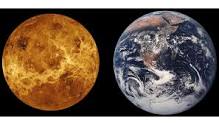
Astrobiologist David Grinspoon believes that scientists should look at our neighboring planets to help understand the perils of global warming. “It seems that both Mars and Venus started out much more like Earth and then changed. They both hold priceless climate information for Earth.”

The atmosphere of Venus is much thicker than Earth’s. Nevertheless, current climate models can reproduce its present temperature structure well. Now planetary scientists want to turn the clock back to understand why and how Venus changed from its former Earth-like conditions into the inferno of today.Climate scientists believe that the planet experienced a runaway greenhouse effect as the Sun gradually heated up. Astronomers believe that the young Sun was dimmer than the present-day Sun by 30 percent. Over the last 4 thousand million years, it has gradually brightened. During this increase, Venus’s surface water evaporated and entered the atmosphere.

“Water vapor is a powerful greenhouse gas and it caused the planet to heat-up even more. This is turn caused more water to evaporate and led to a powerful positive feedback response known as the runaway greenhouse effect,” says Grinspoon.

We have to make sure nothing like a runaway greenhouse effect doesn’t get started on Earth. Hopefully, it has not already started.

Public and Future Citizens Biggest Losers in WBA Second and Final Gubernatorial Debate

Walkerandburke

Democrat Mary Burke argued during a debate last Friday night (Oct. 17) in Wisconsin’s hotly contested governor’s race that Republican incumbent Scott Walker mismanaged Wisconsin’s finances, leading to a projected $1.8 billion budget shortfall, and enacted tax cuts that benefited the wealthy over the middle class (which he did).

Which candidate would be better for Wisconsin’s economy is a central part of the race that’s attracted national attention both because it’s close and because Walker is widely considered to be in the mix for a 2016 presidential run should he win re-election, according to the Associated Press.

Unfortunately, as was the case in the first Wisconsin Broadcasters Association (WBA) televised debate, neither Walker nor Burke were even asked about the growing catastrophe of human-caused global warming let alone the two largest sector contributors of greenhouse gases from the U.S. and most other developed countries: energy production and transportation. The people most negatively impacted by global warming and the havoc it’s already wreaking on the Earth are the young, those yet to be borne, and billions of people living without air conditioning and already living in poverty, many seeing their water and food supplies either drying up or being contaminated by flood waters.

But since the WBA interviewers did not see fit to test the candidates for Wisconsin’s next governor on what they have in mind as to what the state of Wisconsin should be doing to reduce Wisconsin’s contributions to the growing world catastrophe of global warming and how Wisconsin’s people might best plan for the inevitable changes, viewers were left wondering if either of the candidates is even thinking about the subject, let alone what Secretary of State John Kerry said about the seriousness and urgency of addressing climate change: [climate change] “should be addressed with as much “immediacy” as confronting the Islamic State in Iraq and Syria (ISIS), and the Ebola outbreak”.

Earth’s About to Lose What Little Chance It Had – Unless We Act Now!

Who’s Gonna Stand Up
Neil Young’s Who’s Gonna Stand Up (and Save the Earth)
Protect the wild, tomorrow’s child
Protect the land from the greed of man
Take down the dams, stand up to oil
Protect the plants, and renew the soil

Who’s gonna stand up and save the earth?
Who’s gonna say that she’s had enough?
Who’s gonna take on the big machine?
Who’s gonna stand up and save the earth?
This all starts with you and me

Damn the dams, save the rivers
Starve the takers and feed the givers
Build a dream, save the world
We’re the people know as earth

Who’s gonna stand up and save the earth?
Who’s gonna say that she’s had enough?
Who’s gonna take on the big machine?
Who’s gonna stand up and save the earth?
This all starts with you and me

Ban fossil fuel, draw the line
Before we build, one more pipeline
Ban fracking now, save the waters
And build a life, for our sons and daughters

Who’s gonna stand up and save the earth?
Who’s gonna say that she’s had enough?
Who’s gonna take on the big machine?
Who’s gonna stand up and save the earth?
This all starts with you and me

Who’s gonna stand up

Who’s Gonna Stand Up (and Save the Earth)?
(full orchestra & choir version)
Start here. Sign “Conserve NOW Petition to President Obama, U.S. Congress, Wisconsin Governor Walker and Wisconsin Legislature to Enact and Fund Climate Change Legislation” (September 16th post on this blog) or;

I’ve also started the petition “U.S. Congress: Enact and Fund Legislation to Pay Families and Individuals who Use Less Fossil Fuel Energy Annually on Changeorg

Will you take 30 seconds to sign it right now? Here’s the link:

http://www.change.org/p/u-s-congress-enact-and-fund-legislation-to-pay-families-and-individuals-who-use-less-fossil-fuel-energy-annually-conserve-now-please-see-www-allthingsenvironmental-com-for-details

Here’s why it’s important:

Using money that now goes to subsidize the fossil fuel industries (coal, oil, natural gas), instead offer that money to those who limit their driving, flying and household use of fossil fuel devived energy. This would helpslow global warming and sea level rises and would negate the need for raising the minimum wage and foodstamps.

You can sign my petition by clicking here.
.

Thanks

Answer “No” to Transportation Amendment on November 4th Ballot

Interstate

Wisconsin law presently requires that specific revenue streams, such as gasoline and diesel fuel taxes and license fees collected from motor vehicle owners, be deposited into the transportation fund; however, the Wisconsin Supreme Court has recognized that the Wisconsin Legislature may, at times, have greater needs other than transportation, and it is therefore authorized to transfer certain amounts from the Transportation Fund to non-transportation state needs, such as education, health care, and shared revenue.

However, the Wisconsin Department of Transportation and the highway building industry – which includes such contracting entities as the Wisconsin road and bridge builders (the Transportation Builders Association), sand and gravel suppliers, cement and asphalt production companies, trucking firms, and other businesses financially tied to transportation in Wisconsin, have been very vocal in their criticisms of the previous administration’s use of some transportation generated money for purposes not financially benefiting Wisconsin’s transportation infrastructure.

So a Transportation Amendment referendum question was approved for placement on the November 4th ballot which, if the majority of Wisconsin voters answer “yes” (to Question 1 on the ballot), would so amend Wisconsin’s Constitution to mandate that all money generated by transportation taxes in Wisconsin after December 31, 2010 be deposited into the state’s Transportation Fund, and furthermore that no such money be lapsed, further transferred, or used for any program that is not directly administered by the department of transportation, in furtherance of the department’s responsibility for the planning, promotion, and protection of all transportation systems in the state. In short, all transportation collected money could only be used for transportation purposes if the majority of people voting on November 4th answer “yes” to Referendum Question #1.

If the majority of Wisconsin voters on November 4th answer “no” to amending Wisconsin’s Constitution regarding the Transportation Amendment, tax money from transportation in Wisconsin would still be deposited in the Transportation Fund and used for transportation; however, certain amounts approved by the Legislature for use in other state programs or the state budget other than for transportation projects would be permissible. The Wisconsin Constitution would not therefore be amended to provide for the exclusive use of motor vehicle fuel taxes and annual vehicle registration fees by the Wisconsin Department of Transportation for road and bridge expansion, reconstruction, and rehabilitation programs.

Wisconsin Senator Fred Risser recommends voters answer “no” to the Transportation Fund Constitutional Amendment, saying “it serves no useful purpose to submit to the highway lobby and guarantee them a constitutionally protected fund that can never be touched even in the case of economic crisis or statewide emergency”.

Wisconsin’s highway and bridge system and its use, and other state and federal highway systems and their use, have already exceeded the level of environmental and fiscal sustainability. In addition to the billions of dollars of state and federal money that has been collected and awarded to various highway and bridge contractor from Transportation Funds, there have been very real damages inflicted on Wisconsin’s and other state’s natural landscapes, wildlife and wildlife habitat, the climate and the human population. Despite many of these costs being significantly high, they are seldom quantified and simply go unpaid. Most (loss of wildlife habitat, climate change, small particle pollution) are growing more serious over time.

The public health impacts from 60 billion motor vehicle miles being driven annually in the state are growing evermore significant and serious (from climate change, loss of green space, farmland loss, small particle air pollution). Yet we have seen no actions being undertaken or even discussed so far by the Governor Scott Walker administration, the Wisconsin Legislature, or candidate for governor Mary Burke. Action is needed to encourage less fossil fuel burning vehicular travel in the state, to mitigate for many impacts that have already occurred or are still occurring, and to prepare for a climate that will be rapidly changing.

Despite seeing motor vehicle driving in Wisconsin finally leveling off, after decades of growth, the state and federal governments are planning to continue pouring vast sums of money into the construction of new highways and the expansion of old ones. Wisconsin’s governor is leading the way, with Wisconsin the politically powerful road and bridge building industry’s support.

Today’s Wisconsin State Journal newspaper states that Governor Scott Walker, in meeting with the State Journal’s editorial board Monday, said that he is considering replacing the state’s current gasoline tax with a sales tax on gas and alternative vehicle fuel sources “to stabilize long-term transportation funding in the state”. The state currently taxes gasoline, blended gasoline, and diesel fuel for motor vehicle fuel at a flat rate of 31 cents per gallon. The present gasoline tax generates about $1 billion in revenue for the Transportation Fund. The tax on is levied on gasoline suppliers but in turn gets build into the pump price. (The state also taxes liquefied propane gas, compressed natural gas and liquefied natural gas but not electricity, although The Journal reports Walker saying “that’s something that needs to be considered”.

Neither Walker nor Democratic challenger for governor Mary Burke have identified any specific plans for addressing the state’s projected $680 million shortfall in the Transportation Fund in the next biennial budget, according to the Wisconsin State Journal report written by Mathew DeFour and Mary Spicuzza and published October 14, 2014. The state will be short $15.3 billion in the Transportation Budget over the next decade according to a state transportation commission reported last year, despite there being fewer annual vehicle miles predicted to be traveled on the state highways in the coming years.

As alluded to previously (above), there is serious and significant concern regarding the continued burning of fossil fuels and the emission of greenhouse gases (GHGs) from motor vehicles travelly 60 billion miles, or 600 billion miles since 2004. The reason is that these gases, in particular carbon dioxide, have already accumulated to record high levels in the atmosphere, and the added accumulation of them in the atmosphere is growing ever more dangerous. Presently, the concentration of carbon dioxide (CO2) has reached record of over 400 parts per millions in the atmosphere, which is 42% above the CO2 concentration level present in the atmosphere before the Industrial Age. We are now witnessing rising sea levels from thermal expansion of water and ice melt over lands on an unprecedented scale.

Roughly 20 pounds of carbon dioxide is emitted to the atmosphere for each gallon of gasoline burned in a motor vehicle. Even if we assume that all vehicles driven in the state achieved 2013’s record high efficiency of 24.1 miles per gallon, this amounts to roughly 2.5 billion gallons of gasoline being burned on Wisconsin’s highways each year, which translates into 50 billion pounds (25 million tons) of carbon dioxide being emitted from tailpipes each year, or 250 tons over the last decade. Since carbon dioxide has a lifetime exceeding 100 years in the atmosphere, much of this CO2 will still be in the atmosphere by the end of this century, along with CO2 and other greenhouse gases accumulations.

Not only should the state be working harder and faster on reducing it’s GHG emissions – it should not be prohibited from using transportation generated money for this purpose. In fact, there should be a moratorium on adding more capacity (lane) for additional use of motor vehicles on the state’s highway system. This would save the state $3 billion in taxpayer money that is slated for highway expansion now, including work of the I-94 south of Madison project and the addition of two more lanes of Beltline highway in the vicinity of the Verona Road/Beltline interchange in Madison.

As discussed in a previous post on this blog, high motor vehicle traffic areas also generate dangerous levels of small and ultra small particle pollution. It has been reported in numerous that people who live very close to heavy traffic and get exposed to high levels of ultra fine particle pollution have more health problems, including heart and vascular problems. Transportation Funds should be used to minimize and mitigate for these transportation related health costs.

Verona Road/Beltline Expansion: despite the majority of people speaking at a meeting held by DOT in 2003  saying they were opposed to more motor vehicle traffic in the areas of West Madison near the proposed project, DOT proceeded with it plan for the project anyway, as expected.