
Obama and Nebraska Residents, Assisted by Neil Young and Willie Nelson, Reject Keystone Tar Sands Crude Oil Pipeline

By New York Times Writer Chas Danner
Nov. 9, 2015
Following a seven-year stint in political and regulatory purgatory, the Keystone XL project finally met its end last week when President Obama, eyeing the upcoming U.N. climate talks in Paris, formally rejected TransCanada’s request to build the cross-border oil pipeline. Climate activists [with help from two longtime progressive American artists/musicians who didn’t really need the exposure – Neil Young and Willie Nelson and who also opposed the plan] are celebrating their victory and already attempting to parlay the momentum into more wins. Proponents of the pipeline — a group that at this point consists mainly of Republicans and Republican presidential candidates, energy-industry lobbyists, and some labor unions who were looking forward to tens of thousands of temporary construction jobs — are decrying Obama’s decision and writing the whole thing off as a hallmark of irresponsible political capitulation….
Meanwhile, Bill McKibben, one of the central leaders of the anti-KXL fight, writes in The New Yorker that he now believes he and his allies, because of their new tactics, finally have fossil-fuel companies on the defensive:
[T]he Keystone rallying cry [has] quickly spread to protests against other fossil-fuel projects. One industry executive summed it up nicely this spring, when he told a conference of his peers that they had to figure out how to stop the “Keystone-ization” of all their plans. … [And] this fall, the governor of the Bank of England, Mark Carney, speaking to members of the insurance industry at Lloyds of London, used [“leave it in the ground“] language to tell them that they faced a “huge risk” from “unburnable carbon” that would become “stranded assets.” No one’s argued with the math, and that math indicates that the business plans of the fossil-fuel giants are no longer sane. Word is spreading: portfolios and endowments worth a total of $2.6 trillion in assets have begun to divest from fossil fuels. The smart money is heading elsewhere.
We won’t close that gap between politics and physics at the global climate talks next month in Paris. […] In many ways, the developments of the past two days are more important than any pledges and promises for the future, because they show the ways in which political and economic power has already started to shift. If we can accelerate that shift, we have a chance. It’s impossible, in the hottest year that humans have ever measured, to feel optimistic. But it’s also impossible to miss the real shift in this battle. [End of Danner text]
The nearly 1,200-mile (2,000-km) pipeline would carry 830,000 barrels a day of mostly Canadian oil sands crude to Nebraska en route to refineries and ports along the U.S. Gulf Coast.
Read more at Reutershttp://www.reuters.com/article/2015/11/05/us-transcanada-keystone-state-idUSKCN0ST2VX20151105#PXYjkPeuAjeDlY1G.99However, Enbridge Company pipeline projects permitted by Wisconsin Governor Scott Walker’s Department of Natural Resources, are planning on pumping 1.2 million barrels of tar sands crude across Wisconsin for processing into gasoline, diesel fuel and jet fuel, soon, and are planning on pumping another 600 million barrels of tar sands crude oil through a second parallel pipe from Alberta to Illinois in the not too distant future. Burning that much fuel will certainly add to the planet’s global warming troubles, probably sooner than most of us earthlings burning all those fossil fuels had anticipated.
Also see: Obama Urged to reject Keystone XL
Souls of the Dead Speak Out: “Americans Should Not Have Anymore Children”

© Tomas Castelazo, www.tomascastelazo.com / Wikimedia Commons. Licensed under CC BY-SA 3.0 via Commons.
Celebrating The Day of the Dead has a long history in Mexican tradition. The Day of the Dead is celebrated on November 2nd. The Days of the Dead are October 31 – November 2. During the Days of the Dead, some believe that the souls of the departed return to earth to visit with and to provide council or give advice to family and loved ones.
Souls of the Dead Speak Out: “Americans Should Not Have Anymore Children”
President Obama’s Speech at the GLACIER Conference, Anchorage, Alaska
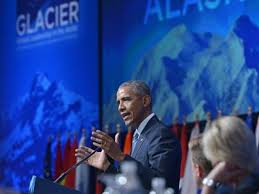
The full text of his speech to the Glacier Conference on 1 September 2015 follows:
I want to thank the people of Alaska for hosting this conference. I look forward to visiting more of Alaska over the next couple of days. The United States is, of course, an Arctic nation. And even if this isn’t an official gathering of the Arctic Council, the United States is proud to chair the Arctic Council for the next two years. And to all the foreign dignitaries who are here, I want to be very clear — we are eager to work with your nations on the unique opportunities that the Arctic presents and the unique challenges that it faces. We are not going to — any of us — be able to solve these challenges by ourselves. We can only solve them together.
Of course, we’re here today to discuss a challenge that will define the contours of this century more dramatically than any other — and that’s the urgent and growing threat of a changing climate.
Our understanding of climate change advances each day. Human activity is disrupting the climate, in many ways faster than we previously thought. The science is stark. It is sharpening. It proves that this once-distant threat is now very much in the present.
In fact, the Arctic is the leading edge of climate change — our leading indicator of what the entire planet faces. Arctic temperatures are rising about twice as fast as the global average. Over the past 60 years, Alaska has warmed about twice as fast as the rest of the United States. Last year was Alaska’s warmest year on record — just as it was for the rest of the world. And the impacts here are very real.
Thawing permafrost destabilizes the earth on which 100,000 Alaskans live, threatening homes, damaging transportation and energy infrastructure, which could cost billions of dollars to fix.
Warmer, more acidic oceans and rivers, and the migration of entire species, threatens the livelihoods of indigenous peoples, and local economies dependent on fishing and tourism. Reduced sea levels leaves villages unprotected from floods and storm surges. Some are in imminent danger; some will have to relocate entirely. In fact, Alaska has some of the swiftest shoreline erosion rates in the world.
I recall what one Alaska Native told me at the White House a few years ago. He said, “Many of our villages are ready to slide off into the waters of Alaska, and in some cases, there will be absolutely no hope -– we will need to move many villages.”
Alaska’s fire season is now more than a month longer than it was in 1950. At one point this summer, more than 300 wildfires were burning at once. Southeast of here, in our Pacific Northwest, even the rainforest is on fire. More than 5 million acres in Alaska have already been scorched by fire this year — that’s an area about the size of Massachusetts. If you add the fires across Canada and Siberia, we’re talking 300 [30] million acres -– an area about the size of New York.
This is a threat to many communities — but it’s also an immediate and ongoing threat to the men and women who put their lives on the line to protect ours. Less than two weeks ago, three highly trained firefighters lost their lives fighting a fire in Washington State. Another has been in critical condition. We are thankful to each and every firefighter for their heroism — including the Canadian firefighters who’ve helped fight the fires in this state.
But the point is that climate change is no longer some far-off problem. It is happening here. It is happening now. Climate change is already disrupting our agriculture and ecosystems, our water and food supplies, our energy, our infrastructure, human health, human safety — now. Today. And climate change is a trend that affects all trends — economic trends, security trends. Everything will be impacted. And it becomes more dramatic with each passing year.
Already it’s changing the way Alaskans live. And considering the Arctic’s unique role in influencing the global climate, it will accelerate changes to the way that we all live.
Since 1979, the summer sea ice in the Arctic has decreased by more than 40 percent — a decrease that has dramatically accelerated over the past two decades. One new study estimates that Alaska’s glaciers alone lose about 75 gigatons — that’s 75 billion tons — of ice each year.
To put that in perspective, one scientist described a gigaton of ice as a block the size of the National Mall in Washington — from Congress all the way to the Lincoln Memorial, four times as tall as the Washington Monument. Now imagine 75 of those ice blocks. That’s what Alaska’s glaciers alone lose each year. The pace of melting is only getting faster. It’s now twice what it was between 1950 and 2000 — twice as fast as it was just a little over a decade ago. And it’s one of the reasons why sea levels rose by about eight inches over the last century, and why they’re projected to rise another one to four feet this century.
Consider, as well, that many of the fires burning today are actually burning through the permafrost in the Arctic. So this permafrost stores massive amounts of carbon. When the permafrost is no longer permanent, when it thaws or burns, these gases are released into our atmosphere over time, and that could mean that the Arctic may become a new source of emissions that further accelerates global warming.
So if we do nothing, temperatures in Alaska are projected to rise between six and 12 degrees by the end of the century, triggering more melting, more fires, more thawing of the permafrost, a negative feedback loop, a cycle — warming leading to more warming — that we do not want to be a part of.
And the fact is that climate is changing faster than our efforts to address it. That, ladies and gentlemen, must change. We’re not acting fast enough.
I’ve come here today, as the leader of the world’s largest economy and its second largest emitter, to say that the United States recognizes our role in creating this problem, and we embrace our responsibility to help solve it. And I believe we can solve it. That’s the good news. Even if we cannot reverse the damage that we’ve already caused, we have the means — the scientific imagination and technological innovation — to avoid irreparable harm.
We know this because last year, for the first time in our history, the global economy grew and global carbon emissions stayed flat. So we’re making progress; we’re just not making it fast enough.
Here in the United States, we’re trying to do our part. Since I took office six and a half years ago, the United States has made ambitious investments in clean energy, and ambitious reductions in our carbon emissions. We now harness three times as much electricity from wind and 20 times as much from the sun. Alaskans now lead the world in the development of hybrid wind energy systems from remote grids, and it’s expanding its solar and biomass resources.
We’ve invested in energy efficiency in every imaginable way — in our buildings, our cars, our trucks, our homes, even the appliances inside them. We’re saving consumers billions of dollars along the way. Here in Alaska, more than 15,000 homeowners have cut their energy bills by 30 percent on average. That collectively saves Alaskans more than $50 million each year. We’ve helped communities build climate-resilient infrastructure to prepare for the impacts of climate change that we can no longer prevent.
Earlier this month, I announced the first set of nationwide standards to end the limitless dumping of carbon pollution from our power plants. It’s the single most important step America has ever taken on climate change. And over the course of the coming days, I intend to speak more about the particular challenges facing Alaska and the United States as an Arctic power, and I intend to announce new measures to address them.
So we are working hard to do our part to meet this challenge. And in doing so, we’re proving that there doesn’t have to be a conflict between a sound environment and strong economic growth. But we’re not moving fast enough. None of the nations represented here are moving fast enough.
And let’s be honest — there’s always been an argument against taking action. The notion is somehow this will curb our economic growth. And at a time when people are anxious about the economy, that’s an argument oftentimes for inaction. We don’t want our lifestyles disrupted. In countries where there remains significant poverty, including here in the United States, the notion is, can we really afford to prioritize this issue. The irony, of course, is, is that few things will disrupt our lives as profoundly as climate change. Few things can have as negative an impact on our economy as climate change.
On the other hand, technology has now advanced to the point where any economic disruption from transitioning to a cleaner, more efficient economy is shrinking by the day. Clean energy and energy efficiency aren’t just proving cost-effective, but also cost-saving. The unit costs of things like solar are coming down rapidly. But we’re still underinvesting in it.
Many of America’s biggest businesses recognize the opportunities and are seizing them. They’re choosing a new route. And a growing number of American homeowners are choosing to go solar every day. It works. All told, America’s economy has grown more than 60 percent over the last 20 years, but our carbon emissions are roughly back to where they were 20 years ago. So we know how to use less dirty fuel and grow our economy at the same time. But we’re not moving fast enough.
More Americans every day are doing their part, though. Thanks to their efforts, America will reach the emission target that I set six years ago. We’re going to reduce our carbon emissions in the range of 17 percent below 2005 levels by 2020. And that’s why, last year, I set a new target: America is going to reduce our emissions 26 to 28 percent below 2005 levels by 10 years from now.
And that was part of a historic joint announcement we made last year in Beijing. The United States will double the pace at which we cut our emissions, and China committed, for the first time, to limiting its emissions. Because the world’s two largest economies and two largest emitters came together, we’re now seeing other nations stepping up aggressively as well. And I’m determined to make sure American leadership continues to drive international action — because we can’t do this alone. Even America and China together cannot do this alone. Even all the countries represented around here cannot do this alone. We have to do it together.
This year, in Paris, has to be the year that the world finally reaches an agreement to protect the one planet that we’ve got while we still can.
So let me sum up. We know that human activity is changing the climate. That is beyond dispute. Everything else is politics if people are denying the facts of climate change. We can have a legitimate debate about how we are going to address this problem; we cannot deny the science. We also know the devastating consequences if the current trend lines continue. That is not deniable. And we are going to have to do some adaptation, and we are going to have to help communities be resilient, because of these trend lines we are not going to be able to stop on a dime. We’re not going to be able to stop tomorrow.
But if those trend lines continue the way they are, there’s not going to be a nation on this Earth that’s not impacted negatively. People will suffer. Economies will suffer. Entire nations will find themselves under severe, severe problems. More drought; more floods; rising sea levels; greater migration; more refugees; more scarcity; more conflict.
That’s one path we can take. The other path is to embrace the human ingenuity that can do something about it. This is within our power. This is a solvable problem if we start now.
And we’re starting to see that enough consensus is being built internationally and within each of our own body politics that we may have the political will — finally — to get moving.
So the time to heed the critics and the cynics and the deniers is past. The time to plead ignorance is surely past. Those who want to ignore the science, they are increasingly alone. They’re on their own shrinking island. (Applause.)
And let’s remember, even beyond the climate benefits of pursuing cleaner energy sources and more resilient, energy-efficient ways of living, the byproduct of it is, is that we also make our air cleaner and safer for our children to breathe. We’re also making our economies more resilient to energy shocks on global markets. We’re also making our countries less reliant on unstable parts of the world. We are gradually powering a planet on its way to 9 billion humans in a more sustainable way.
These are good things. This is not simply a danger to be avoided; this is an opportunity to be seized. But we have to keep going. We’re making a difference, but we have to keep going. We are not moving fast enough.
If we were to abandon our course of action, if we stop trying to build a clean-energy economy and reduce carbon pollution, if we do nothing to keep the glaciers from melting faster, and oceans from rising faster, and forests from burning faster, and storms from growing stronger, we will condemn our children to a planet beyond their capacity to repair: Submerged countries. Abandoned cities. Fields no longer growing. Indigenous peoples who can’t carry out traditions that stretch back millennia. Entire industries of people who can’t practice their livelihoods. Desperate refugees seeking the sanctuary of nations not their own. Political disruptions that could trigger multiple conflicts around the globe.
That’s not a future of strong economic growth. That is not a future where freedom and human rights are on the move. Any leader willing to take a gamble on a future like that — any
so-called leader who does not take this issue seriously or treats it like a joke — is not fit to lead.
On this issue, of all issues, there is such a thing as being too late. That moment is almost upon us. That’s why we’re here today. That’s what we have to convey to our people — tomorrow, and the next day, and the day after that. And that’s what we have to do when we meet in Paris later this year. It will not be easy. There are hard questions to answer. I am not trying to suggest that there are not going to be difficult transitions that we all have to make. But if we unite our highest aspirations, if we make our best efforts to protect this planet for future generations, we can solve this problem.
And when you leave this conference center, I hope you look around. I hope you have the chance to visit a glacier. Or just look out your airplane window as you depart, and take in the God-given majesty of this place. For those of you flying to other parts of the world, do it again when you’re flying over your home countries. Remind yourself that there will come a time when your grandkids — and mine, if I’m lucky enough to have some — they’ll want to see this. They’ll want to experience it, just as we’ve gotten to do in our own lives. They deserve to live lives free from fear, and want, and peril. And ask yourself, are you doing everything you can to protect it. Are we doing everything we can to make their lives safer, and more secure, and more prosperous?
Let’s prove that we care about them and their long-term futures, not just short-term political expediency.
I had a chance to meet with some Native peoples before I came in here, and they described for me villages that are slipping into the sea, and the changes that are taking place — changing migratory patterns; the changing fauna so that what used to feed the animals that they, in turn, would hunt or fish beginning to vanish. It’s urgent for them today. But that is the future for all of us if we don’t take care.
Your presence here today indicates your recognition of that. But it’s not enough just to have conferences. It’s not enough just to talk the talk. We’ve got to walk the walk. We’ve got work to do, and we’ve got to do it together.
So, thank you. And may God bless all of you, and your countries. And thank you, Alaska, for your wonderful hospitality. Thank you. (Applause.)
Catastrophic Climate Change and National Security

Selected Remarks by National Security Adviser Susan E. Rice on Climate Change and National Security at Stanford University, October 12, 2015: [Full Text of Speech]
… In 1985—fall quarter of my senior year—scientists from around the world met to express concern that a buildup of greenhouse gasses, and specifically carbon dioxide, would result in “a rise of global mean temperature…greater than any in man’s history.” By 1990, the Intergovernmental Panel on Climate Change issued its first report, detailing how a warming climate would affect our ecosystem. There have since been four more reports, each with more sophisticated science to support ever more dire warnings.
So, it’s not that we didn’t see climate change coming. It’s that for the better part of three decades we failed, repeatedly, to treat this challenge with the seriousness and the urgency it deserves. As an international community, we succumbed to divisive global politics that set developing countries against industrialized nations and stymied international consensus on climate change.
At home, we succumbed to divisive domestic politics that allowed entrenched interests to push a calculated agenda of doubt, denial, and delay. And, we focused, quite understandably, on other critical national security priorities—from coming to grips with globalization, halting proliferation, and above all, keeping the American people safe in a post-9/11 world….
We are seizing opportunities and meeting challenges head on. And, today, we face no greater long-term challenge than climate change, an advancing menace that imperils so many of the other things we hope to achieve. That’s why, under President Obama, we have put combating climate change at the very center of our national security agenda….
In the past 15 years, we’ve had 14 of the hottest years on record—which is exactly the kind of change those climate scientists back in 1985 suggested we could be seeing by now. Last year, 2014, was the hottest. And, scientists say there’s a 97 percent chance that we’ll set a new record again this year. The seas have risen about eight inches over the past 100 years, and they’re now rising at roughly double the rate they did in the 20th century. Arctic sea ice is shrinking. Permafrost is thawing. The Antarctic ice shelf is breaking up faster than anticipated. Storms are getting stronger. Extreme precipitation events are becoming more frequent. Heat waves are growing more intense. The bottom line is this: we’re on a collision course with climate impacts that have inescapable implications for our national security. Let me sketch out a few of them.
First, climate change is a direct threat to the prosperity and safety of the American people. We’re losing billions of dollars in failed crops due to extreme drought. Millions of acres of forest have been lost to fire. In addition to longer fire seasons and drier summers here in the West, on the East Coast we’re seeing record rain events. Last week in the Carolinas, unprecedented amounts of rain fell—enough in just five days to put a serious dent in California’s multi-year drought. And, while we can’t say that climate change is the direct cause of any specific weather event, these are exactly the trends that we expect to see more of, if climate trends continue on their current trajectory.
Along our coasts, we’ve got thousands of miles of roads and railways, 100 energy facilities, communities of millions—all of which are vulnerable to sea-level rise. Remember Super Storm Sandy—how it hobbled America’s largest city and plunged everyone south of 34th Street into darkness for days? We saw a cascading failure of infrastructure. Water flooded an electrical substation, and backup power was either flooded or insufficient. Over 6,000 patients had to be evacuated from powerless hospitals down stairwells. Transportation broke down, because you can’t pump gas without electricity. Wastewater treatment plants shut down. One critical sector pulled down other vital systems. And, with warmer oceans and higher seas, New York City will have to be prepared for Sandy-level flooding to happen every 25 years.
When I visited Alaska with President Obama last month, we saw rapidly disappearing glaciers and a native community whose island home is already being washed away. The question for them is not if they will have to abandon their traditional homes and way of life, but when. These are real threats to our homeland security, and they’re happening now.
Second, climate change will impact our national defense. We’ve got military installations that are imperiled by the same rising seas as our civilian infrastructure. Here in the western United States, ranges where our troops train are jeopardized by heat and drought. In fact, this summer we had to cancel some training exercises, because it got too hot.
Climate change means operating in more severe weather conditions, increasing the wear on both service members and their equipment. There will also be new demands on our military. A thawing Arctic means 1,000 miles of Arctic coastline and new sea lanes to secure. Around the world, more intense storms—like the massive typhoon that decimated part of the Philippines two years ago—will mean more frequent humanitarian relief missions. And, our military will have to deal with increased instability and conflict around the world.
That’s a third major national security concern, because climate change is what the Department of Defense calls a “threat multiplier”—which means, even if climate change isn’t the spark that directly ignites conflict, it increases the size of the powder keg. A changing climate makes it harder for farmers to grow crops, fishermen to catch enough fish, herders to tend their livestock—it makes it harder for countries to feed their people. And humans, like every other species on this planet, scatter when their environment can no longer sustain them. As the Earth heats up, many countries will experience growing competition for reduced food and water resources. Rather than stay and starve, people will fight for their survival.
All of these consequences are exacerbated in fragile, developing states that are least equipped to handle strains on their resources. In Nigeria, prolonged drought contributed to the instability and dissatisfaction that Boko Haram exploits. The genocide in Darfur began, in part, as a drought-driven conflict. In the years prior to civil war breaking out in Syria, that country also experienced its worst drought on record. Farming families moved en masse into urban centers, increasing political unrest and further priming the country for conflict. In fact, last year, a Stanford research group determined that a rise in temperature is linked with a statistically significant increase in the frequency of conflict. There is already an unholy nexus between human insecurity, humanitarian crises, and state failure—climate change makes it that much worse.
Around the world, more than 100 million people now live less than one meter above sea level—including entire island countries in the Caribbean, the Pacific and the Indian Oceans. Consider the impacts—to the global economy and to our shared security—when rising seas begin to swallow nations whole.
Fourth, we face spreading diseases and mounting threats to global health. Already, more mosquito-borne diseases are spreading from the tropics to temperate zones as climates warm. Viruses like West Nile and Chikungunya are growing more prevalent in the United States. India is currently in the grip of the worst dengue fever outbreak in years. Livestock diseases are expanding northward into Europe. These advancing diseases cost billions of dollars a year to treat and contain, not to mention the immeasurable cost in human lives and suffering.
Finally, we cannot dismiss the worst-case predictions of catastrophic, irreparable damage to our environment. If the Greenland ice sheet melts, seas could rise not just the one to four feet many scientists predict, but eventually as much as 20 feet. If the oceans continue to acidify, it will devastate the marine coral reefs, compromising the food chain, and imperiling a major source of protein for 3 billion people worldwide.
These aren’t marginal threats. They put at risk the health and safety of people on every continent.
Jonathan Patz to Discuss Climate Change and Global Health
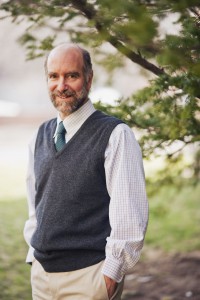
GHI Director Jonathan Patz will be at the Minocqua Brewing Company for the monthly “Science on Tap-Minocqua” series, a science cafe that brings UW researchers to Wisconsin’s Northwoods and lets attendees start a conversation on everything from fisheries, to loons, to Vitamin D.
Patz’s talk, titled “Human Health and a Changing Climate” will start an important discussion on how a warmer world means more than melting ice caps and rising seas.
“Climate Change poses serious harms to our health,” says Patz. “Climate change actions, however, offer enormous health benefits. I’d go so far as to say that achieving a clean energy society may be the greatest public health opportunity we’ve had in more than a century.”
Patz, who spent 15 years as the lead author for the United Nation’s Intergovernmental Panel on Climate Change (IPCC), will touch on these topics, as well as field questions from the audience — an interaction that makes Science on Tap-Minocqua such an important extension of the Wisconsin Idea, says Susan Knight, interim director of Trout Lake Station.
It will be livestreamed
Wednesday October 7th, 2015, 6:30 pm (CST) Duration: 120 minutes
South Carolina Flooding Is The Scary New Reality For Businesses
By Alexander C. Kaufman, Business Editor, The Huffington Post
“Businesses confront a lot of challenges and have a wide range of risks, but this is large and it is growing. It’s just one you can’t ignore.”
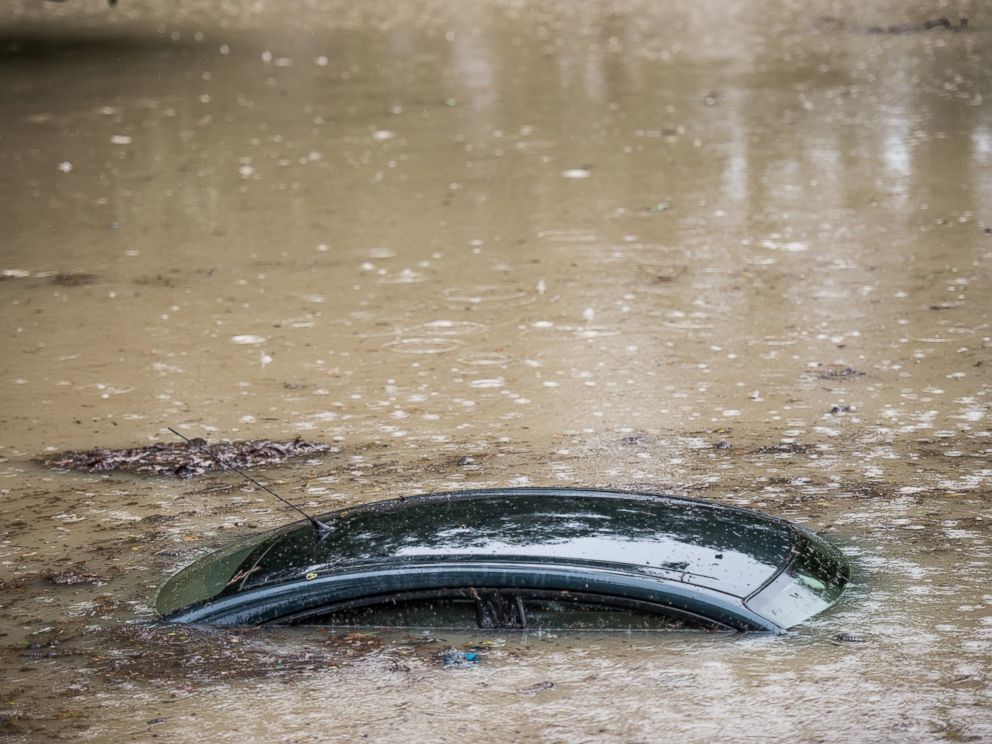
In South Carolina, where heavy weekend rainfall caused the worst flooding in a millennium, the local economy has ground to halt. Rescue workers are evacuating those trapped in flooded neighborhoods of the counties surrounding Columbia, the state’s capital. Officials have also warned other residents to stay home during the cleanup. In many parts of the state, customers can’t shop and employees can’t work.
The floods resulted from Hurricane Joaquin, which never made landfall over South Carolina but combined with other weather systems, soaking the region on Sunday. Nine people have died. It’s unclear how costly the damage will be.
Such extreme events are expected to become more common in the coming years, as the already-irreversible effects of climate change take hold. And bad weather is not good for business.
“It’s a reality of doing business, it’s a reality of life for all of us,” Cynthia McHale, the director of insurance at the sustainability nonprofit Ceres, told The Huffington Post on Monday. “We’re in for a lot of rough weather, among other things.”
Wildfires that destroy property and uproot residents. Heat waves that, as refrigerators and air conditioners roar, cause outages on power grids. Droughts that make water for agriculture and manufacturing even more scarce.
“You need to know the climate change risks to you and your business and, in the case of floods, have an emergency plan for the evacuation of employees,” McHale said. “At some point, you may decide you can’t continue to operate your business where you have been.”
Businesses can even feel ripple effects from storms and floods halfway around the world.
In 2011, deadly deluges in Thailand damaged factories in Bangkok’s bustling manufacturing sector, disrupting supply chains for multinationals such as Apple, Toyota and Unilever. More than 800 people died in the floods, which caused nearly $46 billion in property damages, according to the World Bank.
To be sure, businesses around the world have awakened to the new realities of climate change and the need to mitigate its effects.
Earlier this month, during a series of announcements in New York for Climate Week, business leaders put pressure on political officials to curb carbon emissions.
An unlikely coalition of big corporations — including Goldman Sachs, Johnson & Johnson and Walmart — formed to set dates by which they would completely convert to using renewable energy. Since last year, the number of companies vowing to wean off fossil fuels by setting internal carbon pricing has tripled.
Even bankers are waking up to the need for radical change. In a joint statement released last week, a group of six colossal U.S. banks called for a “strong global climate agreement” during the United Nations’ conference in Paris in December.
“It’s really gargantuan, it really is,” McHale said of climate risks. “I understand that businesses confront a lot of challenges and have a wide range of risks, but this is large and it is growing. It’s just one you can’t ignore.”
In U.N. Speech, Pope Francis Blasts “Selfish and Boundless Thirst for Power and Material Prosperity”
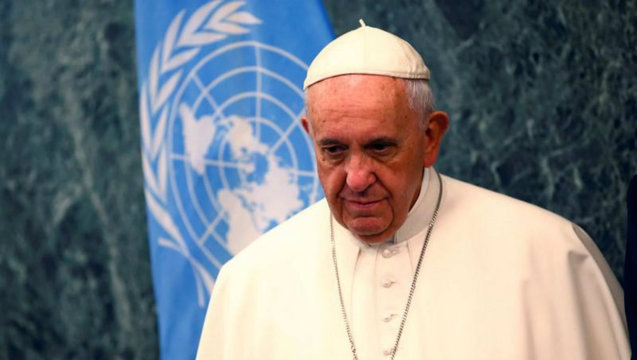
Speaking at the United Nations in New York City (NYC) today Friday, Pope Francis said: “Any harm done to the environment is harm done to humanity.” Moreover, he said: “Every creature has an intrinsic value, in its existence, its life, its beauty and its interdependence with other creatures.”
[Moreover] “We Christians, together with the other monotheistic religions, believe that the universe is the fruit of a loving decision by the Creator, who permits man respectfully to use creation for the good of his fellow men and for the glory of the Creator… he is not authorized to abuse it, much less to destroy it.”
[Furthermore] “In all religions, the environment is a fundamental good”, the pope said, adding that: [A] “selfish and boundless thirst for power and material prosperity leads both to the misuse of available natural resources and to the exclusion of the weak and disadvantaged” and that “the poorest are those who suffer most from such offenses, for three serious reasons: They are cast off by society, forced to live off what is discarded and suffer unjustly from the abuse of the environment.”
“They [the poor] are part of today’s widespread and quietly growing ‘culture of waste.'”, said Pope Francis, speaking in front of UN delegates present for his speech in NYC September 25, 2015.
Following is a transcript of the pope’s speech to the UN, compliments of Democracy NOW!:
Mr President, Ladies and Gentlemen,
Thank you for your kind words. Once again, following a tradition by which I feel honored, the Secretary General of the United Nations has invited the Pope to address this distinguished assembly of nations. In my own name, and that of the entire Catholic community, I wish to express to you, Mr Ban Ki-moon, my heartfelt gratitude. I greet the Heads of State and Heads of Government present, as well as the ambassadors, diplomats and political and technical officials accompanying them, the personnel of the United Nations engaged in this 70th Session of the General Assembly, the personnel of the various programs and agencies of the United Nations family, and all those who, in one way or another, take part in this meeting. Through you, I also greet the citizens of all the nations represented in this hall. I thank you, each and all, for your efforts in the service of mankind.
This is the fifth time that a Pope has visited the United Nations. I follow in the footsteps of my predecessors Paul VI, in1965, John Paul II, in 1979 and 1995, and my most recent predecessor, now Pope Emeritus Benedict XVI, in 2008. All of them expressed their great esteem for the Organization, which they considered the appropriate juridical and political response to this present moment of history, marked by our technical ability to overcome distances and frontiers and, apparently, to overcome all natural limits to the exercise of power. An essential response, inasmuch as technological power, in the hands of nationalistic or falsely universalist ideologies, is capable of perpetrating tremendous atrocities. I can only reiterate the appreciation expressed by my predecessors, in reaffirming the importance which the Catholic Church attaches to this Institution and the hope which she places in its activities.
The United Nations is presently celebrating its seventieth anniversary. The history of this organized community of states is one of important common achievements over a period of unusually fast-paced changes. Without claiming to be exhaustive, we can mention the codification and development of international law, the establishment of international norms regarding human rights, advances in humanitarian law, the resolution of numerous conflicts, operations of peace-keeping and reconciliation, and any number of other accomplishments in every area of international activity and endeavour. All these achievements are lights which help to dispel the darkness of the disorder caused by unrestrained ambitions and collective forms of selfishness. Certainly, many grave problems remain to be resolved, yet it is clear that, without all those interventions on the international level, mankind would not have been able to survive the unchecked use of its own possibilities. Every one of these political, juridical and technical advances is a path towards attaining the ideal of human fraternity and a means for its greater realization.
For this reason I pay homage to all those men and women whose loyalty and self-sacrifice have benefited humanity as a whole in these past seventy years. In particular, I would recall today those who gave their lives for peace and reconciliation among peoples, from Dag Hammarskjöld to the many United Nations officials at every level who have been killed in the course of humanitarian missions, and missions of peace and reconciliation.
Beyond these achievements, the experience of the past seventy years has made it clear that reform and adaptation to the times is always necessary in the pursuit of the ultimate goal of granting all countries, without exception, a share in, and a genuine and equitable influence on, decision-making processes. The need for greater equity is especially true in the case of those bodies with effective executive capability, such as the Security Council, the Financial Agencies and the groups or mechanisms specifically created to deal with economic crises. This will help limit every kind of abuse or usury, especially where developing countries are concerned. The International Financial Agencies are should care for the sustainable development of countries and should ensure that they are not subjected to oppressive lending systems which, far from promoting progress, subject people to mechanisms which generate greater poverty, exclusion and dependence.
The work of the United Nations, according to the principles set forth in the Preamble and the first Articles of its founding Charter, can be seen as the development and promotion of the rule of law, based on the realization that justice is an essential condition for achieving the ideal of universal fraternity. In this context, it is helpful to recall that the limitation of power is an idea implicit in the concept of law itself. To give to each his own, to cite the classic definition of justice, means that no human individual or group can consider itself absolute, permitted to bypass the dignity and the rights of other individuals or their social groupings. The effective distribution of power (political, economic, defense-related, technological, etc.) among a plurality of subjects, and the creation of a juridical system for regulating claims and interests, are one concrete way of limiting power. Yet today’s world presents us with many false rights and – at the same time – broad sectors which are vulnerable, victims of power badly exercised: for example, the natural environment and the vast ranks of the excluded. These sectors are closely interconnected and made increasingly fragile by dominant political and economic relationships. That is why their rights must be forcefully affirmed, by working to protect the environment and by putting an end to exclusion.
First, it must be stated that a true “right of the environment” does exist, for two reasons. First, because we human beings are part of the environment. We live in communion with it, since the environment itself entails ethical limits which human activity must acknowledge and respect. Man, for all his remarkable gifts, which “are signs of a uniqueness which transcends the spheres of physics and biology” (Laudato Si’, 81), is at the same time a part of these spheres. He possesses a body shaped by physical, chemical and biological elements, and can only survive and develop if the ecological environment is favorable. Any harm done to the environment, therefore, is harm done to humanity. Second, because every creature, particularly a living creature, has an intrinsic value, in its existence, its life, its beauty and its interdependence with other creatures. We Christians, together with the other monotheistic religions, believe that the universe is the fruit of a loving decision by the Creator, who permits man respectfully to use creation for the good of his fellow men and for the glory of the Creator; he is not authorized to abuse it, much less to destroy it. In all religions, the environment is a fundamental good (cf. ibid.).
The misuse and destruction of the environment are also accompanied by a relentless process of exclusion. In effect, a selfish and boundless thirst for power and material prosperity leads both to the misuse of available natural resources and to the exclusion of the weak and disadvantaged, either because they are differently abled (handicapped), or because they lack adequate information and technical expertise, or are incapable of decisive political action. Economic and social exclusion is a complete denial of human fraternity and a grave offense against human rights and the environment. The poorest are those who suffer most from such offenses, for three serious reasons: they are cast off by society, forced to live off what is discarded and suffer unjustly from the abuse of the environment. They are part of today’s widespread and quietly growing “culture of waste”.
The dramatic reality this whole situation of exclusion and inequality, with its evident effects, has led me, in union with the entire Christian people and many others, to take stock of my grave responsibility in this regard and to speak out, together with all those who are seeking urgently-needed and effective solutions. The adoption of the 2030 Agenda for Sustainable Development at the World Summit, which opens today, is an important sign of hope. I am similarly confident that the Paris Conference on Climatic Change will secure fundamental and effective agreements.
Solemn commitments, however, are not enough, even though they are a necessary step toward solutions. The classic definition of justice which I mentioned earlier contains as one of its essential elements a constant and perpetual will: Iustitia est constans et perpetua voluntas ius sum cuique tribuendi. Our world demands of all government leaders a will which is effective, practical and constant, concrete steps and immediate measures for preserving and improving the natural environment and thus putting an end as quickly as possible to the phenomenon of social and economic exclusion, with its baneful consequences: human trafficking, the marketing of human organs and tissues, the sexual exploitation of boys and girls, slave labor, including prostitution, the drug and weapons trade, terrorism and international organized crime. Such is the magnitude of these situations and their toll in innocent lives, that we must avoid every temptation to fall into a declarationist nominalism which would assuage our consciences. We need to ensure that our institutions are truly effective in the struggle against all these scourges.
The number and complexity of the problems require that we possess technical instruments of verification. But this involves two risks. We can rest content with the bureaucratic exercise of drawing up long lists of good proposals – goals, objectives and statistical indicators – or we can think that a single theoretical and aprioristic solution will provide an answer to all the challenges. It must never be forgotten that political and economic activity is only effective when it is understood as a prudential activity, guided by a perennial concept of justice and constantly conscious of the fact that, above and beyond our plans and programmes, we are dealing with real men and women who live, struggle and suffer, and are often forced to live in great poverty, deprived of all rights.
To enable these real men and women to escape from extreme poverty, we must allow them to be dignified agents of their own destiny. Integral human development and the full exercise of human dignity cannot be imposed. They must be built up and allowed to unfold for each individual, for every family, in communion with others, and in a right relationship with all those areas in which human social life develops – friends, communities, towns and cities, schools, businesses and unions, provinces, nations, etc. This presupposes and requires the right to education – also for girls (excluded in certain places) – which is ensured first and foremost by respecting and reinforcing the primary right of the family to educate its children, as well as the right of churches and social groups to support and assist families in the education of their children. Education conceived in this way is the basis for the implementation of the 2030 Agenda and for reclaiming the environment.
At the same time, government leaders must do everything possible to ensure that all can have the minimum spiritual and material means needed to live in dignity and to create and support a family, which is the primary cell of any social development. In practical terms, this absolute minimum has three names: lodging, labor, and land; and one spiritual name: spiritual freedom, which includes religious freedom, the right to education and other civil rights.
For all this, the simplest and best measure and indicator of the implementation of the new Agenda for development will be effective, practical and immediate access, on the part of all, to essential material and spiritual goods: housing, dignified and properly remunerated employment, adequate food and drinking water; religious freedom and, more generally, spiritual freedom and education. These pillars of integral human development have a common foundation, which is the right to life and, more generally, what we could call the right to existence of human nature itself.
The ecological crisis, and the large-scale destruction of biodiversity, can threaten the very existence of the human species. The baneful consequences of an irresponsible mismanagement of the global economy, guided only by ambition for wealth and power, must serve as a summons to a forthright reflection on man: “man is not only a freedom which he creates for himself. Man does not create himself. He is spirit and will, but also nature” (BENEDICT XVI, Address to the Bundestag, 22 September 2011, cited in Laudato Si’, 6). Creation is compromised “where we ourselves have the final word… The misuse of creation begins when we no longer recognize any instance above ourselves, when we see nothing else but ourselves” (ID. Address to the Clergy of the Diocese of Bolzano-Bressanone, 6 August 2008, cited ibid.). Consequently, the defense of the environment and the fight against exclusion demand that we recognize a moral law written into human nature itself, one which includes the natural difference between man and woman (cf. Laudato Si’, 155), and absolute respect for life in all its stages and dimensions (cf. ibid., 123, 136).
Without the recognition of certain incontestable natural ethical limits and without the immediate implementation of those pillars of integral human development, the ideal of “saving succeeding generations from the scourge of war” (Charter of the United Nations, Preamble), and “promoting social progress and better standards of life in larger freedom” (ibid.), risks becoming an unattainable illusion, or, even worse, idle chatter which serves as a cover for all kinds of abuse and corruption, or for carrying out an ideological colonization by the imposition of anomalous models and lifestyles which are alien to people’s identity and, in the end, irresponsible.
War is the negation of all rights and a dramatic assault on the environment. If we want true integral human development for all, we must work tirelessly to avoid war between nations and between peoples.
To this end, there is a need to ensure the uncontested rule of law and tireless recourse to negotiation, mediation and arbitration, as proposed by the Charter of the United Nations, which constitutes truly a fundamental juridical norm. The experience of these seventy years since the founding of the United Nations in general, and in particular the experience of these first fifteen years of the third millennium, reveal both the effectiveness of the full application of international norms and the ineffectiveness of their lack of enforcement. When the Charter of the United Nations is respected and applied with transparency and sincerity, and without ulterior motives, as an obligatory reference point of justice and not as a means of masking spurious intentions, peaceful results will be obtained. When, on the other hand, the norm is considered simply as an instrument to be used whenever it proves favorable, and to be avoided when it is not, a true Pandora’s box is opened, releasing uncontrollable forces which gravely harm defenseless populations, the cultural milieu and even the biological environment.
The Preamble and the first Article of the Charter of the United Nations set forth the foundations of the international juridical framework: peace, the pacific solution of disputes and the development of friendly relations between the nations. Strongly opposed to such statements, and in practice denying them, is the constant tendency to the proliferation of arms, especially weapons of mass distraction, such as nuclear weapons. An ethics and a law based on the threat of mutual destruction – and possibly the destruction of all mankind – are self-contradictory and an affront to the entire framework of the United Nations, which would end up as “nations united by fear and distrust”. There is urgent need to work for a world free of nuclear weapons, in full application of the non-proliferation Treaty, in letter and spirit, with the goal of a complete prohibition of these weapons.
The recent agreement reached on the nuclear question in a sensitive region of Asia and the Middle East is proof of the potential of political good will and of law, exercised with sincerity, patience and constancy. I express my hope that this agreement will be lasting and efficacious, and bring forth the desired fruits with the cooperation of all the parties involved.
In this sense, hard evidence is not lacking of the negative effects of military and political interventions which are not coordinated between members of the international community. For this reason, while regretting to have to do so, I must renew my repeated appeals regarding to the painful situation of the entire Middle East, North Africa and other African countries, where Christians, together with other cultural or ethnic groups, and even members of the majority religion who have no desire to be caught up in hatred and folly, have been forced to witness the destruction of their places of worship, their cultural and religious heritage, their houses and property, and have faced the alternative either of fleeing or of paying for their adhesion to good and to peace by their own lives, or by enslavement.
These realities should serve as a grave summons to an examination of conscience on the part of those charged with the conduct of international affairs. Not only in cases of religious or cultural persecution, but in every situation of conflict, as in Ukraine, Syria, Iraq, Libya, South Sudan and the Great Lakes region, real human beings take precedence over partisan interests, however legitimate the latter may be. In wars and conflicts there are individual persons, our brothers and sisters, men and women, young and old, boys and girls who weep, suffer and die. Human beings who are easily discarded when our only response is to draw up lists of problems, strategies and disagreements.
As I wrote in my letter to the Secretary-General of the United Nations on 9 August 2014, “the most basic understanding of human dignity compels the international community, particularly through the norms and mechanisms of international law, to do all that it can to stop and to prevent further systematic violence against ethnic and religious minorities” and to protect innocent peoples.
Along the same lines I would mention another kind of conflict which is not always so open, yet is silently killing millions of people. Another kind of war experienced by many of our societies as a result of the narcotics trade. A war which is taken for granted and poorly fought. Drug trafficking is by its very nature accompanied by trafficking in persons, money laundering, the arms trade, child exploitation and other forms of corruption. A corruption which has penetrated to different levels of social, political, military, artistic and religious life, and, in many cases, has given rise to a parallel structure which threatens the credibility of our institutions.
I began this speech recalling the visits of my predecessors. I would hope that my words will be taken above all as a continuation of the final words of the address of Pope Paul VI; although spoken almost exactly fifty years ago, they remain ever timely. “The hour has come when a pause, a moment of recollection, reflection, even of prayer, is absolutely needed so that we may think back over our common origin, our history, our common destiny. The appeal to the moral conscience of man has never been as necessary as it is today… For the danger comes neither from progress nor from science; if these are used well, they can help to solve a great number of the serious problems besetting mankind (Address to the United Nations Organization, 4 October 1965). Among other things, human genius, well applied, will surely help to meet the grave challenges of ecological deterioration and of exclusion. As Paul VI said: “The real danger comes from man, who has at his disposal ever more powerful instruments that are as well fitted to bring about ruin as they are to achieve lofty conquests” (ibid.).
The common home of all men and women must continue to rise on the foundations of a right understanding of universal fraternity and respect for the sacredness of every human life, of every man and every woman, the poor, the elderly, children, the infirm, the unborn, the unemployed, the abandoned, those considered disposable because they are only considered as part of a statistic. This common home of all men and women must also be built on the understanding of a certain sacredness of created nature.
Such understanding and respect call for a higher degree of wisdom, one which accepts transcendence, rejects the creation of an all-powerful elite, and recognizes that the full meaning of individual and collective life is found in selfless service to others and in the sage and respectful use of creation for the common good. To repeat the words of Paul VI, “the edifice of modern civilization has to be built on spiritual principles, for they are the only ones capable not only of supporting it, but of shedding light on it” (ibid.).
El Gaucho Martín Fierro, a classic of literature in my native land, says: “Brothers should stand by each other, because this is the first law; keep a true bond between you always, at every time – because if you fight among yourselves, you’ll be devoured by those outside”.
The contemporary world, so apparently connected, is experiencing a growing and steady social fragmentation, which places at risk “the foundations of social life” and consequently leads to “battles over conflicting interests” (Laudato Si’, 229).
The present time invites us to give priority to actions which generate new processes in society, so as to bear fruit in significant and positive historical events (cf. Evangelii Gaudium, 223). We cannot permit ourselves to postpone “certain agendas” for the future. The future demands of us critical and global decisions in the face of world-wide conflicts which increase the number of the excluded and those in need.
The praiseworthy international juridical framework of the United Nations Organization and of all its activities, like any other human endeavor, can be improved, yet it remains necessary; at the same time it can be the pledge of a secure and happy future for future generations. And so it will, if the representatives of the States can set aside partisan and ideological interests, and sincerely strive to serve the common good. I pray to Almighty God that this will be the case, and I assure you of my support and my prayers, and the support and prayers of all the faithful of the Catholic Church, that this Institution, all its member States, and each of its officials, will always render an effective service to mankind, a service respectful of diversity and capable of bringing out, for sake of the common good, the best in each people and in every individual.
Upon all of you, and the peoples you represent, I invoke the blessing of the Most High, and all peace and prosperity. Thank you.
Source: Democracy NOW!
The Pope Speaks to Congress about Climate Change, Refugees, Cuba & “Money that is Drenched in Blood”

Pope Francis Thursday became the first Pope to ever address a joint session of Congress. Below are some key passages from the Pope’s speech, compliments of Democracy NOW!:
On Four Great Americans
A nation can be considered great when it defends liberty as [Abraham] Lincoln did, when it fosters a culture which enables people to “dream” of full rights for all their brothers and sisters, as Martin Luther King sought to do; when it strives for justice and the cause of the oppressed, as Dorothy Day did by her tireless work, the fruit of a faith which becomes dialogue and sows peace in the contemplative style of Thomas Merton.
On Dorothy Day
In these times when social concerns are so important, I cannot fail to mention the Servant of God Dorothy Day, who founded the Catholic Worker Movement. Her social activism, her passion for justice and for the cause of the oppressed, were inspired by the Gospel, her faith, and the example of the saints.
On Refugees & Immigration
Our world is facing a refugee crisis of a magnitude not seen since the Second World War. This presents us with great challenges and many hard decisions. On this continent, too, thousands of persons are led to travel north in search of a better life for themselves and for their loved ones, in search of greater opportunities. Is this not what we want for our own children? We must not be taken aback by their numbers, but rather view them as persons, seeing their faces and listening to their stories, trying to respond as best we can to their situation. To respond in a way which is always humane, just and fraternal. We need to avoid a common temptation nowadays: to discard whatever proves troublesome. Let us remember the Golden Rule: “Do unto others as you would have them do unto you.”
On the Arms Trade
Why are deadly weapons being sold to those who plan to inflict untold suffering on individuals and society? Sadly, the answer, as we all know, is simply for money: money that is drenched in blood, often innocent blood. In the face of this shameful and culpable silence, it is our duty to confront the problem and to stop the arms trade.
On Climate Change
In Laudato Si’, I call for a courageous and responsible effort to “redirect our steps” and to avert the most serious effects of the environmental deterioration caused by human activity. I am convinced that we can make a difference and I have no doubt that the United States – and this Congress – have an important role to play. Now is the time for courageous actions and strategies, aimed at implementing a “culture of care” and “an integrated approach to combating poverty, restoring dignity to the excluded, and at the same time protecting nature.”
On Finance Capital
If politics must truly be at the service of the human person, it follows that it cannot be a slave to the economy and finance. Politics is, instead, an expression of our compelling need to live as one, in order to build as one the greatest common good: that of a community which sacrifices particular interests in order to share, in justice and peace, its goods, its interests, its social life. I do not underestimate the difficulty that this involves, but I encourage you in this effort.
On The Death Penalty
The Golden Rule also reminds us of our responsibility to protect and defend human life at every stage of its development. This conviction has led me, from the beginning of my ministry, to advocate at different levels for the global abolition of the death penalty. I am convinced that this way is the best, since every life is sacred, every human person is endowed with an inalienable dignity, and society can only benefit from the rehabilitation of those convicted of crimes. Recently my brother bishops here in the United States renewed their call for the abolition of the death penalty. Not only do I support them, but I also offer encouragement to all those who are convinced that a just and necessary punishment must never exclude the dimension of hope and the goal of rehabilitation.
On Cuba
I would like to recognize the efforts made in recent months to help overcome historic differences linked to painful episodes of the past. It is my duty to build bridges and to help all men and women, in any way possible, to do the same. When countries which have been at odds resume the path of dialogue – a dialogue which may have been interrupted for the most legitimate of reasons – new opportunities open up for all. This has required, and requires, courage and daring, which is not the same as irresponsibility.
Pope Francis Calls on U.S. to Combat Climate Change & Build a “Truly Tolerant and Inclusive” Society

WEDNESDAY, SEPTEMBER 23, 2015
In his first U.S. speech, Pope Francis urged the United States to help tackle climate change at a “critical moment of history” and called on Americans to build a truly tolerant and inclusive society:
TRANSCRIPT
POPE FRANCIS: Mr. President,
I am deeply grateful for your welcome in the name of all Americans. As the son of an immigrant family, I am happy to be a guest in this country, which was largely built by such families. I look forward to these days of encounter and dialogue, in which I hope to listen to, and share, many of the hopes and dreams of the American people.
During my visit I will have the honor of addressing Congress, where I hope, as a brother of this country, to offer words of encouragement to those called to guide the nation’s political future in fidelity to its founding principles. I will also travel to Philadelphia for the Eighth World Meeting of Families, to celebrate and support the institutions of marriage and the family at this, a critical moment in the history of our civilization.
Mr. President, together with their fellow citizens, American Catholics are committed to building a society which is truly tolerant and inclusive, to safeguarding the rights of individuals and communities, and to rejecting every form of unjust discrimination. With countless other people of good will, they are likewise concerned that efforts to build a just and wisely ordered society respect their deepest concerns and their right to religious liberty. That freedom remains one of America’s most precious possessions. And, as my brothers, the United States Bishops, have reminded us, all are called to be vigilant, precisely as good citizens, to preserve and defend that freedom from everything that would threaten or compromise it.
Mr. President, I find it encouraging that you are proposing an initiative for reducing air pollution. Accepting the urgency, it seems clear to me also that climate change is a problem which can no longer be left to a future generation. When it comes to the care of our “common home”, we are living at a critical moment of history. We still have time to make the changes needed to bring about “a sustainable and integral development, for we know that things can change” (Laudato Si’, 13). Such change demands on our part a serious and responsible recognition not only of the kind of world we may be leaving to our children, but also to the millions of people living under a system which has overlooked them. Our common home has been part of this group of the excluded which cries out to heaven and which today powerfully strikes our homes, our cities and our societies. To use a telling phrase of the Reverend Martin Luther King, we can say that we have defaulted on a promissory note and now is the time to honor it.
We know by faith that “the Creator does not abandon us; he never forsakes his loving plan or repents of having created us. Humanity still has the ability to work together in building our common home” (Laudato Si’, 13). As Christians inspired by this certainty, we wish to commit ourselves to the conscious and responsible care of our common home.
The efforts which were recently made to mend broken relationships and to open new doors to cooperation within our human family represent positive steps along the path of reconciliation, justice and freedom. I would like all men and women of good will in this great nation to support the efforts of the international community to protect the vulnerable in our world and to stimulate integral and inclusive models of development, so that our brothers and sisters everywhere may know the blessings of peace and prosperity which God wills for all his children.
Mr. President, once again I thank you for your welcome, and I look forward to these days in your country. God bless America!
Source: Democracy NOW!
Humanity Is ‘Racing Extinction’ (And We’re Losing)

The new documentary “Racing Extinction” goes undercover to the edge of mass extinction in the world’s darkest black markets.
“In 2009, audiences around the world were blown away by a documentary by Louie Psihoyos called “The Cove.” It showed the horrifying secret mass slaughter of dolphins in Japan and the sale of mercury-laden dolphin meat to school children. Won an Oscar. Now Psihoyos has taken his cameras global, and the picture is brutal again. Species falling into oblivion under the pressure of manmade climate change. Some hunted and torn to shreds for gills and fins. A “great extinction.” It’s a powerful call to act, and act fast.”
– Tom Ashbrook, National Public Radio’s “On Point”, aired 9-21-2015, 11:00 am – 12:00 noon, (Eastern).
New York Times: ‘Racing Extinction’ Charts the Slaughter of Vital Species – “Noting that our planet’s five major extinctions had in common a spike in carbon dioxide, Mr. Psihoyos worries that the emissions of our own age, aptly dubbed the Anthropocene, are damaging our oceans in ways that are mostly invisible. And that the devastating consequences of more direct human behaviors — like the mass slaughter of exotic marine life for food and folk medicines — are also largely overlooked.”
 All Things Environmental
Recent Comments