
Governments from Around the World Meeting in Lima, Peru to Lay Foundation for Addressing Climate Change, Wisconsin Governor Scott Walker Sends U.S. EPA Letter Opposing Climate Change Regulations

Building on the groundswell of worldwide climate action, and in preparation for concluding its Framework Convention of Climate Change in Paris in 2015, the United Nations and its participating governments from around the world have begun meeting 1 December, 2014 in Lima, Peru, and scheduled to close on 12 December, 2014, to lay the foundation for an effective new, universal climate change agreement in Paris in 2015 while also raising immediate ambition to act on climate change in advance of the agreement coming into effect in 2020.
The UN’s Intergovernmental Panel on Climate Change has this year warned against rising sea levels, storms and droughts as a result of unchecked greenhouse gas emissions, and highlighted the many opportunities of taking climate action.
Last week, the UN Environment Programme underscored the need for global emissions to peak within the decade and then to rapidly decline so that the world can reach climate neutrality – also termed zero net emissions – in the second half of the century.
Christiana Figueres, Executive Secretary of the UN Climate Convention said:
“Never before have the risks of climate change been so obvious and the impacts so visible. Never before have we seen such a desire at all levels of society to take climate action. Never before has society had all the smart policy and technology resources to curb greenhouse gas emissions and build resilience. All of this means we can be confident we will have a productive meeting in Lima, which will lead to an effective outcome in Paris next year.”
Meanwhile, Wisconsin Governor Scott Walker submitted comments this week in opposition of the Environmental Protection Agency’s (EPA) Clean Power Plan, which proposes increased regulations aimed at reducing carbon dioxide emission from Wisconsin’s power plants in Wisconsin. Walker’s letter claims that the proposed regulations would have a detrimental effect on Wisconsin’s manufacturing-based economy, as well as household ratepayers.
Walker says the Wisconsin Department of Natural Resources and Public Service Commission of Wisconsin have spent months reviewing the rule and seeking input from those who would be affected since its proposal in June of this year.
Governor Walker has asked the EPA to reconsider the rule based on the impact the rule will have on the cost and reliability of electricity, not only to Wisconsin’s manufacturing sector and the 455,000 people it employs, but on every ratepayer in the state and the nation.
In Lima, governments meeting under the “Ad Hoc Work Group on the Durban Platform for Enhanced Action” (ADP) need to define the scope and the type of contributions they will provide to the Paris agreement, along with clarity on how finance, technology and capacity building will be handled.
Countries will put forward what they plan to contribute to the 2015 agreement in the form of Intended Nationally Determined Contributions (INDCs) by the first quarter of 2015, well in advance of the Paris conference in December of next year.
The Lima conference needs to provide final clarity on what the INDCs need to contain, including for developing countries who are likely to have a range of options from, for example, sector-wide emission curbs to energy intensity goals.
Ms. Figueres welcomed the leadership of the EU, the US and China, who have publically announced their post-2020 climate targets and visions.
“It is hugely encouraging that well ahead of next year’s first quarter deadline, countries have already been outlining what they intend to contribute to the Paris agreement. This is also a clear sign that countries are determined to find common ground and maximize the potential of international cooperation,” she said.
“Countries are working hard to increase emission reductions before 2020, when the Paris agreement is set to enter into effect. Pathways on how to accomplish this will also be a key issue before nations in Lima,” she added.
Governments need to work towards streamlining elements of a draft agreement for Paris 2015 and explore common ground on unresolved issues in order to achieve a balanced, well-structured, coherent draft for the next round of work on the text in February next year.
In addition to progress made to date towards a Paris agreement, the political will of countries to provide climate finance is increasingly coming to the fore.
At a recent pledging conference held in Berlin, Germany, countries made pledges towards the initial capitalization of the Green Climate Fund totaling nearly $ 9.3 billion USD. Subsequent pledges took this figure to $ 9.6 billion, so that the $ 10 billion milestone is within reach.
“This shows that countries are determined to build trust and to provide the finance that developing countries need to move forward towards decarbonizing their economies and building resilience”, Ms. Figueres said.
In the course of the 2014, governments have been exploring how to raise immediate climate ambition in areas with the greatest potential to curb emissions, ranging from renewable energy to cities.
As part of the “Lima Action Agenda”, countries will decide how to maintain and accelerate cooperation on climate change by all actors, including those flowing from the Climate Summit in September, where many climate action pledges were made.
“We have seen an amazing groundswell of momentum building this year. One of the main deliverables of the Lima conference will be ways to build on this momentum and further mobilize action across all levels of society. Society-wide action in concert with government contributions to the Paris agreement are crucial to meet the agreed goal of limiting global temperature rise to less than two degrees Celsius, and to safeguard this and future generations,” Ms. Figueres said.
As climate change impacts worsen and impact the poor and most vulnerable, governments urgently need to scale up adaptation to climate change. The conference needs to agree on how National Adaptation Plans of developing countries will be funded and turned into reality on the ground. Countries will also work to agree a work program for the Executive Committee of the Warsaw International Mechanism for Loss and Damage, and elect the members of its Executive Committee.
Governments will work to scale up and coordinate the delivery of climate finance and of the various existing funds. A focus will be on identifying ways to accelerate finance for adaptation to climate change. Governments will also recognize the initial capitalization of the GCF, which is expected to reach USD $ 10 billion by the close of the Lima conference.
Countries meeting in Lima will further work to provide support to avoid deforestation. Several developing countries are expected to submit information which would make it possible for them to obtain funding for forest protection.
Governments meeting in Lima are expected to clarify the role of carbon markets in the 2015 global agreement and set a work program for next year to design and develop operations for implementing new market mechanisms.
As part of the efforts by countries to accelerate pre-2020 climate action, the secretariat is organizing a fair 5, 8 and 9 December in Lima to showcase how action is being scaled up and how many countries and non-state actors are taking action and setting an example.
The Killing of Eric Garner

On July 17, 2014, Eric Garner, an African American, died in the Tompkinsville neighborhood of Staten Island, New York, after a police officer put him in a chokehold, a tactic banned by the New York City Police Department (NYPD). Garner was initially approached by Officer Justin Damico on suspicion of selling “loosies”, single cigarettes from packs without tax stamps. After Garner expressed to the police that he was tired of being harassed and that he was not selling cigarettes, officers made the move to arrest Garner. Officer Daniel Pantaleo, also on scene, put his arms around the much taller Garner’s neck, applying a chokehold shown in a widely viewed video recording of the event. While lying face-down on the sidewalk surrounded by four officers, Garner is heard to repeat numerous times, “I can’t breathe”. Garner was pronounced dead approximately one hour later at the hospital.
After the incident, city medical examiners concluded that Garner was killed by neck compression from the chokehold, along with “the compression of his chest and prone positioning during physical restraint by police”. Contributing factors included bronchial asthma, heart disease, obesity, and hypertensive cardiovascular disease. As a result of Garner’s death, four EMTs and paramedics who responded to the scene were suspended without pay on July 21, 2014; officers Damico and Pantaleo were placed on desk duty; and Daniel Pantaleo was stripped of his service gun and badge.
On December 3, 2014, a grand jury decided not to indict officer Pantaleo. The event stirred public protests and rallies with charges of police brutality and was broadcast nationally over various media networks. Attorney General Eric Holder announced that the Justice Department would launch an “independent, thorough, fair, and expeditious” civil rights investigation into Garner’s death.
From Wikipedia, the free encyclopedia
Clean Wisconsin Report Says Climate Change Already Costing Wisconsin Agricultural Industry
Clean Wisconsin Surveyed 60 Farmers On How Extreme Weather Has Already Affected Their Livelihood
The environmental organization Clean Wisconsin released a report on Wednesday about how climate change could have a major effect on the state’s agriculture industry.
The report “Seeds of Challenge” includes anecdotes from farmers across the state about how extreme weather like droughts and heavy precipitation have impacted their animals and crops.
Third generation farmer Jim Goodman, who owns a dairy operation in southwest Wisconsin, was one of 60 farmers who responded to the group’s survey. Goodman acknowledges that many farmers are skeptical of climate change and are used to dealing with unpredictable weather. But he said that weather has become too frequent.
“You’ll have unduly wet spring where you can’t get into the fields,” he said. “Then it’ll dry up in the summer so bad that the pasture’s gone. Then you may get another wet fall where it’s difficult to harvest what crops you have.”
Goodman said it’s costing him money. For example, he had to buy hay for the first time in decades during the drought in 2012.
University of Wisconsin researchers say that climate change may cause extreme weather to become more common in the future. Clean Wisconsin Energy and Climate Specialist Katy Walter said that if severe weather does become regular, it could end up costing the ag industry a lot of money and require some farmers to make large investments to continue operating.
“For example, installing irrigation systems to combat drought and build structures for storing feed and protecting livestock,” said Walter.
According to the U.S. Department of Agriculture, farmers have reported major crop losses and higher production costs in recent years, partially because of of extreme weather.
Walker’s PSC Pitches Shutout for Wisconsin Utilities Against Public and Environment

Madisonians received a Thanksgiving greeting by Governor Scott Walker today in the form of increased monthly electric rates and reduced incentives for conserving on electricity in their homes. The Public Service Commission of Wisconsin (PSC), with two of its three commissioners appointed by Governor Scott Walker, granted its approval to the private utility Madison Gas & Electric’s (MG&E) proposal to significantly increase the monthly fixed charges its customers must pay, and its request to reduce the monetary benefits customer’s will save by conserving more on their power use.
This is the third major utility monopoly in the state to be granted such an approval by the state’s chief energy regulatory agency. Please see November 18, 2014 post “Public Service Commission of Wisconsin Doing Public a Disservice” for details on PSC’s approvals of the other two utilities’ requests (one for We Energies Corporation and the other for the Green Bay area Wisconsin Public Service Corp..
Despite PSC being given the mission “to protect the environment, the public interest and the public health and welfare of Wisconsin citizens” in its decisions, the Governor Walker’s appointed PSC commissioners Phil Montgomery and Ellen Nowak voted to make it more of a financial hardship for low income families and individuals to pay their energy bills. Eric Callisto, a Governor Doyle appointee to the Commission, voted no to all three utility proposals, which will also have negative impacts on everybody in the form of faster global warming and climate change because they slow the payback on residents of the state who invest in solar panels thus conserving on fossil fuel burning.
The MG&E decision will more than double the monthly fixed rate for Madisonians, from $10.50 a month to $19, while decreasing the charge for kilowatt-hour of power used. The increase is similar to two other two state utilities the PSC has already approved, one for the Wisconsin Public Service Corp., the other for We Energies.
As reported in Thursday’s issue of the Wisconsin State Journal, Callisto chastised fellow commissioners Montgomery and Nowak for supporting the new rate structure, saying they have ignored the comments of 1,100 people (including testimony) who have submitted comments urging the PSC to reject the MG&E plan, including people from the cities of Madison, Middleton and Monona, and other in Dane County.
“Shame on us”, Callisto said. “We have plainly disregarded our opportunity to protect the public interest.”
Madison Mayor Paul Soglin said “MG&E ‘s approved rate design is contrary to the city’s interests and will undermine energy conservation efforts, energy efficiency investments, and the newable energy investments in our community”, the State Journal reported.
Don Wichert, who helped organize RePower Madison, a citizens group opposed to the MG&E plan, said “our commission is now the worst commission in the country. It is clearly not the ‘public’ service commission”. the Wisconsin State Journal reported November 27th.
Shooting of Michael Brown
(From Wikipedia, the free encyclopedia)
The shooting of Michael Brown occurred on August 9, 2014, in Ferguson, Missouri, a suburb of St. Louis. Brown, an 18-year-old black man, was fatally shot by Darren Wilson, 28, a white police officer. The disputed circumstances of the shooting and the resultant protests and civil unrest received considerable attention in the United States and abroad, and have sparked debate about Use of Force Doctrine in Missouri.
Brown and his friend Dorian Johnson were walking down the middle of the street when Wilson drove up and told them to move to the sidewalk. Brown and Wilson struggled through the window of the police vehicle until Wilson’s gun was fired as a result of the struggle. Brown and Johnson then fled in different directions, with Wilson in pursuit of Brown. Wilson shot Brown six times, killing him. Witness reports differ as to whether and when Brown had his hands raised, and whether he was moving toward Wilson, when the final shots were fired.
The shooting sparked protests and unrest in Ferguson, in part due to the belief among many that Brown was surrendering, as well as longstanding racial tensions between the majority-black Ferguson community and the majority-white city government and police.[2] Protests, both peaceful and violent, along with vandalism and looting, continued for more than a week, resulting in night curfews. The response of area police agencies in dealing with the protests received significant criticism from the media and politicians. There were concerns over insensitivity, tactics and a militarized response. Missouri Governor Jay Nixon ordered local police organizations to cede much of their authority to the Missouri State Highway Patrol. Mainly peaceful protests continued for several weeks.
A few days after the shooting, the Ferguson Police Department released a video of a convenience store robbery that occurred only minutes before the shooting. It showed Brown taking cigarillos and shoving a store employee who tried to prevent him from leaving. The timing of the video release received criticism from some media, the Brown family, and some public officials, who viewed the release as an attempt to impeach Brown. Others said the video was informative as to Brown’s state of mind, with the shooting incident coming so shortly after the robbery. There is conflicting evidence as to whether Officer Wilson knew of Brown’s involvement in the robbery.[3][4]
The events surrounding the shooting were investigated by a county grand jury. In a press conference on November 24, 2014, the St. Louis County Prosecutor announced that the jury had decided not to indict Darren Wilson for his actions.[5] The Department of Justice is reviewing Ferguson Police Department’s internal investigations of use of force during the last four years.
“Injustice anywhere is a threat to justice everywhere.” – Martin Luther King, Jr.
Another Wisconsin Butterfly Will Be Added to the Federal Endangered Species List

The Poweshiek skipperling butterfly will be added to the federal endangered species list. That will make for 10 butterflies on the list.
By Lee Bergquist of the Milwaukee Journal Sentinel, Nov. 23, 2014
Experts thought the endangered Poweshiekskipperling would disappear in places like Wisconsin but survive in historic strongholds of western Minnesota, Iowa and the Dakotas.
Just the opposite happened.
Wisconsin is one of the last remaining places where the little brown butterfly can be found. But even here it lives a tenuous existence.
One — maybe two — sites in Wisconsin are inhabited by the prairie butterfly. It is also found in Oakland County, Mich., and one location in Manitoba.
All are on the periphery of the native range of a butterfly named for a Fox Indian chief. The U.S. Fish and Wildlife Service estimates that 90% of the butterfly’s population in nearby states has been wiped out.
“The Poweshiek skipperling is currently in danger of extinction throughout its entire range,” the agency said last month in announcing it would be listed as a federal endangered species. The protections go into effect this week.
The state listed the species in 1989. Both the state and federal listings prevent private landowners from destroying the insect. In Wisconsin’s case, the Poweshiek (pronounced pow-a-sheek) is believed today to inhabit only public-owned land.
“It’s been a very dramatic decline, and the frustrating thing is that I don’t think that anyone really knows what caused it,” said Owen Boyle, section chief of species management at the Department of Natural Resources.
Susan Borkin of the Milwaukee Public Museum is a local expert on the Poweshiek. She could not find the butterfly in Scuppernong Prairie State Natural Area in Waukesha County in 2013 and 2014.
In 2011, she counted 63 a day during peak flight periods on 20 acres of butterfly habitat.
In the spring of 2012, the DNR conducted prescribed burns of Poweshiek habitat at Scuppernong overBorkin’s objections. She found 45 on peak days that summer.
Based on her counts going back to the early 1990s, Scuppernong had more Poweshieks than any place in the state.
Then after 2012, she found nothing.
The only known sighting in 2014 came from independent researchers Scott and Ann Swengel of Baraboo, who found four last summer in Green Lake County in the Puchyan Prairie State Natural Area.
What happened?
The conversion of tall grass and mixed-grass prairies to farming across the Midwest, beginning in 1830, was probably the biggest factor, according to the Fish and Wildlife Service.
But this wouldn’t account for the large-scale decline in the last 10 or 15 years.
“It was not the classic extinction due to ‘destruction of habitat’ for most of the sites,” said Borkin, curator of invertebrate zoology at the museum who has studied the butterfly since the early 1990s.
“It was really surprising how quickly they went out. It caught us all a little by surprise.”
Other possibilities: Borkin said that it could have been the introduction of new pesticides, extreme weather changes such as drought, heat waves, bitterly cold winter or flooding, or a combination of factors.
The Fish and Wildlife Service says the restorative powers of natural fire activity, which has been lacking on many prairies, may have hurt the species by harming the grasses. However, the Swengels, who have studied the butterfly across the Midwest, believe the benefits of fire for the Poweshiek are overblown.
And then there is the Poweshiek itself. Unlike the monarch butterfly, whose populations are also plummeting, the Poweshiek is not capable of long migrations.
It pretty well lives in one spot, regardless of changes in local habitat. Rapid, erratic fliers, they live in their butterfly stage for no more than a week. It can fly about a mile, according to the Fish and Wildlife Service.
In the winter, in a larval form, it clings to a blade of grass and is guarded by antifreeze-type protection in its body.
Borkin opposed the DNR’s decision to conduct a burn at Scuppernong on about 20% of the butterfly’s habitat.
In a July 2011 letter to the DNR, she recommended against burning the prairie, “primarily because we don’t know what’s causing the wide-range species decline, this is the only population in WI that can be considered reasonably viable…”
She also said the Poweshiek is “well known to have a negative response to fire.”
In spring of 2012, shortly before the burn, a letter from the agency’s Bureau of Endangered Resources to Borkin and the Fish and Wildlife Service said the agency was going ahead.
The prairie hadn’t been burned in 15 years and only a portion of the butterfly’s habitat would be affected, the agency said.
Also, the property contained the prairie white-fringed orchid, a federal threatened species that would benefit from fire since it is “profoundly shade-sensitive in critical life stages,” an agency official wrote. Burning would remove woody debris that crowds out the orchid.
“I’d argue that we acted very responsibly,” Boyle said. “A lot of what the DNR has to do is balance the needs of many species.”
Both Borkin and the Swengels didn’t blame the DNR for the disappearance of Poweshiek at Scupperong.
“We are disappointed,” said Scott Swengel. “But we realize we don’t control everything — it’s not all about the butterflies.”
The summer of 2012 was extremely hot and dry. That year, Milwaukee set a record as being the warmest on record. The following spring was unseasonably wet.
“Weather played a huge role in knocking out the populations,” Borkin said. “It was a combination of factors that worked against this species.”
What happens if the Poweshiek becomes extinct?
“The Poweshiek is insignificant in the bigger picture,” Ann Swengel said in an email.
“But it’s a huge warning that we don’t understand nature as well as we think we do.”
Support the EPA’s Biggest Action Ever on Climate Change
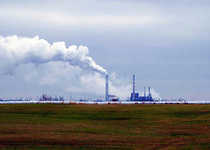
The Obama administration has proposed a critical plan to limit the carbon pollution from new and existing power plants that fuels global warming. But if the Koch brothers, the coal industry and congressional climate change deniers have their way, this plan will be brought to a screeching halt.
The Environmental Protection Agency (EPA) has been working on commonsense carbon limits for power plants, but lobbyists, corporate polluters and Washington insiders are working tirelessly to stop this progress in its tracks. The EPA needs your support it to stand up to the polluters.
Sign this petition by December 1st to fight back those who don’t care what happens to our Earth.
New Study Documents 40% Decline in Polar Bears from 2001 to 2010

A new study shows a marked decrease in the number of polar bears in the Arctic’s southern Beaufort Sea during the 2000s, a period when summer sea ice was also declining. Scientists estimate the population of polar bears in the area north of Alaska and northern Canada declined by about 40 percent from 2001 to 2010.
By tagging and recapturing polar bears over the years, researchers were able to estimate the changes in population size over the decade. Jeffrey Bromaghin, a research statistician for the United States Geological Survey and lead author of the study, told The Huffington Post it’s likely that loss of sea ice during the 10-year period led to the starvation of many of the bears.
“We suspect the primary cause of reduced survival and population decline was starvation, due to climate-induced sea ice conditions that reduced access to seals,” Bromaghin told HuffPost. “During the lengthening open water period, most bears in the southern Beaufort Sea stay on the remnant ice far from shore where few seals are thought to occur.” Essentially, the bears were forced farther away from their food source.
The decline in the number of polar bears over the 10-year period was not constant. The bears’ survival was particularly bad during the middle of the decade, and cubs had an especially difficult time. From 2004 to 2007, only two of 80 observed cubs were known by researchers to have survived. Later in the decade, polar bear survival improved and the population stabilized around 900 bears in 2010.
Steven Amstrup, chief scientist at Polar Bears International and a co-author of the study, told HuffPost that even though the sea ice is declining, there is still a lot of natural variation from year to year. This could make food more available some years, and contribute to better survival rates in the short term. Despite any temporary improvements, Amstrup said, “ultimately as the sea ice goes away entirely, we don’t expect those transitory benefits to persist.”
Polar bear population dynamics are complex, Bromaghin said. “We know that polar bears cannot survive in anything like their current distribution or numbers without adequate sea ice, but we do not know everything we need to know about how the ecological changes stemming from climate warming and sea ice loss may ultimately affect polar bears.” Given that warming is expected to continue, however, Bromaghin and Amstrup both said sea ice loss will likely become the main factor in how many polar bears survive.
In 2008, polar bears were listed as a threatened species under the U.S. Endangered Species Act because of the likelihood that loss of sea ice would cause the bears to become endangered in the future.
Amstrup told HuffPost that upgrading the listing of polar bears to endangered is “more of a legal and definition issue” that is beyond the scope of the study, but he did note that conservation of polar bears and other species threatened by global warming poses a unique challenge because their habitat can’t be protected by simply fencing it off.
“We know that polar bears depend on the sea ice,” Amstrup said. “For other species, you could designate a critical piece of forest or a critical mountain range or something like that, and at least the mountain isn’t going to go away … The conservation of polar bears can’t be done in the Arctic, it has to be done by you and me, where we live, and by our leaders taking the concept of sustainability seriously.”
Amstrup also says the recovery in survival rates of the polar bears near the end of the study show that hope is not lost in saving the polar bears. “My work and that of many of my colleagues confirms we can stop greenhouse gas rise in time to save polar bears in much of their range. This report offers us more incentive to take the actions necessary to do so.”
Article from The Huffington Post and written by Katherine Boehrer, November 18,2014.
The study was published online November 17th in the journal Ecological Applications.
Hear “Who’s Gonna Stand Up (and Save the Earth)”, by Neil Young. The “who” he’s talking about is all of us, and there’s no time like the present for us all to minimize doing thing that burn fossil fuels for energy.
United States is Morally Obligated to Reduce the Growing Threat of Global Climate Change
The world’s top climate panel has issued its direst appeal to date on the need to stop global warming. In a new report, the United Nations’ Intergovernmental Panel on Climate Change says continued emissions of greenhouse gases “will cause further warming and long-lasting changes in all components of the climate system, increasing the likelihood of severe, pervasive and irreversible impacts.” Unveiling the findings, panel chair Rajendra Pachauri said the window for action is closing.
Rajendra Pachauri: “Now, as it happens, the window of action is really closing very rapidly, so we have a very short window of opportunity. If you look at the total carbon budget to ensure that temperature increase by the end of this century will not exceed two degrees Celsius, we’ve already used up a substantial share of this. What’s remaining for us is only 275 gigatons of carbon. So this clearly shows that we have a very limited window of opportunity, and I think the global community must look at these numbers and show the resolve by which we can bring about change.”
The U.N. panel on climate change is not mincing words. The fourth and final volume of the Intergovernmental Panel on Climate Change assessment of the current situation has no real surprises considering it is essentially a summary of previous reports. What it does have is some stark language that warns time is running out. The IPCC report amounts to a “final warning” about the dangers of failing to act on climate change, notes the Independent.
At this point, action has to mean cutting greenhouse gas emmissions to zero by 2100, a goal that, for now at least, seems far-fetched. Unless there is an unprecedented effort to cut emissions, then the planet is clearly headed toward “irreversible” changes to the climate. But even if emissions are cut to zero, some of the effects of climate change “will continue for centuries.” The Washington Post explains what’s at stake:
The question facing governments is whether they can act to slow warming to a pace at which humans and natural ecosystems can adapt, or risk “abrupt and irreversible changes” as the atmosphere and oceans absorb ever-greater amounts of thermal energy within a blanket of heat-trapping gases, according to scientists who contributed to the report.
“The window of opportunity for acting in a cost-effective way—or in an effective way—is closing fast,” said Michael Oppenheimer, a Princeton University geosciences professor and contributing author to the report.
To keep global warming below the target level of two degrees Celsius, the U.N. climate panel says the world must keep fossil fuel emissions to around one trillion tons of carbon dioxide. At current emissions rates, that amount will be reached in just 30 years, maybe even less. Less than $400 billion a year is being spent to reduce emissions or adapt to climate change. By contrast, energy corporations are spending over $600 billion to find new sources of CO2 extraction, and governments are spending that same amount on subsidizing fossil fuel consumption. The IPCC’s report is its fifth and final assessment on climate change ahead of global negotiations in Paris next year.
The 40-page report that summarizes 5,000 pages of work by 800 scientists claims the effects of global warming are already evident. “Climate change is being registered around the world and warming of the climate system is unequivocal,” notes the IPCC. The debate about climate change should be closed. The hundreds of authors that were involved in the study are “even more certain than before that the planet is warming and humans are the cause,” notes CNN. That was the message U.N. Secretary-General Ban Ki-moon wanted to get across: “Science has spoken. There is no ambiguity in the message. Leaders must act, time is not on our side.” Secretary of State John Kerry characterized the report as “another canary in the coal mine” that shows why “ambitious decisive and immediate action” is needed.
IPCC Home
Hear “Who’s Gonna Stand Up (and Save the Earth)”, by Neil Young. The “who” he’s talking about is all of us, and there’s no time like the present for us all to minimize doing thing that burn fossil fuels for energy.
 All Things Environmental
Recent Comments