Archive by Author | Mike Neuman

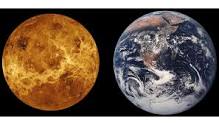
Is Human Activity Really to Blame for Climate Change? How Did Venus Get So Hot?

venusandearth

A recent debate between candidates for Congress in the Wisconsin’s 1st District — U.S. Rep. Paul Ryan, R-Janesville, and Democratic challenger Rob Zerban — included questions about the role of human beings in producing discernible changes in the climate over the last 150 years.

Unfortunately, this question, which is a matter of evidence, analysis and conclusion as all scientific questions are, has become a source of partisan political divide.

The Intergovernmental Panel on Climate Change (IPCC), a scientific body created by the United Nations to inform the UN regarding “scientific, technical and socio-economic information relevant to understanding the scientific basis of risk of human-induced climate change,” has issued five reports on this question since 1990.

These reports are a synthesis of many hundreds of peer-reviewed scientific studies on the issue.

With each successive report — they have been issued in 1995, 2001, 2007 and 2014 — the IPCC has increased the certainty of its conclusions.

The language in these reports has changed from “the balance of evidence suggests a discernible human influence on global climate” (1995) to “most of the observed warming is likely (a greater than 66 percent chance) due to human activities” (2001) to warming “over the last 50 years is very likely (a greater than 90 percent chance) due to human activities” to “It is extremely likely (a 95-100 percent chance) that human influence was the dominant cause of global warming between 1951-2010.”

This makes two things quite clear.

First, that scientists are a skeptical bunch and will move toward increased certainty only as evidence accumulates in favor of that conclusion.

Second, that human-induced global warming is a reality with which we must reckon.

During the debate, when asked if humans have a role in global warming, Ryan answered, “I don’t know the answer to that question. I don’t think science does either.”

He may well be correct in his first response, but he is certainly wrong in his second.

Article by Steve Ackerman and Jonathan Martin who are professors in the University of Wisconsin’s Department of Atmospheric and Oceanic Sciences in Madison, Wisconsin.

The above article was published in the Wisconsin State Journal print edition on October 20, 2014.

The IPCC also says “climate change is not a far-off problem. It is happening now and is having very real consequences on people’s lives. Climate change is disrupting national economies, costing us dearly today and even more tomorrow”, the IPCC states.

Astrobiologist David Grinspoon believes that scientists should look at our neighboring planets to help understand the perils of global warming. “It seems that both Mars and Venus started out much more like Earth and then changed. They both hold priceless climate information for Earth.”

The atmosphere of Venus is much thicker than Earth’s. Nevertheless, current climate models can reproduce its present temperature structure well. Now planetary scientists want to turn the clock back to understand why and how Venus changed from its former Earth-like conditions into the inferno of today.Climate scientists believe that the planet experienced a runaway greenhouse effect as the Sun gradually heated up. Astronomers believe that the young Sun was dimmer than the present-day Sun by 30 percent. Over the last 4 thousand million years, it has gradually brightened. During this increase, Venus’s surface water evaporated and entered the atmosphere.

“Water vapor is a powerful greenhouse gas and it caused the planet to heat-up even more. This is turn caused more water to evaporate and led to a powerful positive feedback response known as the runaway greenhouse effect,” says Grinspoon.

We have to make sure nothing like a runaway greenhouse effect doesn’t get started on Earth. Hopefully, it has not already started.

Public and Future Citizens Biggest Losers in WBA Second and Final Gubernatorial Debate

Walkerandburke

Democrat Mary Burke argued during a debate last Friday night (Oct. 17) in Wisconsin’s hotly contested governor’s race that Republican incumbent Scott Walker mismanaged Wisconsin’s finances, leading to a projected $1.8 billion budget shortfall, and enacted tax cuts that benefited the wealthy over the middle class (which he did).

Which candidate would be better for Wisconsin’s economy is a central part of the race that’s attracted national attention both because it’s close and because Walker is widely considered to be in the mix for a 2016 presidential run should he win re-election, according to the Associated Press.

Unfortunately, as was the case in the first Wisconsin Broadcasters Association (WBA) televised debate, neither Walker nor Burke were even asked about the growing catastrophe of human-caused global warming let alone the two largest sector contributors of greenhouse gases from the U.S. and most other developed countries: energy production and transportation. The people most negatively impacted by global warming and the havoc it’s already wreaking on the Earth are the young, those yet to be borne, and billions of people living without air conditioning and already living in poverty, many seeing their water and food supplies either drying up or being contaminated by flood waters.

But since the WBA interviewers did not see fit to test the candidates for Wisconsin’s next governor on what they have in mind as to what the state of Wisconsin should be doing to reduce Wisconsin’s contributions to the growing world catastrophe of global warming and how Wisconsin’s people might best plan for the inevitable changes, viewers were left wondering if either of the candidates is even thinking about the subject, let alone what Secretary of State John Kerry said about the seriousness and urgency of addressing climate change: [climate change] “should be addressed with as much “immediacy” as confronting the Islamic State in Iraq and Syria (ISIS), and the Ebola outbreak”.

Earth a Lucky Fluke?

earth

Is the Earth one of many habitable planets in the universe, or are human beings alone, the product of a lucky fluke? Author of “Lucky Planet: Why Earth is Exceptional–and What That Means for Life in the Universe”, David Waltham says it’s more likely the latter, thanks to our planet’s unusually stable climate and early development of life.

But whether Earth’s climate can still said to be “stable” is now, unfortunately, open to question. We humans have have relied far too extensively on fossil fuel burning – especially coal, oil (gasoline, diesel fuel, jet fuel, propane, fuel oil) and natural gas (methane), which all emit greenhouse gases to the atmosphere upon combustion, since the onset of the Industrial Revolution.  What Earth needs now is another kind of revolution, a peaceful revolution, but where humans use their own physical power and the energy of the Sun and the wind and rid themselves from the over-dependence on burning fossil fuels.  Read about a plan to do just that right here and then sign the petition to our elected governmental officials demanding they undertake the necessary changes to make this happen before its too late! Thank you.

Another Global Warming Trend: Tornadoes in Swarms

2tornadoes

October 16, 2014
Tornado Swarms Increasing In U.S.: NOAA Study Tracks Deadly Storms

tornado-swarms1-e1413513492877-665x385“>Read more.

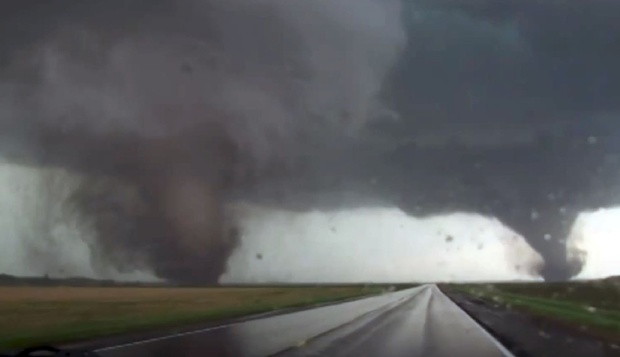
WASHINGTON (Reuters) – Tornadoes in the United States are increasingly coming in swarms rather than as isolated twisters, according to a study by U.S. government meteorologists published on Thursday that illustrates another trend toward extreme weather emerging in recent years.

According to a study published by government meteorologists in the journal Science on Thursday, tornadoes are increasingly coming in swarms, meaning on the days a tornado hits, it is far more likely that several more — possibly dozens — will occur that same day.

Researchers looked at tornado activity over the past 60 years and found that although the number of the deadly storms occurring each year had remained relatively steady, since the mid 1990s they have been more likely to come in swarms over fewer days per year rather than as isolated tornadoes spread throughout the season.

On the list of the 10 single days with the most tornadoes since 1954, eight have occurred since 1999, including five since 2011. That year alone had days with 115, 73, 53 and 52 twisters.

The meteorologist who led the study, Harold Brooks of the U.S. National Oceanic and Atmospheric Administration’s National Severe Storms Laboratory in Norman, Oklahoma, said emergency management agencies and insurers should be prepared to deal more often with days with lots of tornado damage.

The study analyzed the official U.S. tornado database for the six-decade period ending last year, excluding twisters below Category F1, with wind speeds of 73-112 mph (117-180 kph), on the Enhanced Fujita Tornado Intensity Scale.

Some experts have blamed weather intensity seen in recent years on global climate change they attribute to human activities. This study did not, however, offer a conclusion as to a cause.

“Knowing that the climate now has changed from that of the 1970s makes for a circumstantial argument in favor of a changing climate playing at least some role in the tornado changes,” said meteorologist Patrick Marsh of NOAA’s Storm Prediction Center.

“There are indications that heavy rainfall events are occurring with greater frequency globally, and given a warmer climate, this makes sense,” added Storm Prediction Center meteorologist Greg Carbin.

But “any trend in tornado events is much more difficult to discern,” Carbin added.

The average number of days annually with at least 20 tornadoes has more than doubled since the 1970s to upwards of five days per year in the past decade. For days with at least 30 tornadoes, there has been an average of three per year in the past decade, compared to 0.6 days per year in the 1970s.

Records for both the most and fewest tornadoes over a 12-month period have come in the past five years, with 1,050 from June 2010 to May 2011 and 236 tornadoes from May 2012 to April 2013. May is the month with the most tornado activity, followed by June and April.

Tornadoes, rapidly spinning columns of air usually spawned by rotating thunderstorms, can be among the most violent weather events. They have been reported on every continent except Antarctica but most often hit a U.S. region covering the Great Plains and parts of the Midwest and South.

Tornadoes can cause extensive loss of life and property damage like the May 2011 twister in Joplin, Missouri, that killed about 160 people and wrecked thousands of homes.

(Reporting by Will Dunham, editing by G Crosse)

Earth’s About to Lose What Little Chance It Had – Unless We Act Now!

Who’s Gonna Stand Up
Neil Young’s Who’s Gonna Stand Up (and Save the Earth)
Protect the wild, tomorrow’s child
Protect the land from the greed of man
Take down the dams, stand up to oil
Protect the plants, and renew the soil

Who’s gonna stand up and save the earth?
Who’s gonna say that she’s had enough?
Who’s gonna take on the big machine?
Who’s gonna stand up and save the earth?
This all starts with you and me

Damn the dams, save the rivers
Starve the takers and feed the givers
Build a dream, save the world
We’re the people know as earth

Who’s gonna stand up and save the earth?
Who’s gonna say that she’s had enough?
Who’s gonna take on the big machine?
Who’s gonna stand up and save the earth?
This all starts with you and me

Ban fossil fuel, draw the line
Before we build, one more pipeline
Ban fracking now, save the waters
And build a life, for our sons and daughters

Who’s gonna stand up and save the earth?
Who’s gonna say that she’s had enough?
Who’s gonna take on the big machine?
Who’s gonna stand up and save the earth?
This all starts with you and me

Who’s gonna stand up

Who’s Gonna Stand Up (and Save the Earth)?
(full orchestra & choir version)
Start here. Sign “Conserve NOW Petition to President Obama, U.S. Congress, Wisconsin Governor Walker and Wisconsin Legislature to Enact and Fund Climate Change Legislation” (September 16th post on this blog) or;

I’ve also started the petition “U.S. Congress: Enact and Fund Legislation to Pay Families and Individuals who Use Less Fossil Fuel Energy Annually on Changeorg

Will you take 30 seconds to sign it right now? Here’s the link:

http://www.change.org/p/u-s-congress-enact-and-fund-legislation-to-pay-families-and-individuals-who-use-less-fossil-fuel-energy-annually-conserve-now-please-see-www-allthingsenvironmental-com-for-details

Here’s why it’s important:

Using money that now goes to subsidize the fossil fuel industries (coal, oil, natural gas), instead offer that money to those who limit their driving, flying and household use of fossil fuel devived energy. This would helpslow global warming and sea level rises and would negate the need for raising the minimum wage and foodstamps.

You can sign my petition by clicking here.
.

Thanks

Answer “No” to Transportation Amendment on November 4th Ballot

Interstate

Wisconsin law presently requires that specific revenue streams, such as gasoline and diesel fuel taxes and license fees collected from motor vehicle owners, be deposited into the transportation fund; however, the Wisconsin Supreme Court has recognized that the Wisconsin Legislature may, at times, have greater needs other than transportation, and it is therefore authorized to transfer certain amounts from the Transportation Fund to non-transportation state needs, such as education, health care, and shared revenue.

However, the Wisconsin Department of Transportation and the highway building industry – which includes such contracting entities as the Wisconsin road and bridge builders (the Transportation Builders Association), sand and gravel suppliers, cement and asphalt production companies, trucking firms, and other businesses financially tied to transportation in Wisconsin, have been very vocal in their criticisms of the previous administration’s use of some transportation generated money for purposes not financially benefiting Wisconsin’s transportation infrastructure.

So a Transportation Amendment referendum question was approved for placement on the November 4th ballot which, if the majority of Wisconsin voters answer “yes” (to Question 1 on the ballot), would so amend Wisconsin’s Constitution to mandate that all money generated by transportation taxes in Wisconsin after December 31, 2010 be deposited into the state’s Transportation Fund, and furthermore that no such money be lapsed, further transferred, or used for any program that is not directly administered by the department of transportation, in furtherance of the department’s responsibility for the planning, promotion, and protection of all transportation systems in the state. In short, all transportation collected money could only be used for transportation purposes if the majority of people voting on November 4th answer “yes” to Referendum Question #1.

If the majority of Wisconsin voters on November 4th answer “no” to amending Wisconsin’s Constitution regarding the Transportation Amendment, tax money from transportation in Wisconsin would still be deposited in the Transportation Fund and used for transportation; however, certain amounts approved by the Legislature for use in other state programs or the state budget other than for transportation projects would be permissible. The Wisconsin Constitution would not therefore be amended to provide for the exclusive use of motor vehicle fuel taxes and annual vehicle registration fees by the Wisconsin Department of Transportation for road and bridge expansion, reconstruction, and rehabilitation programs.

Wisconsin Senator Fred Risser recommends voters answer “no” to the Transportation Fund Constitutional Amendment, saying “it serves no useful purpose to submit to the highway lobby and guarantee them a constitutionally protected fund that can never be touched even in the case of economic crisis or statewide emergency”.

Wisconsin’s highway and bridge system and its use, and other state and federal highway systems and their use, have already exceeded the level of environmental and fiscal sustainability. In addition to the billions of dollars of state and federal money that has been collected and awarded to various highway and bridge contractor from Transportation Funds, there have been very real damages inflicted on Wisconsin’s and other state’s natural landscapes, wildlife and wildlife habitat, the climate and the human population. Despite many of these costs being significantly high, they are seldom quantified and simply go unpaid. Most (loss of wildlife habitat, climate change, small particle pollution) are growing more serious over time.

The public health impacts from 60 billion motor vehicle miles being driven annually in the state are growing evermore significant and serious (from climate change, loss of green space, farmland loss, small particle air pollution). Yet we have seen no actions being undertaken or even discussed so far by the Governor Scott Walker administration, the Wisconsin Legislature, or candidate for governor Mary Burke. Action is needed to encourage less fossil fuel burning vehicular travel in the state, to mitigate for many impacts that have already occurred or are still occurring, and to prepare for a climate that will be rapidly changing.

Despite seeing motor vehicle driving in Wisconsin finally leveling off, after decades of growth, the state and federal governments are planning to continue pouring vast sums of money into the construction of new highways and the expansion of old ones. Wisconsin’s governor is leading the way, with Wisconsin the politically powerful road and bridge building industry’s support.

Today’s Wisconsin State Journal newspaper states that Governor Scott Walker, in meeting with the State Journal’s editorial board Monday, said that he is considering replacing the state’s current gasoline tax with a sales tax on gas and alternative vehicle fuel sources “to stabilize long-term transportation funding in the state”. The state currently taxes gasoline, blended gasoline, and diesel fuel for motor vehicle fuel at a flat rate of 31 cents per gallon. The present gasoline tax generates about $1 billion in revenue for the Transportation Fund. The tax on is levied on gasoline suppliers but in turn gets build into the pump price. (The state also taxes liquefied propane gas, compressed natural gas and liquefied natural gas but not electricity, although The Journal reports Walker saying “that’s something that needs to be considered”.

Neither Walker nor Democratic challenger for governor Mary Burke have identified any specific plans for addressing the state’s projected $680 million shortfall in the Transportation Fund in the next biennial budget, according to the Wisconsin State Journal report written by Mathew DeFour and Mary Spicuzza and published October 14, 2014. The state will be short $15.3 billion in the Transportation Budget over the next decade according to a state transportation commission reported last year, despite there being fewer annual vehicle miles predicted to be traveled on the state highways in the coming years.

As alluded to previously (above), there is serious and significant concern regarding the continued burning of fossil fuels and the emission of greenhouse gases (GHGs) from motor vehicles travelly 60 billion miles, or 600 billion miles since 2004. The reason is that these gases, in particular carbon dioxide, have already accumulated to record high levels in the atmosphere, and the added accumulation of them in the atmosphere is growing ever more dangerous. Presently, the concentration of carbon dioxide (CO2) has reached record of over 400 parts per millions in the atmosphere, which is 42% above the CO2 concentration level present in the atmosphere before the Industrial Age. We are now witnessing rising sea levels from thermal expansion of water and ice melt over lands on an unprecedented scale.

Roughly 20 pounds of carbon dioxide is emitted to the atmosphere for each gallon of gasoline burned in a motor vehicle. Even if we assume that all vehicles driven in the state achieved 2013’s record high efficiency of 24.1 miles per gallon, this amounts to roughly 2.5 billion gallons of gasoline being burned on Wisconsin’s highways each year, which translates into 50 billion pounds (25 million tons) of carbon dioxide being emitted from tailpipes each year, or 250 tons over the last decade. Since carbon dioxide has a lifetime exceeding 100 years in the atmosphere, much of this CO2 will still be in the atmosphere by the end of this century, along with CO2 and other greenhouse gases accumulations.

Not only should the state be working harder and faster on reducing it’s GHG emissions – it should not be prohibited from using transportation generated money for this purpose. In fact, there should be a moratorium on adding more capacity (lane) for additional use of motor vehicles on the state’s highway system. This would save the state $3 billion in taxpayer money that is slated for highway expansion now, including work of the I-94 south of Madison project and the addition of two more lanes of Beltline highway in the vicinity of the Verona Road/Beltline interchange in Madison.

As discussed in a previous post on this blog, high motor vehicle traffic areas also generate dangerous levels of small and ultra small particle pollution. It has been reported in numerous that people who live very close to heavy traffic and get exposed to high levels of ultra fine particle pollution have more health problems, including heart and vascular problems. Transportation Funds should be used to minimize and mitigate for these transportation related health costs.

Verona Road/Beltline Expansion: despite the majority of people speaking at a meeting held by DOT in 2003  saying they were opposed to more motor vehicle traffic in the areas of West Madison near the proposed project, DOT proceeded with it plan for the project anyway, as expected.

September 2014 – Another Month of Record High Global Average Temperature

earth-from-space
This past September was the warmest since records began in 1880, according to new data released by NASA this weekend. The announcement continues a trend of record or near-record breaking months, including May and August of this year.

The newly released data could make it very likely that 2014 will become the warmest year on record.

Health Effects of Small Particle Pollution from Heavy Motor Vehicle Traffic

houston-highway_wikipedia

What people cannot see can be very harmful. In 2012, a report on the Global Burden of Disease found that pollution from dangerous tiny particles and droplets in the air — what scientists call “fine particulate matter” — is among the leading causes of death and severe disability. According to estimates in this report, over 3.2 million deaths per year may be attributable to people breathing dangerous particles in their general environment, and another 3.6 million deaths happen because of polluted air attributed to burning solid fuels for heating or cooking in developing countries. To put the danger in perspective: the total deaths from particulate air pollution are greater than 6.3 million deaths each year from tobacco use.

The bad health news about dangerous particles in the air is not confined to fine particulate matter which is spread broadly across metropolitan regions, however. I direct a study called the Community Assessment of Freeway Exposure and Health that looks at air pollution from even tinier particles — “ultrafine particles” — that are concentrated next to freeways and other places with a lot of motor vehicle traffic. Pockets of this kind of invisible, odorless and often overlooked air pollution may be especially dangerous for people to live and work next to busy highways. My research group is developing innovative ways to assess the hazard and protect people from exposure to health risks.

Health dangers from particles in the air

Many people suppose that respiratory diseases are the main risk from breathing in polluted air, but in fact the major health risks are from cardiovascular diseases. Breathing in fine particles from vehicle emissions, power plants, or burning fuels causes inflammation that spreads throughout the body in the blood, contributing to hardening of the arteries and increased risks for heart attacks and strokes.

Most research on particle pollution in the air has so far focused on fine particles in the surrounding air. This kind of pollution is not spread evenly around the world. Very high pollution levels in China and India, for example, result in approximately two million deaths a year from exposure to fine particles. But even in countries like the United States, where pollution levels have been regulated for decades and skies are usually relatively clear, there is still a surprisingly high level of deaths from breathing dangerous fine particles. Estimates vary, but somewhere between 100,000 and 200,000 deaths per year are attributable to dangerous fine particles spewed into the air, primarily from power plants and motor vehicles.

Measurements of the health effects of ultrafine particles are less well developed — and that is what my research colleagues and I are tackling. Conventional fine particle air pollution tends to be spread evenly over wide areas — such as whole cities — but ultrafine particle pollution can be high in small, local areas, next to a highway or major roadway, for example. Pollution concentrations can move around and go up and down rapidly. Researchers have not looked as much at ultrafine particle air pollution in part because the fast-changing levels make it hard to pin down exactly how much people are exposed to.

Researchers often do tests on animals to see how dangerous various kinds of pollution might be for people, and ultrafine particles in the air turn out to be more toxic in animal studies than similar concentrations of fine particles. Investigations looking at people have found that when ultrafine particle pollution levels go up and down, measures of health problems also rise and fall in the weeks that follow. Particularly worrisome, people who live very close to heavy traffic and get exposed to high levels of ultrafine particle pollution also have more health problems, including heart and vascular problems, according to available studies. Air monitoring has repeatedly shown ultrafine particles are elevated next to highways and major roadways, but researchers are still working to fully connect the dots between ultrafine exposure and its health effects in people.

In the Community Assessment of Freeway Exposure and Health study, my colleagues and I are measuring exposure to ultrafine particles in the air for people living at various distances from a highway and testing for health risks. Our full findings are not yet ready to report, but we have published some early papers that demonstrate both elevated ultrafine particle levels and higher disease risks for people who live closer to highways. We expect to be able to give more precise estimates of degrees of exposure and health risks in the near future.

Addressing the highway air pollution problem

Over the past half century, air in many parts of the United States has gone from sometimes looking cloudy and soot-filled, much like the air over much of China today, to clearer skies. Over many decades, America figured out how to reduce emissions of fine particulate matter from smoke stacks and tail pipes, phasing in increasingly effective pollution-reducing technologies. But we are at earlier stages in developing awareness of the measurable dangers from ultrafine particle pollution — and finding solutions to reduce those dangers.

My research group is actively looking for workable solutions — such as installing various forms of air filtration as a possible way to protect people who live or work next to highways or heavy traffic. Early experiments on public housing units near highways have not achieved the reductions we hoped for, but we are continuing to test ideas. In addition, we are working with municipal agencies, regional planners and design experts to draft local ordinances that might be protective. So far, only California has ordinances that restrict the building of schools next to freeways, and many places might need such rules for parks, public plazas and other community institutions as well.

The bottom line is that particulate matter in the air — including very tiny and invisible particles in air near highways — is the most important and dangerous environmental health threat. Yet the dangers are insufficiently recognized by the public and policy makers. Better evidence can educate the public and inspire new efforts to tackle serious health risks. We already know that risks from ultrafine air pollution near highways are serious — and they may turn out to be even more worrisome than we know so far. Research can help communities prepare to take action.

Source: Scholars Strategy Network, written by Doug Brugge, Tufts University School of Medicine – See more at: http://journalistsresource.org/studies/environment/pollution-environment/health-risks-polluted-air-freeways#sthash.ViZVW4zM.dpuf
Learn More.

Frac Sand Rush Threatens Wisconsin, Minnesota Towns, Advocates Warn

Operations At The Wisconsin Industrial Sand Co.

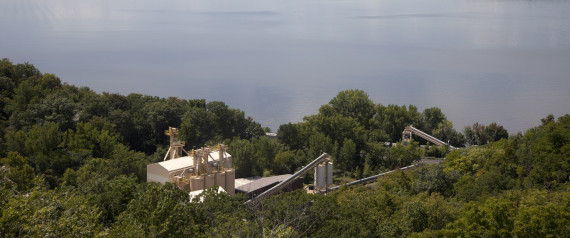
Victoria Trinko hasn’t opened the windows of her Wisconsin home in two years — for fear of the dust clouds billowing from a frac sand mine a half-mile away.

“This blowing of silica sand has not abated since the inception of the mine in 2011,” Trinko, a farmer and the town clerk for Cooks Valley, Wisconsin, said during a media call on Thursday highlighting an industry proliferating alongside horizontal hydraulic fracturing, or fracking. Frac sand is an essential ingredient in the process of natural gas drilling.

Trinko is among residents, advocates and scientists warning of risks posed by the frac sand boom — from heavy truck traffic and sleep-stymying lights and noise. At least one truck hauling silica sand travels a road by Trinko’s home every three minutes. When HuffPost spoke with Trinko in 2012, she had just been diagnosed with asthma — and her doctor suggested the condition was pollution-related.

The industry is concentrated in Wisconsin and Minnesota. Rising demand, however, threatens to expand frac sand mining into New York, Massachusetts and 10 other states, according to a report

released Thursday by the Civil Society Institute’s Boston Action Research, a human rights advocacy group, in partnership with the nonprofit Environmental Working Group and other environmental health advocates.

On top of the burgeoning rush for natural gas, the appetite for frac sand has been inflated by the recent discovery that using more sand per well increases fracking yields. An energy consulting firm estimated that fracking companies will blast nearly 95 billion pounds of frac sand into wells this year — an increase of almost 30 percent over last year, exceeding predictions. The number of frac mines have more than doubled in the last decade, with Wisconsin and Minnesota now hosting a total of 164 active facilities, according to the advocacy report. An additional 20 mines have been proposed in the two states.

Deanna Schone of Glenwood City, Wisconsin, lives near one of the proposed frac sand mines. She told HuffPost that city council members had “made their intentions known” in early September that they will allow the mine to proceed in a location about a half-mile from both her home and her kids’ school.

“We heard at the beginning that this was going to happen very quickly. That’s very much what happened,” said Schone, noting that most decisions seemed to have been made “under the table” before the public caught wind. In an effort to protect residents in regions not yet experienced with the frac sand boom, she offered some advice: “Talk to your local government. Do you have zoning? What are types of things that you could do to at least slow down the process?

“Once attorneys and big money are involved, it’s an uphill battle,” Schone added, as she stood outside her home and watched two young deer eating acorns off her kids’ basketball court. “This is part of why we don’t want to live in an industrial area.”

An interactive map published with the new report shows that more than 58,000 people live within a half-mile of existing or permitted frac sand mining sites across a 33-county span in Minnesota and Wisconsin, as well as a small corner of Iowa. Twenty schools also fall within that half-mile range.

Rich Budinger, president of the Wisconsin Industrial Sand Association, highlighted his industry’s own list of “facts about frac sand mining in Wisconsin,” and offered a broad critique of the advocates’ publication.

“The groups behind this report have a definite political and social agenda against sand mining, so their conclusions are not surprising,” Budinger wrote in an email to HuffPost. “But their conclusions also fail to offer an accurate picture of sand mining in Wisconsin and the industry’s major contributions to the state’s communities and economy.

“There is no scientific evidence that ambient respirable crystalline silica that may be associated with sand mines poses a health risk,” said Budinger, referring to the frac sand dust that tops advocates’ concerns. He added that the Wisconsin Department of Natural Resources and other regulators “require air permits and fugitive dust control plans, which limit emissions and off-site impacts from dust.”

Crispin Pierce, a professor of environmental health at the University of Wisconsin-Eau Claire, has been studying these potential health impacts for the last five years. He offered a different take during the media call.

The state regulatory agency, Pierce explained, requires fewer than 10 percent of the 140 frac sand operations in Wisconsin to monitor their emissions — and not the fine particulate matter and silica that he said are the “most dangerous components” of those emissions. Further, the state asks the companies to monitor themselves.

Of tests conducted by the industry and by the Minnesota Pollution Control Agency, none have detected levels of pollution that exceeded federal standards, Pierce said.

“To overstate the certainty that these issues are causing problems is to dilute their importance,” said Pierce. But he underscored “some real concerns,” including “potential long-term exposures and increases in cardiovascular disease, premature death and lung cancer,” as well as threats to water availability and quality.

A television station in Chippewa County, Wisconsin, reported last week that heavy rains had washed fine particles off a frac sand mine site and clouded a local waterway. Because state regulations for the mines are vague and “open to interpretation,” mining companies can get away with the pollution, an engineer with the county suggested.

Illinois is among the most recent states facing a potential surge in strip-mining for frac sand. While its deposits remain largely untapped, that’s changing fast, said Ashley Williams, a resident of Ottawa, Illinois.

She mentioned a battle HuffPost first covered in 2012, which continues over Mississippi Sand’s proposed mine near the entrance of Starved Rock State Park. The bluffs, canyons, waterfalls and wildlife found there entice more than 2 million visitors each year.

The 425-million-year-old rock formations also contain some of the nation’s highest quality frac sand, which has drawn the mining companies. Environmental groups, with help from lawyers and students at the University of Chicago and Northwestern University, are fighting multiple mining permits around the state, including the one now held by Mississippi Sand.

“They’re descending on our community like sand sharks,” said Williams, “and it seems like there’s no end in sight.”

Wisconsin Public Radio Promotes Fossil Fuel Burning

140124124418-meridian-private-jet-traffic-620xa
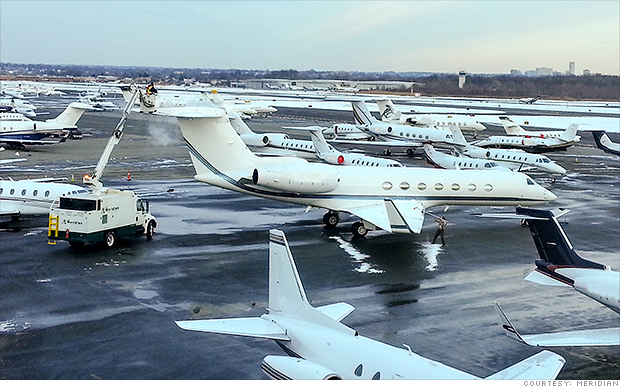
Although I listen regularly to Wisconsin Public Radio (WPR)’s news and talk shows, and I just renewed my annual membership with them (with a $120.00 donation), I told them with my renewal that I was not interested in entering their vacation trip sweepstakes, to travel to France, take a cruise ship in Alaska, or travel Germany and France by way of the Rhine River this December. WPR regularly sponsors vacation trips (through travel agencies) for listeners to fly to various resorts around the world, presumably as fundraiser events.

I have told them in more than one email message and by phone during last month’s call-in show with their news director that I don’t support their promoting and coordinating travel by people from Wisconsin taking long distance vacations by jet airplane to exotic places because of the tremendous volumes of fossil fuel burned by jet airplanes flying thousands of miles, to and from foreign vacation resorts. It would be far better for everyone, here, if Wisconsin vacationers stayed closer to home, spending their vacation money within their home state, and thus benefiting Wisconsin’s economy and sparing the atmosphere from receiving huge quantities of planet warming greenhouse gases.

Following is a copy of a recent message I sent them:

“Thank you for taking my comments about the long term global warming effects from the abundant amount of greenhouse gases from people taking WPR sponsored flying/vacation trips. As I said before, flying by jet airplane is the worst thing an individual can do for the future of our planet. The impending global warming catastrophe is right around the corner.”

“I’m surprised WPR continues to sponsor these trips in light of having a number of excellent guests and programs attesting to this. Even President Obama agrees the earth is warming, the ocean are warming and rising, and the cummulative effect of rising concentrations of GHGs in the atmosphere and oceans is a grave threat to our world and especially children who will grow up in a far less hospitable world than the world that was passed onto us.”

When I called in and talked to the director, he said WPR’s contract with the travel agency requires passengers to “offset” their carbon emissions from the flight with sources that take an equal amount of carbon dioxide out of the air. See article on pros and cons of “justifying” flying by purchasing offsetting factors.

Below is a copy of another email I sent to WPR, sent 10-13-2014:

“Although I do love public radio, in particular the ideas network, I do NOT love WPR’s promotion of fossil fuel burning via it’s sponsoring and prize vacations at exotic locations thousands of miles from our home state. I do not believe buying into “tradeoff” C02 sequesters offset the extremely large volume of greenhouse gases that long distance vacations produce.”

Earth’s warming might be viewed of as a water glass, filled with water (the oceans), and ice (the polar ice caps and Earth’s mountainous glaciers). With a constant heat source (a stable “greenhouse effect”), the ice in the glass will remain roughly unchanged over time, the average temperature of the water in the glass will also remain unchanged (as did the Earth’s global average temperature). However, should the temperature surrounding the water and ice increase (i.e. due to an increase in the “greenhouse effect”, or global warming), the ice in the glass will gradually melt away, and once it melts, the temperature of the water in the glass will warm much faster, until equilibrium is reached, whatever temperature that might be, depending on the energy source, and the strength of the growing “greenhouse effect”.

WPR says it’s impartial on topics it chooses to air. When it come to preserving the livability of our planet, its actions are speaking louder than words because they sponsor these trips. WPR employees are state employees. State employees should be role models for people wanting to minimizing their global footprint. Promoting travel to exotic places is about the worst thing they could do. They should stop it. It’s morally not the right thing to do to save the planet. it’s more sustainable to take vacations in your home state and keep the local economy healthy the Earth from getting an even higher temperature/

Contact WPR’s Audience Service,..s at 1-800-747-7444 and listener@wpr.org and tell them to stop doing these trips.