
Ice Melt at the Poles

It’s confirmed: both Antarctica and Greenland are losing ice—around 350 billion tons each year—and, as a result, sea level has risen 11.1 millimeters worldwide since 1992. This photo shows a summertime channel created by the flow of melted ice, which ultimately carries the water away from the glacier to the sea.
It’s not easy to measure melting ice. But by using data from 10 satellite missions, an international team of 47 scientists put together the most accurate estimate of ice melt to date. Ice melt doesn’t just affect sea level, however: the influx of fresh water could change the salinity of the North Atlantic enough to alter weather patterns in North America and affect ocean organisms.
Miami Beach Prepares For Annual ‘King Tide’ Flooding And A Taste Of Future Sea Level Rise Reuters
By Zachary Fagenson and David Adams
MIAMI BEACH, Fla., Oct. 3 (Reuters) – Construction crews are wading into chest high pools of muck in a race against time to install pumps Miami Beach officials hope will help control an annual super-high tide threatening to flood south Florida’s popular seaside city next week.
Around Oct. 9, a so-called “King Tide” is expected to push almost an extra foot (30 cm) of water onto streets, going over sea walls and forcing residents to wade through flooded streets, an annual event causing widespread damage.
“It’s been a nightmare,” said Andreas Schreiner, who has seen past high tides bring water up to and even inside his group of neighborhood restaurants, causing tens of thousands of dollars in losses due temporary shut downs and cleanup.
The event, caused by the alignment of the sun, moon and Earth, provides a taste of the potential impact of a longer-term two-foot sea level rise predicted for south Florida by 2060, according to the United States Geological Survey.
The low-lying greater Miami area, with a population of 5.7 million, is one of the world’s most at-risk urban communities, scientists told a U.S. Senate subcommittee hearing in April.
The King Tide is expected to rise to almost four feet. With seven miles of coastline, Miami Beach is already seeing more frequent salt-water street flooding at high tide, according to Miami Beach City Manager Jimmy Morales.
To combat such widespread flooding, the city has set aside $300 million to 400 million to install up to 50 pumps in the coming years in what some say is a vain effort to protect an estimated $23 billion of real estate.
Bigger sea walls are not an option as Miami Beach’s flooding is caused largely by water rising underfoot through porous limestone bedrock. Officials concede pumping water back into the ocean is only a short-term solution.
Standing near four pumps that will each push 7,000 gallons per second when switched on, Miami Beach’s chief engineer, Bruce Mowry, said rising seas pose a constant challenge.
“The technology is never as effective as it was when you first installed it,” he said.
The city is also retrofitting 300 outflow valves that allow stormwater to drain into the bay, inserting plugs to prevent the reverse flow of sea water. Dunes are being reinforced with sea oats and engineers are looking into pumping water into underground storage.
Apart from these measures, Miami Beach has begun to develop a long-term plan for coping with sea level rise, including pushing developers to sacrifice street-level space for more elevated building designs.
“It’s a retreat up,” said Morales.
Doing so is critical to quell concerns of insurers and lenders backing the city’s blockbuster development.
“In order to keep the real estate market hot, we need to assure people who understand this that we are doing everything in our power,” Morales added. “Do you wait till it’s at your ankles and knees?” (Editing by David Adams and Steve Orlofsky)
Source: The Huffington Post
All Good Things Need Not Come to an End

Demonstrators make their way down New York’s Sixth Avenue on Sunday.
PHOTOGRAPH BY JASON DECROW, AP
Last week was quite a week for U.S. advocates of protecting the environment. Four hundred thousand of them, including people of all ages, cultures and locations (people from all 50 States), joined together and marched through the streets of New York City, the country’s’s most populous city otherwise known as “The Big Apple”. Their reason for making the trip (many chose to endure long bus rides) was to demonstrate to the world and their county’s political leaders, and in no uncertain terms, their deep and growing concern with the increasing amounts of “greenhouse gases”, most notably carbon dioxide (CO2) which has 42% higher concentration levels in the atmosphere now than in pre-industrial times, before the widespread burning of fossil fuels for energy, which releases predominantly CO2 gas as an invisible byproduct. The greenhouse gases in the atmosphere have historically kept the planet warm by absorbing the Sun’s radiant energy and trapping it near the surface. However, too many of them being added to the atmosphere causes what is commonly known now as “global warming”, which causes ice and snow to melt at the poles and mountainous glaciers, and ultimately leads to rising and warming ocean waters that are more acidic (a certain percentage of CO2 is absorbed in the oceans). Global warming also causes more extreme weather events (a warmer atmosphere is more volatile), including heavier rainfalls and flooding, stronger storms, hotter and longer heat waves, worse drought and related problems (such as buckling highways and dwindling water supplies).
“Our citizens keep marching,” U.S. President Barack Obama said in his Tuesday address, acknowledging the protest. “We cannot pretend we do not hear them. We have to answer the call.”
Despite the biggest and most diverse climate march ever – one having almost 400,000 people, including people from every state of the Union marching through the streets of New York City in a huge show of strength in advance of last week’s United Nations General Meeting, it’s back to “business as usual” in the USA this week.
Global warming deniers, who flat-out refuse to believe rising greenhouses gas emissions from fossil fuel burning the last two centuries are affecting the atmosphere, the oceans, plants, wildlife, the weather and people; and that the effects are likely to grow stronger in intensity and thus in damage as the world adds to the aggregate amount of greenhouse gases emitted to the atmosphere, cannot deny the fact that the poor and middle class in the U.S. and the rest of the world will be the ones who suffer the greater effects from global warming. Those who are at the top of the economic ladder in the U.S., many who refuse to pay their fair share of U.S. taxes to help poor individuals and families yet purposely deny the existence of global warming are all now likely breathing a huge sigh of relief.
Last week’s groundswell of the people’s demands and concern for urgent action is now past history for them. They survived the four-hundred thousand people from all over the country marching through NYC Sunday, September 21, demanding action be taken by government and business to slow the global warming – already causing brutal climate change impacts throughout the globe and the country; they survived Wall Street being flooded with protesters Monday, September 22, that brought Wall Streets Financial District to a grinding halt over the course of a day-long sit-in by environmental activists; they survived any action by the U.S. Congress which adjourned after last week for the year.
“We can easily forgive a child who is afraid of the dark; the real tragedy of life is when men are afraid of the light.”
― Plato
U.S. Congress Needs to Take Action to Slow Climate Change and Ensure Public Saftey

Julia Pierson, a 30-year veteran of the Secret Service agency who became director in 2013, was forced to resign under pressure as director Wednesday after breaches of White House security that resulted in nobody getting hurt and no damage to property.

The U.S. Congress has 535 members: 435 Representatives and 100 Senators. The One Hundred Thirteenth United States Congress first met in Washington, D.C. on January 3, 2013, and is scheduled to end on January 3, 2015. Widespread public dissatisfaction with the institution has increased in recent years, and some commentators have ranked it among the worst in United States congressional history. According to a Gallup Poll released in August 2014, the 113th Congress had the highest disapproval rating of any Congress since 1974, when data first started being collected: 83% of Americans surveyed said that they disapproved of the job Congress was doing, while only 13% said that they approved.
So why aren’t we forcing some of these folks to resign?
A New York Times/CBS News poll found that nearly half of Americans believe that global warming is causing a serious impact now, while about 60 percent said that protecting the environment should be a priority “even at the risk of curbing economic growth.”
Fifty-four percent of those surveyed said that global warming is caused by human activity. This, the New York Times notes, is the “highest level ever recorded by the national poll.”
Those results echo those of another survey conducted by the Chicago Council on Global Affairs, which found that more than 70 percent of Americans believe climate change is either a critical or an important threat “to the vital interests” of the country, while more than 80 percent said that combating climate change is either a “very important” or “somewhat important” goal for the U.S.
The survey also found that 50 percent of the American public believe that the government is not doing enough to address the problem of climate change. According to poll makers, this is an increase of five percentage points from 2012 poll results.
Dealing appropriately with reducing causes of global warming and insuring protection of citizens from climate change is government responsibility. But this Congress (and the Congresses preceding it) have failed to act on it, as have many states, Wisconsin included. They all ought consider resignation for their failure to enact legislation to slow global warming and ensure the America public is protected from climate change.
Picture – 35,000 walruses are swarming Alaska’s shore — because their sea ice is vanishing

New images captured by NOAA aerial surveys of the Alaska coast on September 27 show an estimated 35,000 walruses ashore near Point Lay. (Corey Arrardo / NOAA/NMFS/AFSC/NMML)
.
“We can easily forgive a child who is afraid of the dark; the real tragedy of life is when men are afraid of the light.”
― Plato
Global Warming is a No-Brainer
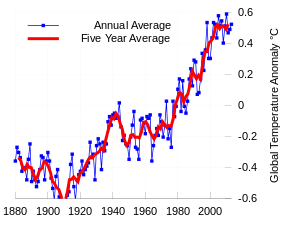
August 2014 was the hottest August ever recorded (global average temperature of 61.45°F), with records dating back to 1880. Rising global temperatures have been accompanied by changes in weather and climate. Many places have seen changes in rainfall, resulting in more floods, droughts, or intense rain, as well as more frequent and severe heat waves. The planet’s oceans and glaciers have also experienced some big changes – oceans are warming and becoming more acidic, ice caps are melting, and sea levels are rising. As these and other changes become more pronounced in the coming decades, they will likely present challenges to our society and our environment. [U.S. Environmental Protection Agency]
The increase in global temperature across the world’s land and ocean surfaces for August 2014 was 1.35°F higher than the 20th century average of 60.1°F.
Nine of the 10 warmest Augusts on record have occurred during the 21st century. Additionally, August 2014 marked the 38th consecutive August with a temperature above the 20th century average. The last below-average global temperature for August occurred in 1976.
Sea surface temperatures have been higher during the past three decades than at any other time since reliable observations began in 1880.
Over the past century, human activities have released large amounts of carbon dioxide and other greenhouse gases into the atmosphere. The majority of greenhouse gases come from burning fossil fuels to produce energy, although deforestation, industrial processes, and some agricultural practices also emit gases into the atmosphere. The energy is produced by power plants burning predominantly coal and natural gas, who sell the energy for heating and electricity. Commercially owned power plant are the number one emitter of carbon dioxide to the atmosphere, followed closely by the transportation sector’s burning of petroleum products (oil, gasoline, and jet fuel). Transportation accounted for over half of the net increase in total U.S. GHG emissions from 1990-2011.
Carbon dioxide can stay in the atmosphere for nearly a century, so Earth will continue to warm in the coming decades.
The warmer it gets, the greater the risk for more severe changes to the climate and Earth’s system. Although it’s difficult to predict the exact impacts of climate change, what’s clear is that the climate we are accustomed to is no longer a reliable guide for what to expect in the future.
The temperature record shows the fluctuations of the temperature of the atmosphere and the oceans through various spans of time. The most detailed information exists since 1850, when methodical thermometer-based records began.
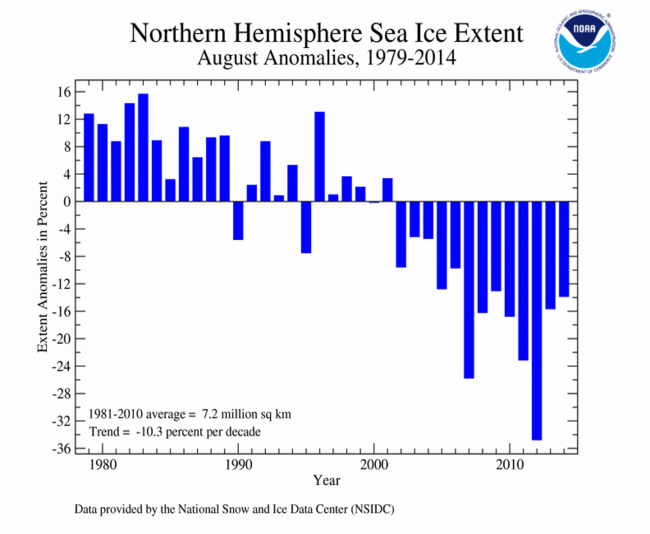
The Northern Hemisphere (Arctic) sea ice extent — which is measured from passive microwave instruments onboard NOAA satellites — averaged for August 2014 was 6.22 million square km (2.40 million square miles), 1.00 million square km (390,000 square miles), or 13.85 percent, below the 1981-2010 average. This was the seventh smallest August Arctic sea ice extent on record.
The second most important anthropogenic greenhouse gas (after carbon dioxide, or CO2), is methane (CH4). Although its concentration in the atmosphere is far less than that of CO2, it’s a much stronger greenhouse gas on a per-molecule basis. It also is eventually is transformed into CO2 by atmospheric chemistry processes. More than half the atmospheric CH4 load is due to human activities. Atmospheric methane concentration had stabilized from about 1999 to 2007, but recently began rising again.

Conserve NOW Petition to President Obama, U.S. Congress, Wisconsin Governor Walker and Wisconsin Legislature to Enact and Fund Climate Change Legislation

PETITION TO: U.S. PRESIDENT OBAMA, U.S. CONGRESS, WISCONSIN GOVERNOR SCOTT WALKER, WISCONSIN STATE LEGISLATURE
Title of petition: “Pay Individuals and Families, Annually, for Maintaining a Smaller Global Footprint”
(Sign petition here.)
Enact and Fund Legislation to Annually Pay Families and Individuals who Record a Smaller Global Footprint Each Year.
People would voluntarily apply to a “Minimize My Global Footprint” program, and work towards (1) minimizing the number of miles they drive their vehicle(s) in a year. The families and individuals who record the fewest number of driving miles in a year’s time, as recorded on their vehicle(s) odometers (illegal to modify in Wisconsin), or if they do no driving at all over the year, would earn the most money for their “low global footprint of driving”; (2) people who choose not to fly by an airplane anywhere during that year (flying emits the largest global impact due to the long distances traveled) would earn the maximum amount of money allowed for their “zero global footprint of flying” that year; and (3) people who minimize their household use of fossil-fuel-derived electricity and/or heating (by installing solar panels, installing more efficient windows, replacing light bulbs with LED lights, adding more insulation, or turning the heat down in winter and up in summer, or using less hot water) or obtaining their energy from wind turbines, would earn the “minimum household energy use global footprint”.
Depending on how successful each individual or family was at minimizing their driving mileage and flying, and minimizing their energy use in their home, they could earn up to $22,800 in a year. African-American individuals and families would be eligible to earn a higher maximum of $30,400 per year. (For tables identifying lower amounts, see “Conserve, NOW” at: http://www.allthingsenvironmental.com and multiply by four.)
or:
Conserve Now ex sum
Conserve NOW!1.doc; Final
As with practically every new major governmental initiative, there would undoubtedly be some “bugs” to work out. But “TIME IS OF THE ESSENCE “when it comes to reducing our aggregate annual emissions of greenhouse gases to our atmosphere, because, at 400+ parts per million (ppm) carbon dioxide (CO2), we have already far exceeded the natural concentration level of those gases (eg. 350 ppm CO2) in the atmosphere that scientists claim to be “safe” for the planet. Continuing to pave over the landscape with Portland cement and bituminous asphalt, for the purpose of expanding highways and building more freeways and bridges to accommodate more motor vehicle driving, and adding more airplane runways to accommodate more flying by everyone, is totally unsustainable for the preservation of our planet for life in the future.
In fact, NOTHING is more URGENT than for everyone to SIGNIFICANTLY REDUCE their activities THAT BURN LARGE QUANTITIES OF FOSSIL FUELS (and emit tons more greenhouse gases to the atmosphere, where they remain upwards of 100 years. One way to do this is to fly less (or not at all), and drive less, or not at all, by using more sustainable modes of transportation (such as bicycling, walking, using mass transit), and by conserving on fossil fuel burning in their home, or by using less electricity (that which is generated by burning of fossil fuels; i.e. solar and wind powered electricity not counted).
Unfortunately, our planet is already exhibiting the damaging impacts of having excessive concentrations of greenhouse gases in its atmosphere. The climate has already changed in many places: heat records have been broken, massive flooding has occurred, oceans are rising and becoming more acidic, extreme drought and massive wildfires has cost the nation billions of dollars – all will worsen with more global warming
Another problem this proposal aims to address is the clearly grotesque disparities between the top and lowest annual income levels in the U.S., especially for African American families. Some say the low income levels of African American families and individuals in the U.S. is rooted in the U.S. government’s condoned enslavement of African Americans on plantations in America for close to 400 years (40 generations), until finally being outlawed by President Lincoln’s Emancipation Proclamation. The government’s order provided the slaves with their freedom but failed to require or cover payment of financial reparations to the African Americans for their long period of enslavement (close to 40 generations of slavery!); hence, the increase in annual financial incentives for African American families and individuals to reduce greenhouse emissions.
In short, the U.S. Congress, President Obama, state Legislatures and our governors should, without delay, go to work and adopt this revolutionary new approach to addressing global warming and the inequalities that remain within the American economy, while only touching the surface of the reparations that really ought to be made to present day African Americans, for nearly 400 years of slavery of their ancestors. Our current political leaders need to show the courage that millions of American’s soldier exhibited in World Wars I & II, and all the many other wars where American soldiers put themselves in harm’s way and adopt this proposal into law.
The prognosis for Planet Earth and all life forms that exist on it is getting increasingly dire by each day we fail to have political action to slow global warming and prepare for the increasingly bad effects of global warming. We need a new paradigm to counter global warming which is the now is widely accepted as reality and our fault.
The effects of increasing global warming are overwhelmingly negative and severe, cause massive negative environmental changes, and continuing global warming will create environmental, social, and economic havoc that would not otherwise occur. This proposal needs to be fast-tracked in the Congress, not only to provide supplemental income for families demonstrating their small global footprints annually, and annually thereafter. The alternative of “no action”, which has continued to be employed by our governmental officials in Washington D.C. and by our state Legislature, is that catastrophic global warming effects will not only continue but worsen, and the effects are, for all intents and purposes, irreversible.
Money for this program could come from a variety of sources. First, Congress should use the billions of dollars ($18.5 billion in 2013) that subsidize U.S. fossil fuel industries (coal, oil, natural gas) and instead use those funds to pay incentives to the public who apply to this program, and minimize their global footprint. Hopefully, this will help slow global warming in time and reduce the current rate of sea level rise. The rate of changes in the climate that have already been set in motion (drought in California and Guatemala, ice melting at poles, mountain glaciers receding) might at least be slowed but we must act now.
Our economy and public health would be expected to improve with the full implementation of this program, and while the primary purpose of the program is to slow climate change, the benefits of not using as much coal, natural gas and oil will help the environment by reducing the need for additional infrastructure for providing fossil fuels, such as pipelines carrying dirty crude oil from the tar sand region of Canada and other negative environmental impact developments. There would need to be less flammable products transported by rail. The air would get cleaner with less coal being burned and fewer car and jet airplanes emissions. The additional income would help families presently struggling from having insufficient family and individual income, due to the low minimum wages in the U.S., reductions in monthly food shares, having children with disabilities that require extra money and discrimination in employment. Income disparities have never been higher in the U.S.. Transit systems and pedestrian and bicycling infrastructure is needed in many communities for people who choose not to own and use cars. Madison, Wisconsin, for example, has had a long history of building for travel without cars and serves as a model for promoting non fossil fuel transportation, year round.
Adoption of this program would help all individuals and families that conserve energy and preserve our environment.
The funds could come from a multiple sources of sources not just the fossil fuel industry. The airline industry is heavily subsidized by the U.S.Federal Aviation Administration, despite the fact that a large percentage of American don’t fly at all during the year. The National Air Traffic Controllers Association has more than 15,000 FAA-employed controllers, The FAA has an operation budget of $16 billion. Groups such as the National Business Aviation Association, a Washington-based trade group for corporate flight departments, have opposed any arrangement requiring fees. Of course they do, its in their own best interest. But is it in the interests of all Americans and the future of the planet to reduce global warming caused by too much fossil fuel burning.
Follow – Up to Labor Day WORT Radio Show: “Plant Earth -It Needs our Help Now More The Ever”

I broadcast my second show on finding a solution to the global warming and income disparity problems this past Labor Day Monday, September 1, on the weekly “Access Hour”, 7-8 pm, on Madison, Wisconsin’s WORT-FM at 89.9 (HD) radio station. With the friendly assistance of Access Hour engineer Ken Rineer, I was able to provide what I hope listener found to be an informational and enjoyable listening experience, on a problem of serous consequence to the habitability of our planet in the future. If you missed the Labor Day show, for the next 60-days, anyone in the world having access to the Internet can listen to the archived show from WORT-FM September 2, 2014 here.
Those who wish to sign a petition for the U.S. Congress and state governors and Legislatures to petition the government to enact legislation to provide positive monetary incentives to individual and families who minimize their global footprint can sign the petition here.
Conserve, NOW! Planet Earth Needs Our Help Now More Than Ever

On this Labor Day (September 1, 2014) Community Radio Station WORT-FM, 89.9 will broadcast a special program on its weekly show “The Access Hour”, from 7:00 to 8:00 PM. The Labor Day show is called: “Planet Earth: It Needs Our Help Now More Than Ever!”. The show can be heard live on radio in the listening area – south central Wisconsin including Madison, Wisconsin where it originates. The show can also be listened to anywhere in the world at http://www.wortfm.org. All earthlings are invited to listen in then, or on the archive of the WORTFM.org website at their convenience.
The program will consist of both music and dialog, appropriate to issues that confront many of us and those important to all of us and future generations.
Accordingly, I have initiated a petition drive to demand our federal and state legislative leaders to take immediate and major actions that will jointly confront these issues. If you wish to read and sign the petition, please do so. It’s sorely needed. Please send me an email to MTNeuman@gmail.com requesting it and I’ll forward the link to use for signing the petition.
The program being advanced advocating is designed to minimize our fossil burning before it’s too late, by telling our government to establish a program that provides positive financial incentives – supplemental income – for all individuals and families who burn less fuel annually: (1) by driving less or no miles (more $ for not at all); (2) by not flying in that year; and (3) by using less fossil fuel derived energy in heating, cooling and using electricity derived from burning fossil fuel in the year than the average household in a year. Money can be earned by doing (1), more by doing (2) and even more by doing (3), yearly,
Money used to finance this program could come from a number sources:
1) Money the U.S. Department of Transportation and states SAVE (billions of dollars) by not paving even more lanes of highways and bridges on the landscape with cement and asphalt (both require fossil fuel burning) to accommodate more driving of motor vehicles;
2) Money the U.S. Federal Aviation Administration would SAVE (more billions of dollars) by requiring the commercial airlines pay air flight controllers, instead of the federal government (U.S. citizens) providing these employees for the exclusive financial interests of commercial airlines and aviation fuel suppliers.
3) Money from levying a tax on all carbon emitted by electrical power generation plants in the U.S. which burn fossil fuels (more billions of dollars), and emitted by the transportation sector (jets, cars, motorcycles, trucks, trains and buses, work vehicles and fossil fueled equipment, and recreational vehicles, including but not limited to ATVs, motor boats, snowmobiles, jet skis).
4) Money from other extravagant federal expenditures, such as the billions of dollars paid to private defense contractors, at home and abroad, and also the billions of dollars of subsidies the U.S. government (American taxpayers) presently awards to the fossil fuel industry (coal, oil, natural gas) operating in the U.S..
Only individuals and families in the U.S. who conserve energy (emit fewer greenhouse gases) by driving less (or no) miles; by not flying; and by using less fossil fuel derived energy in their home during a year would earn the REWARDS.
More detailed information on this proposal can be viewed on the Conserve, NOW! post of August 16. 2014.
Airlines Make Big Profits But the Federal Government Pays Many of their Costs and the Atmosphere Receives the Airplane Pollution
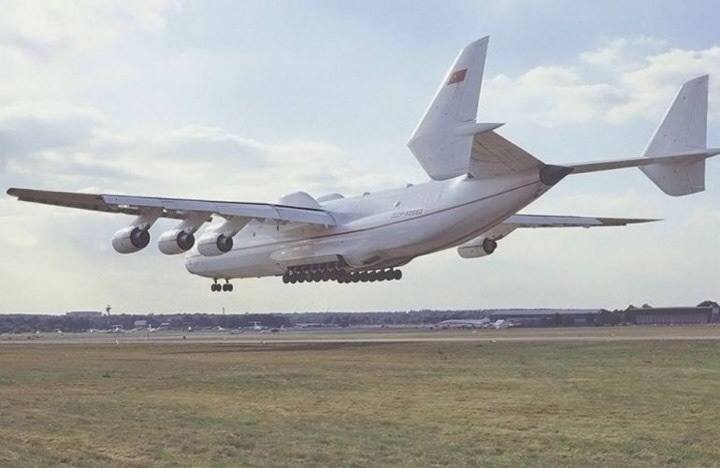
In a story last month published in USA Today (7/24/2014), “Several airlines announce record profits“, American Airlines, which was in bankruptcy court last year and merged with U.S. Airways in December, announced the company’s first dividend since 1980, based on record quarterly profits of $1.5 billion.
United Airlines, the only major U.S. airline to lose money in the first quarter, announced second-quarter income of $919 million, an increase of 51% from the same period a year earlier.
Southwest Airlines, the largest carrier of U.S. passengers which began its first international flights July 1, also reported record quarterly net income of $485 million or 70 cents per diluted share, which beat analysts’ expectations of 61 cents. Southwest is offering workers a one-time bonus of $200 each to thank them. And JetBlue Airways announced its 17th consecutive quarter of profitability.
The next time you hop on a plane to go on an exotic vacation, or to give an important presentation at some far off land or distant conference, or go on an unnecessary (or necessary) business trip, or fly to see the Olympics, the Super Bowl, the Rose Bowl, or maybe just go pay a visit to someone you haven’t seen for awhile, know that the ticket price is really just a fraction of the “true” cost of traveling by jet airplane.
Over the past five years, the Obama administration has repeatedly called for cutting fossil fuel subsidies in the form of tax breaks and other incentives. But the amount of money the federal government forfeits through subsidies has increased steadily over that time period, reaching $18.5 billion last year, according to a new report from the environmental group Oil Change International.
That total is up from $12.7 billion in 2009, largely because oil and gas production has increased in the United States. Next year, domestic oil production is expected to reach the highest level since 1972. The Obama administration regularly touts its “all of the above” energy strategy, which includes increased oil and gas production.
The Oil Change report includes a variety of subsidies in its accounting, including tax breaks, incentives for production on federal lands (such as royalty fees that haven’t been adjusted in 25 years) and tax deductions for clean-up costs. And if state subsidies for oil, gas and coal production are also included, the total value climbs to $21.6 billion for 2013.
A 2011 study by the consulting firm Management Information Services, Inc. (MISI) estimated the total historical federal subsidies for various energy sources over the years 1950–2010 in the U.S.. The study found that oil, natural gas, and coal received $369 billion, $121 billion, and $104 billion (2010 dollars), respectively, or 70% of total energy subsidies over that period. Oil, natural gas, and coal benefited most from percentage depletion allowances and other tax-based subsidies, but oil also benefited heavily from regulatory subsidies such as exemptions from price controls and higher-than-average rates of return allowed on oil pipelines.
In September 2009, Obama and other G20 leaders pledged to phase out fossil fuel subsidies to help curb global warming. Obama also called for eliminating subsidies in 2012 and 2013. And the administration’s 2015 budget proposal again calls for a major cut to fossil fuel subsidies.
But Congress so far hasn’t acted to cut the subsidies. The report argues that as long as those incentives remain in place, the federal government is “essentially rewarding companies for accelerating climate change.”
“We’re spending more taxpayer dollars every year to fund fossil fuels that we can’t afford to burn, according to climate science,” said Steve Kretzmann, executive director of Oil Change International. “Subsidizing fossil fuels at this point is climate denial.” [article by Kate Sheppard, “Federal Government Still Spending Billions To Subsidize Fossil Fuels”, Huffington Post, 7/9/2014]
Essential Air Service (EAS) is a U.S. government program enacted to guarantee that small communities in the United States, which, prior to deregulation, were served by certificated airlines, maintained commercial service. Its aim is to maintain a minimal level of scheduled air service to these communities that otherwise would not be profitable. This came in response to the Airline Deregulation Act, passed in 1978, which gave U.S. airlines almost total freedom to determine which markets to serve domestically and what fares to charge for that service.[1] The program is codified at 49 U.S.C. §§ 41731–41748.
The United States Department of Transportation (DOT) subsidizes airlines to serve rural communities across the country that otherwise would not receive any scheduled air service. As of November 1, 2013, the Essential Air Service subsidized 160 communities, of which 43 were in Alaska, whose guidelines for service are separate and distinct from the rest of the country. The decision as to what degree of subsidized service a community requires is made based on identifying a specific hub for the community and from there determining the number of trips, seats, and type of aircraft that are necessary to reach that hub.
The budget for EASs increased from $131.5 million in 2011 to $214 million in 2012 to $234 million in 2013 and to $241 million in 2014.
The true cost of flying includes the consequences of burning the fossil fuels which end up in the earth’s atmosphere. Consider also the uses of the land, wetlands or other uses that the airport and its runways and taxiways that your plane uses must have replaced and the other impacts the airport and its uses have on the surrounding environment. Finally, consider the costs and materials that are obtained for building the airport and airliners and the impacts of the many service vehicles operating at each airport and the impact of their emissions on the environment, too. Also consider the impacts of mining, drilling, and transport of fuel to the airport, possible fuel pipeline construction, and the potential for fuel spills, contamination of land and water resources, and the potential for fuel explosions associated with operation of the airport, transportation of the fuel, as well as the possible environmental effects associated with manufacturing airliners like the one you are flying that regularly use the airport. Most of these types of impacts are very real and can impose significant negative consequences to people, animal life and our environment but seldom do they have any recognized monetary cost thus they they go unpaid for by those who profit from the public’s use of the airplanes and the airport.
Ignorance, or purposefully ignoring negative, nonmonetary environmental effects of flying to exotic locations may seem blissful, at first; but when the environmental effects of millions of people doing the same things, but when many millions of people are flying daily, at different locations throughout the world yet in the same atmosphere are considered collectively, and over time, the consequences upon our atmosphere and therefore our planet can be very significant, dangerous and ultimately catastrophic, especially when combined with the billions of other sources of fossil fuel burning being done irrefutably caused our planet and oceans to warm, causing sea level rise, and ocean acidification, and increased severity of extreme weather events, ignorant over the cause and effect of burning fossil fuels and global warming is not only dangerous but foolhardy.
Yes, those jet airplanes and propeller driven airplanes burn significant volumes of fossil fuels every day in the world, in flight, taking-off and landing, thereby adding significantly to the increasing concentration of of the gas “carbon dioxide” (CO2) and other greenhouse gases that end up in the Earth’s atmosphere, daily, thus contributing to the increasingly grave rate of global warming.
Data from a Milwaukee Journal Sentinel article by Joe Taschler of the Journal Sentinel Aug. 9, 2014
“Airlines seeing friendlier skies as profits rise
Airlines may be making record profit again but who is realy paying for most of the cost?
Airlines are making money again, with U.S. carriers reporting record profits for the second quarter of this year, but don’t look for them to use that money to add flights or upgrade service.
Where airlines once burned through cash the way a jumbo jet burns fuel, these days they are content to stay in a financial holding pattern.
The profits are either given back to investors, in the form of dividends or stock buybacks, or used for expansion, said Jay Sorensen, president of IdeaWorks, a Shorewood airline industry consulting firm.
“I don’t think the latter is going to happen, in terms of expansion,” he said. “Airline management is going to push back against that because that’s what got them into trouble in the first place.”
Southwest Airlines CEO Gary Kelly all but said as much in a July 24 conference call to discuss the company’s second quarter earnings.
“Right now, the demand is very strong and it is balanced very nicely with the supply of seats,” Kelly said. “We’re going to manage our growth very carefully so that we don’t upset that balance.”
Southwest, the market share leader at Milwaukee’s Mitchell International Airport, reported record second-quarter profit of $465 million and set records for full planes and passenger fare per mile. Revenue rose 8%. In July, the airline’s planes were 86.7% full.
Those numbers certainly are strong, but the recent past continues to haunt airlines, leaving them gun-shy about spending money.
“The only other thing that I think needs to be mentioned here is that we’ve lived through a brutal decade where every balance sheet in the industry was stressed and most went bankrupt. So you just can’t extrapolate 2014 into infinity,” Kelly said.
“We do want to make sure that we err on the side, financially, of being conservative and being very well prepared for the unpredictable,” he added. “The unpredictable’s happened a lot to us in 43 years.”
More service cuts
Among other carriers, American Airlines, only eight months removed from bankruptcy, said it will pay its first dividend in 34 years, a cash payout of 10 cents per share.
American reported net income of $864 million in the second quarter. Excluding special charges related to taxes and bankruptcy and merger costs, the profit was $1.5 billion, a quarterly record for the carrier.
So will it put any of that money into additional services? No. Actually, it’s cutting some in-flight meals.
The carrier, in the process of merging with US Airways, will stop serving free meals to first-class and business-class passengers on flights shorter than 2 hours and 45 minutes, beginning Sept. 1.
American now serves full meals on flights longer than two hours. The change is being made as part of the US Airways merger and is meant to keep consistent policies between the two airlines.
The airlines will continue to serve snacks such as fig bars, pretzels, fruit and cookies on shorter flights. Passengers in the economy sections can buy meals on flights longer than 2 hours and 45 minutes.
“We have to make sure our customers have a consistent experience, no matter what airline they choose,” American Airlines spokesman Casey Norton said.
Making up ground
To be fair, American is doing things to bolster its business using the profits it earned in the quarter.
The carrier will spend more than $2.8 billion on debt and aircraft lease prepayments, $1 billion to buy back shares and pay $600 million toward additional pension contributions.
All of those moves make sense.
“When you run an organization that was bankrupt or operating with poor financial results, it becomes threadbare. They need to make capital investments. They need to consider salary increases or profit-sharing increases,” Sorensen said.
“Hallelujah, they are making money,” he added. “They need it.”
Still, the timing of the meal service cutbacks was poor.
“That’s not the message that should be given right now,” Sorensen said. “The message should be that, ‘We are profitable. We are maintaining or improving the product for the consumer.'”
Four carriers, Southwest, Delta, American/US Airways and United, control more than 80% of the domestic airline market. All four serve Milwaukee.
With so much of the industry concentrated with a few carriers, it hasn’t made attracting new service to Mitchell any easier.
Attracting more air service is a top priority for Mitchell management, Harold Mester, public relations manager for the airport, said in an email.
“We meet with airlines on a regular basis, including frequently hosting airline executives in Milwaukee. We also invest significant resources into promoting Milwaukee as a cost-effective alternative for air carriers looking to serve the Chicago market,” he said.
The airport also has an air service incentive program to help offset the costs of new or expanded service from Milwaukee, he added.
Still, the airport has made some gains. “We now have year-round nonstop service to Seattle, San Francisco and Los Angeles, which were previously served on a seasonal basis,” Mester said.
Southwest is adding service to Cancun, and Frontier recently added some Florida service.
Adjusting to a new order
The Milwaukee County owned and operated airport is adjusting to the new order in the airline industry and its status of no longer being a major airline hub.
“Milwaukee’s air service is resetting in the wake of the airline industry’s new business model that parked feeder planes and moved to full-size mainline jets,” Mester said.
That new model also means that, if planes aren’t full, they won’t be flying a particular route for long.
It’s the butts-in-seats model. If there are not enough butts, the seats go away.
At Southwest, for example, trips flown in July were 113,099, down 3.7% from 117,402 in July 2013. Year to date, the airline’s trips flown as of July was 740,080, a 5% drop from 779,508 in 2013.
“Air service is largely ‘use it or lose it,'” Mester said. “Growth in population, employment, industry, commerce, conventions and tourism are the biggest factors that create demand and result in more air service.”
Industry watchers don’t expect things to change much.
“The industry is happy to bask in the glow of making money for once,” Sorensen said.
While touting green technology, and lobbying the federal government on environmental policy, Sergey Brin, Larry Page, and Eric Schmidt have put 3.4 million miles on their private jets in recent years, polluting the atmosphere with 100 million pounds of carbon dioxide. Their trips, according to flight log data I analyzed, included single-day jaunts and brief corporate meetings, but also what appear to be hundreds of exotic vacation destinations.
Perhaps someone should introduce them to Google Hangouts?
Few Americans would care that a successful tech company with substantial travel demands and nearly $60 billion in revenue over the past year maintains a fleet of private jets that guzzle fuel by the millions of gallons. But Google uses campaign contributions to strong-arm federal lawmakers into hamstringing everyone else with restrictive environmental regulations, while Google execs cavalierly jet off to exotic vacation spots around the globe on the taxpayers’ dime.
In a story by Justin Bachman, 7/23/2013, Bloomberg News lays out the arguments being made to get Uncle Sam out of the business of directing airplanes. This debate is hardly new, although the meat cleaver Congress took to the federal budget in January has given the proposal new impetus and appears to have made leaders of the labor union, the National Air Traffic Controllers Association, ready to discuss fundamental changes.
STORY: Some Air Traffic Controllers Watch Over Empty Skies
The Federal Aviation Administration cut $637 million from its $16 billion budget this fiscal year as a result of the sequester and faces similar cuts in the year beginning Oct. 1. In April, the traveling public felt the first effects of the reduced funding with furloughs hitting some 50,000 FAA employees and touching off about 2,300 flight delays. Days later, after heavy press coverage and outrage from airlines, Congress passed legislation allowing the agency to transfer funds to end the furloughs.
The basic change would be to fund traffic control not with taxes but through a “fee for flight”—a twist on the medical profession’s fee-for-service model—collected by a government corporation or a public-private partnership of some sort. About two-thirds of the costs of operating the U.S. air-traffic system derive from excise taxes on airline tickets and jet fuel, Bloomberg News reported. And with appropriations from Congress serving as the basis of long-term capital projects, the FAA’s ability to complete a transformation to a satellite-based routing system—as well as other large, capital-intensive efforts—has been called into question.
“The idea that you pay for $20 billion dollar infrastructure projects out of annual operating cash flow is nuts,” Robert Poole Jr., a co-founder of the libertarian Reason Foundation and a long-term advocate of moving ATC out of the federal government, said at the June conference. “You wouldn’t run any business that way.”
STORY: The GOP Plan to Get Air Traffic Safety on the Cheap
Dozens of countries, including Australia, Canada, and Germany, have relinquished the management of flight traffic to various private and public-private organizations in a bid to increase efficiency, lower costs, and boost safety. Funding air traffic control through fees also allows the agency in charge to issue bonds and pay for large projects, Poole has argued. Many of those agencies even enjoy investment-grade credit ratings.
There’s also the matter of public safety and bragging rights: For decades, the U.S. has boasted the safest air traffic system, and some foresee that title being supplanted by other nations that operate their airspaces differently. Others, however, argue that controllers should be government employees and that privatization could compromise safety. “I do know that the current system is broken and this conversation needs to start to happen,” Rinaldi said.
The federal budget sequester may advance an old proposal that was once broadly unthinkable: privatizing the U.S. air traffic control system.
In a story today that’s well worth reading for anyone who flies, Bloomberg News lays out the arguments being made to get Uncle Sam out of the business of directing airplanes. This debate is hardly new, although the meat cleaver Congress took to the federal budget in January has given the proposal new impetus and appears to have made leaders of the labor union, the National Air Traffic Controllers Association, ready to discuss fundamental changes.
“My organization has pivoted,” Paul Rinaldi, president of the controllers union, said at a symposium in June on modernizing air traffic control in response to the deep budget cuts. “If we do not mature, have this discussion, find a way to sustainably fund this system properly so that we can modernize it, we are going to fall way behind the world.” (A video of the panel discussion on FAA funding can be viewed here.) The union has not advocated any particular approach or called for air traffic control to be privatized, hoping instead to foster a wider, public discussion of the issue.
Wind Power Energy Growing in U.S.
Wind turbines provide the clean and renewable energy for us of both home and office. Wind Turbines are a great way to save money and keep the environment clean.
The U.S. Energy Department issued two reports Monday that highlight the strength of the growing U.S. wind energy industry. The Energy Department finds that the U.S. continues to be a global leader in wind energy, ranking second in installed capacity in the world. With increasing wind energy generation and decreasing prices of wind energy technologies, the U.S. wind energy market remains strong and the U.S. is moving closer to doubling renewable electricity generation from energy resources, including wind power.
“As a readily expandable, domestic source of clean, renewable energy, wind power is paving the way to a low-carbon future that protects our air and water while providing affordable, renewable electricity to American families and businesses,” said Energy Secretary Ernest Moniz.
After modest growth in 2013, total installed wind power capacity in the United States now stands at 61 gigawatts (GW), which meets nearly 4.5 percent of electricity demand in an average year, according to the 2013 Wind Technologies Market Report, released today by the Energy Department and its Lawrence Berkeley National Laboratory. The report also found that wind energy prices – particularly in the Interior region of the United States–are at an all-time low, with utilities selecting wind as a cost-saving option.
With utility-scale turbines installed in more than 39 states and territories, the success of the U.S. wind industry has had a ripple effect on the American economy, spurring more than $500 million in exports and supporting jobs related to development, siting, manufacturing, transportation and other industries, the Energy Department release said.
In total, U.S. turbines in distributed applications, which accounted for more than 80 percent of all wind turbines installed in the U.S. last year, reached a cumulative installed capacity of more than 842 MW–enough to power 120,000 average American homes–according to the 2013 Distributed Wind Market Report, also released today by the Energy Department and its Pacific Northwest National Laboratory. This capacity is supplied by roughly 72,000 turbines across all 50 states, Puerto Rico, and the U.S. Virgin Islands. In fact, a total of 14 states, including Iowa, Nevada and California, among others, now each have more than 10 MW of distributed wind capacity.
Compared to traditional, centralized power plants, distributed wind energy installations supply power directly to the local grid near homes, farms, businesses and communities. Turbines used in these applications can range in size from a few hundred watts to multi-megawatts, and can help power remote, off-grid homes and farms as well as local schools and manufacturing facilities.
 All Things Environmental
Recent Comments