
Cecil The Lion And The Debate Over Trophy Hunting

After Zimbabwe released the name this week of Walter Palmer, the hunter who killed Cecil the lion, the Minnesota dentist has faced intense backlash.
Those who still question the scientific validity of greenhouse gas warming causing more warming and rising sea levels, for pecuniary advantage, are a million times more unethical than Palmer and may be guilty of crimes against humanity.

Firefights working an explosive wildfire that’s tripled in size since Friday and is now burning in three Northern California counties — Lake County, Yolo County, and Colusa County and is only 12 % contained.
The Rocky Fire is now 60,000 acres, only 12 percent contained, and has prompted mandatory or voluntary evacuation orders for more than 12,000 residents. The wildfire has destroyed 50 structures, including 24 homes. The fire jumped Highway 20 and started a 100-acre fire in multiple spots, which firefighters were aggressively attacking Monday afternoon.
Firefighters say they’re feeling optimistic about the new containment number. They say the weather looks good for the next three days and that Sunday night was one of the quietest nights on the fire line.
They know, however, that spots can flare up in the afternoon when the winds pick up. As a result, crews are still keeping a very close eye on things, putting water on hotspots, and clearing residents out of the area.
“Left about 10 p.m. and will be here until they send us home,” said Lake County resident Wayne McKenney. “A couple days, probably. Who knows.”
There are nearly 3,000 firefighters currently battling the Rocky Fire, and more are arriving Monday. Residents say they are impressed and grateful.
“These guys are great,” said Lake County resident Rick McCune. “The winds are really bad, and that’s the problem.
Firefighters say even though it looked calm Monday morning and they’d more than doubled their containment lines, residents need to keep their head on a swivel. The fire grew so dramatically over the weekend that they just don’t know what it will do. Crews say you may not be affected this second, but that could change.
So far, 13,118 people have been evacuated.
“You know, they got a bad year, this is the worst fire I’ve ever seen in 40 some years up here,” said McKenney. “So, too much brush.”
Firefighters say the goal today is to box in the fire by using Highway 20 and Highway 16 as the perimeter. They want to keep it in that area and not jump over. They believe the weather may be in their favor over the next few days and maybe they’ll be able to turn the corner on this one.
Source: Drew Tuma – ABC7
Shell Oil Company Icebreaker Leaves Portland for Arctic after Wild Oil Drilling Protest

Activists hang from the St. Johns bridge in an effort to block the Royal Dutch Shell PLC icebreaker Fennica from leaving for Alaska in Portland, Ore., Thursday, July 30, 2015. The icebreaker, which is a vital part of Shell’s exploration and spill-response plan off Alaska’s northwest coast, stopped short of the hanging blockade, turned around and sailed back to a dock at the Port of Portland. (AP Photo/Don Ryan)
A Royal Dutch Shell icebreaker that was the target of environmental protesters left Portland, Oregon, on Thursday bound for an Arctic drilling operation after a tense standoff ended with kayakers and activists who had dangled from a bridge to block it.
The Fennica left dry dock and made its way down the Willamette River toward the Pacific Ocean soon after authorities forced the demonstrators from the river and the St. Johns Bridge.
Several protesters in kayaks moved toward the center of the river as the ship began its trip, but authorities in boats and personal watercraft cleared a narrow pathway for the Fennica.
The Fennica arrived in Portland for repairs last week. It attempted to leave earlier Thursday but turned around when activists dangling from the bridge refused to let it pass.
The icebreaker is a key part of Shell’s exploration and spill-response plan off Alaska’s northwest coast. It protects Shell’s fleet from ice and carries equipment that can stop gushing oil.
Authorities moved in hours after a federal judge in Alaska ordered Greenpeace USA to pay a fine of $2,500 for every hour that protesters dangled from the bridge to block the ship.
In May, U.S. District Judge Sharon Gleason granted Shell’s request that activists protesting its Arctic drilling plans be ordered to stay away from company vessels and beyond buffer zones.
At the court hearing Thursday in Anchorage, Gleason said the hourly fine against Greenpeace would increase over the next few days unless the blockade was lifted. It would have jumped to $5,000 an hour Friday, $7,500 an hour Saturday, and $10,000 an hour Sunday.
The Fennica was damaged earlier this month in the Aleutian Islands when it struck an underwater obstruction, tearing a gash in its hull.
Environmentalists hoped to delay the ship long enough for winter weather to prevent Shell from drilling until 2016. By that time, they hoped the Obama administration would have a change of heart on the issue.
Protesters began their blockade Wednesday. Several environmental groups joined Greenpeace’s effort. On Thursday, activists in about 50 kayaks milled beneath the bridge as other protesters dangled from ropes above.
One of the kayak protesters, Leah Rothlein, borrowed her mother’s kayak and headed onto the river.
“It’s pretty cool,” the 26-year-old said after coming ashore. “I was in the water for four hours.”
A crowd of a few hundred people watched from the shore and from a wooden dock as authorities began to move against protesters on the water and dangling from the ropes.
From AP story by Steven Dubois and Dan Joling 7/31/2015.
Missing in Action: Governor Scott Walker at National Governor’s Summer Meeting

It’s not that difficult figuring out why presidential candidate Scott Walker chose to opt out of attending the National Governor Summer meet Thursday through Saturday In West Virginia. Costs and controversies surrounding attempts to combat global warming are among topics the nation’s governors plan to tackle when they gather this week.
But because Walker believes 97% of scientists publishing papers on this subject are wrong, and he says human activity has no impact on the climate, he has little reason to attend this meeting.
This timely and urgently needed conference comes also as states grapple with issues that defy easy answers. Those include long-range funding for infrastructure upgrades, the effects of prolonged drought, and adequately funding public schools and colleges, to name a few.
It is likely that should Scott Walker become the next U.S. president, he will have to change his toon as the results of even worse global warming will already be upon us. We ought not wait for the next election to take massive actions and provide positive financial incentives to residents who cause limited or no amounts of contributions (greenhouse gas emissions to the atmosphere) to this potentially very real calamity. See “About This Blog” for one approach.
Who’s Gonna Stand Up and Save the Earth – Neil Young

Originally published on Sep 27, 2014, as requested by Neil himself. More than one version. “Please feel free to create any video of “Who’s Gonna Stand Up” u wish. Use social media to spread the word. – NY”
The above photo is of the Alberta, Canada area which was once boreal forest but was converted into a tar sands mine.
The Koch Brothers are the main owners. A Koch Industries subsidiary holds leases on 1.1 million acres in the northern Alberta oil sands, an area nearly the size of Delaware. The Washington Post confirmed the group’s findings with Alberta Energy, the provincial government’s ministry of energy. Koch Industries has been involved with almost every aspect of the tar sands industry, from mining bitumen to transportation, exportation, distribution and, of course, refining the petrochemicals — a large part of their empire.
Koch Industries is “one of Canada’s largest crude oil purchasers, shippers, and exporters, with more than 130 crude oil customers,” and is also responsible for about 25 percent of oil sands crude imports into the U.S., for use at its refineries, according to a Post article by Ari Philips, March 20, 2014.
Koch Industries on a net acreage basis is the largest American and foreign holder of leases in Canada’s oil sands.
The Enbrige owned pipeline cuts diagonally across Wisconsin from Superior to the border with Illinois The Wisconsin Department of Natural Resources (DNR) approved its permit to triple the volume pumped through the current 42 inch pipeline to 1.1 million barrels (42-gallons) per day. Dane County added a condition to placing a pumping station on the Dane County that they appropriately insure the project in case of a spill like the one that occurred in 2012 in Kalamazoo, Michigan part but Wisconsin state legislators nullified that with language prohibiting local action. The Wisconsin DNR determined there was no significant environmental impacts warranting a public review and Environmental Impact Statement EIS.
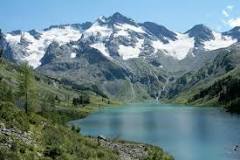
Boreal Forest
Movement to Require GMO Labeling Dealt a Blow in U.S. House of Representatives

The GMO-labeling movement was dealt a major blow last week when Congress passed HR 1599, the Safe and Accurate Food Labeling Act. The bill, sponsored by Representative Mike Pompeo (R., Kan.), prohibits states from mandating labels on products with genetically modified ingredients and creates a voluntary certification system at the USDA.
Forty-five Democrats voted in favor of the bill. Voting “yes” to the bill were Wisconsin’s Paul Ryan, James Sensenbrenner, Glen Grothman, Sean Duffy and Reid Ribble. Voting “no” were Mark Pocan, Ron Kind and Gwen Moore.
Why Have Our Commercial and Public Media (TV, Radio, Newspapers, Magazines, Online Sources) and Officials in Federal and State Government in the United States Not Sounded the ALARM Yet on Continued Global Warming and Climate Change?


The following is a summary of a 2008 international conference entitled: “ENVIRONMENT: FROM GLOBAL WARNINGS TO MEDIA ALERT” that was held October 10 and 11, 2008, in Venice, Italy. The purpose of the conference was to challenge the international media to improve public understanding of the impact of climate change. Journalists and news executives from 29 countries representing six continents attended the conference which was held by the international World Political Forum (WPF).
Unfortunately, now almost five years after this conference was held, commercial and corporation funded TV and radio media in these United States continue to purposefully ignore said challenge by not sounding the alarm on the global warming world catastrophe in the making, as do many U.S. publicly elected government officials in federal and state government, leaving the at large public in the U.S. as confused as ever over whether human activities such as fossil fuel burning: in power plants that produce electricity; in home and business heating (natural gas; oil; propane; electric baseboard); in motor vehicle travel and product shipping, via trucks, ships, pipelines (fueling lift stations), in airplanes and in trains; and in cement making and paving the landscape (fuel burning in earth moving equipment). Another significant contributor to the growing global warming crisis is continued deforestation, worldwide, and especially the deforestation of the tropics, where previously large reductions in of carbon dioxide (CO2) were being taken out of the air by the vegetation there – through the process of photosynthesis. Less green vegetation on Earth means increasing buildup of CO2 in the atmosphere and oceans, adding to warmer global temperatures. Methane gas (unburned natural gas) that is released from oil wells, livestock, and rotting biological matter (permafrost thawing) compound the problem that is resulting in what the scientific community has called “a potentially very dangerous situation for all humanity and life on Earth and lasting far into the future. Reason is that many positive (lead to more warming) feedbacks . One such warming feedback is the loss of Earth’s albedo, where a reduction in the area of snow-covered land, ice caps, glaciers or sea ice has a compounding effect on the initial warming. As the loss of “white” snow and ice cover (the albedo) continues, the amount of solar energy absorbed by the ocean increases, leading to more warming, which reduces the albedo on the planet even more, which causes more warming, and so on. A small amount of snow melt exposes darker ground which absorbs more radiation, leading to more snowmelt.
The effect is most vividly demonstrated by the decline in Arctic sea ice in recent decades.

As humans are continuing to do things that add more heat-trapping greenhouse gases (GHGs) to the Earth’s atmosphere, the result is that climates all around Earth have been measurably and significantly changing, mostly to the detriment of humans and animal life.
The global warming that has already taken place has caused Earth’s ocean levels to rise – due to thermal expansion from increasing water temperatures and from melting glaciers on Greenland, Antarctica, and Earth’s numerous mountain ranges.
Ocean water acidification has already taken place (a 33% increase) which has already lead to significant environmental, economic, and social cost. These effects of expected to continue unabated which is expected to worsen in time, with projected increases in monetary losses, damage, and loss of human and animal life due to worse and worse “natural” disasters.
As examples of recent catastrophes suspected to have been made worse as a likely direct consequence of rising average global temperatures (global warming): in 2015 heat waves in India and Pakistan killed 1,400 and 2,500 people; in 2013, the thirtieth named storm of the 2013 Pacific typhoon season, Typhoon Haiyan — known as Typhoon Yolanda in the Philippines – with an estimated one-minute sustained winds of 315 km/h (196 mph; 170 kn), making the typhoon the strongest tropical cyclone ever observed based on one-minute sustained wind speed and the deadliest typhoon hitting the Philippines in recorded modern history, killing 6,300 people in that country alone (dozens of fatalities from the storm were also reported in Taiwan, China and Vietnam) and according to United Nation’s officials, about 11 million people were adversely impacted by the storm with many left homeless and an economic cost in the billions of dollars; in 2012, Hurricane Sandy, which remains the largest Atlantic hurricane on record (as measured by diameter, with winds spanning 1,100 miles (1,800 km)) is estimated to have caused monetary damages of over $68 billion and killed at least 233 people along its path on the eastern U S. seaboard including New Jersey and New York; and in 2005, Hurricane Katrina, the fifth hurricane of the 2005 Atlantic hurricane season, was not only the costliest “natural” disaster in the history of the United States. Total property damage from Hurricane Katrina was estimated at $108 billion; the hurricane and subsequent flooding took 1,833 human lives and an undetermined number of domesticated and wild animal lives.
Yet today, incredibly – almost six years later – there remain deniers of human-caused global warming and climate change, including our State of Wisconsin’s own U.S. Senator Ron Johnson, as well as announced U.S. presidential candidate and our current governor, Scott Walker, who continue to spread the false message that Earth’s climates have not been shown to have changed as a result of human activities, to the delight of corporations that are financially benefiting from continued and more fossil fuel burning, which releases carbon dioxide gas, the most abundant of the greenhouse gases, which compounds from year to year in the atmosphere and Earth’s oceans, leading to monumental negative consequences for humanity and other life forms on Earth.
WPF’s President Mikhail Gorbachev, the eighth and last leader of the Soviet Union and General Secretary of the Communist Party of the Soviet Union from 1985 until 1991 when the party was dissolved, chaired the conference at which participants reached a consensus that the problem of climate change is “URGENT”.
“Time is running out,” Mr. Gorbachev said in his closing remarks. “The most efficient way to tackle the urgent environmental problems facing our planet is transparency, in which the media have a vital role to play. This means global glasnost.”
Climate experts and media delegates approved a declaration calling for higher standards of reporting on strategic options to avert irreversible damage to the Earth’s eco-systems.
Stressing the importance of well-informed public opinion, the declaration set out the following main recommendations:
– The media have the central role in ensuring that politicians, corporations, non-governmental organisations and scientists keep the general public informed about the latest facts and policy options regarding climate change. Civil society formation and action are essential components in deliberation on this issue.
– Journalists have a responsibility to improve their knowledge and skills in order to be able effectively to question government policy-makers, to distinguish facts from opinion or advocacy, and to evaluate scientific arguments from an independent viewpoint.
– Journalists and civil society should redouble their efforts to combat restrictive measures by governments on journalists reporting on their deficiencies in fighting environmental degradation or in informing the public about the dangers of climate change.
– Journalists should avail themselves of existing international databanks of validated statistics and scientific research on climate change.
– Scientists need to acquire improved communications skills to explain their findings in accessible terms and to build relationships of trust with the media.
– Media proprietors should be prepared to invest more resources in investigative reporting to allow specialist journalists to carry out serious and objective coverage of complex issues, based on a thorough understanding of good science.
– Editors should provide more space for in-depth treatment of environmental issues, not just on-line but in print and on air, and encourage innovative approaches that will grab the attention of the audience in a responsible, independent and non-sensational manner.
– Journalism training organisations should develop ever more sophisticated exercises to improve reporters’ skills in explaining complex scientific arguments. An international network should be created to share information about the availability of training courses and the development of new training models.
The Conference concluded on a positive note, declaring: “There is, however, cause for optimism if we act now. Numerous positive solutions to the global environmental change proposed by science and made possible by innovations in technology, the potential inherent in global civil society organization and by citizens’ groups everywhere in the world; and contributions from socially responsible business leaders can make it possible for us to provide for a decent and full life for all, and for generations to come, within the limits of our planet’s resources.”
Global Warming Deniers and All Fossil Fuel Users: You Are Collectively Putting Us All in Very Grave Danger!
Scientists:
2015 Still On Pace as Hottest Year On Record
The first five months of 2015 topped the warmest such period on record for the globe, according to a pair of recently released independent analyses from government scientists. Meanwhile, a third, separate analysis from the Japanese Meteorological Agency similarly found May 2015 to be the globe’s hottest May, topping May 2014 in records dating to 1891.
Global temperatures January-May 2015 exceeded 2010’s as the warmest first five months of any year, according to the National Aeronautics and Space Administration’s (NASA’s) Goddard Institute for Space Studies.
The National Oceanic and Atmospheric Administration’s (NOAA’s) National Climatic Data Center noted that the first five months of 2015 nudged ahead of January-May 2010 by 0.09 degrees Celsius.
Record warm sea-surface temperatures in the northeast and equatorial Pacific Ocean, as well as areas of the western North Atlantic Ocean and Barents Sea north of Scandinavia contributed to the record warm January-May 2015, according to a recently released NOAA data set. The record global average warmth in the first five months of 2015 follows the record annual average global temperatures of all of 2014.
NASA’s analysis found the most pronounced warm anomalies in May 2015 were over the higher latitudes of the northern hemisphere in two zones. One stretched from northern and central Russia into the Kara Sea, Barents Sea, northern Scandinavia westward toward northeast Greenland. Another was centered over northeast Alaska, and Canada’s Yukon and Northwest Territories stretching into the Beaufort Sea.
Record May warmth was also observed in parts of equatorial South America, southern Africa and The Middle East, according to NOAA. Spain tallied its second warmest May on record. Meanwhile, the heat wave death toll in India in the latter part of May topped 2,300, as was reported in a blog posting here last month that also reported on the death toll of Pakistan’s heat wave last month.
In fact, no U.S. corporation-funded major public media (T.V. or radio, including ABC, NBC, CBS, FOX and NPR) devoted any of their prime time broadcasting in Madison, WI to this story. This is not surprising, of course, knowing that all the major media networks in the U.S., both public and private, as well as many U.S. politicians who claim they represent the public, depend heavily on monetary sources from the major automobile, trucking, airline and fossil fuel providers/refiners/distributors and fossil fuel related industries.
Nine of the ten warmest years in NASA’s 134-year database have occurred this century, with the exception of 1998, which featured the tail end of one of the strongest El Ninos on record.
The last year NASA’s data set of global average temperatures was cooler than average global was 1976.
- The last cooler-than-average month was over 21 years ago, February 1994. In the 449 months from January 1978 through May 2015, only 11 months have been cooler than average, according to the NASA data set.
NOAA says nine of 10 warmest 12-month periods have taken place over the past two years. This 12-month record for the globe has been either tied or broken each month from January to April 2015.
France to see worse heat wave than occurred in 2003 when thousands of people died. France’s southwestern Gironde region sweltered under 107-degree F. heat a day after Cordoba in Southern Spain recorded nearlt 111 degree temperatures.
For noncorporatized REAL news, see news schedule at WORT-FM Community Radio – Madison, Wisconsin, and Democracy NOW!.
The Capital Times’ Editorial Board Agrees: Pope Francis Right to Ring Alarm Bells on Climate Change

Madison Capital Newspaper’s Editorial Board of The Capital Times endorsed Pope Francis’ June 18 Encyclical on Climate Change last week, citing the pope’s recommendation for “cultural revolution” to correct what the pope also said is a “structurally perverse” economic system, exploiting the poor to benefit the rich, turning Earth into an “immense pile of filth”, the pope said.
The following appeared verbatim in The Cap Times’ newspaper and on Madison .com on June 24, 2015 as an opinion and commentary of The Cap Time’s Editorial Board:
Pope Francis is Absolutely Right about Climate Change
“I would like to enter a dialogue with all people about our common home,” writes Pope Francis in the remarkable encyclical on climate change that he has addressed to “every person living on this planet.”
The pope will bring that dialogue to the United States in September and, to our view, he cannot arrive soon enough. Francis is adding to the debate about environmental challenges and responses a sense of urgency that has, for the most part, been missing from the discussions of climate change among the political and economic elites in the United States.
“Doomsday predictions can no longer be met with irony or disdain,” explains the Catholic leader, who argues that the scientific and practical proof of global warming is as undeniable as it is unsettling.
“The Earth, our home, is beginning to look more and more like an immense pile of filth,” Francis argues. “In many parts of the planet, the elderly lament that once beautiful landscapes are now covered with rubbish.”
The pope’s message must be heard in the United States — especially in Washington, especially on Wall Street — as it challenges the superstitions and fantastical thinking of those who still try to deny the human role in creating climate change. And in addressing the crisis.
Some of the deniers are so out of touch with reality that they do not understand what the pope is talking about. Rick Santorum, a clueless conservative who is waging another doomed-to-fail campaign for the Republican presidential nomination, rejected the new encyclical with a bizarre announcement that the pope should “leave science to the scientists.”
Santorum has company in the reality-free zone. A supposedly more serious contender for the Republican nomination, former Florida Gov. Jeb Bush, who like Santorum is Catholic, says, “I don’t get economic policies from my bishops or my cardinals or my pope. I think religion ought to be about making us better as people and less about things that end up getting into the political realm.”
Bush’s fellow front-runner for the Republican presidential nod, Scott Walker, has what Mother Jones magazine refers to as an “inglorious history of anti-environmentalism” in Wisconsin, where the governor recently refused to join a chorus of objection to a move by the Republican-controlled state Board of Commissioners of Public Lands to bar its staffers from engaging in official discussions about climate change. (No thanks to Walker, that idiotic policy was subsequently changed.) And when Americans for Prosperity, the right-wing group funded by the Koch brothers, asked politicians to sign a document devised to restrict government action to address climate change, Walker signed the pledge “to oppose any legislation relating to climate change that includes a net increase in government revenue.”
The ignorance revealed in the statements and actions of political careerists like Santorum, Bush and Walker is such that they may be beyond redemption — at least as regards the climate change debate. They do not seem to understand that the pope is relying on science; Janos Pasztor, the U.N. assistant secretary-general for climate change, says of the pope’s stance: “We have a situation in which science and religion are totally aligned.” Nor do they seem to understand that Francis is not taking a political stand; he is making a moral statement that recognizes an environmental and social circumstance that is denied only by those who persist in placing politics above the facts.
“We are not faced with two separate crises, one environmental and the other social, but rather one complex crisis which is both social and environmental,” writes Francis.
That crisis is “aggravated,” the pope explains, “by a model of development based on the intensive use of fossil fuels.” But it is made worse by indifference of political and economic elites to the condition of those who are already being harmed by climate change, especially the poor who cannot retreat from the disasters that are already playing out and that will grow worse without a radical change of course.
Instead of recognizing that the poor will be the first and the most harmed victims of the environmental catastrophe that is in the making, corporate-aligned political and economic elites in the United States are so neglectful that, the pope writes, “when all is said and done, (the poor) frequently remain on the bottom of the pile.”
Ultimately, of course, we will all be on the bottom of the pile — unless our political and economic responses to climate charge are altered.
Polling shows that, despite massive misinformation campaigns financed by fossil-fuel companies and self-interested billionaires, the American people are beginning to recognize this reality. According to CNN, more than 70 percent of Americans believe the planet is growing warmer, while roughly half now attribute that warming to human causes.
The politicians may resist for a bit longer, but the people are ready for honest leadership on the environmental and economic issues that are arising in an age of considerable climate change. They are ready to ask, as Pope Francis does, “What kind of world do we want to leave to those who come after us, to children who are now growing up?” They are ready for the insight that says, again as the pope does, “The question not only concerns the environment in isolation; the issue cannot be approached piecemeal.”
What the pope proposes is more than mere awareness, however.
Francis seeks action — a “bold cultural revolution” that “(rejects) a magical conception of the market, which would suggest that the problems can be solved simply by an increase in the profits of companies or individuals.”
The pope is absolutely right when he argues that the “invisible forces of the market” will not steer us out of the ditch into which market fundamentalists have steered the planet and its people. But enlightened thinking about the environment along with new approaches to the economy will. This is the promise, and the possibility, that Pope Francis will bring to the United States.
Republican Brewhaha on Wisconsin Highway Funding Symptomatic of Larger Problem

Wisconsin Governor Scott Walker’s proposed borrowing plan for highway construction the next two years has finally hit the skids! GOP lawmakers said as much in a letter to the governor yesterday. Not only is the governor’s proposed $1.3 billion transportation borrowing plan too high, said the 33 Assembly Republicans who signed the letter, but also any reduction to $800 million must include reductions in the massive Milwaukee area freeway projects already under construction.
The Republicans lawmakers, who are in the majority in both houses of the Wisconsin Legislature, are negotiating among themselves over the reduction in bonding to $800 million according to a story in the Milwaukee Journal Sentinel website Monday.
Allthingsenvironmental emailed the Republican dominated Joint Finance way last March after the governor’s proposed biennial budget for 2015-17 hit the streets sending them the following message:
So it’s not just the governor’s highway plan part of the 2-year budget that’s unsustainable. It’s virtually everything Scott Walker has done as governor, starting January 2010 with his Act 10 that destroyed collective bargaining in public employee unions, having appeared out of the blue.
Meanwhile, as probable presidential candidate Scot Walker heads his way to yet another Wisconsin taxpayer funded speaking engagement, this time in California, the brewhaha simmering among his fellow Republicans is beginning to reach the boiling point. One has to wonder how many frequent flyer miles the governor and his security people have racked up over the past 5 years? A lot? Yes, but undoubtedly not even close to the millions of tons of greenhouse gases his jets, autos and motorcycles have emitted to the atmosphere for the next generation to be burdened with.
 All Things Environmental
Recent Comments