
Baking in Alaska: Anchorage is hotter than Los Angeles

Temperatures in Alaska’s biggest city hit 83 degrees on Monday and Tuesday, records for both calendar days and just two degrees shy of the June record set in 1969. Temperatures could again hit 80 on Wednesday. In Los Angeles, temperatures on Monday and Tuesday didn’t crack 80.
The normal high for Anchorage is just 63 degrees, as measured between 1981 and 2010, according to the National Weather Service.
Despite this heat wave, cooler-than-normal temperatures in the first 10 days of the month means it probably won’t go down as one of the hottest Junes on record for much of the state. Contributing to the warmer weather in recent years have been sea surface temperatures far above normal as well as earlier melting of winter ice.
Alaska glaciers sending 75 billion tons of water into sea each year.
Alaska: Card Street Fire blazes on the Kenai Peninsula

10 P.M. THURSDAY UPDATE:
The fire burning near Card Street in Sterling grew 33 percent throughout Thursday to more than 12,000 acres, according to Division of Forestry spokesman Tim Lowry.
However, the fire continues to spread eastward and away from nearby homes. Firefighters on the ground and in the air are focusing their attention on protecting structures.
Heading into the evening, there are an estimated 2,000 firefighters in the state and 55 active fires large and small.
That puts the number of fires this season at 286, which have scorched a small-for-Alaska 89,820 acres overall, Lowry said: “We’ll probably get over 100,000 tonight,” he added.
2:30 P.M. THURSDAY UPDATE:
Evacuations have been lifted for subdivisions from the Feuding Lane and Kenai Keyes intersections, the Kenai Peninsula Borough says.
“Kenai Keyes SOUTH to the Kenai River remains evacuated status,” a spokeswoman wrote. “Please use caution when returning to your residence.”
It was a message that residents were hoping for. According to the Division of Forestry today, the subdivisions that were threatened by the now-9,000-acre Card Street Fire appear to be out of the danger zone.
The decision to turn back on the power to homeowners in the Kenai Keyes area is expected about 6 p.m. tonight.
That’s the good news. The fire also remains the top priority wildfire in the United States and has destroyed at least 11 buildings. While most structures are protected, firefighters are now focusing on making sure the flames do not jump the highway.
Some evacuation orders are still in effect on the road to Kenai Keyes, while crews continue to make sure there are no hot spots.
Fire officials have estimated the cost of fighting the wildfire at $1.06 million as of this morning.
— Nikki Carvajal & Tulsi Patil
Children Crying Out for a Planet in Peril
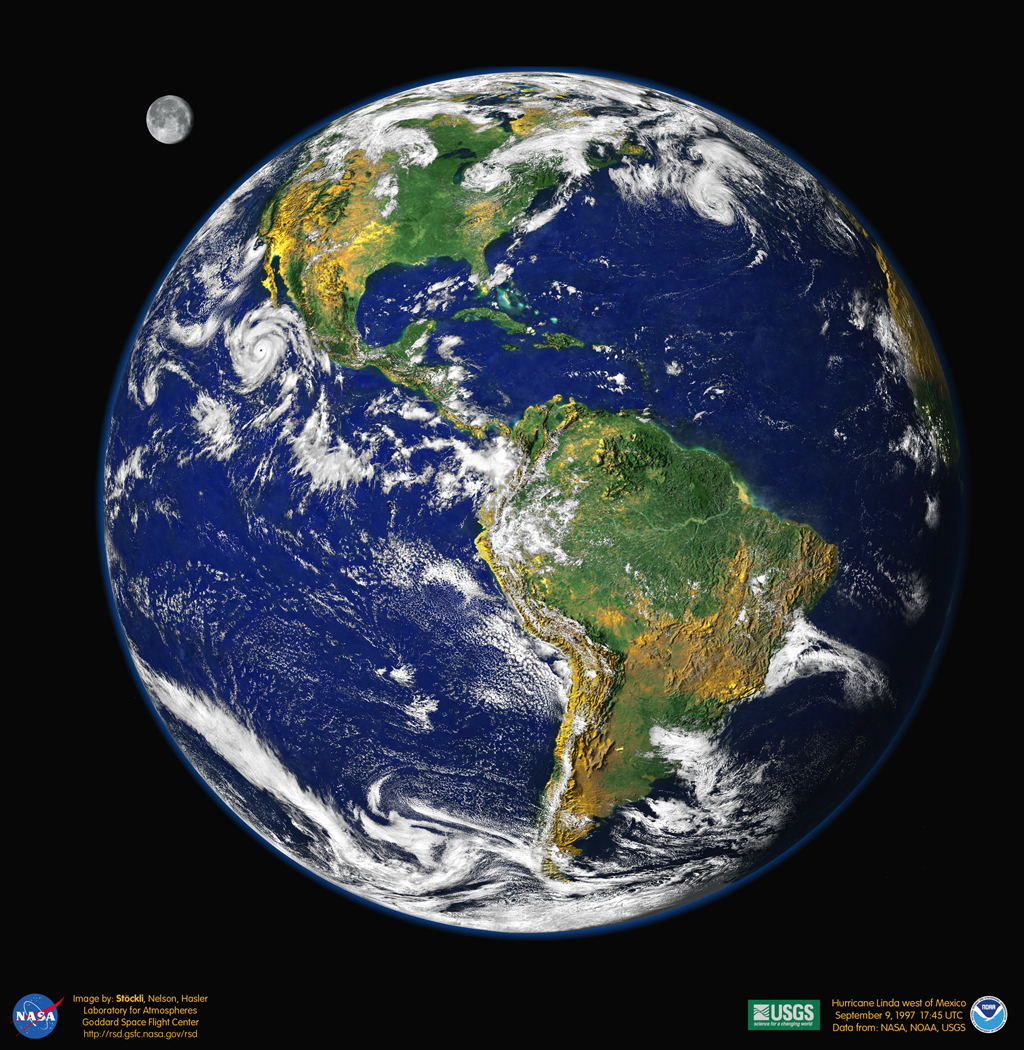
Children in Wisconsin and elsewhere are getting wise to what’s happening to the planet. They’re beginning to speak out, and they will not accept the willful ignorance of the subject that so many Republicans are espousing.
This month, Home Box Office (HBO) in collaboration with New York City’s American Museum of Natural History, will air a new documentary called “Saving My Tomorrow”. The voices of children are heard crying out for universal action to prevent them from inheriting what they believe is a dying planet in desperate need of healing.
While Wisconsin governor Scott Walker, who has not yet announced he is running for the president of the United States, gallivants to Europe and elsewhere with a number of others interested in promoting trade oversees, not realizing that flying is said to be the paramount sin against global warming and the environment, children are crying out that adults everywhere clearly are not doing enough to stop climate catastrophe from occurring in their lifetime to our planet, Earth.
Scientists: Long-Awaited “Jump” in Global Temperatures Now Appears “Imminent”

The National Center for Atmospheric Research’s leading climatologist Kevin Trenberth said this week that he believes “a jump [in global temperatures] is imminent”, according to article posted April 2 on Climate Progress.
New research from a major national lab projects that the rate of climate change, which has risen sharply in recent decades, will soar by the 2020s, with the Arctic warming by 1 degree Fahrenheit per decade.
The speed with which temperatures change will continue to increase over the next several decades, intensifying the impacts of climate change, according to the U.S. Department of Energy.
New research documents evidence that global warming causes more global warming and that, as Earth warms, the warmer temperatures correspond with an increase in greenhouse gases, which means the earth warms the earth even more. “We discovered that not only does thickening the blanket of heat-trapping gases around our planet cause it to get warmer, but also, crucially, when it gets warmer this increases thickens the blanket of heat-trapping gases,” scientist Tim Lenton said.
While previous studies have suggested a correlation between warming temperatures and an increase in greenhouse gas, Lenton’s team is the first to prove the relationship using direct evidence, taken from ice cores nearly one million years old. The team — comprised of scientists from the University of Exeter, the Scripps Institution of Oceanography, and Wageningen University in the Netherlands — analyzed Antarctic ice core data from the end of ice age cycles 400,000 and 800,000 years ago. That ancient ice is important, because it offers an extremely large amount of historical global temperature and greenhouse gas concentration data, which the scientists were able to analyze to figure out how the two interact.
The findings provide even more support to the overwhelming evidence that humans are causing global warming by pumping greenhouse gases into the atmosphere. The surprise, Lenton explained, is that the findings also show that increasing temperature eventually increases greenhouse gases.
“It implies that we should expect the ‘Earth system’ to respond to anthropogenic global warming by amplifying it with the release of additional greenhouse gases,” Lenton said.
The Washington Post: “The Arctic climate threat that nobody’s even talking about yet.”

When we think about the Arctic in a warming world, we tend to think about sharp declines in sea ice and — that powerful symbol — the polar bear. But that’s far from the only problem that a melting Arctic brings.
In the past decade, scientists have been training more attention on another deeply troubling consequence. Rapid Arctic warming is expected to lead to the thawing of a great deal of frozen soil or permafrost, which, as it thaws, will begin to emit carbon dioxide and methane to the atmosphere. And if this occurs in the amounts that some scientists are predicting, it could significantly undermine efforts to reduce the world’s greenhouse gas emissions.
Indeed, scientists have discovered a simple statistic that underscores the scale of the potential problem: There may be more than twice as much carbon contained in northern permafrost as there is in the atmosphere itself. That’s a staggering thought.
Permafrost is simply defined as ground that stays frozen all year round. There’s a lot of it – it covers 24 percent of the surface of the northern hemisphere land masses, according to the International Permafrost Association. But more and more of it is thawing as the Arctic warms, and these frozen soils contain a vast amount of organic material — largely dead plant life — in a kind of suspended animation.
“It’s built up over thousand and thousands of years,” says Robert Max Holmes, a senior scientist at the Woods Hole Research Center. “It’s all stored away in a freezer, and as we’re warming the Earth, and warming the Arctic, it’s starting to thaw.”
As permafrost thaws, microbes start to chow down on the organic material that it contains, and as that material decomposes, it emits either carbon dioxide or methane. Experts think most of the release will take the form of carbon dioxide — the chief greenhouse gas driving global warming — but even a small fraction released as methane can have major consequences. Although it doesn’t last nearly as long as carbon dioxide in the atmosphere, methane has a short-term warming effect that is many times more powerful.
Among the potential mega-problems brought on by climate change, including melting ice caps to the slowdown of the ocean conveyor system, permafrost emissions are unique. For it’s not merely about sea level rise or weather changes — it’s about amplifying the root problem behind it all, atmospheric carbon levels.
The emission of carbon from thawing permafrost is what scientists call a “positive feedback.” More global warming could cause more thawing of Arctic permafrost, leading to more emissions of carbon into the atmosphere, leading to more warming and more thawing of Arctic permafrost — this does not end in a good place.
Moreover, in a year in which the world will train its attention on Paris and the hope for a new global climate agreement, permafrost emissions could potentially undermine global climate policies. Even as the world starts to cut back on emissions, the planet itself might start replacing our emissions cuts with brand new carbon outputs.
All of this, and the Arctic permafrost problem hasn’t received much attention — yet. “The concept is actually relatively new,” says Kevin Schaefer of the National Snow and Ice Data Center at the University of Colorado in Boulder. “It was first proposed in 2005. And the first estimates came out in 2011.” Indeed, the problem is so new that it has not yet made its way into major climate projections, Schaefer says.
“None of the climate projections in the last IPCC report account for permafrost,” says Schaefer. “So all of them underestimate, or are biased low.”
To understand why northern soils contain so much carbon it helps to understand why southern or tropical soils don’t. It all comes down to temperature, and how that affects how quickly microorganisms break down dead organic material (plant and animal life), causing it to release its carbon back into the atmosphere.
In temperate latitudes, it’s simple: Plants grow and pull carbon dioxide from the air — then they die, decompose and emit it back again. “In warmer temperatures, microbial activity will go on over all of the year,” says Vladimir Romanovsky, a permafrost researcher at the University of Alaska, Fairbanks. “So even if productivity in warmer climates [is] larger, there’s not much sequestration of carbon in the soil.”
But in permafrost regions, it’s very different. Plants grow much more slowly, and there are fewer of them — but their decomposition is also much slower, explains Romanovsky. So a large amount of organic material gets stored in the frozen ground. And this has been happening, in some cases, over tens of thousands of years since the last ice age, leading to a truly vast carbon store that is stuck in place — or, at least, it used to be.
“As long as the carbon stays frozen in permafrost, it’s stable,” says Schaefer. “It’s kind of like broccoli in your freezer. But if you take that out, it eventually thaws out and goes bad.”
The problem, in this case, is the size of the freezer. Just consider some basic numbers. According to a 2013 report from the National Academy of Sciences, northern permafrost contains 1,700 to 1,850 gigatons of carbon — a gigaton is a billion metric tons — which is more than double the amount of carbon currently in the atmosphere (730 gigatons, says the NAS). And over 1,000 of those gigatons are thought to be stored in the top three meters of permafrost soil.
Nobody’s saying all of that is going to come out — certainly not immediately, and maybe not ever. However, as the Arctic continues to warm over the course of the century, emissions from permafrost could ramp up, and they could eventually reach a scale that could begin to offset climate gains. “It’s certainly not much of a stretch of the imagination to think that over the coming decades, we could lose a couple of gigatons per year from thawing permafrost,” says Holmes.
So far, permafrost emissions, if any, are pretty small. But by 2100, the “mean” estimate for total emissions from permafrost right now is 120 gigatons, says Schaefer. That’s no small matter, considering that according to the U.N.’s Intergovernmental Panel on Climate Change and the National Academy of Sciences (see above), the world can only emit about 1000 total gigatons of carbon if we want to have a good chance of limiting the temperature rise to less 2 degrees Celsius of warming since 1860-1880.
According to the IPCC, the world had already emitted 515 gigatons by 2011, leaving a pretty tight remaining carbon “budget.” Permafrost emissions, if they’re big enough, could lead to busting the budget a lot quicker.
“The further south you go, the warmer it is, so the more vulnerable the permafrost is to thawing,” says Schaefer. “So all the emissions will be dominated by the southern margins, southern Alaska, Hudson Bay.”
Later this month — on April 24 — the United States takes over the chairmanship of the Arctic Council, a group of eight nations with Arctic territories that helps to coordinate policy for the region. The State Department has specifically indicated that one of the focuses of the two-year chairmanship will be the issue of climate change. So, will permafrost emissions enter into policy considerations?
“This is a dangerous feedback loop as Arctic warming drives permafrost thaw, and the permafrost releases more GHGs into the atmosphere, accelerating change,” said a State Department official. “However, many questions remain about the processes by and time scales over which such emissions could be released into the atmosphere.”
The official said that through the Arctic Council, the United States will emphasize better monitoring and observation systems to detect emissions from permafrost. But the officials also underscored the importance of “an ambitious international climate agreement in Paris – this is where we need action to slow climate change.”
The concern is whether such an agreement will arrive soon enough to stop or at least blunt the permafrost problem. It’s “a true climatic tipping point, because it’s completely irreversible,” says Schaefer. “Once you thaw the permafrost, there’s no way to refreeze it.”
By Chris Mooney, The Washington Post: “The Arctic climate threat that nobody’s even talking about yet”, April 1, 2015.
2015 Arctic Ice and Snow Cover Lowest in the Satellite Record

Arctic sea ice extent for February 25, 2015. The orange line shows the 1981 to 2010 median extent for that day. The black cross indicates the geographic North Pole.
On March 19, the National Snow & Ice Data Center reported this years Arctic sea ice, reached on February 25, 2015, is likely reached likely reached its maximum extent for the year on February 25th, measuring 14.54 million square kilometers (5.61 million square miles). 2015’s maximum ice extent was the lowest in the satellite record, with below-average ice conditions everywhere except in the Labrador Sea and Davis Strait. The maximum extent is 1.10 million square kilometers (425,000 square miles) below the 1981 to 2010 average of 15.64 million square kilometers (6.04 million square miles) and 130,000 square kilometers (50,200 square miles) below the previous lowest maximum that occurred in 2011.
This year’s maximum occurred 15 days earlier than the 1981 to 2010 average date of March 12.
Over the first two weeks of March, temperatures throughout the eastern Arctic at approximately 3,000 feet altitude were several degrees Celsius above average, with temperatures as much as 8 to 10 degrees Celsius (14 to 18 degrees Fahrenheit) above average in the Barents Sea between Svalbard and Franz Josef Land.
Melt extent in Greenland was also well above average in 2014, tying for the 7th highest extent in the 35-year satellite record. Overall, climate patterns favored intense west coast and northwest ice sheet melting, with relatively cool conditions in the southeast. Relative to the 35 years of continuous satellite measurements, 2014 is tied with 2006 for seventh highest, and is well above the 1981 to 2010 average. Melt area total (the sum of daily melt extents for the entire June through August period) was approximately 100,000 square kilometers (38,600 square miles) above the 1981 to 2010 average. The top eight melt extent years have all occurred since 2002.
Greenland’s snow and ice was significantly darker in the summer of 2014 than in 2013, and similar to 2011. This darkening trend is apparent in the comparison of the past 15 years of average summer (June through August), during which Greenland’s snow and ice has been getting dirtier and the geographic extent of the darker Arctic Ocean water (darker than snow and ice) has been growing substantially. This has reduced the ice and snow “albedo” effect. The warmer temperatures in the Arctic have caused more of the Arctic’s ice and snow cover to melt, which has reduced the Arctic’s overall albedo, thus more of the Sun’s energy is absorbed by the earth, rather than reflecting the Sun’s rays back out to space, which causes even more warming, et cetera. This is what scientists call a “positive feedback” climate process.
The darker snow on Greenland is a result of increased soot, dust, and even microbes in the snow, and the general trend of warmer summer conditions. Snow also darkens over time as jagged snowflakes evolve into rounder snow crystals. The larger snow grain size allows more light to be absorbed by the snow.
Antarctica’s Melting Getting Worse

We’d heard that the Western Antarctic glacier was rapidly melting. And if it does, it could raise the word’s ocean levels 11 feet.
Now comes news that the Eastern ice sheet may be headed in that direction, too. That would release the same amount of water, giving our grand children a lot of waterfront property where there isn’t any now.
A hundred years from now, humans may remember 2014 as the year that we first learned that we may have irreversibly destabilized the great ice sheet of West Antarctica, and thus set in motion more than 10 feet of sea level rise.
Meanwhile, 2015 could be the year of the double whammy — when we learned the same about one gigantic glacier of East Antarctica, which could set in motion roughly the same amount all over again. Northern Hemisphere residents and Americans in particular should take note — when the bottom of the world loses vast amounts of ice, those of us living closer to its top get more sea level rise than the rest of the planet, thanks to the law of gravity.
The findings about East Antarctica emerge from a new paper just out in Nature Geoscience by an international team of scientists representing the United States, Britain, France and Australia. They flew a number of research flights over the Totten Glacier of East Antarctica — the fastest-thinning sector of the world’s largest ice sheet — and took a variety of measurements to try to figure out the reasons behind its retreat. And the news wasn’t good: It appears that Totten, too, is losing ice because warm ocean water is getting underneath it.
“The idea of warm ocean water eroding the ice in West Antarctica, what we’re finding is that may well be applicable in East Antarctica as well,” says Martin Siegert, a co-author of the study and who is based at the Grantham Institute at Imperial College London.
The floating ice shelf of the Totten Glacier covers an area of 90 miles by 22 miles. It it is losing an amount of ice “equivalent to 100 times the volume of Sydney Harbour every year,” notes the Australian Antarctic Division.
That’s alarming, because the glacier holds back a much more vast catchment of ice that, were its vulnerable parts to flow into the ocean, could produce a sea level rise of more than 11 feet — which is comparable to the impact from a loss of the West Antarctica ice sheet. And that’s “a conservative lower limit,” says lead study author Jamin Greenbaum, a PhD candidate at the University of Texas at Austin.
In its alignment with the land and the sea, the Totten Glacier is similar to the West Antarctic glaciers, which also feature ice shelves that slope out from the vast sheet of ice on land and extend into the water. These ice shelves are a key source of instability, because if ocean waters beneath them warm, they can lose ice rapidly, allowing the ice sheet behind them to flow more quickly into the sea.
The researchers used three separate types of measurements taken during their flights — gravitational measurements, radar and laser altimetry — to get a glimpse of what might be happening beneath the massive glacier, whose ice shelves are more than 1,600 feet thick in places. Using radar, they could measure the ice’s thickness. Meanwhile, by measuring the pull of the Earth’s gravity on the airplane in different places, the scientists were able to determine just how far below that ice the seafloor was.
The result was the discovery of two undersea troughs or valleys beneath the ice shelf — regions where the seafloor slopes downward, allowing a greater depth of water beneath the floating ice. These cavities or subsea valleys, the researchers suggest, may explain the glacier’s retreat — they could allow warmer deep waters to get underneath the ice shelf, accelerating its melting.
In this particular area of Antarctica, Greenbaum says, a warmer layer of ocean water offshore is actually deeper than the colder layers above it, because of the saltwater content of the warm water (which increases its density). And the canyons may allow that warm water access to the glacier base. “What we found here is that there are seafloor valleys deeper than the depth of the maximum temperature measured near the glacier,” Greenbaum says.
One of these canyons is three miles wide, in a region that was previously believed to simply hold ice lying atop solid earth. On the contrary, the new study suggests the ice is instead afloat.
The availability of warm water, and the observed melting, notes the study, “support the idea that the behaviour of Totten Glacier is an East Antarctic analogue to ocean-driven retreat underway in the West Antarctic Ice Sheet (WAIS). The global sea level potential of 3.5 m flowing through Totten Glacier alone is of similar magnitude to the entire probable contribution of the WAIS.”
For Richard Alley, a glaciologist at Penn State University, the new research hints at a possible solution to a question that scientists have long had about the planet’s past — and in particular the Pliocene epoch, beginning 5.3 million years ago, when sea levels were dramatically higher, by as much as 40 meters.
“The sea-level indicators from the Pliocene have suggested that an important amount of ice came out of East Antarctica into the ocean,” says Alley. “Sedimentary records offshore pointed in the same way, and recent modeling…shows the strong potential for this to have happened. This new paper adds to the evidence — the pieces are fitting together.”
One limitation of the study is that the scientists were not able to directly measure the temperature of ocean water that is reaching the glacier itself. While this could be done with robotic underwater vehicles or other methods, that wasn’t part of the study at this time. Thus, the conclusions are more focused on inferring the vulnerability of the glacier based on a number of different pieces of evidence — topped off by the fact that the glacier is, indeed, retreating.
“What we need now is a confirmation of the findings of the paper from oceanographic data, because it is one thing to find potential pathways for warm water to intrude the cavity, it is another to show that this is actually happening,” observes Eric Rignot, an Antarctica expert at the University of California, Irvine. “This paper comes short of the latter, but other research efforts are underway to get critical oceanographic information near Totten.”
For residents of the United States — and indeed, the entire Northern Hemisphere — the impact of major ice loss from Antarctica could be dire. If Antarctica loses volumes of ice that would translate into major contributions to sea level rise, that rise would not be distributed evenly around the globe. The reason is the force of gravity. Antarctica is so massive that it pulls the ocean toward it, but if it loses ice, that gravitational pull will relax, and the ocean will slosh back toward the Northern Hemisphere — which will experience additional sea level rise.
For the United States, the amount of sea level rise could be 25 percent or more than the global average.
[The U.S. has caused more global warming than any other country. Here’s how the Earth will get its revenge.]
Much as with the ocean-abutting glaciers of West Antarctica, just because a retreat has been observed — and because the entirety of the region implies a sea level rise of 11 or more feet were all ice to end up in the ocean — does not mean that we’ll see anything near that much sea level rise in our lifetimes. These processes generally are expected to play out over hundreds of years or more. They would reshape the face of the Earth – but we may never see it.
The problem, then, is more the world we’re leaving to our children and grandchildren — because once such a gigantic geophysical process begins, it’s hard to see how it comes to a halt. “With warming oceans, it’s difficult to see how a process that starts now would be reversed, or reversible, in a warming world,” Siegert says.
Update: This article was updated to correct the size of the Totten Glacier. According to Greenbaum, its floating portion (or ice shelf) is 90 miles by 22 miles in size.
The problem, then, is more the world we’re leaving to our children and grandchildren — because once such a gigantic geophysical process begins, it’s hard to see how it comes to a halt. “With warming oceans, it’s difficult to see how a process that starts now would be reversed, or reversible, in a warming world,” Siegert says.
By Chris Mooney March 16. 2015 in The Washington Post
Wisconsin Legislature Votes to Call “Extraordinary Sessions” for Wrong Reasons

Organizing committees of both the Wisconsin Senate and Wisconsin Assembly called both houses of the Wisconsin legislature into extraordinary sessions this week to pass a “right-to-work” bill, making it illegal for employers and labor unions to charge their employees and any new employees union dues as a condition of accepting employment. The Wisconsin State Journal reported in today’s newspaper edition that the full Senate could vote on this highly charged legislation (Senate Bill 44) as early as Wednesday and the Wisconsin Assembly could vote on this legislation (AB 61) as soon as Monday.
Governor Scott Walker has said he would sign the bill into law.
The Senate and Assembly organizing committees ought have called their “extraordinary” sessions to address what the State of Wisconsin ought do to protect its citizens from global warming and climate change instead. Greenhouse gas emissions, global warming and climate change are far more significant to the future of Wisconsin than are unions charging union dues in the state.
Governor Scott Walker Punts on Taking On Climate Change in Wisconsin’s State Budget and Other Walker Administration Decisions
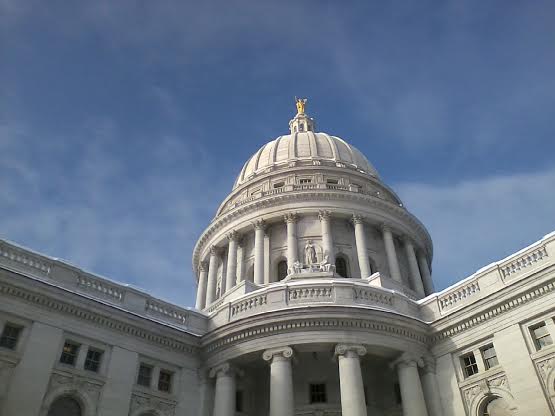
While other countries and U.S. states struggle with the deadly and extremely negative economic costs of dangerous storms made worse by warming oceans and rising sea levels caused by increasing greenhouse gases concentrations in the atmosphere, Wisconsin Governor Scott Walker has taken a pass on including anything in his two-year budget about how or to what degree the State of Wisconsin might reduce its annual greenhouse gases emissions and better adapt to the changing climate predicted for the future in Wisconsin. Governor Walker’s two-year state budget was forwarded to the Wisconsin Legislature earlier this month for adoption by July 1, 2015.
Much of what the governor’s budget proposes for the state will exacerbate the world’s chances of ever reducing climate change, or global warming, to a safe level. Scientists now say the changing climate around the world (global warming) is overwhelmingly human-caused and will be disastrous for the planet if the amounts of fossil fuels (coal, oil, natural gas) we are now burning are not significantly reduced and in a timely manner – now! – worldwide, and deforestation, over has been done over the last 100 – 150 years is stopped. Forests sequester carbon dioxide (CO2) as they grow, which is also the most abundant of the greenhouse gases emitted during fuel combustion.
While Wisconsin did experience a costly drought two years ago, and suffered through two recent killing heat waves in 1995 and 2011, the state has generally been spared from such massive destruction and loss of life as occurred in the Philippine Islands caused by Typhoon Haiyan U.S. states under hit by Hurricanes Sandy Sandy, Katrina and Ike, Hurricane Irene and increasing torrential rains and flooding around the world, heavier snowfalls, and long lasting droughts in California, other western states, and other areas around the world.
The economic costs of these catastrophes, especially those occurring in the United States, negatively effects all states in the U.S. through increased prices of goods, higher insurance rates, and the overall health of the U.S. economy.
Instead of addressing the inevitable economic and environmental effects of climate change and its causes in Wisconsin, Governor Walker instead chose to include in his two year budget proposal for the state many action items that, if enacted into law by the Wisconsin Legislature will, without question, add to the already abhorrently high human, economic and environmental costs of change climate here in Wisconsin and throughout the rest of the world. For example, Governor Walker’s two-year budget, which would begin taking effect in July 2015, expands numerous major highways in the state to increase their capacity to accommodate increased driving of cars and trucks, the vast majority of which burn fossil fuels. The governor’s budget proposes to contribute millions of dollars in state bonding to help the privately owned Milwaukee Bucks build a new arena for NBA games, games that require thousands of miles of jet travel each year for each visiting team as well as their fans and supporting personnel, adding measurably to rising volumes of greenhouse gases linked with global warming.
Furthermore, by not proposing other actions, many additional sources of greenhouse gases and pollution will continue and undoubtedly increase significantly in the next two years under the Walker administration and the current Republican legislature. Due to the lower price of crude oil, prices of fuel at the pump have dropped, leading to the purchase of less fuel efficient SUVs and trucks.
Americans and Wisconsinites need to drastically reduce their annual driving miles, and Governor Walker’s budget should have included positive financial benefits to encourage people to drive fewer and fewer miles each year, and compensate those individuals and Wisconsin families who manage to drive less miles, annually, than average – especially those individuals and families who don’t drive personal automobiles or fly airplanes (jet fuel is a fossil fuel and jets burn tons of fuel on each trip) during the year. The emission of greenhouse gases (GHGs) to the atmosphere from motorized transportation, jets, other internal combustion engines, as well as GHGs emitted from coal, oil, and natural gas burning power plants and household and business furnaces is “cumulative”, meaning the various emission of those gases accumulate in the atmosphere over time, rising to higher and higher levels of concentration in the atmosphere.
Scientists the world over have reached a level of consensus that the amount of GHGs present in the atmosphere are becoming increasingly of concern, more threatening each year that global warming worsens. Eventually, global warming could reach, or is close to reaching, its “tipping point” in the atmosphere – a level of accumulation of GHGs in the atmosphere after which the earth’s natural systems could keep adding more and more GHGs into the atmosphere, the point at which continued warming would become inevitable, regardless of what we humans do to reduce our GHG emissions. For example, as the permafrost region of the planet thaws (1/5 of earth’s surface exists in the form of permafrost), the GHG methane is released from the rotting permafrost. Methane is a much more potent GHG than CO2, and when the permafrost begins to thaw extensively, it will be releasing massive amounts of methane to the atmosphere, This would make matters much worse, because global warming would become less responsive, if responsive at all, to the amount of GHGs we humans cause to be emitted (or not to be emitted).
Wisconsin Must Join the All Out World Effort to Fight Global Climate Change Without Delay, BEFORE Time Runs Out

Wisconsin has traditionally prided itself as being a state that “cares”. Wisconsin residents care about its wild and domestic animals, its fish, birds and butterflies; its plants, trees, and its forests; its tens of thousands of lakes, streams and rivers, and the quality of its wetlands, groundwater and air; its mighty bluffs and gorges, its remaining prairies, and the state’s overall majestic scenic beauty.
Wisconsin has traditionally had a strong manufacturing economy, a top notch agricultural industry, a public education system second to none, a world class university system, and an equally top notch private schools, colleges, and other educational institutions. Wisconsin also boasts an excellent highway, airport, and bicycle transportation system, and communities that are walking and wheelchair friendly. It has always held all visitors to the state in high regards and treated them with respect the production and sustainability of its farms, the well being of its human population, without regard for race, heritage or creed. Wisconsinites treat visitors to their state with respect and dignity,satisfaction of its visitors and transients alike, and, perhaps above all, in leaving its land, water and its economy better condition than they received it. In a nutshell, that’s a statement of Wisconsin’s traditions and value, as I have come to know them.
Wisconsin residents often boast, and rightly so, that Wisconsin was the home of such renown conservationists and humanists as John Muir, Aldo Leopold, Senator Gaylord Nelson, Midge Miller and Vel Phillips. In the 1970s, Wisconsin was emulated by other states as the state to look at for developing effective environmental protection regulations to safeguard its treasures. With Wisconsin Departmental Resource Secretary Anthony “Tony” Earl at the helm, who would later become Wisconsin’s governor, and George “Knute” Knudson as its chief naturalist, Wisconsin natural resources were in good hands.
It is no exaggeration to say that all this is at risk the longer our Wisconsin Legislature, our governor, other state legislatures and governors, and the people’s representatives in the United States Congress continue to kick the issue of excess fossil fuel burning and greenhouse gas production by Americans down the road. What we don’t need is more highway development and expansion and more airport capacity expansion that encourage even more fossil fuel burning by the public. What we don’t need is more trade with distant countries that requires more fuel for shipping and flying. What we don’t need are more coal and natural gas burning power plants and the thousands of miles of high voltage transmission lines that go with them, and not Wisconsin power companies who restructure their rates in favor of more fossil fuel burning, thus discouraging their customers from investing in solar energy panels for their homes and businesses, and having the governor’s appointed Wisconsin Public Service Commission (the PSC) “rubber stamps” the fossil-fuel-dependent utilities’ proposals.
We are wasting valuable time and money by not relying less and less on fossil fuel dependent energy, and more on either energy conservation or on conversion to solar and wind generated power, in our homes, businesses and institutions; and that we desperately need to reduce aggregate driving and flying, which rely almost exclusively on burning fossil fuels that, when subject to combustion, release large quantities of greenhouse gases, especially carbon dioxide (CO2), to the atmosphere. Most of the greenhouse gases, such as CO2, remain in the atmosphere for centuries, accumulating to increasingly more ominous concentration levels, or they get absorbed in the oceans, making the earth’s ocean water more acidic, harming the biological species in the oceans.
But scientists the world over are in agreement that the rising concentrations of greenhouse gases from significantly increased fossil fuel burning by humans since the time of the Industrial Revolution (early 1800’s) have remained in earth’s atmosphere, trapping more and more of the Sun’s radiant energy and changing it into heat energy, causing the earth’s surface to warm, melting more of the polar ice caps and mountain glaciers, causing the vast permafrost region to thaw, releasing more and more methane gas, another greenhouse gas that’s known to have 37 times the heat-trapping power of CO2.
Scientists don’t know when global warming could begin accelerating, but it could be any day now. What they do know is that there are higher concentrations of greenhouse gases in the atmosphere now to push global surface temperatures much higher than what we have experienced thus far. Time is of the essence for the world’s populations who are relying on fossil fuel burning for energy to stop adding even higher concentration levels of greenhouse gases to the atmosphere, risking setting off positive feedback mechanisms in the system that could worsen the situation and amplify the weather extremes global warming has already caused in earth’s climate.
 All Things Environmental
Recent Comments