
CAP’s Climate Guide to Governors In the United States

Climate denial runs rampant in the halls of Congress, with over 58 percent of congressional Republicans refusing to accept the reality of basic climate science. A new analysis from the
Center of American Progress (CAP) War Room room reveals that half of America’s Republican governors agree with the anti-science caucus of Congress.
Fifteen out of twenty nine sitting Republican governors openly deny climate science despite the overwhelming level of scientific consensus and enormous cost to taxpayers. None of the country’s Democratic governors have made public statements denying climate change.
Order is not all alphabetical. Wisconsin is listed last, although the current governor of Wisconsin, Scott Walker, has not stated he is in denial of global warming, it’s just that he hasn’t proposed any state actions to reduce greenhouse gases emissions to the atmosphere from burning fossil fuels in the State of Wisconsin.
CALIFORNIA
Governor Jerry Brown (D)
California Governor Jerry Brown (D) has made climate change a primary focus of his administration as he enforces AB 32, the state’s cap-and-trade system. In 2013, he signaled he would not wait for Congress to act on climate by joining the leaders of Oregon, Washington, and British Columbia in signing the Pacific Coast Action Plan on Climate and Energy, which aims to unite their efforts in combating climate change. He also signed a Memorandum of Understanding with China’s top climate negotiator that pledges to work together on sharing low-carbon strategies and create joint ventures on clean energy technologies. In order to expand renewable energy, Brown signed pioneer legislation that allows customers of the state’s three largest utilities to purchase up to 100 percent clean energy. He’s also signed multiple clean energy bill packages into law and expanded the Renewable Portfolio Standard to make California’s standard among the most aggressive in the country. While he has signed legislation into law that allows fracking in California, the law imposes strict regulations on the oil and gas industry, including requiring companies to disclose which chemicals they use in the fracking process. Governor Brown is running for re-election in 2014.
CONNECTICUT
Governor Dan Malloy (D)
Connecticut Governor Dan Malloy (D) believes climate change is one of the most challenging and pressing issues of our time. As Governor, he created the Connecticut Shoreline Resiliency Fund, a low-interest loan program for state residents who are subject to coastal flooding and would like to elevate their homes. He signed into law the nation’s first full-scale clean energy finance bank to increase private investment in renewables and expanded Connecticut’s Renewable Portfolio Standard to help move the state away from dirtier fuels. Governor Malloy is running for re-election in 2014.
DELAWARE
Governor Jack Markell (D)
As Governor of Delaware, Jack Markell (D) has been outspoken about his acceptance of mainstream climate science. When commenting on the aftermath of Superstorm Sandy, Markell said, “There are still people who may say this storm or that storm is not related to general climate change. I can tell you when we had a number of communities flooded out in Delaware…and when you have leading scientists talk about the linkage between climate change and that flooding, people are in a position where they may more be receptive to listen.” Markell has worked to expand renewable energy in the state, signing into law a Clean Energy Jobs package that expanded Delaware’s Renewable Portfolio Standard and strengthened the solar net metering program. Along with the Governor Martin O’Malley of Maryland, Markell asked the federal government to contract for future offshore wind energy in order to help start the offshore wind energy manufacturing industry in the Mid-Atlantic region.
HAWAII
Governor Neil Abercrombie (D)
“Being the only island state in the country, we are especially vulnerable to climate change and are on the frontlines of impacts like sea level rise,” said Hawaii Governor Neil Abercrombie (D) when he signed legislation into law to establish an interagency committee to develop a sea-level rise vulnerability and adaptation report. While Hawaii was already one of the most attractive markets for solar power, the governor signed legislation into law in 2013 to establish a green infrastructure financing program, which allows residents to invest in clean energy. Abercrombie also praised the president’s new Clean Power Plan to reduce carbon pollution from coal-fired power plants. Governor Abercrombie is running for re-election in 2014.
MARYLAND
Governor Martin O’Malley (D)
Governor Martin O’Malley (D) stated that he believes climate change is real. He signed into law legislation that cut the state’s carbon pollution by 25 percent by 2020. “For our prosperity, for our current and future generations, and for the health of our State, which is so vulnerable to rising sea levels, we must take action on climate change now — not later.” He boosted Maryland’s Renewable Portfolio Standard, enacted an initiative to create 100,000 new green jobs, and signed the EmPOWER Maryland Energy Efficiency Act that established targets on energy consumption. In 2013, the Maryland House of delegates handed O’Malley one of his most desired legislative victories — enactment of a bill that would fund the development of a wind farm in federal waters off the coast of Maryland. O’Malley later vetoed a bill that would have “effectively killed” the wind farm from being developed and has also reached out with Delaware Governor Markell to ask the federal government to buy future offshore wind energy. Governor O’Malley is term-limited and cannot seek re-election in 2014.
MASSACHUSETTS
Governor Deval Patrick (D)
While speaking at a college graduation ceremony, Governor Deval Patrick (D) highlighted the National Climate Assessment, how climate change is already effecting New England, and went on to lay out the steps Massachusetts has taken over the 15 years to cut carbon emissions, invest in clean energy, and adapt to climate change. He then proposed something big — “Massachusetts should finally end all reliance on conventional coal generation.” He called for a “future free of fossil fuels” and hopes to drop coal in four years. As governor, he has allocated funding for measures to protect the state against sea level rise and destructive storms, signed one of the most aggressive greenhouse gas emission targets for any single state, and boosted renewable energy enough for the state to achieve its 10-year goal four years early in 2013. Governor Patrick is eligible to seek a third term but has stated he will not run for re-election in 2014.
MINNESOTA
Governor Mark Dayton (D)
Governor Mark Dayton (D) agrees the climate is changing and having impacts on Minnesota. Minnesota Public Radio reported that in response to a question about climate change, Dayton said the state’s strategy should include an eventual elimination of coal-burning power plants as Minnesota needs to move toward less-polluting sources of energy, such as wind and solar. He said the availability and price of natural gas makes it possible to set a goal of getting rid of coal as a source of electricity. In 2013, Dayton signed an economic development bill that contained several powerful incentives for solar development in the state. Governor Dayton is running for re-election in 2014.
NEW HAMPSHIRE
Governor Maggie Hassan (D)
Governor Maggie Hassan (D) has said “the science behind climate change is incontrovertible,” and in 2013, signed two bills into law to help lessen the impact of climate change in New Hampshire. The bills aim to give more power to state and local governments to prepare coastal communities for sea-level rise, and include the creation of a new Coastal Risk and Hazard Commission. She also signed into law two bills that strengthen New Hampshire’s participation in the Regional Greenhouse Gas Initiative (RGGI) by lowering the carbon pollution cap for power plants. Governor Hassan is running for re-election in 2014.
NEW YORK
Governor Andrew Cuomo (D)
In an op-ed, Governor Andrew Cuomo (D) said that climate denial is distracting us from addressing its inarguable effects. In the aftermath of Superstorm Sandy, Governor Cuomo outlined a plan on how New York could start to prepare for the impacts of climate change by investing federal disaster aid on items like high-tech weather stations and seals for entrances to subway stations. He announced more than 1,000 projects that will better prepare the state for storms, which includ rebuilding tidal wetlands, upgrading the electrical grid, and buying homes that are at a high risk of flooding. He has also proposed revised rules to further reduce pollution from power plants by lowering the emissions cap under the nine-state Regional Greenhouse Gas Initiative (RGGI). In February 2014, Cuomo announced the opening of the New York Green Bank, which will “stimulate private sector financing and accelerate the transition to a more cost-effective, resilient and clean energy system.” He also launched the NY-Sun Initiative, which aims to double the amount of customer-sited solar power installed annually. Cuomo has committed $1 billion to the program over 10 years. Governor Cuomo is running for re-election in 2014.
OREGON
Governor John Kitzhaber (D)
Governor John Kitzhaber (D) has called climate change a “central issue of our time.” In 2013, he signaled he would not wait for Congress to act on climate by joining the leaders of California, Washington, and British Columbia in signing the Pacific Coast Action Plan on Climate and Energy, which aims to unite their efforts in combating climate change. Kitzhaber signed a bill into law that preserved the state’s successful Renewable Portfolio Standard (RPS) and in 2012, created a 10-Year Energy Action Plan to boost renewable fuels and reduce greenhouse gas pollution. After realizing he would not be able to convince the legislature to keep Oregon’s clean-fuels program, he ordered a stricter fuel requirement to move forward anyway. He also put himself at odds with the president when he challenged the administration’s policy of supporting increases of exports of American coal because of the consequences it would have on climate change. Governor Kitzhaber is running for re-election in 2014.
RHODE ISLAND
Governor Lincoln Chafee (D)
Governor Lincoln Chafee (D) signed an executive order in early 2014 to create the Rhode Island Executive Climate Change Council (ECCC) — “I am establishing the Council because for too long there has been strong evidence and scientific consensus that manmade greenhouse gases will have profound effects on global climate, weather patterns and ocean conditions; effects that the state cannot afford to ignore,” Governor Chafee said. “Rhode Island must act boldly to position the state as a national leader in climate adaptation with a comprehensive approach that will benefit our communities and businesses.” The council will advise the governor on best practices to ensure the state continues to be a leader in developing strategies to combat the impacts of climate change. A few months later, the legislature passed a bill making the council permanent, and Chafee signed it. In order to support clean energy, Chafee’s office has announced grants to support energy efficiency and renewable energy projects and made significant investments in offshore wind developments. Governor Chafee is eligible for re-election in 2014 but has decided to retire.
VERMONT
Governor Peter Shumlin (D)
“We will not join the others in the denial, in the pretend, in the ‘let business happen as usual,’ because our kids and our grandkids mean more to us than our own greed,” Governor Shumlin (D) said in 2011. “And we’re going to get off oil and move forward as quickly as we know how.” Governor Shumlin has worked to expand solar net metering, signed into law the nation’s first ban on fracking, and has openly stated his opposition to the Keystone XL pipeline. Governor Shumlin is running for re-election in 2014.
WASHINGTON
Governor Jay Inslee (D)
Governor Jay Inslee (D) has said the science is clear — climate change is happening and the state of Washington has already experienced negative economic impacts. As his first official act as governor, he wrote a letter to a clean energy company inviting it to relocate to Washington. In 2013, he joined the leaders of California, Oregon, and British Columbia in signing the Pacific Coast Action Plan on Climate and Energy, which aims to unite their efforts in combating climate change. Signaling he would not wait for Congress to act, Inslee signed an executive order in early 2014 that creates a task force on reducing carbon pollution and directs it to design a “cap-and-market” program to meet emission reduction goals. The directive also orders state agencies to eventually eliminate the use of coal, spur development and the use of renewable energy, and develop a “smart building program” to increase energy efficiency. Inslee also asked the Obama administration to review the climate change consequences of leasing and exporting Western coal, saying it will be the “largest decision we will be making as a state from a carbon pollution standpoint.”
ARKANSAS
Governor Mike Beebe (D)
“Global warming is a growing concern that requires study and action on both state and federal levels,” said Governor Mike Beebe (D) when he announced the Governor’s Commission on Global Warming in 2007. The Commission studies how climate change will have an impact on Arkansas. He has since suggested the need for balance between environmental concerns and economic interests, and that a unilateral approach to climate change would be fruitless. Beebe has been a big supporter of wind power and has spoken out against Congress for failing to extend the Production Tax Credit for wind electricity. Governor Beebe is term-limited and cannot seek re-election in 2014.
COLORADO
Governor John Hickenlooper (D)
Colorado Governor Hickenlooper has a record of flip-flopping on his climate science beliefs. In 2010, he said he didn’t think the scientific community had decided that climate change is as catastrophic as so many people think, and in 2013, he seemed to accept the science more, though still showed some doubt: “Every study I’ve seen, climate change is happening. I’m not saying it absolutely is, but if climate change is happening, every study I’ve seen puts Colorado in what’s called a rain shadow, so not only does it get warmer, so we get less snowpack, but we’re going to get less water.” Hickenlooper did spearhead efforts and signed into law first-of-their-kind limits on methane — a potent climate pollutant — from oil and gas production. As a former petroleum geologist, he’s been a big supporter of the oil and gas industry in Colorado. He appointed an industry campaign donor to oversee the oil industry. In 2012, he appeared in paid advertising supporting the Colorado Oil and Gas Association, an industry lobby and trade group which has a history of fighting health and safety standards. He has even drank fracking fluid to prove there was no risk to human health. Hickenlooper has also developed a troubling record of opposing protections for at-risk wildlife in oil and gas producing areas, including the lesser prairie chicken, the Gunnison sage grouse, and the Greater sage grouse. Despite his close ties with the fossil fuel industry, Hickenlooper has been a proponent of renewable electricity, and signed a bill that doubled the renewable power target for rural electric cooperatives. Governor Hickenlooper is running for re-election in 2014.
ILLINOIS
Governor Pat Quinn (D)
Illinois Governor Pat Quinn (D) agrees there is a link between people and climate change. In response to the EPA’s proposed Clean Power Plan for coal-fired power plants, Governor Quinn said, “I commend President Obama for confronting this critical issue. Illinois has seen the devastating impacts of severe weather first-hand with 11 natural disasters over the past five years. Moving toward a cleaner, more reliable and resilient energy system will bring significant benefits to our communities and our state.” In 2013, Governor Quinn signed legislation into law to regulate fracking, which was seen as the nation’s strictest for oil and gas drilling. Illinois is the nation’s fifth-largest producer of coal and the governor has cheered the state’s record coal exports. While he has signed legislation to boost the coal industry, including allowing the coal industry to mine in the state’s largest park, he has also vetoed legislation that would have moved forward with a coal gasification plant slated for an already heavily polluted area of Southeastern Chicago. Governor Quinn is running for re-election in 2014.
IOWA
Governor Terry Branstad (R)
Republican Governor Terry Branstad believes that climate change is happening but has expressed hesitation on acting. “We need to recognize this climate change issue is a global issue,” he told to Politico. “We also need to respect as we try to deal with that on an international basis the need for our country to be competitive and be able to attract good-quality, high-paying jobs. I think we’ve got to be open at looking at all kinds of things we can do to be energy independent and also keep our energy costs reasonably low,” he added. As governor, he has been a big proponent of the state’s burgeoning wind industry, even reprimanding fellow Republicans who are against supporting the industry. Along with North Dakota, Iowa now uses wind power for more than 25 percent of its total electricity production, the most in the nation. Yet with regard to the president’s plan to regulate carbon pollution from existing coal-fired power plants, a spokesman for the governor said he is concerned the EPA’s “latest unilateral, ideological action” will hurt Iowa consumers and cost jobs. Governor Branstad is running for re-election in 2014.
KENTUCKY
Governor Steven L. Beshear (D)
“My administration recognizes the need to address greenhouse gas emissions from all sources and has supported a diversified energy portfolio, including measures to improve energy efficiency, expand use of renewables, and promote carbon capture and storage and other low-carbon technologies,” said Governor Steven Beshear (D). In 2013, he created the Kentucky Energy and Environment Cabinet, which will develop a plan to address climate change. He stood up to climate deniers and signed into law Next Generation Science Standards, which provide standards for science education that include the teaching of climate science and evolution. While he has been outspoken about acting on climate, Beshear joined six other governors in urging the president to drop proposed EPA rules to limit carbon pollution from coal plants.
MICHIGAN
Governor Rick Snyder (R)
Governor Rick Synder (R) ran on a strong conservation platform, earning him a 2010 endorsement from the Michigan League of Conservation Voters (LCV). A spokesman for the governor said the administration is convinced climate change is real, but also showed some doubt on why it occurs: “People may not agree about why climate change is happening, but it is certainly affecting Michigan.” The governor spoke out against a 2012 ballot measures that would have required the state’s utilities to generate 25 percent of their electricity from renewable sources by 2025, saying he had concerns about the financial viability of using wind, solar, hydropower, and biomass to meet Michigan’s energy needs. Towards the end of 2013, the governor indicated that his goal is to have a more comprehensive energy plan in place by 2015 that includes a reduction in coal-fired power and an increase in fracking and renewable energy. Michigan LCV issued a Midterm Report Card for 2011-2012 and gave Snyder a “C” rating, saying they’ve seen both positive and negative policies adopted by his administration. Governor Snyder is running for re-election in 2014.
MISSOURI
Governor Jay Nixon (D)
Speaking on CNN’s Crossfire, Governor Jay Nixon (D) said, “Well, first of all we need to accept the science of climate change and understand we’ve got to change the world. And we all have a joint responsibility to do things to make that better.” In early 2014, Nixon signed an executive order launching the development of a comprehensive energy policy for Missouri. The Democratic governor has also endorsed the Keystone XL pipeline.
MONTANA
Governor Steve Bullock (D)
Governor Steve Bullock said climate change is real: “In Montana, whether you’re a farmer, whether you’re a fisherman … you know that the climate is changing and we need to do something about it.” Governor Bullock has opposed any federal pollution limits on fracking, arguing states are capable of regulating the oil and gas industry, and endorsed the Keystone XL pipeline, which would greatly exacerbate carbon pollution. He has also defended the state’s Renewable Energy Standard and signed legislation into law that would expand renewables in the state.
NEVADA
Governor Brian Sandoval (R)
Asked if he believes climate scientists that humans are the main drivers of climate change, Governor Brian Sandoval (R) told Real Clear Politics, “I’m not qualified to answer that question.” He added, “Let me tell you what we’ve done, without getting to whether it’s human-caused or whatever that may be.” Sandoval signed legislation into law that shifts the state away from coal by eliminating “800 megawatts of coal-fired power generation…[and] mandates 350 megawatts of renewable energy development,” according to the Las Vegas Sun. In the interview with Real Clear Politics, he also expressed that the state will be ready to meet the new EPA standards for existing coal-fired power plants. Sandoval also signed into law a bill aimed at studying an unconstitutional plan to seize federal public lands in Nevada for state management, an idea that that is well outside the mainstream among Western voters. Governor Sandoval is running for re-election in 2014.
NEW JERSEY
Governor Chris Christie (R)
Governor Chris Christie (R) flip-flopped on climate change throughout his tenure as governor. In 2011, he acknowledged the effects humans have on climate change, but in 2013, he rejected the notion that Hurricane Sandy’s damage was worsened by climate change. A New Jersey appeals court ruled that the governor illegally withdrew the state from the Regional Greenhouse Gas Initiative (RGGI) back in 2011, a Northeast cap-and-trade program that aims to collectively reduce carbon pollution from power plants. He also broke from other Northeast states and did not join the lawsuit to defend the EPA’s cross-state air pollution rules. His administration has been accused of going to extraordinary lengths to secure approval for a controversial gas pipeline that would benefit a top Christie political operative who was also enmeshed in the George Washington Bridge scandal. The governor has signed legislation into law that increased the number of solar renewable energy credits that electric utilities must buy. In 2010, Christie signed into law a bill that aims to facilitate offshore wind power, but his administration has recently been accused of stalling the projects.
OHIO
Governor John Kasich (R)
“I am a believer — my goodness I am a Republican — I happen to believe there is a problem with climate change. I don’t want to overreact to it, I can’t measure it all, but I respect the creation that the Lord has given us and I want to make sure we protect it,” Governor John Kasich (R) said at an energy conference hosted by The Hill. In 2012, he pushed a major rewrite of Ohio’s energy policies that in his words, accounted for newly accessible shale gas and embraced Ohio’s renewable energy and efficiency targets as “vital to the state’s economy.” In June 2014, he signed a bill passed by the state legislature that would freeze the Renewable Energy Standard, despite its popularity among Ohioans and industry. In 2011, he also signed a bill 70 percent of Ohioans opposed that opened up state parks and other public lands to drilling and fracking. Governor Kasich is running for re-election in 2014.
VIRGINIA
Governor Terry McAuliffe (D)
“The first big decision is to accept climate change is real,” Governor Terry McAuliffe (D) said. “I believe humans contribute to climate change. I think it’s pretty much settled. I think the impacts are felt today.” The governor plans to reactivate a climate change commission to advise him on how to protect Virginia, as the Hampton Roads area has been named the second-most vulnerable place to sea-level rise in the nation. In response to the economic struggles the coal industry has deal with in the Commonwealth, McAuliffe said carbon capture and sequestration (CCS) technology was the answer, calling jobs in CCS-equipped coal plants the “jobs of the future.” He is the only Democrat to join a coalition of governors supporting efforts to open the outer continental shelf to oil and gas exploration.
ALABAMA
Governor Robert Bentley (R)
Governor Robert Bentley (R) hasn’t taken a strong position on climate in the past few years, but in 2010 he said, “Now, carbon emissions, I do think, probably play a role in climate changes. I do scientifically agree with that and I do think we have to look for ways to reduce carbon emissions.” In 2012, Bentley declined to say why he signed a bill banning the UN Agenda 21 Sustainability Program, making Alabama the first state to ban the environmental treaty aimed at increasing sustainable living despite the fact it has no force of law in the United States. Bentley has joined a coalition of governors supporting efforts to open the outer continental shelf to oil and gas exploration and in 2014, he expressed interest in his State of the State speech to develop the state’s highly polluting tar sands oil. Governor Bentley is running for re-election in 2014.
ALASKA
Governor Sean Parnell (R)
While Alaska Governor Sean Parnell (R) agrees that climate change is occurring and that “both human and natural elements, like volcanic eruptions, are responsible,” he has actively blocked efforts to combat climate change, even dismantling a state climate panel that former Governor Sarah Palin (R) established to develop ways “Alaskans can save energy and reduce their greenhouse gas emissions.” In 2010, the state of Alaska, along with trade groups like the Chamber of Commerce, filed a lawsuit challenging the EPA’s ability to regulate greenhouse gas emissions, which Parnell called “federal overreach.” More recently, Parnell touted a lawsuit filed by Alaska to allow drilling in polar bear habitats, calling it “disappointing and disturbing” that the Obama administration does not want to look for oil in the polar bear breeding ground. A former ConocoPhillips executive, Parnell has long represented Big Oil’s interest in Alaska. In 2012, he met with CEO’s of Exxon Mobil, BP, and ConocoPhillips for a meeting the AP called “virtually unheard-of,” to develop a strategy for promoting oil development in the state. He has also sought to open the Arctic National Wildlife Refuge (ANWR) for drilling and has called on the Obama administration to approve the Keystone XL pipeline. Governor Parnell is running for re-election in 2014.
LOUISIANA
Governor Bobby Jindal (R)
Louisiana Governor Bobby Jindal (R) has never said if he believes the science that climate change is real, here, and due to human activities. ClimateProgress reached out for a comment, but did not immediately hear back from the governor’s office. Jindal has demanded the EPA rescind its determination that greenhouse gases endanger public health and welfare. The New Orleans Times-Picayune reported that in his letter he said the agency was attempting to avoid proper review of new rules by Congress and public input into the rules. A long-time ally of the oil and gas industry, Governor Jindal signed a bill that would kill a New Orleans area flood authority’s lawsuit against 97 oil and gas companies. Three former Louisiana governors, State Attorney General Buddy Caldwell, more than 100 legal experts, and a number of environmental groups and state politicians urged Louisiana Gov. Bobby Jindal not to sign the bill, which could undermine other lawsuits against oil and gas interests in Louisiana, including claims against BP over its 2010 Gulf of Mexico disaster. Last year, environmental groups pointed out that Jindal had received more than $1 million from oil and gas companies and executives in state election campaigns between 2003 and 2013.
MISSISSIPPI
Governor Phil Bryant (R)
Governor Phil Bryant (R) has never said if he believes climate change science. ClimateProgress reached out for a comment, but did not immediately hear back from the governor’s office. Bryant wrote to President Obama urging him to back off from an April 2012 Environmental Protection Agency proposed rule that would set a limit on 1,000 pounds of carbon dioxide released for every megawatt of power generated by coal fired power plants, according to BussinessWeek. He also joined a coalition of governors supporting efforts to open the outer continental shelf to oil and gas exploration.
NEBRASKA
Governor Dave Heineman (R)
Governor Dave Heineman (R) has never said whether he believes scientists that climate change is occurring or if humans contributes to it. ClimateProgress reached out for a comment, but a spokeswoman for Governor Heineman did not respond to the question. Heineman cancelled a controversial legislative study on the effects of climate change in Nebraska, saying the work would be duplicative of a study done by the University of Nebraska-Lincoln. He approved a revised route for the Keystone XL pipeline, which supporters have said would avoid the environmentally-sensitive Sand Hills region of Nebraska. However, a Nebraska District Court Judge declared a rule that gave Heineman the power to approve pipeline routes unconstitutional. The governor has appealed that decision. Governor Heineman is term-limited and cannot seek re-election in 2014.
NORTH DAKOTA
Governor Jack Dalrymple (R)
North Dakota Governor Jack Dalrymple (R) has never stated whether he believes climate change is underway. ClimateProgress reached out for a comment, but did not immediately hear back from the governor’s office. Dalrymple has been outspoken about his opposition to limits on carbon pollution, stating: “The president’s plan [to reduce carbon pollution] means higher energy costs for consumers and businesses, weakened U.S. competiveness in global markets and increased unemployment at a time when the economy is still struggling.” In a state that relies on coal for 87 percent of its electricity generation, the governor has emphasized his concerns that coal plants are being singled out.
SOUTH CAROLINA
Governor Nikki R. Haley (R)
Governor Nikki Haley (R) has never stated if she believes climate change is underway. ClimateProgress reached out for a comment, but did not immediately hear back from the governor’s office. Haley has criticized the EPA’s rule to cut carbon emissions from existing power plants, saying, “This is exactly what we don’t need. This is exactly what hurts us. You can’t mandate utility companies which, in turn, raises the cost of power. That’s what’s going to keep jobs away. That’s what’s going to keep companies away.” She added that officials in Washington “stay out of the way,” according to The Charleston Post and Courier. The South Carolina Department of Natural Resources also kept quiet a report by a team of state scientists that outlined serious concerns about the damage the state will suffer due to climate change. Governor Haley is running for re-election in 2014.
TENNESSEE
Governor Bill Haslam (R)
Governor Bill Haslam (R) has never stated if he believes climate change science. ClimateProgress reached out for a comment, but did not immediately hear back from the governor’s office. EcoWatch reported that Haslam is an oilman that stands to profit from petroleum and gas development in the state: “The Haslam family of Knoxville, Tennessee has amassed a fortune from the business, Pilot Travel Centers, which the family founded in 1958. The family merged the business with Flying J in 2001 and the Haslam family continues to run the company out of Knoxville. In 2012, the Haslam family purchased Western Petroleum and Maxum Petroleum. Both companies are among the nation’s major suppliers of fuel to the gas drilling and fracking operations in the U.S. The Haslam family will also start installing natural gas fueling pump stations to some of the corporation’s fueling stations. In 2013, they plan to have 100 truck stops capable of fueling 18-wheelers with liquefied natural gas.” Though he weakly protested the veto-proof passage of a bill that would permit climate denial to be taught in schools, he has yet to make any major state-level pushes to address climate change. Governor Haslam is running for re-election in 2014.
WEST VIRGINIA
Governor Earl Ray Tomblin (D)
Governor Earl Ray Tomblin (D) has not said if he believes climate scientists that human-induced climate change is real and happening now. ClimateProgress reached out for a comment, but did not immediately hear back from the governor’s office. He has, however, spoken out against standards that will help combat climate change and its impacts. He has long said the White House is waging a “war on coal” and met with Obama administration officials prior to the release of federal Clean Power Plan to urge the EPA to be flexible. Despite the EPA’s promise to allow flexibility for states, the governor spoke out at a press conference against the rule, saying it was “outrageous” and that the state’s “worst fears were realized.” Coal is one of West Virginia’s primary economic resources. Tomblin also sued the EPA over its denial of new mountain top removal mining permits in the Appalachian region, stating the EPA had “overstepped its bound.”
ARIZONA
Governor Jan Brewer (R)
A climate-denier, Governor Jan Brewer (R) said, “Everybody has an opinion on it, you know, and I probably don’t believe that it’s man-made. I believe that, you know, that weather and certain elements are controlled maybe by different things.” In 2010, she signed a bill that bars new state rules or regional agreements to reduce greenhouse gases unless the legislature approves. In 2011, Brewer opted out of the Western Climate Initiative, a multi-state attempt to limit greenhouse gases, despite recognizing that their greenhouse gas pollution was expected to rise. A spokesman for the governor said she objects to the president’s Clean Power Plan, saying the EPA has overstepped its authority. As governor, she has worked to expand renewables in the state, particularly solar energy. She also vetoed a bill that would turn over 25 million acres of public lands to the state, which was consistent with Arizona voters views. Governor Brewer is term-limited and cannot seek re-election in 2014.
FLORIDA
Rick Scott (R)
In 2010, Governor Rick Scott (R) was asked if he accepts climate science. He said “no … I have not been convinced.” Asked what he needs to convince him, “Something more convincing than what I’ve read.” He still dodges the question by stating “I’m not a scientist” and hasn’t been vocal in addressing sea level rise since the National Climate Assessment came out in May 2014. He denied requests from the New York Times to be interviewed on the subject, but told WPBF there was “absolutely” work being done on the state level to protect Florida from the effects of climate change. Gov. Scott’s beachfront property is in the path of sea level rise projections in the state, putting the governor in “one of the most vulnerable positions” in regards to rising waters, the Tampa Bay Times reported. The governor’s $9.2 million Naples mansion sits about 200 feet away from the ocean and a foot above sea level, and the sea on his stretch of beach has risen about 8 or 9 inches over the last century. Governor Scott is seeking re-election in 2014.
GEORGIA
Governor Nathan Deal (R)
Governor Nathan Deal (R) previously served in the House of Representatives, where he filed a “climategate” petition against the EPA finding that greenhouse gases endanger public health and welfare. Rep. Deal, along with energy companies, industry front groups, and other Republican politicians, sued the EPA in an attempt to block the agency from limiting greenhouse gases. Their argument was that climate science is a hoax. As governor, he has never stated his position on climate change. ThinkProgress reached out for a comment, but did not immediately hear back from the governor’s office. Deal said he is wary of requiring utilities to expand solar power and that green energy comes with trade-offs on reliability and cost. Governor Deal is seeking re-election in 2014.
IDAHO
Governor C.L. “Butch” Otter (R)
In a letter addressing the president’s climate change plan, Governor C.L. “Butch” Otter said: “And while the degree and extent to which carbon emissions play a role in climate change is still debatable, the fact that Idaho is significantly impacted by the federal government’s actions and inactions is not.” The Salt Lake Tribune reported that Governor Otter “…complained about the federal government’s doublespeak on energy. He blamed vehicle fuel-efficiency standards for devastating wildfires, carbon emissions from those fires, declining transportation-tax revenues in the states, and for ruining salmon runs.” Governor Otter is running for re-election in 2014.
INDIANA
Governor Mike Pence (R)
When asked if he accepts climate change science, Governor Mike Pence (R) responded, “I don’t know that that is a resolved issue in science today…just a few years ago we were talking about global warming. We haven’t seen a lot of warming lately. I remember back in the 70’s we were talking about the coming ice age.” He has also been outspoken in opposing the Clean Power Plan, saying the president’s proposal to cap carbon from fossil-fuel power plants will have a “detrimental impact” on Indiana and cause electricity price spikes. Governor Pence also refused to either sign or veto a bill that would end Indiana’s state-wide energy efficiency program, which by default, became law.
KANSAS
Governor Sam Brownback (R)
Kansas Governor Sam Brownback (R) has flip-flopped on his acceptance of climate science. In 2007, as a U.S. Senator, he said that “we need to reduce the amount of CO2 in the atmosphere,” but in 2009 he embraced the “climategate” scandal, writing in a letter with fellow Republicans that climate science research is “driven more by a political agenda than a quest for truth.” As governor, he has not stated if he accepts climate science. ClimateProgress reached out for a comment, but did not immediately hear back from the governor’s office. Before the EPA even released their rule to reduce carbon pollution from existing power plants, Gov. Brownback signed a bill that asserts Kansas will make its own decisions about how to handle carbon pollution. The bill-signing ceremony took place at a local coal plant. In response to the president’s Clean Power Plan, Brownback said, “This is more of the Obama administration’s war against middle America.” The governor has supported the wind industry, defending attacks on the state’s Renewable Energy Standard and praising the extension of the federal Production Tax Credit. Hailing from the same state as the Koch brothers, Brownback has received financial support from the oil and gas giants for his entire career. Governor Brownback is running for re-election in 2014.
MAINE
Governor Paul LePage (R)
Maine Governor Paul LePage (R) is one of the most outspoken climate deniers, and has said that “scientists are divided on the subject.” During LePage’s tenure, he has argued that Maine could potentially benefit from the effects of climate change, vetoed legislation that would help the state prepare for extreme weather, blocked a bipartisan bill to expand solar power, and has attempted to dramatically reduce the state’s renewable energy standards to benefit large corporations. He also tried to sneak through a proposal that would exempt the state from certain anti-smog regulations, undoing protections that have been in place for almost 25 years. Following a critical series of articles in three Maine newspapers on the administration’s work to undermine environmental protections, LePage’s office cut off those papers’ access to administration officials. A spokeswoman told them they would no longer respond to requests, even for public documents, because the newspaper’s parent company “made it clear that it opposed this administration.” Governor LePage is running for re-election in 2014.
NEW MEXICO
Governor Susana Martinez (R)
“I’m not sure the science completely supports that,” is Governor Susana Martinez’s (R) view on climate change science. Responding to the New Mexico Independent in 2010, she revealed that she thinks the science of climate change is an “ideological debate.” While he is no longer serving, Martinez appointed a well-known climate denier to head the state’s Energy, Minerals and Natural Resources Department. Upon taking office, she also immediately repealed the state’s regulation requiring an annual 3 percent cut in greenhouse gas pollution, saying it was a burden on industry, and stopped regulations to keep oil and gas drilling waste out of groundwater that frequently supplies drinking water. Martinez did veto a provision that would have spent New Mexico taxpayers’ money on an ill-conceived study of whether the state should seize federal public lands. Governor Martinez is running for re-election in 2014.
NORTH CAROLINA
Governor Pat McCrory (R)
In a 2008 interview, then gubernatorial candidate Pat McCrory (R) was asked if he believes climate change science. His response was that “some things are out of control” and that “it’s in God’s hands.” Since then, he has admitted the climate is changing, but still shows some doubt on how much is human-caused. Since he became governor in 2013, there have been drastic changes to the state agencies responsible for addressing climate change, including the Department of Energy and Natural Resources (DENR). The Asheboro and Randolph Courier-Tribune reported, “DENR had previously made climate change a key component in its 2009-13 strategic plan. That plan included launching a climate change initiative and forming a climate change steering committee. The strategic plan cited a ‘fierce urgency’ for dealing with climate change. But with the election of Republican Gov. Pat McCrory in 2012, new leadership was also installed at many state agencies, including DENR. A DENR employee who worked on the Interagency Leadership Team plan, ‘Climate Ready North Carolina,’ was reassigned to new duties when the current administration took over, and she said she didn’t know who might be working on climate change.” Since that article was published in July 2013, DENR has removed links and documents containing information about climate change from its website. McCrory has also been very outspoken about his desire to open up more land and even the coast of North Carolina, a popular tourist destination that fuels the coastal economy, to drilling operations. He joined a coalition of governors that support drilling in the outer continental shelf and signed a law that lifts the state’s moratorium on fracking permits.
OKLAHOMA
Governor Mary Fallin (R)
Before her 2013 “State of the State” speech, Governor Mary Fallin (R) was asked by reporters about climate change and whether the current drought in Oklahoma is evidence that change is occurring. She replied, “It’s just nature itself and the patterns that flow and so we’re going to continue to pray for rain in the state of Oklahoma and hope we that we get some relief.” The Raleigh News and Observer also reported Fallin said Sen. Jim Inhofe (R-OK) has lent “a voice of logic on climate change.” Inhofe is one of the most outspoken climate science deniers, even writing a book on the subject. In early 2014, Fallin signed a bill that would charge Oklahoma residents an additional fee if they produce their own energy through solar panels or small wind turbines, standing up for the utilities over consumers. Citing concerns for ratepayers, the governor also criticized a plan by the EPA to reduce regional haze and control pollution at three Oklahoma power plants: “It is frustrating and disappointing that the EPA continues to move forward with a federal plan that will raise costs for ratepayers and utility companies, leave less money in the pockets of Oklahomans and push our economy in the wrong direction. The EPA’s plan could drive utility rates significantly higher in the next five years, something that many citizens cannot afford, especially during a recession.” Governor Fallin is running for re-election in 2014.
PENNSYLVANIA
Governor Tom Corbett (R)
Governor Tom Corbett (R) questions the science behind climate change: “I think some people believe that it is clearly evident and it’s coming very, very quickly. I think there are others who are equally qualified that disagree with that. It’s a subject of debate.” In 2011, Corbett withdrew the state of Pennsylvania from the legal defense of the EPA’s endangerment finding for greenhouse gases. While he did implement a climate action plan, it was criticized as inadequate because it fails to set greenhouse gas reduction goals and fails to incentive renewable energy, according to an op-ed by Rep. Greg Vitali (D) in the Lebanon Daily News. The governor has cut funding for climate change research, has appointed climate science deniers to his administration, and has eliminated bipartisan programs that focused on renewable energy and conservation. Instead, he has moved his focus to natural gas production and the booming fracking industry in Pennsylvania. Despite coming under fire for pollution from drilling, Corbett handed authority of some of the state’s most critical environmental decisions to C. Alan Walker, a Pennsylvania energy executive who has fought against environmental protections and donated $184,000 to Corbett’s campaign efforts. The governor also made false job claims on behalf of the fracking industry, has been accused of trying to confuse the public with an environmentally friendly fracking agreement, and has called to lift the ban on oil and gas drilling in state parks and forests. Governor Corbett is running for re-election in 2014.
SOUTH DAKOTA
Governor Dennis Daugaard (R)
“I am skeptical about the science that suggests global warming is man-caused or can be corrected by man-made efforts. It’s a complex world we live in,” Governor Dennis Daugaard (R) said in 2010. He has helped increase oil and gas production in South Dakota and supports the use of hydraulic fracturing, also known as ‘‘fracking.’’ Governor Daugaard is running for re-election in 2014.
TEXAS
Governor Rick Perry (R)
Governor Rick Perry (R) has repeatedly questioned the science behind climate change — “I think we’re seeing almost weekly, or even daily, scientists that are coming forward and questioning the original idea that man-made global warming is what is causing the climate to change.” Perry, along with energy companies, industry front groups, and other conservative politicians, sued the EPA in an attempt to block the agency from regulating climate pollution. Their argument was that climate science is a hoax. Under Perry, Texas has led the nation in carbon emissions and is home to five of the ten worst mercury emitting power plants in the country. The governor has called the EPA a “den of activists,” and in response to the Clean Power Plan, the governor said it was “the most direct assault yet on the energy providers that employ thousands of Americans.” He has criticized the administration’s delay of the Keystone XL pipeline and speaking at a trade association funded by BP, Perry called the 2010 BP oil catastrophe an “act of God” and his solution to the nation’s economic ills: “more oil drilling.” Governor Perry is eligible to seek a fourth term but has stated he will not run for re-election in 2014.
UTAH
Governor Gary R. Herbert (R)
In 2009, Governor Gary Herbert (R) said, “I’ve heard people argue on both sides of the issue, people I have a high regard for. People say man’s impact is minimal, if at all, so it appears to me the science is not necessarily conclusive,” on his acceptance of climate science. Herbert signed a clearly unconstitutional measure passed by the state legislature asserting that Utah can lay claim to 30 million acres of federal lands within the state’s borders and appropriating $3 million in scarce state funds to fight that hopeless battle in court. He has also brought a lawsuit to gain state control of 12,000 miles of “roads” that cross federal parks, monuments, wilderness areas and red rock wonderlands managed by the federal Department of Interior — many of which are nothing but cow paths and nearly invisible trails. In his 2014 “State of the State” address, the governor promised to speed the transition to Tier 3 vehicle and fuel standards, a move that “would lower the sulfur content of gasoline from 30 parts per million to 10 parts per million and require cleaner-burning emission controls on all new vehicles.” Herbert also asked the state air quality board to limit wood burning in high air pollution areas, and said he would require less auto travel and more mass transit travel by state employees.
WYOMING
Governor Matthew Mead (R)
Governor Matthew Mead (R) is a climate science denier: “As we flew in a snowstorm tonight I was thinking about global warming,” Mead joked. “I think the world generally accepts this phenomenon. I’m skeptical. In part, I’m skeptical because I think people need to be skeptical when it comes to where we are in science.” He’s called efforts to curb greenhouse gas emissions a “war on coal” and criticized the EPA rule to cut carbon pollution from existing power plants. He has also emphasized the limitations of renewable energy sources: “Renewables aren’t going to get you there,” he said. “The reason I don’t think we should [have a state renewable policy] is because, as the nation’s largest exporter of energy, I think that it should be more voluntary.” It’s not surprising he is a fossil fuel booster, as he presides over a state that ranks #1 in coal production, #5 in natural gas production, and #8 in crude oil production. Wyoming was also the first state to reject new national science education standards after Mead approved a state budget that blocked them. That decision was based in part on lawmakers’ concerns that the standards teach climate change as a scientifically-accepted occurrence. Finally, Mead spoke at an event hosted by the American Legislative Exchange Council, a conservative group known for making model legislation that has been used to target renewable energy standards. Governor Mead is running for re-election in 2014.
WISCONSIN
Governor Scott Walker (R)
Governor Walker (R) has never said if he believes climate change is occurring. ClimateProgress reached out for a comment, but did not immediately hear back from the governor’s office. The Milwaukee Journal Sentinel reported that little has been done to combat climate change under his administration. “After an intense focus on climate change under Democratic Gov. Jim Doyle, Republican Gov. Scott Walker and the GOP-controlled Legislature have devoted little attention to such issues… Shortly after taking office in 2011, Walker canceled plans to burn renewable biomass at the University of Wisconsin-Madison.” He has spoken to the Heartland Institute, a conservative think tank that denies climate science, and has tried to ban wind-powered energy from Wisconsin and exacerbate the state’s dependence on out of state coal. Governor Walker is running for re-election in 2014.
Effective as of 1 July 2014
SOURCE: The Center for American Progress

FDR’s “Four Freedoms”

The “Four Freedoms”
Franklin D. Roosevelt’s Address to Congress January 6, 1941
In the future days, which we seek to make secure, we look forward to a world founded upon four essential human freedoms.
The first is freedom of speech and expression — everywhere in the world.
The second is freedom of every person to worship God in his own way — everywhere in the world.
The third is freedom from want — which, translated into world terms, means economic understandings which will secure to every nation a healthy peacetime life for its inhabitants — everywhere in the world.
The fourth is freedom from fear — which, translated into world terms, means a world-wide reduction of armaments to such a point and in such a thorough fashion that no nation will be in a position to commit an act of physical aggression against any neighbor– anywhere in the world.
That is no vision of a distant millennium. It is a definite basis for a kind of world attainable in our own time and generation….
Moon Landing, Meeting Current Needs, Ensuring Earth Remains Sustainable
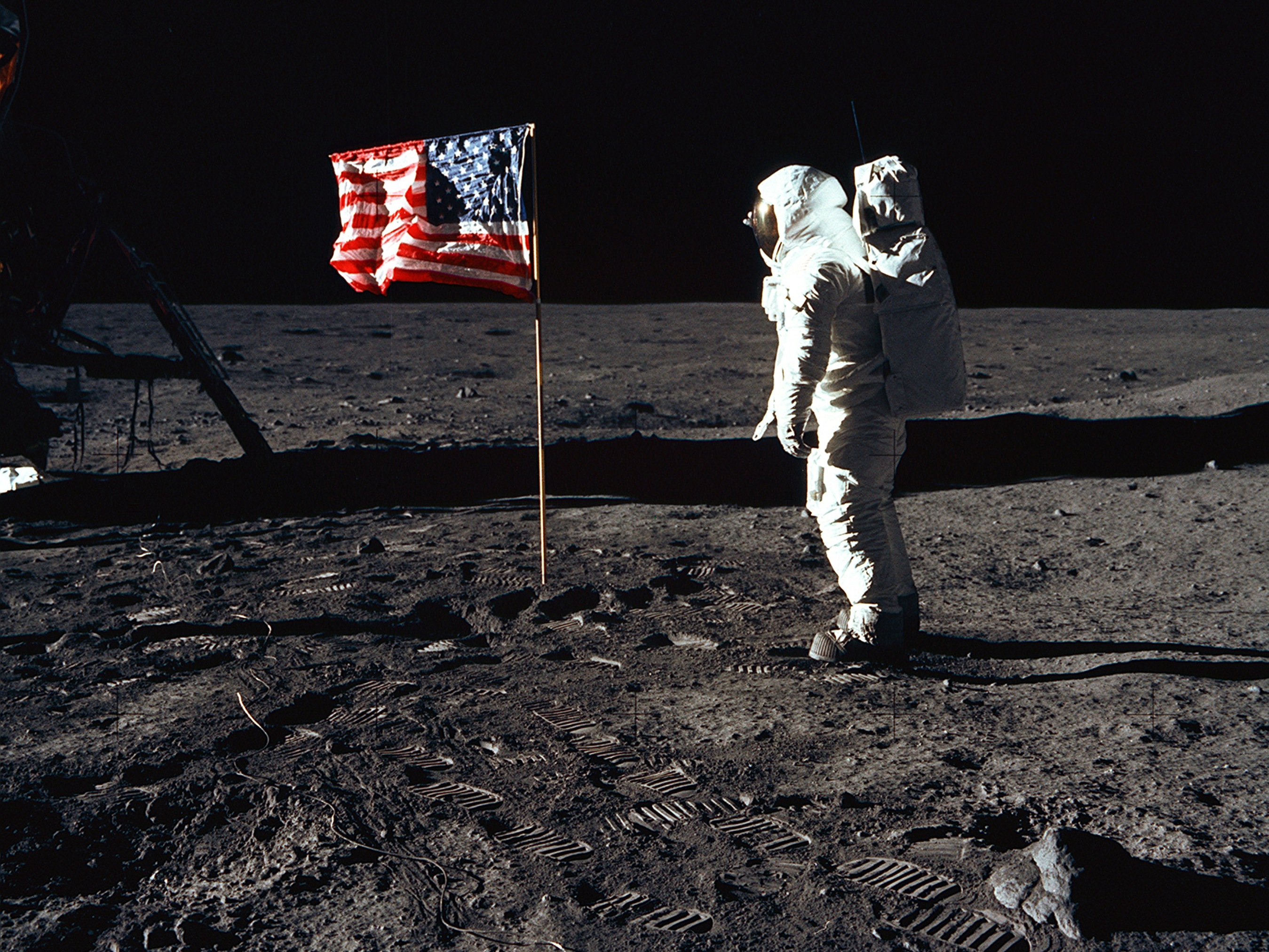
Apollo 11 moon landing. Astronaut Edwin E. “Buzz” Aldrin Jr. poses for a photograph beside the U.S. flag. Photo taken by Neil Armstrong.
We put a man on the moon 45 years ago. Apollo 11 was the spaceflight that landed the first humans on the Moon on July 20, 1969. Six hours later, U.S. Astronaut Neil Armstrong became the first human being to step down onto the lunar surface, on July 21. As he stepped down from the space ship onto the surface, Armstrong declared “one small step for (a) man, one giant leap for mankind.” Astronaut Buzz Aldrin followed and spent slightly less than six hours on the Moon’s surface. Astronaut Michael Collins piloted the command spacecraft alone in lunar orbit until Armstrong and Aldrin returned to the space ship for the trip back to Earth. They returned to Earth and landed in the Pacific Ocean on July 24. That’s the last time the United States set out to accomplish something really big in the world – something that had never been done before – and it succeeded, with flying colors!
Happy 4th of July to all!
We proclaimed ourselves to be a nation by publishing the Declaration of Independence on July 4, 1776.
THE DECLARATION OF INDEPENDENCE
“When in the course of human events, it becomes necessary for one people to dissolve the political bands which have connected them with another, and to assume among the powers of the earth, the separate and equal station to which the Laws of Nature and of Nature’s God entitle them, a decent respect to the opinions of mankind requires that they should declare the causes which impel them to the separation.
We hold these truths to be self-evident, that all men are created equal, that they are endowed by their Creator with certain unalienable Rights, that among these are Life, Liberty and the pursuit of Happiness, That to secure these rights, Governments are instituted among Men, deriving their just powers from the consent of the governed, That whenever any Form of Government becomes destructive of these ends, it is the Right of the People to alter or to abolish it, and to institute new Government, laying its foundation on such principles and organizing its powers in such form, as to them shall seem most likely to effect their Safety and Happiness….”
THE PLEDGE OF ALLEGIANCE TO THE FLAG
We have been citing “The Pledge of Allegiance” since it was formally adopted by our representatives in the U.S. Congress in 1942. It reads as follows: “I pledge of Allegiance to the Flag of the United States of America, and to the Republic for which it stands, one Nation under God, indivisible, with liberty and justice for all”.
The Pledge of Allegiance was written by Francis Julius Bellamy, who wrote it as a young man while traveling in Massachusetts. He submitted it to a patriotic circular he became aware of called “Youth’s Companion”. “The Pledge” was published in the circular on September 8, 1892. Following its publication, Bellamy described his reasons for writing it and for its “careful wording”:
“It began as an intensive communing with salient points of our national history, from the Declaration of Independence; with the makings of the Constitution; with the meaning of the Civil War; with the aspiration of the people…”. “The true reason for reciting allegiance to the Flag is … to make it clear that we are “One Nation” – the One Nation which the Civil War was fought to prove. To make that One Nation idea clear, we must specify that it is indivisible, as Webster and Lincoln used to repeat in their great speeches.”
Francis Julius Bellamy was born on May 18, 1855 in Mount Morris, NY. He became a First Baptist Church minister and married Harriet Benton in Newark, NY in 1881, raised two sons, and spent most of the last years of his life living and working in Tampa, FL where he died on August 28, 1931 at the age of 76.
Now, in 2014, few U.S. citizens and others living in the U.S. and abroad seem satisfied with where the United States of America stands in the world on many issues of concern. Wars are still raging on, with or without U.S. involvement it seems everywhere, and U.S. soldiers, foreign civilians, foreign soldiers, and even young children are dying, or being maimed, needlessly.
Billions of people in the world live in poverty, including millions of U.S. citizens and non U.S. citizen and young children living in the U.S.. Yet we hear in the media that there are more millionaires now in the United States than ever before, and that income inequality in the U.S. has reached an all-time high, especially adversely affecting African-American and Latino youth populations in the U.S. the most. Yet it seems clear the majority of our representatives in the U.S. Congress, and the men and women serving in our state Legislature, and Governor Scott Walker, must be content with the deplorable situation this country finds itself in in spite of the above ideals embodied in our country’s broad declarations.
And while this injustice continues to take place in America and in Wisconsin, [“Injustice anywhere is a threat to justice everywhere”, said Dr. Martin Luther King, Jr. in his “Letter from a Birmingham Jail”, dated 16 April 1963], human-caused global warming of our planet’s atmosphere and oceans and the resulting climate catastrophes, [California’s long-standing drought and high wildfire numbers; Hurricane Katrina devastation; Midwest flooding; Hurricane Sandy; Supertyphoon Haiyan …] which many credible scientists have said are linked to a warming climate and oceans, are evidence enough that we ought as society begin to act in major ways to begin significantly reducing our collective greenhouse gas emissions to the urgent degree that what’s happening to our planet now demands. Because the crisis that is emerging worldwide is the result of decades and even centuries of a collectively massive amount of fossil fuels being burned, and therefore equally massive volumes of greenhouse gases being released to the atmosphere from the combustion – combustion of oil, natural gas, diesel fuel, and coal in power plants, jet engines, automobiles, trucks, ships, motorized recreational and work-related equipment, generators, food processing facilities, and other transportation and recreational devises, mostly by those who can afford it, as well as increases in emissions of other potent greenhouse gases (eg. methane releases from natural gas pipes and oil drilling and fracking activities, where they are allowed), and the positive feedback releases resulting from a warming planet even more (thawing rotting permafrost region from warming temperature releases powerful greenhouse gas methane in larger and larger quantities, resulting in even more warming, even more thawing and rotting permafrost, and so on…; it is essential that we act now before it’s too late.
This problem should not be viewed as insolvable. However, the likely impacts should be planned for and ample adaptation measures taken by all. In doing this, we can be guided by the words of President John F. Kennedy spoken on September 12, 1962 before a crowd of 35,000 people in the football stadium at Rice University in Houston, Texas:
“We choose to go to the moon in this decade and do the other things, not because they are easy, but because they are hard, because that goal will serve to organize and measure the best of our energies and skills, because that challenge is one that we are willing to accept, one we are unwilling to postpone, and one which we intend to win, and the others, too.”

As Albert Einstein said: “The significant problems we face today cannot be solved at the same level of thinking we were at when we created them.” Click on “About this Blog” to read about a socially just approach aimed at reducing greenhouse gas emissions while at the same time reducing economic inequality and poverty for people and families in the U.S. who demonstrate they burn significantly fewer fossil fuels over the course of a year than the average American.
This type of program (Conserve, NOW!) is doable and could be funded from reductions in capacity expansion of highways bridges, airports, power plants and major transmission lines, since the need (economic demand) for these costly and environmentally damaging tax-payer financed boondoggle projects would be reduced as a result of decreased use of fossil fuel derived energy by the public in driving cars, jet travel, home heating, electricity use, etc.. If need be, a carbon tax could also be applied to all fossil fuel combustion, no matter the use, to generate additional revenues for offering financial incentives to the everyone in the U.S. to reduce activities they engage in that require fuel burning.
In an April 23, 2013 interview with Space.com contributor Elizabeth Howell, Astronaut Eugene Cernan, who became the last man to walk on the Moon (in December 1972), shared his thoughts on how the Apollo missions achieved such grand success: “When Kennedy challenged us to go to the moon we didn’t know beans about it. “I was just a young lieutenant flying out in the West Pacific off aircraft carriers, and at that time I believed – and I think most other people did too – that they were asking us to do something that was impossible. And then all of a sudden we got involved – all of us. And the rest is history. Don’t tell me I can’t do it: I think that’s the America I grew up in.”
As Cernan prepared to climb up the lunar ladder for the last time on the Apollo 17 mission, the last maned spaceflight mission to the Moon, he paused and spoke these words:
“As I take man’s last step from the surface, back home for some time to come – but we believe not too long into the future – I’d like to just (say) what I believe history will record. That America’s challenge of today has forged man’s destiny of tomorrow. And, as we leave the Moon at Taurus–Littrow, we leave as we came and, God willing, as we shall return, with peace and hope for all mankind. Godspeed the crew of Apollo 17.”
He and his crewmates returned to Earth on Dec. 19, 1972.
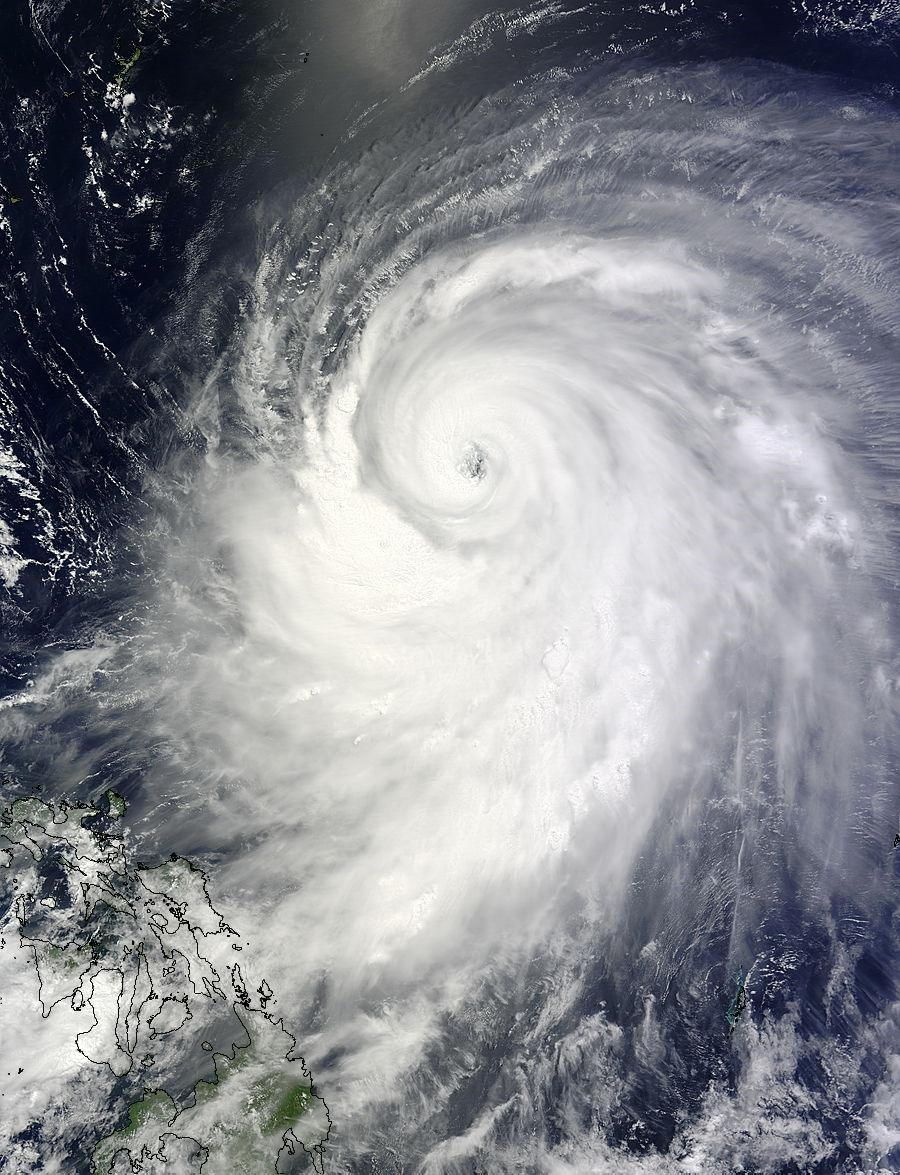
The cost of not proceeding with any major Congressionally approved program to massively conserve on burning fossil fuels, NOW, will surely ultimately be astronomical. The costs will not only skyrocket, ending up in the trillions of dollars, and but the number of human and other animal lives lost will likely end up in the billions, all because we already have and we are continuing to burn unsafe quantity levels of fossil fuels, which is now scientifically linked to rising atmospheric greenhouse gas accumulations, rising surface and ocean temperatures, worldwide, and which is also scientifically linked to ultra-extreme weather climate disasters, such as the one presently being experienced at Okinawa, Japan. What more will it take for our government officials in the U.S. to begin taking appropriate scale actions?
Madison 2014 Junteenth Commemoration at Penn Park, and Lyrics to Bob Marley’s “400 Years” (of slavery)

According to Kujichagulia-Madison Center for Self Determination, today marks the Madison area’a 25th annual celebration of Juneteeth, a nationally recognized community-wide event commemorating the last formal announcement from the federal government that African-American slavery in the United States was legally over.
According to history, President Lincoln issued the Emancipation Proclamation on September 22, 1862, but it took close to three more years before the full emancipation of America’s slaves was completed!
The historic moment that slavery was last announced as illegal in the U.S. came on June 19, 1865, when General Gordon Granger arrived in Galveston, Texas, to issue General Order No. 3, officially freeing America’s last African-American slaves. Slavery of Africans, initiated first in the Caribbean Islands about 1600, was finally over in the U.S..
As with previous Juneteenth celebrations, the day is celebrated with words, song, dance and food; at the city of Madison’s Penn Park, from 10 am to 6 pm, June 21.Gospel music is highlighted as well as performances, children’s events and a heritage area.
The event kicks off with a parade beginning at Fountain of Life Family Worship Center on West Badger Road in Madison.
Song lyrics to Bob Marley’s
“400 Years” [of slavery]
400 years 400 years, 400 years.
And it’s the same,
The same philosophy
I’ve said it’s four hundred years,
400 years, 400 years.
Look, how long.
And the people they still can’t see.
Why do they fight against the poor youth of today?
And without these youths, they would be gone –
All gone astray
Come on, let’s make a move,
make a move, make a move.
I can see time – time has come,
And if-a fools don’t see
fools don’t see, fools don’t see.
I can’t save the youth:
The youth is gonna be strong.
So, won’t you come with me;
I’ll take you to a land of liberty
Where we can live – live a good, good life
And be free.
Look how long: 400 years, 400 years, 400 years –
Way too long!
That’s the reason my people – my people can’t see.
Said, it’s four hundred long years, 400 years, 400 years.
Give me patience – same philosophy.
It’s been 400 years, 400 years, 400 years.
Wait so long!
How long? 400 long, long years….
Global Warming Deniers are the Real Hoaxers

I never thought I’d have to make this post, 14 years into the 21st century. It’s been fourteen-years since I began saying it was all but certain rising concentration of the greenhouse gases, particularly carbon dioxide, will threaten life on our planet unless we take major and significant actions to reduce our annual emissions. It’s been virtually proven now, unfortunately.
It’s been fourteen years since I began warning my families, friends, community, co-workers, governmental representatives, church members, pastors, anyone who would listen. I also started writing newspaper editors, calling on state legislators, along with working in the local group “Preserve Our Climate”, and making phone calls on Wisconsin Public Radio talk shows, and occasionally National Public Radio, about the perils of global warming and climate change.
Yet the seem to be far too few folks, including members of Congress, most Wisconsin Legislators and Governor Walker, as well as most other countries outside the U.S., who are concerned enough about the injustices of passing on worsening climate change misery to future generations to act now to change things.
One would think that Wisconsin Public Radio (WPR) would have had the moral courage to listen to the many credible scientists it has had as guests on it’s radio talk shows over the last 14 years who were advocating for large scale greenhouse gas reductions. Instead, WPR continues to encourage their listeners to sign up for long distance WPR vacation travel trips, to Hawaii, Southern France, Germany and the like, which result in vast quantities of greenhouse gases being released to our atmosphere, over the objections of environmental advocates like myself who have been requesting they stop sponsoring such trips. It would be better if WPR instead encouraged their Wisconsin listeners to spend their vacation money in Wisconsin, not only reducing the negative impacts to the atmosphere, but also helping Wisconsin businesses prosper, rather than the foreign businesses catering to Wisconsin tourists.
Even worse, our State of Wisconsin plans to sponsor more business trips to Asia this August, going to Indonesia and Singapore, to lead to even more trips in the future by commercial airlines and shipping of goods. Even President Obama is encouraging the U.S. Congress to approve of fast-tracking the Trans Pacific Partnership treaty, which will encourage even more motorized travel to distant places.
Thirty-five percent of the world’s greenhouse gas emissions from human activities originate from burning oil and its refined products in jets, ships, boats, trucks, cars, trains, buses, etc..
Following are statements from experts “in the know” about the science, climate, physics and other fields they have excelled in those area which required solid understanding of the consequences of massive increases of greenhouse gas:
Global Climate Change: A Plea by the U.S. Conference of Catholic Bishops for Dialogue, Prudence, and the Common Good

Global Climate Change A Plea For Dialogue Prudence And The Common Good
A Statement of the United States Conference of Catholic Bishops
June 15, 2001
The text for Global Climate Change: A Plea for Dialogue, Prudence, and the Common Good originated from the Domestic and International Policy Committees and was prepared in consultation with the bishops’ Committee on Doctrine and the Committee on Science and Human Values. The document was approved for publication by the full body of United States Catholic bishops at their June 2001 General Meeting and has been authorized by the undersigned.
Msgr. William P. Fay
General Secretary
USCCB
Introduction
As people of faith, we are convinced that “the earth is the Lord’s and all it holds” (Ps 24:1). Our Creator has given us the gift of creation: the air we breathe, the water that sustains life, the fruits of the land that nourish us, and the entire web of life without which human life cannot flourish. All of this God created and found “very good.” We believe our response to global climate change should be a sign of our respect for God’s creation.
The continuing debate about how the United States is responding to questions and challenges surrounding global climate change is a test and an opportunity for our nation and the entire Catholic community. As bishops, we are not scientists or public policymakers. We enter this debate not to embrace a particular treaty, nor to urge particular technical solutions, but to call for a different kind of national discussion. Much of the debate on global climate change seems polarized and partisan. Science is too often used as a weapon, not as a source of wisdom. Various interests use the airwaves and political process to minimize or exaggerate the challenges we face. The search for the common good and the voices of poor people and poor countries sometimes are neglected.
At its core, global climate change is not about economic theory or political platforms, nor about partisan advantage or interest group pressures. It is about the future of God’s creation and the one human family. It is about protecting both “the human environment” and the natural environment. 1 It is about our human stewardship of God’s creation and our responsibility to those who come after us. With these reflections, we seek to offer a word of caution and a plea for genuine dialogue as the United States and other nations face decisions about how best to respond to the challenges of global climate change.
The dialogue and our response to the challenge of climate change must be rooted in the virtue of prudence. While some uncertainty remains, most experts agree that something significant is happening to the atmosphere. Human behavior and activity are, according to the most recent findings of the international scientific bodies charged with assessing climate change, contributing to a warming of the earth’s climate. Although debate continues about the extent and impact of this warming, it could be quite serious (see the sidebar “The Science of Global Climate Change”). Consequently, it seems prudent not only to continue to research and monitor this phenomenon, but to take steps now to mitigate possible negative effects in the future.
As Catholic bishops, we seek to offer a distinctively religious and moral perspective to what is necessarily a complicated scientific, economic, and political discussion. Ethical questions lie at the heart of the challenges facing us. John Paul II insists, “We face a fundamental question which can be described as both ethical and ecological. How can accelerated development be prevented from turning against man? How can one prevent disasters that destroy the environment and threaten all forms of life, and how can the negative consequences that have already occurred be remedied?” 2
Because of the blessings God has bestowed on our nation and the power it possesses, the United States bears a special responsibility in its stewardship of God’s creation to shape responses that serve the entire human family. As pastors, teachers, and citizens, we bishops seek to contribute to our national dialogue by examining the ethical implications of climate change. We offer some themes from Catholic social teaching that could help to shape this dialogue, and we suggest some directions for the debate and public policy decisions that face us. We do so with great respect for the work of the scientists, diplomats, business and union representatives, developers of new technologies, environmental leaders, and policymakers who have been struggling with the difficult questions of climate change for many years.
While our own growing awareness of this problem has come in part from scientific research and the public debate about the human contribution to climate change, we are also responding to the appeals of the Church in other parts of the world. Along with Pope John Paul II, church leaders in developing countries—who fear that affluent nations will mute their voices and ignore their needs—have expressed their concerns about how this global challenge will affect their people and their environment. We also hear the call of Catholic youth and other young people to protect the environment.
Therefore, we especially want to focus on the needs of the poor, the weak, and the vulnerable in a debate often dominated by more powerful interests. Inaction and inadequate or misguided responses to climate change will likely place even greater burdens on already desperately poor peoples. Action to mitigate global climate change must be built upon a foundation of social and economic justice that does not put the poor at greater risk or place disproportionate and unfair burdens on developing nations.
Scientific Knowledge and the Virtue of Prudence
As Catholic bishops, we make no independent judgment on the plausibility of “global warming.” Rather, we accept the consensus findings of so many scientists and the conclusions of the Intergovernmental Panel on Climate Change (IPCC) as a basis for continued research and prudent action (see the sidebar: The Science of Global Climate Change). Scientists engaged in this research consistently acknowledge the difficulties of accurate measurement and forecasting. Models of measurement evolve and vary in reliability. Researchers and advocates on all sides of the issue often have stakes in policy outcomes, as do advocates of various courses of public policy. News reports can oversimplify findings or focus on controversy rather than areas of consensus. Accordingly, interpretation of scientific data and conclusions in public discussion can be difficult and contentious matters.
Responsible scientific research is always careful to recognize uncertainty and is modest in its claims. Yet over the past few decades, the evidence of global climate change and the emerging scientific consensus about the human impact on this process have led many governments to reach the conclusion that they need to invest time, money, and political will to address the problem through collective international action.
The virtue of prudence is paramount in addressing climate change. This virtue is not only a necessary one for individuals in leading morally good lives, but is also vital to the moral health of the larger community. Prudence is intelligence applied to our actions. It allows us to discern what constitutes the common good in a given situation. Prudence requires a deliberate and reflective process that aids in the shaping of the community’s conscience. Prudence not only helps us identify the principles at stake in a given issue, but also moves us to adopt courses of action to protect the common good. Prudence is not, as popularly thought, simply a cautious and safe approach to decisions. Rather, it is a thoughtful, deliberate, and reasoned basis for taking or avoiding action to achieve a moral good.
In facing climate change, what we already know requires a response; it cannot be easily dismissed. Significant levels of scientific consensus—even in a situation with less than full certainty, where the consequences of not acting are serious—justifies, indeed can obligate, our taking action intended to avert potential dangers. In other words, if enough evidence indicates that the present course of action could jeopardize humankind’s well-being, prudence dictates taking mitigating or preventative action.
This responsibility weighs more heavily upon those with the power to act because the threats are often greatest for those who lack similar power, namely, vulnerable poor populations, as well as future generations. According to reports of the IPCC, significant delays in addressing climate change may compound the problem and make future remedies more difficult, painful, and costly. On the other hand, the impact of prudent actions today can potentially improve the situation over time, avoiding more sweeping action in the future.
Climate Change and Catholic Social Teaching
God has endowed humanity with reason and ingenuity that distinguish us from other creatures. Ingenuity and creativity have enabled us to make remarkable advances and can help us address the problem of global climate change; however, we have not always used these endowments wisely. Past actions have produced both good works and harmful ones, as well as unforseen or unintended consequences. Now we face two central moral questions:
How are we to fulfill God’s call to be stewards of creation in an age when we may have the capacity to alter that creation significantly, and perhaps irrevocably?
How can we as a “family of nations” exercise stewardship in a way that respects and protects the integrity of God’s creation and provides for the common good, as well as for economic and social progress based on justice?
Catholic social teaching provides several themes and values that can help answer these questions.
The Universal Common Good
Global climate is by its very nature a part of the planetary commons. The earth’s atmosphere encompasses all people, creatures, and habitats. The melting of ice sheets and glaciers, the destruction of rain forests, and the pollution of water in one place can have environmental impacts elsewhere. As Pope John Paul II has said, ” We cannot interfere in one area of the ecosystem without paying due attention both to the consequences of such interference in other areas and to the well being of future generations.” 3 Responses to global climate change should reflect our interdependence and common responsibility for the future of our planet. Individual nations must measure their own self-interest against the greater common good and contribute equitably to global solutions.
Stewardship of God’s Creation and the Right to Economic Initiative and Private Property
Freedom and the capacity for moral decision making are central to what it means to be human. Stewardship—defined in this case as the ability to exercise moral responsibility to care for the environment—requires freedom to act. Significant aspects of this stewardship include the right to private initiative, the ownership of property, and the exercise of responsible freedom in the economic sector. Stewardship requires a careful protection of the environment and calls us to use our intelligence “to discover the earth’s productive potential and the many different ways in which human needs can be satisfied.” 4
We believe economic freedom, initiative, and creativity are essential to help our nation find effective ways to address climate change. The United States’ history of economic, technological innovation, and entrepreneurship invites us to move beyond status quo responses to this challenge. In addition, the right to private property is matched by the responsibility to use what we own to serve the common good. Our Catholic tradition speaks of a “social mortgage” on property and, in this context, calls us to be good stewards of the earth. 5 It also calls us to use the gifts we have been given to protect human life and dignity, and to exercise our care for God’s creation.
True stewardship requires changes in human actions—both in moral behavior and technical advancement. Our religious tradition has always urged restraint and moderation in the use of material goods, so we must not allow our desire to possess more material things to overtake our concern for the basic needs of people and the environment. Pope John Paul II has linked protecting the environment to “authentic human ecology,” which can overcome “structures of sin” and which promotes both human dignity and respect for creation. 6 Technological innovation and entrepreneurship can help make possible options that can lead us to a more environmentally benign energy path. Changes in lifestyle based on traditional moral virtues can ease the way to a sustainable and equitable world economy in which sacrifice will no longer be an unpopular concept. For many of us, a life less focused on material gain may remind us that we are more than what we have. Rejecting the false promises of excessive or conspicuous consumption can even allow more time for family, friends, and civic responsibilities. A renewed sense of sacrifice and restraint could make an essential contribution to addressing global climate change.
Protecting the Environment for Future Generations
The common good calls us to extend our concern to future generations. Climate change poses the question “What does our generation owe to generations yet unborn?” As Pope John Paul II has written, “there is an order in the universe which must be respected, and . . . the human person, endowed with the capability of choosing freely, has a grave responsibility to preserve this order for the well-being of future generations.” 7
Passing along the problem of global climate change to future generations as a result of our delay, indecision, or self-interest would be easy. But we simply cannot leave this problem for the children of tomorrow. As stewards of their heritage, we have an obligation to respect their dignity and to pass on their natural inheritance, so that their lives are protected and, if possible, made better than our own.
Population and Authentic Development
Population and climate change should be addressed from the broader perspective of a concern for protecting human life, caring for the environment, and respecting cultural norms and the religious faith and moral values of peoples. Population is not simply about statistics. Behind every demographic number is a precious and irreplaceable human life whose human dignity must be respected.
The global climate change debate cannot become just another opportunity for some groups—usually affluent advocates from the developed nations—to blame the problem on population growth in poor countries. Historically, the industrialized countries have emitted more greenhouse gases that warm the climate than have the developing countries. Affluent nations such as our own have to acknowledge the impact of voracious consumerism instead of simply calling for population and emissions controls from people in poorer nations.
A more responsible approach to population issues is the promotion of “authentic development,” which represents a balanced view of human progress and includes respect for nature and social well-being. 8 Development policies that seek to reduce poverty with an emphasis on improved education and social conditions for women are far more effective than usual population reduction programs and far more respectful of women’s dignity. 9
We should promote a respect for nature that encourages policies fostering natural family planning and the education of women and men rather than coercive measures of population control or government incentives for birth control that violate local cultural and religious norms.
Caring for the Poor and Issues of Equity
Working for the common good requires us to promote the flourishing of all human life and all of God’s creation. In a special way, the common good requires solidarity with the poor who are often without the resources to face many problems, including the potential impacts of climate change. Our obligations to the one human family stretch across space and time. They tie us to the poor in our midst and across the globe, as well as to future generations. The commandment to love our neighbor invites us to consider the poor and marginalized of other nations as true brothers and sisters who share with us the one table of life intended by God for the enjoyment of all.
All nations share the responsibility to address the problem of global climate change. But historically the industrial economies have been responsible for the highest emissions of greenhouse gases that scientists suggest are causing the warming trend. Also, significant wealth, technological sophistication, and entrepreneurial creativity give these nations a greater capacity to find useful responses to this problem. To avoid greater impact, energy resource adjustments must be made both in the policies of richer countries and in the development paths of poorer ones.
Most people will agree that while the current use of fossil fuels has fostered and continues to foster substantial economic growth, development, and benefits for many, there is a legitimate concern that as developing countries improve their economies and emit more greenhouse gases, they will need technological help to mitigate further atmospheric environmental harm. Many of the poor in these countries live in degrading and desperate situations that often lead them to adopt environmentally harmful agricultural and industrial practices. In many cases, the heavy debt burdens, lack of trade opportunities, and economic inequities in the global market add to the environmental strains of the poorer countries. Developing countries have a right to economic development that can help lift people out of dire poverty. Wealthier industrialized nations have the resources, know-how, and entrepreneurship to produce more efficient cars and cleaner industries. These countries need to share these emerging technologies with the less-developed countries and assume more of the financial responsibility that would enable poorer countries to afford them. This would help developing countries adopt energy-efficient technologies more rapidly while still sustaining healthy economic growth and development. 10 Industries from the developed countries operating in developing nations should exercise a leadership role in preserving the environment.
No strategy to confront global climate change will succeed without the leadership and participation of the United States and other industrial nations. But any successful strategy must also reflect the genuine participation and concerns of those most affected and least able to bear the burdens. Developing and poorer nations must have a genuine place at the negotiating table. Genuine participation for those most affected is a moral and political necessity for advancing the common good.
The Public Policy Debate and Future Directions
Catholic social teaching calls for bold and generous action on behalf of the common good. “Interdependence,” as Pope John Paul II has written, “must be transformed into solidarity. . . . Surmounting every type of imperialism and determination to preserve their own hegemony, the stronger and richer nations must have a sense of moral responsibility for the other nations, so that a real international system may be established which will rest on the foundation of the equality of all peoples and on the necessary respect for their legitimate differences.” 11
The common good is built up or diminished by the quality of public debate. With its scientific, technological, economic, political, diplomatic, and religious dimensions, the challenge of global climate change may be a basic test of our democratic processes and political institutions. We respect the inquiry and dialogue which has been carried forward by a wide variety of scientists, diplomats, policy makers, and advocates, not only in the United States but around the world. These efforts should not be demeaned or distorted by disinformation or exaggeration. Serious dialogue should not be jeopardized by public relations tactics that fan fears or pit nations against one another. Leaders in every sector should seek to build a scientifically based consensus for the common good; avoid merely representing their own particular interests, industries, or movements; and act responsibly to protect future generations and the weak.
In the past decade, a continuing process of international diplomacy has led to agreements on principles and increasingly on procedures. In 1992, more than 160 nations, including the United States, ratified the first international treaty on global climate change at Earth Summit in Rio de Janeiro, Brazil, which was known as the United Nations Framework Convention on Climate Change (UNFCCC). In 1997, parties to the UNFCCC including the United States negotiated the Kyoto Protocol, which established mandatory emission reduction targets, market-based procedures for meeting those targets, and timetables for industrialized nations.
Without endorsing the specifics of these agreements and processes, we Catholic bishops acknowledge the development of these international negotiations and hope they and other future efforts can lead to just and effective progress. However, serious deliberations must continue to bring about prudent and effective actions to ensure equity among nations.
As an act of solidarity and in the interest of the common good, the United States should lead the developed nations in contributing to the sustainable economic development of poorer nations and to help build their capacity to ease climate change. Since our country’s involvement is key to any resolution of these concerns, we call on our people and government to recognize the seriousness of the global warming threat and to develop effective policies that will diminish the possible consequences of global climate change. We encourage citizens to become informed participants in this important public debate. The measures we take today may not greatly moderate climate change in the near future, but they could make a significant difference for our descendants.
We also hope that the United States will continue to undertake reasonable and effective initiatives for energy conservation and the development of alternate renewable and clean-energy resources. New technologies and innovations can help meet this challenge. While more needs to be done to reduce air pollution, through the use of improved technologies and environmental entrepreneurship, the United States has made significant environmental gains over the last several decades. Our hope is that these technologies along with other resources can be shared with developing countries.
Within the United States, public policy should assist industrial sectors and workers especially impacted by climate change policies, and it should offer incentives to corporations to reduce greenhouse gas emissions and assistance to workers affected by these policies.
We encourage all parties to adopt an attitude of candor, conciliation, and prudence in response to serious, complex, and uncertain challenges. We hope the continuing dialogue within and among the diverse disciplines of science, economics, politics, and diplomacy will be guided by fundamental moral values: the universal common good, respect for God’s creation, an option for the poor, and a sense of intergenerational obligation. Since religious values can enrich public discussion, this challenge offers opportunities for interfaith and ecumenical conversation and cooperation.
Finally, we wish to emphasize the need for personal conversion and responsibility. In our pastoral reflection Renewing the Earth, we wrote the following:
Grateful for the gift of creation . . . we invite Catholics and men and women of good will in every walk of life to consider with us the moral issues raised by the environmental crisis. . . . These are matters of powerful urgency and major consequence. They constitute an exceptional call to conversion. As individuals, as institutions, as a people, we need a change of heart to preserve and protect the planet for our children and for generations yet unborn. 12 Each of us should carefully consider our choices and lifestyles. We live in a culture that prizes the consumption of material goods. While the poor often have too little, many of us can be easily caught up in a frenzy of wanting more and more—a bigger home, a larger car, etc. Even though energy resources literally fuel our economy and provide a good quality of life, we need to ask about ways we can conserve energy, prevent pollution, and live more simply.
Conclusion
Our national debate over solutions to global climate change needs to move beyond the uses and abuses of science, sixty-second ads, and exaggerated claims. Because this issue touches so many people, as well as the planet itself, all parties need to strive for a civil and constructive debate about U.S. decisions and leadership in this area.
As people of religious faith, we bishops believe that the atmosphere that supports life on earth is a God-given gift, one we must respect and protect. It unites us as one human family. If we harm the atmosphere, we dishonor our Creator and the gift of creation. The values of our faith call us to humility, sacrifice, and a respect for life and the natural gifts God has provided. Pope John Paul II reminds us in his statement The Ecological Crisis: A Common Responsibility that “respect for life and for the dignity of the human person extends also to the rest of creation, which is called to join man in praising God.” 13 In that spirit of praise and thanksgiving to God for the wonders of creation, we Catholic bishops call for a civil dialogue and prudent and constructive action to protect God’s precious gift of the earth’s atmosphere with a sense of genuine solidarity and justice for all God’s children.
Sidebar
The Science of Global Climate Change
The photographs from the Apollo missions show earth glowing in the stillness of space like a blue-white opal on black velvet. Cool and beautiful, it hurries along in the Sun’s gravitational embrace. The earth is our home, our whole wide world.
Our enfolding blanket of air, our atmosphere, is both the physical condition for human community and its most compelling symbol. We all breathe the same air. Guarding the integrity of the atmosphere—without which complex life could not have evolved on this planet—seems like common sense. Yet a broad consensus of modern science is that human activity is beginning to alter the earth’s atmospheric characteristics in serious, perhaps profound ways. For the past century, researchers have been gathering and verifying data that reveal an increase in the global average temperature. Until recently, scientists could not say with great confidence whether or not this phenomenon was in any way the result of human activity or entirely the result of natural changes over time.
To deal with the difficulty of making precise measurements and arriving at definite conclusions, the World Meteorological Organization and the United Nations Environment Programme established the Intergovernmental Panel on Climate Change (IPCC) to seek a clear explanation of the causes and possible impacts of this global climate change. 14 Because of the large number of scientists involved in the IPCC and its process of consultation, its reports are considered widely as offering the most authoritative scientific perspectives on the issue. IPCC’s findings have met with general—but because of remaining uncertainties, not complete—agreement within the wider scientific community.
In 1996, the IPCC issued its Second Assessment Reports, which summarized the current state of knowledge. The first of these reports concluded that ” the balance of evidence suggests that there is a discernible human influence on global climate.” 15 The Third Assessment Reports, approved in early 2001, found even stronger evidence and concluded, ” most of the observed warming over the last 50 years is likely to have been due to the [human-induced] increase in greenhouse gas concentrations” (italics added). 16
The IPCC offers convincing evidence that there exists if not a clear and present danger then a clear and future one, and that coming changes will affect all aspects of the environment and societal well-being. Based on measurements taken over both land and sea, the global average surface-air temperature has increased by about one degree Fahrenheit since 1860, building up as the Industrial Revolution was hitting full stride. While this is hardly a frightening increase for a particular geographic location, the temperature change is global in extent, so one must read it against the background of the earth’s average temperature during historic times. According to IPCC, the rate and duration of warming in the twentieth century appears to be the largest in the last one thousand years. The twentieth century also experienced precipitation increases in mid- and high-northern latitudes; drier conditions in the subtropics; decreases in snow cover, mountain glaciers, and Arctic sea ice; and a rise of four to eight inches in mean sea level. 17
The “greenhouse effect,” though complex in detail, is simple enough in outline. Not considering the internal heating due to radioactive decay and volcanism, the earth draws its thermal energy from the Sun. Atmospheric gases form a protective cover that makes our planet hospitable to life, transmitting visible light, blocking out harmful high-energy radiation like ultraviolet rays, and keeping temperatures comfortable by moderating the escape of heat into space. However, the precise mix of these gases is quite delicate, and changing that mix alters the atmosphere’s properties. An increase in the relative abundance of the greenhouse gases (carbon dioxide, methane, chlorofluorocarbons, tropospheric ozone, and nitrous oxide) causes the earth to trap more of the Sun’s heat, resulting in what is called “global warming.” Since the beginning of the industrial period, the IPCC reports, the concentration of the principal greenhouse gas, carbon dioxide, has increased by 30 percent and is now greater than at any time in the past 20 million years. 18 The presence of methane (150 percent increase) and nitrous oxide (16 percent increase) is also growing. The result is the small but alarming temperature rise science has detected. 19
What causes greenhouse gases to accumulate in the atmosphere? Emissions from cars and trucks, industry and electric plants, and businesses and homes are the largest part of the answer, although other factors such as deforestation contribute. The Industrial Revolution was built on furnaces and engines burning fossil fuels (coal, natural gas, oil, and such derived products as gasoline and heating oil). These fossil fuels now power the U.S. and global economy. Although some of the smoke particles and other pollutants (such as sulfur dioxide) now streaming from chimneys and tailpipes can actually cool the earth if they take an aerosol form, the great bulk of our emissions are contributing a warming influence. Reflecting upon studies completed since its last report in 1996, the IPCC says, “There is new and stronger evidence that most of the warming observed over the last 50 years is attributable to human activities.” 20
Whatever the extent, severity, or geographical distribution of global warming impacts, the problem is expected to disproportionately affect the poor, the vulnerable, and generations yet unborn. Projected sea level rises could impact low-lying coastal areas in densely populated nations of the developing world. Storms are most likely to strain the fragile housing infrastructure of the poorest nations. The migration of diseases could further challenge the presently inadequate health care systems of these same nations. Droughts or floods, it is feared, will afflict regions already too often hit by famine, hunger, and malnutrition. Because the number of days with high heat and humidity are likely to increase, heat stress impacts will also increase, especially among the elderly, the sick, children, and the poor. 21
The scientific reports of the IPCC portray the long-term challenge global climate change poses. Its findings, while not complete, are widely accepted in the scientific community. In June 2001, the National Academy of Sciences released a report, prepared at the request of President Bush, summarizing a prestigious panel’s understanding of global climate change and an assessment of the work of the International Panel on Climate Change. The panel said that “greenhouse gases are accumulating in the Earth’s atmosphere as a result of human activities. . . .” It also found that “we cannot rule out that some significant part of these changes are also a reflection of natural variability. . . . Because there is considerable uncertainty in current understanding of how the climate system varies naturally and reacts to emissions of greenhouse gases and aerosols, current estimates of the magnitude of future warming should be regarded as tentative and subject to future adjustments (either upward or downward). . . .” The report noted that while the full implications of climate change remain unknown, the panel “generally agrees with the assessment of human-caused change presented in the IPCC Working Group I scientific report.” 22
John Paul II, On the Hundredth Anniversary of Rerum Novarum (Centesimus Annus) (Washington, D.C.: United States Conference of Catholic Bishops, 1991), no. 38.
John Paul II, “International Solidarity Needed to Safeguard Environment,” Address by the Holy Father to the European Bureau for the Environment, L’Osservatore Romano (June 26, 1996).
John Paul II, The Ecological Crisis: A Common Responsibility (Washington, D.C.: United States Conference of Catholic Bishops, 1990), no. 6.
John Paul II, On the Hundredth Anniversary of Rerum Novarum (Centesimus Annus) (Washington, D.C.: United States Conference of Catholic Bishops, 1991), no. 32.
John Paul II, On Social Concern (Sollicitudo Rei Socialis) (Washington, D.C.: United States Conference of Catholic Bishops, 1988), no. 42.
John Paul II, On the Hundredth Anniversary of Rerum Novarum, no. 38.
John Paul II, “The Exploitation of the Environment Threatens the Entire Human Race,” address to the Vatican symposium on the environment (1990), in Ecology and Faith: The Writings of Pope John Paul II, ed. Sr. Ancilla Dent, OSB (Berkhamsted, England: Arthur James, 1997), 12.
John Paul II, On Social Concern, ch. four. This chapter of the encyclical gives a more complete definition of the concept of authentic development.
Second Vatican Council, Pastoral Constitution on the Church in the Modern World (Gaudium et Spes), nos. 50-51, in Austin Flannery, ed., Vatican Council II: The Conciliar and Post Conciliar Documents, new rev. ed., 1st vol. (Northport, N.Y.: Costello Publishing, 1996).
See also treatment of this topic in Stewardship: A Disciple’s Response (Washington, D.C.: United States Conference of Catholic Bishops, 1993), 27.
Ibid., no. 39.
United States Conference of Catholic Bishops, Renewing the Earth: An Invitation to Reflection and Action on Environment in Light of Catholic Social Teaching (Washington, D.C.: United States Conference of Catholic Bishops, 1992), 3. See also treatment of this theme in Stewardship: A Disciple’s Response, 46.
John Paul II, The Ecological Crisis, no. 16.
To date, the IPCC’s work represents the most authoritative estimates and prognosis of current and future climate change data. This statement utilizes the following Second and Third Assessment Reports by the IPCC: 1996a: Climate Change 1995: The Science of Climate Change. Contribution of Working Group I to the Second Assessment Report of the Intergovernmental Panel on Climate Change, eds. J. T. Houghton, L. G. Meira Filho, B. A. Callander, N. Harris, A. Kattenberg, and K. Maskell (Cambridge and New York: Cambridge University Press). 1996b: Climate Change 1995: Impacts, Adaptations and Mitigation of Climate Change: Scientific-Technical Analyses. Contribution of Working Group II to the Second Assessment Report of the Intergovernmental Panel on Climate Change, eds. R. T. Watson, M. C. Zinyowera, and R. H. Moss (Cambridge and New York: Cambridge University Press). 1996c: Climate Change 1995: Economic and Social Dimensions of Climate Change. Contribution of Working Group III to the Second Assessment Report of the Intergovernmental Panel on Climate Change, eds. J. P. Bruce, Hoesund Kee, and E. F. Haites (Cambridge and New York: Cambridge University Press). 1996d: The IPCC Second Assessment Synthesis of Scientific-Technical Information Relevant to Interpreting Article 2 of the UN Framework Convention on Climate Change (Geneva: World Meteorological Organization/United Nations Environment Programme). 2001a: Climate Change 2001: The Scientific Basis, eds. J. T. Houghton, Y. Ding, D. J. Griggs, M. Noguer, P. van der Linden, X. Dai, K. Maskell, and C. Johnson (Cambridge and New York: Cambridge University Press). 2001b: Climate Change 2001: Impacts, Adaptation, and Vulnerability, eds. J. McCarthy, O. Canziani, N. Leary, D. Dokken, and K. White (Cambridge and New York: Cambridge University Press). 2001c: Climate Change 2001: Mitigation, eds. O. Davidson, B. Metz, R. Swart, and J. Pan (Cambridge and New York: Cambridge University Press).
IPCC, 1996a, 5.
IPCC, Climate Change 2001: The Scientific Basis, 10.
Ibid., ch. two.
Ibid., 7.
Ibid.
Ibid., 10.
IPCC, Climate Change 2001: Impacts, Adaptation, and Vulnerability.
National Academy of Science, Climate Change Science: An Analysis of Some Key Questions (Washington, D.C., June 7, 2001).
Mayday! Mayday! Mayday!

May 1, called May Day, historically was a fun-filled day for people to say goodbye to the long, cold winter and welcoming warmer weather, by gathering flowers, singing, and dancing.
May Day has also become know as also known as International Workers’ Day, Unions and union locals in the United States — especially in urban areas with strong support for organized labor — have maintained a connection with labor traditions through their own unofficial observances on May 1. Some of the largest examples of this occurred during the Great Depression of the 1930s, when hundreds of thousands of workers marched in May Day parades in New York’s Union Square.
International Workers’ Day is also the commemoration of the May 4, 1886 Haymarket affair in Chicago. The police were trying to disperse a public assembly during a general strike for the eight-hour workday when an unidentified person threw something at the police. The police responded by firing on the workers, killing four demonstrators. “Reliable witnesses testified that all the pistol flashes came from the center of the street, where the police were standing, and none from the crowd. Moreover, initial newspaper reports made no mention of firing by civilians. A telegraph pole at the scene was filled with bullet holes, all coming from the direction of the police On May 1, 2012, tens of thousands marched in the streets of New York and around the US to commemorate May Day as the worker’s holiday and to protest the dismal state of the economy, the growing divide between the rich and the poor and the status quo of economic inequality. Members of Occupy Wall Street and labor unions held protests together in a number of cities in the United States and Canada on May 1, 2012 to commemorate May Day.
This afternoon in Madison there is a May Day march and rally to the State Capitol for immigrant justice, worker’s rights, and a living wage for all, hosted by the Immigrant Worker’s Union. Marcher’s will be meeting at 3 pm at Brittingham Park of Monona Bay, Madison.
Tonight, the Industrial Workers of the World host a May Day celebration with live music, ols fashion labor singing, food, literature and solidarity from 6 – 10 pm at the Wilmar Center, 953 Jennifer Street.
“Mayday”, voiced three consecutive times, as done in the title, “Mayday! Mayday! Mayday!”, is a call for help used in maritime and aviation operations to broadcast that, unless we take major, significant, and TIMELY ALTERNATIVE ACTIONS (quickly), that reverse course – away from the3 status quo (business as usual), imminent doom for the planet and its inhabitants is inevitable.
Thus, a “Mayday! Mayday! Mayday!” call has collectively been sounded by the thousands of the United Nation’s Intergovernmental Panel of scientists who make up the IPCC and wrote and published the latest dire report on the status of our changing climate. What follows are some remarks they and others made following the report’s public release:
(Additions coming shortly.)
Earth’s future ability to sustain life will be directly incumbent are the success of us here today in reducing enough fossil fuel burning, fast enough, and in reversing the deforestation and paving of the earth with cement. We must contact our governmental officials, who we collectively chose to represent our interests, and demand they take immediate major actions to begin to combat not only global warming, but also income inequality, poverty and hunger and other condition of human injustice.
Energy efficiency is a key way to reduce the state’s carbon footprint and make customer energy bills more affordable. Innovative efficiency strategies, coupled with smart use of renewable resources, could position Wisconsin as a leader in climate and energy strategies for the 21st century.
See “Conserve, NOW” conservation solution which rewards those who burn less fossils fuels on an annual basis. Click on “About this blog” on page 1 for more information.

Our Children’s Future is being Sabotaged by the Failure of U.S. Congress and Wisconsin Politicians to Act NOW to Reduce Greenhouse Gases

Things have gone real bad for our natural and human environment in Wisconsin, and especially for poor Black children in the state, under the governorship of Scott Walker. There may still be time to fix things, but scientists the world over say now that “major action is needed and fast” – from everyday people, from all businesses, and especially from all current and acting government officials. It is morally wrong for them not to act now, both meaningfully and without delay, for the sake of today’s children. It is they who will face the brunt of global warming impacts as this century progresses.
The effects of rising greenhouse gas concentration level in the atmosphere are latent and slow to develop. But once they do – and they are beginning to do that now – those effects are long-lasting. Decades and centuries, not just years. And more warming also creates chain reactions, producing positive feedbacks that lead to more warming;for example, reducing snow and ice cover at the poles leads to a reduction in albedo (reflection of Sun’s rays back out to space). Because less of the Sun’s radiation is reflected, more is absorbed by the darker (than snow) ocean, thus warming the ocean waters, which causes more snow and ice on the ocean to melt, reducing albedo at the poles even more, warming the water even more and so on. This has already been measured as happening now.
Another example of the positive feedbacks of more warming is that the Permafrost region, which covers one-fifth of the earth’s surface, is now thawing. The thawing of eons of organic material in the Permafrost causes the production and release of methane gas, which is another greenhouse gas (in addition to carbon dioxide and several others) that has 37-times the heat absorbing power of carbon dioxide in the earth atmosphere. This will add to the warming that is already occurring. Add the additional warming will cause even more methane to be released by the thawing Permafrost region. And so on. This dangerous compounding and reoccurring effect has already started as well.
It’s time to Conserve, Now! – for all children living today, and especially for those who follow them. Maybe by that time humans will find a way to safely combat the warming temperatures and rising oceans. But there is much yet that has to happen. The latest reports from the Intergovernmental Panel on Climate Change are out, and farming and consumption as practiced in the U.S. must change in many ways. Researchers say climate change has already cut yields of wheat and corn, reducing gains achieved by better farming technology. Meat and dairy production consumes vast amount of fossil fuel derived energy, and animal waste adds more methane to the atmosphere.
Making matters worse, world population is expected to hit nine billion by 2050. The world’s population needs to be reduced, not allowed to grow more rapidly. To do that, aid and education will need to be given to countries having out of control population explosions. We are morally obligated to help them on this for the sake of all humanity. Future and distant future populations need to be given a chance. To achieve that, all the world’s countries need to drastically reduce all activities causing the most greenhouse gases to be emitted by their people and industries, while everyone should be encouraging activities that will sequester greenhouse gases from the atmosphere (growing plants and trees, primarily). Some of this is starting now and such initiatives should be amplified in number and be heavily financed by countries that have historically deforested the world while burning up the most fossil fuels.
There should be only a minimum number of fossil fuel development projects developed, and only the most clean and energy efficient fuel should be taken from the earth for combustion. The goal should be to obtain as much power from wind, solar and and renewable energies as possible.

 All Things Environmental
Recent Comments