
Support the EPA’s Biggest Action Ever on Climate Change
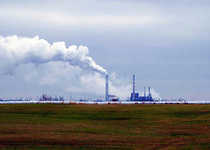
The Obama administration has proposed a critical plan to limit the carbon pollution from new and existing power plants that fuels global warming. But if the Koch brothers, the coal industry and congressional climate change deniers have their way, this plan will be brought to a screeching halt.
The Environmental Protection Agency (EPA) has been working on commonsense carbon limits for power plants, but lobbyists, corporate polluters and Washington insiders are working tirelessly to stop this progress in its tracks. The EPA needs your support it to stand up to the polluters.
Sign this petition by December 1st to fight back those who don’t care what happens to our Earth.
Public Service Commission of Wisconsin Doing Public a Disservice
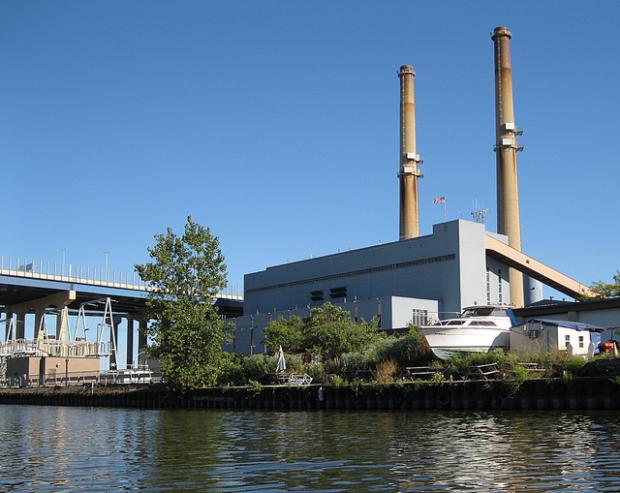
Wisconsin Public Radio reported last Friday (Nov. 14) that the Public Service Commission of Wisconsin (PSC) has approved an increase in the fixed rate that customers of We Energies are charged on their electric bills.
We Energies, which is the largest utility in Wisconsin, will now be able to pay less for solar power it buys back from customers thanks to the decision by the Public Service Commission.
The PSC’s action means customers of We Energies will see the monthly, fixed part of their bills go up by nearly $7 a month. That means residential and small business customers will pay $16 for that portion of their bill.
PSC commissioner Ellen Nowak said the charges ensure everyone pays the same amount to hook up to the power grid, whether they are a large business, homeowner or apartment dweller.
“The charges we are approving today are fair,” said Nowak.
Commissioner Eric Callisto disagreed. He said hiking the fixed charge is a major disincentive for energy efficiency, and that the customers who will see the greatest increases in utility payments are those who use the least amount of energy.
That same argument was made by the group RENEW Wisconsin.
“That’s going to hurt low-use customers, whether they’re low-income, whether they’re seniors on fixed incomes, whether they’ve been using energy conservation to save energy — which is the message we’ve always sent as a state is a good thing,” said Tyler Huebner, the group’s executive director.
Huebner said RENEW Wisconsin is considering whether to appeal regulator’s decision to hike rates.
Three Wisconsin utilities have asked the PSC for increases in fixed rates. Last week, regulators approved another such a request by the Green Bay utility Wisconsin Public Service Corp. The PSC has yet to rule on the final request of the three, which was made by Madison Gas and Electric.


The Public Service Commission (PSC) has given verbal approval to Northeastern Wisconsin Utility’s request to raise fixed charges on customer electricity bills, and is also considering 2 other similar proposals across the state including We Energies in southeastern Wisconsin and Madison Gas & Electric Company in south central Wisconsin.
Customers of a northeastern Wisconsin utility will pay more for electricity beginning in January, after the state’s Public Service Commission voted to allow Wisconsin Public Service Corp. to hike its fixed charge.
The PSC has given verbal approval to WPS to increase the fixed electricity charge by about $9 a month, after it voted 2 to 1 in favor of the increase on Thursday.
Critics of the move, like the nonprofit group Citizens’ Utility Board, say higher fixed costs mean that someone who lives in a small apartment will pay the same monthly fee as someone who lives in a mansion.
Kira Loehr, CUB’s director and general counsel, said that in WPS’s case, the PSC also mandated that the per-kilowatt fee will go down by about $.02 per hour. Loehr believes the decision gives people no reason to cut back on useage.
“And that’s what actually incents more energy use, because as the fixed portion that you can’t do anything about increases, the variable portion does decrease a little bit, sending less of a signal to customers that the less they use the more they can save.”
WPS said the structure change was needed because of increased costs for coal, natural gas and transportation.
“I won’t say there’s no incentive to conserve energy,” said David Kyto, the company’s director of rate case process. “The fixed charge is going up and the per-kilowatt hour will go down. So there will be less of an incentive. But I still think there’ll be incentive for customers to pursue energy efficiency and conservation.”
Madison Gas and Electric, along with Milwaukee-based We Energies, are also asking the PSC for similar fixed rate hikes.
MGE is looking to raise the fixed charges on customer bills and reduce charges for the amount of electricity used — a move critics say will discourage energy conservation while hitting low-income and elderly residents the hardest.
For the typical residential customer, the fixed charge would increase from the current $10.50 to $19 if the plan is approved by the state Public Service Commission. Future increases could take the fixed charge higher, although MGE has backed off from an earlier plan to charge $69 per customer by 2017.
MGE and electric utilities nationwide are feeling cost pressures with the growth of renewable energy coupled with increased efficiencies. At the same time, MGE says it must maintain the electric system and is looking for a way to fairly spread those costs among all customers — not just those who use large amounts of power.
A variety of groups have already filed comments on the case, including the city of Madison which has hired an outside expert to argue against the MGE rate changes.
“This MGE proposal will move the city of Madison in exactly the opposite direction that the city wishes to go,” writes city consultant William Marcus, an economist for JBS Energy of West Sacramento, Calif.
Renewable energy groups have also gotten into the fray, arguing that MGE’s rate plan will stifle investment in clean energy and leave Wisconsin farther behind in that key economic sector.
“MGE’s proposed approach would push the market down a path that discourages innovation and competition at a time when other states are encouraging this type of development,” says Susan Crawford, an attorney for Wind on the Wires.
Rally organizer Don Ferber of RePower Madison says 88 percent of MGE’s electricity supply is generated by fossil fuel burning — either coal or natural gas.
“We want the company to be forward looking but they have no plans for the future and that is not a good place to be,” he said, noting rising fuel costs and potential carbon emission charges going forward.
MGE’s Kraus counters that the company is committed to its customers and plans to unveil a series of community meetings next year to focus on the key issues that have come out of the rate case.
“It will be modeled after the Community Energy Conversations we did across Dane County in the early 2000’s,” he says. [Which I personally attended and recommended my “Concern, NOW! plan but nothing became of it.]
On Thursday, October 8, 2014 the PSC had a hearing on the MGE proposal. Upward of 200 people protested the proposal and gave public testimony, the vast majority demanding the PSC reject MGE’s proposed rate restructure. [Including me.] A decision by PSC is expected before the end of the year.
IPCC Releases Final Report on Global Warming and Climate Change
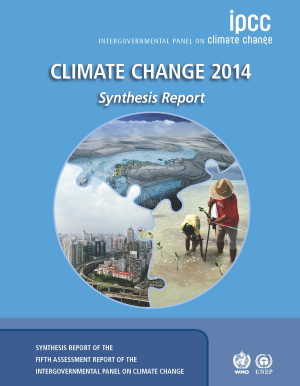
In a word: “dire” – the Intergovernmental Panel on Climate Change. The window of opportunity for doing something positive about it – closing. The time to start action on quickly reducing human causes releases of greenhouse gases – NOW!
From the Huffington Post (November 3, 2014):
COPENHAGEN, Denmark (AP) — Climate change is happening, it’s almost entirely man’s fault and limiting its impacts may require reducing greenhouse gas emissions to zero this century, the U.N.’s panel on climate science said Sunday.
The fourth and final volume of the Intergovernmental Panel on Climate Change’s giant climate assessment offered no surprises, nor was it expected to since it combined the findings of three reports released in the past 13 months.
But it underlined the scope of the climate challenge in stark terms. Emissions, mainly from the burning of fossil fuels, may need to drop to zero by the end of this century for the world to have a decent chance of keeping the temperature rise below a level that many consider dangerous.
The IPCC didn’t say exactly what such a world would look like but it would likely require a massive shift to renewable sources to power homes, cars and industries combined with new technologies to suck greenhouse gases from the atmosphere.
The report warned that failure to reduce emissions could lock the world on a trajectory with “irreversible” impact on people and the environment. Some impacts already being observed included rising sea levels, a warmer and more acidic ocean, melting glaciers and Arctic sea ice and more frequent and intense heat waves.
The science has spoken. There is no ambiguity in their message. Leaders must act. Time is not on our side,” U.N. Secretary-General Ban Ki-moon said at the report’s launch in Copenhagen.
Amid its grim projections, the report said the tools are there to set the world on a low-emissions path and break the addiction to burning oil, coal and gas which pollute the atmosphere with heat-trapping CO2, the chief greenhouse gas.
“All we need is the will to change, which we trust will be motivated by knowledge and an understanding of the science of climate change,” IPCC chairman Rajendra Pachauri said.
The IPCC was set up in 1988 to assess global warming and its impacts. The report released Sunday caps its latest assessment, a mega-review of 30,000 climate change studies that establishes with 95-percent certainty that most of the warming seen since the 1950s is man-made. The IPCC’s best estimate is that just about all of it is man-made, but it can’t say that with the same degree of certainty.
Today only a small minority of scientists challenge the mainstream conclusion that climate change is linked to human activity.
Global Climate Change, a NASA website, says 97 percent of climate scientists agree that warming trends over the past century are very likely due to human activities.
The American public isn’t as convinced. A year-old survey by Pew Research showed 67 percent of Americans believed global warming is occurring and 44 percent said the earth is warming mostly because of human activity. More recently, a New York Times poll said 42 percent of Republicans say global warming won’t have a serious impact, a view held by 12 percent of Democrats and 22 percent of independents.
Sleep-deprived delegates approved the final documents Saturday after a weeklong line-by-line review that underscored that the IPCC process is not just about science. The reports must be approved both by scientists and governments, which means political issues from U.N. climate negotiations, which are nearing a 2015 deadline for a global agreement, inevitably affect the outcome.
The rift between developed and developing countries in the U.N. talks opened up in Copenhagen over a passage on what levels of warming could be considered dangerous. After a protracted battle, the text was dropped from a key summary for policy-makers — to the disappointment of some scientists.
“If the governments are going to expect the IPCC to do their job,” said Princeton professor Michael Oppenheimer, a lead author of the IPCC’s second report, they shouldn’t “get caught up in fights that have nothing to do with the IPCC.”
The omission meant the word “dangerous” disappeared from the summary altogether. It appeared only twice in a longer underlying report compared to seven times in a draft produced before the Copenhagen session. The less loaded word “risk” was mentioned 65 times in the final 40-page summary.
“Rising rates and magnitudes of warming and other changes in the climate system, accompanied by ocean acidification, increase the risk of severe, pervasive, and in some cases irreversible detrimental impacts,” the report said.
World governments in 2009 set a goal of keeping the temperature rise below 2 degrees C (3.6 F) compared to before the industrial revolution. Temperatures have gone up about 0.8 C (1.4 F) since the 19th century.
Emissions have risen so fast in recent years that the world has used up two-thirds of its carbon budget, the maximum amount of CO2 that can be emitted to have a likely chance of avoiding 2 degrees of warming, the IPCC report said.
“This report makes it clear that if you are serious about the 2-degree goal … there is nowhere to hide,” said Alden Meyer of the Union of Concerned Scientists, an advocacy group. “You can’t wait several decades to address this issue.”
U.S. Secretary of State John Kerry said the report demands “ambitious, decisive and immediate action.”
“Those who choose to ignore or dispute the science so clearly laid out in this report do so at great risk for all of us and for our kids and grandkids,” Kerry said in a statement.
The IPCC said the cost of actions such as shifting to solar and wind power and other renewable sources and improving energy efficiency would reduce economic growth only by 0.06 percent annually.
Pachauri said that should be measured against the implications of doing nothing, putting “all species that live on this planet” at peril.
The report is meant as a scientific roadmap for the U.N. climate negotiations, which continue next month in Lima, Peru. That’s the last major conference before a summit in Paris next year, where a global agreement on climate action is supposed to be adopted.
The biggest hurdle is deciding who should do what. Rich countries are calling on China and other major developing countries to set ambitious targets; developing countries saying the rich have a historical responsibility to lead the fight against warming and to help poorer nations cope with its impacts. The IPCC avoided taking sides, saying the risks of climate change “are generally greater for disadvantaged people and communities in countries at all levels of development.”
AP: By KARL RITTER
Posted: 11/02/2014 7:35 am EST Updated: 11/03/2014 12:59 pm EST
IPCC Sounds Fresh Alarm as Fossil Fuel Interests Tighten Grip on Congress
The leading international network of climate scientists is urging a rapid shift away from fossil fuels, just as allies of coal, oil and natural gas industries in the United States appear poised to tighten their grip on Congress—where opposition to cleaner energy is already entrenched.
That outcome of Tuesday’s midterm election would spell trouble for advocates of a strong international climate accord. Treaty negotiations are supposed to pick up in the next few months and culminate in Paris just over a year from now.
This weekend, the UN’s Intergovernmental Panel on Climate Change issued a synthesis report that sums up its years-long review of the climate crisis and what to do about it. The report called for the near-complete elimination of fossil fuel-burning by the end of the century. This, it said, is what is needed to have a reasonable chance of avoiding the most severe risks of man-made changes to the world’s climate.
Nothing could be further from the agenda of Sen. Mitch McConnell of Kentucky, the coal-state Republican who on the eve of the election appears to have significantly better than even odds of becoming the next majority leader. (Though, as the IPCC might put it, until the last votes are tallied any forecast of which party will prevail deserves only “medium confidence.”)
Even if the Republicans don’t gain a majority in the Senate on Nov. 4, they are likely to gain strength in that chamber as well as in the House—an election outcome that would undermine President Obama’s entire climate agenda, not just his influence in the Paris talks.
From the Keystone XL pipeline decision and so-called “war on coal,” to a carbon tax and the very foundations of climate science, Congressional Republicans have opposed Obama on anything having to do with global warming from his first days in office.
Just last year, on the day the IPCC released one of three exhaustive treatments that formed the basis of this week’s synthesis report, McConnell co-sponsored an amendment to block the EPA from regulating fossil fuels in electric power plants, the largest single source of carbon emissions in this country.
His co-sponsor, Sen. James Inhofe of Oklahoma, offered another amendment at the same time. It would have prohibited the administration from participating in international climate negotiations “unless the U.S. offers an addendum to the latest IPCC report stating that anthropogenic climate change is a scientifically unproven theory.” Inhofe, who reportedly aspires to be chairman of the environment committee in a Republican Senate, calls the whole IPCC enterprisea “conspiracy” and “a hoax.”
Their ascent would alarm participants in the climate talks who agree with IPCC chairman, Rajendra Pachauri, that the climate crisis could be solved if action is quick and decisive. “All we need,” Pachauri said as he released the new synthesis report, “is the will to change, which we trust will be motivated by knowledge and an understanding of the science of climate change.”
Emissions must fall by 40 to 70 percent between 2010 and 2050, and then to zero by 2100, he explained at a news conference.
Those are fighting words to anyone committed to defending the coal industry in Kentucky, the oil and gas industry in Oklahoma, or campaigning in any fossil fuel stronghold—from the Marcellus shale to the Bakken light oil play. And it helps explain why the politics of carbon are a feature of so many swing elections in states like West Virginia, Colorado, Louisiana and Alaska.
The contrast between this increasingly partisan American political divide and the increasingly solid international scientific consensus could hardly be starker.
“The scientists have done their jobs and then some,” said Alden Meyer of the Union of Concerned Scientists, who has tracked the negotiations for decades. “Politicians can either dramatically reduce emissions or they can spend the rest of their careers running from climate disaster to climate disaster.”
Other environmental advocates, too, issued statements emphasizing that the synthesis report—including its summary for policymakers, expressly designed to guide them toward early action —was as significant politically as it was scientifically.
“The report is alarming and should be a wake-up call to government leaders,” said Mindy Lubber, president of Ceres, a group that encourages businesses to show leadership on climate issues. Her statement called on them to “ramp up the pressure…especially in Washington.”
“The critical missing link is the oil and gas industry, which is doing its best to thwart concrete action,” she said.
The Sierra Club’s Michael Brune aimed a jibe at the Koch brothers and their favored candidates, saying that “we don’t have any more time to coddle fossil fuel billionaires or politicians who will eschew responsibility at every corner.”
Big environmental groups have spent heavily in this campaign, too—$85 million on state and federal races, according to Daniel Weiss of the League of Conservation Voters, including $40 million on just six key Senate races. And in the closing days, they were knocking on millions of doors to bring out a green vote.
The organizations released results from a Hart Research Associates poll taken in late October in swing states suggesting that the climate issue could break in their favor.
“The survey suggests that Republican candidates are losing ground as a result of their climate science denial and opposition to climate pollution reductions,” Hart reported. “This is true among independent swing voters, and particularly among women and younger voters.”
But only about 40 percent of those surveyed said they had heard much of candidates’ views on climate. A majority had heard about energy issues, but far more about abortion, jobs and Obamacare.
Leaked Final Draft Of U.N. Climate Report Shows Dire Global Warming Predictions

 BY ARI PHILLIPS, POSTED ON OCTOBER 27, 2014
Delegates from more than 100 governments and many of the world’s top climate scientists are meeting in Copenhagen this week to finalize a report that will be used as a foundation for important upcoming climate summits. The leaked United Nations draft report, due to be published on Nov. 2nd, says climate change may have “serious, pervasive and irreversible” impacts on human society and nature.
Hopes are set on a new, post-Kyoto Protocol global climate agreement to be reached at the Paris summit at the end of 2015. There will a major climate meeting in Lima, Peru at the end of this year to help set the framework for the 2015 gathering.
“The report will be a guide for us,” Peruvian Environment Minister Manuel Pulgar-Vidal, told Reuters.
This final report is a synthesis of three comprehensive IPCC reports published over the course of the last year. Those reports focused on the physical science; impacts, adaptation and vulnerability; and mitigation. This flagship report received over 2,000 comments from government officials relating to changes to be made prior to publication.
According to a Reuters analysis, many governments want the draft to be written in a more clear and accessible manner with a focus on extreme weather events such as storms, heat waves, and floods. The U.S. wrote that the report needs to be useful for those without deep technical knowledge of climate issues.
“What about drought? Cyclones? Wildfires? Policymakers care deeply about extreme events,” the U.S. team wrote. “After all, in many ways it is how extreme events will change that will determine many of the (near-term, at least) impacts from climate change. As such, the authors should strongly consider saying more about the projected changes in extreme events.”
>U.S. commenters also wrote that the report should stress impacts on rich countries more, saying “there are very few references to the vulnerability of wealthier countries to climate change.”
The E.U. team wrote that “the key messages should contain more substance that can help guide policy makers rather than general overarching statements,” and that “the overall storyline … is sometimes not clear and still looks fragmented.”
While the report warns of the dire consequences of the continued rise of GHGs, it also says the worst impacts can still be avoided. It states that a combination of adaptation and substantial, sustained reductions in GHGs can limit climate change risks and reduce the costs and challenges of mitigation.
Over the past five years some 2,000 scientists worked on the fifth iteration of the U.N.’s Intergovernmental Panel On Climate Change’s Assessment Report. With leaders gathering to finalize the report this week, Rajendra Pachauri, chairman of the IPCC, urged world governments not to be overcome by hopelessness as they engage in negotiations.
“May I humbly suggest that policymakers avoid being overcome by the seeming hopelessness of addressing climate change,” he said. “Tremendous strides are being made in alternative sources of clean energy. There is much we can do to use energy more efficiently. Reducing and ultimately eliminating deforestation provides additional avenues for action.”
In one hopeful indication, last week leaders of the European Union agreed to cut emissions by 40 percent below 1990 levels by 2030. European leaders hope this will build momentum for when the bloc hosts the critical Paris climate summit next year, and that it will encourage other major emitters yet to make pledges — such as the U.S. and China — to rise to the occasion. Countries have until early next year to announce the targets they intend to negotiate with at the Paris summit.
Wisconsinites Should Be “Angry” about the Actions and In-actions of their Governor!
Republican Gov. Scott Walker kicked up a hornets nest in Madison last Thursday, October 23, 2014, when he told a gathering of news reporters at the morning briefing that people living in Madison are driven by anger. “There are many people in Madison who are angry and they’re going to vote no (against Walker) [no] matter what, Walker said in his morning briefing.

What does he expect?
Shortly after he took office, Governor Walker surprised the citizens of Wisconsin with his now infamous “Act 10”, also known as the Wisconsin Budget Repair bill, ridding public unions of their rights to collective bargaining and deeply reducing the take home pay of all public employees, including all the public school teachers in the state. The bill was referred to the Joint Committee on Finance who then held a public hearing the same day.
When it became clear the passage of the bill was inevitable, all 14 Senate Democrats left the state to prevent Republicans from passing the measure in the Senate.
Twenty senators had to be present to hold a vote on the bill and Republicans had just 19 seats. Walker immediately advocated for taking that requirement out of the bill, so Republicans could pass it without the Democrats being present, according to an online report by the Milwaukee Journal Sentinel and became law in Wisconsin on June 29, 2011.
“It’s had a devastating effect on our union,”, said Wisconsin Union of State Employees Marty Beil in a report by the New York Times . It brought tens of thousands of protesters out to the Wisconsin State Capitol in Madison in frigid February weather in protest.
Wisconsin had been the first state in the country to grant public unions the right to negotiate contracts with their employers, after former Governor Gaylord Nelson established the rights for all labor unions, public and private, to bargain collectively.
Nelson subsequently became a U.S. Senator, where he helped passed numerous environmental legislation, and where he famously founded “Earth Day”, a day celebrated in many public schools and communities around the world with the purpose of learning about the importance of keeping a healthy environment every April 22nd. According to Nelson: “Some people who talk about the environment talk about it as though it involved only a question of clean air and clean water. The environment involves the whole broad spectrum of man’s relationship to all other living creatures, including other human beings. It involves the environment in its broadest and deepest sense. It involves the environment of the ghetto which is the worst environment, where the worst pollution, the worst noise, the worst housing, the worst situation in this country — that has to be a critical part of our concern and consideration in talking and cleaning up the environment.”
The aftermath of schools having to abide by Governor Walker’s Act 10 has deeply affected public education throughout Wisconsin. As the 2014-15 school year unfolds, Wisconsin has seen class sizes in its public schools grow faster than the national average, a rise in the number of students living in poverty, coupled with a reduction in state support for public education.
Public schools have long been an engine of our state’s economic growth, according to The Wisconsin Budget Project, an initiative of the Wisconsin Council on Children and Families and the State Priorities Partnership, formed in 1999, who’s mission is to engage in nonpartisan and independent analysis and provide education on state budget and tax issues, particularly those relating to low- and moderate-income families.
The Partnership is coordinated by the Center on Budget and Policy Priorities. According to The Wisconsin Budget Project, “Wisconsin has depended on a well-educated workforce, shaped by excellent public schools, to lay the foundation for our prosperity. To ensure that Wisconsin is competitive in the future, our schools must have the resources to offer students a high-quality education. Only then can we create a future workforce that is well-qualified and globally competitive”.
However, three and 1/2 years following Act 10’s passage into law, Wisconsin classrooms have fewer teachers, resulting in more crowded classrooms and less individualized attention for students. Over the last seven years, the number of teachers in Wisconsin public schools has fallen significantly. In the 2011-2012 year alone, there was a 7.1% in the number of full-time equivalents (FTEs) teachers in Wisconsin public schools to 56,200 FTE teachers, down from 60,500 FTE public school teachers in the 2004-05 school year, even as student enrollment has increased slightly.
The decline in the number of teachers in Wisconsin has resulted in higher student-to-teacher ratios in Wisconsin. Having fewer students for each teacher helps students learn better, but in Wisconsin the trend is going in the opposite direction. In 2004-05, Wisconsin had 14.3 students per teacher; that number had risen to 15.5 students by 2011-12.
There has been a rising tide of children living in poverty in Wisconsin and attending public schools. The number of Wisconsin children who are from low-income families has climbed for ten straight years, according to Wisconsin’s Department of Public Instruction.
According to the Wisconsin Budget Project, the rising number of low-income students presents challenges for Wisconsin schools. Children from low-income families lag their peers in educational achievement. They also are less likely to graduate from high school and become well-educated, healthy members of Wisconsin’s skilled workforce.
In the 2013-14 school year, 43% of Wisconsin children in public schools — or 359,000 children — were eligible for free or reduced-price school lunches, A decade earlier, only 30% of students qualified for free or reduced lunches.
In each of Wisconsin’s five largest school districts — Milwaukee, Madison, Kenosha, Green Bay, and Racine — more than half the students are from low-income families and qualified for assistance for school meals. More than 8 out of 10 students in Milwaukee Public Schools were from low-income families in the 2013-14 school year. Put another way, about 69,000 children in Milwaukee Public Schools received assistance to help pay for school lunches.
Wisconsin’s public education cuts under Scott Walker are among the deepest in the country. When measured as dollars lost per student, Wisconsin’s cuts to public education over this period are second only to Alabama. Wisconsin provided $1,038 per student less in state support for public schools in 2014 than in 2008.
Changes to the state retirement system and collective bargaining rules made in 2011 forced school districts to cut compensation for teachers and other school employees and scale back academic programs. Some school districts have been forced to eliminate courses in core subject areas.
At the same time lawmakers were cutting state support for schools, they passed tax cuts that add up to $1.9 billion over four years. The tax cuts didn’t do much to lower tax bills for Wisconsin’s lowest-wage earners, but they did drain revenue that could be used for education or other priorities.
Cuts in state aid and uncertainties about future funding have caused turmoil in Wisconsin schools.
Yet while Walker’s actions have caused increased hardships on Wisconsin’s public employees, teachers and its student population, particularly for poor minority families, additional adverse impact is resulting from Governor Walker’s lack of positive environmental action.
In a recent article, Bill Lueders quotes Matt Neumann, president of the trade group Wisconsin Solar Energy Industries Association, as saying he needs only one word to describe Wisconsin’s recent record on renewable energy. He calls it “rotten.”
Neumann is equally concise in ascribing blame: “The big change happened in 2010, when the Republicans took control of the governorship and Legislature.”
Such criticism may have greater weight given that Neumann is a self-described conservative who a few years back launched SunVest, a Pewaukee-based solar installation company, with his father, Mark.
Matt Neumann says the economics of solar power have improved dramatically in recent years, to where government subsidies are no longer needed. “But we still need policies that support the ability to install solar,” he says, adding that the state is missing opportunities to grow this sector of its economy.
Renew Wisconsin, a nonprofit advocacy group, has tallied that the number of new solar electric installations in Wisconsin fell from 339 in 2010 to 136 in 2012, then rose slightly to 194 in 2013. Meanwhile, new solar installations nationally grew by leaps and bounds. More than 150,000 were added last year, about three times as many as in 2010.
For wind power, Renew Wisconsin reports that the number of commercial turbines placed in service plunged from 215 in 2008 to just 10 in 2012. Wind power in Wisconsin has since “flatlined,” according to Michael Vickerman, the group’s program and policy director. No new turbines were added in 2013 and 2014, and none are planned by state utilities, he says.
“We’re definitely falling behind,” says Gary Radloff, a researcher with the Wisconsin Energy Institute at the University of Wisconsin-Madison. “It’s pretty remarkable and measurable.” Wisconsin had been seeing growth in this area before “this massive drop-off in the last few years.”
A recent poll by a bipartisan research team found that more than 80% of Wisconsin voters support raising the state’s use of various forms of renewable energy, including solar, wind and biomass.
Mary Burke, the Democratic candidate for governor, has blasted Walker for his record on renewable energy and pledged to boost state investment in wind power, biofuels and digester technologies that turn waste to watts.
Walker’s true colors of being anti-environmental were shown when it was reported he received $700,000 from a mining firm who was subsequently allowed to rewrite Wisconsin’s once strong metallic mining law to allow it to have the largest open pit mine in North America, which will wipe out an area of significant natural beauty and high natural habitat quality which is a local tribe finds irreplaceable.
Further evidence of the low priority the Walker administration has given to environmental values is its unwillingness to create rules to limit small particle pollution from power plants, forcing the U.S. Environmental Protection Agency to write such rules for Wisconsin. Wisconsin, the home of the late Gaylord Nelson, was once said to be a strong leader for other states to follow in protecting our environment. That can no longer be said now because of the blatant disregard for the environment the last three and one-half years by Governor Scott Walker. It’s no wonder Madison residents and undoubtedly many other residents of communities and rural areas throughout Wisconsin appear angry to Governor Walker. They’re furious – and they are saving their stingers for the voting booth on November 4th.
Source: Wisconsin Center for Investigative Journalism
Earth a Lucky Fluke?

Is the Earth one of many habitable planets in the universe, or are human beings alone, the product of a lucky fluke? Author of “Lucky Planet: Why Earth is Exceptional–and What That Means for Life in the Universe”, David Waltham says it’s more likely the latter, thanks to our planet’s unusually stable climate and early development of life.
But whether Earth’s climate can still said to be “stable” is now, unfortunately, open to question. We humans have have relied far too extensively on fossil fuel burning – especially coal, oil (gasoline, diesel fuel, jet fuel, propane, fuel oil) and natural gas (methane), which all emit greenhouse gases to the atmosphere upon combustion, since the onset of the Industrial Revolution. What Earth needs now is another kind of revolution, a peaceful revolution, but where humans use their own physical power and the energy of the Sun and the wind and rid themselves from the over-dependence on burning fossil fuels. Read about a plan to do just that right here and then sign the petition to our elected governmental officials demanding they undertake the necessary changes to make this happen before its too late! Thank you.
Earth’s About to Lose What Little Chance It Had – Unless We Act Now!
Who’s Gonna Stand Up
Neil Young’s Who’s Gonna Stand Up (and Save the Earth)
Protect the wild, tomorrow’s child
Protect the land from the greed of man
Take down the dams, stand up to oil
Protect the plants, and renew the soil
Who’s gonna stand up and save the earth?
Who’s gonna say that she’s had enough?
Who’s gonna take on the big machine?
Who’s gonna stand up and save the earth?
This all starts with you and me
Damn the dams, save the rivers
Starve the takers and feed the givers
Build a dream, save the world
We’re the people know as earth
Who’s gonna stand up and save the earth?
Who’s gonna say that she’s had enough?
Who’s gonna take on the big machine?
Who’s gonna stand up and save the earth?
This all starts with you and me
Ban fossil fuel, draw the line
Before we build, one more pipeline
Ban fracking now, save the waters
And build a life, for our sons and daughters
Who’s gonna stand up and save the earth?
Who’s gonna say that she’s had enough?
Who’s gonna take on the big machine?
Who’s gonna stand up and save the earth?
This all starts with you and me
Who’s gonna stand up
Who’s gonna stand up
Who’s gonna stand up
Who’s gonna stand up
Who’s gonna stand up
Who’s Gonna Stand Up (and Save the Earth)?
(full orchestra & choir version)
Start here. Sign “Conserve NOW Petition to President Obama, U.S. Congress, Wisconsin Governor Walker and Wisconsin Legislature to Enact and Fund Climate Change Legislation” (September 16th post on this blog) or;
I’ve also started the petition “U.S. Congress: Enact and Fund Legislation to Pay Families and Individuals who Use Less Fossil Fuel Energy Annually on Changeorg
Will you take 30 seconds to sign it right now? Here’s the link:
Here’s why it’s important:
Using money that now goes to subsidize the fossil fuel industries (coal, oil, natural gas), instead offer that money to those who limit their driving, flying and household use of fossil fuel devived energy. This would helpslow global warming and sea level rises and would negate the need for raising the minimum wage and foodstamps.
You can sign my petition by clicking here.
.
Thanks
U.S. Congress Needs to Take Action to Slow Climate Change and Ensure Public Saftey

Julia Pierson, a 30-year veteran of the Secret Service agency who became director in 2013, was forced to resign under pressure as director Wednesday after breaches of White House security that resulted in nobody getting hurt and no damage to property.
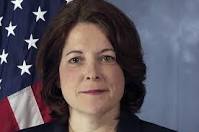
The U.S. Congress has 535 members: 435 Representatives and 100 Senators. The One Hundred Thirteenth United States Congress first met in Washington, D.C. on January 3, 2013, and is scheduled to end on January 3, 2015. Widespread public dissatisfaction with the institution has increased in recent years, and some commentators have ranked it among the worst in United States congressional history. According to a Gallup Poll released in August 2014, the 113th Congress had the highest disapproval rating of any Congress since 1974, when data first started being collected: 83% of Americans surveyed said that they disapproved of the job Congress was doing, while only 13% said that they approved.
So why aren’t we forcing some of these folks to resign?
A New York Times/CBS News poll found that nearly half of Americans believe that global warming is causing a serious impact now, while about 60 percent said that protecting the environment should be a priority “even at the risk of curbing economic growth.”
Fifty-four percent of those surveyed said that global warming is caused by human activity. This, the New York Times notes, is the “highest level ever recorded by the national poll.”
Those results echo those of another survey conducted by the Chicago Council on Global Affairs, which found that more than 70 percent of Americans believe climate change is either a critical or an important threat “to the vital interests” of the country, while more than 80 percent said that combating climate change is either a “very important” or “somewhat important” goal for the U.S.
The survey also found that 50 percent of the American public believe that the government is not doing enough to address the problem of climate change. According to poll makers, this is an increase of five percentage points from 2012 poll results.
Dealing appropriately with reducing causes of global warming and insuring protection of citizens from climate change is government responsibility. But this Congress (and the Congresses preceding it) have failed to act on it, as have many states, Wisconsin included. They all ought consider resignation for their failure to enact legislation to slow global warming and ensure the America public is protected from climate change.
Picture – 35,000 walruses are swarming Alaska’s shore — because their sea ice is vanishing

New images captured by NOAA aerial surveys of the Alaska coast on September 27 show an estimated 35,000 walruses ashore near Point Lay. (Corey Arrardo / NOAA/NMFS/AFSC/NMML)
.
“We can easily forgive a child who is afraid of the dark; the real tragedy of life is when men are afraid of the light.”
― Plato
Conserve NOW Petition to President Obama, U.S. Congress, Wisconsin Governor Walker and Wisconsin Legislature to Enact and Fund Climate Change Legislation

PETITION TO: U.S. PRESIDENT OBAMA, U.S. CONGRESS, WISCONSIN GOVERNOR SCOTT WALKER, WISCONSIN STATE LEGISLATURE
Title of petition: “Pay Individuals and Families, Annually, for Maintaining a Smaller Global Footprint”
(Sign petition here.)
Enact and Fund Legislation to Annually Pay Families and Individuals who Record a Smaller Global Footprint Each Year.
People would voluntarily apply to a “Minimize My Global Footprint” program, and work towards (1) minimizing the number of miles they drive their vehicle(s) in a year. The families and individuals who record the fewest number of driving miles in a year’s time, as recorded on their vehicle(s) odometers (illegal to modify in Wisconsin), or if they do no driving at all over the year, would earn the most money for their “low global footprint of driving”; (2) people who choose not to fly by an airplane anywhere during that year (flying emits the largest global impact due to the long distances traveled) would earn the maximum amount of money allowed for their “zero global footprint of flying” that year; and (3) people who minimize their household use of fossil-fuel-derived electricity and/or heating (by installing solar panels, installing more efficient windows, replacing light bulbs with LED lights, adding more insulation, or turning the heat down in winter and up in summer, or using less hot water) or obtaining their energy from wind turbines, would earn the “minimum household energy use global footprint”.
Depending on how successful each individual or family was at minimizing their driving mileage and flying, and minimizing their energy use in their home, they could earn up to $22,800 in a year. African-American individuals and families would be eligible to earn a higher maximum of $30,400 per year. (For tables identifying lower amounts, see “Conserve, NOW” at: http://www.allthingsenvironmental.com and multiply by four.)
or:
Conserve Now ex sum
Conserve NOW!1.doc; Final
As with practically every new major governmental initiative, there would undoubtedly be some “bugs” to work out. But “TIME IS OF THE ESSENCE “when it comes to reducing our aggregate annual emissions of greenhouse gases to our atmosphere, because, at 400+ parts per million (ppm) carbon dioxide (CO2), we have already far exceeded the natural concentration level of those gases (eg. 350 ppm CO2) in the atmosphere that scientists claim to be “safe” for the planet. Continuing to pave over the landscape with Portland cement and bituminous asphalt, for the purpose of expanding highways and building more freeways and bridges to accommodate more motor vehicle driving, and adding more airplane runways to accommodate more flying by everyone, is totally unsustainable for the preservation of our planet for life in the future.
In fact, NOTHING is more URGENT than for everyone to SIGNIFICANTLY REDUCE their activities THAT BURN LARGE QUANTITIES OF FOSSIL FUELS (and emit tons more greenhouse gases to the atmosphere, where they remain upwards of 100 years. One way to do this is to fly less (or not at all), and drive less, or not at all, by using more sustainable modes of transportation (such as bicycling, walking, using mass transit), and by conserving on fossil fuel burning in their home, or by using less electricity (that which is generated by burning of fossil fuels; i.e. solar and wind powered electricity not counted).
Unfortunately, our planet is already exhibiting the damaging impacts of having excessive concentrations of greenhouse gases in its atmosphere. The climate has already changed in many places: heat records have been broken, massive flooding has occurred, oceans are rising and becoming more acidic, extreme drought and massive wildfires has cost the nation billions of dollars – all will worsen with more global warming
Another problem this proposal aims to address is the clearly grotesque disparities between the top and lowest annual income levels in the U.S., especially for African American families. Some say the low income levels of African American families and individuals in the U.S. is rooted in the U.S. government’s condoned enslavement of African Americans on plantations in America for close to 400 years (40 generations), until finally being outlawed by President Lincoln’s Emancipation Proclamation. The government’s order provided the slaves with their freedom but failed to require or cover payment of financial reparations to the African Americans for their long period of enslavement (close to 40 generations of slavery!); hence, the increase in annual financial incentives for African American families and individuals to reduce greenhouse emissions.
In short, the U.S. Congress, President Obama, state Legislatures and our governors should, without delay, go to work and adopt this revolutionary new approach to addressing global warming and the inequalities that remain within the American economy, while only touching the surface of the reparations that really ought to be made to present day African Americans, for nearly 400 years of slavery of their ancestors. Our current political leaders need to show the courage that millions of American’s soldier exhibited in World Wars I & II, and all the many other wars where American soldiers put themselves in harm’s way and adopt this proposal into law.
The prognosis for Planet Earth and all life forms that exist on it is getting increasingly dire by each day we fail to have political action to slow global warming and prepare for the increasingly bad effects of global warming. We need a new paradigm to counter global warming which is the now is widely accepted as reality and our fault.
The effects of increasing global warming are overwhelmingly negative and severe, cause massive negative environmental changes, and continuing global warming will create environmental, social, and economic havoc that would not otherwise occur. This proposal needs to be fast-tracked in the Congress, not only to provide supplemental income for families demonstrating their small global footprints annually, and annually thereafter. The alternative of “no action”, which has continued to be employed by our governmental officials in Washington D.C. and by our state Legislature, is that catastrophic global warming effects will not only continue but worsen, and the effects are, for all intents and purposes, irreversible.
Money for this program could come from a variety of sources. First, Congress should use the billions of dollars ($18.5 billion in 2013) that subsidize U.S. fossil fuel industries (coal, oil, natural gas) and instead use those funds to pay incentives to the public who apply to this program, and minimize their global footprint. Hopefully, this will help slow global warming in time and reduce the current rate of sea level rise. The rate of changes in the climate that have already been set in motion (drought in California and Guatemala, ice melting at poles, mountain glaciers receding) might at least be slowed but we must act now.
Our economy and public health would be expected to improve with the full implementation of this program, and while the primary purpose of the program is to slow climate change, the benefits of not using as much coal, natural gas and oil will help the environment by reducing the need for additional infrastructure for providing fossil fuels, such as pipelines carrying dirty crude oil from the tar sand region of Canada and other negative environmental impact developments. There would need to be less flammable products transported by rail. The air would get cleaner with less coal being burned and fewer car and jet airplanes emissions. The additional income would help families presently struggling from having insufficient family and individual income, due to the low minimum wages in the U.S., reductions in monthly food shares, having children with disabilities that require extra money and discrimination in employment. Income disparities have never been higher in the U.S.. Transit systems and pedestrian and bicycling infrastructure is needed in many communities for people who choose not to own and use cars. Madison, Wisconsin, for example, has had a long history of building for travel without cars and serves as a model for promoting non fossil fuel transportation, year round.
Adoption of this program would help all individuals and families that conserve energy and preserve our environment.
The funds could come from a multiple sources of sources not just the fossil fuel industry. The airline industry is heavily subsidized by the U.S.Federal Aviation Administration, despite the fact that a large percentage of American don’t fly at all during the year. The National Air Traffic Controllers Association has more than 15,000 FAA-employed controllers, The FAA has an operation budget of $16 billion. Groups such as the National Business Aviation Association, a Washington-based trade group for corporate flight departments, have opposed any arrangement requiring fees. Of course they do, its in their own best interest. But is it in the interests of all Americans and the future of the planet to reduce global warming caused by too much fossil fuel burning.
 All Things Environmental
Recent Comments