
One-year Anniversary of “Planet Earth: It Needs Our Help Now More Than Ever”, Broadcast on WORT-FM’s Public Access Hour on Labor Day 2014
Last year on Labor Day WORT-FM in Madison, Wisconsin I had the privilege of recording an hour of music and commentary on a subject I have researched for going on 16 years now: the likely effects of rising greenhouse gas concentrations in the atmosphere, in the oceans, on the landscape; in other words, our planet earth. Since other than president Obama, Pope Francis, the environmental community and the state of California are about the only ones talking seriously about starting to do something to head off what is certain to be catastrophic effects upon our planet and all its livings things in decades and centuries to come, it only seem appropriate to remind folks who would like to listen to the show again. Here it is. Planet Earth – It Needs Our Help More than Ever!
Touring Alaska last month to shine a spotlight on global warming, President Obama warned that “climate change is no longer some far-off problem. It is happening here; it is happening now. Climate change is already disrupting our agriculture and ecosystems, our water and food supplies, our energy, our infrastructure, human health, human safety. Now. Today.”
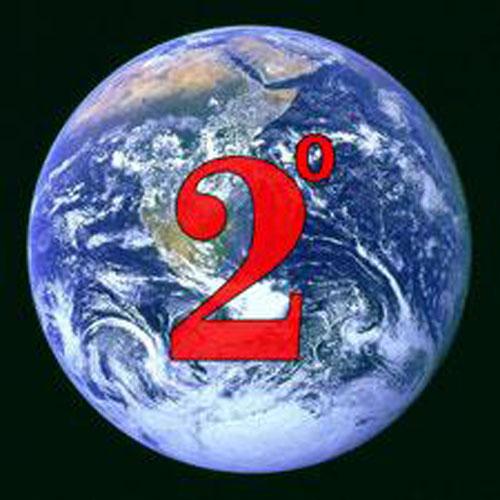
This wasn’t supposed to happen. In 2009, 114 countries signed the Copenhagen Accord, agreeing “to stabilize greenhouse gas concentration in the atmosphere at a level that would prevent dangerous anthropogenic interference with the climate system;” “recognizing the scientific view” that the increase in global temperature should be held to no more than 2 degrees Celsius” (3.6 degrees Fahrenheit) above the pre-industrial level; and promising greater “long-term cooperative action to combat climate change.”
Paradoxically, an accord that should have spurred the world to immediate action instead seemed to offer some breathing room. Two degrees was meant to be a ceiling, but repeated references to an internationally agreed-upon “threshold” led many people to believe that nothing really bad could happen below 2 degrees—or worse yet, that the number itself was negotiable. Perhaps the biggest failure of the Copenhagen Accord was its pact for “long-term” action. Forty years ago, climate change was a “long-term” problem. Today it’s an emergency.
As we’re coming ever so close to the dreaded 2-degree mark, which will have devastating effects especially on people and families less economically fortunate, everywhere, Pope Francis last week called upon the members of the U.S. Congress to find solutions to the problems of growing poverty, everywhere, and climate change, including warming and acidification of the oceans. As civilization’s industrial machinery marches on, we’re already at 400 ppm of carbon dioxide, and likely to go much higher and faster under current “business as usual” practices continue.
Such numbers may mean little to the general public, but they matter a lot to negotiators who will be at Paris climate change talks in December. Unfortunately, the numbers that these negotiators plan to propose will only be part of non-legally-binding pledges—and they represent only what is achievable without too much difficulty, rather than the drastic austerity measures needed to stabilize emissions. In fact, 2 degrees is not an upper limit that the nations of the world recognize and respect, only a target that negotiators know they will overshoot with their expected pledges. The very idea that the Paris conference is a negotiation is ridiculous. You can’t negotiate with the atmosphere.
What were they thinking? As Naomi Klein points out in her book This Changes Everything, the 2 degree goal “has always been a highly political choice that has more to do with minimizing economic disruption than with protecting the greatest number of people.” In theory, the Copenhagen Accord relied on the best available science of the time—an international scientific symposium held in 2005 and assessment reports published by the Intergovernmental Panel on Climate Change (IPCC) in 2007 and earlier, which in turn were based on even older scientific studies. You can trace the 2 degrees notion all the way back to a 1977 paper by Yale economist William D. Nordhaus.
In hindsight, though, the idea that even 2 degrees of warming would be tolerable is baffling. Homo sapiens have never lived in a world that hot. In an excellent series of special reports for CNN on what 2 degrees of global warming would mean, John D. Sutter lists some of the expected impacts: a melting Arctic, enormous wildfires, more intense hurricanes, water shortages, reduced crop yields, and animals and plants at risk of extinction. Even if warming can be held to 2 degrees, scientists predict that global sea level will rise by at least 20 feet as a result.
The Climate Vulnerable Forum, a coalition of 20 nations that expect severe global-warming effects, has called the 2-degree goal “inadequate” to protect fundamental human rights. “How can we possibly subscribe to more than double the current warming?” asked Mary Ann Lucille L. Sering, secretary of the Philippines Climate Change Commission.
Although the 2-degree target was endorsed in Copenhagen in 2009, and again in Cancún the following year, the parties also agreed to periodically review the adequacy of the target and to consider strengthening it. The majority of countries that have signed and ratified the United Nations Framework Convention on Climate Change now support a lower target of 1.5 degrees, and a review process reported that the lower limit would be “preferable” but that the science supporting it is “less robust.”
What is feasible? The World Bank has warned that a 1.5-degree rise is “locked in,” and that we’re headed toward a warming of 4 degrees by the end of the century. “Scientists, policy-makers and the public already accept that progress will not be enough to keep global average temperature rise within the 2°C limit,” wrote Oliver Geden, head of the EU Research Division at the German Institute for International and Security Affairs, in a recent Nature commentary. “The negotiations’ goal has become what is politically possible, not what is environmentally desirable.”
If you add up the pledges that have been made so far, and nations keep their promises, the world is in for about 3 degrees of warming by 2100. Limiting the warming to 2 degrees would require rapid emissions reductions over the next few decades, declining to zero net emissions shortly after 2050.
It is still possible to limit global warming to 1.5 degrees by 2100 (after a temporary overshoot), according to a paper published in Nature Climate Change a few months ago. But it would mean becoming carbon neutral even earlier than required for a 2-degree scenario.
A national security approach. President Obama made headlines in Alaska—and before that, New Orleans—with fervent talk about the urgency of the climate problem, the need to make communities more resilient, and the “failure of government to look out for its own citizens.” Can this be the same president who, a few months earlier, gave Royal Dutch Shell permission to begin drilling for oil off the coast of Alaska? Developing fossil fuel resources in the Arctic is “incommensurate with efforts to limit average global warming to 2°C,” according to a study by scientists at University College London.
There is an alternative to meaningless numbers and endless negotiations: going to war against climate change. If the United States can spend nearly $1.7 trillion on the “war on terror,”surely we can spend at least that much to keep our planet from overheating.
The 2-degree goal was chosen based on what was considered to be a scientific consensus about the most likely scenario for climate change. That is not how national security risks are evaluated. “When we think about keeping our country safe, we always consider the worst case scenarios,” said British Foreign Office Minister Baroness Joyce Anelay in a statement introducing a new climate risk assessment commissioned by her office. “That is what guides our policies on nuclear non-proliferation, counter-terrorism, and conflict prevention. We have to think about climate change the same way.”
In a foreword to the report, Anelay writes: “We must remember that in one way, climate change differs from any other subject of diplomatic negotiation: It is governed by a physical process. A process where the risk increases over time, and will continue to do so until we have entirely dealt with its cause.”
Increased risk is not an abstraction. It is record-setting heat, year after year. It is coastal erosion washing away villages in Alaska. It is massive wildfires raging in the American West. “We have to attack these at the source, which is carbon pollution,” Washington Gov. Jay Inslee told the Northwest News Network after flying over the worst fires in his state’s history. “It is difficult to comprehend a central fact of these fires,” Inslee said, “which is nature bats last.” Unfortunately, there won’t be any extra innings.
By Dawn Stover, from Bulleten of Atomic Scientists
Stover is a science writer based in the Pacific Northwest and is a contributing editor at the Bulletin. Her work has appeared in Scientific American, Conservation, Popular Science, New Scientist, The New York Times, and other publications. One of her articles is included in the 2010 Best American Science and Nature Writing, and another article was awarded a special citation by the Knight-Risser Prize for Western Environmental Journalism.
NASA: Sea Level Rise of Several Feet is UNAVOIDABLE!

[Tide gauges have been used to measure sea level for more than 130 years. Satellite measurements now complement the historical record. (NASA Earth Observatory image by Joshua Stevens, based on data from the Commonwealth Scientific and Industrial Research Organization and NOAA)]
For thousands of years, sea level has remained relatively stable and human communities have settled along the planet’s coastlines. But now Earth’s seas are rising. Globally, sea level has risen about eight inches since the beginning of the 20th century and more than two inches in the last 20 years alone. According to the federal National Aeronautics and Space Administration (NASA), “all signs suggest that this rise is accelerating”.
Seas around the world have risen an average of nearly 3 inches since 1992, with some locations rising more than 9 inches due to natural variation, according to the latest satellite measurements from NASA and its partners. An intensive research effort now underway, aided by NASA observations and analysis, points to “an unavoidable rise of several feet in the future”.
“Sea level rise is a natural [physical] consequence of the warming of our planet”, states NASA’s press release dated August 26, 2015. “We know this from basic physics. When water heats up, it expands. So when the ocean warms, sea level rises. When ice is exposed to heat, it melts. And when ice on land melts and water runs into the ocean [water from unprecedented ice and snow melt off Antarctica, Greenland, land areas north of permafrost region in Northern Hemisphere, mountainous glaciers receding, worldwide] sea level rises”.
As the ocean has warmed, polar ice has melted, and porous landmasses have subsided, global mean sea level has risen by 8 inches (20 centimeters) since 1870. The rate of sea level rise is faster now than at any time in the past 2,000 years, and that rate has doubled in the past two decades.
While NASA and other agencies continue to monitor the warming of the ocean and changes to the planet’s land masses, the biggest concern is what will happen to the ancient ice sheets covering Greenland and Antarctica, which continue to send out alerts that a warming planet is affecting their stability.
NASA has been recording the height of the ocean surface from space since 1992, recording about 2.9 inches (7.4 centimeters) of sea level rise averaged for all the oceans in that 23 year period.
In 2002, NASA and the German space agency launched the Gravity Recovery and Climate Experiment (GRACE) twin satellites, capable of measuring the movement of mass, hence gravity, around Earth at intervals of every 30 days. GRACE has found that earth’s land masses move very little in a month; however, earth’s water masses move through melting, evaporation, precipitation and other processes. GRACE records these movements of water around the planet, while a new NASA network of more than 3,000 floating ocean sensors spread across the entire open ocean supplement that ocean water level data.
Observations from the new NASA ocean level data collection systems have revolutionized scientists’ understanding of contemporary sea level rise and its causes. NASA’s newest release state that: “We know that today’s sea level rise is about one-third the result of the warming of existing ocean water, with the remainder coming from melting land ice”, adding that “currently, regional differences in sea level rise are dominated by the effects of ocean currents and well known cycles, such as the Pacific Ocean’s El Niño phenomenon and the Pacific Decadal Oscillation.” But as the ice sheets located closer to the poles of the planet (which receive less direct solar radiation due to the tilting of the planet as it orbits the Sun), and the once “permanent” ice located at higher elevations around the world continues to melt as a direct result of measurably warming temperatures occurring as a direct consequence of a stronger greenhouse effect that is already unnaturally high due to human activities such as fossil fuel burning, deforestation, and paving over the earth’s still green landscape. NASA scientists now predict that the increasing meltwater resulting from the stronger greenhouse effect will overtake the formerly natural causes of regional variations of the ocean water levels and be the most significant contributor to the overall rise in sea level.
The recent advances in observing the world’s frozen regions using satellite measurements from NASA and its participating organizations have allowed scientists to accurately estimate annual ice losses from Greenland and Antarctica. Not only can they now determine how much sea level around the world is changing – as measured by satellite for the past 23 years – but they can also determine how much of the sea level rise is being caused by our warming of the earth’s biosphere, which includes both the atmosphere at or near the surface, the oceans, the land surface, and the biota (plant and animal kingdoms) that all together comprise earth’s biosphere.
GRACE’s record, spanning over the last decade, shows that the ice loss around the planet is now accelerating in Greenland and West Antarctica. The record shows Greenland has shed on average 303 gigatons of ice every year since 2004, while Antarctica has lost on average 118 gigatons of ice per year. Much of Antarctica’s ice loss has been shown to come from West Antarctica’s ice loss. Greenland’s ice loss has accelerated by 31 gigatons of ice per year, every year since 2004, while West Antarctica’s ice loss has accelerated to 28 gigatons per year.
“Given what we know now about how the ocean expands as it warms and how ice sheets and glaciers are adding water to the seas, it’s pretty certain we are locked into at least 3 feet of sea level rise and probably more,” said Steve Nerem of the University of Colorado, Boulder, and lead of NASA’s new Sea Level Change Team.
The Greenland Ice Sheet, spanning 660,000 square miles (an area almost as big as Alaska), and with a thickness at its highest point of almost 2 miles, has the potential to raise the world’s oceans by more than 20 feet. Situated in the Arctic, which is warming at twice the rate of the rest of the planet, Greenland has been shedding more ice in the summer than it gains back in the winter since 1992.
“In Greenland, everything got warmer at the same time: the air, the ocean surface, the depths of the ocean,” said Ian Joughin, a glaciologist at University of Washington. “We don’t really understand which part of that warming is having the biggest effect on the glaciers.”
What scientists do know is that warming Arctic temperatures – and a darkening surface of the Greenland ice sheet – are causing so much summer melting that it is now the dominant factor in Greenland’s contribution to sea level rise.
NASA has found that Greenland’s summer melt season now lasts 70 days longer than it did in the early 1970s. Every summer, warmer air temperatures cause melt over about half of the surface of the ice sheet – although recently, 2012 saw an extreme event where 97 percent of the ice sheet experienced melt at its top layer.
Greenland’s massive glaciers have sped up, too. Though many of the glaciers in the southeast, west and northwest of the island – an area that experienced quick thinning from 2000 to 2006 – have now slowed down, the melting rate at other areas Greenland’s massive ice sheet has not slowed. A study last year showed that the northeast Greenland ice stream had increased its ice loss rate due to warmer air temperatures.
“The early 2000s was when some big things revealed themselves, such as when we saw the fastest glacier we knew of, the Jakobshavn ice stream in Greenland, double its speed,” said Waleed Abdalati, director of the Cooperative Institute for Research in Environmental Sciences, Boulder, Colorado, and former NASA chief scientist. “The subsequent surprise was that these changes could be sustained for a decade – Jakobshavn is still going fast”, Abdalati said.
The Antarctic Ice Sheet covers nearly 5.4 million square miles, and area larger than the United States and India combined, and contains enough ice to raise the ocean level by about 190 feet. The Transantarctic Mountains split Antarctica in two major regions: West Antarctica and the much larger East Antarctica.
Though Antarctica’s contribution to sea level rise is still at less than 0.02 inches (0.5 millimeters) per year, several events over the past decade and a half have prompted experts to start warning about the possibility of more rapid changes this century.
The mountainous horn of the continent, the Antarctic Peninsula, gave one of the earliest warnings on the impact of a changing climate in Antarctica when warm air and warmer ocean temperatures led to the dramatically fast breakup of the Larsen B ice shelf in 2002. In about a month, 1,250 square miles of floating ice that had been stable for over 10,000 years were gone. In the following years, other ice shelves in the Peninsula, including the last remainder of Larsen B, collapsed, speeding up in the flow of the land lying glaciers that they were buttressing against the warming ocean.
In 2014, two studies focusing on the acceleration of the glaciers in the Amundsen Sea sector of West Antarctica showed that its collapse is currently well underway. And while one of the studies speculated that the demise of the ice overlaying West Antarctica could take as long as 200 to 1,000 years, depending on how rapidly the ocean heats up, both studies concurred that its collapse is already unstoppable, and that when it does collapse, the melt water will add up to 12 feet of sea level rise to the oceans.
The wind is also a factor in determining the timing of West Antarctica’s collapse. The “westerlies”, the winds that spin the ocean waters around Antarctica, are known to have intensified during the last decade, pushing the cold top layer away from the land, and thus allowing the warmer, deeper waters to rise and spill over the border of the continental shelf, flowing all the way back to the base of many of the ice shelves jetting out from the continent. As the ice shelves weaken from underneath, the glaciers behind them are predicted to speed up.
East Antarctica’s massive ice sheet, as vast as the lower continental U.S., remains an unknown in projections of sea level rise. Though it appears to be stable, a recent study on Totten Glacier, East Antarctica’s largest and most rapidly thinning glacier, hints otherwise. Research found two deep troughs that could lead warm ocean water to the base of the glacier and melt it in a similar way to what’s happening to the glaciers in West Antarctica. Other sectors grounded below sea level, such as the Cook Ice Shelf, Ninnis, Mertz and Frost glaciers, have also been found to be losing mass.
For the West Antarctic Ice Sheet, which largely rests on a bed that lies below sea level, the main driver of ice loss is the ocean. The waters of the Southern Ocean are layered: on top and at the bottom, the temperatures are frigid, but the middle layer is warm. The westerlies, the winds that spin the ocean waters around Antarctica, have intensified during the last decade, pushing the cold top layer away from the land. This allows the warmer, deeper waters to rise and spill over the border of the continental shelf, flowing all the way back to the base of many ice shelves. As the ice shelves weaken from underneath, the glaciers behind them speed up.
East Antarctica’s massive ice sheet, as vast as the lower continental U.S., remains the main unknown in projections of sea level rise. Though it appears to be stable, a recent study on Totten Glacier, East Antarctica’s largest and most rapidly thinning glacier, hints otherwise. The research found two deep troughs that could lead warm ocean water to the base of the glacier and melt it in a similar way to what’s happening to the glaciers in West Antarctica. Other sectors grounded below sea level, such as the Cook Ice Shelf, Ninnis, Mertz and Frost glaciers, are also losing mass.
Thanks to a Corporation-compliant Mass Media and Press in the United States: the American People, their Representatives in the Congress, and a Majority of State Legislatures and Governors in the U. S. Have Clearly Been Duped by the Many of the Fossil Fuel Dependent Industries and their Lobbyists into Not Taking Global Warming Seriously Enough

Hurricane Katrina, Late August, 2005
According to scientists who have studied and documented the causes and effects of changes in climates at various locations around the world, there has never been a time in Earth’s history during which climates around the world; ocean levels, temperatures, and chemistry; wildlife territorial changes and atmospheric properties have occurred so rapidly and so significantly as to create significant levels of concern to human the world over. The United Nations Intergovernmental Panel of Climate Change, made up of hundreds of the world’s most respected scientists predicts much more rapid global warming in the coming decades today if we humans collectively continue doing what we have done in the recent past – burning increased amounts of fossil fuels, destroying more and more forests in the name of economic “progress”, and we continue living “high on the hog” under the mantra of “business as usual”.
Volunteer host Esty Dinur of WORT-FM Community Radio Station in Madison, Wisconsin talked with climatologist Michael E. Mann and journalist John H. Richardson on the station’s “A Public Affair” Friday, August 21, 2015, from noon to 1:00 PM.
Dr. Michael E. Mann is Distinguished Professor of Meteorology at Penn State University, with joint appointments in the Department of Geosciences and the Earth and Environmental Systems Institute, and is the director of the Penn State Earth System Science Center. He is also the author of more than 180 peer reviewed and edited publications, and has published two books including Dire Predictions: Understanding Global Warming and The Hockey Stick and the Climate Wars: Dispatches from the Front Lines. He is also a co-founder of the award-winning science website RealClimate.org.
John H. Richardson is a writer and journalist for Esquire Magazine. He has also worked with The Albuquerque Tribune, The Los Angeles Daily News, Premiere Magazine, New York Magazine. He has taught at the Columbia University, the University of New Mexico, and Purchase College. He recently published an article in Esquire Magazine that looks into numerous climatologists’ research and the backlash that they received from various climate change “deniers”.
Today’s politicians in the U.S. Congress, State Legislators and governors’ offices who have continued to downplay the significance of global warming and excessive fossil fuel burning despite what has now become eminent, regrettably, deserve outright shaming, especially by children and those yet to be born into the world of global warming, climate havoc, disruption of plant and animal life, and global economic instability, overpopulation and extinction.
Listen to the entire 1-hour program.
When the End of Human Civilization Is Your Day Job
Among many climate scientists, gloom has set in. Things are worse than we think, but they can’t really talk about it.
Message to Obama on Fighting Poverty and Global Warming

Fight Poverty and Global Warming at the Same Time
I sent the following message to President Obama using Greenpeace’s petition letter as a template on Monday, August 17, 2015:
Dear President Obama,
You have declared that “No challenge poses a greater threat to future generations than climate change” and showed leadership in vetoing the Keystone XL pipeline bill. Why then, would you allow Shell to drill in Arctic waters after a Nature study declared that Arctic Oil MUST be kept in the ground to prevent catastrophic climate change?
One solution that has not been paid enough attention to is to reduce the demand for oil by offering the American public financial incentives to annually drive less (miles); avoid flying entirely, and reduce the amount of electricity they use annually in their homes. This proposal would benefit those who don’t add to the greenhouse gas burden on the atmosphere and oceans and cause other forms of pollution related to fossil fuel burning (including the need to drill and ship oil from the Arctic), who are often those in our society who need supplemental income the most to get out of poverty. Make it pay not to pollute! Right now, too many Americans are using the atmosphere as a “free” sewer to deposit their emissions from excessive burning of fossil fuels, often for recreational travel or other forms of entertainment (travel to “away” sporting events …). See proposal at http://www.allthingsenvironmental.com for more information.
Arctic oil must be left in the ground in order to avoid the catastrophic effects of climate change. The risks are simply too great to allow drilling in this fragile and important ecosystem.
See NASA’s “Vital Signs of the Planet”.
Obama Administration Attacks Leaks and Methane Gas Emissions from Oil Wells

The Obama administration on Tuesday proposed the first federal regulations requiring the nation’s oil and gas industry to cut emissions of wasted methane gas as part of an expanding and increasingly aggressive effort to combat climate change.
In a conference call with reporters, Janet McCabe, the Environmental Protection Agency’s acting assistant administrator for the Office of Air and Radiation, said the rules were designed to ensure that oil and gas companies reduced waste and sold more natural gas that would otherwise be lost, while protecting the climate and the health of the public. Natural gas and methane are actually one and the same gas; methane is commonly called natural gas when it is captured and burned for energy, generating carbon dioxide (CO2) emissions as the primary byproduct. When the methane gas is allowed to escape into the atmosphere unburned, it has a much stronger potential to increase the greenhouse gas effect of the atmosphere than the release of an equal amount of CO2 gas.
Ms. McCabe estimated that the proposals — which would require drillers to stop leaks and capture lost gas even in wells intended to extract only oil — would cost the industry up to $420 million to carry out by 2025, but that there would be savings, including reduced waste, of as much as $550 million during that period, bringing a net benefit of as much as $150 million.
The new rules, which were widely expected, are part of a broad push by the Obama administration to cut emissions of planet-warming gases from different sectors of the economy. This month, Mr. Obama unveiled the centerpiece of that plan, a final regulation meant to cut emissions of carbon dioxide by 32 percent from 2005 levels by 2030 and increase to 28 percent the proportion of the nation’s electricity generated by renewable sources like solar and wind.
The administration has proposed rules for methane emissions because methane emissions released to the atmosphere are 25 times more powerful than carbon dioxide in trapping heat. The administration has set a goal of reducing methane emissions by 40 to 45 percent from 2012 levels by 2025.
The latest proposed regulations are expected to reduce methane emissions by 20 to 30 percent, Ms. McCabe said, getting the administration about halfway to its overall methane reduction target.
Oil and gas companies oppose the proposals, calling them unnecessary and costly, while environmental advocacy groups say they do not go far enough, because they apply mainly to new wells and not most existing ones that already leak methane gas.
Primary Source: The New York Times, August 18, 2015
President Obama Gives Reasons Going to Arctic
President Obama:
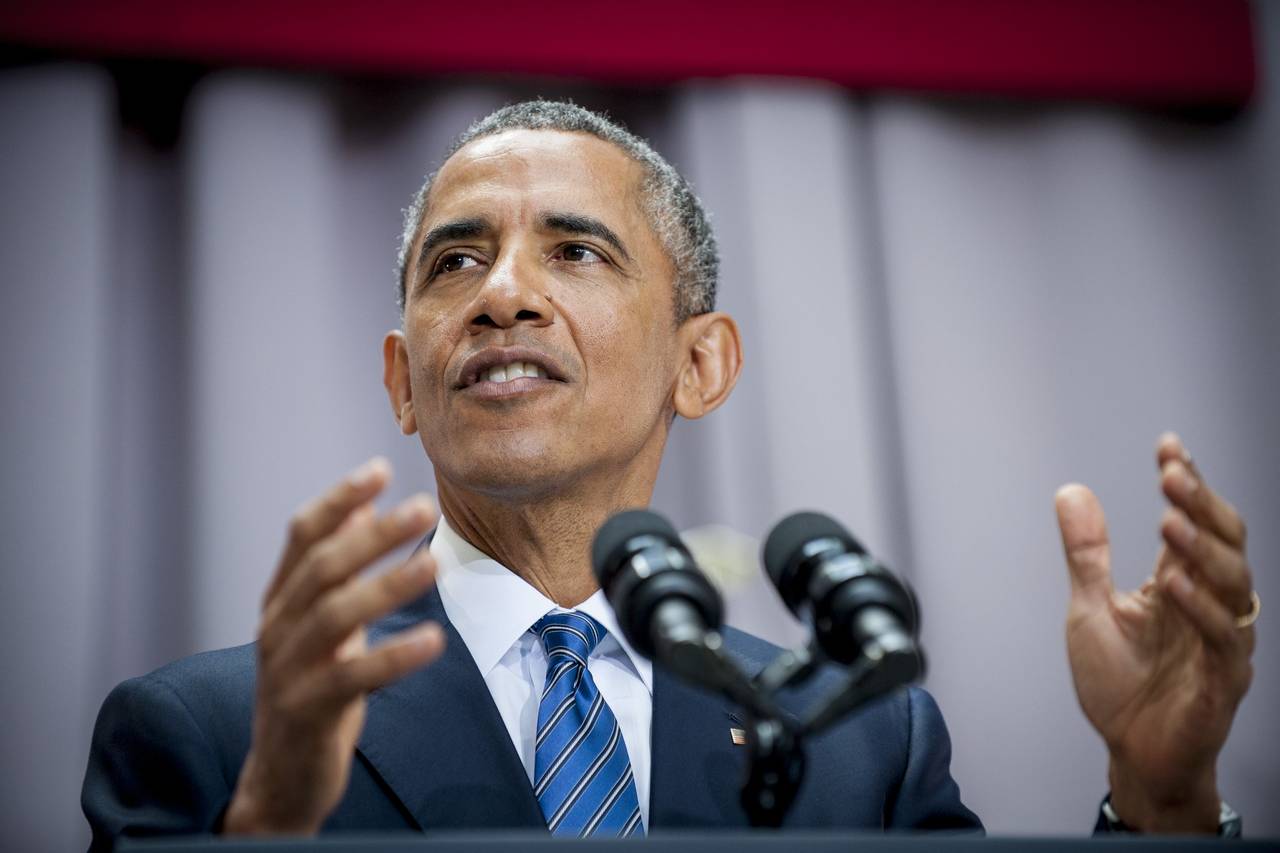
PHOTO: PETE MAROVICH/ZUMA PRESS
President Obama giving a speech at American University, August 5, Washington D.C..
Later this month, President Obama will travel to Alaska and shine a spotlight on what Alaskans in particular have come to know: Climate change is one of the biggest threats we face, it is being driven by human activity, and it is disrupting Americans’ lives right now. [White House]
Can A Global Warming Calamity Be Averted?

“Unless someone like you cares a whole awful lot,
Nothing is going to get better. It’s not.”
― Dr. Seuss, The Lorax
Global warming is often wrongly said to be a political issue. In fact, global warming is no more of a political issue than a tornado is a political issue, or an erupting volcano, or an earthquake or tsunami. These are factual occurrences that occur for known scientific reasons. As there is no debate on the existence or occurrence of these physical happenings nor should there be a need to debate the occurrence of human-caused global warming and climate change as these changes are, too, scientifically based and measured. In fact, sea level has already begun to rise from global warming, measurably. Migratory bird species are changing their patterns and timing of flight; temperature gradients for gardening around the world have changed; heat wave death tolls have risen; extreme weather has become more extreme; average monthly air temperatures at the surface have been steadily rising; dewpoint temperatures in the Midwest have exceeded precedence. Time is running out run out for acting responsibly to avert the worst outcomes possible from global warming. Alarm bells have rung. Action must be taken now, and on a grand scale, to prevent what scientists have been predicting for decades now – the catastrophic consequences of human fed global warming.
Longtime and well respected University of Wisconsin-Madison Chemistry Professor Bassam Shakhashiri recently summarized on Wisconsin Public Radio his own perceptions of the seriousness of the global warming threat and our collective responsibilities as citizens to work towards mitigating and adapting to this monumental threat as follows:
“We should have high expectation of all our government agencies and we should have high expectations of our elected officials and we should have high expectations of everyone who cares about the quality of life of where we live. We face grand challenges. Global warming is unequivocal. It’s not a matter of voting whether we will have global warming or not. It’s a matter of who we elect in the next election cycle to take responsible action to address and to solve this very, very serious and highly consequential question of climate change.
“We have elected officials from our state of Wisconsin who engage in conversations that label other people as deniers of climate change. I think it behooves us as learned individuals, as people who care about the quality of life that we have, to elect individuals to the U.S. Senate to the presidency, to our local government, who can take responsible action to mitigate and to address in responsible ways, and “responsible” is crucial, global warming. It’s not just local here. You can look at different displays of information. In the past 25 years, the plant hardening zones have been changing. Just in the past 25 years, the zone that we are in Wisconsin, is what it was 25 years ago in Florida. We have issues that relate to water quality. We have issues that relate to wellness, to health care.
“We have fabulous opportunities to make great progress in our society, and that’s why I have high expectations – always have high expectations – but I also live in the real world. We must, in the upcoming election cycle, be truly faithful to our core beliefs and to our values, so that our elected officials can act and can respond, in most good ways, to this one issue of climate change. There are other issues, too, but this is really a critical one.” [The Larry Meiller Show,Thursday, August 6, 2015, 11:00 am]
Global warming has all the marking of becoming a worldwide economic, environmental and human disaster. It could be a disaster that has no precedent in nature, at least during the time humans have been inhabiting Earth. Scientific models have demonstrated the inevitably of global warming due to our relentless burning of fossil fuels, in almost every device possible, and our continued deforestation practices, particularly in the tropics. Should global warming be allowed to continue at the current rates, the death toll from global warming effects could ultimately exceed the number of human losses from all wars, human atrocities, motor vehicle crashes, airplane crashes and worldwide epidemics.
History is repleat with examples of being “too little, too late”. U.S. President Hoover’s attempts to end the Great Depression by funding the construction of the Hoover Dam were believed by the American public as being “too little” to save the U.S. economy and “too late”. He was soundly defeated in the U.S. presidential election by Franklin Delano Roosevelt.
In medicine, if someone is sick and they do not get to a doctor until their sickness becomes fatal any remedy will be “too little, too late”.
The Obama administration’s Clean Power Plan to reduce global warming is also both too little and too late to prevent what scientists call a “runaway greenhouse effect”, as what happen on the planet Venus eons ago, making the planet’s former oceans of water boil away, due to surface atmospheric temperatures that continued to climb, unabated.
While the U.S. electrical energy power production may be the top emitting sector of greenhouse gases (GHGs) in the U.S. economy, timely and sufficiently large GHGs emissions reductions in the transportation and other GHG emitting sectors (construction industry sector, agriculture industry sector, consumer sector, export/import sectors, the military industrial complex) will nullify any gains made in the electricity production sector. This could leave the planet vulnerable for the positive GHG feedback mechanisms that contribute to more global warming to kick-in, which could cause a runaway greenhouse effect on Earth. Examples of positive feedback to more global warming of Earth include a reduced ability of the Arctic Ocean to reflect solar energy back into space (darker water absorbs more solar energy than snow and ice), causing additional heating of the oceans; melting of the permafrost region (1/5 of the earth’s surface) resulting in more methane gas (a much stronger GHG than carbon dioxide) production.
Albert Einstein once remarked: “We can’t solve problems by using the same kind of thinking we used when we created them.” Offering the public positive financial incentives to reduce actions that emit greenhouse gases, such as driving, flying and using fossil fuel created heat and electricity, could drastically reduce human caused climate change and as well as other problems created by our fossil fuel powered economy (such as oil spills, ground water pollution from petroleum waste, and natural gas explosions).
Arena Deal Is A “Pig in a Poke” for Milwaukee, Others Too

The National Basketball Association (NBA) said the Milwaukee Bucks must have a new arena by 2017 or the city risks losing the team to another state. Enter Governor Scott Walker.
Gov. Scott Walker negotiated the deal in July with the current Bucks owners – billionaire hedge funds managers Wesley Edens and Marc Lasry, who jointly purchased a majority interest in the team from former senator Herbert Kohl – and senator Kohl.
The team is currently valued at $600 million. In a bipartisan vote last month, the Wisconsin Legislature approved a bill authorizing $250 million in state and local public financing for the Milwaukee Bucks arena. Governor Walker signed the bill into law on Wednesday, August 12, setting up a vote on the $500 million public/private project at a City of Milwaukee Common Council meeting on the proposal in September.
Walker’s signing of the bill commits the State of Wisconsin’s taxpayers to paying at least half of the dollar cost of the massive new arena over the next 20 years, discouraging the NBA from moving the team out of Milwaukee.
Opponents have said the public’s money would benefit the team’s already wealthy owners and is not a good use of public funds. The state’s financial commitment to keeping the Bucks in Milwaukee comes on the heels of controversial state cuts to spending on transportation infrastructure along with a $250 million cut of the University of Wisconsin System’s budget and historic earlier cuts to the state’s public K-12 education system. The state’s commitment to fund the arena was perceived by many Wisconsinites as a slap in the face to Wisconsin’s dwindling number of middle class families and its increasing number of low income families. The governor has not been shy in showing his disdain for those who advocate for a higher minimum wage in Wisconsin – presently $7.25/hour, or the same as the federal minimum wage – and his budget approval of cuts to other social programs in Wisconsin which help the state’s disabled and low income populations.
Walker claimed Wisconsin needed to keep the team and its stream of income taxes in the state. “It’s cheaper to keep them,” he said repeatedly to reporters on Wednesday..
The Bucks deal includes $250 million in contributions from the state, city and county of Milwaukee, and a special arena and entertainment district. The other half of the arena is being paid by Edens, Lasry and Kohl.
State, city and county residents will ultimately pay $400 million on the arena when accounting for $174 million in interest over 20 years, with any construction cost overruns and maintenance expenses being the responsibility of the team.
Of the principal coming from taxpayers for the arena, $47 million would come from the City of Milwaukee, which must agree to provide for a parking structure and tax incremental financing.
The rest — $203 million — would come from: bonds issued by an arena and entertainment district and paid off by state taxpayers; a $4 million decrease in Milwaukee County’s state aid over the next 20 years; and the increase of a ticket surcharge and the extension of existing local hotel room, rental car, and food and beverage taxes being collected by the Wisconsin Center District.
Walker included $220 million in state borrowing for the arena in the budget he proposed in February.
But his fellow Republicans who control the Legislature took the measure out of the budget and reworked the deal with some input from Democrats.
Not factored into this analysis is the total number of tons of carbon dioxide (C02) and other greenhouse gases that will be emitted to the atmosphere by jet travel by other NBA teams traveling to Milwaukee, Wisconsin, nor the tons of C02 and other greenhouse gases emitted by the jets carrying the Bucks to distant locations over the next 20 years to play basketball. Nor does the agreement factor in the costs to the environment of paving roads and Wisconsin’s landscape to accommodate more travelers to the arena for games and other events and their emissions. Presently, travelers and the airlines and associated companies are getting a “free lunch” from everyone who might be affected by those emissions, to say nothing about the cost to the public of funding the Federal Aviation Administration’s air traffic controllers, who mainly benefit people who can afford to fly commercially or privately.
Part of this post are taken from a 8/12/15 story of by Mary Spicuzza, Jason Stein and Crocker Stephenson of the Journal Sentinel.

Democracy Now Interviews Naomi Klein Re: EPA’s (Obama’s) Power Plan CO2 Emissions Regulations
Democracy Now:
As scientists warn 2015 is on pace to become the Earth’s hottest year on record, President Obama has unveiled his long-awaited plan to slash carbon emissions from U.S. power plants. Under new Environmental Protection Agency regulations, U.S. power plants will be required to cut emissions by 32 percent from 2005 levels by 2030. In addition, new power plants will be required to be far cleaner, which could effectively prevent any new coal plants from opening. But does the plan go far enough? We speak to Naomi Klein, author of the best-selling book, “This Changes Everything: Capitalism vs. the Climate,” which is out in paperback today.
TRANSCRIPT
This is a rush transcript. Copy may not be in its final form.
NERMEEN SHAIKH: As scientists warn 2015 is on pace to become the Earth’s hottest year on record, President Obama has unveiled his long-awaited plan to slash carbon emissions from U.S. power plants. During a speech at the White House, Obama said no challenge poses a greater threat to future generations than a changing climate.
PRESIDENT BARACK OBAMA: Climate change is no longer just about the future that we’re predicting for our children or our grandchildren; it’s about the reality that we’re living with every day, right now. The Pentagon says that climate change poses immediate risks to our national security. While we can’t say any single weather event is entirely caused by climate change, we’ve seen stronger storms, deeper droughts, longer wildfire seasons. Charleston and Miami now flood at high tide. Shrinking ice caps forced National Geographic to make the biggest change in its atlas since the Soviet Union broke apart. Over the past three decades, nationwide asthma rates have more than doubled, and climate change puts those Americans at greater risk of landing in the hospital. As one of America’s governors has said, we’re the first generation to feel the impact of climate change and the last generation that can do something about it. And that’s why I committed the United States to leading the world on this challenge, because I believe there is such a thing as being too late.
AMY GOODMAN: Under new Environmental Protection Agency regulations, U.S. power plants will be required to cut emissions by 32 percent from the 2005 levels by 2030. In addition, new power plants will be required to be far cleaner, which could effectively prevent any new coal plants from opening. President Obama defended the regulations, which are expected to be challenged in court.
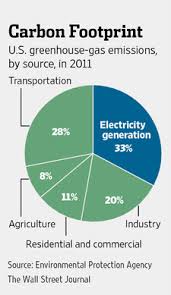
PRESIDENT BARACK OBAMA: Right now our power plants are the source of about a third of America’s carbon pollution. That’s more pollution than our cars, our airplanes and our homes generate combined. That pollution contributes to climate change, which degrades the air our kids breathe. But there have never been federal limits on the amount of carbon that power plants can dump into the air. Think about that. We limit the amount of toxic chemicals like mercury and sulfur and arsenic in our air or our water, and we’re better off for it. But existing power plants can still dump unlimited amounts of harmful carbon pollution into the air. For the sake of our kids and the health and safety of all Americans, that has to change. For the sake of the planet, that has to change.
NERMEEN SHAIKH: As President Obama spoke, the impacts of extreme weather could be seen across the globe. In California, more than 9,000 firefighters are battling more than 21 active wildfires. In Japan, temperatures topped 95 degrees on Monday for a record fourth day in a row. Heat records are also being broken across the Middle East. In one Iranian city, the heat index reached 164 degrees last week. Temperatures have been regularly topping 120 degrees in Baghdad and other Iraqi cities.
Meanwhile, a group of scientists, including former NASA scientist James Hansen, have warned that sea levels could rise as much as 10 feet before the end of the century unless greenhouse gas emissions are drastically reduced. The rise would make cities such as London, New York and Shanghai uninhabitable.
AMY GOODMAN: To talk more about climate change and President Obama’s plan to cut emissions, we’re joined by Naomi Klein, author of the best-selling book, This Changes Everything: Capitalism vs. the Climate, which is out in paperback today. She recently spoke at a Vatican climate change summit organized by Pope Francis. Naomi Klein joins us from Washington, D.C.
Naomi, welcome. Your assessment first of President Obama’s plan that he unveiled yesterday at the White House?
NAOMI KLEIN: Well, good morning, Amy. It’s great to be with you, and Nermeen.
So I think that what we’re seeing from Obama is a really good example of what a climate leader sounds like. You know, everything he’s saying is absolutely true about the level of threat, about the fact that this is not a threat for future generations, it is a threat unfolding right now around the world, including in the United States. It’s a threat that is about people’s daily health, with asthma levels, and also about the safety of entire cities, huge coastal cities. So he’s doing a very good job of showing us what a climate leader sounds like. But I’m afraid we’ve got a long way to go before we see what a climate leader acts like, because there is a huge gap between what Obama is saying about this threat, about it being the greatest threat of our time, and indeed this being our last window in which we can take action to prevent truly catastrophic climate change, but the measures that have been unveiled are simply inadequate.
I mean, if we look at what kind of emission reductions this is going to deliver, we’re—you know, when you talk about emission reductions, we don’t look at just one sector, just at electricity generation; you have to look at the economy as a whole. And what climate scientists are telling us is that relatively wealthy countries, like the United States, if we are going to stay within our carbon budget and give ourselves a chance of keeping warming below two degrees Celsius, which is already very dangerous but is what the United States negotiated, under Obama—when they went to Copenhagen in 2009, they agreed to keep temperatures below two degrees warming, and, in fact, we’re still on track for more like four degrees warming—if we were to stay below two degrees, we would need to be cutting emissions by around 8 to 10 percent a year. Those are numbers from the Tyndall Centre on Climate Research in Manchester. And this plan would lower emissions in the United States by around 6 percent overall—I’m not just talking about the power sector, but overall emissions by 6 percent by 2030. So compare what we should be doing—8 to 10 percent a year—with 6 percent by 2030. That’s the carbon gap, and it’s huge.
NERMEEN SHAIKH: And so, Naomi Klein, in your view, why did President Obama choose to focus so much on the power sector and not on other equally important sectors?
NAOMI KLEIN: Well, look, it is an incredibly important sector, as he says. It’s just that we have to do it all. And I think that this should be seen as a victory for the grassroots social movements that have been fighting dirty coal plants in their backyards, and the clean coal—the campaign that the Sierra Club has led over years now to shut down hundreds of coal plants. So this should be claimed, I think, as a grassroots victory. This phase of the plan is better than the last draft, in some ways, in that it’s less of a gift to the natural gas sector and has more supports for renewables. It also has more supports for low-income communities for energy efficiency. It’s inadequate, but it’s still better than the last draft. There are parts of the plan that are worse than the last draft, because of pressure from industry and from states that are very reliant on coal.
But that’s at—you know, the problem is not that this plan itself is bad. If this was announced in Obama’s first year in office, I would be the first to celebrate this and say, “OK, great. So now let’s bring on a carbon tax. Let’s prevent leasing of new oil and gas and coal on public lands. You know, let’s do the rest of the package. Let’s have huge investments in public transit, and we’ll really be on our way.” But at the end of his two terms in office, or coming near the end, you know, frankly, this does not buy a climate legacy. It’s not enough, because it isn’t in line with science, and it also isn’t in line with technology. I mean, the team at Stanford University under Mark Jacobson is telling us that we could get to 100 percent renewables, powering our entire economy with renewables, in two decades. So, if the scientists are telling us we need to do it, and the engineers are telling us we can do it, then all that’s missing are the politicians willing to introduce the bold policies that will make it happen. And that’s what we’re missing still.
AMY GOODMAN: Naomi Klein, during his speech Monday, President Obama also talked about his visit to the Arctic at the end of the month.
PRESIDENT BARACK OBAMA: I’ll also be the first American president to visit the Alaskan Arctic, where our fellow Americans have already seen their communities devastated by melting ice and rising oceans, the impact on marine life. We’re going to talk about what the world needs to do together to prevent the worst impacts of climate change before it’s too late.
AMY GOODMAN: So that’s President Obama. Can you talk about what’s happening in the Arctic and the activism that’s going on, from Portland, Oregon, to Seattle, Washington, to prevent what President Obama has allowed—drilling in the Arctic?
NAOMI KLEIN: Well, it’s extraordinary, actually, that he would be announcing this now, because what the world needs to do to save the Arctic, for starters, is to declare a moratorium on Arctic drilling. And the U.S. could be leading that effort, bringing together all Arctic nations to agree that this is untouchable, this is a no-go zone. And because that leadership is not there, and because indeed Obama has—is opening up the Arctic to drilling for the first time—we know that Shell has drilling rigs there right now, that they began the very preliminary stages of drilling on Thursday—and because his administration has failed to provide leadership on such a basic issue, I mean, Amy, it is the definition of insanity, it would seem to me, to be drilling in the Arctic for oil that is only available because Arctic ice is melting and it’s now passable and ships are able to go there and do this.
The CEO of Shell, a few days ago, talked about how they are expecting to find oil underneath that melting ice that is an even bigger deposit than there is off the Gulf of Mexico. He described it as a huge play, but more significantly, he described it as a long-term play. It’s unfortunate that the oil and gas industry describes all of this, you know, in the language of games, because obviously it’s not a game, but they call it a play. And he says that they don’t expect this to be in production until 2030. I mean, that is really striking, because by 2030 we should be really winding down our reliance on existing oil and gas infrastructure, not ramping up and opening up whole new fossil fuel frontiers.
And so this is what I mean about how Obama does not deserve to be called a climate leader simply because he has introduced what is a pretty good plan for cutting emissions from coal-fired power plants. I’m not saying that’s not important. It’s a step in the right direction. But simultaneously, he’s taking some significant steps in the wrong direction with Arctic drilling, with—you know, he’s overseen an explosion of fracking for gas. He’s still waffling on the Keystone XL pipeline. You know, he’s opened up new offshore oil and gas leases. So, you know, when you take one step in the right direction and five steps in the wrong direction, you’re going in the wrong direction. You’re not going in the right direction. And we have to be honest about this, despite the fact that he’s under huge fire from the coal lobby right now.
AMY GOODMAN: This issue of the activists who have been trying to stop the drilling—
NAOMI KLEIN: Yeah.
AMY GOODMAN: —that the Obama administration has provided license for—I mean, what was it? Forty people—
NAOMI KLEIN: Yeah, in Portland.
AMY GOODMAN: Forty people were—40 people were hanging from the bridge. You had all these kayaktivists outside. Can you talk about how it is he can announce—as they are all being taken away, as activists are charged for doing the activism they do, he’s announcing he’s going to the Arctic.
NAOMI KLEIN: Well, you know, frankly, if we want to look for climate leaders, climate leaders are the people who rappelled down from that bridge in Portland. Climate leaders are the people who have been taking to their kayaks in Portland, in Seattle, you know, 21-year-olds who have been trying to stop Arctic drilling with their bodies, they feel so passionately about this. People stayed on that bridge, hanging from that bridge, in order to block Shell’s icebreaker, for 40 hours, and they did so despite the fact that Shell had gone to the courts and got an injunction and they were being threatened with huge fines. That is real leadership. That is real, moral action, standing up in the face of huge amounts of money and power and might-makes-right logic.
And we’ve seen this all over the Pacific Northwest. It’s one of the ironies of the extreme energy era that we’ve been living in this past decade or so, where North America has been in the midst of this extreme energy frenzy, with fracking, mountaintop removal and tar sands oil. In order to get this stuff out, it’s required that the oil and gas and coal companies build all kinds of new infrastructure in the Pacific Northwest, which is the part of the United States that is probably most environmentally aware, even militant. It’s where a lot of the tree sits began. You know, you think about Portland and the history of anti-logging activism, tree sits. In that part of the world, there are a lot of people with deep history in this kind of activism. And Shell, I think, you know, just in order—just logistically, in order to get to the Arctic, they needed to use various ports in the Pacific Northwest as a parking lot for their machinery and also to get repairs done. And, you know, the Pacific Northwest has given them a very, very, very hostile welcome and made it clear that they don’t want to be a gateway to this, frankly, suicidal action of drilling in the Arctic.
AMY GOODMAN: Just to be clear, to clarify this point, explaining what the activists were doing, the Greenpeace activists spending 40 hours suspending from a bridge in order to block the icebreaking ship commissioned by Shell from leaving for the Arctic, hundreds of activists gathering on the bridge in kayaks in efforts to stop Shell’s plans to drill in the remote Chukchi Sea. They did temporarily stop the ship—
NAOMI KLEIN: Yeah.
AMY GOODMAN: —but then, ultimately, the ship made its way and is now making its way to the Arctic.
NAOMI KLEIN: They stopped the ship for 40 hours. And, you know, I think sometimes this can be seen as a sort of a stunt or a token action, but it really isn’t. You know, I was speaking with Annie Leonard, the executive director of Greenpeace, yesterday, and the really significant part of this is that there is a very small window when it is possible to do this drilling for Shell, because the period where the Arctic is sufficiently ice-free is just a few months. They have until late September to do this. So every day that they’re delayed is one less day when they’re able to look for this deposit that they claim is going to be a game-changing play. So this is more than token activism. Anything that slows them down is really significant. And these really are heroes.
AMY GOODMAN: And Hillary Clinton and President Obama’s position on Keystone XL?
NAOMI KLEIN: Well, Hillary, first of all, she was asked about drilling in the Arctic, and she said she was skeptical of it, which some people claimed as, you know, it was Hillary coming out against Arctic drilling. I think it’s Hillary understanding that this is a very unpopular position. But just saying that you’re skeptical or have doubts, which is another phrase she used, is not anything that she can be held accountable to. That’s language that is slippery enough to get a glacier through, Amy. It’s not a straight-up “no.” She’s also refused to comment, as you mentioned, on the Keystone XL pipeline.
And let me say, you know, Hillary Clinton’s plan, green energy plan, that she unveiled a few days ago—we’re going to get more details soon—is surprisingly bold. There’s parts of this that the plan really gets right, in terms of the speed with which she’s promising to roll out renewable energy. She’s getting the yes part of this equation pretty close to right, in the sense that we need supports for renewable energy. But it’s not enough, because if you look at a country like Germany, they have introduced a bold plan to support renewable energy, and in fact Germany now has what Hillary Clinton is promising she would do in the U.S., which is it has 30 percent of its electricity coming from renewables, but Germany’s emissions are not going down fast enough, and in some years they’ve even gone up. And that’s because in Germany that yes to renewable energy hasn’t been accompanied by a no to fossil fuels. They’ve allowed a continued mining at very high rates of dirty coal, of lignite coal, the dirtiest coal on the market, and they just export it, if they don’t have a market for it in the U.S.
And, you know, this is the problem with Hillary. She is willing to say yes to green technology, green jobs, but she is showing no signs of being willing to say no to the oil and gas lobby, which we know is funding her campaign significantly. So, as secretary of state, we know that there was quite a revolving door between the oil and gas lobby and her people at State and on her previous campaign staff. And I think there’s real reason for concern about whether or not she would be willing to stand up to the oil and gas lobby on Keystone, on Arctic drilling, on any of these other issues.
Obama Unveils His Plan to Cut Greenhouse Gases Emissions from Power Plants
President Obama formally unveiled his plan to cut power plant emissions on Monday — some two years in the making — calling it the “single most important step that America has ever made in the fight against global climate change.”
Speaking at the White House, the president said the plan includes the first-ever Environmental Protection Agency standards on carbon pollution from U.S. power plants. Over the next few years, each state will have the chance to create its own plan, he said, adding: “We’ll reward the states that take action sooner.”
Toward the end of his remarks, Obama cited other environmental issues, such as combating acid rain, where efforts have been successful even though it seemed hard at the time.
“We can figure this stuff out, as long as we’re not lazy about it,” he said.
The president compared the requirement of cutting carbon emissions by 32 percent to taking 166 million cars off the road.
In a new push to confront climate change, President Obama is announcing new standards that would cut the amount of carbon pollution produced by America’s power plants.
“These are the first-ever national standards that address carbon pollution from power plants,” according to the Environmental Protection Agency, which adds that power plants are the largest source of carbon pollution in the U.S., generating 32 percent of the total emissions.
Key elements of the Clean Power Plan include a requirement that would cut the power industry’s carbon pollution by 32 percent below 2005 levels in the next 15 years. The plan also seeks to boost renewable energy.
The White House says that between now and 2015, the changes will mean better health for Americans — preventing up to 3,600 premature deaths — along with bringing energy savings for U.S. consumers.
President Obama’s sweeping new power plant regulations are thrusting the debate over climate change into the race for the White House.
To Democrats, rallying around global climate change is a way to energize liberal supporters and paint Republicans as out of touch. To Republicans, Obama’s actions to curb greenhouse gas emissions are burdensome to business and block job creation.
Most of the changes Obama outlined would have to be implemented by the next president, if the rules survive court challenges.
Republicans cast the measure requiring states to cut carbon dioxide emissions by 32 percent by 2030 as unnecessary and costly.
The Obama administration itself estimated the emissions limits will cost $8.4 billion annually by 2030, though the actual price isn’t clear.
Republican Jeb Bush said the rules “run over state governments, will throw countless people out of work and increases everyone’s energy prices.”
Texas Republican Sen. Ted Cruz questioned whether climate change is occurring.
“I’m saying the data and facts don’t support it,” Cruz said at a retreat sponsored by billionaire brothers Charles and David Koch, heavily courted donors who oppose Obama’s climate change agenda.
Hillary Clinton called the measure a “significant step forward” and said she would defend it if elected president. Her Democratic challengers were similarly supportive.
A Washington Post/ABC News poll conducted in March showed 59 percent of Americans said they’d like the next president to be someone who favors government action to address climate change, while 31 percent would prefer someone who opposes it.
BY JULIE PACE, THE ASSOCIATED PRESS
 All Things Environmental
Recent Comments