
DESMOGBIOG.COM Introducing “Natural Gas Exports: Washington’s Revolving Door Fuels Climate Threat”
DeSmogBlog’s Steve Horn and Republic Report’s Lee Fang have co-written an in-depth report on the influence the government-industry revolving door has had on Big Oil’s ability to obtain four liquefied natural gas (LNG) export permits since 2012 from the Obama Administration.
Titled “Natural Gas Exports: Washington’s Revolving Door Fuels Climate Threat,” the report published here on DeSmogBlog and on Republic Report serves as the launching pad of an ongoing investigation. It will act as the prelude of an extensive series of articles by both websites uncovering the LNG exports influence peddling machine.
The report not only exposes the lobbying apparatus that has successfully opened the door for LNG exports, but also the PR professionals paid to sell them to the U.S. public. It also exposes those who have gone through the “reverse revolving door,” moving from industry back to government and sometimes back again.
October 2014 Globally Averaged Temperature Warmest on Record

Despite a bitter U.S. cold snap, the globe is rushing hell-bent toward its warmest year on record with last month setting the fifth monthly heat record of year.
The National Oceanic and Atmospheric Administration announced Thursday that last month was the hottest October on record worldwide. The 58.43 degrees Fahrenheit (14.74 Celsius) beat out October 2003.
“It is becoming pretty clear that 2014 will end up as the warmest year on record,” said Deke Arndt, climate monitoring chief for NOAA’s National Climatic Data Center in Asheville, North Carolina. “The remaining question is: How much?”
With only two months left in the year, 2014 has now surged ahead as the globe’s warmest year so far, beating 2010 and 1998. So far this year, the world is averaging 58.62 degrees (14.78 degrees Celsius). If the last two months of the year are only average for the 21st century, it will still be the warmest year ever, Arndt said.
He said this year’s heat is what scientists expect from man-made global warming. Scientists say the burning of coal, oil and gas traps heats, changing the climate.
This heat is being driven by incredible warmth in the world’s oceans, Arndt said. The six warmest months on record for the world ocean temperatures have been the last six months. Because oceans are big and slow to change that makes it more likely the world will set a yearly temperature record, he said.
Pennsylvania State University climate scientist Michael Mann said in an email he hopes the new data will put to rest “the silly ongoing claims that global warming has ‘stopped’ or that there is a ‘hiatus’ in global warming.”
The world is approaching the warmest year “in spite of the U.S. being pretty cold,” Arndt said. That’s because the United States is only 2 percent of the world’s area and the part that’s unusually cold is about 1.5 percent of the entire globe, he said.
It has been so hot in California that there is no way the year will end up not breaking the record for heat in the state, said NOAA climate scientist Jake Crouch.
This year October, September, August, June and May — five of the last six months — set global monthly heat records. April 2014 was the second hottest on record. January, March and July were fourth. February was the 21st warmest.
NASA, Japan’s weather agency and the University of Alabama Huntsville satellite measuring system — which climate skeptics usually use — also called it the hottest October on record.
Texas Tech climate scientist Katharine Hayhoe said the issue isn’t so much about record highs, but trends over multiple decades. Seeing the 38th consecutive October that is warmer than the 20th century average “is climate change, and we are seeing it in spades.” It is also the 356th month in a row the world’s temperature has been warmer than the 20th century average.
By Seth Borenstein (AP) SETH BORENSTEIN
NOAA Report
Public Service Commission of Wisconsin Doing Public a Disservice
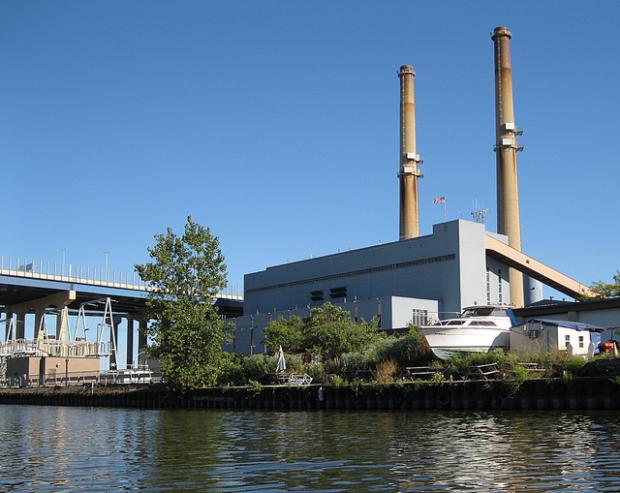
Wisconsin Public Radio reported last Friday (Nov. 14) that the Public Service Commission of Wisconsin (PSC) has approved an increase in the fixed rate that customers of We Energies are charged on their electric bills.
We Energies, which is the largest utility in Wisconsin, will now be able to pay less for solar power it buys back from customers thanks to the decision by the Public Service Commission.
The PSC’s action means customers of We Energies will see the monthly, fixed part of their bills go up by nearly $7 a month. That means residential and small business customers will pay $16 for that portion of their bill.
PSC commissioner Ellen Nowak said the charges ensure everyone pays the same amount to hook up to the power grid, whether they are a large business, homeowner or apartment dweller.
“The charges we are approving today are fair,” said Nowak.
Commissioner Eric Callisto disagreed. He said hiking the fixed charge is a major disincentive for energy efficiency, and that the customers who will see the greatest increases in utility payments are those who use the least amount of energy.
That same argument was made by the group RENEW Wisconsin.
“That’s going to hurt low-use customers, whether they’re low-income, whether they’re seniors on fixed incomes, whether they’ve been using energy conservation to save energy — which is the message we’ve always sent as a state is a good thing,” said Tyler Huebner, the group’s executive director.
Huebner said RENEW Wisconsin is considering whether to appeal regulator’s decision to hike rates.
Three Wisconsin utilities have asked the PSC for increases in fixed rates. Last week, regulators approved another such a request by the Green Bay utility Wisconsin Public Service Corp. The PSC has yet to rule on the final request of the three, which was made by Madison Gas and Electric.
Homeless Children in the United States

“Some people who talk about the environment talk about it as though it involved only a question of clean air and clean water. The environment involves the whole broad spectrum of man’s relationship to all other living creatures, including other human beings. It involves the environment in its broadest and deepest sense. It involves the environment of the ghetto which is the worst environment, where the worst pollution, the worst noise, the worst housing, the worst situation in this country — that has to be a critical part of our concern and consideration in talking and cleaning up the environment.”
– U.S. Senator Gaylord Nelson speaking on CBS News “Face the Nation” on April 19, 1970.
Nelson is considered the founder of “Earth Day” in the U.S. which has been officially recognized and celebrated the week around April 22nd each year since 1970. Of course there are and will be many more hungry and homeless children suffering as oceans rise and global warming worsens. Jackson Browne asks “How Long” must this will go on while we spend trillions of dollars on military expenditures around the world and many more children suffer?
In the United States, one child in every 30 – or 2.5 million children – was homeless in 2013, marking an all-time high, according to a new comprehensive report that blames the country’s high poverty rate and lack of affordable housing, among other causes.
The report, ‘America’s Youngest Outcasts,’ released by the National Center on Family Homelessness was prepared using the “most recent federal data that comprehensively counts homeless children, using more than 30 variables from over a dozen established data sets.”
The 2.5 million figure is based on the US Department of Education’s count of 1.3 million homeless children in public schools, and estimates of homeless preschool children left out of DOE data.
The National Center on Family Homelessness – part of the private, nonprofit American Institutes for Research – said the top causes of youth homelessness include America’s high poverty rate; lack of affordable housing across the US; the lingering ramifications of the Great Recession; racial disparities; high rates of and challenges that come with single parenting; and the manner in which trauma, especially domestic violence, “precede and prolong homelessness for families.”
From 2012 to 2013, child homelessness in the US went up by eight percent overall, as 31 states and the District of Columbia had increases, according to the report.
“The impact of homelessness on the children, especially young children, is devastating and may lead to changes in brain architecture that can interfere with learning, emotional self- regulation, cognitive skills, and social relationships,” the report stated. “The unrelenting stress experienced by the parents, most of whom are women parenting alone, may contribute to residential instability, unemployment, ineffective parenting, and poor health.”
Carmela DeCandia, director of the National Center on Family Homelessness and co-author of the report, said that the federal government has not made the same progress in reducing child homelessness as it has in combating homelessness among veterans and long-term homeless adults.
“The same level of attention and resources has not been targeted to help families and children,” she told AP. “As a society, we’re going to pay a high price, in human and economic terms.”
“In the Getto”, written by Mac Davis, performed by Elvis Presley, early 1970s. Lyrics.
U.S. State Department Sued for Secretly Approving Enbridge Tar Sands Oil Pipeline

The Center for Biological Diversity reported last Wednesday that environmental and tribal groups filed a lawsuit last week against the U.S. State Department’s secretive approval of a plan to allow Enbridge company to nearly double the amount of tar sands oil in the Alberta Clipper pipeline. The approval this summer happened without public notice and without a legally required review that’s meant to protect air, water, wildlife, and public health, in spite of a previous State Department decision that any expansion of Alberta Clipper would require a federal permit.
The pipeline transports tar sands oil from Alberta, Canada through North Dakota, Minnesota and Wisconsin, passing through three tribal areas, as well as the Mississippi River, and national forest lands.
The project nearly doubles the Alberta Clipper’s capacity and would put the pipeline on par with the controversial Keystone XL pipeline project that the U.S. Senate is scheduled to vote on Tuesday. The Enbridge company project significantly increases the amount of toxic, highly polluting tar sands crude moved into the U.S.. It also represents a violation of U.S. environmental laws that protect the air and water.
“This lawsuit challenges the State Department’s illegal approval of Enbridge’s tar sands expansion plans,” Sierra Club Staff Attorney Doug Hayes told reporters on a press call last week. Rather than follow the public review process required by the National Environmental Policy Act (NEPA), the State Department instead chose to go ahead and approve the project without any public review.
The suit was filed in federal court in Minneapolis by a diverse coalition of groups including the White Earth Nation, Sierra Club, Center for Biological Diversity, Honor the Earth, the National Wildlife Federation, the Minnesota Conservation Federation, the Indigenous Environmental Network, and MN350, being represented by the Vermont Law School Environmental and Natural Resources Law Clinic. The suit aims to force Secretary of State John Kerry and the State Department to reverse its approval and ensure that a full environmental review takes place before any expansion of Alberta Clipper occurs.
“To establish the U.S. as a real international leader in tackling the climate crisis, the State Department must stop turning a blind eye to Big Oil schemes to bypass U.S. laws and nearly double the amount of corrosive, carbon-intensive tar sands crude it brings into our country,” said Sierra Club Deputy National Program Director Michael Bosse. “Enbridge has been allowed to play by their own rules for too long at the expense of our water, air, and climate, and the Sierra Club is taking legal action to stop this abuse.”
“The only thing worse than dirty oil is dirty oil backed by dirty tricks. This is the fossil fuel equivalent of money laundering,” said Kieran Suckling, executive director of the Center for Biological Diversity. “The Obama administration should be ashamed of itself for letting Enbridge illegally pump more dirty tar sands oil into the United States.”
“Honor the Earth represents Anishinaabeg people and the earth. We believe that nations should abide by their agreements, treaties, and laws. The Anishinaabeg continue to harvest and live the life the Creator gave us, within the north country, and within the treaty areas, protected and recognized under federal law, including the 1837, 1854, 1855 and 1867 treaties,” said Winona LaDuke, program director for Honor the Earth and a member of the White Earth Nation.
“We know that new oil pipelines will not bode well for the fish, the wild rice, and the medicines of this Akiing, this land. We also know that the U.S., through the State Department, should uphold its own laws and regulations, and not issue permits under the pressure of oil interests, over the interests of our country, people, and land”, she said. “Federal law requires environmental impact assessments, and the U.S. must uphold its own laws. New pipelines by the Enbridge Company and this illegal switching of lines do not serve our state or our country. We ask the U.S. State Department to uphold the law”, LaDuke said.
Aussies Bury Heads in Sand Prior to World Leaders Attending G20 Summit in Brisbane, Australia

A group of around 400 demonstrators participate in a protest of Australia’s elimination of its carbon tax by burying their heads in the sand. The photo was taken at Sydney’s Bondi Beach on November 13, 2014. Australia has the developed world’s highest per capita emissions of greenhouse gases.
World leaders met November 15-16, 2014, at Brisbane, Australia, for the G20 summit. President Barack Obama spoke at the University of Queensland during the summit on a number topics, including his announcing of a $3 billion contribution by the U.S. to an international fund to help poor countries cope with the effect of climate change.
Speaking to university students in Brisbane, ahead of the official opening of the G20 Leaders’ Summit, Obama said:
“Today, I’m announcing that the United States will take another important step,” he said.
“We will contribute $3 billion to the Green Climate Fund [UN] to help developing nations deal with climate change.” speech made reference to Queensland’s Great Barrier Reef, which the Intergovernmental Panel on Climate Change (IPCC) has warned could be at risk if more is not done to reduce carbon emissions.
“I have not had time to go to the Great Barrier Reef and I want to come back,” Mr Obama said.
“I want my daughters to be able to come back and I want them to be able to bring their daughters or sons to visit. And I want that there 50 years from now.”
The US contribution to the climate fund doubles what other countries had previously pledged ahead of a November 20 deadline. Mr Obama told the audience that every nation has a responsibility to act on climate change, including Australia.
“The United States and Australia have a lot in common and one of the things we have in common is we produce a lot of carbon,” he said. “Historically we have not been the most energy efficient of nations, which means we’ve got to step up.”
In his speech, Mr Obama also spoke about the situation in Ukraine, describing Russia’s actions as aggressive.
“We’re leading in dealing with Ebola in West Africa and in opposing Russia’s aggression against Ukraine, which is a threat to the world, as we saw in the appalling shoot-down of MH17.”
Speaking at an earlier news conference in Brisbane, UN secretary-general Ban Ki-moon said he hoped other G20 leaders would contribute to the fund as did Obama.
“The transition towards a low-carbon, climate-resilient future is accelerating, I urge other leaders and major economies, especially at the G20, to come forward with contributions that will sustain this momentum”, the UN secretary said.
Carbon pricing had been implemented for Australia’s 500 largest carbon dioxide (CO2) emitting companies, which are those companies that emit more than 25,000 tons of CO2 or supply or use natural gas, starting on July 1, 2012.
CO2 was taxed at $22.60 per ton of CO2 emitted by the highest 348 emitters.
Under the Carbon Farming Initiative (CFI), farmers and land managers could earn carbon credits by storing carbon or reducing greenhouse gas emissions on their land. The credits could then be sold to people and businesses wishing to offset their emissions.
The program included credits earned from activities such as reforestation, savannah fire management and reductions in emissions from livestock and fertilizer use. CFI credits could also be sold to international companies.
Australia had legislated a renewable energy target designed to ensure that 20 per cent of electricity would come from renewable sources by 2020.
Following the 2013 federal election, Prime Minister Tony Abbott announced plans to scrap the controversial tax. He then put pressure on labor leader Bill Shorten to support legislation repealing the tax by the senate. The Australian Senate voted by 39 to 32 votes to repeal the tax on July 17, 2014. Abbott claims that the tax cost jobs and forced energy prices up.
The G20 summit meeting came just days after President Obama and Chinese President Xi Jinping announced a deal on climate change that raised hopes for a comprehensive international deal next year in France.
Keystone XL Pipeline: Lame-Duck Congress Fast-Tracks Legislation
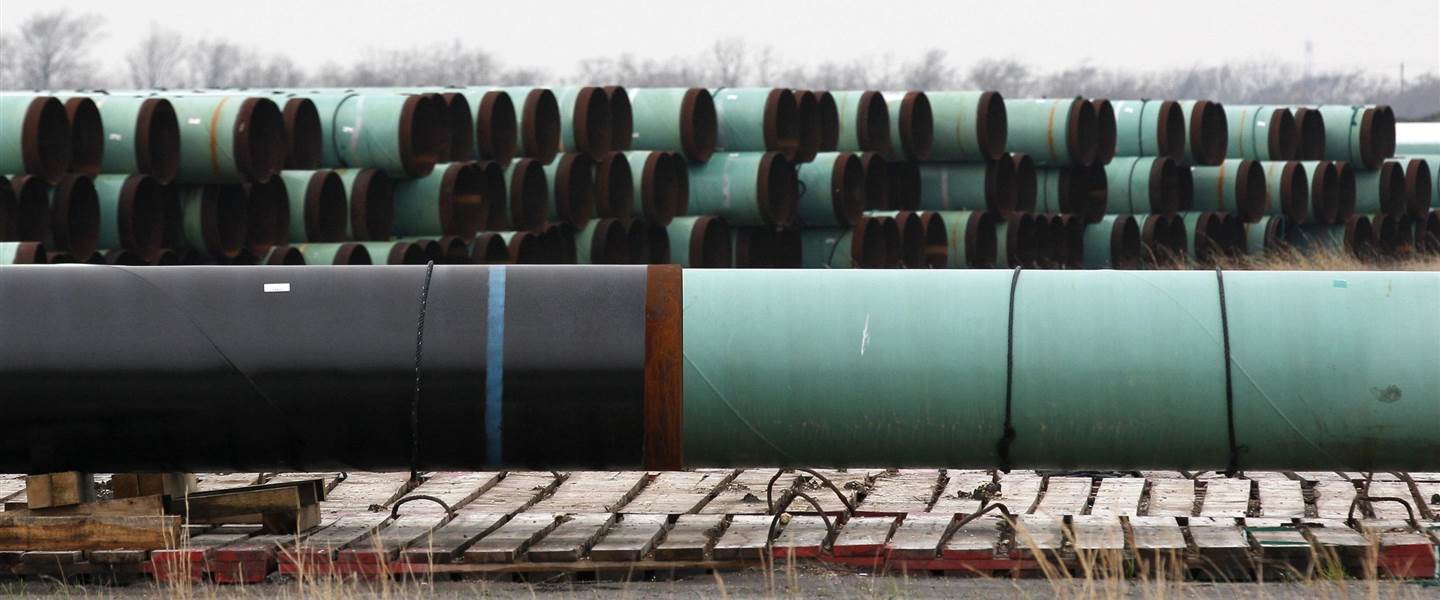
The tortuous six-year fight over a controversial proposal to funnel oil from Canada to the Gulf Coast took another turn this week after both houses of the lame-duck Congress moved to vote on the Keystone XL pipeline.
As the legislation barrels through Congress and heads to the Oval Office, President Barack Obama may soon settle one of the most politically charged debates of the decade. The White House appeared to downplay the congressional maneuvering Wednesday, saying it takes a “dim view of these kinds of legislative proposals.”
But if the Senate passes the bill as early as next Tuesday, Obama would likely be forced to either sign it into law or veto it. He has said the project needs his approval because it crosses an international border.
National Audubon Society Reports Impacts of Climate Change on North America’s Birds

Burrowing Owl – According to the National Audubon Society, by 2080, this diurnal owl species could lose 77 percent of its breeding range.
The National Audubon Society recently released a comprehensive study of the impact of climate change on birds, detailing the prospects for 588 species found in Alaska, Canada and the continental U.S.
The forecast isn’t good, according to Chad Wilsey, one of the study’s authors. Of the species covered in the report, “more than half are likely to be in trouble,” said Wilsey. “Our models indicate that 314 species will lose more than 50 percent of their current climatic range by 2080.”
Nearly 60% of the 305 relatively widely distributed bird species found in North America in winter are on the move, shifting their ranges northward by an average of 35 miles. Audubon scientists analyzed 40 years of citizen-science Christmas Bird Count data — and their findings provide new and powerful evidence that global warming is having a serious impact on natural systems.
Northward movement was detected among species of every type, including more than 70 percent of highly adaptable forest and feeder birds.
Only grassland species were an exception – with only 38 percent mirroring the northward trend. But far from being good news for species like Eastern Meadowlark and Henslow’s Sparrow, this reflects the grim reality of severely-depleted grassland habitat and suggests that these species now face a double threat from the combined stresses of habitat loss and climate adaptation.
The data was collected from two different widespread and ongoing compilations of information submitted by birders: the Audubon Christmas Bird Count and the U.S. Geological Survey’s North American Breeding Bird Survey.
The importance of the contributions from citizen scientists and amateur ornithologists to those surveys can’t be overestimated, according to Matt Reetz, the executive director of the Madison chapter of the Audubon Society.
“These are data that were collected by average, everyday citizens throughout the U.S. and Canada,” he said. “And a lot of folks in Wisconsin contributed to this data set over the years.”
Reliable data is important, but the real challenge is to apply it for meaningful results.
“We get to take the results of this work and apply it to conservation on the ground,” Reetz said.
Sometimes the effects of climate change can seem distant — for example, when Pacific Ocean islands are at risk of being submerged. But Reetz said that the consequences are also much closer to home.
“There are real, major impacts on some of the bird species that we as Wisconsinites grew up loving,” he said. “We are very familiar with them, they’re species that are embedded in our culture and they are at risk here.”
White House and China Set Historic Greenhouse Gas Emissions Levels

Beijing (CNN) — At the end of the APEC trade summit in China, U.S. President Barack Obama announced a climate change agreement with Chinese President Xi Jinping that would cut both countries’ greenhouse gas emissions by close to a third over the next two decades.
Under the deal, the United States would cut its carbon emissions between 26-28% — from levels established in 2005 — by 2025. China would peak its carbon emissions no later than 2030 and would also increase the use of non-fossil fuels to 20% by 2030.
“As the world’s two largest economies, energy consumers and emitters of greenhouse gases, we have a special responsibility to lead the global effort against climate change,” Obama said Wednesday in a joint press conference with Xi.
Obama said he hopes the announcement will spur other nations to tackle climate change. “We hope to encourage all major economies to be ambitious — all countries, developing and developed — to work across some of the old divides, so we can conclude a strong global climate agreement next year,” Obama said.
The White House said the ultimate target is to “achieve deep economy-wide reductions on the order of 80% by 2050.”
A senior administration official calls the goals both “ambitious and achievable,” but also acknowledged that U.S. domestic politics could put a damper on the announcement. Saying “leading climate deniers” in the GOP might try to stop the initiative, the official hinted the President may act alone if necessary.
“Congress may try to stop us, but we believe that with control of Congress changing hands we can proceed with the authority we already have.” The official added, “This is really the crusade of a narrow group of people who are politically motivated and have made this a cause celebre, but we believe we will be successful.”
The administration hopes to sell the plan back home by touting the anticipated savings on energy costs. “Consumers and businesses will save literally billions of dollars” a senior administration official said. The plan offers initiatives and incentives to develop more solar and wind power across both countries, the official said.
Another official said the agreement “won’t all fall together in five minutes,” but hopes this will demonstrate to other nations that working together to reduce carbon emissions would prove that “we can work together to enhance deployment of sustainable clean technologies.”
The White House said the announcement marks the first time China has agreed to cut its carbon emissions, and said the Chinese are calling for “an energy revolution” that would include a broad economic reform program that would address air pollution.
China has agreed to provide an “additional 800-1,000 gigawatts of nuclear, wind, solar and other zero emission generation capacity by 2030, more than all the coal-fired power plants that exist in China today and close to total current electricity generation capacity.
During Obama’s visit, the Chinese government closed factories and gave employees time off to reduce car traffic and, ultimately, emissions in Beijing. The reduction of smog and the appearance of blue skies was noted by media throughout the APEC Summit.
Another senior administration official said that historically, the United States and China have often been seen as antagonists, so this “should send a powerful message,” and “will usher in a new day, where the U.S. and China can work as partners. We have a special responsibility to lead the global effort against climate change.”
On top of historic climate change agreement, Obama and Xi also agreed on the importance of cybersecurity, the denuclearization of the Korean peninsula, strengthening military relations and increasing trade.
By Matt Hoye, CNN Politics Senior White House Producer, 11/12/2014
Enbride Company Balks at Dane County’s Request for Extra Spill Safeguards Around Expansion of Tar Sands Crude Oil Pipeline

Dane County officials want Enbridge Energy to buy insurance or a performance bond that would guarantee availability of cleanup money in the event of a spill of the tar sands petroleum from its pipeline and pumping station near Marshall.
Officials are worried about a repeat of a 2010 spill that fouled 35 miles of Michigan’s Kalamazoo River and led to an ongoing cleanup effort with an estimated price tag of $1.21 billion.
But the Calgary-based company is insisting that local governments can’t require financial guarantees because pipeline safety is regulated exclusively by federal law.
Enbridge is tripling the capacity of its Line 61, which runs from Superior to the Illinois border, by adding horsepower to 12 pumping stations, including one in the town of Medina near Marshall in the northeast part of the county.
The county Zoning and Land Regulation Committee meets Tuesday to consider the conditions it will place on a permit Enbridge needs to do the work.
Committee chairman Patrick Miles said he’s not sure what the committee will do given the risk of a costly court battle over a demand for insurance or bonding.
He acknowledged that the federal government would be in charge of ensuring cleanup but said the county could play a role.
“If they have some financial surety committed to a cleanup, it would give some comfort that if they go belly up or run out of resources or go bankrupt, there’s some resources for a cleanup,” Miles said.
Miles said he shares the concerns of environmental advocates about the climate change implications of expanding pipeline capacity and the relatively high energy cost of extracting tar sands oil, but he sees no way to address those things in the county permit approval process.
Enbridge said it has never accepted the kind of financial condition county staff included as an option for the proposed permit at Miles’ request. The company has already received local permits for upgrading the other 11 pumping stations, and none of the communities asked for financial assurances, said spokeswoman Becky Haase.
However, the company has already made one special allowance for the Dane County site. At the request of the town of Medina, Enbridge agreed to build a bermed spill containment area twice the size of those in other communities, Haase said. The structure will be designed to hold 2.1 million gallons, the amount that would be released in a 60-minute spill at the increased flow rate, she said.
Enbridge agreed to the condition in the town permit as a “good neighbor” gesture, Haase said.
Containment structures at the other 11 sites will be expanded to accommodate higher flow, but they’ll still have only a 30-minute capacity, she said.
Pipeline safety regulations are governed by federal law, and local governments are forbidden from adding their own, county attorney David Gault said. However, federal law leaves open the possibility for local regulation on cleaning up spills, including bonds or insurance, Gault said.
Amy Back, Enbridge senior legal counsel, in an Oct. 14 letter to the county, disagreed. She wrote that any regulation of an interstate pipeline such as the Enbridge line is “preempted by federal law and therefore is not a permissible condition of approval.”
The pump station improvements will mean Line 61 will be able to carry an average 1.2 billion barrels of tar sands petroleum a day starting next year, Haase said. The oil originates in western Canada and North Dakota. The pipeline cuts across Wisconsin on its way to Gulf Coast refineries.
The Sierra Club Wisconsin chapter is concerned that there’s been insufficient government oversight and that pipelines might not stand up to increased pressure from the new pumps.
Conservation program director Elizabeth Ward faulted the state Department of Natural Resources for failing to conduct an environmental assessment, but the agency maintains it approved the planned higher capacity before the pipe was installed in 2007.
The company paid $3.6 million in federal fines as a result of the 2010 Kalamazoo River spill near Marshall, Michigan, the largest oil pipeline failure in U.S. history.
The cleanup remains incomplete, but the company has revamped its safety procedures, Haase said.
The Michigan spill released an estimated 840,000 gallons of thick crude into a wetland that drains to the river. The cleanup has been complicated because the oil stuck to sand, sticks and debris churned up by heavy rains, Haase said. Oil usually floats on water, but the debris carried it down to the riverbed making cleanup more difficult, she said.
Enbridge president Mark Maki said that after the spill, the company increased its insurance liability coverage to $700 million, short of the $1.21 billion cleanup cost.
“If you go back over our history, the Marshall incident was without question really a confluence of a number of very, very difficult and bad events in terms of what it cost ultimately,” Maki said in a Nov. 3 earnings call. “So we just don’t see a lot of value in insuring for another Marshall.”
In an SEC filing, the company indicated it expected around $40 million in fines from the U.S. Environmental Protection Agency for violations of the Clean Water Act.
The Michigan spill occurred because start-up of pumps weakened and then ruptured a section of pipe, Haase said. The company control center in Edmonton, Alberta, which monitors all the company’s lines, misread signals showing a pressure drop in the line, she said.
Operators restarted pumps a number of times believing there was a bubble in the line. The spill went on for 17 hours and three work shifts before it was shut down.
Haase said the control center operates under tighter protocols and the company has invested $4.4 billion in safety and maintenance since the spill. “I’d love to say I guarantee it won’t ever happen again, but I can’t say that,” Haase said.
By Steven Verburg, Madison Newspapers Inc.
To view tar sands mining impacts, see Neil Young’s performance of the “Mother Earth” video at the close of “About this Blog”.
 All Things Environmental
Recent Comments