
Pope Urging the U.N. Take Very Strong Stand on Climate Change in Paris in December

In front of a Vatican-hosted conference of mayors from major world cities and governors, Pope Francis on Jul 21, 2015 urged the United Nations to take a “very strong stand” on climate change at a landmark summit this year in Paris on global warming.
The pope spoke at a Vatican-hosted conference of mayors and governors from major world cities who signed a declaration urging global leaders to take bold action at the U.N. summit, saying it may be the last chance to tackle human-induced global warming.
“I have a great hopes in the Paris summit,” he said. “I have great hopes that a fundamental agreement is reached. The United Nations needs to take a very strong stand on this.”
Last month, the pope issued an encyclical on climate change, the first ever dedicated to the environment. The call to his church’s 1.2 billion members could spur the world’s Catholics to lobby policymakers on ecology issues and climate change.
The Vatican conference linked climate change and modern slavery because, according to an introductory paper, “global warming is one of the causes of poverty and forced migration”.
Francis, speaking in unprepared comments in Spanish to the group at the end of the first day, said he hoped the Paris summit would address “particularly how it (climate change) affects the trafficking of people.”
The conference is the Vatican’s latest attempt to influence the Paris summit in December, the purpose of which is to reach a global agreement to combat climate change after past failures.
Mayors from South America, Africa, the United States, Europe and Asia signed a declaration stating that the Paris summit “may be the last effective opportunity to negotiate arrangements that keep human-induced warming below 2 degrees centigrade.”
Leaders should come to a “bold agreement that confines global warming to a limit safe for humanity while protecting the poor and the vulnerable…,” the declaration, which the pope also signed, reads.
High-income countries should help finance the cost of climate-change mitigation in low-income countries, it says.
In a rejection of so-called climate-change deniers, the declaration says: “Human-induced climate change is a scientific reality, and its effective control is a moral imperative for humanity.”
On Tuesday morning, California Governor Edmund “Jerry” Brown, whose state is suffering a severe drought, urged mayors to “fight the propaganda” of big business interests that deny that climate change is human induced.
“We have fierce opposition and blind inertia and that opposition is well-financed,” Brown said.
New York Mayor Bill de Blasio called Pope Francis “the most powerful voice on this earth for those whose voice is not being heard,” and added: “He did not convene us here to accept the status quo but to indict it”.
De Blasio announced that New York City would commit to reduce carbon emissions by 40 percent by 2030 on top of a previous commitment to reduced them by 80 percent by 2050.
Tony Chammany, the mayor of Kochi, India, said coastal areas were already feeling the effects of rising sea levels. “It is now or never, there may never be a replay,” he said.
Original by Philip Pullella
Reuters
Missing in Action: Governor Scott Walker at National Governor’s Summer Meeting

It’s not that difficult figuring out why presidential candidate Scott Walker chose to opt out of attending the National Governor Summer meet Thursday through Saturday In West Virginia. Costs and controversies surrounding attempts to combat global warming are among topics the nation’s governors plan to tackle when they gather this week.
But because Walker believes 97% of scientists publishing papers on this subject are wrong, and he says human activity has no impact on the climate, he has little reason to attend this meeting.
This timely and urgently needed conference comes also as states grapple with issues that defy easy answers. Those include long-range funding for infrastructure upgrades, the effects of prolonged drought, and adequately funding public schools and colleges, to name a few.
It is likely that should Scott Walker become the next U.S. president, he will have to change his toon as the results of even worse global warming will already be upon us. We ought not wait for the next election to take massive actions and provide positive financial incentives to residents who cause limited or no amounts of contributions (greenhouse gas emissions to the atmosphere) to this potentially very real calamity. See “About This Blog” for one approach.
Why Have Our Commercial and Public Media (TV, Radio, Newspapers, Magazines, Online Sources) and Officials in Federal and State Government in the United States Not Sounded the ALARM Yet on Continued Global Warming and Climate Change?


The following is a summary of a 2008 international conference entitled: “ENVIRONMENT: FROM GLOBAL WARNINGS TO MEDIA ALERT” that was held October 10 and 11, 2008, in Venice, Italy. The purpose of the conference was to challenge the international media to improve public understanding of the impact of climate change. Journalists and news executives from 29 countries representing six continents attended the conference which was held by the international World Political Forum (WPF).
Unfortunately, now almost five years after this conference was held, commercial and corporation funded TV and radio media in these United States continue to purposefully ignore said challenge by not sounding the alarm on the global warming world catastrophe in the making, as do many U.S. publicly elected government officials in federal and state government, leaving the at large public in the U.S. as confused as ever over whether human activities such as fossil fuel burning: in power plants that produce electricity; in home and business heating (natural gas; oil; propane; electric baseboard); in motor vehicle travel and product shipping, via trucks, ships, pipelines (fueling lift stations), in airplanes and in trains; and in cement making and paving the landscape (fuel burning in earth moving equipment). Another significant contributor to the growing global warming crisis is continued deforestation, worldwide, and especially the deforestation of the tropics, where previously large reductions in of carbon dioxide (CO2) were being taken out of the air by the vegetation there – through the process of photosynthesis. Less green vegetation on Earth means increasing buildup of CO2 in the atmosphere and oceans, adding to warmer global temperatures. Methane gas (unburned natural gas) that is released from oil wells, livestock, and rotting biological matter (permafrost thawing) compound the problem that is resulting in what the scientific community has called “a potentially very dangerous situation for all humanity and life on Earth and lasting far into the future. Reason is that many positive (lead to more warming) feedbacks . One such warming feedback is the loss of Earth’s albedo, where a reduction in the area of snow-covered land, ice caps, glaciers or sea ice has a compounding effect on the initial warming. As the loss of “white” snow and ice cover (the albedo) continues, the amount of solar energy absorbed by the ocean increases, leading to more warming, which reduces the albedo on the planet even more, which causes more warming, and so on. A small amount of snow melt exposes darker ground which absorbs more radiation, leading to more snowmelt.
The effect is most vividly demonstrated by the decline in Arctic sea ice in recent decades.

As humans are continuing to do things that add more heat-trapping greenhouse gases (GHGs) to the Earth’s atmosphere, the result is that climates all around Earth have been measurably and significantly changing, mostly to the detriment of humans and animal life.
The global warming that has already taken place has caused Earth’s ocean levels to rise – due to thermal expansion from increasing water temperatures and from melting glaciers on Greenland, Antarctica, and Earth’s numerous mountain ranges.
Ocean water acidification has already taken place (a 33% increase) which has already lead to significant environmental, economic, and social cost. These effects of expected to continue unabated which is expected to worsen in time, with projected increases in monetary losses, damage, and loss of human and animal life due to worse and worse “natural” disasters.
As examples of recent catastrophes suspected to have been made worse as a likely direct consequence of rising average global temperatures (global warming): in 2015 heat waves in India and Pakistan killed 1,400 and 2,500 people; in 2013, the thirtieth named storm of the 2013 Pacific typhoon season, Typhoon Haiyan — known as Typhoon Yolanda in the Philippines – with an estimated one-minute sustained winds of 315 km/h (196 mph; 170 kn), making the typhoon the strongest tropical cyclone ever observed based on one-minute sustained wind speed and the deadliest typhoon hitting the Philippines in recorded modern history, killing 6,300 people in that country alone (dozens of fatalities from the storm were also reported in Taiwan, China and Vietnam) and according to United Nation’s officials, about 11 million people were adversely impacted by the storm with many left homeless and an economic cost in the billions of dollars; in 2012, Hurricane Sandy, which remains the largest Atlantic hurricane on record (as measured by diameter, with winds spanning 1,100 miles (1,800 km)) is estimated to have caused monetary damages of over $68 billion and killed at least 233 people along its path on the eastern U S. seaboard including New Jersey and New York; and in 2005, Hurricane Katrina, the fifth hurricane of the 2005 Atlantic hurricane season, was not only the costliest “natural” disaster in the history of the United States. Total property damage from Hurricane Katrina was estimated at $108 billion; the hurricane and subsequent flooding took 1,833 human lives and an undetermined number of domesticated and wild animal lives.
Yet today, incredibly – almost six years later – there remain deniers of human-caused global warming and climate change, including our State of Wisconsin’s own U.S. Senator Ron Johnson, as well as announced U.S. presidential candidate and our current governor, Scott Walker, who continue to spread the false message that Earth’s climates have not been shown to have changed as a result of human activities, to the delight of corporations that are financially benefiting from continued and more fossil fuel burning, which releases carbon dioxide gas, the most abundant of the greenhouse gases, which compounds from year to year in the atmosphere and Earth’s oceans, leading to monumental negative consequences for humanity and other life forms on Earth.
WPF’s President Mikhail Gorbachev, the eighth and last leader of the Soviet Union and General Secretary of the Communist Party of the Soviet Union from 1985 until 1991 when the party was dissolved, chaired the conference at which participants reached a consensus that the problem of climate change is “URGENT”.
“Time is running out,” Mr. Gorbachev said in his closing remarks. “The most efficient way to tackle the urgent environmental problems facing our planet is transparency, in which the media have a vital role to play. This means global glasnost.”
Climate experts and media delegates approved a declaration calling for higher standards of reporting on strategic options to avert irreversible damage to the Earth’s eco-systems.
Stressing the importance of well-informed public opinion, the declaration set out the following main recommendations:
– The media have the central role in ensuring that politicians, corporations, non-governmental organisations and scientists keep the general public informed about the latest facts and policy options regarding climate change. Civil society formation and action are essential components in deliberation on this issue.
– Journalists have a responsibility to improve their knowledge and skills in order to be able effectively to question government policy-makers, to distinguish facts from opinion or advocacy, and to evaluate scientific arguments from an independent viewpoint.
– Journalists and civil society should redouble their efforts to combat restrictive measures by governments on journalists reporting on their deficiencies in fighting environmental degradation or in informing the public about the dangers of climate change.
– Journalists should avail themselves of existing international databanks of validated statistics and scientific research on climate change.
– Scientists need to acquire improved communications skills to explain their findings in accessible terms and to build relationships of trust with the media.
– Media proprietors should be prepared to invest more resources in investigative reporting to allow specialist journalists to carry out serious and objective coverage of complex issues, based on a thorough understanding of good science.
– Editors should provide more space for in-depth treatment of environmental issues, not just on-line but in print and on air, and encourage innovative approaches that will grab the attention of the audience in a responsible, independent and non-sensational manner.
– Journalism training organisations should develop ever more sophisticated exercises to improve reporters’ skills in explaining complex scientific arguments. An international network should be created to share information about the availability of training courses and the development of new training models.
The Conference concluded on a positive note, declaring: “There is, however, cause for optimism if we act now. Numerous positive solutions to the global environmental change proposed by science and made possible by innovations in technology, the potential inherent in global civil society organization and by citizens’ groups everywhere in the world; and contributions from socially responsible business leaders can make it possible for us to provide for a decent and full life for all, and for generations to come, within the limits of our planet’s resources.”
President Obama Twitting about Global Warming and Future of NBA

Goes to show most of the people who follow professional basketball aren’t aware of the treats global warming has on their sport. Gee, maybe Governor Scott Walker ought to have thought this through before encouraging the locals and state decision-makers to entering the deal for building the half-billion dollar arena in Milwaukee with the billionaires who will own the team and arena?
President Obama took to Twitter to talk about global warming after a briefing at the National Hurricane Center. Obama, using his freshly minted @POTUS Twitter handle, took questions on climate change after receiving his annual briefing on its effects at Miami’s National Hurricane Center.
But when he weighed in on the NBA Finals, Twitter lit up.
Most of Obama’s answers focused on climate change, though they got far fewer retweets.
His tweets on climate change after a briefing at the Miami National Hurricane Center were not as popular as his basketball tweets.
His tweets on climate change after a briefing at the Miami National Hurricane Center were not as popular as his basketball tweets.
“More severe weather events lead to displacement, scarcity, stressed populations; all increase likelihood of global conflict,” he said, explaining why he views climate change as a national security issue.
“The science is overwhelming but what will move Congress will be public opinion. Your voices will make them open to facts,” he said when asked how he handles “climate deniers” in Congress.
The Q&A was the first real engagement Obama had made with the public since he got the Twitter handle 10 days ago.
Flashback to Thursday, November 21, 2013, when senior representatives from four of the most influential professional sports leagues in the United States assembled at a closed door meeting of the Congressional Bicameral Committee on Climate Change. Officials from Major League Baseball, the National Football League, the National Basketball Association, and the National Hockey League, joined by a representative of the U.S. Olympic Committee, testified that worsening climate change poses risks to the future of their sport. They all described some of their league’s many environmental initiatives and, in particular, the work they do that is focused on reducing their contribution to global warming.
While November 21st is now known as an historic day in Congress because of changes made to the Senate filibuster rule, that date now also represents a watershed in our national debate about climate change: On November 21st, 2013, senior representatives from the major professional sports leagues in the United States testified before Congress for the first time about their organizations’ belief that climate change is real and, as Kathy Behrens of the NBA stated, “will only worsen if we do not address the air pollutants that are driving it.”
It is notable when senior officials from MLB, the NFL, the NBA and the NHL, all speak before a Congressional committee about the need to address climate disruption. While climate deniers in Congress and elsewhere might think they can attack the U.S. EPA or the United Nations with impunity, surely they would think twice before trying to impugn the integrity of those who lead the professional sports industry. All of the premier U.S.-based sports organizations are among the most culturally influential and highly regarded businesses in the world, and all of them, even including NASCAR, have now stated publicly that climate disruption is real and that we must act to do something about it.
U.S. Congress and President Obama Derelict for Not Considering Global Warming Effect of Proposed TPP Agreement

The Trans-Pacific Partnership (TPP) is a massive new international trade pact being pushed by the U.S. government at the behest of transnational corporations. The TPP is already being negotiated between the United States, Australia, Brunei Darussalam, Canada, Chile, Malaysia, Mexico, New Zealand, Peru, Singapore, Vietnam, and most recently, Japan — which together cover approximately 40% of the global economy. But it is also specifically intended as a “docking agreement” that other Pacific Rim countries would join over time, with the Philippines, Thailand, Colombia and others already expressing interest. It is poised to become the largest Free Trade Agreement in the world.
Governments intending to sign on to TTP must take into consideration that international trade generates greenhouse gas (GHG) emissions, not just from the production of traded goods, but perhaps more importantly from the fossil fuel burning required transport required between trading partners and their goods. Studies show that the greenhouse gas emissions generated by international transportation are substantial yet widely overlooked, both in regulations and in data collection efforts.
Those presently pushing for governmental support of the trading of products between the 27 countries listed in the TPP are derelict in not considering the added quantities of greenhouse gases that would be added to the global stockpile of greenhouse gases in the atmosphere as a result of implementing the TTP.
U.S. Officially Submits Its Target 2025 Annual Greenhouse Gas Emissions to the United Nations, as Called for by the Framework Convention on Climate Change
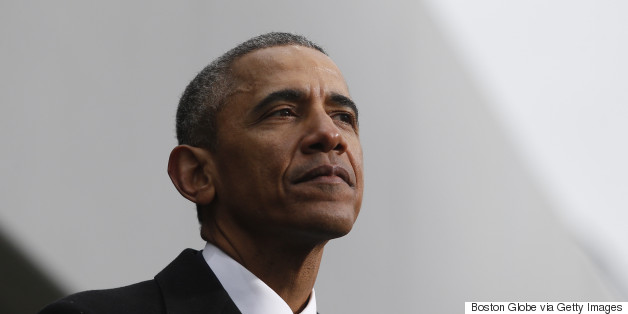
WASHINGTON – The United States officially submitted its emissions-cutting target to the United Nations on Tuesday morning, formalizing its commitment to reducing emissions 26 to 28 percent below 2005 levels by 2025.
The Obama administration had previously announced the goal in its work with China on a bilateral climate agreement. The Tuesday submission makes the pledge official.
“With today’s submission of the U.S. target, countries accounting for more than half of total carbon pollution from the energy sector have submitted or announced what they will do in the post-2020 period to combat climate change,” wrote Brian Deese, senior adviser to the president, in a blog post Tuesday morning.
Under a system established through the United Nations Framework Convention on Climate Change, individual countries are putting forward their own emissions commitments, referred to as Intended Nationally Determined Contributions, or INDCs. Countries are supposed to submit their INDCs to the U.N. by March 31. The submissions will be the basis for an international climate agreement, which leaders expect to reach at the upcoming negotiation session in Paris at the end of 2015.
The U.S. described its target as “fair and ambitious” in the U.N. document, and said that the country has already undertaken “substantial policy action to reduce its emissions.” The submission says that the U.S. is already on a path to reach its previously submitted goal of cutting emissions 17 percent by 2020, and the new commitment will require the country to speed up its rate of emissions reduction.
The European Union, Norway and Mexico submitted their commitments last week.
The Bicameral Task Force on Climate Change, which includes 34 Democratic senators and 83 Democratic House members, sent a letter to President Barack Obama on Tuesday praising the commitment. “One of the three pillars of the Climate Action Plan is to lead international efforts to address global climate change. As a nation that has contributed more than a quarter of all global carbon pollution, it is our responsibility to lead,” they wrote. “As a nation already feeling the effects and costs of climate change, it is also in our national interest to do so.”
Jennifer Morgan, global director of the climate program at the World Resources Institute, called the U.S. target “a serious and achievable commitment” in a statement. Based on WRI’s research, the U.S. can meet the goal by using existing federal authority, and make even further reductions as technology advances, Morgan said.
Other environmental groups were more critical of the submission, arguing that the U.S. could make a more ambitious commitment. Greenpeace legislative representative Kyle Ash said in a statement that the pledge “begins to treat the wound, but does not stop the bleeding.” “As the world’s second largest emitter, the US must strengthen its commitment to climate solutions before Paris to ensure an agreement that immediately spurs the necessary transition away from fossil fuels and towards 100 percent renewable energy,” said Ash.
The Obama administration is expected to face staunch opposition from the Republican-led Congress to any sort of international climate agreement. It remains unclear at this point whether the international agreement will be finalized as a treaty, which would require Senate approval, or take some other legal form that does not require approval. The Obama administration has long sought an alternative format to try to avoid a battle with the Senate.
By: kate.sheppard@huffingtonpost.com
Mississippi River Mayors Come Together To Consider Climate Change
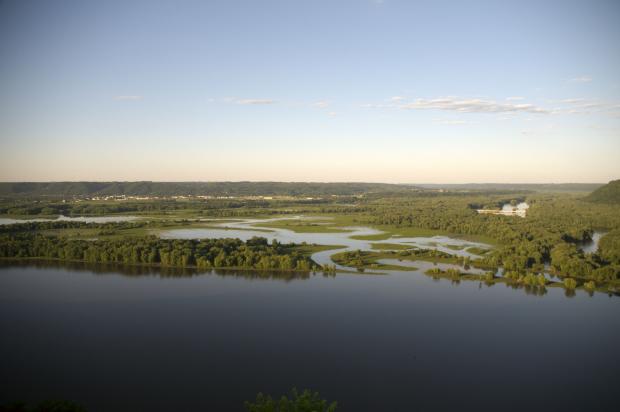
A group a mayors living along the Mississippi River has plans to collaborate with international leaders, with an eye toward playing a bigger role in global talks surrounding climate change.
Mayors with the Mississippi River Cities and Towns Initiative will be working more closely with the Netherlands, learning what actions have been taken to protect the Rhine River from climate change.
The group is also initiating discussions with people living along the Amazon, Euphrates, Yellow, Paraná, Danube, Volga, and Ganges rivers.
MRCTI director Colin Wellenkamp said the Mississippi River Valley is the most agriculturally productive zone on the planet and working with those other major food-producing regions is a necessity.
“This is not going to be not just about flooding and water management, it’s going to be about the future of our food supply,” Wellenkamp said. “Climate disruption is a major component of that and so far, that part of the conversation really hasn’t been emphasized.”
Mayors from La Crosse, Onalaska, Prairie du Chien, and Prescott are involved in the initiative, which will send a delegation of mayors to the Conference of the Parties to the United Nations Framework Convention on Climate Change, also known as COP21, later this year.
The MRCTI also recently praised sections of the president’s proposed budget for offering more funding for flooding and disasters.
President Obama proposed funding the Federal Emergency Management Agency’s Pre-Disaster Mitigation Grant program at $200 million, which is a record high.
In La Crosse, this program has been used to flood-proof and remove homes built in the city’s floodplain.
Mayor Tim Kabat and fellow members of the Mississippi River Cities and Towns Initiative met with members of Congress this week, encouraging them to maintain the funding. Kabat said the grants can save money in the long run.
“You do the investment and the project in the front end and prevent a lot of the emergency situations on the back end,” Kabat said.
Kabat said, in the future, these grants could be used to restore the city’s marsh.
The mayors also hope to see funding go up for National Flood Insurance Program Risk Mapping.
Republicans Risk Nuclear Annihilation by Meddling President U.S. Barrak Obama’s Affairs

President Barak Obama has every reason to be angry with the Republican members of the U.S. Congress going behind his back in sending their own letter to Iran, attempting to deflate the U.S. president’s negotiating stance keep Iran from getting the bomb.
According to a New York Times story by Peter Baker, the fractious debate over a possible nuclear deal with Iran escalated on Monday as 47 Republican senators warned Iran about making an agreement with President Obama, and the White House accused them of undercutting foreign policy.
In a rare direct congressional intervention into diplomatic negotiations, the Republicans signed an open letter addressed to “leaders of the Islamic Republic of Iran” declaring that any agreement without legislative approval could be reversed by the next president “with the stroke of a pen.”
While the possible agreement has drawn bipartisan criticism, the letter, signed only by Republicans, underscored the increasingly party-line flavor of the clash. Just last week, the Republican House speaker, John A. Boehner, gave Prime Minister Benjamin Netanyahu of Israel the platform of a joint meeting of Congress to denounce the developing deal, and Senate Republicans briefly tried to advance legislation aimed at forcing Mr. Obama to submit it to Congress, alienating Democratic allies.
The letter came as Secretary of State John Kerry’s office announced that he would return to Switzerland on Sunday in hopes of completing the framework agreement before an end-of-March deadline. Under the terms being discussed, Iran would pare back its nuclear program enough so that it would be unable to produce enough fuel for a bomb in less than a year if it tried to break out of the agreement. The pact would last at least 10 years; in exchange the world powers would lift sanctions.
Whether the Republican letter might undercut Iran’s willingness to strike a deal was not clear. Iran reacted with scorn. “In our view, this letter has no legal value and is mostly a propaganda ploy,” Mohammad Javad Zarif, Iran’s foreign minister, said in a statement. “It is very interesting that while negotiations are still in progress and while no agreement has been reached, some political pressure groups are so afraid even of the prospect of an agreement that they resort to unconventional methods, unprecedented in diplomatic history.”
A senior American official said the letter probably would not stop an agreement from being reached, but could make it harder to blame Iran if the talks fail. “The problem is if there is not an agreement, the perception of who is at fault is critically important to our ability to maintain pressure, and this type of thing would likely be used by the Iranians in that scenario,” said the official, who spoke anonymously to discuss the negotiations.
The White House and congressional Democrats expressed outrage, calling the letter an unprecedented violation of the tradition of leaving politics at the water’s edge. Republicans said that by styling it as an “open letter,” it was akin to a statement, not an overt intervention in the talks.
“It’s somewhat ironic to see some members of Congress wanting to make common cause with the hard-liners in Iran,” Mr. Obama told reporters. “It’s an unusual coalition.”
Other Democrats were sharper. Josh Earnest, the White House press secretary, called it “just the latest in an ongoing strategy, a partisan strategy, to undermine the president’s ability to conduct foreign policy.” Senator Harry M. Reid of Nevada, the Democratic minority leader, said the “Republicans are undermining our commander in chief while empowering the ayatollahs.”
One has to wonder if the Republicans who signed the letter to Iran would have done so had Franklin Delano Roosevelt been president now.
Say it isn’t true. (Jackson Browne)

Chagan nuclear test – Russia, 1965
Pope Speaks Out Against Global Warming

NBC News reports that Pope Francis is convinced that global warming is “mostly” man-made and that he hopes his upcoming encyclical on the environment will encourage negotiators at a climate change meeting in Paris to make “courageous” decisions to protect God’s creation. He explained the basis for his conclusion while en route to the Philippine Islands, where he is meeting this weekend with survivors of the 2013 Super Typhoon Haiyan, which the government has said was an example of the extreme weather conditions that global warming has wrought. Pope Francis, who has spoken out often about the “culture of waste” that has imperiled our environment, said “I don’t know if it (human activity) is the only cause, but mostly, in great part, it is man who has slapped nature in the face,” he said. “We have in a sense taken over nature”, he exclaimed.
“I think we have exploited nature too much,” the Pope said, citing deforestation and monoculture among the many human instigated causes. “Thanks be to God that today there are voices, so many people who are speaking out about it”, Francis said, adding that he pledged on the day of his installation as pope to make the environment a priority.
The Pope is the head of the Catholic Church which numbers 1.2 billion people around the world over. Catholics believe the Pope is infallible in his authority to make decisions for the Church, meaning he is incapable of making mistakes or being wrong.
Pope Francis is expected to public release his encyclical on ecology by June or July, 2015. He said he wanted it out in plenty of time to be read and absorbed before the next and final set of Intergovernmental Panel of Climate Change negotiations which opens in Paris in November 2015, especially considering that the last round of meeting in Lima, Peru, failed to reach an agreement.
The ultimate goal of U.N. climate negotiations is to stabilize greenhouse gases at a level that keeps global warming below 2 degrees C (3.6 F), compared with pre-industrial times.
Scant Progress As UN COP 20 Talks Enter Final Stretch

U.N. global warming talks seemed set to spill over into the weekend as negotiators bickered Friday over the content of climate action plans that countries should unveil in the run-up to a key summit in Paris next year.
The yearly U.N. climate meetings rarely close on time and the two-week session in Lima was no exception as disputes that arose in the opening days remained unresolved by Friday’s scheduled close of the conference.
“This will not be over today,” Chinese delegate Zhang Jiutian said. “There are still some points in the agenda that need more discussion.”
One of the most problematic issues in Lima was getting the more than 190 countries participating to agree on what information should go into the pledges that governments are supposed to put on the table for a global climate pact expected to be adopted a year from now in Paris.
Rich countries insisted the pledges should focus on efforts to control emissions of carbon dioxide and other heat-trapping greenhouse gases and were resisting demands that they include promises of financing to help poor countries absorb the effects of climate change.
Meanwhile, top carbon polluter China and other major developing countries opposed plans for a review process so the pledges can be compared against one another before Paris. Their reluctance angered some delegates from countries on the front lines of climate change.
“We are shocked that some of our colleagues would want to avoid a process to hold their proposed targets up to the light,” said Tony de Brum, the foreign minister of the Marshall Islands, a Pacific nation of low-lying atolls at risk of being flooded by rising seas.
Though negotiating tactics always play a role, virtually all disputes in the U.N. talks reflect the wider issue of how to divide the burden of fixing the planetary warming that scientists say results from human activity, primarily the burning of oil, coal and natural gas.
Historically, Western nations are the biggest emitters. Currently, most CO2 emissions are coming from developing countries as they grow their economies and lift millions of people out of poverty.
During a brief stop in Lima on Thursday, U.S. Secretary of State John Kerry said fixing the problem was “everyone’s responsibility, because it’s the net amount of carbon that matters, not each country’s share.”
According to the U.N.’s scientific panel on climate change, the world can pump out no more than about 1 trillion tons of carbon to have a likely chance of avoiding dangerous levels of warming. It has already spent about half of that carbon budget as emissions continue to rise, driven by growth in China and other emerging economies.
Scientific reports say climate impacts are already happening and include rising sea levels, intensifying heat waves and shifts in weather patterns causing floods in some areas and droughts in others.
* COP 20 — 20th Annual Conference of the Parties
By KARL RITTER – 12/12/2014. Associated Press writer Nestor Ikeda contributed to this report.
Also on HuffPost.
 All Things Environmental
Recent Comments