
Saint Francis of Assisi

Pope Francis is expected to take a provocative stance on global climate change Thursday, releasing an encyclical — a teaching letter addressed to Catholic bishops — that not only affirms the reality of man-made warming but issues a moral call for changes in lifestyle, consumption and policy to stave off environmental disaster.
The pope appears to have chosen the name “Francis” – after Saint Francis of Assisi – for good reason: Saint Francis of Assisi is not only known as the patron saint of animals and the environment; he also changed his own lifestyle from a life of wealth and over consumption to a life of bare subsistence in service of the poor.
His father was Pietro di Bernardone, a prosperous silk merchant. Francis lived the high-spirited life typical of a wealthy young man, even fighting as a soldier for Assisi. While going off to war in 1204, Francis had a vision that directed him back to Assisi, where he lost his taste for his worldly life. On a pilgrimage to Rome, he joined the poor in begging at St. Peter’s Basilica. The experience moved him to live in poverty.Francis returned home, began preaching on the streets, and soon gathered followers.
Francis preached the teaching of the Catholic Church, that the world was created good and beautiful by God but suffers a need for redemption because of the primordial sin of man. He preached to man and beast the universal ability and duty of all creatures to praise God (a common theme in the Psalms) and the duty of men to protect and enjoy nature as both the stewards of God’s creation and as creatures ourselves. On November 29, 1979, Pope John Paul II declared St. Francis the Patron Saint of Ecology. Many of the stories that surround the life of St. Francis say that he had a great love for animals and the environment.
Perhaps the most famous incident that illustrates the Saint’s humility towards nature is recounted in the “Fioretti” (“Little Flowers”), a collection of legends and folklore that sprang up after the Saint’s death. It is said that, one day, while Francis was travelling with some companions, they happened upon a place in the road where birds filled the trees on either side. Francis told his companions to “wait for me while I go to preach to my sisters the birds.” The birds surrounded him, intrigued by the power of his voice, and not one of them flew away. He is often portrayed with a bird, typically in his hand.
Another legend from the Fioretti tells that in the city of Gubbio, where Francis lived for some time, was a wolf “terrifying and ferocious, who devoured men as well as animals.” Francis had compassion upon the townsfolk, and so he went up into the hills to find the wolf. Soon, fear of the animal had caused all his companions to flee, though the saint pressed on. When he found the wolf, he made the sign of the cross and commanded the wolf to come to him and hurt no one. Miraculously the wolf closed his jaws and lay down at the feet of St. Francis.
“Brother Wolf, you do much harm in these parts and you have done great evil,” said Francis. “All these people accuse you and curse you…But brother wolf, I would like to make peace between you and the people.” Then Francis led the wolf into the town, and surrounded by startled citizens made a pact between them and the wolf. Because the wolf had “done evil out of hunger, the townsfolk were to feed the wolf regularly. In return, the wolf would no longer prey upon them or their flocks. In this manner Gubbio was freed from the menace of the predator. Francis even made a pact on behalf of the town dogs, that they would not bother the wolf again. Finally, to show the townspeople that they would not be harmed, Francis blessed the wolf.
Then during the World Environment Day 1982, John Paul II said that St. Francis’ love and care for creation was a challenge for contemporary Catholics and a reminder “not to behave like dissident predators where nature is concerned, but to assume responsibility for it, taking all care so that everything stays healthy and integrated, so as to offer a welcoming and friendly environment even to those who succeed us.” The same Pope wrote on the occasion of the World Day of Peace, January 1, 1990, the saint of Assisi “offers Christians an example of genuine and deep respect for the integrity of creation…” He went on to make the point that: “As a friend of the poor who was loved by God’s creatures, Saint Francis invited all of creation – animals, plants, natural forces, even Brother Sun and Sister Moon – to give honor and praise to the Lord. The poor man of Assisi gives us striking witness that when we are at peace with God we are better able to devote ourselves to building up that peace with all creation which is inseparable from peace among all peoples.”
Pope John Paul II concluded that section of the document with these words, “It is my hope that the inspiration of Saint Francis will help us to keep ever alive a sense of ‘fraternity’ with all those good and beautiful things which Almighty God has created.”
The Children of Today and Tomorrow are in for a Rude Awakening

The global warming genie has escaped his bottle! He has begun to show his wrath, which is only likely to worsen in the coming years, decades and centuries, and there is presently no end in sight!
He’s leaving plenty of evidence. The only way we can all help weaken him is by stopping our nonessential burning of fossil fuels, stopping deforestation especially of the tropics, and doing things which naturally result in more greenhouse gases being added into the earth’s atmosphere and oceans (such as overeating, wasting food, not recycling, not reusing things whenever possible, running our air conditioning and furnaces needlessly, using energy derived from tar sands industry, doing other things that frivolously burn fossil fuels such as going for joy rides, cruising, etc.. Because our atmosphere is where Global Warming lives and breathes (now that he’s escaped the bottle) and because he gets his tremendous strength to wreak havoc on the world by his breathing in greenhouse gases that have been accumulating to record high concentrations in the earth’s atmosphere (as a by-product of our burning carbon-based fuels in our cars, trucks, airplanes, power plants, ships, boats, trains, machinery, recreational products and the like) we need to all put him on a crash diet, NOW!
According to David Owen, author of Green Metropolis and The Conundrum: How Scientific Innovation, Increased Efficiency, and Good Intentions Can Make Our Energy and Climate Problems Worse, the proportional share of the fuel burned during a round trip from New York City to Melbourne, Australia, is greater than the total amount of energy that the average resident of the earth uses, for all purposes, in a year. Forestalling global calamity is a preemptively worthy, ethically justifiable and economically achievable goal for everyone on the planet, especially in this era of television, radio, computers, Skype, the iPhone and virtual reality. Climatologists, environmentalists, CEOs, religious leaders, students and tourists seeking entertainment or to broaden their horizons, and government officials ought use the least greenhouse gas emitting technologies available to them to accomplish their objectives; they should not have to cross the oceans and great land masses of world (requiring vast burning fossil fuels) just to be present in person. Likewise, our government leaders and business people ought minimize the amount of products traded with distant countries, so as to minimize the amount of fuel burning required in the shipment of goods by air, sea and over miles and miles of terrain. Transportation of billions of tons of goods along with extensive long distance vacationing and business trips by millions of people every year is simply no longer sustainable. Such activities are becoming ethically wrong because they are unquestionably harming the planet and all the living things it is home to, both now and in the future.
We cannot and must not wait for technology to bail us out. Scientists the world over say it is now paramount that all humans begin acting in significant ways to reduce their annual greenhouse gas emissions. Otherwise, we will never get Global Warming to go back into his bottle – where he belongs! Greenhouse gases accumulate atmospherically over time – they build up in the atmosphere and oceans from year to year. Their volume is accelerating in earth’s atmosphere and as well as in its oceans, and the total volume will likely keep accelerating for some time due to compounding factors (positive feedbacks) of the earth’s natural systems. That’s why it’s of the utmost importance – paramount – that everyone act in ways to reduce their annual carbon footprint, immediately, before Global Warming becomes all to powerful, uncontrollable and for generations, a tragedy for civilization.
A Memorial Day Salute and Promise for the Future

Today is the day to pause and show our respect to those who, regardless of race, religion, gender, national origin or sexual orientation, served, fought and died to protect our country and all Americans, those living now or in the future from enemy harm. Those who have given the ultimate sacrifice to protect our country and its people deserve the highest honor possible, to be sure. And I believe those who have been maimed by war, physically or mentally, should be equally honored. One such victim I’m proud to have as friend and former high school classmate. His name is Jim Walktendonk, and he and family suffered greatly from the ill effects of U.S. war planes spraying what was called “agent orange” to defoliate the greenery the enemy hid in and expose them to U.S. fire power. Unfortunately, the chemicals in the agent orange also had adverse impact on our troops as well. I’ll let Jim Walktendonk tell the complete story.
One way we can give honor and respect to those who died to protect our freedom is by working, individually or in groups, to build a healthier and more peaceful world. Unfortunately, the world we share is not getting any any healthier nor any more peaceful, but just the opposite.
With a population of over 7 billion people we must find ways to live more peacefully with one another and be more protective of our finite earth. We elect our political leaders to keep us out of wars and our economy strong but they are seldom successful at doing either
We now face the biggest threat to humanity of all time in rapid global warming, due primarily to: our excessive fossil fuel burning in cars, homes, businesses and airplanes; in production of an excessive amount of consumer goods for many individuals and a dearth of such goods for others, and in shipment of those goods; in military exercises around the world; in the type of foods we eat and the methods of its production; in our use of water and by a myriad of other sources and by deforestation, especially in the tropical area of the world considered by many to be the lunges of the planet. Along with warming temperatures caused by a thickening greenhouse atmosphere around our planet comes more extreme weather, warming and rising seas, a changing climate and how that changes the supporting biodiversity. Although too difficult to separate out from other weather extreme events, global warming has now without a doubt become the greatest killer of American and other peoples ever, of the earth’s animal populations, and the number of deaths linked to it each year will likely grow significantly, without major and swift action taken by our governments, commerce and you and I.
Public officials, state and federal lawmakers, and many members of the media who continue to cite uncertainty and spurious research as reason not for people not to take serious action now to reduce all sources of greenhouse gas emission should be judged harshly; their actions (or inaction) are crimes against humanity of the highest order. The people we honor today would likely agree, wholeheartedly.
We do not need a war to rise to the occasion and join the fight against global warming. To do that, we must all hop on the peace train, put down our gun, and fight the fight of our life for the living planet, OUR EARTH.
Climate Change: Are We Doing Enough?
Was the Titanic Unsinkable? Earth Day 2015 has come and gone. There was no reason to post anything to celebrate it .
.
State of Wisconsin Board of Commissioners of Public Lands Bans Staff from Discussing Global Warming and Climate Change
 Former Wisconsin governor and U.S. senator Gaylord Nelson at Gaylord Nelson State Park in Madison in 2001. Photo: Tom Lynn, Milwaukee Journal Sentinel.
According to a report published in the Wisconsin State Journal April 9, 2015, Wisconsin’s 3-member Board of Commissioners of Public Lands passed a measure Tuesday, April 7th, by a 2-1 margin, that bans the staff of from “on-the-job discussion or work related to climate change”.
Reference to climate change had already been removed from agency’s website in response to previous complaints from one board member, state Treasurer Matt Adamczyk, according to the report. Adamczyk is a Wisconsin Republican who recently sought to dismiss the commission’s executive secretary, Tia Nelson, who is the daughter of former Wisconsin United States Senator and Earth Day founder, Gaylord Nelson, after he learned she served as a co-chairwomen on former Democratic Governor Jim Doyle’s Global Warming Task Force in 2007 and 2008.
The other board member who voted yes to the ban — Attorney General Brad D. Schimel – said he voted with Adamczyk to ban the staff from further work on climate change because he views it as “political activity”, and not connected to the board’s duties. The report said Adamczyk stated that he is bothered by Nelson’s service on the task force because it had “nothing to do with the board’s business”, which is to manage forest land and help maintain certain state-owned forest land and help finance local government. Tia Nelson, who directs the commission’s eight member staff, declined to comment saying she didn’t want to say anything that would inflame the situation, according to the report.
The third member of the board, Wisconsin’s Secretary of State Douglas La Follette, said Adamczyk “is a “climate denier” who is out to get Nelson”, the Journal report stated.
Gaylord Nelson (June 4, 1916 – July 3, 2005) was born in Clear Lake, Wisconsin, and served several terms as a United States senator and two terms as governor. He is best known as the founder of Earth Day, which launched a new wave of environmental activism in the U.S. and abroad. He would not have been pleased with this action, which has occurred by a state committee under Governor Scott Walker’s watch.
Preserve Our Climate Petition to Protect U.S. Citizenry from Runaway Greenhouse Effect

Petition requesting the U.S. Congress members and President Barack Obama to adopt the proposal called “Conserve, NOW” which would reduce greenhouse gas emissions from the United States and create jobs in the areas of adding to and reconstructing infrastructure in cities and counties of the U.S. to accommodate and encourage less fossil fuel burning in transportation and fossil fuel derived energy presently used in homes.
U.S. Officially Submits Its Target 2025 Annual Greenhouse Gas Emissions to the United Nations, as Called for by the Framework Convention on Climate Change
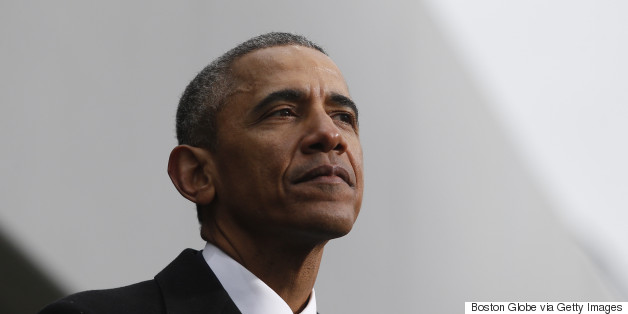
WASHINGTON – The United States officially submitted its emissions-cutting target to the United Nations on Tuesday morning, formalizing its commitment to reducing emissions 26 to 28 percent below 2005 levels by 2025.
The Obama administration had previously announced the goal in its work with China on a bilateral climate agreement. The Tuesday submission makes the pledge official.
“With today’s submission of the U.S. target, countries accounting for more than half of total carbon pollution from the energy sector have submitted or announced what they will do in the post-2020 period to combat climate change,” wrote Brian Deese, senior adviser to the president, in a blog post Tuesday morning.
Under a system established through the United Nations Framework Convention on Climate Change, individual countries are putting forward their own emissions commitments, referred to as Intended Nationally Determined Contributions, or INDCs. Countries are supposed to submit their INDCs to the U.N. by March 31. The submissions will be the basis for an international climate agreement, which leaders expect to reach at the upcoming negotiation session in Paris at the end of 2015.
The U.S. described its target as “fair and ambitious” in the U.N. document, and said that the country has already undertaken “substantial policy action to reduce its emissions.” The submission says that the U.S. is already on a path to reach its previously submitted goal of cutting emissions 17 percent by 2020, and the new commitment will require the country to speed up its rate of emissions reduction.
The European Union, Norway and Mexico submitted their commitments last week.
The Bicameral Task Force on Climate Change, which includes 34 Democratic senators and 83 Democratic House members, sent a letter to President Barack Obama on Tuesday praising the commitment. “One of the three pillars of the Climate Action Plan is to lead international efforts to address global climate change. As a nation that has contributed more than a quarter of all global carbon pollution, it is our responsibility to lead,” they wrote. “As a nation already feeling the effects and costs of climate change, it is also in our national interest to do so.”
Jennifer Morgan, global director of the climate program at the World Resources Institute, called the U.S. target “a serious and achievable commitment” in a statement. Based on WRI’s research, the U.S. can meet the goal by using existing federal authority, and make even further reductions as technology advances, Morgan said.
Other environmental groups were more critical of the submission, arguing that the U.S. could make a more ambitious commitment. Greenpeace legislative representative Kyle Ash said in a statement that the pledge “begins to treat the wound, but does not stop the bleeding.” “As the world’s second largest emitter, the US must strengthen its commitment to climate solutions before Paris to ensure an agreement that immediately spurs the necessary transition away from fossil fuels and towards 100 percent renewable energy,” said Ash.
The Obama administration is expected to face staunch opposition from the Republican-led Congress to any sort of international climate agreement. It remains unclear at this point whether the international agreement will be finalized as a treaty, which would require Senate approval, or take some other legal form that does not require approval. The Obama administration has long sought an alternative format to try to avoid a battle with the Senate.
By: kate.sheppard@huffingtonpost.com
Wisconsin Utilities, Public Service Commission and Governor Walker Being Bad Actors in Leading Fight Against Solar Energy in Wisconsin
Once considered a Midwestern leader in clean energy development, Wisconsin is now referenced as one state where electric utilities with the backing of regulators are putting up financial roadblocks against the solar industry.
A new report in the Washington Post mentions Wisconsin along with New Mexico and Arizona as states where traditional utilities like WE Energies and Madison Gas & Electric are fighting to maintain electric sales in the face of a changing marketplace.
The story quotes from a private meeting three years ago where power company executives were told that as demand for residential solar continued to soar, traditional utilities could soon face serious problems from “declining retail sales” and a “loss of customers” to “potential obsolescence.”
“Industry must prepare an action plan to address the challenges,” warned the Edison Electric Institute, the leading industry trade association. All four of Wisconsin’s investor-owned utilities are members.
The meeting at a resort in Colorado Springs, Colorado, became “a call to arms for electricity providers in nearly every corner of the nation” wrote reporter Joby Warrick.
“Three years later, the industry and its fossil-fuel supporters are waging a determined campaign to stop a home-solar insurgency that is rattling the boardrooms of the country’s government-regulated electric monopolies,” he wrote.
Warrick’s report also makes the link between the electric utilities and the American Legislative Exchange Council, or ALEC, a nonprofit organization with financial ties to billionaire fossil fuel industrialists Charles and David Koch.
In Wisconsin last year, the state Public Service Commission approved major price increases in electric rate structures for state utilities. Utilities argued the changes were needed to cover the cost of maintaining the power plants, poles and wires in the face of slowing electric sales.
For MGE customers, fixed charges for residential electric service went from $10.50 to $19 a month.
MGE customers fought against the changes and eventually got the company to agree to a series of community listening sessions before pursuing additional fixed rate prices hikes going forward. At one point, MGE had talked about raising residential customer fixed charges to nearly $70 a month by 2017.
Meanwhile, the state Public Service Commission (PSC) of Wisconsin is facing a lawsuit from Madison-based Renew Wisconsin and the Alliance for Solar Choice of San Francisco, saying it was guilty of discrimination by passing additional fees on solar customers in the WE Energies 2014 rate case.
Gov. Scott Walker has appointed all three members of the PSC, with the naming in February of former Department of Administration secretary Mike Huebsch to the powerful regulatory agency.
Koch Industries has significant operations in Wisconsin, including Flint Hills Resources, which produces gasoline and asphalt; the C. Reiss Coal Co., which supplies coal throughout the Great Lakes region; and Georgia-Pacific, the packaging and paper firm. Georgia-Pacific’s chemical division is also a producer of proppant resin, a coating for small particles used in hydraulic fracturing.
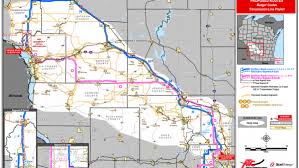
Another current decision of interest to the utility companies, the PSC, and the governor is American Transmission Company’s (ATC) and Xcel Energy’s proposed Badger-Coulee transmission line project, which stretches from the La Crosse area to Madison in Wisconsin. It is estimated 345-kilovolt, 180-mile line project will cost $580 million.
More than 200 people attended a public hearing in the Town of Holland by the PSC in December. Most of the people who testified in front of the Public Service Commission of Wisconsin voiced their opposition to the project. Some cited health concerns from massive power lines and others questioned whether it’s necessary.
Xcel Energy is one of project partners. A spokesman at the meeting, Tim Carlsgaard, said power lines need a capacity upgrade. Plus, he said, Wisconsin has a 10 percent renewable energy mandate and wind energy is the best option for the Midwest. Carlsgaard said it’s nearly impossible to develop wind energy in Wisconsin.
“Where it’s located is out in the rural areas,” Carlsgaard said. “Out in western Minnesota, southern Minnesota, parts of the Dakotas. The only way to bring that energy to the people is by building transmission lines. There are not existing lines in those areas.”
Dr. Patrice Tronstad, of Prairie View Elementary School, presented PSC administrative law Judge Michael Newmark with a poster signed by students opposing the project. The line could run right next to the Holmen school.
Onalaska Mayor Joe Chilsen said he doesn’t want the Badger-Coulee transmission line to be built at all. But, if the proposed project running from the La Crosse area to Madison is approved, he urged PSC officials not choose the route that could cut through his city. Chilsen said the power line could affect property values and aesthetically damage the city along the Mississippi River.
“This in essence kills all our future economic growth, our business growth in Onalaska,” he said. “I’m absolutely flabbergasted that this is even being considered.”
Chilsen also testified that future expansion plans for Mayo Clinic and other businesses could come to a halt if the Badger-Coulee line comes through the area.
Chilsen was one of the dozens of people who testified before two PSC commissioners: chairman Phil Montgomery and commissioner Ellen Nowak.
Commissioner Eric Callisto didn’t attend because his term is ended in February.
The now 3-person Walker appointed PSC decided last Thursday, March 26, 2015 to allow the construction of the new power line from La Crosse to Madison, over the objections by the public. Discussions and debate over the power line have lasted years, with many opposed citing environmental and aesthetic grievances. The Badger Coulee high-voltage transmission line will be built and it will follow a route from a substation near Holmen, north of La Crosse, to the Madison area, the Wisconsin Public Service Commission (PSC) decided in a unanimous preliminary vote.
Opponent group, Citizens Energy Task Force, said it is “appalled, but not surprised” by the decision, saying there was not enough study of alternatives to building another huge power line. It conceded the construction of the line is “economically driven, with the economic benefits going to utilities while ratepayers being saddled with massive unneeded debt and the health, environmental and quality-of-life consequences that come with these unsightly, unnecessary lines,” the citizen group said. Organizations that have been fighting the proposal said they are considering filing a petition for a rehearing by the PSC or challenging the validity of the PSC’s decision in circuit court.
“More than 90 units of local government tried in vain to understand why these lines are needed,” said Maureen Freedland, La Crosse County Board supervisor. “Our local planning rights have been stripped from us. The decision is a blow to our values and the way of life for our rural Wisconsin neighbors.”
The PSC is expected to issue a final order on the project within four weeks, and Wisconsin-based ATC and Minnesota-based Xcel said they will start contacting property owners on the chosen route yet this year. Construction of the line is expected to begin in 2016 and it is scheduled to go into service in 2018.
Sources: March 11, 2015, report by Mike Ivey of The Capital Times.
Reports aired on Wisconsin Public Radio.
Over Two-thirds of Americans are Cowards When it Comes to Standing Up to the Threats of Global Warming


Over two-thirds of Americans polled answered they were not concerned about global warming and climate change, according to a Gallop poll released last Wednesday and published by The Washington Times. Thirteen percent of Republicans are concerned about global warming and climate problems compared to 52 percent of Democrats polled.
A “coward” is any person who lacks the courage endure dangerous or unpleasant things. Global warming is the most dangerous natural disaster our civilization will have ever had to face and endure, and it is human-caused.
The majority of Americans worry about only one environmental issue, however. Fifty five percent are concerned about the pollution of drinking water. Next in line: 47 percent fret over lake and river pollution, air pollution (36 percent) and the loss of tropical rain forests (33 percent).
In general, Americans are more positive about the environment these days notes Gallup analyst Jeffrey Jones, with negative sentiments now at the “low end” of what the polling group has measured in the last 25 years.
“The nature of the environmental agenda may indirectly be influencing Americans’ concern. The primary focus of the environmental movement has shifted toward long-term threats like global warming – issues about which Americans tend to worry less than about more immediate threats like pollution,” writes Mr. Jones.
“Importantly, even as global warming has received greater attention as an environmental problem from politicians and the media in recent years, Americans’ worry about it is no higher now than when Gallup first asked about it in 1989”, according to Jones.
Source: From an article by Jennifer Harper in The Washington Times, Wednesday, March 25, 2015.
Governor Walker’s Proposed 2015 -2017 State of Wisconsin Budget

Following are the comments I submitted by email on the governor’s proposed budget for July 1, 2015 to June 30, 2017.
Bad things can happen to good people. It happens all the time, and has occurred all throughout history. So when bad things, or threats, are predicted to occur or seem reasonably likely to occur, it’s best for one to take action, and involve others in removing the oncoming threat, before it gets realized and significant damage to life and our environment occurs.
Governor Walker’s biennial budget plan for Wisconsin for the next two years contains numerous threats to the people of Wisconsin and the state of Wisconsin’s natural resources. Some of those threats could have devastating and harmful impacts if they are allowed to occur without any attempts to prevent or ameliorate them.
Governor Walker’s budget plan as written will cause a great deal of harm for many thousands of Wisconsin’s people and their families. Some people who have worked their entire life at University of Wisconsin or UW-extension will likely lose their jobs, and the public who those people serve will lose out as well. Wisconsin’s elderly and disabled population, and families having children enrolled in Wisconsin’s excellent public school system will also suffer loses. Many hard working and dedicated school teachers and educational assistants serving special needs children will be without a job next fall if this budget is not revamped.
The governor’s budget also hurts those who watch over and protect our precious natural resources, both now and in the coming years, by cutting positions and land stewardship funds.
But really the worst thing about the governor’s budget is not what’s in it but rather what’s NOT IN IT BUT SHOULD IN IT. For example, despite Wisconsin’s aging population and increasing number of people who prefer not to drive, or who can’t drive because of the high cost of owning, maintaining and driving an automobile, the Walker budget proposes nothing new to help with mobility in the state, transit in particular. Rather, it borrows hundreds of millions of dollars to expand an already too large highway system at great environmental harm to the state, and for no good reason.
Numerous observations demonstrate that the climate of the Great Lakes Region, including Wisconsin’s climate, is changing. Average temperatures are getting warmer and extreme heat events are occurring more frequently. Total precipitation is increasing and heavy precipitation events are becoming more common. Winters are getting shorter and the duration of lake ice cover is decreasing over time. As a state, we should already be doing as much as we can to drastically cut back on our burning of fossil fuels but we seem to be doing almost the opposite. This tragedy grows in magnitude the longer it takes for our country and other countries to wean themselves off burning fossil fuels. There are many other unintended consequences of living in a fossil fuel burning dependent society.
But ironically, rather than then increasing substantially the funding of transit systems and the funding of positive financial incentive programs aimed at reducing greenhouse gas emissions and encourage walking and use of nonmotorized travel by state residents and businesses, the governor’s budget promotes more highway expansion. Instead, the state should reward those who drive less (miles), don’t fly, and minimizing their use of fossil fuel derived energy over the year. Use the money that Governor Walker’s budget borrows to fund a bigger highway system and a big new professional basketball arena instead – expenditures that not only subject state taxpayer to great financial risks but also promote adding millions more tons of greenhouse gases to the atmosphere including promoting jet airplanes flying of visiting teams and fans to the games.
Wisconsin Public Radio (part of state’s UW-extension) plans vacationing trips to Scotland and Australia, trips that not only release hundreds of millions of tons of greenhouse gases to the atmosphere but also give nothing back to the state’s own tourism businesses.
Governor Walker’s budgets include more trade promotions with foreign countries despite the fact that shipping products and working with foreign business interests similarly add millions and millions more tons of greenhouse gases to the atmosphere.
My plan would increase Wisconsin families’ and individuals’ annual income for polluting less and reducing the global warming threat, rather than adding to it. It would encourage Wisconsinites and Americans to buy from local entrepreneurs, whenever possible.
Governor Walker’s plan is to require a monthly drug test of food share (too low to begin with) recipients and proof of their having worked at least 80 hours at a place of employment before their receiving the meager food share benefits. It would do nothing to curb the rising income and employment inequalities and racial disparities in the state. The numbers of families and children living in poverty already will not be helped by Governor Walker’s budget. It is a fact that children of families living in poverty start their lives with a handicap because of many reason but the worst is that they do not receive adequate nutrition before and after they enter their school years. The governor’s budget insufficiently funds Wisconsin public schools and the families that live in poverty are disadvantaged in those schools from day one. Yet the governor’s budget does nothing to make up for previous cuts to public schools and add more financial stress for them by requiring them to pay vouchers for children attending private schools.
The budget should also refund the planned parenthood clinics the state had before Scott Walker took office. Certainly we ought not be adding to our human population pressures on the environment if we don’t have to.
Thank for the opportunity to submit my comments on the proposed state budget. For addition background on my concerns expressed here, please visit my blog at: http://www.allthingsenvironmental.com.
 All Things Environmental
Recent Comments