
Stop Oil Development in Coastal Habitat

One oil spill or accident in Grays Harbor could wipe out a significant portion of the Red Knot population in the Pacific Flyway. Speak out against the development of oil terminals in Grays Harbor.
Critical coastal estuaries could face devastating consequences for birds if the oil industry is successful in expanding its operations in Grays Harbor in Washington state—a site visited by hundreds of thousands of migrating shorebirds every year. Three proposed new oil terminals would store roughly 91 million gallons of toxic crude, most of it for export to China. Our birds rely on this Pacific coast estuary to rest and refuel during migration. One oil spill would devastate this fragile marine ecosystem.
Write the Washington Department of Ecology and the City of Hoquiam today and tell them to reject the oil terminals.
Located on Washington’s outer coast, Grays Harbor is a critical spring migration stop-over site for Red Knots in the Pacific Flyway. A climate-endangered bird, the Red Knot uses the North Bay of Grays Harbor almost exclusively during the month of May to feed on rich marine food sources before flying non-stop to northwestern Alaska and Wrangel Island, Russia to nest and raise their young. One oil spill or accident could wipe out a significant portion of the Red Knot population in the Pacific Flyway.
Oil extraction, transport, and export across our country contributes to greenhouse gas emissions responsible for global warming. If the terminals are built, as much as 126,860 barrels of crude would arrive by train every day, another enormous source of risk. Oil trains have a bad safety record—in 2014 there were 141 oil train spills across the United States.
The deadline to speak out against two of the proposed terminals in Grays Harbor is October 29. Please add your voice in support of our birds. Tell the State of Washington that Grays Harbor is important to all of us who care about birds. We can’t afford to turn over our best coastal habitat to an industry that has shown it cannot prevent or contain oil spills. We’ve seen the devastating effects of oil spills in Alaska and the Gulf Coast—let’s keep that from happening in Washington.
Tell the Washington Department of Ecology and City of Hoquiam not to allow the development of oil terminals in Grays Harbor.
For your information and use, I am including a reproduction of the message I sent to the State of Washington’s Department of Ecology and the City of Hoquiam, Washington, on October 16, 2015, requesting that they NOT allow the development of the proposed crude oil terminals in Gray’s Harbor, Washington:
“Critical coastal estuaries could face devastating consequences for birds if the oil industry is successful in expanding its operations in Grays Harbor in Washington state–a site visited by hundreds of thousands of migrating shorebirds every year. Three proposed new oil terminals would store roughly 91 million gallons of toxic crude, most of it for export to China. Our birds rely on this Pacific coast estuary to rest and refuel during migration. One oil spill would devastate this fragile marine ecosystem.”
One-year Anniversary of “Planet Earth: It Needs Our Help Now More Than Ever”, Broadcast on WORT-FM’s Public Access Hour on Labor Day 2014
Last year on Labor Day WORT-FM in Madison, Wisconsin I had the privilege of recording an hour of music and commentary on a subject I have researched for going on 16 years now: the likely effects of rising greenhouse gas concentrations in the atmosphere, in the oceans, on the landscape; in other words, our planet earth. Since other than president Obama, Pope Francis, the environmental community and the state of California are about the only ones talking seriously about starting to do something to head off what is certain to be catastrophic effects upon our planet and all its livings things in decades and centuries to come, it only seem appropriate to remind folks who would like to listen to the show again. Here it is. Planet Earth – It Needs Our Help More than Ever!
Touring Alaska last month to shine a spotlight on global warming, President Obama warned that “climate change is no longer some far-off problem. It is happening here; it is happening now. Climate change is already disrupting our agriculture and ecosystems, our water and food supplies, our energy, our infrastructure, human health, human safety. Now. Today.”
This wasn’t supposed to happen. In 2009, 114 countries signed the Copenhagen Accord, agreeing “to stabilize greenhouse gas concentration in the atmosphere at a level that would prevent dangerous anthropogenic interference with the climate system;” “recognizing the scientific view” that the increase in global temperature should be held to no more than 2 degrees Celsius” (3.6 degrees Fahrenheit) above the pre-industrial level; and promising greater “long-term cooperative action to combat climate change.”
Paradoxically, an accord that should have spurred the world to immediate action instead seemed to offer some breathing room. Two degrees was meant to be a ceiling, but repeated references to an internationally agreed-upon “threshold” led many people to believe that nothing really bad could happen below 2 degrees—or worse yet, that the number itself was negotiable. Perhaps the biggest failure of the Copenhagen Accord was its pact for “long-term” action. Forty years ago, climate change was a “long-term” problem. Today it’s an emergency.
As we’re coming ever so close to the dreaded 2-degree mark, which will have devastating effects especially on people and families less economically fortunate, everywhere, Pope Francis last week called upon the members of the U.S. Congress to find solutions to the problems of growing poverty, everywhere, and climate change, including warming and acidification of the oceans. As civilization’s industrial machinery marches on, we’re already at 400 ppm of carbon dioxide, and likely to go much higher and faster under current “business as usual” practices continue.
Such numbers may mean little to the general public, but they matter a lot to negotiators who will be at Paris climate change talks in December. Unfortunately, the numbers that these negotiators plan to propose will only be part of non-legally-binding pledges—and they represent only what is achievable without too much difficulty, rather than the drastic austerity measures needed to stabilize emissions. In fact, 2 degrees is not an upper limit that the nations of the world recognize and respect, only a target that negotiators know they will overshoot with their expected pledges. The very idea that the Paris conference is a negotiation is ridiculous. You can’t negotiate with the atmosphere.
What were they thinking? As Naomi Klein points out in her book This Changes Everything, the 2 degree goal “has always been a highly political choice that has more to do with minimizing economic disruption than with protecting the greatest number of people.” In theory, the Copenhagen Accord relied on the best available science of the time—an international scientific symposium held in 2005 and assessment reports published by the Intergovernmental Panel on Climate Change (IPCC) in 2007 and earlier, which in turn were based on even older scientific studies. You can trace the 2 degrees notion all the way back to a 1977 paper by Yale economist William D. Nordhaus.
In hindsight, though, the idea that even 2 degrees of warming would be tolerable is baffling. Homo sapiens have never lived in a world that hot. In an excellent series of special reports for CNN on what 2 degrees of global warming would mean, John D. Sutter lists some of the expected impacts: a melting Arctic, enormous wildfires, more intense hurricanes, water shortages, reduced crop yields, and animals and plants at risk of extinction. Even if warming can be held to 2 degrees, scientists predict that global sea level will rise by at least 20 feet as a result.
The Climate Vulnerable Forum, a coalition of 20 nations that expect severe global-warming effects, has called the 2-degree goal “inadequate” to protect fundamental human rights. “How can we possibly subscribe to more than double the current warming?” asked Mary Ann Lucille L. Sering, secretary of the Philippines Climate Change Commission.
Although the 2-degree target was endorsed in Copenhagen in 2009, and again in Cancún the following year, the parties also agreed to periodically review the adequacy of the target and to consider strengthening it. The majority of countries that have signed and ratified the United Nations Framework Convention on Climate Change now support a lower target of 1.5 degrees, and a review process reported that the lower limit would be “preferable” but that the science supporting it is “less robust.”
What is feasible? The World Bank has warned that a 1.5-degree rise is “locked in,” and that we’re headed toward a warming of 4 degrees by the end of the century. “Scientists, policy-makers and the public already accept that progress will not be enough to keep global average temperature rise within the 2°C limit,” wrote Oliver Geden, head of the EU Research Division at the German Institute for International and Security Affairs, in a recent Nature commentary. “The negotiations’ goal has become what is politically possible, not what is environmentally desirable.”
If you add up the pledges that have been made so far, and nations keep their promises, the world is in for about 3 degrees of warming by 2100. Limiting the warming to 2 degrees would require rapid emissions reductions over the next few decades, declining to zero net emissions shortly after 2050.
It is still possible to limit global warming to 1.5 degrees by 2100 (after a temporary overshoot), according to a paper published in Nature Climate Change a few months ago. But it would mean becoming carbon neutral even earlier than required for a 2-degree scenario.
A national security approach. President Obama made headlines in Alaska—and before that, New Orleans—with fervent talk about the urgency of the climate problem, the need to make communities more resilient, and the “failure of government to look out for its own citizens.” Can this be the same president who, a few months earlier, gave Royal Dutch Shell permission to begin drilling for oil off the coast of Alaska? Developing fossil fuel resources in the Arctic is “incommensurate with efforts to limit average global warming to 2°C,” according to a study by scientists at University College London.
There is an alternative to meaningless numbers and endless negotiations: going to war against climate change. If the United States can spend nearly $1.7 trillion on the “war on terror,”surely we can spend at least that much to keep our planet from overheating.
The 2-degree goal was chosen based on what was considered to be a scientific consensus about the most likely scenario for climate change. That is not how national security risks are evaluated. “When we think about keeping our country safe, we always consider the worst case scenarios,” said British Foreign Office Minister Baroness Joyce Anelay in a statement introducing a new climate risk assessment commissioned by her office. “That is what guides our policies on nuclear non-proliferation, counter-terrorism, and conflict prevention. We have to think about climate change the same way.”
In a foreword to the report, Anelay writes: “We must remember that in one way, climate change differs from any other subject of diplomatic negotiation: It is governed by a physical process. A process where the risk increases over time, and will continue to do so until we have entirely dealt with its cause.”
Increased risk is not an abstraction. It is record-setting heat, year after year. It is coastal erosion washing away villages in Alaska. It is massive wildfires raging in the American West. “We have to attack these at the source, which is carbon pollution,” Washington Gov. Jay Inslee told the Northwest News Network after flying over the worst fires in his state’s history. “It is difficult to comprehend a central fact of these fires,” Inslee said, “which is nature bats last.” Unfortunately, there won’t be any extra innings.
By Dawn Stover, from Bulleten of Atomic Scientists
Stover is a science writer based in the Pacific Northwest and is a contributing editor at the Bulletin. Her work has appeared in Scientific American, Conservation, Popular Science, New Scientist, The New York Times, and other publications. One of her articles is included in the 2010 Best American Science and Nature Writing, and another article was awarded a special citation by the Knight-Risser Prize for Western Environmental Journalism.
Obama Administration Attacks Leaks and Methane Gas Emissions from Oil Wells

The Obama administration on Tuesday proposed the first federal regulations requiring the nation’s oil and gas industry to cut emissions of wasted methane gas as part of an expanding and increasingly aggressive effort to combat climate change.
In a conference call with reporters, Janet McCabe, the Environmental Protection Agency’s acting assistant administrator for the Office of Air and Radiation, said the rules were designed to ensure that oil and gas companies reduced waste and sold more natural gas that would otherwise be lost, while protecting the climate and the health of the public. Natural gas and methane are actually one and the same gas; methane is commonly called natural gas when it is captured and burned for energy, generating carbon dioxide (CO2) emissions as the primary byproduct. When the methane gas is allowed to escape into the atmosphere unburned, it has a much stronger potential to increase the greenhouse gas effect of the atmosphere than the release of an equal amount of CO2 gas.
Ms. McCabe estimated that the proposals — which would require drillers to stop leaks and capture lost gas even in wells intended to extract only oil — would cost the industry up to $420 million to carry out by 2025, but that there would be savings, including reduced waste, of as much as $550 million during that period, bringing a net benefit of as much as $150 million.
The new rules, which were widely expected, are part of a broad push by the Obama administration to cut emissions of planet-warming gases from different sectors of the economy. This month, Mr. Obama unveiled the centerpiece of that plan, a final regulation meant to cut emissions of carbon dioxide by 32 percent from 2005 levels by 2030 and increase to 28 percent the proportion of the nation’s electricity generated by renewable sources like solar and wind.
The administration has proposed rules for methane emissions because methane emissions released to the atmosphere are 25 times more powerful than carbon dioxide in trapping heat. The administration has set a goal of reducing methane emissions by 40 to 45 percent from 2012 levels by 2025.
The latest proposed regulations are expected to reduce methane emissions by 20 to 30 percent, Ms. McCabe said, getting the administration about halfway to its overall methane reduction target.
Oil and gas companies oppose the proposals, calling them unnecessary and costly, while environmental advocacy groups say they do not go far enough, because they apply mainly to new wells and not most existing ones that already leak methane gas.
Primary Source: The New York Times, August 18, 2015
Can A Global Warming Calamity Be Averted?

“Unless someone like you cares a whole awful lot,
Nothing is going to get better. It’s not.”
― Dr. Seuss, The Lorax
Global warming is often wrongly said to be a political issue. In fact, global warming is no more of a political issue than a tornado is a political issue, or an erupting volcano, or an earthquake or tsunami. These are factual occurrences that occur for known scientific reasons. As there is no debate on the existence or occurrence of these physical happenings nor should there be a need to debate the occurrence of human-caused global warming and climate change as these changes are, too, scientifically based and measured. In fact, sea level has already begun to rise from global warming, measurably. Migratory bird species are changing their patterns and timing of flight; temperature gradients for gardening around the world have changed; heat wave death tolls have risen; extreme weather has become more extreme; average monthly air temperatures at the surface have been steadily rising; dewpoint temperatures in the Midwest have exceeded precedence. Time is running out run out for acting responsibly to avert the worst outcomes possible from global warming. Alarm bells have rung. Action must be taken now, and on a grand scale, to prevent what scientists have been predicting for decades now – the catastrophic consequences of human fed global warming.
Longtime and well respected University of Wisconsin-Madison Chemistry Professor Bassam Shakhashiri recently summarized on Wisconsin Public Radio his own perceptions of the seriousness of the global warming threat and our collective responsibilities as citizens to work towards mitigating and adapting to this monumental threat as follows:
“We should have high expectation of all our government agencies and we should have high expectations of our elected officials and we should have high expectations of everyone who cares about the quality of life of where we live. We face grand challenges. Global warming is unequivocal. It’s not a matter of voting whether we will have global warming or not. It’s a matter of who we elect in the next election cycle to take responsible action to address and to solve this very, very serious and highly consequential question of climate change.
“We have elected officials from our state of Wisconsin who engage in conversations that label other people as deniers of climate change. I think it behooves us as learned individuals, as people who care about the quality of life that we have, to elect individuals to the U.S. Senate to the presidency, to our local government, who can take responsible action to mitigate and to address in responsible ways, and “responsible” is crucial, global warming. It’s not just local here. You can look at different displays of information. In the past 25 years, the plant hardening zones have been changing. Just in the past 25 years, the zone that we are in Wisconsin, is what it was 25 years ago in Florida. We have issues that relate to water quality. We have issues that relate to wellness, to health care.
“We have fabulous opportunities to make great progress in our society, and that’s why I have high expectations – always have high expectations – but I also live in the real world. We must, in the upcoming election cycle, be truly faithful to our core beliefs and to our values, so that our elected officials can act and can respond, in most good ways, to this one issue of climate change. There are other issues, too, but this is really a critical one.” [The Larry Meiller Show,Thursday, August 6, 2015, 11:00 am]
Global warming has all the marking of becoming a worldwide economic, environmental and human disaster. It could be a disaster that has no precedent in nature, at least during the time humans have been inhabiting Earth. Scientific models have demonstrated the inevitably of global warming due to our relentless burning of fossil fuels, in almost every device possible, and our continued deforestation practices, particularly in the tropics. Should global warming be allowed to continue at the current rates, the death toll from global warming effects could ultimately exceed the number of human losses from all wars, human atrocities, motor vehicle crashes, airplane crashes and worldwide epidemics.
History is repleat with examples of being “too little, too late”. U.S. President Hoover’s attempts to end the Great Depression by funding the construction of the Hoover Dam were believed by the American public as being “too little” to save the U.S. economy and “too late”. He was soundly defeated in the U.S. presidential election by Franklin Delano Roosevelt.
In medicine, if someone is sick and they do not get to a doctor until their sickness becomes fatal any remedy will be “too little, too late”.
The Obama administration’s Clean Power Plan to reduce global warming is also both too little and too late to prevent what scientists call a “runaway greenhouse effect”, as what happen on the planet Venus eons ago, making the planet’s former oceans of water boil away, due to surface atmospheric temperatures that continued to climb, unabated.
While the U.S. electrical energy power production may be the top emitting sector of greenhouse gases (GHGs) in the U.S. economy, timely and sufficiently large GHGs emissions reductions in the transportation and other GHG emitting sectors (construction industry sector, agriculture industry sector, consumer sector, export/import sectors, the military industrial complex) will nullify any gains made in the electricity production sector. This could leave the planet vulnerable for the positive GHG feedback mechanisms that contribute to more global warming to kick-in, which could cause a runaway greenhouse effect on Earth. Examples of positive feedback to more global warming of Earth include a reduced ability of the Arctic Ocean to reflect solar energy back into space (darker water absorbs more solar energy than snow and ice), causing additional heating of the oceans; melting of the permafrost region (1/5 of the earth’s surface) resulting in more methane gas (a much stronger GHG than carbon dioxide) production.
Albert Einstein once remarked: “We can’t solve problems by using the same kind of thinking we used when we created them.” Offering the public positive financial incentives to reduce actions that emit greenhouse gases, such as driving, flying and using fossil fuel created heat and electricity, could drastically reduce human caused climate change and as well as other problems created by our fossil fuel powered economy (such as oil spills, ground water pollution from petroleum waste, and natural gas explosions).
Vatican Conference Linked Climate Change and Modern Slavery

Democracy Now:
Following the publication of Pope Francis’ encyclical on climate change, a major conference on climate change was held at the Vatican. Speakers included our guest, Naomi Klein, author of “This Changes Everything: Capitalism vs. the Climate.” We speak to Klein about her trip to the Vatican and the importance of the pope’s message – not only on climate change, but the global economy.
TRANSCRIPT
This is a rush transcript. Copy may not be in its final form.
AMY GOODMAN: Our guest is Naomi Klein, journalist, best-selling author. Her most recent book is This Changes Everything: Capitalism vs. the Climate, out today in paperback. A documentary film directed by Avi Lewis based on This Changes Everything will be released in the fall.
Naomi, you have recently returned from the Vatican. Can you describe that experience? What were you doing there?
NAOMI KLEIN: So I was there at a conference that was convened by Cardinal Peter Turkson. And Cardinal Peter Turkson is—has been doing a lot of the speaking on the encyclical. It wasn’t convened by Francis, just to set that record straight. It was convened by the Cardinal Turkson’s office and also by the organization representing Catholic development agencies. And it was part of the rollout for the climate change encyclical. The organizers described what they were doing as building a megaphone for the encyclical, because they understand that it’s words on a page unless there are groups of people around the world who are amplifying that message in various ways. So there were people from around the world.
There were people there, for instance, from Brazil, who were talking about how the movements there that have been fighting large dams, oil drilling, fighting for more just transit, are going to be putting huge resources behind popularizing the climate change encyclical, buying radio ads, producing videos, creating teaching materials for every chapter of the encyclical, and really using it as an organizing tool. That was one of the things I was really struck by while I was there, was just how ready particularly the movements in Latin America are to operationalize the encyclical, if you will.
And they also talked about not wanting it to be domesticated, was a phrase I heard a lot, domesticated by the church. You know, there’s a way in which you can just take this document that is, you know, almost 200 pages and just take out the safest parts of it—you know, “Oh, we’re against climate change, and we all need to kind of hold hands.” But, in fact, if you read the document, it’s very clear in calling for a different economic model, and it’s a challenge to what Pope Francis calls our throwaway culture. So they want to make sure that the parts of the encyclical that really do represent the deepest challenge to our current economic system and represent the most hope for the people who are excluded from the benefits of that economic system are really highlighted.
NERMEEN SHAIKH: Well, last month, Pope Francis went on a tour of South America in his first foreign trip after unveiling the historic encyclical urging climate action. In Ecuador, he reiterated his call for social justice and environmental preservation.
POPE FRANCIS: [translated] The goods of the Earth are meant for everyone. And however much someone may parade his property, it has a social mortgage. In this way, we move beyond purely economic justice, based on commerce, toward social justice, which upholds the fundamental human right to a dignified life. The tapping of natural resources, which are so abundant in Ecuador, must not be concerned with short-term benefits.
NERMEEN SHAIKH: That was Pope Francis speaking in Ecuador. Naomi Klein, could you talk—you’ve mentioned in the past the significance of the pope’s origins in Argentina and the particular form that Catholicism took in Latin America. Could you talk about the significance of that and the kind of turn that you witnessed at the Vatican in the focus of this new pope and the church under his leadership?
NAOMI KLEIN: Sure, Nermeen. Yeah, it was definitely striking that a lot of the people who are real players in the Vatican right now come from the Global South. As you mentioned, Pope Francis is from Argentina, and he is the first pope from the Global South. And Cardinal Turkson is originally from Ghana and is talked about as potentially going to be the first African pope. And you see the influence. There are a lot of people who have a history with liberation theology around this pope. He doesn’t come from that particular tradition, but there’s clearly an influence, because before he became pope, he worked with the Latin American Council of Bishops, which—you know, the form of Catholicism in Latin America is one that is more influenced by indigenous cosmology than perhaps in North America, and definitely in Europe, precisely because the genocide of indigenous people in Latin America was far less complete.
So, the first phrase of the encyclical, the first paragraph of the encyclical quotes Francis of Assisi, referring to the Earth as “sister” and as “mother,” and then goes on to talk about Francis—Francis of Assisi, not Pope Francis—and it’s significant that Pope Francis chose the name Francis, the first pope in history to choose that as his name—how we ministered to plants and animals, and saw them as his brothers and sisters. And obviously, in there, you have echoes of indigenous cosmologies that see all of creation as our relations. And while I was at the Vatican, I did ask and, before and afterwards, talked to different theologians about whether there is any precedent for a pope talking—using this language of Mother Earth so prominently, and nobody could think of a single example of this. So, I think what is significant about it is that it is very much a rebuke to the worldview that humans have been put on Earth to dominate and subjugate nature. That is very clear in the encyclical. And the major theme of the encyclical is the theme of interdependence.
You also mentioned—or you played that clip where Francis talks about natural resources as being something that everybody has a right to. And this, of course, is a challenge to a pretty basic principle of private property under capitalism, that if you buy it, it’s yours to do with whatever you want. And that’s something else that’s very strong in the encyclical, is the idea of the commons, that the atmosphere is a commons, that water is a right. And I do think that you can see the influence of Pope Francis’s many years in Argentina. You know, he ministered in the outskirts of Buenos Aires, and that’s somewhere where I spent some time doing reporting and filmmaking. And the outskirts of Buenos Aires, they have had one of the most catastrophic experiences with water privatization, where a French water company came in and put in the pipes, but then refused to put in the sewers. So every time it rains, there are these huge floods, and there’s even cases of bodies being washed up in the streets and in people’s basements, so—which is simply to say he knows of which he speaks. I mean, he has seen a very brutal form of deregulated capitalism introduced in the Southern Cone of Latin America, and he also understands that this is a form of capitalism that, in that part of the world, was imposed with tremendous violence.
AMY GOODMAN: Naomi Klein, as we wrap up, very quickly, the pope is coming to the United States in September, but before that, he will go to Cuba first. Can you talk about the significance of the Cuba trip, and then, within the presidential race here, the pope landing in the United States?
NAOMI KLEIN: Well, I think the timing of this trip is obviously going to be very awkward for several Republican candidates who are Catholic and understand that this is a very, very popular pope. He’s particularly popular among Latinos, and that’s a really coveted voting bloc. So, you know, picking a fight with this pope is not a very smart political move if you’re running for office right now.
And I met somebody while I was—I can’t use his name, because it was just—it wasn’t an interview situation. But I met a fairly prominent Catholic, while I was at the Vatican, from the United States, from a major U.S. organization, who said, “The holy father isn’t doing us any favors by going to Cuba first,” by which he meant that there are a lot of people talking about how this pope is sort of a closet socialist, and by going to Cuba first, he was reinforcing that narrative. So I think for conservative Republican Catholics, the fact that this pope is going to Cuba first, but also because he has said such critical things about deregulated capitalism and everything he’s saying about climate change, is putting them into, frankly, uncharted territories. They really don’t know how to navigate these waters.
AMY GOODMAN: It’s President Obama’s birthday today. Do you have any particular birthday wishes for him?
NAOMI KLEIN: Amy, I had no idea. Thanks for telling me. And I wish him a very happy birthday.
AMY GOODMAN: Naomi Klein, we want to thank you for being with us, journalist, best-selling author. Her most recent book is called This Changes Everything: Capitalism vs. the Climate. It’s out in paperback today. And she’s got a documentary film coming out. It’s directed by Avi Lewis, based on This Changes Everything. It’s out in the fall. She also, together with Avi Lewis, made The Take, about Argentina. Her past books, No Logo and The Shock Doctrine: The Rise of Disaster Capitalism.
Democracy Now Interviews Naomi Klein Re: EPA’s (Obama’s) Power Plan CO2 Emissions Regulations
Democracy Now:
As scientists warn 2015 is on pace to become the Earth’s hottest year on record, President Obama has unveiled his long-awaited plan to slash carbon emissions from U.S. power plants. Under new Environmental Protection Agency regulations, U.S. power plants will be required to cut emissions by 32 percent from 2005 levels by 2030. In addition, new power plants will be required to be far cleaner, which could effectively prevent any new coal plants from opening. But does the plan go far enough? We speak to Naomi Klein, author of the best-selling book, “This Changes Everything: Capitalism vs. the Climate,” which is out in paperback today.
TRANSCRIPT
This is a rush transcript. Copy may not be in its final form.
NERMEEN SHAIKH: As scientists warn 2015 is on pace to become the Earth’s hottest year on record, President Obama has unveiled his long-awaited plan to slash carbon emissions from U.S. power plants. During a speech at the White House, Obama said no challenge poses a greater threat to future generations than a changing climate.
PRESIDENT BARACK OBAMA: Climate change is no longer just about the future that we’re predicting for our children or our grandchildren; it’s about the reality that we’re living with every day, right now. The Pentagon says that climate change poses immediate risks to our national security. While we can’t say any single weather event is entirely caused by climate change, we’ve seen stronger storms, deeper droughts, longer wildfire seasons. Charleston and Miami now flood at high tide. Shrinking ice caps forced National Geographic to make the biggest change in its atlas since the Soviet Union broke apart. Over the past three decades, nationwide asthma rates have more than doubled, and climate change puts those Americans at greater risk of landing in the hospital. As one of America’s governors has said, we’re the first generation to feel the impact of climate change and the last generation that can do something about it. And that’s why I committed the United States to leading the world on this challenge, because I believe there is such a thing as being too late.
AMY GOODMAN: Under new Environmental Protection Agency regulations, U.S. power plants will be required to cut emissions by 32 percent from the 2005 levels by 2030. In addition, new power plants will be required to be far cleaner, which could effectively prevent any new coal plants from opening. President Obama defended the regulations, which are expected to be challenged in court.
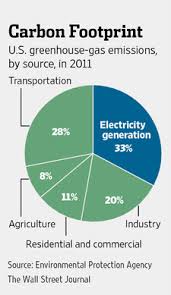
PRESIDENT BARACK OBAMA: Right now our power plants are the source of about a third of America’s carbon pollution. That’s more pollution than our cars, our airplanes and our homes generate combined. That pollution contributes to climate change, which degrades the air our kids breathe. But there have never been federal limits on the amount of carbon that power plants can dump into the air. Think about that. We limit the amount of toxic chemicals like mercury and sulfur and arsenic in our air or our water, and we’re better off for it. But existing power plants can still dump unlimited amounts of harmful carbon pollution into the air. For the sake of our kids and the health and safety of all Americans, that has to change. For the sake of the planet, that has to change.
NERMEEN SHAIKH: As President Obama spoke, the impacts of extreme weather could be seen across the globe. In California, more than 9,000 firefighters are battling more than 21 active wildfires. In Japan, temperatures topped 95 degrees on Monday for a record fourth day in a row. Heat records are also being broken across the Middle East. In one Iranian city, the heat index reached 164 degrees last week. Temperatures have been regularly topping 120 degrees in Baghdad and other Iraqi cities.
Meanwhile, a group of scientists, including former NASA scientist James Hansen, have warned that sea levels could rise as much as 10 feet before the end of the century unless greenhouse gas emissions are drastically reduced. The rise would make cities such as London, New York and Shanghai uninhabitable.
AMY GOODMAN: To talk more about climate change and President Obama’s plan to cut emissions, we’re joined by Naomi Klein, author of the best-selling book, This Changes Everything: Capitalism vs. the Climate, which is out in paperback today. She recently spoke at a Vatican climate change summit organized by Pope Francis. Naomi Klein joins us from Washington, D.C.
Naomi, welcome. Your assessment first of President Obama’s plan that he unveiled yesterday at the White House?
NAOMI KLEIN: Well, good morning, Amy. It’s great to be with you, and Nermeen.
So I think that what we’re seeing from Obama is a really good example of what a climate leader sounds like. You know, everything he’s saying is absolutely true about the level of threat, about the fact that this is not a threat for future generations, it is a threat unfolding right now around the world, including in the United States. It’s a threat that is about people’s daily health, with asthma levels, and also about the safety of entire cities, huge coastal cities. So he’s doing a very good job of showing us what a climate leader sounds like. But I’m afraid we’ve got a long way to go before we see what a climate leader acts like, because there is a huge gap between what Obama is saying about this threat, about it being the greatest threat of our time, and indeed this being our last window in which we can take action to prevent truly catastrophic climate change, but the measures that have been unveiled are simply inadequate.
I mean, if we look at what kind of emission reductions this is going to deliver, we’re—you know, when you talk about emission reductions, we don’t look at just one sector, just at electricity generation; you have to look at the economy as a whole. And what climate scientists are telling us is that relatively wealthy countries, like the United States, if we are going to stay within our carbon budget and give ourselves a chance of keeping warming below two degrees Celsius, which is already very dangerous but is what the United States negotiated, under Obama—when they went to Copenhagen in 2009, they agreed to keep temperatures below two degrees warming, and, in fact, we’re still on track for more like four degrees warming—if we were to stay below two degrees, we would need to be cutting emissions by around 8 to 10 percent a year. Those are numbers from the Tyndall Centre on Climate Research in Manchester. And this plan would lower emissions in the United States by around 6 percent overall—I’m not just talking about the power sector, but overall emissions by 6 percent by 2030. So compare what we should be doing—8 to 10 percent a year—with 6 percent by 2030. That’s the carbon gap, and it’s huge.
NERMEEN SHAIKH: And so, Naomi Klein, in your view, why did President Obama choose to focus so much on the power sector and not on other equally important sectors?
NAOMI KLEIN: Well, look, it is an incredibly important sector, as he says. It’s just that we have to do it all. And I think that this should be seen as a victory for the grassroots social movements that have been fighting dirty coal plants in their backyards, and the clean coal—the campaign that the Sierra Club has led over years now to shut down hundreds of coal plants. So this should be claimed, I think, as a grassroots victory. This phase of the plan is better than the last draft, in some ways, in that it’s less of a gift to the natural gas sector and has more supports for renewables. It also has more supports for low-income communities for energy efficiency. It’s inadequate, but it’s still better than the last draft. There are parts of the plan that are worse than the last draft, because of pressure from industry and from states that are very reliant on coal.
But that’s at—you know, the problem is not that this plan itself is bad. If this was announced in Obama’s first year in office, I would be the first to celebrate this and say, “OK, great. So now let’s bring on a carbon tax. Let’s prevent leasing of new oil and gas and coal on public lands. You know, let’s do the rest of the package. Let’s have huge investments in public transit, and we’ll really be on our way.” But at the end of his two terms in office, or coming near the end, you know, frankly, this does not buy a climate legacy. It’s not enough, because it isn’t in line with science, and it also isn’t in line with technology. I mean, the team at Stanford University under Mark Jacobson is telling us that we could get to 100 percent renewables, powering our entire economy with renewables, in two decades. So, if the scientists are telling us we need to do it, and the engineers are telling us we can do it, then all that’s missing are the politicians willing to introduce the bold policies that will make it happen. And that’s what we’re missing still.
AMY GOODMAN: Naomi Klein, during his speech Monday, President Obama also talked about his visit to the Arctic at the end of the month.
PRESIDENT BARACK OBAMA: I’ll also be the first American president to visit the Alaskan Arctic, where our fellow Americans have already seen their communities devastated by melting ice and rising oceans, the impact on marine life. We’re going to talk about what the world needs to do together to prevent the worst impacts of climate change before it’s too late.
AMY GOODMAN: So that’s President Obama. Can you talk about what’s happening in the Arctic and the activism that’s going on, from Portland, Oregon, to Seattle, Washington, to prevent what President Obama has allowed—drilling in the Arctic?
NAOMI KLEIN: Well, it’s extraordinary, actually, that he would be announcing this now, because what the world needs to do to save the Arctic, for starters, is to declare a moratorium on Arctic drilling. And the U.S. could be leading that effort, bringing together all Arctic nations to agree that this is untouchable, this is a no-go zone. And because that leadership is not there, and because indeed Obama has—is opening up the Arctic to drilling for the first time—we know that Shell has drilling rigs there right now, that they began the very preliminary stages of drilling on Thursday—and because his administration has failed to provide leadership on such a basic issue, I mean, Amy, it is the definition of insanity, it would seem to me, to be drilling in the Arctic for oil that is only available because Arctic ice is melting and it’s now passable and ships are able to go there and do this.
The CEO of Shell, a few days ago, talked about how they are expecting to find oil underneath that melting ice that is an even bigger deposit than there is off the Gulf of Mexico. He described it as a huge play, but more significantly, he described it as a long-term play. It’s unfortunate that the oil and gas industry describes all of this, you know, in the language of games, because obviously it’s not a game, but they call it a play. And he says that they don’t expect this to be in production until 2030. I mean, that is really striking, because by 2030 we should be really winding down our reliance on existing oil and gas infrastructure, not ramping up and opening up whole new fossil fuel frontiers.
And so this is what I mean about how Obama does not deserve to be called a climate leader simply because he has introduced what is a pretty good plan for cutting emissions from coal-fired power plants. I’m not saying that’s not important. It’s a step in the right direction. But simultaneously, he’s taking some significant steps in the wrong direction with Arctic drilling, with—you know, he’s overseen an explosion of fracking for gas. He’s still waffling on the Keystone XL pipeline. You know, he’s opened up new offshore oil and gas leases. So, you know, when you take one step in the right direction and five steps in the wrong direction, you’re going in the wrong direction. You’re not going in the right direction. And we have to be honest about this, despite the fact that he’s under huge fire from the coal lobby right now.
AMY GOODMAN: This issue of the activists who have been trying to stop the drilling—
NAOMI KLEIN: Yeah.
AMY GOODMAN: —that the Obama administration has provided license for—I mean, what was it? Forty people—
NAOMI KLEIN: Yeah, in Portland.
AMY GOODMAN: Forty people were—40 people were hanging from the bridge. You had all these kayaktivists outside. Can you talk about how it is he can announce—as they are all being taken away, as activists are charged for doing the activism they do, he’s announcing he’s going to the Arctic.
NAOMI KLEIN: Well, you know, frankly, if we want to look for climate leaders, climate leaders are the people who rappelled down from that bridge in Portland. Climate leaders are the people who have been taking to their kayaks in Portland, in Seattle, you know, 21-year-olds who have been trying to stop Arctic drilling with their bodies, they feel so passionately about this. People stayed on that bridge, hanging from that bridge, in order to block Shell’s icebreaker, for 40 hours, and they did so despite the fact that Shell had gone to the courts and got an injunction and they were being threatened with huge fines. That is real leadership. That is real, moral action, standing up in the face of huge amounts of money and power and might-makes-right logic.
And we’ve seen this all over the Pacific Northwest. It’s one of the ironies of the extreme energy era that we’ve been living in this past decade or so, where North America has been in the midst of this extreme energy frenzy, with fracking, mountaintop removal and tar sands oil. In order to get this stuff out, it’s required that the oil and gas and coal companies build all kinds of new infrastructure in the Pacific Northwest, which is the part of the United States that is probably most environmentally aware, even militant. It’s where a lot of the tree sits began. You know, you think about Portland and the history of anti-logging activism, tree sits. In that part of the world, there are a lot of people with deep history in this kind of activism. And Shell, I think, you know, just in order—just logistically, in order to get to the Arctic, they needed to use various ports in the Pacific Northwest as a parking lot for their machinery and also to get repairs done. And, you know, the Pacific Northwest has given them a very, very, very hostile welcome and made it clear that they don’t want to be a gateway to this, frankly, suicidal action of drilling in the Arctic.
AMY GOODMAN: Just to be clear, to clarify this point, explaining what the activists were doing, the Greenpeace activists spending 40 hours suspending from a bridge in order to block the icebreaking ship commissioned by Shell from leaving for the Arctic, hundreds of activists gathering on the bridge in kayaks in efforts to stop Shell’s plans to drill in the remote Chukchi Sea. They did temporarily stop the ship—
NAOMI KLEIN: Yeah.
AMY GOODMAN: —but then, ultimately, the ship made its way and is now making its way to the Arctic.
NAOMI KLEIN: They stopped the ship for 40 hours. And, you know, I think sometimes this can be seen as a sort of a stunt or a token action, but it really isn’t. You know, I was speaking with Annie Leonard, the executive director of Greenpeace, yesterday, and the really significant part of this is that there is a very small window when it is possible to do this drilling for Shell, because the period where the Arctic is sufficiently ice-free is just a few months. They have until late September to do this. So every day that they’re delayed is one less day when they’re able to look for this deposit that they claim is going to be a game-changing play. So this is more than token activism. Anything that slows them down is really significant. And these really are heroes.
AMY GOODMAN: And Hillary Clinton and President Obama’s position on Keystone XL?
NAOMI KLEIN: Well, Hillary, first of all, she was asked about drilling in the Arctic, and she said she was skeptical of it, which some people claimed as, you know, it was Hillary coming out against Arctic drilling. I think it’s Hillary understanding that this is a very unpopular position. But just saying that you’re skeptical or have doubts, which is another phrase she used, is not anything that she can be held accountable to. That’s language that is slippery enough to get a glacier through, Amy. It’s not a straight-up “no.” She’s also refused to comment, as you mentioned, on the Keystone XL pipeline.
And let me say, you know, Hillary Clinton’s plan, green energy plan, that she unveiled a few days ago—we’re going to get more details soon—is surprisingly bold. There’s parts of this that the plan really gets right, in terms of the speed with which she’s promising to roll out renewable energy. She’s getting the yes part of this equation pretty close to right, in the sense that we need supports for renewable energy. But it’s not enough, because if you look at a country like Germany, they have introduced a bold plan to support renewable energy, and in fact Germany now has what Hillary Clinton is promising she would do in the U.S., which is it has 30 percent of its electricity coming from renewables, but Germany’s emissions are not going down fast enough, and in some years they’ve even gone up. And that’s because in Germany that yes to renewable energy hasn’t been accompanied by a no to fossil fuels. They’ve allowed a continued mining at very high rates of dirty coal, of lignite coal, the dirtiest coal on the market, and they just export it, if they don’t have a market for it in the U.S.
And, you know, this is the problem with Hillary. She is willing to say yes to green technology, green jobs, but she is showing no signs of being willing to say no to the oil and gas lobby, which we know is funding her campaign significantly. So, as secretary of state, we know that there was quite a revolving door between the oil and gas lobby and her people at State and on her previous campaign staff. And I think there’s real reason for concern about whether or not she would be willing to stand up to the oil and gas lobby on Keystone, on Arctic drilling, on any of these other issues.
Obama Unveils His Plan to Cut Greenhouse Gases Emissions from Power Plants
President Obama formally unveiled his plan to cut power plant emissions on Monday — some two years in the making — calling it the “single most important step that America has ever made in the fight against global climate change.”
Speaking at the White House, the president said the plan includes the first-ever Environmental Protection Agency standards on carbon pollution from U.S. power plants. Over the next few years, each state will have the chance to create its own plan, he said, adding: “We’ll reward the states that take action sooner.”
Toward the end of his remarks, Obama cited other environmental issues, such as combating acid rain, where efforts have been successful even though it seemed hard at the time.
“We can figure this stuff out, as long as we’re not lazy about it,” he said.
The president compared the requirement of cutting carbon emissions by 32 percent to taking 166 million cars off the road.
In a new push to confront climate change, President Obama is announcing new standards that would cut the amount of carbon pollution produced by America’s power plants.
“These are the first-ever national standards that address carbon pollution from power plants,” according to the Environmental Protection Agency, which adds that power plants are the largest source of carbon pollution in the U.S., generating 32 percent of the total emissions.
Key elements of the Clean Power Plan include a requirement that would cut the power industry’s carbon pollution by 32 percent below 2005 levels in the next 15 years. The plan also seeks to boost renewable energy.
The White House says that between now and 2015, the changes will mean better health for Americans — preventing up to 3,600 premature deaths — along with bringing energy savings for U.S. consumers.
President Obama’s sweeping new power plant regulations are thrusting the debate over climate change into the race for the White House.
To Democrats, rallying around global climate change is a way to energize liberal supporters and paint Republicans as out of touch. To Republicans, Obama’s actions to curb greenhouse gas emissions are burdensome to business and block job creation.
Most of the changes Obama outlined would have to be implemented by the next president, if the rules survive court challenges.
Republicans cast the measure requiring states to cut carbon dioxide emissions by 32 percent by 2030 as unnecessary and costly.
The Obama administration itself estimated the emissions limits will cost $8.4 billion annually by 2030, though the actual price isn’t clear.
Republican Jeb Bush said the rules “run over state governments, will throw countless people out of work and increases everyone’s energy prices.”
Texas Republican Sen. Ted Cruz questioned whether climate change is occurring.
“I’m saying the data and facts don’t support it,” Cruz said at a retreat sponsored by billionaire brothers Charles and David Koch, heavily courted donors who oppose Obama’s climate change agenda.
Hillary Clinton called the measure a “significant step forward” and said she would defend it if elected president. Her Democratic challengers were similarly supportive.
A Washington Post/ABC News poll conducted in March showed 59 percent of Americans said they’d like the next president to be someone who favors government action to address climate change, while 31 percent would prefer someone who opposes it.
BY JULIE PACE, THE ASSOCIATED PRESS
Why Have Our Commercial and Public Media (TV, Radio, Newspapers, Magazines, Online Sources) and Officials in Federal and State Government in the United States Not Sounded the ALARM Yet on Continued Global Warming and Climate Change?


The following is a summary of a 2008 international conference entitled: “ENVIRONMENT: FROM GLOBAL WARNINGS TO MEDIA ALERT” that was held October 10 and 11, 2008, in Venice, Italy. The purpose of the conference was to challenge the international media to improve public understanding of the impact of climate change. Journalists and news executives from 29 countries representing six continents attended the conference which was held by the international World Political Forum (WPF).
Unfortunately, now almost five years after this conference was held, commercial and corporation funded TV and radio media in these United States continue to purposefully ignore said challenge by not sounding the alarm on the global warming world catastrophe in the making, as do many U.S. publicly elected government officials in federal and state government, leaving the at large public in the U.S. as confused as ever over whether human activities such as fossil fuel burning: in power plants that produce electricity; in home and business heating (natural gas; oil; propane; electric baseboard); in motor vehicle travel and product shipping, via trucks, ships, pipelines (fueling lift stations), in airplanes and in trains; and in cement making and paving the landscape (fuel burning in earth moving equipment). Another significant contributor to the growing global warming crisis is continued deforestation, worldwide, and especially the deforestation of the tropics, where previously large reductions in of carbon dioxide (CO2) were being taken out of the air by the vegetation there – through the process of photosynthesis. Less green vegetation on Earth means increasing buildup of CO2 in the atmosphere and oceans, adding to warmer global temperatures. Methane gas (unburned natural gas) that is released from oil wells, livestock, and rotting biological matter (permafrost thawing) compound the problem that is resulting in what the scientific community has called “a potentially very dangerous situation for all humanity and life on Earth and lasting far into the future. Reason is that many positive (lead to more warming) feedbacks . One such warming feedback is the loss of Earth’s albedo, where a reduction in the area of snow-covered land, ice caps, glaciers or sea ice has a compounding effect on the initial warming. As the loss of “white” snow and ice cover (the albedo) continues, the amount of solar energy absorbed by the ocean increases, leading to more warming, which reduces the albedo on the planet even more, which causes more warming, and so on. A small amount of snow melt exposes darker ground which absorbs more radiation, leading to more snowmelt.
The effect is most vividly demonstrated by the decline in Arctic sea ice in recent decades.

As humans are continuing to do things that add more heat-trapping greenhouse gases (GHGs) to the Earth’s atmosphere, the result is that climates all around Earth have been measurably and significantly changing, mostly to the detriment of humans and animal life.
The global warming that has already taken place has caused Earth’s ocean levels to rise – due to thermal expansion from increasing water temperatures and from melting glaciers on Greenland, Antarctica, and Earth’s numerous mountain ranges.
Ocean water acidification has already taken place (a 33% increase) which has already lead to significant environmental, economic, and social cost. These effects of expected to continue unabated which is expected to worsen in time, with projected increases in monetary losses, damage, and loss of human and animal life due to worse and worse “natural” disasters.
As examples of recent catastrophes suspected to have been made worse as a likely direct consequence of rising average global temperatures (global warming): in 2015 heat waves in India and Pakistan killed 1,400 and 2,500 people; in 2013, the thirtieth named storm of the 2013 Pacific typhoon season, Typhoon Haiyan — known as Typhoon Yolanda in the Philippines – with an estimated one-minute sustained winds of 315 km/h (196 mph; 170 kn), making the typhoon the strongest tropical cyclone ever observed based on one-minute sustained wind speed and the deadliest typhoon hitting the Philippines in recorded modern history, killing 6,300 people in that country alone (dozens of fatalities from the storm were also reported in Taiwan, China and Vietnam) and according to United Nation’s officials, about 11 million people were adversely impacted by the storm with many left homeless and an economic cost in the billions of dollars; in 2012, Hurricane Sandy, which remains the largest Atlantic hurricane on record (as measured by diameter, with winds spanning 1,100 miles (1,800 km)) is estimated to have caused monetary damages of over $68 billion and killed at least 233 people along its path on the eastern U S. seaboard including New Jersey and New York; and in 2005, Hurricane Katrina, the fifth hurricane of the 2005 Atlantic hurricane season, was not only the costliest “natural” disaster in the history of the United States. Total property damage from Hurricane Katrina was estimated at $108 billion; the hurricane and subsequent flooding took 1,833 human lives and an undetermined number of domesticated and wild animal lives.
Yet today, incredibly – almost six years later – there remain deniers of human-caused global warming and climate change, including our State of Wisconsin’s own U.S. Senator Ron Johnson, as well as announced U.S. presidential candidate and our current governor, Scott Walker, who continue to spread the false message that Earth’s climates have not been shown to have changed as a result of human activities, to the delight of corporations that are financially benefiting from continued and more fossil fuel burning, which releases carbon dioxide gas, the most abundant of the greenhouse gases, which compounds from year to year in the atmosphere and Earth’s oceans, leading to monumental negative consequences for humanity and other life forms on Earth.
WPF’s President Mikhail Gorbachev, the eighth and last leader of the Soviet Union and General Secretary of the Communist Party of the Soviet Union from 1985 until 1991 when the party was dissolved, chaired the conference at which participants reached a consensus that the problem of climate change is “URGENT”.
“Time is running out,” Mr. Gorbachev said in his closing remarks. “The most efficient way to tackle the urgent environmental problems facing our planet is transparency, in which the media have a vital role to play. This means global glasnost.”
Climate experts and media delegates approved a declaration calling for higher standards of reporting on strategic options to avert irreversible damage to the Earth’s eco-systems.
Stressing the importance of well-informed public opinion, the declaration set out the following main recommendations:
– The media have the central role in ensuring that politicians, corporations, non-governmental organisations and scientists keep the general public informed about the latest facts and policy options regarding climate change. Civil society formation and action are essential components in deliberation on this issue.
– Journalists have a responsibility to improve their knowledge and skills in order to be able effectively to question government policy-makers, to distinguish facts from opinion or advocacy, and to evaluate scientific arguments from an independent viewpoint.
– Journalists and civil society should redouble their efforts to combat restrictive measures by governments on journalists reporting on their deficiencies in fighting environmental degradation or in informing the public about the dangers of climate change.
– Journalists should avail themselves of existing international databanks of validated statistics and scientific research on climate change.
– Scientists need to acquire improved communications skills to explain their findings in accessible terms and to build relationships of trust with the media.
– Media proprietors should be prepared to invest more resources in investigative reporting to allow specialist journalists to carry out serious and objective coverage of complex issues, based on a thorough understanding of good science.
– Editors should provide more space for in-depth treatment of environmental issues, not just on-line but in print and on air, and encourage innovative approaches that will grab the attention of the audience in a responsible, independent and non-sensational manner.
– Journalism training organisations should develop ever more sophisticated exercises to improve reporters’ skills in explaining complex scientific arguments. An international network should be created to share information about the availability of training courses and the development of new training models.
The Conference concluded on a positive note, declaring: “There is, however, cause for optimism if we act now. Numerous positive solutions to the global environmental change proposed by science and made possible by innovations in technology, the potential inherent in global civil society organization and by citizens’ groups everywhere in the world; and contributions from socially responsible business leaders can make it possible for us to provide for a decent and full life for all, and for generations to come, within the limits of our planet’s resources.”
Global Warming Deniers and All Fossil Fuel Users: You Are Collectively Putting Us All in Very Grave Danger!
Scientists:
2015 Still On Pace as Hottest Year On Record
The first five months of 2015 topped the warmest such period on record for the globe, according to a pair of recently released independent analyses from government scientists. Meanwhile, a third, separate analysis from the Japanese Meteorological Agency similarly found May 2015 to be the globe’s hottest May, topping May 2014 in records dating to 1891.
Global temperatures January-May 2015 exceeded 2010’s as the warmest first five months of any year, according to the National Aeronautics and Space Administration’s (NASA’s) Goddard Institute for Space Studies.
The National Oceanic and Atmospheric Administration’s (NOAA’s) National Climatic Data Center noted that the first five months of 2015 nudged ahead of January-May 2010 by 0.09 degrees Celsius.
Record warm sea-surface temperatures in the northeast and equatorial Pacific Ocean, as well as areas of the western North Atlantic Ocean and Barents Sea north of Scandinavia contributed to the record warm January-May 2015, according to a recently released NOAA data set. The record global average warmth in the first five months of 2015 follows the record annual average global temperatures of all of 2014.
NASA’s analysis found the most pronounced warm anomalies in May 2015 were over the higher latitudes of the northern hemisphere in two zones. One stretched from northern and central Russia into the Kara Sea, Barents Sea, northern Scandinavia westward toward northeast Greenland. Another was centered over northeast Alaska, and Canada’s Yukon and Northwest Territories stretching into the Beaufort Sea.
Record May warmth was also observed in parts of equatorial South America, southern Africa and The Middle East, according to NOAA. Spain tallied its second warmest May on record. Meanwhile, the heat wave death toll in India in the latter part of May topped 2,300, as was reported in a blog posting here last month that also reported on the death toll of Pakistan’s heat wave last month.
In fact, no U.S. corporation-funded major public media (T.V. or radio, including ABC, NBC, CBS, FOX and NPR) devoted any of their prime time broadcasting in Madison, WI to this story. This is not surprising, of course, knowing that all the major media networks in the U.S., both public and private, as well as many U.S. politicians who claim they represent the public, depend heavily on monetary sources from the major automobile, trucking, airline and fossil fuel providers/refiners/distributors and fossil fuel related industries.
Nine of the ten warmest years in NASA’s 134-year database have occurred this century, with the exception of 1998, which featured the tail end of one of the strongest El Ninos on record.
The last year NASA’s data set of global average temperatures was cooler than average global was 1976.
- The last cooler-than-average month was over 21 years ago, February 1994. In the 449 months from January 1978 through May 2015, only 11 months have been cooler than average, according to the NASA data set.
NOAA says nine of 10 warmest 12-month periods have taken place over the past two years. This 12-month record for the globe has been either tied or broken each month from January to April 2015.
France to see worse heat wave than occurred in 2003 when thousands of people died. France’s southwestern Gironde region sweltered under 107-degree F. heat a day after Cordoba in Southern Spain recorded nearlt 111 degree temperatures.
For noncorporatized REAL news, see news schedule at WORT-FM Community Radio – Madison, Wisconsin, and Democracy NOW!.
Republican Brewhaha on Wisconsin Highway Funding Symptomatic of Larger Problem

Wisconsin Governor Scott Walker’s proposed borrowing plan for highway construction the next two years has finally hit the skids! GOP lawmakers said as much in a letter to the governor yesterday. Not only is the governor’s proposed $1.3 billion transportation borrowing plan too high, said the 33 Assembly Republicans who signed the letter, but also any reduction to $800 million must include reductions in the massive Milwaukee area freeway projects already under construction.
The Republicans lawmakers, who are in the majority in both houses of the Wisconsin Legislature, are negotiating among themselves over the reduction in bonding to $800 million according to a story in the Milwaukee Journal Sentinel website Monday.
Allthingsenvironmental emailed the Republican dominated Joint Finance way last March after the governor’s proposed biennial budget for 2015-17 hit the streets sending them the following message:
So it’s not just the governor’s highway plan part of the 2-year budget that’s unsustainable. It’s virtually everything Scott Walker has done as governor, starting January 2010 with his Act 10 that destroyed collective bargaining in public employee unions, having appeared out of the blue.
Meanwhile, as probable presidential candidate Scot Walker heads his way to yet another Wisconsin taxpayer funded speaking engagement, this time in California, the brewhaha simmering among his fellow Republicans is beginning to reach the boiling point. One has to wonder how many frequent flyer miles the governor and his security people have racked up over the past 5 years? A lot? Yes, but undoubtedly not even close to the millions of tons of greenhouse gases his jets, autos and motorcycles have emitted to the atmosphere for the next generation to be burdened with.
 All Things Environmental
Recent Comments