Archive | Ethics RSS for this section

United States is Morally Obligated to Reduce the Growing Threat of Global Climate Change

moralityscales

The world’s top climate panel has issued its direst appeal to date on the need to stop global warming. In a new report, the United Nations’ Intergovernmental Panel on Climate Change says continued emissions of greenhouse gases “will cause further warming and long-lasting changes in all components of the climate system, increasing the likelihood of severe, pervasive and irreversible impacts.” Unveiling the findings, panel chair Rajendra Pachauri said the window for action is closing.

Rajendra Pachauri: “Now, as it happens, the window of action is really closing very rapidly, so we have a very short window of opportunity. If you look at the total carbon budget to ensure that temperature increase by the end of this century will not exceed two degrees Celsius, we’ve already used up a substantial share of this. What’s remaining for us is only 275 gigatons of carbon. So this clearly shows that we have a very limited window of opportunity, and I think the global community must look at these numbers and show the resolve by which we can bring about change.”

The U.N. panel on climate change is not mincing words. The fourth and final volume of the Intergovernmental Panel on Climate Change assessment of the current situation has no real surprises considering it is essentially a summary of previous reports. What it does have is some stark language that warns time is running out. The IPCC report amounts to a “final warning” about the dangers of failing to act on climate change, notes the Independent.

At this point, action has to mean cutting greenhouse gas emmissions to zero by 2100, a goal that, for now at least, seems far-fetched. Unless there is an unprecedented effort to cut emissions, then the planet is clearly headed toward “irreversible” changes to the climate. But even if emissions are cut to zero, some of the effects of climate change “will continue for centuries.” The Washington Post explains what’s at stake:

The question facing governments is whether they can act to slow warming to a pace at which humans and natural ecosystems can adapt, or risk “abrupt and irreversible changes” as the atmosphere and oceans absorb ever-greater amounts of thermal energy within a blanket of heat-trapping gases, according to scientists who contributed to the report.
“The window of opportunity for acting in a cost-effective way—or in an effective way—is closing fast,” said Michael Oppenheimer, a Princeton University geosciences professor and contributing author to the report.

To keep global warming below the target level of two degrees Celsius, the U.N. climate panel says the world must keep fossil fuel emissions to around one trillion tons of carbon dioxide. At current emissions rates, that amount will be reached in just 30 years, maybe even less. Less than $400 billion a year is being spent to reduce emissions or adapt to climate change. By contrast, energy corporations are spending over $600 billion to find new sources of CO2 extraction, and governments are spending that same amount on subsidizing fossil fuel consumption. The IPCC’s report is its fifth and final assessment on climate change ahead of global negotiations in Paris next year.

The 40-page report that summarizes 5,000 pages of work by 800 scientists claims the effects of global warming are already evident. “Climate change is being registered around the world and warming of the climate system is unequivocal,” notes the IPCC. The debate about climate change should be closed. The hundreds of authors that were involved in the study are “even more certain than before that the planet is warming and humans are the cause,” notes CNN. That was the message U.N. Secretary-General Ban Ki-moon wanted to get across: “Science has spoken. There is no ambiguity in the message. Leaders must act, time is not on our side.” Secretary of State John Kerry characterized the report as “another canary in the coal mine” that shows why “ambitious decisive and immediate action” is needed.

IPCC Home
Hear “Who’s Gonna Stand Up (and Save the Earth)”, by Neil Young. The “who” he’s talking about is all of us, and there’s no time like the present for us all to minimize doing thing that burn fossil fuels for energy.

DESMOGBIOG.COM Introducing “Natural Gas Exports: Washington’s Revolving Door Fuels Climate Threat”

DeSmogBlog’s Steve Horn and Republic Report’s Lee Fang have co-written an in-depth report on the influence the government-industry revolving door has had on Big Oil’s ability to obtain four liquefied natural gas (LNG) export permits since 2012 from the Obama Administration.

Titled “Natural Gas Exports: Washington’s Revolving Door Fuels Climate Threat,” the report published here on DeSmogBlog???????????????????????????????????????????????????????????????????????????? and on Republic Report serves as the launching pad of an ongoing investigation. It will act as the prelude of an extensive series of articles by both websites uncovering the LNG exports influence peddling machine.

The report not only exposes the lobbying apparatus that has successfully opened the door for LNG exports, but also the PR professionals paid to sell them to the U.S. public. It also exposes those who have gone through the “reverse revolving door,” moving from industry back to government and sometimes back again.

Aussies Bury Heads in Sand Prior to World Leaders Attending G20 Summit in Brisbane, Australia

heads-in-the-sand

A group of around 400 demonstrators participate in a protest of Australia’s elimination of its carbon tax by burying their heads in the sand. The photo was taken at Sydney’s Bondi Beach on November 13, 2014. Australia has the developed world’s highest per capita emissions of greenhouse gases.

World leaders met November 15-16, 2014, at Brisbane, Australia, for the G20 summit. President Barack Obama spoke at the University of Queensland during the summit on a number topics, including his announcing of a $3 billion contribution by the U.S. to an international fund to help poor countries cope with the effect of climate change.

Speaking to university students in Brisbane, ahead of the official opening of the G20 Leaders’ Summit, Obama said:

“Today, I’m announcing that the United States will take another important step,” he said.

“We will contribute $3 billion to the Green Climate Fund [UN] to help developing nations deal with climate change.” speech made reference to Queensland’s Great Barrier Reef, which the Intergovernmental Panel on Climate Change (IPCC) has warned could be at risk if more is not done to reduce carbon emissions.

“I have not had time to go to the Great Barrier Reef and I want to come back,” Mr Obama said.

“I want my daughters to be able to come back and I want them to be able to bring their daughters or sons to visit. And I want that there 50 years from now.”

The US contribution to the climate fund doubles what other countries had previously pledged ahead of a November 20 deadline. Mr Obama told the audience that every nation has a responsibility to act on climate change, including Australia.

“The United States and Australia have a lot in common and one of the things we have in common is we produce a lot of carbon,” he said. “Historically we have not been the most energy efficient of nations, which means we’ve got to step up.”

In his speech, Mr Obama also spoke about the situation in Ukraine, describing Russia’s actions as aggressive.

“We’re leading in dealing with Ebola in West Africa and in opposing Russia’s aggression against Ukraine, which is a threat to the world, as we saw in the appalling shoot-down of MH17.”

Speaking at an earlier news conference in Brisbane, UN secretary-general Ban Ki-moon said he hoped other G20 leaders would contribute to the fund as did Obama.

“The transition towards a low-carbon, climate-resilient future is accelerating, I urge other leaders and major economies, especially at the G20, to come forward with contributions that will sustain this momentum”, the UN secretary said.

Carbon pricing had been implemented for Australia’s 500 largest carbon dioxide (CO2) emitting companies, which are those companies that emit more than 25,000 tons of CO2 or supply or use natural gas, starting on July 1, 2012.

CO2 was taxed at $22.60 per ton of CO2 emitted by the highest 348 emitters.

Under the Carbon Farming Initiative (CFI), farmers and land managers could earn carbon credits by storing carbon or reducing greenhouse gas emissions on their land. The credits could then be sold to people and businesses wishing to offset their emissions.

The program included credits earned from activities such as reforestation, savannah fire management and reductions in emissions from livestock and fertilizer use. CFI credits could also be sold to international companies.

Australia had legislated a renewable energy target designed to ensure that 20 per cent of electricity would come from renewable sources by 2020.

Following the 2013 federal election, Prime Minister Tony Abbott announced plans to scrap the controversial tax. He then put pressure on labor leader Bill Shorten to support legislation repealing the tax by the senate. The Australian Senate voted by 39 to 32 votes to repeal the tax on July 17, 2014. Abbott claims that the tax cost jobs and forced energy prices up.

The G20 summit meeting came just days after President Obama and Chinese President Xi Jinping announced a deal on climate change that raised hopes for a comprehensive international deal next year in France.
heads-in-the-sand

Flood Wall Street Activists Seek Trial to Mount “Necessity Defense” for Global Warming Protest

Protesters arrested in last month’s demonstration in the heart of Wall Street have appeared in court to a demand a trial. More than 100 people were detained as part of the “Flood Wall Street” action targeting the financial sector’s role in the extractive industries fueling global warming. As the cases were brought to court lastClimate-Change-Science-v2 week, a group among those arrested rejected a prosecution offer to dismiss the charges after six months. Instead, the protesters said they want their case to go to trial so they can mount a “necessity defense” — arguing that their actions were justified by how the financial industry worsens the climate change that threatens the planet. Flood Wall Street defendant John Tarleton explained the rationale on Tuesday.

John Tarleton: “Twelve of us have plead not guilty to these charges of disorderly conduct. We want to take the case to trial and argue a ‘necessity defense,’ that the harm being caused by Wall Street in financing all sorts of extreme energy projects in this country and around the world is so much greater than any harm that was done by a traffic jam on Broadway. And we feel that we have to continue to push this point that Wall Street and capitalism in general cannot solve the climate crisis because they are central to the problem.”

The “necessity defense” had been the plan of two climate activists set to go on trial in Massachusetts last month for blocking a coal shipment. But the case was resolved after the prosecutor all but adopted their reasoning and dropped the charges. He then joined them in the People’s Climate March.

Source: Democracy Now

More Reasons why Wisconsinites Should Be “Angry” about the Actions and In-actions of their Governor!

4653708055_profile_pic_16357065254_xlarge_xlarge

While speaking at a Republican Party field office in Waukesha last week, Republican National Committee co-chair Sharon Day was searching for an answer as to why the governor’s race seemed so close this year in Wisconsin and the need for all republicans to get to the polls on November 4th and re-elect Scott Walker. “It’s not going to be an easy election”, Day told the audience, “it’s a close election. Like I said, much closer than I can even understand why.

“I don’t want to say anything about your Wisconsin voters but, some of them might not be as sharp as a knife.”

[as reported by Bill Glauber of the Journal Sentinel Oct. 20, 2014] Then again maybe it’s so close because Wisconsin voters are all too well informed of the impacts of their governor’s decisions over the last 4 years on Wisconsin’s environment and the inability of the Walker administration to follow a sustainable course to the future.

Wisconsin’s voters have always been well respected and admired for electing public officials who went beyond the call of duty and sometimes went outside the preferences of their own party to ensure Wisconsin’s many fine natural resources were always well protected. Wisconsin became a model in the 1960 and 1970s that other states emulated to protect their own natural and human resources. It never did mattered much which political party was in the majority in the state Legislature, nor the party affiliation of the governor. What mattered most was that Wisconsin’s rich natural resource and its healthy population was protected no matter what.

Even Gaylord Nelson ran as a Progressive Republican his first attempt at being a representative in the Wisconsin Legislature (he lost). Two years later, in 1948, he ran for the state Senate as a Democrat in 1948 and won. He then served ten years in the state Legislature before being elected Wisconsin Governor in 1958. He became a U.S. Senator in 1962 and championed several other environmental protection laws throughout his 18 years in the U.S. Senate, cooperating regularly with fellow democrats and republicans alike. That’s how it pretty much was in Wisconsin for a number of decades regardless of there being a democratic or republican governor. democratic

However, in 2010, Wisconsin voters elected Republican Scott Walker to be their governor. Moreover, Republican filled the majority of both the Wisconsin Assembly and the State Senate. Things changed. Beginning in 2010, it mattered a great deal whether a person in the government was a democrat or a republican. It mattered for the environment, too, as Governor Scott Walker had promised 250,000 new jobs should he be elected and he has not been able to keep that promise. What’s worse, neither he nor his party’s other officials in the State Assembly and the State Senate have shown any regard for protecting Wisconsin’s current and future environment from harm. Nor have they taken any meaningful action reins of government to really help the middle and lower income families and individuals in Wisconsin the last 4 years.

After being sworn into office on January 3, 2011, like a bolt from the blue, Scott Walker introduced a controversial budget repair plan which eliminated many collective bargaining rights for most public employees and made over $1 billion in cuts to the state’s biennial education budget and $500 million in cuts from the state’s biennial Medicaid budget. The budget cuts led to significant protests at the Wisconsin State Capitol and sparked a recall vote of Walker in June 2012, which he won with just 53% of the vote.

Wisconsin’s environment has been under attack by the republicans in the state Legislature and by Governor Scott Walker since they took the reins of Wisconsin’s government in January 2010. Wisconsin will never be the same. But things could get even worse with four more years of republican controlled government and Scott Walker as Wisconsin’s governor.

According to Editor emeritus of The Capital Times, “They’ve [Wisconsin’s republicans] been intent on tearing down the state’s traditions, dating all the way back to another Republican governor, Robert M. La Follette. They’ve weakened La Follette’s famed civil service rules. They’ve made drastic cuts to the Nelson-Knowles public land purchases and rolled back environmental rules to make it easier to build on wetlands or construct open pit mines in recreational areas. They’ve vigorously fought gay marriage equality until the U.S. Supreme Court finally told them to stop.

And all the while they’ve unabashedly worked to change the rules to give them an advantage at election time to stay in power to continue tearing down what their predecessors from both parties have built. They’ve relentlessly pushed voter ID under the guise of stopping what experts agree is nonexistent voter fraud. They’ve made it harder for people in urban areas, where many Democrats live, to vote absentee. They’ve gerrymandered legislative districts like they’ve never been gerrymandered before. No other Republican administration would have ever thought of being so brazen…”

“Contrast that with previous Republican administrations. Warren Knowles brought in the likes of respected governmental experts like James Morgan, Paul Hassett and Wayne McGown. Lee Dreyfus surrounded himself with stalwarts like Bill Kraus, Mike Musolf and the incomparable “Stone” Williams. Tommy Thompson reached into the Democratic caucus and made state Sen. Tim Cullen a key cabinet member and made class acts like Mark Bugher a key player. There was always one goal in mind: Make Wisconsin government work for all the people, not the special few. That, sadly, isn’t the case with those who call themselves Republicans in state government these days.”

“If they’re returned to office next week, the destruction of what was once Wisconsin will continue.”

In perhaps no other subject area has Wisconsin lost ground in the last four years than that of clean energy production and reducing Wisconsin’s global footprint. In April 2007, Wisconsin Gov. Jim Doyle signed Executive Order 191 establishing the Governor’s Task Force on Global Warming (GTF). The Task Force brought together members of the business, industry, government and environmental consulting communities to create a plan of action for the state of Wisconsin that addresses issues related to climate change. Doyle commissioned the Task Force to identify actionable public policies designed to reduce greenhouse gas (GHG) emissions from Wisconsin while ensuring that the state remains competitive in the global economy.

The Task Force’s final report to the governor, entitled “Wisconsin’s Strategy for Reducing Global Warming,” was released in July 2008. The report recommended the state reduce its GHG emissions “to 2005 levels by 2014”, “22% below 2005 levels by 2022”, and “75% below 2005 levels by 2050”. The GHG emission mitigation options recommended were similar to those recommended by other states.

According to the Milwaukee Journal Sentinel‘s Lee Bergquist and Thomas Content, “only a few years ago, fighting global warming was a front burner topic among state policy makers. But the issue has been largely ignored in Wisconsin since 2010 with the collapse of legislation that would have required a big shift to renewable power.”

After an intense focus on climate change under Democratic Gov. Jim Doyle, Republican Gov. Scott Walker and the GOP-controlled Legislature devoted little attention to the issue. Shortly after taking office in 2011, Walker canceled plans to burn renewable biomass at the University of Wisconsin-Madison. The school’s power plant had come under fire for high construction costs and other problems.

In moves directed by the Wisconsin Public Service Commission (PSC, 2 of its 3 commission are appointees of Governor Scott Walker), the state’s Focus on Energy program suspended incentives for solar panel projects twice in the past three years. More recently, Wisconsin utility companies, including Madison Gas and Electric Company (MGE), have submitted proposals to the PSC which would allow them to cut back further on incentives for customers to install solar panels. MGE recently submitted plans to increase monthly baseline charges and reduce per kilowatt rates, making residential and commercial investments in solar energy less economically advantageous in the future. For example, under MGE’s proposal this fall, the fixed charge for connecting to the power grid would increase from about $10 to $19 a month, while the energy usage rates would drop from 14.4 cents to 13.3 cents per kilowatt hour. Much greater increases in the fixed charges were announced for years beginning in 2016.

According to Michael Vickerman, the program and policy director for RENEW Wisconsin, a statewide group that advocates for renewable energy, the proposed rates would result in cost increases on an unprecedented scale, putting Madison’s electricity rates among the highest in the region. “What they’re proposing is practically double what is the norm in the upper Midwest,” he told Madison’s weekly newspaper, ISTHMUS.

“If MGE’s rate changes go through, the results could have ramifications across the entire nation. This sets a very bad precedent,” said Michael Noble, the executive director of Fresh Energy, a nationwide renewable energy coalition.

Vickerman said the proposed changes would have an impact on solar installation in Wisconsin, “which is already falling behind the rest of the nation”. Feelings of insecurity from the current rate debate may have had a hand in that drop, he argued. “It is the lowering of the [energy] rate that is the most unsettling for the solar industry,” he said. Property owners might be less inclined to invest in solar, since such investments usually take several years to be paid back.

The proposed plans have met with widespread public opposition at PSC’s public hearings. Yet the Walker administration has been strangely silent on this issue. The PSC is expected to announce its decision on MG&E’s proposed changes to its rate structure in December.

The transportation is the second most major source of U.S. greenhouse gases to the atmosphere, second to only electricity generating coal and natural gas powered electricity generating plants. Most of the greenhouse gas are emitted by flying and driving motor vehicles.

Since January 2011, Governor Walker has spent nearly $1 million in campaign funds on air travel, according Jessie Opoien, writing for The Capital Times. The majority of his flights out of state are taken on private, chartered jet – by far the worse way to travel as far as the environment is concerned because per passenger emissions are at their highest compared to other travel modes.

Walker has also done nothing to reduce the vehicle miles traveled on Wisconsin roads and bridges, which is the other part of transportation’s large annual slug of carbon dioxide and other greenhouse gases added to the atmosphere. The carbon dioxide that remains in the atmosphere (other quantities of it are absorbed into the oceans, causing the oceans to become 30% more acidic than during the early 20th century) may remain in the atmosphere for hundreds of years.

The Wisconsin Department of Transportation reports that the annual number of vehicle miles traveled on Wisconsin roads has now “leveled off” at 59.5 billion miles. That is roughly double the vehicle miles traveled on Wisconsin roads in 1975 and even the 1975 levels of 30 billion miles traveled per year is unsustainable if we are going to do anything timely on the release of greenhouse gases from transportation in Wisconsin. For every gallon of gasoline burn in an internal combustion chamber, 20 pound of carbon dioxide is emitted to the atmosphere.

Women’s rights, taking health care decision out of women’s hands, and countering overpopulation have also been under attack by the Walker administration. One of the first things Governor Walker did was repeal the Equal Pay Protection Act in Wisconsin which will set women financially in reverse compared to men.

State republicans and Governor Scott Walker have gutted Wisconsin family planning and women’s reproductive health care centers in Wisconsin. This September, the Fond du Lac Planned Parenthood clinic shut its doors, marking the fifth Planned Parenthood closure in Wisconsin to directly result from Walker’s decision to eliminate family planning dollars in the state budget. This action is short-sited.

In a report by Kate Golden, writing in the Wisconsin State Journal Monday, Rep. Chris Taylor of Madison, a former public policy director of Planned Parenthood of Wisconsin, is reported to have said she is suspicious because Gov. Scott Walker ‘s administration and the Republican-controlled Legislature have been “hostile to birth control”.

The problem of unwanted pregnancies in Wisconsin and elsewhere has profoundly negative social, economic and environmental consequences for Wisconsin and the sustainability of our entire planet, which makes it imperative that unwanted pregnancies are prevented. That is a primary mission of Planned Parenthood and will mean a lot in terms of unnecessary greenhouse gases and the cost of social programs. It is already a tragedy that program funds have been cut and clinics had to close.

The reasons for Wisconsinites’ anger with Governor Walker over the last 4 years are nearly endless. Environmental writer Bill Berry’s observation on Walker’s environmental record following Berry’s four decades of covering the environment in Wisconsin should suffice: “Scoot Walker has by far the worst environmental record of all Wisconsin governors of that time”. [from Berry’s opinion plece in the October 8-14, 2014 edition of The Capital Times.]

IPCC Releases Final Report on Global Warming and Climate Change

IPCClast

In a word: “dire” – the Intergovernmental Panel on Climate Change. The window of opportunity for doing something positive about it – closing. The time to start action on quickly reducing human causes releases of greenhouse gases – NOW!

From the Huffington Post (November 3, 2014):

COPENHAGEN, Denmark (AP) — Climate change is happening, it’s almost entirely man’s fault and limiting its impacts may require reducing greenhouse gas emissions to zero this century, the U.N.’s panel on climate science said Sunday.

The fourth and final volume of the Intergovernmental Panel on Climate Change’s giant climate assessment offered no surprises, nor was it expected to since it combined the findings of three reports released in the past 13 months.

But it underlined the scope of the climate challenge in stark terms. Emissions, mainly from the burning of fossil fuels, may need to drop to zero by the end of this century for the world to have a decent chance of keeping the temperature rise below a level that many consider dangerous.

The IPCC didn’t say exactly what such a world would look like but it would likely require a massive shift to renewable sources to power homes, cars and industries combined with new technologies to suck greenhouse gases from the atmosphere.

The report warned that failure to reduce emissions could lock the world on a trajectory with “irreversible” impact on people and the environment. Some impacts already being observed included rising sea levels, a warmer and more acidic ocean, melting glaciers and Arctic sea ice and more frequent and intense heat waves.

The science has spoken. There is no ambiguity in their message. Leaders must act. Time is not on our side,” U.N. Secretary-General Ban Ki-moon said at the report’s launch in Copenhagen.

Amid its grim projections, the report said the tools are there to set the world on a low-emissions path and break the addiction to burning oil, coal and gas which pollute the atmosphere with heat-trapping CO2, the chief greenhouse gas.

“All we need is the will to change, which we trust will be motivated by knowledge and an understanding of the science of climate change,” IPCC chairman Rajendra Pachauri said.

The IPCC was set up in 1988 to assess global warming and its impacts. The report released Sunday caps its latest assessment, a mega-review of 30,000 climate change studies that establishes with 95-percent certainty that most of the warming seen since the 1950s is man-made. The IPCC’s best estimate is that just about all of it is man-made, but it can’t say that with the same degree of certainty.

Today only a small minority of scientists challenge the mainstream conclusion that climate change is linked to human activity.

Global Climate Change, a NASA website, says 97 percent of climate scientists agree that warming trends over the past century are very likely due to human activities.

The American public isn’t as convinced. A year-old survey by Pew Research showed 67 percent of Americans believed global warming is occurring and 44 percent said the earth is warming mostly because of human activity. More recently, a New York Times poll said 42 percent of Republicans say global warming won’t have a serious impact, a view held by 12 percent of Democrats and 22 percent of independents.

Sleep-deprived delegates approved the final documents Saturday after a weeklong line-by-line review that underscored that the IPCC process is not just about science. The reports must be approved both by scientists and governments, which means political issues from U.N. climate negotiations, which are nearing a 2015 deadline for a global agreement, inevitably affect the outcome.

The rift between developed and developing countries in the U.N. talks opened up in Copenhagen over a passage on what levels of warming could be considered dangerous. After a protracted battle, the text was dropped from a key summary for policy-makers — to the disappointment of some scientists.

“If the governments are going to expect the IPCC to do their job,” said Princeton professor Michael Oppenheimer, a lead author of the IPCC’s second report, they shouldn’t “get caught up in fights that have nothing to do with the IPCC.”

The omission meant the word “dangerous” disappeared from the summary altogether. It appeared only twice in a longer underlying report compared to seven times in a draft produced before the Copenhagen session. The less loaded word “risk” was mentioned 65 times in the final 40-page summary.

“Rising rates and magnitudes of warming and other changes in the climate system, accompanied by ocean acidification, increase the risk of severe, pervasive, and in some cases irreversible detrimental impacts,” the report said.

World governments in 2009 set a goal of keeping the temperature rise below 2 degrees C (3.6 F) compared to before the industrial revolution. Temperatures have gone up about 0.8 C (1.4 F) since the 19th century.

Emissions have risen so fast in recent years that the world has used up two-thirds of its carbon budget, the maximum amount of CO2 that can be emitted to have a likely chance of avoiding 2 degrees of warming, the IPCC report said.

“This report makes it clear that if you are serious about the 2-degree goal … there is nowhere to hide,” said Alden Meyer of the Union of Concerned Scientists, an advocacy group. “You can’t wait several decades to address this issue.”

U.S. Secretary of State John Kerry said the report demands “ambitious, decisive and immediate action.”

“Those who choose to ignore or dispute the science so clearly laid out in this report do so at great risk for all of us and for our kids and grandkids,” Kerry said in a statement.

The IPCC said the cost of actions such as shifting to solar and wind power and other renewable sources and improving energy efficiency would reduce economic growth only by 0.06 percent annually.

Pachauri said that should be measured against the implications of doing nothing, putting “all species that live on this planet” at peril.

The report is meant as a scientific roadmap for the U.N. climate negotiations, which continue next month in Lima, Peru. That’s the last major conference before a summit in Paris next year, where a global agreement on climate action is supposed to be adopted.

The biggest hurdle is deciding who should do what. Rich countries are calling on China and other major developing countries to set ambitious targets; developing countries saying the rich have a historical responsibility to lead the fight against warming and to help poorer nations cope with its impacts. The IPCC avoided taking sides, saying the risks of climate change “are generally greater for disadvantaged people and communities in countries at all levels of development.”

AP: By KARL RITTER
Posted: 11/02/2014 7:35 am EST Updated: 11/03/2014 12:59 pm EST

IPCC Sounds Fresh Alarm as Fossil Fuel Interests Tighten Grip on Congress

The contrast between the increasingly partisan American political divide and the increasingly solid international scientific consensus couldn’t be starker.

By John H. Cushman Jr., InsideClimate News   November 3, 2014   Inside Climate

The leading international network of climate scientists is urging a rapid shift away from fossil fuels, just as allies of coal, oil and natural gas industries in the United States appear poised to tighten their grip on Congress—where opposition to cleaner energy is already entrenched.

That outcome of Tuesday’s midterm election would spell trouble for advocates of a strong international climate accord. Treaty negotiations are supposed to pick up in the next few months and culminate in Paris just over a year from now.

This weekend, the UN’s Intergovernmental Panel on Climate Change issued a synthesis report that sums up its years-long review of the climate crisis and what to do about it. The report called for the near-complete elimination of fossil fuel-burning by the end of the century. This, it said, is what is needed to have a reasonable chance of avoiding the most severe risks of man-made changes to the world’s climate.

Nothing could be further from the agenda of Sen. Mitch McConnell of Kentucky, the coal-state Republican who on the eve of the election appears to have significantly better than even odds of becoming the next majority leader. (Though, as the IPCC might put it, until the last votes are tallied any forecast of which party will prevail deserves only “medium confidence.”)

Even if the Republicans don’t gain a majority in the Senate on Nov. 4, they are likely to gain strength in that chamber as well as in the House—an election outcome that would undermine President Obama’s entire climate agenda, not just his influence in the Paris talks.

From the Keystone XL pipeline decision and so-called “war on coal,” to a carbon tax and the very foundations of climate science, Congressional Republicans have opposed Obama on anything having to do with global warming from his first days in office.

Just last year, on the day the IPCC released one of three exhaustive treatments that formed the basis of this week’s synthesis report, McConnell co-sponsored an amendment to block the EPA from regulating fossil fuels in electric power plants, the largest single source of carbon emissions in this country.

His co-sponsor, Sen. James Inhofe of Oklahoma, offered another amendment at the same time. It would have prohibited the administration from participating in international climate negotiations “unless the U.S. offers an addendum to the latest IPCC report stating that anthropogenic climate change is a scientifically unproven theory.” Inhofe, who reportedly aspires to be chairman of the environment committee in a Republican Senate, calls the whole IPCC enterprisea “conspiracy” and “a hoax.”

Their ascent would alarm participants in the climate talks who agree with IPCC chairman, Rajendra Pachauri, that the climate crisis could be solved if action is quick and decisive. “All we need,” Pachauri said as he released the new synthesis report, “is the will to change, which we trust will be motivated by knowledge and an understanding of the science of climate change.”

Emissions must fall by 40 to 70 percent between 2010 and 2050, and then to zero by 2100, he explained at a news conference.

Those are fighting words to anyone committed to defending the coal industry in Kentucky, the oil and gas industry in Oklahoma, or campaigning in any fossil fuel stronghold—from the Marcellus shale to the Bakken light oil play. And it helps explain why the politics of carbon are a feature of so many swing elections in states like West Virginia, Colorado, Louisiana and Alaska.

The contrast between this increasingly partisan American political divide and the increasingly solid international scientific consensus could hardly be starker.

“The scientists have done their jobs and then some,” said Alden Meyer of the Union of Concerned Scientists, who has tracked the negotiations for decades. “Politicians can either dramatically reduce emissions or they can spend the rest of their careers running from climate disaster to climate disaster.”

Other environmental advocates, too, issued statements emphasizing that the synthesis report—including its summary for policymakers, expressly designed to guide them toward early action —was as significant politically as it was scientifically.

“The report is alarming and should be a wake-up call to government leaders,” said Mindy Lubber, president of Ceres, a group that encourages businesses to show leadership on climate issues. Her statement called on them to “ramp up the pressure…especially in Washington.”

“The critical missing link is the oil and gas industry, which is doing its best to thwart concrete action,” she said.

The Sierra Club’s Michael Brune aimed a jibe at the Koch brothers and their favored candidates, saying that “we don’t have any more time to coddle fossil fuel billionaires or politicians who will eschew responsibility at every corner.”

Big environmental groups have spent heavily in this campaign, too—$85 million on state and federal races, according to Daniel Weiss of the League of Conservation Voters, including $40 million on just six key Senate races. And in the closing days, they were knocking on millions of doors to bring out a green vote.

The organizations released results from a Hart Research Associates poll taken in late October in swing states suggesting that the climate issue could break in their favor.

“The survey suggests that Republican candidates are losing ground as a result of their climate science denial and opposition to climate pollution reductions,” Hart reported. “This is true among independent swing voters, and particularly among women and younger voters.”

But only about 40 percent of those surveyed said they had heard much of candidates’ views on climate. A majority had heard about energy issues, but far more about abortion, jobs and Obamacare.


Leaked Final Draft Of U.N. Climate Report Shows Dire Global Warming Predictions

earth-from-spaceEinstein-Quotes-1BY ARI PHILLIPS, POSTED ON OCTOBER 27, 2014

Delegates from more than 100 governments and many of the world’s top climate scientists are meeting in Copenhagen this week to finalize a report that will be used as a foundation for important upcoming climate summits. The leaked United Nations draft report, due to be published on Nov. 2nd, says climate change may have “serious, pervasive and irreversible” impacts on human society and nature.
Hopes are set on a new, post-Kyoto Protocol global climate agreement to be reached at the Paris summit at the end of 2015. There will a major climate meeting in Lima, Peru at the end of this year to help set the framework for the 2015 gathering.

“The report will be a guide for us,” Peruvian Environment Minister Manuel Pulgar-Vidal, told Reuters.
This final report is a synthesis of three comprehensive IPCC reports published over the course of the last year. Those reports focused on the physical science; impacts, adaptation and vulnerability; and mitigation. This flagship report received over 2,000 comments from government officials relating to changes to be made prior to publication.

According to a Reuters analysis, many governments want the draft to be written in a more clear and accessible manner with a focus on extreme weather events such as storms, heat waves, and floods. The U.S. wrote that the report needs to be useful for those without deep technical knowledge of climate issues.

“What about drought? Cyclones? Wildfires? Policymakers care deeply about extreme events,” the U.S. team wrote. “After all, in many ways it is how extreme events will change that will determine many of the (near-term, at least) impacts from climate change. As such, the authors should strongly consider saying more about the projected changes in extreme events.”

>U.S. commenters also wrote that the report should stress impacts on rich countries more, saying “there are very few references to the vulnerability of wealthier countries to climate change.”

The E.U. team wrote that “the key messages should contain more substance that can help guide policy makers rather than general overarching statements,” and that “the overall storyline … is sometimes not clear and still looks fragmented.”

While the report warns of the dire consequences of the continued rise of GHGs, it also says the worst impacts can still be avoided. It states that a combination of adaptation and substantial, sustained reductions in GHGs can limit climate change risks and reduce the costs and challenges of mitigation.
Over the past five years some 2,000 scientists worked on the fifth iteration of the U.N.’s Intergovernmental Panel On Climate Change’s Assessment Report. With leaders gathering to finalize the report this week, Rajendra Pachauri, chairman of the IPCC, urged world governments not to be overcome by hopelessness as they engage in negotiations.

“May I humbly suggest that policymakers avoid being overcome by the seeming hopelessness of addressing climate change,” he said. “Tremendous strides are being made in alternative sources of clean energy. There is much we can do to use energy more efficiently. Reducing and ultimately eliminating deforestation provides additional avenues for action.”

In one hopeful indication, last week leaders of the European Union agreed to cut emissions by 40 percent below 1990 levels by 2030. European leaders hope this will build momentum for when the bloc hosts the critical Paris climate summit next year, and that it will encourage other major emitters yet to make pledges — such as the U.S. and China — to rise to the occasion. Countries have until early next year to announce the targets they intend to negotiate with at the Paris summit.

Is Human Activity Really to Blame for Climate Change? How Did Venus Get So Hot?

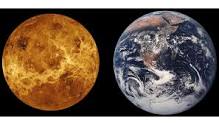
venusandearth

A recent debate between candidates for Congress in the Wisconsin’s 1st District — U.S. Rep. Paul Ryan, R-Janesville, and Democratic challenger Rob Zerban — included questions about the role of human beings in producing discernible changes in the climate over the last 150 years.

Unfortunately, this question, which is a matter of evidence, analysis and conclusion as all scientific questions are, has become a source of partisan political divide.

The Intergovernmental Panel on Climate Change (IPCC), a scientific body created by the United Nations to inform the UN regarding “scientific, technical and socio-economic information relevant to understanding the scientific basis of risk of human-induced climate change,” has issued five reports on this question since 1990.

These reports are a synthesis of many hundreds of peer-reviewed scientific studies on the issue.

With each successive report — they have been issued in 1995, 2001, 2007 and 2014 — the IPCC has increased the certainty of its conclusions.

The language in these reports has changed from “the balance of evidence suggests a discernible human influence on global climate” (1995) to “most of the observed warming is likely (a greater than 66 percent chance) due to human activities” (2001) to warming “over the last 50 years is very likely (a greater than 90 percent chance) due to human activities” to “It is extremely likely (a 95-100 percent chance) that human influence was the dominant cause of global warming between 1951-2010.”

This makes two things quite clear.

First, that scientists are a skeptical bunch and will move toward increased certainty only as evidence accumulates in favor of that conclusion.

Second, that human-induced global warming is a reality with which we must reckon.

During the debate, when asked if humans have a role in global warming, Ryan answered, “I don’t know the answer to that question. I don’t think science does either.”

He may well be correct in his first response, but he is certainly wrong in his second.

Article by Steve Ackerman and Jonathan Martin who are professors in the University of Wisconsin’s Department of Atmospheric and Oceanic Sciences in Madison, Wisconsin.

The above article was published in the Wisconsin State Journal print edition on October 20, 2014.

The IPCC also says “climate change is not a far-off problem. It is happening now and is having very real consequences on people’s lives. Climate change is disrupting national economies, costing us dearly today and even more tomorrow”, the IPCC states.

Astrobiologist David Grinspoon believes that scientists should look at our neighboring planets to help understand the perils of global warming. “It seems that both Mars and Venus started out much more like Earth and then changed. They both hold priceless climate information for Earth.”

The atmosphere of Venus is much thicker than Earth’s. Nevertheless, current climate models can reproduce its present temperature structure well. Now planetary scientists want to turn the clock back to understand why and how Venus changed from its former Earth-like conditions into the inferno of today.Climate scientists believe that the planet experienced a runaway greenhouse effect as the Sun gradually heated up. Astronomers believe that the young Sun was dimmer than the present-day Sun by 30 percent. Over the last 4 thousand million years, it has gradually brightened. During this increase, Venus’s surface water evaporated and entered the atmosphere.

“Water vapor is a powerful greenhouse gas and it caused the planet to heat-up even more. This is turn caused more water to evaporate and led to a powerful positive feedback response known as the runaway greenhouse effect,” says Grinspoon.

We have to make sure nothing like a runaway greenhouse effect doesn’t get started on Earth. Hopefully, it has not already started.

Earth’s About to Lose What Little Chance It Had – Unless We Act Now!

Who’s Gonna Stand Up
Neil Young’s Who’s Gonna Stand Up (and Save the Earth)
Protect the wild, tomorrow’s child
Protect the land from the greed of man
Take down the dams, stand up to oil
Protect the plants, and renew the soil

Who’s gonna stand up and save the earth?
Who’s gonna say that she’s had enough?
Who’s gonna take on the big machine?
Who’s gonna stand up and save the earth?
This all starts with you and me

Damn the dams, save the rivers
Starve the takers and feed the givers
Build a dream, save the world
We’re the people know as earth

Who’s gonna stand up and save the earth?
Who’s gonna say that she’s had enough?
Who’s gonna take on the big machine?
Who’s gonna stand up and save the earth?
This all starts with you and me

Ban fossil fuel, draw the line
Before we build, one more pipeline
Ban fracking now, save the waters
And build a life, for our sons and daughters

Who’s gonna stand up and save the earth?
Who’s gonna say that she’s had enough?
Who’s gonna take on the big machine?
Who’s gonna stand up and save the earth?
This all starts with you and me

Who’s gonna stand up

Who’s Gonna Stand Up (and Save the Earth)?
(full orchestra & choir version)
Start here. Sign “Conserve NOW Petition to President Obama, U.S. Congress, Wisconsin Governor Walker and Wisconsin Legislature to Enact and Fund Climate Change Legislation” (September 16th post on this blog) or;

I’ve also started the petition “U.S. Congress: Enact and Fund Legislation to Pay Families and Individuals who Use Less Fossil Fuel Energy Annually on Changeorg

Will you take 30 seconds to sign it right now? Here’s the link:

http://www.change.org/p/u-s-congress-enact-and-fund-legislation-to-pay-families-and-individuals-who-use-less-fossil-fuel-energy-annually-conserve-now-please-see-www-allthingsenvironmental-com-for-details

Here’s why it’s important:

Using money that now goes to subsidize the fossil fuel industries (coal, oil, natural gas), instead offer that money to those who limit their driving, flying and household use of fossil fuel devived energy. This would helpslow global warming and sea level rises and would negate the need for raising the minimum wage and foodstamps.

You can sign my petition by clicking here.
.

Thanks

All Good Things Need Not Come to an End

NGClimatemarch

Demonstrators make their way down New York’s Sixth Avenue on Sunday.
PHOTOGRAPH BY JASON DECROW, AP

Last week was quite a week for U.S. advocates of protecting the environment. Four hundred thousand of them, including people of all ages, cultures and locations (people from all 50 States), joined together and marched through the streets of New York City, the country’s’s most populous city otherwise known as “The Big Apple”. Their reason for making the trip (many chose to endure long bus rides) was to demonstrate to the world and their county’s political leaders, and in no uncertain terms, their deep and growing concern with the increasing amounts of “greenhouse gases”, most notably carbon dioxide (CO2) which has 42% higher concentration levels in the atmosphere now than in pre-industrial times, before the widespread burning of fossil fuels for energy, which releases predominantly CO2 gas as an invisible byproduct. The greenhouse gases in the atmosphere have historically kept the planet warm by absorbing the Sun’s radiant energy and trapping it near the surface. However, too many of them being added to the atmosphere causes what is commonly known now as “global warming”, which causes ice and snow to melt at the poles and mountainous glaciers, and ultimately leads to rising and warming ocean waters that are more acidic (a certain percentage of CO2 is absorbed in the oceans). Global warming also causes more extreme weather events (a warmer atmosphere is more volatile), including heavier rainfalls and flooding, stronger storms, hotter and longer heat waves, worse drought and related problems (such as buckling highways and dwindling water supplies).

“Our citizens keep marching,” U.S. President Barack Obama said in his Tuesday address, acknowledging the protest. “We cannot pretend we do not hear them. We have to answer the call.”

Despite the biggest and most diverse climate march ever – one having almost 400,000 people, including people from every state of the Union marching through the streets of New York City in a huge show of strength in advance of last week’s United Nations General Meeting, it’s back to “business as usual” in the USA this week.

Global warming deniers, who flat-out refuse to believe rising greenhouses gas emissions from fossil fuel burning the last two centuries are affecting the atmosphere, the oceans, plants, wildlife, the weather and people; and that the effects are likely to grow stronger in intensity and thus in damage as the world adds to the aggregate amount of greenhouse gases emitted to the atmosphere, cannot deny the fact that the poor and middle class in the U.S. and the rest of the world will be the ones who suffer the greater effects from global warming. Those who are at the top of the economic ladder in the U.S., many who refuse to pay their fair share of U.S. taxes to help poor individuals and families yet purposely deny the existence of global warming are all now likely breathing a huge sigh of relief.

Last week’s groundswell of the people’s demands and concern for urgent action is now past history for them. They survived the four-hundred thousand people from all over the country marching through NYC Sunday, September 21, demanding action be taken by government and business to slow the global warming – already causing brutal climate change impacts throughout the globe and the country; they survived Wall Street being flooded with protesters Monday, September 22, that brought Wall Streets Financial District to a grinding halt over the course of a day-long sit-in by environmental activists; they survived any action by the U.S. Congress which adjourned after last week for the year.

“We can easily forgive a child who is afraid of the dark; the real tragedy of life is when men are afraid of the light.”
― Plato