
U.S. Congress and President Obama Derelict for Not Considering Global Warming Effect of Proposed TPP Agreement

The Trans-Pacific Partnership (TPP) is a massive new international trade pact being pushed by the U.S. government at the behest of transnational corporations. The TPP is already being negotiated between the United States, Australia, Brunei Darussalam, Canada, Chile, Malaysia, Mexico, New Zealand, Peru, Singapore, Vietnam, and most recently, Japan — which together cover approximately 40% of the global economy. But it is also specifically intended as a “docking agreement” that other Pacific Rim countries would join over time, with the Philippines, Thailand, Colombia and others already expressing interest. It is poised to become the largest Free Trade Agreement in the world.
Governments intending to sign on to TTP must take into consideration that international trade generates greenhouse gas (GHG) emissions, not just from the production of traded goods, but perhaps more importantly from the fossil fuel burning required transport required between trading partners and their goods. Studies show that the greenhouse gas emissions generated by international transportation are substantial yet widely overlooked, both in regulations and in data collection efforts.
Those presently pushing for governmental support of the trading of products between the 27 countries listed in the TPP are derelict in not considering the added quantities of greenhouse gases that would be added to the global stockpile of greenhouse gases in the atmosphere as a result of implementing the TTP.
Children Crying Out for a Planet in Peril

Children in Wisconsin and elsewhere are getting wise to what’s happening to the planet. They’re beginning to speak out, and they will not accept the willful ignorance of the subject that so many Republicans are espousing.
This month, Home Box Office (HBO) in collaboration with New York City’s American Museum of Natural History, will air a new documentary called “Saving My Tomorrow”. The voices of children are heard crying out for universal action to prevent them from inheriting what they believe is a dying planet in desperate need of healing.
While Wisconsin governor Scott Walker, who has not yet announced he is running for the president of the United States, gallivants to Europe and elsewhere with a number of others interested in promoting trade oversees, not realizing that flying is said to be the paramount sin against global warming and the environment, children are crying out that adults everywhere clearly are not doing enough to stop climate catastrophe from occurring in their lifetime to our planet, Earth.
Scientists: Long-Awaited “Jump” in Global Temperatures Now Appears “Imminent”

The National Center for Atmospheric Research’s leading climatologist Kevin Trenberth said this week that he believes “a jump [in global temperatures] is imminent”, according to article posted April 2 on Climate Progress.
New research from a major national lab projects that the rate of climate change, which has risen sharply in recent decades, will soar by the 2020s, with the Arctic warming by 1 degree Fahrenheit per decade.
The speed with which temperatures change will continue to increase over the next several decades, intensifying the impacts of climate change, according to the U.S. Department of Energy.
New research documents evidence that global warming causes more global warming and that, as Earth warms, the warmer temperatures correspond with an increase in greenhouse gases, which means the earth warms the earth even more. “We discovered that not only does thickening the blanket of heat-trapping gases around our planet cause it to get warmer, but also, crucially, when it gets warmer this increases thickens the blanket of heat-trapping gases,” scientist Tim Lenton said.
While previous studies have suggested a correlation between warming temperatures and an increase in greenhouse gas, Lenton’s team is the first to prove the relationship using direct evidence, taken from ice cores nearly one million years old. The team — comprised of scientists from the University of Exeter, the Scripps Institution of Oceanography, and Wageningen University in the Netherlands — analyzed Antarctic ice core data from the end of ice age cycles 400,000 and 800,000 years ago. That ancient ice is important, because it offers an extremely large amount of historical global temperature and greenhouse gas concentration data, which the scientists were able to analyze to figure out how the two interact.
The findings provide even more support to the overwhelming evidence that humans are causing global warming by pumping greenhouse gases into the atmosphere. The surprise, Lenton explained, is that the findings also show that increasing temperature eventually increases greenhouse gases.
“It implies that we should expect the ‘Earth system’ to respond to anthropogenic global warming by amplifying it with the release of additional greenhouse gases,” Lenton said.
Preserve Our Climate Petition to Protect U.S. Citizenry from Runaway Greenhouse Effect

Petition requesting the U.S. Congress members and President Barack Obama to adopt the proposal called “Conserve, NOW” which would reduce greenhouse gas emissions from the United States and create jobs in the areas of adding to and reconstructing infrastructure in cities and counties of the U.S. to accommodate and encourage less fossil fuel burning in transportation and fossil fuel derived energy presently used in homes.
U.S. Officially Submits Its Target 2025 Annual Greenhouse Gas Emissions to the United Nations, as Called for by the Framework Convention on Climate Change
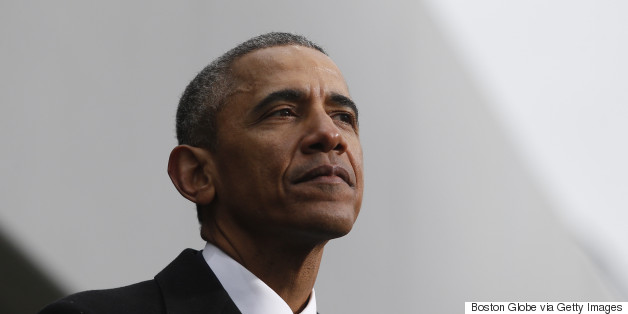
WASHINGTON – The United States officially submitted its emissions-cutting target to the United Nations on Tuesday morning, formalizing its commitment to reducing emissions 26 to 28 percent below 2005 levels by 2025.
The Obama administration had previously announced the goal in its work with China on a bilateral climate agreement. The Tuesday submission makes the pledge official.
“With today’s submission of the U.S. target, countries accounting for more than half of total carbon pollution from the energy sector have submitted or announced what they will do in the post-2020 period to combat climate change,” wrote Brian Deese, senior adviser to the president, in a blog post Tuesday morning.
Under a system established through the United Nations Framework Convention on Climate Change, individual countries are putting forward their own emissions commitments, referred to as Intended Nationally Determined Contributions, or INDCs. Countries are supposed to submit their INDCs to the U.N. by March 31. The submissions will be the basis for an international climate agreement, which leaders expect to reach at the upcoming negotiation session in Paris at the end of 2015.
The U.S. described its target as “fair and ambitious” in the U.N. document, and said that the country has already undertaken “substantial policy action to reduce its emissions.” The submission says that the U.S. is already on a path to reach its previously submitted goal of cutting emissions 17 percent by 2020, and the new commitment will require the country to speed up its rate of emissions reduction.
The European Union, Norway and Mexico submitted their commitments last week.
The Bicameral Task Force on Climate Change, which includes 34 Democratic senators and 83 Democratic House members, sent a letter to President Barack Obama on Tuesday praising the commitment. “One of the three pillars of the Climate Action Plan is to lead international efforts to address global climate change. As a nation that has contributed more than a quarter of all global carbon pollution, it is our responsibility to lead,” they wrote. “As a nation already feeling the effects and costs of climate change, it is also in our national interest to do so.”
Jennifer Morgan, global director of the climate program at the World Resources Institute, called the U.S. target “a serious and achievable commitment” in a statement. Based on WRI’s research, the U.S. can meet the goal by using existing federal authority, and make even further reductions as technology advances, Morgan said.
Other environmental groups were more critical of the submission, arguing that the U.S. could make a more ambitious commitment. Greenpeace legislative representative Kyle Ash said in a statement that the pledge “begins to treat the wound, but does not stop the bleeding.” “As the world’s second largest emitter, the US must strengthen its commitment to climate solutions before Paris to ensure an agreement that immediately spurs the necessary transition away from fossil fuels and towards 100 percent renewable energy,” said Ash.
The Obama administration is expected to face staunch opposition from the Republican-led Congress to any sort of international climate agreement. It remains unclear at this point whether the international agreement will be finalized as a treaty, which would require Senate approval, or take some other legal form that does not require approval. The Obama administration has long sought an alternative format to try to avoid a battle with the Senate.
By: kate.sheppard@huffingtonpost.com
Wisconsin Utilities, Public Service Commission and Governor Walker Being Bad Actors in Leading Fight Against Solar Energy in Wisconsin
Once considered a Midwestern leader in clean energy development, Wisconsin is now referenced as one state where electric utilities with the backing of regulators are putting up financial roadblocks against the solar industry.
A new report in the Washington Post mentions Wisconsin along with New Mexico and Arizona as states where traditional utilities like WE Energies and Madison Gas & Electric are fighting to maintain electric sales in the face of a changing marketplace.
The story quotes from a private meeting three years ago where power company executives were told that as demand for residential solar continued to soar, traditional utilities could soon face serious problems from “declining retail sales” and a “loss of customers” to “potential obsolescence.”
“Industry must prepare an action plan to address the challenges,” warned the Edison Electric Institute, the leading industry trade association. All four of Wisconsin’s investor-owned utilities are members.
The meeting at a resort in Colorado Springs, Colorado, became “a call to arms for electricity providers in nearly every corner of the nation” wrote reporter Joby Warrick.
“Three years later, the industry and its fossil-fuel supporters are waging a determined campaign to stop a home-solar insurgency that is rattling the boardrooms of the country’s government-regulated electric monopolies,” he wrote.
Warrick’s report also makes the link between the electric utilities and the American Legislative Exchange Council, or ALEC, a nonprofit organization with financial ties to billionaire fossil fuel industrialists Charles and David Koch.
In Wisconsin last year, the state Public Service Commission approved major price increases in electric rate structures for state utilities. Utilities argued the changes were needed to cover the cost of maintaining the power plants, poles and wires in the face of slowing electric sales.
For MGE customers, fixed charges for residential electric service went from $10.50 to $19 a month.
MGE customers fought against the changes and eventually got the company to agree to a series of community listening sessions before pursuing additional fixed rate prices hikes going forward. At one point, MGE had talked about raising residential customer fixed charges to nearly $70 a month by 2017.
Meanwhile, the state Public Service Commission (PSC) of Wisconsin is facing a lawsuit from Madison-based Renew Wisconsin and the Alliance for Solar Choice of San Francisco, saying it was guilty of discrimination by passing additional fees on solar customers in the WE Energies 2014 rate case.
Gov. Scott Walker has appointed all three members of the PSC, with the naming in February of former Department of Administration secretary Mike Huebsch to the powerful regulatory agency.
Koch Industries has significant operations in Wisconsin, including Flint Hills Resources, which produces gasoline and asphalt; the C. Reiss Coal Co., which supplies coal throughout the Great Lakes region; and Georgia-Pacific, the packaging and paper firm. Georgia-Pacific’s chemical division is also a producer of proppant resin, a coating for small particles used in hydraulic fracturing.
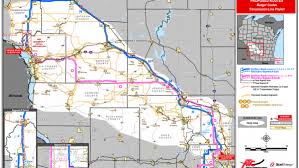
Another current decision of interest to the utility companies, the PSC, and the governor is American Transmission Company’s (ATC) and Xcel Energy’s proposed Badger-Coulee transmission line project, which stretches from the La Crosse area to Madison in Wisconsin. It is estimated 345-kilovolt, 180-mile line project will cost $580 million.
More than 200 people attended a public hearing in the Town of Holland by the PSC in December. Most of the people who testified in front of the Public Service Commission of Wisconsin voiced their opposition to the project. Some cited health concerns from massive power lines and others questioned whether it’s necessary.
Xcel Energy is one of project partners. A spokesman at the meeting, Tim Carlsgaard, said power lines need a capacity upgrade. Plus, he said, Wisconsin has a 10 percent renewable energy mandate and wind energy is the best option for the Midwest. Carlsgaard said it’s nearly impossible to develop wind energy in Wisconsin.
“Where it’s located is out in the rural areas,” Carlsgaard said. “Out in western Minnesota, southern Minnesota, parts of the Dakotas. The only way to bring that energy to the people is by building transmission lines. There are not existing lines in those areas.”
Dr. Patrice Tronstad, of Prairie View Elementary School, presented PSC administrative law Judge Michael Newmark with a poster signed by students opposing the project. The line could run right next to the Holmen school.
Onalaska Mayor Joe Chilsen said he doesn’t want the Badger-Coulee transmission line to be built at all. But, if the proposed project running from the La Crosse area to Madison is approved, he urged PSC officials not choose the route that could cut through his city. Chilsen said the power line could affect property values and aesthetically damage the city along the Mississippi River.
“This in essence kills all our future economic growth, our business growth in Onalaska,” he said. “I’m absolutely flabbergasted that this is even being considered.”
Chilsen also testified that future expansion plans for Mayo Clinic and other businesses could come to a halt if the Badger-Coulee line comes through the area.
Chilsen was one of the dozens of people who testified before two PSC commissioners: chairman Phil Montgomery and commissioner Ellen Nowak.
Commissioner Eric Callisto didn’t attend because his term is ended in February.
The now 3-person Walker appointed PSC decided last Thursday, March 26, 2015 to allow the construction of the new power line from La Crosse to Madison, over the objections by the public. Discussions and debate over the power line have lasted years, with many opposed citing environmental and aesthetic grievances. The Badger Coulee high-voltage transmission line will be built and it will follow a route from a substation near Holmen, north of La Crosse, to the Madison area, the Wisconsin Public Service Commission (PSC) decided in a unanimous preliminary vote.
Opponent group, Citizens Energy Task Force, said it is “appalled, but not surprised” by the decision, saying there was not enough study of alternatives to building another huge power line. It conceded the construction of the line is “economically driven, with the economic benefits going to utilities while ratepayers being saddled with massive unneeded debt and the health, environmental and quality-of-life consequences that come with these unsightly, unnecessary lines,” the citizen group said. Organizations that have been fighting the proposal said they are considering filing a petition for a rehearing by the PSC or challenging the validity of the PSC’s decision in circuit court.
“More than 90 units of local government tried in vain to understand why these lines are needed,” said Maureen Freedland, La Crosse County Board supervisor. “Our local planning rights have been stripped from us. The decision is a blow to our values and the way of life for our rural Wisconsin neighbors.”
The PSC is expected to issue a final order on the project within four weeks, and Wisconsin-based ATC and Minnesota-based Xcel said they will start contacting property owners on the chosen route yet this year. Construction of the line is expected to begin in 2016 and it is scheduled to go into service in 2018.
Sources: March 11, 2015, report by Mike Ivey of The Capital Times.
Reports aired on Wisconsin Public Radio.
Governor Walker’s Proposed 2015 -2017 State of Wisconsin Budget

Following are the comments I submitted by email on the governor’s proposed budget for July 1, 2015 to June 30, 2017.
Bad things can happen to good people. It happens all the time, and has occurred all throughout history. So when bad things, or threats, are predicted to occur or seem reasonably likely to occur, it’s best for one to take action, and involve others in removing the oncoming threat, before it gets realized and significant damage to life and our environment occurs.
Governor Walker’s biennial budget plan for Wisconsin for the next two years contains numerous threats to the people of Wisconsin and the state of Wisconsin’s natural resources. Some of those threats could have devastating and harmful impacts if they are allowed to occur without any attempts to prevent or ameliorate them.
Governor Walker’s budget plan as written will cause a great deal of harm for many thousands of Wisconsin’s people and their families. Some people who have worked their entire life at University of Wisconsin or UW-extension will likely lose their jobs, and the public who those people serve will lose out as well. Wisconsin’s elderly and disabled population, and families having children enrolled in Wisconsin’s excellent public school system will also suffer loses. Many hard working and dedicated school teachers and educational assistants serving special needs children will be without a job next fall if this budget is not revamped.
The governor’s budget also hurts those who watch over and protect our precious natural resources, both now and in the coming years, by cutting positions and land stewardship funds.
But really the worst thing about the governor’s budget is not what’s in it but rather what’s NOT IN IT BUT SHOULD IN IT. For example, despite Wisconsin’s aging population and increasing number of people who prefer not to drive, or who can’t drive because of the high cost of owning, maintaining and driving an automobile, the Walker budget proposes nothing new to help with mobility in the state, transit in particular. Rather, it borrows hundreds of millions of dollars to expand an already too large highway system at great environmental harm to the state, and for no good reason.
Numerous observations demonstrate that the climate of the Great Lakes Region, including Wisconsin’s climate, is changing. Average temperatures are getting warmer and extreme heat events are occurring more frequently. Total precipitation is increasing and heavy precipitation events are becoming more common. Winters are getting shorter and the duration of lake ice cover is decreasing over time. As a state, we should already be doing as much as we can to drastically cut back on our burning of fossil fuels but we seem to be doing almost the opposite. This tragedy grows in magnitude the longer it takes for our country and other countries to wean themselves off burning fossil fuels. There are many other unintended consequences of living in a fossil fuel burning dependent society.
But ironically, rather than then increasing substantially the funding of transit systems and the funding of positive financial incentive programs aimed at reducing greenhouse gas emissions and encourage walking and use of nonmotorized travel by state residents and businesses, the governor’s budget promotes more highway expansion. Instead, the state should reward those who drive less (miles), don’t fly, and minimizing their use of fossil fuel derived energy over the year. Use the money that Governor Walker’s budget borrows to fund a bigger highway system and a big new professional basketball arena instead – expenditures that not only subject state taxpayer to great financial risks but also promote adding millions more tons of greenhouse gases to the atmosphere including promoting jet airplanes flying of visiting teams and fans to the games.
Wisconsin Public Radio (part of state’s UW-extension) plans vacationing trips to Scotland and Australia, trips that not only release hundreds of millions of tons of greenhouse gases to the atmosphere but also give nothing back to the state’s own tourism businesses.
Governor Walker’s budgets include more trade promotions with foreign countries despite the fact that shipping products and working with foreign business interests similarly add millions and millions more tons of greenhouse gases to the atmosphere.
My plan would increase Wisconsin families’ and individuals’ annual income for polluting less and reducing the global warming threat, rather than adding to it. It would encourage Wisconsinites and Americans to buy from local entrepreneurs, whenever possible.
Governor Walker’s plan is to require a monthly drug test of food share (too low to begin with) recipients and proof of their having worked at least 80 hours at a place of employment before their receiving the meager food share benefits. It would do nothing to curb the rising income and employment inequalities and racial disparities in the state. The numbers of families and children living in poverty already will not be helped by Governor Walker’s budget. It is a fact that children of families living in poverty start their lives with a handicap because of many reason but the worst is that they do not receive adequate nutrition before and after they enter their school years. The governor’s budget insufficiently funds Wisconsin public schools and the families that live in poverty are disadvantaged in those schools from day one. Yet the governor’s budget does nothing to make up for previous cuts to public schools and add more financial stress for them by requiring them to pay vouchers for children attending private schools.
The budget should also refund the planned parenthood clinics the state had before Scott Walker took office. Certainly we ought not be adding to our human population pressures on the environment if we don’t have to.
Thank for the opportunity to submit my comments on the proposed state budget. For addition background on my concerns expressed here, please visit my blog at: http://www.allthingsenvironmental.com.
Cyclone Pam Is Just the Start
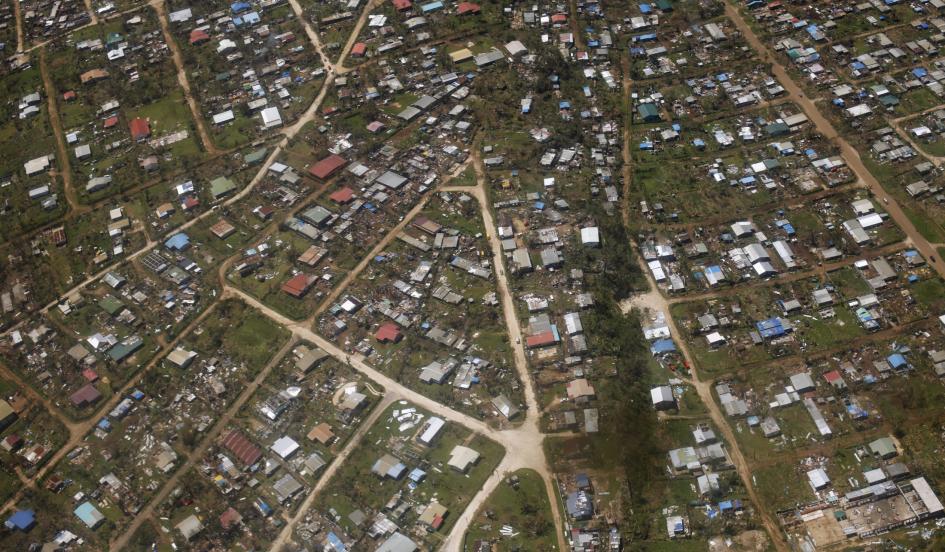
In the wake of island nation Vanuatu’s devastation by Cyclone Pam, in which 320 mile-per-hour winds killed dozens of people and destroyed 90 percent of the buildings in the capital city of Port Vila, public health experts fear that the country’s ruined infrastructure will result in mass starvation and epidemics of disease.
An aerial view of the destruction after Cyclone Pam hit Port Vila, capital city of the Pacific island nation of Vanuatu, on March 17, 2015. EDGAR SU/REUTERS
As the rate of global climate change continues to increase, such tragedies will become more and more common around the world. Vanuatu is not alone. New Yorkers, for example, received a dire warning recently from the New York City Panel on Climate Change: Sea levels and temperatures have risen dramatically over the past few decades, and that rise will only accelerate more rapidly in the coming years, putting the city at serious risk for flooding.
According to the report, mean annual temperatures have increased 3.4 degrees Fahrenheit in the past century, precipitation has increased 8 inches over the same time period, and sea levels in New York City have risen over a foot, which is twice the global rate of rising.
While these changes in temperature may seem insubstantial—none of us might notice, for example, if room temperature changed by a few degrees Fahrenheit—these changes have enormous implications for the environment and its inhabitants, particularly humans.
Take a look. Temperatures are projected to increase by nearly 6 degrees by 2050; heat waves will be more common; precipitation will increase up to 11 percent by 2050; and sea levels will rise up to 21 inches by 2050, up to 39 inches by 2080 and a worst-case situation of six feet by 2100.
As a result of climate change that has already occurred, we are now experiencing more powerful storms, resulting in more city damage. In Brooklyn, thousands of families were displaced by Hurricane Sandy, which flooded entire neighborhoods and ruined many homes, some of which have not been rebuilt. Worryingly, many experts now believe that a worse storm could occur within the next few years.
We cannot allow this to continue. The problem of global climate change requires a global solution. We must work with other nations and their people to support the development of renewable energy and to reduce emissions of carbon dioxide that contribute to drastic changes in our climate.
We already have much of the technology we will need. We have electric cars, commercially available in the United States at prices that decrease every year. We have wind turbines and solar panels, which continue to increase in capacity. None of these policies will, by itself, reverse the effects of climate change. But a flexible approach to the problem, in which we consider all of the possibilities, offers us considerable hope for the future.
This flexible approach to climate change is not a Republican or a Democratic idea. Regardless of our partisan affiliation, we all have a responsibility to protect our earth and its people, as well as a profound concern for the generations that will follow us.
Yet today there are still dinosaurs roaming the halls of Congress, who insist that we burn fossil fuels, and nothing other than fossil fuels, to produce our energy, a policy that will only exacerbate the problem.
Despite the challenges that exist, we remain optimistic. The women and men determining national policy on renewable energy and climate change are ultimately elected. If we raise our voices and organize on behalf of the broad interests of society as a whole, rather than the narrow interests of fossil fuel producers, we will influence the debate of climate change and elect leaders who are committed to this effort.
As the United Nations this year brings together representatives from every country to work toward a solution that accounts for the different needs of nations, we have a real opportunity to lead that process. President Barack Obama’s historic agreement with Taiwan and his recent trip to India, to emphasize and commit to greenhouse gas emission reductions, have the potential to provide a model for the entire world. This is an all-hands-on-deck approach to developing policies that reduce our dependence on fossil fuels and expand our capacity to create energy from renewable resources. No one is exempt.
We cannot afford delay, especially as Vanuatu-type storms become more common. With each year, the problem becomes more serious, and the range of potential solutions more limited.
We encourage you to demand action from your elected officials on this issue. We have the ability to mitigate the effects of climate change. We need only the resolve to act. Now is the time.
Yvette Clarke represents the 9th Congressional District of New York and serves on the House Energy and Commerce Committee. Dr. Michael Shank is director of media strategy at Climate Nexus and an adjunct faculty member at George Mason University’s School for Conflict Analysis and Resolution.
BY YVETTE CLARKE AND DR. MICHAEL SHANK 3/19/15
Newsweek
President Obama’s Executive Order Committing Federal Government to Cutting Its Greenhouse Gas Emissions

President Barack Obama signed an executive order on Thursday committing the federal government to cutting its own emissions 40 percent by 2025 and pledging to increase the amount of renewable energy used by federal agencies to 30 percent.
-
[This is a good addition but still not nearly enough. States and everyday Americans all have to greatly reduce the things they do that contribute to their daily and annual greenhouse gas emissions, as does the rest of the world. The U.S. still has the highest per capita GHG emissions. Forty percent of world travel by air (a large emitter of GHGs) is by American recreation and business travel pursuits. This has to change! Click on: “About this Blog” to read about how our government really could help make this happen – Power to the People]
The executive order builds on a previous administration directive to cut emissions from federal agencies 28 percent by 2020, compared with 2008 levels. “We are well on our way to meet that goal,” Brian Deese, senior adviser to the president, said in a call with reporters Thursday. “That’s what’s motivating us today to chart out a new and even more aggressive goal going forward.”
The administration is also setting a goal of cutting the per-mile emissions from the agencies’ vehicle fleet 30 percent, it said. It estimates the total commitment across the federal agencies will save taxpayers $18 billion — funds that won’t be spent on energy.
Christy Goldfuss, managing director of the Council on Environmental Quality, said that by the end of 2014, the federal government had cut emissions 17 percent since 2008, putting it well on the way to meeting Obama’s earlier goal. Much of that has come through energy efficiency improvements in federal buildings and with the installation of renewables.
As of the end of 2014, renewable energy accounted for 9 percent of the federal government’s energy use, and Thursday’s directive wants to increase that to 30 percent by 2025. The Department of Defense has set its own goal of deploying 3 gigawatts of solar energy on its installations around the world by 2025.
The federal government is the single largest energy user in the United States, Goldfuss said, with 360,000 buildings and 650,000 vehicles. “Not only is our footprint expansive, our impact is as well,” she said.
The administration also argued that the push to reduce emissions in the federal government has effects across the private sector as well. To that end, the administration also released a scorecard to track emissions from major federal contractors such as Lockheed Martin, Boeing and General Dynamics, which the administration is also calling on to make reductions.
The White House estimates that with reductions from the agency and those of private suppliers, the administration can cut greenhouse gas emissions by 26 million metric tons in the next 10 years.
“These goals will make sure the federal government is leading by example and pushing the envelope on cutting emissions,” said Deese, adding that it will “demonstrate that we are going to stay on offense in pushing our clean energy and climate change objectives.”
Wisconsin Legislature Votes to Call “Extraordinary Sessions” for Wrong Reasons

Organizing committees of both the Wisconsin Senate and Wisconsin Assembly called both houses of the Wisconsin legislature into extraordinary sessions this week to pass a “right-to-work” bill, making it illegal for employers and labor unions to charge their employees and any new employees union dues as a condition of accepting employment. The Wisconsin State Journal reported in today’s newspaper edition that the full Senate could vote on this highly charged legislation (Senate Bill 44) as early as Wednesday and the Wisconsin Assembly could vote on this legislation (AB 61) as soon as Monday.
Governor Scott Walker has said he would sign the bill into law.
The Senate and Assembly organizing committees ought have called their “extraordinary” sessions to address what the State of Wisconsin ought do to protect its citizens from global warming and climate change instead. Greenhouse gas emissions, global warming and climate change are far more significant to the future of Wisconsin than are unions charging union dues in the state.
 All Things Environmental
Recent Comments