
Pope Calls for Swift Actions to Save the Planet from Environmental Ruin

“The pace of consumption, waste and environmental change has so stretched the planet’s capacity that our contemporary lifestyle, unsustainable as it is, can only precipitate catastrophe”.
Pope Francis, June 18, 2015
In his long-awaited encyclical on the environment and climate change publicly released last week, Pope Francis called for swift action to save the planet from environmental ruin, urging world leaders to hear “the cry of the Earth and the cry of the poor.” He called for a change of lifestyle in rich countries steeped in a “throwaway” consumer culture, and an end to “obstructionist attitudes” that sometimes put profit before the common good. Pope Francis said protecting the planet is a moral and ethical “imperative” for believers and nonbelievers alike that should supersede political and economic interests.
A major theme of the encyclical is the disparity between rich and poor. “We fail to see that some are mired in desperate and degrading poverty, with no way out, while others have not the faintest idea of what to do with their possessions, vainly showing off their supposed superiority and leaving behind them so much waste which, if it were the case everywhere, would destroy the planet,” he said.
“Our house is going to ruin, and that harms everyone, especially the poorest. Mine is therefore an appeal for responsibility, based on the task that God has given to man in creation: “till and keep the garden” in which he was placed. I invite everyone to accept with open hearts this document, which follows the church’s social doctrine”, the pope said.
In a transcript of the pope’s encyclical on the DemocracyNow.org website, Pope Francis said protecting the planet is a moral and ethical imperative, for believers and nonbelievers alike, that should supersede political and economic interests. He also dismissed those who argue that technology will solve all environmental problems and that global hunger and poverty will be resolved simply by market growth.
A major theme of the encyclical is the disparity between rich and poor. “We fail to see that some are mired in desperate and degrading poverty, with no way out, while others have not the faintest idea of what to do with their possessions, vainly showing off their supposed superiority and leaving behind them so much waste which, if it were the case everywhere, we destroy the planet.”
Climate change is already happening, and its effects have already been disastrous on the poorest countries and the poorest people, who don’t have the means to defend themselves from it. They are also part of the human population who have the least responsibility for what is happening, being that they consume less fossil fuels.
Author Naomi Klein said on Democracy Now Thursday that “this encyclical, we can’t overstate the importance of it, the impact that it will have. It’s hard to respond to a document that runs close to 200 pages, when it was just released in non-draft form a few hours ago. We’re all still digesting it, Amy. But it is very clear that a door has just been opened, and a gust of wind is blowing through, where it is now possible to say some very powerful truths about the real implications of climate change, really the root causes.”
“And I think a lot of the discussion about the encyclical in the U.S. media cycle has focused and will continue to focus on the impact on Republicans and on climate deniers, many of whom are Catholic. And it is certainly a challenge to that demographic in the United States, because the pope is coming out so clearly on the side of climate science in saying this is real and this is happening. But I think that it’s too easy to say that this is just a challenge to Rick Santorum and Jeb Bush. Frankly, it is also a challenge to Hillary Clinton and Barack Obama and to large parts of the green movement, because it is a rebuke of slow action. It very specifically says that climate denial is not just about denying the science, it’s also about denying the urgency of the science. The document is very strong in condemning delays, half-measures, so-called market solutions. It very specifically criticizes carbon markets, the carbon offsetting, as an inadequate measure that will encourage speculation and rampant consumption.
“And I think probably the most significant part of it, the big picture, is the foregrounding of the culture of frenetic consumption in the wealthy world and among the wealthy. And this is really significant, because I think large parts of the climate change discussion tries to have it all ways and say, “No, we’ll just have green growth. We’ll just have—we’ll consume green products.” And, you know, this goes a lot deeper than that and says, no, we need to get at the underlying values that are feeding this culture of frenetic consumption that is entirely unsustainable.”
In the encyclical, the pope states that: “In a corrupt culture, we can’t believe that laws will be enough to change behaviors that affect the environment.” Naomi Kline responds: Well, I think, when he’s referring to corruption, I believe he’s referring to the influence of polluting companies, of multinational corporations, which he also goes after in the encyclical. And I think this is one of the most significant things about the document. One might expect of a religious document about climate change to erase difference, right? to say, “Well, we’re all in this together,” and certainly it talks about the Earth as our common home. But it also recognizes explicitly the power dynamics in capitalism, which is to say that there are forces within the system that are actively working against change. And that is probably what he’s referring to when he’s talking about how there may be laws, but the laws aren’t enforced. And, you know, indeed the laws are also inadequate, which is also addressed in the document, and it has some very specific calls for another level of environmental law, which is a part of the document that I haven’t been able to look at, you know, closely enough.
And another thing I have to say is, you know, I am—I have accepted this invitation to speak at a conference which is about digging more deeply into the document, because there’s an understanding that it does take time to digest a document of this length, this multilayered, and it requires that kind of deeper analysis. And I think that this intervention, five months ahead of U.N. climate conference in Paris, is tremendously significant. It’s going to push political leaders to go further. It’s going to be a tool for social movements.
A lot of the language of the climate justice movement has just been adopted by the pope—I mean, even of phrases like “ecological debt.” The pope is talking about the debt that the wealthy world owes to the poor. I mean, this is a framing that comes originally from Ecuador, from the movement against drilling in the Amazon. And, you know, this is a phrase that was never heard in mainstream circles until just now, actually. I mean, I’ve never seen such a mainstream use of that term.
So, it is very important in that way. But, I mean, I have to say, on a personal level, that as thrilled as I am that the Vatican is leading in this way and that this pope is leading in this way and bringing together the fight against poverty with the fight to act on climate change, that doesn’t mean that there’s a complete merger between the climate justice movement and the Vatican here. I mean, obviously there are huge differences that remain over issues like marriage equality, reproductive rights and freedom, to name just a few.”
Nathan Schneider, columnist with the Catholic weekly, America, who has been covering Catholic engagement with climate change, talks about what the encyclical means for the Catholic community and the number of languages it’s been released in and how large the document is: “Well, this is really the first Third World encyclical. You know, this is coming from a pope who was shaped in really significant ways by economic crises during the Cold War in Argentina and being in the middle of a battleground between the First and Second World powers. It was drafted by a cardinal from Ghana. So this is coming from the side of the world that we don’t normally hear from. And it’s very much in line with things that popes have been saying for decades, you know, going back to Paul VI, then John Paul II, Benedict XVI. So, a lot of the content is actually not so new for Catholics, but the emphasis and that—the language of climate debt, the language—the recognition that there is a divide here between the rich countries and the poor. And this is a cry from the developing world, from what has been labeled the Third World, for change.”
“The pope is calling here for us to change how we live, how we—what we do with our resources. You know, this is not just moving from one kind of consumerism to another. This is a kind of spiritual renewal and also a material renewal, that—in which we turn ourselves toward an economy that’s sustainable, that’s life-giving, both for humanity and the rest of the world.”
Source: Democracynow.org
Saint Francis of Assisi

Pope Francis is expected to take a provocative stance on global climate change Thursday, releasing an encyclical — a teaching letter addressed to Catholic bishops — that not only affirms the reality of man-made warming but issues a moral call for changes in lifestyle, consumption and policy to stave off environmental disaster.
The pope appears to have chosen the name “Francis” – after Saint Francis of Assisi – for good reason: Saint Francis of Assisi is not only known as the patron saint of animals and the environment; he also changed his own lifestyle from a life of wealth and over consumption to a life of bare subsistence in service of the poor.
His father was Pietro di Bernardone, a prosperous silk merchant. Francis lived the high-spirited life typical of a wealthy young man, even fighting as a soldier for Assisi. While going off to war in 1204, Francis had a vision that directed him back to Assisi, where he lost his taste for his worldly life. On a pilgrimage to Rome, he joined the poor in begging at St. Peter’s Basilica. The experience moved him to live in poverty.Francis returned home, began preaching on the streets, and soon gathered followers.
Francis preached the teaching of the Catholic Church, that the world was created good and beautiful by God but suffers a need for redemption because of the primordial sin of man. He preached to man and beast the universal ability and duty of all creatures to praise God (a common theme in the Psalms) and the duty of men to protect and enjoy nature as both the stewards of God’s creation and as creatures ourselves. On November 29, 1979, Pope John Paul II declared St. Francis the Patron Saint of Ecology. Many of the stories that surround the life of St. Francis say that he had a great love for animals and the environment.
Perhaps the most famous incident that illustrates the Saint’s humility towards nature is recounted in the “Fioretti” (“Little Flowers”), a collection of legends and folklore that sprang up after the Saint’s death. It is said that, one day, while Francis was travelling with some companions, they happened upon a place in the road where birds filled the trees on either side. Francis told his companions to “wait for me while I go to preach to my sisters the birds.” The birds surrounded him, intrigued by the power of his voice, and not one of them flew away. He is often portrayed with a bird, typically in his hand.
Another legend from the Fioretti tells that in the city of Gubbio, where Francis lived for some time, was a wolf “terrifying and ferocious, who devoured men as well as animals.” Francis had compassion upon the townsfolk, and so he went up into the hills to find the wolf. Soon, fear of the animal had caused all his companions to flee, though the saint pressed on. When he found the wolf, he made the sign of the cross and commanded the wolf to come to him and hurt no one. Miraculously the wolf closed his jaws and lay down at the feet of St. Francis.
“Brother Wolf, you do much harm in these parts and you have done great evil,” said Francis. “All these people accuse you and curse you…But brother wolf, I would like to make peace between you and the people.” Then Francis led the wolf into the town, and surrounded by startled citizens made a pact between them and the wolf. Because the wolf had “done evil out of hunger, the townsfolk were to feed the wolf regularly. In return, the wolf would no longer prey upon them or their flocks. In this manner Gubbio was freed from the menace of the predator. Francis even made a pact on behalf of the town dogs, that they would not bother the wolf again. Finally, to show the townspeople that they would not be harmed, Francis blessed the wolf.
Then during the World Environment Day 1982, John Paul II said that St. Francis’ love and care for creation was a challenge for contemporary Catholics and a reminder “not to behave like dissident predators where nature is concerned, but to assume responsibility for it, taking all care so that everything stays healthy and integrated, so as to offer a welcoming and friendly environment even to those who succeed us.” The same Pope wrote on the occasion of the World Day of Peace, January 1, 1990, the saint of Assisi “offers Christians an example of genuine and deep respect for the integrity of creation…” He went on to make the point that: “As a friend of the poor who was loved by God’s creatures, Saint Francis invited all of creation – animals, plants, natural forces, even Brother Sun and Sister Moon – to give honor and praise to the Lord. The poor man of Assisi gives us striking witness that when we are at peace with God we are better able to devote ourselves to building up that peace with all creation which is inseparable from peace among all peoples.”
Pope John Paul II concluded that section of the document with these words, “It is my hope that the inspiration of Saint Francis will help us to keep ever alive a sense of ‘fraternity’ with all those good and beautiful things which Almighty God has created.”
Juneteenth Day Celebration in Madison this Weekend
June 19, 2015, will mark the 150 Anniversary of Juneteenth Day Celebration in American History. The weekend’s activities begin Friday, June 19, 2015 with a Praise Celebration at Fountain of Life Church, 633 W Badger Rd, Madison, at 7:00 pm, featuring Marquis Hunt, renowned saxophonist and psalmist.
Saturday’s Celebration will kick-off with the Fifteenth Annual Parade at 11:00 am. (Expo Way–at Willow Park–to John Nolen – Olin Turville Pkwy) and the outdoor festivities will follow at Olin Turville Park, starting at Noon on June 20, 2015.
Juneteenth is the one event that is totally dedicated to the African American experience here in Madison and across the nation. We are aware of the challenges that impact African Americans living in Madison and Dane County but adversity is not new to African American community. For it was in the midst of slavery that our American experience was formed; while plowing fields and picking cotton “soul music” was born as an outward expression of hope in the midst of despair. It is the freedom from what physically binds us that is celebrated every Juneteenth Day. In 1865, it was slavery and today it is racial disparity.
Celebrate Black Lives at Juneteenth
The Children of Today and Tomorrow are in for a Rude Awakening

The global warming genie has escaped his bottle! He has begun to show his wrath, which is only likely to worsen in the coming years, decades and centuries, and there is presently no end in sight!
He’s leaving plenty of evidence. The only way we can all help weaken him is by stopping our nonessential burning of fossil fuels, stopping deforestation especially of the tropics, and doing things which naturally result in more greenhouse gases being added into the earth’s atmosphere and oceans (such as overeating, wasting food, not recycling, not reusing things whenever possible, running our air conditioning and furnaces needlessly, using energy derived from tar sands industry, doing other things that frivolously burn fossil fuels such as going for joy rides, cruising, etc.. Because our atmosphere is where Global Warming lives and breathes (now that he’s escaped the bottle) and because he gets his tremendous strength to wreak havoc on the world by his breathing in greenhouse gases that have been accumulating to record high concentrations in the earth’s atmosphere (as a by-product of our burning carbon-based fuels in our cars, trucks, airplanes, power plants, ships, boats, trains, machinery, recreational products and the like) we need to all put him on a crash diet, NOW!
According to David Owen, author of Green Metropolis and The Conundrum: How Scientific Innovation, Increased Efficiency, and Good Intentions Can Make Our Energy and Climate Problems Worse, the proportional share of the fuel burned during a round trip from New York City to Melbourne, Australia, is greater than the total amount of energy that the average resident of the earth uses, for all purposes, in a year. Forestalling global calamity is a preemptively worthy, ethically justifiable and economically achievable goal for everyone on the planet, especially in this era of television, radio, computers, Skype, the iPhone and virtual reality. Climatologists, environmentalists, CEOs, religious leaders, students and tourists seeking entertainment or to broaden their horizons, and government officials ought use the least greenhouse gas emitting technologies available to them to accomplish their objectives; they should not have to cross the oceans and great land masses of world (requiring vast burning fossil fuels) just to be present in person. Likewise, our government leaders and business people ought minimize the amount of products traded with distant countries, so as to minimize the amount of fuel burning required in the shipment of goods by air, sea and over miles and miles of terrain. Transportation of billions of tons of goods along with extensive long distance vacationing and business trips by millions of people every year is simply no longer sustainable. Such activities are becoming ethically wrong because they are unquestionably harming the planet and all the living things it is home to, both now and in the future.
We cannot and must not wait for technology to bail us out. Scientists the world over say it is now paramount that all humans begin acting in significant ways to reduce their annual greenhouse gas emissions. Otherwise, we will never get Global Warming to go back into his bottle – where he belongs! Greenhouse gases accumulate atmospherically over time – they build up in the atmosphere and oceans from year to year. Their volume is accelerating in earth’s atmosphere and as well as in its oceans, and the total volume will likely keep accelerating for some time due to compounding factors (positive feedbacks) of the earth’s natural systems. That’s why it’s of the utmost importance – paramount – that everyone act in ways to reduce their annual carbon footprint, immediately, before Global Warming becomes all to powerful, uncontrollable and for generations, a tragedy for civilization.
President Obama Twitting about Global Warming and Future of NBA
Goes to show most of the people who follow professional basketball aren’t aware of the treats global warming has on their sport. Gee, maybe Governor Scott Walker ought to have thought this through before encouraging the locals and state decision-makers to entering the deal for building the half-billion dollar arena in Milwaukee with the billionaires who will own the team and arena?
President Obama took to Twitter to talk about global warming after a briefing at the National Hurricane Center. Obama, using his freshly minted @POTUS Twitter handle, took questions on climate change after receiving his annual briefing on its effects at Miami’s National Hurricane Center.
But when he weighed in on the NBA Finals, Twitter lit up.
Most of Obama’s answers focused on climate change, though they got far fewer retweets.
His tweets on climate change after a briefing at the Miami National Hurricane Center were not as popular as his basketball tweets.
His tweets on climate change after a briefing at the Miami National Hurricane Center were not as popular as his basketball tweets.
“More severe weather events lead to displacement, scarcity, stressed populations; all increase likelihood of global conflict,” he said, explaining why he views climate change as a national security issue.
“The science is overwhelming but what will move Congress will be public opinion. Your voices will make them open to facts,” he said when asked how he handles “climate deniers” in Congress.
The Q&A was the first real engagement Obama had made with the public since he got the Twitter handle 10 days ago.
Flashback to Thursday, November 21, 2013, when senior representatives from four of the most influential professional sports leagues in the United States assembled at a closed door meeting of the Congressional Bicameral Committee on Climate Change. Officials from Major League Baseball, the National Football League, the National Basketball Association, and the National Hockey League, joined by a representative of the U.S. Olympic Committee, testified that worsening climate change poses risks to the future of their sport. They all described some of their league’s many environmental initiatives and, in particular, the work they do that is focused on reducing their contribution to global warming.
While November 21st is now known as an historic day in Congress because of changes made to the Senate filibuster rule, that date now also represents a watershed in our national debate about climate change: On November 21st, 2013, senior representatives from the major professional sports leagues in the United States testified before Congress for the first time about their organizations’ belief that climate change is real and, as Kathy Behrens of the NBA stated, “will only worsen if we do not address the air pollutants that are driving it.”
It is notable when senior officials from MLB, the NFL, the NBA and the NHL, all speak before a Congressional committee about the need to address climate disruption. While climate deniers in Congress and elsewhere might think they can attack the U.S. EPA or the United Nations with impunity, surely they would think twice before trying to impugn the integrity of those who lead the professional sports industry. All of the premier U.S.-based sports organizations are among the most culturally influential and highly regarded businesses in the world, and all of them, even including NASCAR, have now stated publicly that climate disruption is real and that we must act to do something about it.
Climate Change: Are We Doing Enough?
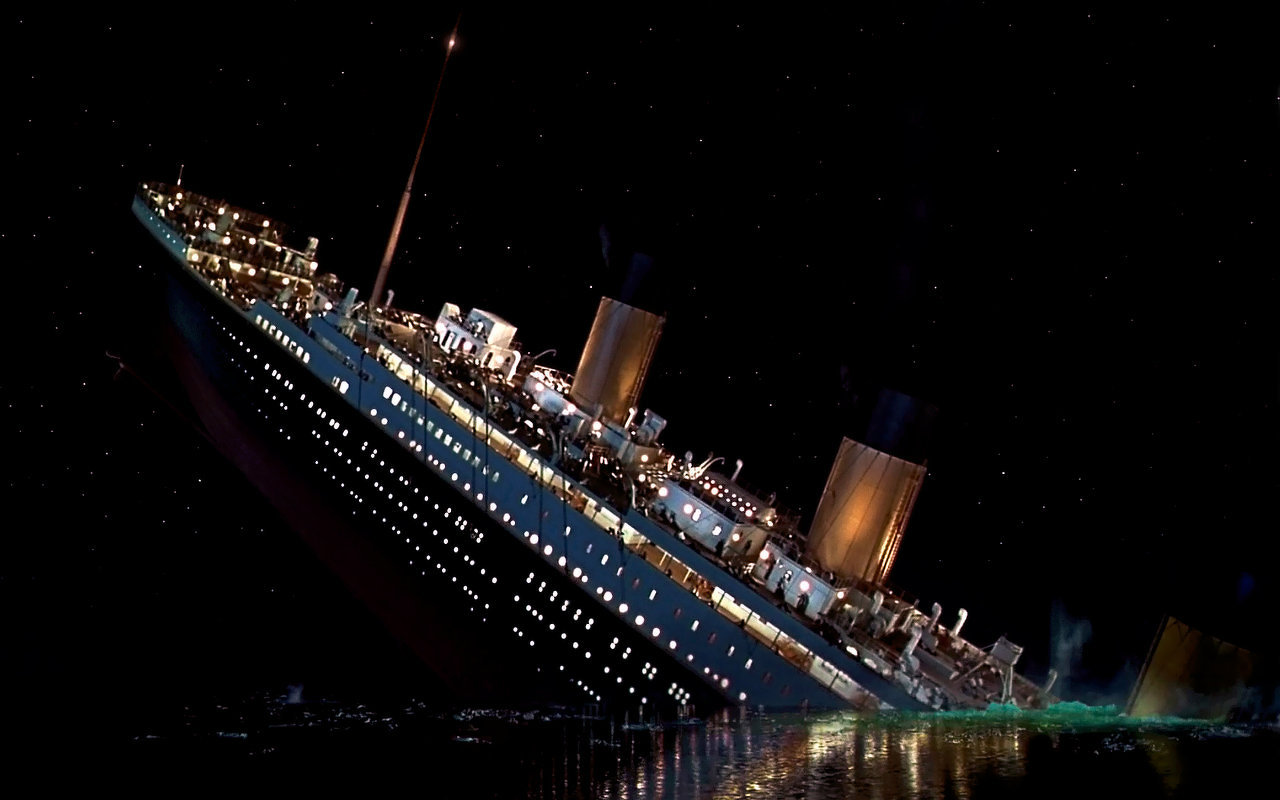
Was the Titanic Unsinkable? Earth Day 2015 has come and gone. There was no reason to post anything to celebrate it.
Preserve Our Climate Petition to Protect U.S. Citizenry from Runaway Greenhouse Effect

Petition requesting the U.S. Congress members and President Barack Obama to adopt the proposal called “Conserve, NOW” which would reduce greenhouse gas emissions from the United States and create jobs in the areas of adding to and reconstructing infrastructure in cities and counties of the U.S. to accommodate and encourage less fossil fuel burning in transportation and fossil fuel derived energy presently used in homes.
Governor Walker’s Proposed 2015 -2017 State of Wisconsin Budget

Following are the comments I submitted by email on the governor’s proposed budget for July 1, 2015 to June 30, 2017.
Bad things can happen to good people. It happens all the time, and has occurred all throughout history. So when bad things, or threats, are predicted to occur or seem reasonably likely to occur, it’s best for one to take action, and involve others in removing the oncoming threat, before it gets realized and significant damage to life and our environment occurs.
Governor Walker’s biennial budget plan for Wisconsin for the next two years contains numerous threats to the people of Wisconsin and the state of Wisconsin’s natural resources. Some of those threats could have devastating and harmful impacts if they are allowed to occur without any attempts to prevent or ameliorate them.
Governor Walker’s budget plan as written will cause a great deal of harm for many thousands of Wisconsin’s people and their families. Some people who have worked their entire life at University of Wisconsin or UW-extension will likely lose their jobs, and the public who those people serve will lose out as well. Wisconsin’s elderly and disabled population, and families having children enrolled in Wisconsin’s excellent public school system will also suffer loses. Many hard working and dedicated school teachers and educational assistants serving special needs children will be without a job next fall if this budget is not revamped.
The governor’s budget also hurts those who watch over and protect our precious natural resources, both now and in the coming years, by cutting positions and land stewardship funds.
But really the worst thing about the governor’s budget is not what’s in it but rather what’s NOT IN IT BUT SHOULD IN IT. For example, despite Wisconsin’s aging population and increasing number of people who prefer not to drive, or who can’t drive because of the high cost of owning, maintaining and driving an automobile, the Walker budget proposes nothing new to help with mobility in the state, transit in particular. Rather, it borrows hundreds of millions of dollars to expand an already too large highway system at great environmental harm to the state, and for no good reason.
Numerous observations demonstrate that the climate of the Great Lakes Region, including Wisconsin’s climate, is changing. Average temperatures are getting warmer and extreme heat events are occurring more frequently. Total precipitation is increasing and heavy precipitation events are becoming more common. Winters are getting shorter and the duration of lake ice cover is decreasing over time. As a state, we should already be doing as much as we can to drastically cut back on our burning of fossil fuels but we seem to be doing almost the opposite. This tragedy grows in magnitude the longer it takes for our country and other countries to wean themselves off burning fossil fuels. There are many other unintended consequences of living in a fossil fuel burning dependent society.
But ironically, rather than then increasing substantially the funding of transit systems and the funding of positive financial incentive programs aimed at reducing greenhouse gas emissions and encourage walking and use of nonmotorized travel by state residents and businesses, the governor’s budget promotes more highway expansion. Instead, the state should reward those who drive less (miles), don’t fly, and minimizing their use of fossil fuel derived energy over the year. Use the money that Governor Walker’s budget borrows to fund a bigger highway system and a big new professional basketball arena instead – expenditures that not only subject state taxpayer to great financial risks but also promote adding millions more tons of greenhouse gases to the atmosphere including promoting jet airplanes flying of visiting teams and fans to the games.
Wisconsin Public Radio (part of state’s UW-extension) plans vacationing trips to Scotland and Australia, trips that not only release hundreds of millions of tons of greenhouse gases to the atmosphere but also give nothing back to the state’s own tourism businesses.
Governor Walker’s budgets include more trade promotions with foreign countries despite the fact that shipping products and working with foreign business interests similarly add millions and millions more tons of greenhouse gases to the atmosphere.
My plan would increase Wisconsin families’ and individuals’ annual income for polluting less and reducing the global warming threat, rather than adding to it. It would encourage Wisconsinites and Americans to buy from local entrepreneurs, whenever possible.
Governor Walker’s plan is to require a monthly drug test of food share (too low to begin with) recipients and proof of their having worked at least 80 hours at a place of employment before their receiving the meager food share benefits. It would do nothing to curb the rising income and employment inequalities and racial disparities in the state. The numbers of families and children living in poverty already will not be helped by Governor Walker’s budget. It is a fact that children of families living in poverty start their lives with a handicap because of many reason but the worst is that they do not receive adequate nutrition before and after they enter their school years. The governor’s budget insufficiently funds Wisconsin public schools and the families that live in poverty are disadvantaged in those schools from day one. Yet the governor’s budget does nothing to make up for previous cuts to public schools and add more financial stress for them by requiring them to pay vouchers for children attending private schools.
The budget should also refund the planned parenthood clinics the state had before Scott Walker took office. Certainly we ought not be adding to our human population pressures on the environment if we don’t have to.
Thank for the opportunity to submit my comments on the proposed state budget. For addition background on my concerns expressed here, please visit my blog at: http://www.allthingsenvironmental.com.
President Obama’s Executive Order Committing Federal Government to Cutting Its Greenhouse Gas Emissions

President Barack Obama signed an executive order on Thursday committing the federal government to cutting its own emissions 40 percent by 2025 and pledging to increase the amount of renewable energy used by federal agencies to 30 percent.
-
[This is a good addition but still not nearly enough. States and everyday Americans all have to greatly reduce the things they do that contribute to their daily and annual greenhouse gas emissions, as does the rest of the world. The U.S. still has the highest per capita GHG emissions. Forty percent of world travel by air (a large emitter of GHGs) is by American recreation and business travel pursuits. This has to change! Click on: “About this Blog” to read about how our government really could help make this happen – Power to the People]
The executive order builds on a previous administration directive to cut emissions from federal agencies 28 percent by 2020, compared with 2008 levels. “We are well on our way to meet that goal,” Brian Deese, senior adviser to the president, said in a call with reporters Thursday. “That’s what’s motivating us today to chart out a new and even more aggressive goal going forward.”
The administration is also setting a goal of cutting the per-mile emissions from the agencies’ vehicle fleet 30 percent, it said. It estimates the total commitment across the federal agencies will save taxpayers $18 billion — funds that won’t be spent on energy.
Christy Goldfuss, managing director of the Council on Environmental Quality, said that by the end of 2014, the federal government had cut emissions 17 percent since 2008, putting it well on the way to meeting Obama’s earlier goal. Much of that has come through energy efficiency improvements in federal buildings and with the installation of renewables.
As of the end of 2014, renewable energy accounted for 9 percent of the federal government’s energy use, and Thursday’s directive wants to increase that to 30 percent by 2025. The Department of Defense has set its own goal of deploying 3 gigawatts of solar energy on its installations around the world by 2025.
The federal government is the single largest energy user in the United States, Goldfuss said, with 360,000 buildings and 650,000 vehicles. “Not only is our footprint expansive, our impact is as well,” she said.
The administration also argued that the push to reduce emissions in the federal government has effects across the private sector as well. To that end, the administration also released a scorecard to track emissions from major federal contractors such as Lockheed Martin, Boeing and General Dynamics, which the administration is also calling on to make reductions.
The White House estimates that with reductions from the agency and those of private suppliers, the administration can cut greenhouse gas emissions by 26 million metric tons in the next 10 years.
“These goals will make sure the federal government is leading by example and pushing the envelope on cutting emissions,” said Deese, adding that it will “demonstrate that we are going to stay on offense in pushing our clean energy and climate change objectives.”
Wisconsin Legislature Votes to Call “Extraordinary Sessions” for Wrong Reasons
Organizing committees of both the Wisconsin Senate and Wisconsin Assembly called both houses of the Wisconsin legislature into extraordinary sessions this week to pass a “right-to-work” bill, making it illegal for employers and labor unions to charge their employees and any new employees union dues as a condition of accepting employment. The Wisconsin State Journal reported in today’s newspaper edition that the full Senate could vote on this highly charged legislation (Senate Bill 44) as early as Wednesday and the Wisconsin Assembly could vote on this legislation (AB 61) as soon as Monday.
Governor Scott Walker has said he would sign the bill into law.
The Senate and Assembly organizing committees ought have called their “extraordinary” sessions to address what the State of Wisconsin ought do to protect its citizens from global warming and climate change instead. Greenhouse gas emissions, global warming and climate change are far more significant to the future of Wisconsin than are unions charging union dues in the state.
 All Things Environmental
Recent Comments