
Pope Calls for Swift Actions to Save the Planet from Environmental Ruin

“The pace of consumption, waste and environmental change has so stretched the planet’s capacity that our contemporary lifestyle, unsustainable as it is, can only precipitate catastrophe”.
Pope Francis, June 18, 2015
In his long-awaited encyclical on the environment and climate change publicly released last week, Pope Francis called for swift action to save the planet from environmental ruin, urging world leaders to hear “the cry of the Earth and the cry of the poor.” He called for a change of lifestyle in rich countries steeped in a “throwaway” consumer culture, and an end to “obstructionist attitudes” that sometimes put profit before the common good. Pope Francis said protecting the planet is a moral and ethical “imperative” for believers and nonbelievers alike that should supersede political and economic interests.
A major theme of the encyclical is the disparity between rich and poor. “We fail to see that some are mired in desperate and degrading poverty, with no way out, while others have not the faintest idea of what to do with their possessions, vainly showing off their supposed superiority and leaving behind them so much waste which, if it were the case everywhere, would destroy the planet,” he said.
“Our house is going to ruin, and that harms everyone, especially the poorest. Mine is therefore an appeal for responsibility, based on the task that God has given to man in creation: “till and keep the garden” in which he was placed. I invite everyone to accept with open hearts this document, which follows the church’s social doctrine”, the pope said.
In a transcript of the pope’s encyclical on the DemocracyNow.org website, Pope Francis said protecting the planet is a moral and ethical imperative, for believers and nonbelievers alike, that should supersede political and economic interests. He also dismissed those who argue that technology will solve all environmental problems and that global hunger and poverty will be resolved simply by market growth.
A major theme of the encyclical is the disparity between rich and poor. “We fail to see that some are mired in desperate and degrading poverty, with no way out, while others have not the faintest idea of what to do with their possessions, vainly showing off their supposed superiority and leaving behind them so much waste which, if it were the case everywhere, we destroy the planet.”
Climate change is already happening, and its effects have already been disastrous on the poorest countries and the poorest people, who don’t have the means to defend themselves from it. They are also part of the human population who have the least responsibility for what is happening, being that they consume less fossil fuels.
Author Naomi Klein said on Democracy Now Thursday that “this encyclical, we can’t overstate the importance of it, the impact that it will have. It’s hard to respond to a document that runs close to 200 pages, when it was just released in non-draft form a few hours ago. We’re all still digesting it, Amy. But it is very clear that a door has just been opened, and a gust of wind is blowing through, where it is now possible to say some very powerful truths about the real implications of climate change, really the root causes.”
“And I think a lot of the discussion about the encyclical in the U.S. media cycle has focused and will continue to focus on the impact on Republicans and on climate deniers, many of whom are Catholic. And it is certainly a challenge to that demographic in the United States, because the pope is coming out so clearly on the side of climate science in saying this is real and this is happening. But I think that it’s too easy to say that this is just a challenge to Rick Santorum and Jeb Bush. Frankly, it is also a challenge to Hillary Clinton and Barack Obama and to large parts of the green movement, because it is a rebuke of slow action. It very specifically says that climate denial is not just about denying the science, it’s also about denying the urgency of the science. The document is very strong in condemning delays, half-measures, so-called market solutions. It very specifically criticizes carbon markets, the carbon offsetting, as an inadequate measure that will encourage speculation and rampant consumption.
“And I think probably the most significant part of it, the big picture, is the foregrounding of the culture of frenetic consumption in the wealthy world and among the wealthy. And this is really significant, because I think large parts of the climate change discussion tries to have it all ways and say, “No, we’ll just have green growth. We’ll just have—we’ll consume green products.” And, you know, this goes a lot deeper than that and says, no, we need to get at the underlying values that are feeding this culture of frenetic consumption that is entirely unsustainable.”
In the encyclical, the pope states that: “In a corrupt culture, we can’t believe that laws will be enough to change behaviors that affect the environment.” Naomi Kline responds: Well, I think, when he’s referring to corruption, I believe he’s referring to the influence of polluting companies, of multinational corporations, which he also goes after in the encyclical. And I think this is one of the most significant things about the document. One might expect of a religious document about climate change to erase difference, right? to say, “Well, we’re all in this together,” and certainly it talks about the Earth as our common home. But it also recognizes explicitly the power dynamics in capitalism, which is to say that there are forces within the system that are actively working against change. And that is probably what he’s referring to when he’s talking about how there may be laws, but the laws aren’t enforced. And, you know, indeed the laws are also inadequate, which is also addressed in the document, and it has some very specific calls for another level of environmental law, which is a part of the document that I haven’t been able to look at, you know, closely enough.
And another thing I have to say is, you know, I am—I have accepted this invitation to speak at a conference which is about digging more deeply into the document, because there’s an understanding that it does take time to digest a document of this length, this multilayered, and it requires that kind of deeper analysis. And I think that this intervention, five months ahead of U.N. climate conference in Paris, is tremendously significant. It’s going to push political leaders to go further. It’s going to be a tool for social movements.
A lot of the language of the climate justice movement has just been adopted by the pope—I mean, even of phrases like “ecological debt.” The pope is talking about the debt that the wealthy world owes to the poor. I mean, this is a framing that comes originally from Ecuador, from the movement against drilling in the Amazon. And, you know, this is a phrase that was never heard in mainstream circles until just now, actually. I mean, I’ve never seen such a mainstream use of that term.
So, it is very important in that way. But, I mean, I have to say, on a personal level, that as thrilled as I am that the Vatican is leading in this way and that this pope is leading in this way and bringing together the fight against poverty with the fight to act on climate change, that doesn’t mean that there’s a complete merger between the climate justice movement and the Vatican here. I mean, obviously there are huge differences that remain over issues like marriage equality, reproductive rights and freedom, to name just a few.”
Nathan Schneider, columnist with the Catholic weekly, America, who has been covering Catholic engagement with climate change, talks about what the encyclical means for the Catholic community and the number of languages it’s been released in and how large the document is: “Well, this is really the first Third World encyclical. You know, this is coming from a pope who was shaped in really significant ways by economic crises during the Cold War in Argentina and being in the middle of a battleground between the First and Second World powers. It was drafted by a cardinal from Ghana. So this is coming from the side of the world that we don’t normally hear from. And it’s very much in line with things that popes have been saying for decades, you know, going back to Paul VI, then John Paul II, Benedict XVI. So, a lot of the content is actually not so new for Catholics, but the emphasis and that—the language of climate debt, the language—the recognition that there is a divide here between the rich countries and the poor. And this is a cry from the developing world, from what has been labeled the Third World, for change.”
“The pope is calling here for us to change how we live, how we—what we do with our resources. You know, this is not just moving from one kind of consumerism to another. This is a kind of spiritual renewal and also a material renewal, that—in which we turn ourselves toward an economy that’s sustainable, that’s life-giving, both for humanity and the rest of the world.”
Source: Democracynow.org
Wisconsin Group Hosts “Bee Fest” to Encourage Pollination in Madison

Madison’s “Bee Fest” kicks off the beginning of Pollinator Week, June 15 – 21, 2015, a week dedicated to highlighting the importance of bees, bats, birds, butterflies and other pollinators.
A dramatic drop in the number of honeybee colonies in recent years drew dozens to the UW Arboretum on Sunday to understand that trend and how to encourage more pollination in Madison.
About 60 people spent their Sunday learning about pollinating insects and animals — which are not restricted to bees — and how to monitor their numbers in to help researchers track them.
The event was hosted by the Wisconsin chapter of the Society for Conservation Biology and is part of a larger effort to track populations of pollinating insects in the city.
More than 60 percent of Wisconsin’s honeybee hives have died since April of last year — higher than the national average, according to a recent survey conducted by a partnership that includes the U.S. Department of Agriculture.
Now, the group is cataloging different species of pollinating insects with a focus on the rare rusty-patched bees and yellow-banded bumblebees in the Lakeshore Nature Preserve, which stretches along Lake Mendota’s University Bay between Muir Woods and Picnic Point.
Sunday’s event was the kickoff of that effort, chapter member and event organizer Wynne Moss said.
“One thing that’s challenging about studying changes in communities over time is that we often don’t have baseline data,” said Jesse Miller, a UW-Madison graduate student and botanist who researches grasslands and biodiversity patterns.
“This hopefully will be a long-term project that allows us to track changes year to year so we know what species were there in 2015, and how did that change in 2016,” Miller said. “And that can become incredibly valuable because these long-term data sets are so rare.”
Many of those attending Sunday’s event learned how to catch and identify insects using nets, special insect vacuums and by creating traps in cups of soapy water.
Attendee Keefe Keeley is the executive director of the Savanna Institute, a nonprofit based in Urbana, Illinois, that is focused on developing restorative agricultural systems.
Keeley said the effort will help ongoing research into bee hive collapse.
Anitra Johnson of Madison, a retired landscape gardener, plans to help monitor the insects, too.
On Sunday, she caught three species of bees that were drawn to baptisia and wild rose plants.
A major contributing factor to the declining bee population is a reduction in native plants they prefer, Miller said.
“In order to conserve pollinators, we have to conserve our natural habitats, and native plant gardens can be one way to do that, in addition to conserving the wild lands,” Miller said.
Miller said agricultural land has largely replaced savannas and prairie lands, especially in southern Wisconsin, diminishing the number of plants that flower at various times throughout the year.
“It’s not only having a native habitat but having a diverse enough native habitat that you have nectar throughout the summer, and that’s hard for a lot of gardeners to recognize and know when things bloom,” Moss said.
Source: Molly Beck mbeck@madison.com
EPA is joining other federal agencies, the National Wildlife Federation, the Pollinator Partnership (pollinator.org) and many more organizations in the Million Pollinator Garden Challenge (http://millionpollinatorgardens.org/) to promote pollinator health.
The Children of Today and Tomorrow are in for a Rude Awakening

The global warming genie has escaped his bottle! He has begun to show his wrath, which is only likely to worsen in the coming years, decades and centuries, and there is presently no end in sight!
He’s leaving plenty of evidence. The only way we can all help weaken him is by stopping our nonessential burning of fossil fuels, stopping deforestation especially of the tropics, and doing things which naturally result in more greenhouse gases being added into the earth’s atmosphere and oceans (such as overeating, wasting food, not recycling, not reusing things whenever possible, running our air conditioning and furnaces needlessly, using energy derived from tar sands industry, doing other things that frivolously burn fossil fuels such as going for joy rides, cruising, etc.. Because our atmosphere is where Global Warming lives and breathes (now that he’s escaped the bottle) and because he gets his tremendous strength to wreak havoc on the world by his breathing in greenhouse gases that have been accumulating to record high concentrations in the earth’s atmosphere (as a by-product of our burning carbon-based fuels in our cars, trucks, airplanes, power plants, ships, boats, trains, machinery, recreational products and the like) we need to all put him on a crash diet, NOW!
According to David Owen, author of Green Metropolis and The Conundrum: How Scientific Innovation, Increased Efficiency, and Good Intentions Can Make Our Energy and Climate Problems Worse, the proportional share of the fuel burned during a round trip from New York City to Melbourne, Australia, is greater than the total amount of energy that the average resident of the earth uses, for all purposes, in a year. Forestalling global calamity is a preemptively worthy, ethically justifiable and economically achievable goal for everyone on the planet, especially in this era of television, radio, computers, Skype, the iPhone and virtual reality. Climatologists, environmentalists, CEOs, religious leaders, students and tourists seeking entertainment or to broaden their horizons, and government officials ought use the least greenhouse gas emitting technologies available to them to accomplish their objectives; they should not have to cross the oceans and great land masses of world (requiring vast burning fossil fuels) just to be present in person. Likewise, our government leaders and business people ought minimize the amount of products traded with distant countries, so as to minimize the amount of fuel burning required in the shipment of goods by air, sea and over miles and miles of terrain. Transportation of billions of tons of goods along with extensive long distance vacationing and business trips by millions of people every year is simply no longer sustainable. Such activities are becoming ethically wrong because they are unquestionably harming the planet and all the living things it is home to, both now and in the future.
We cannot and must not wait for technology to bail us out. Scientists the world over say it is now paramount that all humans begin acting in significant ways to reduce their annual greenhouse gas emissions. Otherwise, we will never get Global Warming to go back into his bottle – where he belongs! Greenhouse gases accumulate atmospherically over time – they build up in the atmosphere and oceans from year to year. Their volume is accelerating in earth’s atmosphere and as well as in its oceans, and the total volume will likely keep accelerating for some time due to compounding factors (positive feedbacks) of the earth’s natural systems. That’s why it’s of the utmost importance – paramount – that everyone act in ways to reduce their annual carbon footprint, immediately, before Global Warming becomes all to powerful, uncontrollable and for generations, a tragedy for civilization.
A Memorial Day Salute and Promise for the Future

Today is the day to pause and show our respect to those who, regardless of race, religion, gender, national origin or sexual orientation, served, fought and died to protect our country and all Americans, those living now or in the future from enemy harm. Those who have given the ultimate sacrifice to protect our country and its people deserve the highest honor possible, to be sure. And I believe those who have been maimed by war, physically or mentally, should be equally honored. One such victim I’m proud to have as friend and former high school classmate. His name is Jim Walktendonk, and he and family suffered greatly from the ill effects of U.S. war planes spraying what was called “agent orange” to defoliate the greenery the enemy hid in and expose them to U.S. fire power. Unfortunately, the chemicals in the agent orange also had adverse impact on our troops as well. I’ll let Jim Walktendonk tell the complete story.
One way we can give honor and respect to those who died to protect our freedom is by working, individually or in groups, to build a healthier and more peaceful world. Unfortunately, the world we share is not getting any any healthier nor any more peaceful, but just the opposite.
With a population of over 7 billion people we must find ways to live more peacefully with one another and be more protective of our finite earth. We elect our political leaders to keep us out of wars and our economy strong but they are seldom successful at doing either
We now face the biggest threat to humanity of all time in rapid global warming, due primarily to: our excessive fossil fuel burning in cars, homes, businesses and airplanes; in production of an excessive amount of consumer goods for many individuals and a dearth of such goods for others, and in shipment of those goods; in military exercises around the world; in the type of foods we eat and the methods of its production; in our use of water and by a myriad of other sources and by deforestation, especially in the tropical area of the world considered by many to be the lunges of the planet. Along with warming temperatures caused by a thickening greenhouse atmosphere around our planet comes more extreme weather, warming and rising seas, a changing climate and how that changes the supporting biodiversity. Although too difficult to separate out from other weather extreme events, global warming has now without a doubt become the greatest killer of American and other peoples ever, of the earth’s animal populations, and the number of deaths linked to it each year will likely grow significantly, without major and swift action taken by our governments, commerce and you and I.
Public officials, state and federal lawmakers, and many members of the media who continue to cite uncertainty and spurious research as reason not for people not to take serious action now to reduce all sources of greenhouse gas emission should be judged harshly; their actions (or inaction) are crimes against humanity of the highest order. The people we honor today would likely agree, wholeheartedly.
We do not need a war to rise to the occasion and join the fight against global warming. To do that, we must all hop on the peace train, put down our gun, and fight the fight of our life for the living planet, OUR EARTH.
Preserve Our Climate Petition to Protect U.S. Citizenry from Runaway Greenhouse Effect

Petition requesting the U.S. Congress members and President Barack Obama to adopt the proposal called “Conserve, NOW” which would reduce greenhouse gas emissions from the United States and create jobs in the areas of adding to and reconstructing infrastructure in cities and counties of the U.S. to accommodate and encourage less fossil fuel burning in transportation and fossil fuel derived energy presently used in homes.
Mississippi River Mayors Come Together To Consider Climate Change
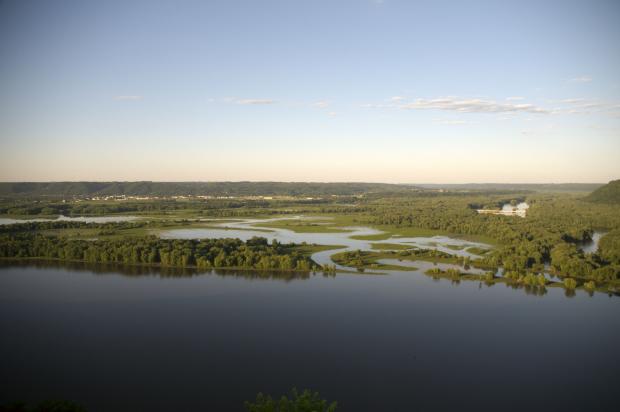
A group a mayors living along the Mississippi River has plans to collaborate with international leaders, with an eye toward playing a bigger role in global talks surrounding climate change.
Mayors with the Mississippi River Cities and Towns Initiative will be working more closely with the Netherlands, learning what actions have been taken to protect the Rhine River from climate change.
The group is also initiating discussions with people living along the Amazon, Euphrates, Yellow, Paraná, Danube, Volga, and Ganges rivers.
MRCTI director Colin Wellenkamp said the Mississippi River Valley is the most agriculturally productive zone on the planet and working with those other major food-producing regions is a necessity.
“This is not going to be not just about flooding and water management, it’s going to be about the future of our food supply,” Wellenkamp said. “Climate disruption is a major component of that and so far, that part of the conversation really hasn’t been emphasized.”
Mayors from La Crosse, Onalaska, Prairie du Chien, and Prescott are involved in the initiative, which will send a delegation of mayors to the Conference of the Parties to the United Nations Framework Convention on Climate Change, also known as COP21, later this year.
The MRCTI also recently praised sections of the president’s proposed budget for offering more funding for flooding and disasters.
President Obama proposed funding the Federal Emergency Management Agency’s Pre-Disaster Mitigation Grant program at $200 million, which is a record high.
In La Crosse, this program has been used to flood-proof and remove homes built in the city’s floodplain.
Mayor Tim Kabat and fellow members of the Mississippi River Cities and Towns Initiative met with members of Congress this week, encouraging them to maintain the funding. Kabat said the grants can save money in the long run.
“You do the investment and the project in the front end and prevent a lot of the emergency situations on the back end,” Kabat said.
Kabat said, in the future, these grants could be used to restore the city’s marsh.
The mayors also hope to see funding go up for National Flood Insurance Program Risk Mapping.
 All Things Environmental
Recent Comments