
The Children of Today and Tomorrow are in for a Rude Awakening

The global warming genie has escaped his bottle! He has begun to show his wrath, which is only likely to worsen in the coming years, decades and centuries, and there is presently no end in sight!
He’s leaving plenty of evidence. The only way we can all help weaken him is by stopping our nonessential burning of fossil fuels, stopping deforestation especially of the tropics, and doing things which naturally result in more greenhouse gases being added into the earth’s atmosphere and oceans (such as overeating, wasting food, not recycling, not reusing things whenever possible, running our air conditioning and furnaces needlessly, using energy derived from tar sands industry, doing other things that frivolously burn fossil fuels such as going for joy rides, cruising, etc.. Because our atmosphere is where Global Warming lives and breathes (now that he’s escaped the bottle) and because he gets his tremendous strength to wreak havoc on the world by his breathing in greenhouse gases that have been accumulating to record high concentrations in the earth’s atmosphere (as a by-product of our burning carbon-based fuels in our cars, trucks, airplanes, power plants, ships, boats, trains, machinery, recreational products and the like) we need to all put him on a crash diet, NOW!
According to David Owen, author of Green Metropolis and The Conundrum: How Scientific Innovation, Increased Efficiency, and Good Intentions Can Make Our Energy and Climate Problems Worse, the proportional share of the fuel burned during a round trip from New York City to Melbourne, Australia, is greater than the total amount of energy that the average resident of the earth uses, for all purposes, in a year. Forestalling global calamity is a preemptively worthy, ethically justifiable and economically achievable goal for everyone on the planet, especially in this era of television, radio, computers, Skype, the iPhone and virtual reality. Climatologists, environmentalists, CEOs, religious leaders, students and tourists seeking entertainment or to broaden their horizons, and government officials ought use the least greenhouse gas emitting technologies available to them to accomplish their objectives; they should not have to cross the oceans and great land masses of world (requiring vast burning fossil fuels) just to be present in person. Likewise, our government leaders and business people ought minimize the amount of products traded with distant countries, so as to minimize the amount of fuel burning required in the shipment of goods by air, sea and over miles and miles of terrain. Transportation of billions of tons of goods along with extensive long distance vacationing and business trips by millions of people every year is simply no longer sustainable. Such activities are becoming ethically wrong because they are unquestionably harming the planet and all the living things it is home to, both now and in the future.
We cannot and must not wait for technology to bail us out. Scientists the world over say it is now paramount that all humans begin acting in significant ways to reduce their annual greenhouse gas emissions. Otherwise, we will never get Global Warming to go back into his bottle – where he belongs! Greenhouse gases accumulate atmospherically over time – they build up in the atmosphere and oceans from year to year. Their volume is accelerating in earth’s atmosphere and as well as in its oceans, and the total volume will likely keep accelerating for some time due to compounding factors (positive feedbacks) of the earth’s natural systems. That’s why it’s of the utmost importance – paramount – that everyone act in ways to reduce their annual carbon footprint, immediately, before Global Warming becomes all to powerful, uncontrollable and for generations, a tragedy for civilization.
What Happened to the Passenger Pigeon?

Throughout the 19th century, passenger pigeons were the most abundant bird in North America. Named after the French word passager for “passing by”, the species numbered an estimated 3 to 5 billion birds when Europeans arrived on the continent. The species lived primarily east of the Rocky Mountains, and bred almost exclusively in the eastern deciduous forest. In Wisconsin alone, in 1871, there were an estimated 136 million breeding passenger pigeon adults in the state.
Historical accounts of their huge flocks are numerous. It is reported that they darkened the sky for hours or even days at a time as they took to the air. But because the birds lived in a limited number of extremely large flocks, this gave the impression that there was an unlimited abundance of the birds and the birds could be harvested at will.
The bird’s population began to decline in increasing numbers as a result of European settlement in America, due at first to deforestation and habitat loss later as a result of unregulated hunting. Pigeon meat was subsequently commercialized as “cheap meat” for slaves and the poor in the 19th century. As a result the species went from being one of the most abundant species in the world during the 19th century to extinction in the early 20th century.
This year marks the 100 year anniversary of the passenger pigeon’s extinction.
The Way We Should All Live, by Graham Nash and David Crosby

Song Lyrics by Graham Nash from “Winds on the Water”, album by David Crosby and Graham Nash, Produced by David Crosby and Graham Nash
Lyrics: “The Way I Live
Determines the Way
My People Survive.”
Chorus line in “Cowboy of Dreams
To The Last Whale …
A. “Critical Mass”, music by David Crosby; vocals David Crosby and Graham Nash
B. “Wind on the Water”, words and music by Graham Nash, third stanza:
“Maybe we”ll disappear
Its not that we don’t know
Its just that we don’t want to care
Under the bridges
Over the foam
Wind on the water
Carry me home”
Climate Change: Are We Doing Enough?
Was the Titanic Unsinkable? Earth Day 2015 has come and gone. There was no reason to post anything to celebrate it .
.
Preserve Our Climate Petition to Protect U.S. Citizenry from Runaway Greenhouse Effect

Petition requesting the U.S. Congress members and President Barack Obama to adopt the proposal called “Conserve, NOW” which would reduce greenhouse gas emissions from the United States and create jobs in the areas of adding to and reconstructing infrastructure in cities and counties of the U.S. to accommodate and encourage less fossil fuel burning in transportation and fossil fuel derived energy presently used in homes.
U.S. Officially Submits Its Target 2025 Annual Greenhouse Gas Emissions to the United Nations, as Called for by the Framework Convention on Climate Change
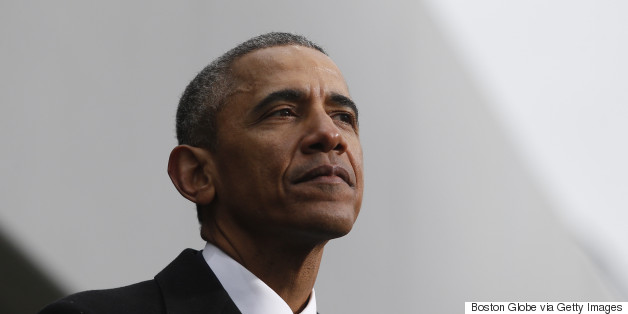
WASHINGTON – The United States officially submitted its emissions-cutting target to the United Nations on Tuesday morning, formalizing its commitment to reducing emissions 26 to 28 percent below 2005 levels by 2025.
The Obama administration had previously announced the goal in its work with China on a bilateral climate agreement. The Tuesday submission makes the pledge official.
“With today’s submission of the U.S. target, countries accounting for more than half of total carbon pollution from the energy sector have submitted or announced what they will do in the post-2020 period to combat climate change,” wrote Brian Deese, senior adviser to the president, in a blog post Tuesday morning.
Under a system established through the United Nations Framework Convention on Climate Change, individual countries are putting forward their own emissions commitments, referred to as Intended Nationally Determined Contributions, or INDCs. Countries are supposed to submit their INDCs to the U.N. by March 31. The submissions will be the basis for an international climate agreement, which leaders expect to reach at the upcoming negotiation session in Paris at the end of 2015.
The U.S. described its target as “fair and ambitious” in the U.N. document, and said that the country has already undertaken “substantial policy action to reduce its emissions.” The submission says that the U.S. is already on a path to reach its previously submitted goal of cutting emissions 17 percent by 2020, and the new commitment will require the country to speed up its rate of emissions reduction.
The European Union, Norway and Mexico submitted their commitments last week.
The Bicameral Task Force on Climate Change, which includes 34 Democratic senators and 83 Democratic House members, sent a letter to President Barack Obama on Tuesday praising the commitment. “One of the three pillars of the Climate Action Plan is to lead international efforts to address global climate change. As a nation that has contributed more than a quarter of all global carbon pollution, it is our responsibility to lead,” they wrote. “As a nation already feeling the effects and costs of climate change, it is also in our national interest to do so.”
Jennifer Morgan, global director of the climate program at the World Resources Institute, called the U.S. target “a serious and achievable commitment” in a statement. Based on WRI’s research, the U.S. can meet the goal by using existing federal authority, and make even further reductions as technology advances, Morgan said.
Other environmental groups were more critical of the submission, arguing that the U.S. could make a more ambitious commitment. Greenpeace legislative representative Kyle Ash said in a statement that the pledge “begins to treat the wound, but does not stop the bleeding.” “As the world’s second largest emitter, the US must strengthen its commitment to climate solutions before Paris to ensure an agreement that immediately spurs the necessary transition away from fossil fuels and towards 100 percent renewable energy,” said Ash.
The Obama administration is expected to face staunch opposition from the Republican-led Congress to any sort of international climate agreement. It remains unclear at this point whether the international agreement will be finalized as a treaty, which would require Senate approval, or take some other legal form that does not require approval. The Obama administration has long sought an alternative format to try to avoid a battle with the Senate.
By: kate.sheppard@huffingtonpost.com
Antarctica Records Hottest Day Ever, New Study Published in SCIENCE Finds Rapid Acceleration of Ice Melt
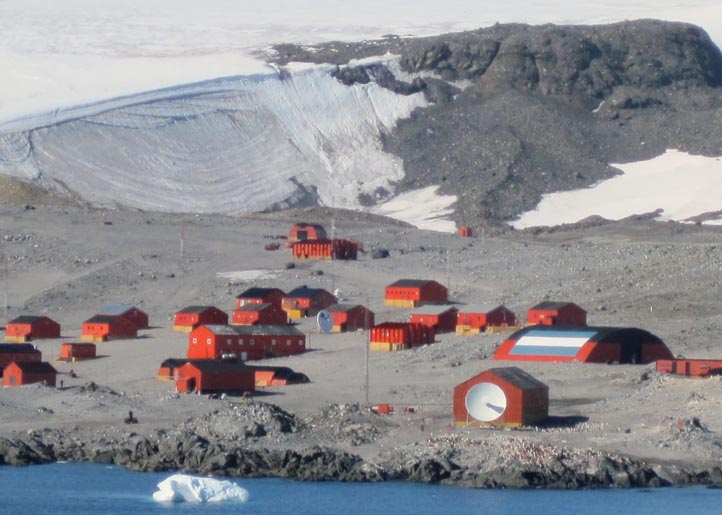
The warmest temperature ever recorded on the continent of Antarctica may have occurred on Tuesday, March 24, 2015, when the mercury shot up to 63.5°F (17.5°C) at Argentina’s Esperanza Base on the northern tip of the Antarctic Peninsula. According to weather records researcher Maximiliano Herrera, the previous hottest temperature recorded in Antarctica was 63.3°F (17.4°C) set just one day previously at Argentina’s Marambio Base, on a small islet just off the coast of the Antarctic Peninsula. Prior to this week’s remarkable heat wave, the hottest known temperature in Antarctica was the 62.8°F (17.1°C) recorded at Esperanza Base on April 24, 1961. (The World Meteorological Organization—WMO—has not yet certified that this week’s temperatures are all-time weather records for Antarctica, though the Argentinian weather service has verified that the temperatures measured at Esperanza Base and Marambio Base were the highest ever measured at each site.) A new all-time temperature record for an entire continent is a rare event, and Weather Underground’s weather historian, Christopher C. Burt, has full details in his latest post.
The record heat coincides with the release of a new study from Science that finds “ice shelves in West Antarctica have lost as much as 18 percent of their volume over the last two decades, with rapid acceleration occurring over the last decade. The study found that from 1994 to 2003, the overall loss of ice shelf volume across the continent was negligible, but over the last decade West Antarctic losses increased by 70 percent,” says Think Progress.
The heat wave also coincides with Robert Swan and his 2041 team’s Antarctic Expedition, which wrapped up last week. The point of the trip was to document the firsthand effects of climate change, which was obviously very apparent.
The Antarctic Peninsula is one of the fastest warming spots on Earth. A 2012 Climate Central post by Michael Lemonick documented how while the Earth as a whole warmed up by 1.3°F between 1900 and 2011, the Antarctic Peninsula warmed by 5°, forcing massive ice shelves to disintegrate and penguin colonies to collapse. A 2012 paper in Nature found that the recent warming is faster than 99.7% of any other given 100-year period in the last 2000 years.
In May 2014, a study by researchers at NASA and the University of California, Irvine, found a rapidly melting section of the West Antarctic Ice Sheet to be in an irreversible state of decline, with nothing to stop the glaciers in this area from melting into the sea.
The study presents multiple lines of evidence, incorporating 40 years of observations that indicate the glaciers in the Amundsen Sea sector of West Antarctica “have passed the point of no return,” according to glaciologist and lead author Eric Rignot, of UC Irvine and NASA’s Jet Propulsion Laboratory in Pasadena, California. The new study has been accepted for publication in the journal Geophysical Research Letters.
These glaciers already contribute significantly to sea level rise, releasing almost as much ice into the ocean annually as the entire Greenland Ice Sheet. They contain enough ice to raise global sea level by 4 feet (1.2 meters) and are melting faster than most scientists had expected. Rignot said these findings will require an upward revision to current predictions of sea level rise.
“This sector will be a major contributor to sea level rise in the decades and centuries to come,” Rignot said.
Three major lines of evidence point to the glaciers’ eventual demise: the changes in their flow speeds, how much of each glacier floats on seawater, and the slope of the terrain they are flowing over and its depth below sea level. In a paper in April, Rignot’s research group discussed the steadily increasing flow speeds of these glaciers over the past 40 years. This new study examines the other two lines of evidence.
The glaciers flow out from land to the ocean, with their leading edges afloat on the seawater. The point on a glacier where it first loses contact with land is called the grounding line. Nearly all glacier melt occurs on the underside of the glacier beyond the grounding line, on the section floating on seawater.
Just as a grounded boat can float again on shallow water if it is made lighter, a glacier can float over an area where it used to be grounded if it becomes lighter, which it does by melting or by the thinning effects of the glacier stretching out. The Antarctic glaciers studied by Rignot’s group have thinned so much they are now floating above places where they used to sit solidly on land, which means their grounding lines are retreating inland.
“The grounding line is buried under a thousand or more meters of ice, so it is incredibly challenging for a human observer on the ice sheet surface to figure out exactly where the transition is,” Rignot said. “This analysis is best done using satellite techniques.”
The team used radar observations captured between 1992 and 2011 by the European Earth Remote Sensing (ERS-1 and -2) satellites to map the grounding lines’ retreat inland. The satellites use a technique called radar interferometry, which enables scientists to measure very precisely — within less than a quarter of an inch — how much Earth’s surface is moving. Glaciers move horizontally as they flow downstream, but their floating portions also rise and fall vertically with changes in the tides. Rignot and his team mapped how far inland these vertical motions extend to locate the grounding lines.
The accelerating flow speeds and retreating grounding lines reinforce each other. As glaciers flow faster, they stretch out and thin, which reduces their weight and lifts them farther off the bedrock. As the grounding line retreats and more of the glacier becomes waterborne, there’s less resistance underneath, so the flow accelerates.
Slowing or stopping these changes requires pinning points — bumps or hills rising from the glacier bed that snag the ice from underneath. To locate these points, researchers produced a more accurate map of bed elevation that combines ice velocity data from ERS-1 and -2 and ice thickness data from NASA’s Operation IceBridge mission and other airborne campaigns. The results confirm no pinning points are present upstream of the present grounding lines in five of the six glaciers. Only Haynes Glacier has major bedrock obstructions upstream, but it drains a small sector and is retreating as rapidly as the other glaciers.
The bedrock topography is another key to the fate of the ice in this basin. All the glacier beds slope deeper below sea level as they extend farther inland. As the glaciers retreat, they cannot escape the reach of the ocean, and the warm water will keep melting them even more rapidly.
The accelerating flow rates, lack of pinning points and sloping bedrock all point to one conclusion, Rignot said.
“The collapse of this sector of West Antarctica appears to be unstoppable,” he said. “The fact that the retreat is happening simultaneously over a large sector suggests it was triggered by a common cause, such as an increase in the amount of ocean heat beneath the floating sections of the glaciers. At this point, the end of this sector appears to be inevitable.”
Because of the importance of this part of West Antarctica, NASA’s Operation IceBridge will continue to monitor its evolution closely during this year’s Antarctica deployment, which begins in October. IceBridge uses a specialized fleet of research aircraft carrying the most sophisticated suite of science instruments ever assembled to characterize changes in thickness of glaciers, ice sheets and sea ice.
For additional images and video related to this new finding, visit:
For additional information on the West Antarctic Ice Sheet and its potential contribution to sea level rise, visit:
For more information on Operation IceBridge, visit:
Governor Walker’s Proposed 2015 -2017 State of Wisconsin Budget

Following are the comments I submitted by email on the governor’s proposed budget for July 1, 2015 to June 30, 2017.
Bad things can happen to good people. It happens all the time, and has occurred all throughout history. So when bad things, or threats, are predicted to occur or seem reasonably likely to occur, it’s best for one to take action, and involve others in removing the oncoming threat, before it gets realized and significant damage to life and our environment occurs.
Governor Walker’s biennial budget plan for Wisconsin for the next two years contains numerous threats to the people of Wisconsin and the state of Wisconsin’s natural resources. Some of those threats could have devastating and harmful impacts if they are allowed to occur without any attempts to prevent or ameliorate them.
Governor Walker’s budget plan as written will cause a great deal of harm for many thousands of Wisconsin’s people and their families. Some people who have worked their entire life at University of Wisconsin or UW-extension will likely lose their jobs, and the public who those people serve will lose out as well. Wisconsin’s elderly and disabled population, and families having children enrolled in Wisconsin’s excellent public school system will also suffer loses. Many hard working and dedicated school teachers and educational assistants serving special needs children will be without a job next fall if this budget is not revamped.
The governor’s budget also hurts those who watch over and protect our precious natural resources, both now and in the coming years, by cutting positions and land stewardship funds.
But really the worst thing about the governor’s budget is not what’s in it but rather what’s NOT IN IT BUT SHOULD IN IT. For example, despite Wisconsin’s aging population and increasing number of people who prefer not to drive, or who can’t drive because of the high cost of owning, maintaining and driving an automobile, the Walker budget proposes nothing new to help with mobility in the state, transit in particular. Rather, it borrows hundreds of millions of dollars to expand an already too large highway system at great environmental harm to the state, and for no good reason.
Numerous observations demonstrate that the climate of the Great Lakes Region, including Wisconsin’s climate, is changing. Average temperatures are getting warmer and extreme heat events are occurring more frequently. Total precipitation is increasing and heavy precipitation events are becoming more common. Winters are getting shorter and the duration of lake ice cover is decreasing over time. As a state, we should already be doing as much as we can to drastically cut back on our burning of fossil fuels but we seem to be doing almost the opposite. This tragedy grows in magnitude the longer it takes for our country and other countries to wean themselves off burning fossil fuels. There are many other unintended consequences of living in a fossil fuel burning dependent society.
But ironically, rather than then increasing substantially the funding of transit systems and the funding of positive financial incentive programs aimed at reducing greenhouse gas emissions and encourage walking and use of nonmotorized travel by state residents and businesses, the governor’s budget promotes more highway expansion. Instead, the state should reward those who drive less (miles), don’t fly, and minimizing their use of fossil fuel derived energy over the year. Use the money that Governor Walker’s budget borrows to fund a bigger highway system and a big new professional basketball arena instead – expenditures that not only subject state taxpayer to great financial risks but also promote adding millions more tons of greenhouse gases to the atmosphere including promoting jet airplanes flying of visiting teams and fans to the games.
Wisconsin Public Radio (part of state’s UW-extension) plans vacationing trips to Scotland and Australia, trips that not only release hundreds of millions of tons of greenhouse gases to the atmosphere but also give nothing back to the state’s own tourism businesses.
Governor Walker’s budgets include more trade promotions with foreign countries despite the fact that shipping products and working with foreign business interests similarly add millions and millions more tons of greenhouse gases to the atmosphere.
My plan would increase Wisconsin families’ and individuals’ annual income for polluting less and reducing the global warming threat, rather than adding to it. It would encourage Wisconsinites and Americans to buy from local entrepreneurs, whenever possible.
Governor Walker’s plan is to require a monthly drug test of food share (too low to begin with) recipients and proof of their having worked at least 80 hours at a place of employment before their receiving the meager food share benefits. It would do nothing to curb the rising income and employment inequalities and racial disparities in the state. The numbers of families and children living in poverty already will not be helped by Governor Walker’s budget. It is a fact that children of families living in poverty start their lives with a handicap because of many reason but the worst is that they do not receive adequate nutrition before and after they enter their school years. The governor’s budget insufficiently funds Wisconsin public schools and the families that live in poverty are disadvantaged in those schools from day one. Yet the governor’s budget does nothing to make up for previous cuts to public schools and add more financial stress for them by requiring them to pay vouchers for children attending private schools.
The budget should also refund the planned parenthood clinics the state had before Scott Walker took office. Certainly we ought not be adding to our human population pressures on the environment if we don’t have to.
Thank for the opportunity to submit my comments on the proposed state budget. For addition background on my concerns expressed here, please visit my blog at: http://www.allthingsenvironmental.com.
Emperor Walker Wearing No Clothes When It Comes to Wisconsin’s Natural Resources

Actually, this emperor has no clothes.
Wisconsin citizens have got to realize that Wisconsin’s governor has not had the best interests of the state at heart when it comes to natural resources issues, including the effects of rising greenhouse gas concentrations in the atmosphere’s significance to Wisconsin’s natural, economic and human resources in the absence of timely action by their governmental officials.
This politician looks only ahead to the next election. Our part-time governor has his attention turned to Iowa, New Hampshire and any road leading to Washington, D.C.
His tracks are the proposed budget that will leave scars on the state.
For a state with the legacy of people like Aldo Leopold, John Muir, Gaylord Nelson, and Warren Knowles, it is an embarrassment that Gov. Walker would submit a budget that:
• Strips the Natural Resources board of its authority, making it advisory only to the DNR – leaving all decisions up to the DNR secretary;
• Eliminates 18 research scientists from the DNR Sciences Services Bureau;
• Eliminates environmental education programs;
• Places a moratorium on land buying through the Stewardship Fund.
The problem is that politicians care about money brought into their campaigns, and getting re-elected.
That is why the Natural Resources Board was established originally: to keep natural resources governance at arm’s length from politicians. The NRB (citizens who in the past came together to put natural interests foremost), can make decisions taking into account biological and sociological information.
The NRB was also charged with hiring a DNR secretary, but Tommy Thompson and Jim Doyle looked to their self-interest and changed a system that worked well since 1927.
Now Scott Walker has manipulated the system, put politicians in charge of the DNR, silenced scientists, and changed agency priorities from natural resource protection to job creation.
How long can people who hunt, fish, trap, bird watch, hike, camp, and enjoy the state’s scenery, sit on their hands while the governor trashes our state?
Source: original article by Tim Eisele, Wisconsin Outdoor News, February 28, 2015
Note: “Emperor’s New Clothes” is an old children’s story by Hans Christian Andersen about an emperor who pays a lot of money for some new magic clothes which can only be seen by wise people. The clothes do not really exist, but the emperor does not admit he cannot see them, because he does not want to seem stupid. Everyone else pretends to see the clothes too, until a child shouts, “The Emperor has no clothes on!”
Need for a Land Ethic: The Aldo Leopold Legacy

“The land ethic simply enlarges the boundaries of the community to include soils, waters, plants, and animals, or collectively: the land.”- Aldo Leopold
Published in 1949 as the finale to his book “A Sand County Almanac”, Leopold’s “land ethic” defined a new relationship between people and nature and set the stage for the modern conservation movement.
Leopold understood that ethics direct individuals to cooperate with each other for the mutual benefit of all. One of his philosophical achievements was the idea that this ‘community’ should be enlarged to include non-human elements such as soils, waters, weather, plants, and animals, “or collectively: the land.”
“That land is a community is the basic concept of ecology, but that land is to be loved and respected is an extension of ethics”, he said. This recognition, according to Leopold, implies individuals play an important role in protecting and preserving the health of this expanded definition of a community.
“A land ethic, then, reflects the existence of an ecological conscience, and this in turn reflects a conviction of individual responsibility for the health of land”, Leopold said. Central to Leopold’s philosophy is the assertion to “quit thinking about decent land use as solely an economic problem.” While recognizing the influence economics have on decisions, Leopold understood that ultimately, our economic well being could not be separated from the well being of our environment. Therefore, he believed it was critical that people have a close personal connection to the land.
“We can be ethical only in relation to something we can see, feel, understand, love, or otherwise have faith in”, he said.
Leopold’s “A Sand County Almanac” has prompted generations of people to take better notice – and care – of the natural environment. Aldo Leopold (January 11, 1887 – April 21, 1948) was the first research director at the University of Wisconsin Madison Arboretum and was closely involved in its design.
Madison Reads Leopold begins at 9:30 am at the Arboretum this Saturday, March 7, 2015 and is free and open to the public. Light refreshments will be available in the visitor center lobby. Brown-bagging is permitted but food must remain in the Visitor Center.
Madison Reads Leopold is a community celebration organized for to celebrate the life and legacy of Aldo Leopold and is sponsored by the Aldo Leopold Foundation.
The name “Aldo Leopold Weekend” has its roots in Wisconsin, where it is held annually the first full weekend of March has that official designation and Wisconsin communities across the state coordinate events that all happen at the same time. Leopold-themed events have spread far beyond the borders of Wisconsin since the event’s inception in 2000, and are now celebrated across the nation in various ways and at various times throughout the year! Events planned for the Madison celebration include a showing of the Green Fire film., an excellent documentary on the history of the environmental movement in the United States. At the Madison UW Arboretum there will also be readings from “A Sand County Almanac”, Leopold bench building workshops, round table discussions followed by hikes through the Arboretum itself. In short, lots of great things! The event in Madison is scheduled to go to 4 PM Saturday.
 All Things Environmental
Recent Comments