
Study Finds Pace of Arctic Melting Increasing North of Scandinavia

Image credit:Jason Roberts, BBC-Cracked surface: The largest ice cap in the Eurasian Arctic – Austfonna in Svalbard.
A recent technical study reported that glaciers at the Austfonna ice cap , located within the arctic circle north of Scandinavia, appear to have come “ungrounded”, flowing out to sea at a “rapid pace” and draining ice from the ice cap in the process. The study reports the Austfonna ice cap is now thinning by an average of 25 meters per year.
The waters of the Arctic Ocean are known to have warmed at a rapid pace relative to the rest of the world over recent years, and 2012 in particular was a year of “exceptional melting” and warmth in the arctic due to extreme storms. The study concludes “the sudden glacial movement suggests that the warming in 2012 destabilized glaciers in the surrounding territory and [that] it is happening at an exceptionally rapid pace”.
There has been widespread ice loss to the Arctic Ocean and “the melting is creating the potential for future instability if further ungrounding occurs”.
“Across Austfonna, there is a coherent pattern of ice margin thinning at all marine-based sectors [and] the behavior recorded here demonstrates that slow-flowing ice caps can enter states of significant imbalance over very short timescales and highlights their capacity for increased ice loss in the future.”
World Bank Concludes Global Warming Will Hurt Poor Countries the Most

World Bank Group President Jim Yong Kim
More than 100 million people could be pushed back into poverty within 15 years due to rising temperatures and extreme weather, the World Bank has warned.
In a new report released Sunday, November 22, 2015, the World Bank said climate change was already preventing people escaping poverty but the situation could get much worse.
“This report sends a clear message that ending poverty will not be possible unless we take strong action to reduce the threat of climate change on poor people and dramatically reduce harmful emissions,” said World Bank Group President Jim Yong Kim.
Crop failures due to drought, big rises in food prices after “extreme weather events,” and a higher incidence of disease following heat waves and floods would hurt the poorest the hardest, the World Bank said in a statement.
The report found people in Africa and South Asia were especially vulnerable.
Stephane Hallegate, an economist who led the team preparing report, said that the future for these 100 million people was not set in stone.
“We have a window of opportunity to achieve our poverty objectives in the face of climate change, provided we make wise policy choices now,” he said.
That would mean tackling the cause of climate change by reducing greenhouse gas emissions, as well as taking steps to reduce the impact on the poor such as improved social safety nets and healthcare, building better flood defenses and developing climate-resistant crops, the report said.
The report comes roughly a month before top officials from around the world will attend the U.N. Climate Change Conference in Paris.
Previously, Nature Climate Change published studies indicating climate change could make parts of the Middle East too hot for human beings to survive.
United Nations Climate Change Conference in Paris

The 2015 United Nations Climate Change Conference, COP 21 or CMP 11 will be held in Paris from November 30 to December 11. It will be the 21st yearly session of the Conference of the Parties to the 1992 United Nations Framework Convention on Climate Change (UNFCCC) and the 11th session of the Meeting of the Parties to the 1997 Kyoto Protocol. The conference objective is to achieve a legally binding and universal agreement on climate, from all the nations of the world.
The overarching goal of the Convention is to reduce greenhouse gas emissions to limit the global temperature increase to 2 °C above pre-industrial levels. However, Christiana Figueres, executive secretary of the UNFCCC, acknowledged in the closing briefing at the 2012 Doha conference “the current pledges under the second commitment period of the Kyoto protocol are clearly not enough to guarantee that the temperature will stay below 2 °C and there is an ever increasing gap between the action of countries and what the science tells us.”
The governments of more than 190 nations will gather in Paris to discuss a possible new global agreement on climate change, aimed at reducing global greenhouse gas emissions and thus avoiding the threat of dangerous climate change.
Current commitments on greenhouse gas emissions run out in 2020, so at Paris governments are expected to produce an agreement on what happens for the decade after that at least, and potentially beyond.
Growing Worries Over Global Climate Change Threaten Major Highway Expansions
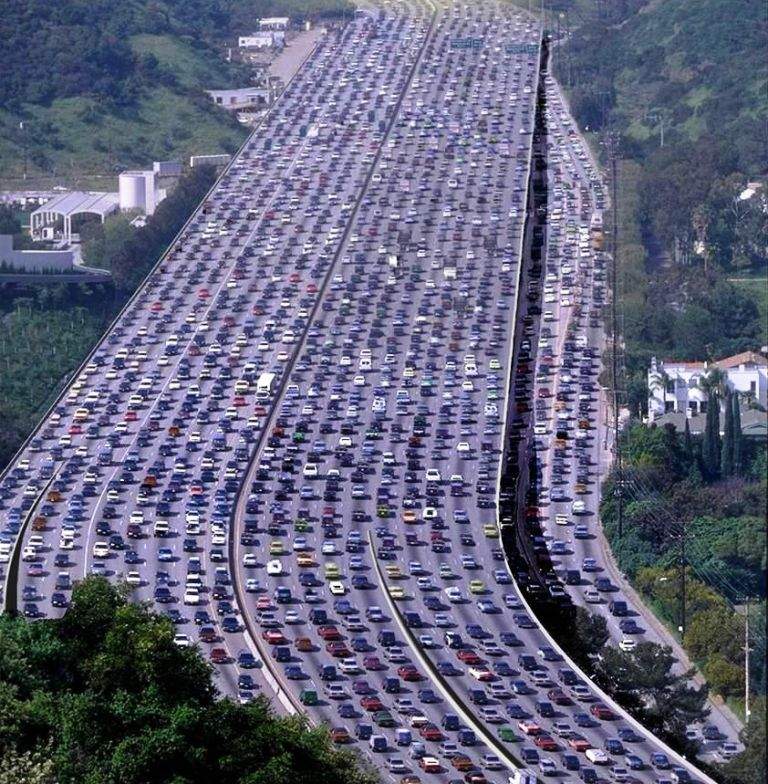
Some of the main contributors of greenhouse gases to the atmosphere from current society are cement making, paving the landscape and emissions from motor vehicle driving.
Last week,the Wisconsin Legislature’s Joint Finance Committee approved borrowing an additional $350 million to be paid later to put five major highway capacity expansion projects back on the schedule for road and bridge construction. The 5 major projects in Wisconsin include the following:
* the roadwork along Madison’s Beltline, Highway 12-18, at the Verona Road interchange;
* I-39/90 from the Illinois state line to Madison;
* Highway 10/441 in the Fox Valley;
* Highway 23 between Fond du Lac and Plymouth;
* Highway 15 near New London in Outagamie County.
Project completion dates for those project have been put off by two years, due to the lack of funds in the current Wisconsin state budget. The Wisconsin Department of Transportation (DOT) has already contracted for the start of work on these projects but because of the funding shortfall, the completion date for the projects was pushed later into the future.
The five major highway capacity projects are located throughout Wisconsin and their completion dates will be delayed pending full approval by the Wisconsin Legislature’s of the JFC’s ruling in a revised state budget signed by Governor Scott Walker. The bonding approval means the five projects will face delays of one year instead of two.
Meanwhile, the state of North Carolina and the Federal Highway Administration are reconsidering the widening an interstate highway through west Asheville to eight lanes. Highway builders want to complete the “missing link” of Interstate 26 running from Tennessee to Charleston. That missing link is actually already an interstate: I-240, built right though some of Asheville’s urban neighborhoods during the urban renewal era. The highway was a major dividing line between some of the black neighborhoods in west Asheville and some more affluent white neighborhoods.

Problem is, FHWA refuses to just rename it I-26 because the highway doesn’t meet some of the modern interstate standards. The DOT is exploring its options for a $600 million widening and “upgrade.”
The state recently released its draft environmental impact statement. The document seems to favor a design that would widen the highway from four lanes to eight — a plan many local residents say is unnecessary and potentially damaging. Last year, the U.S. Public Interest Research group named the project one of its top “highway boondoggles.”
Groups such as “Mountain True”, the Asheville Design Center and a number of community groups had been pushing for a more city-friendly approach. They wanted a design that would preserve urban land for development, minimize air pollution, and provide additional multi-modal connections for neighborhood residents.
“I keep seeing this stuff from U.S. DOT about ‘beyond traffic’ and moving beyond the old paradigm but we’re sort of having the old paradigm forced on us in Asheville”, said Don Kostelec, a local advocate and independent planner skeptical of the project.
Alternative to Verona Road/Beltline Highway Expansion
President Obama Gives Reasons Going to Arctic
President Obama:
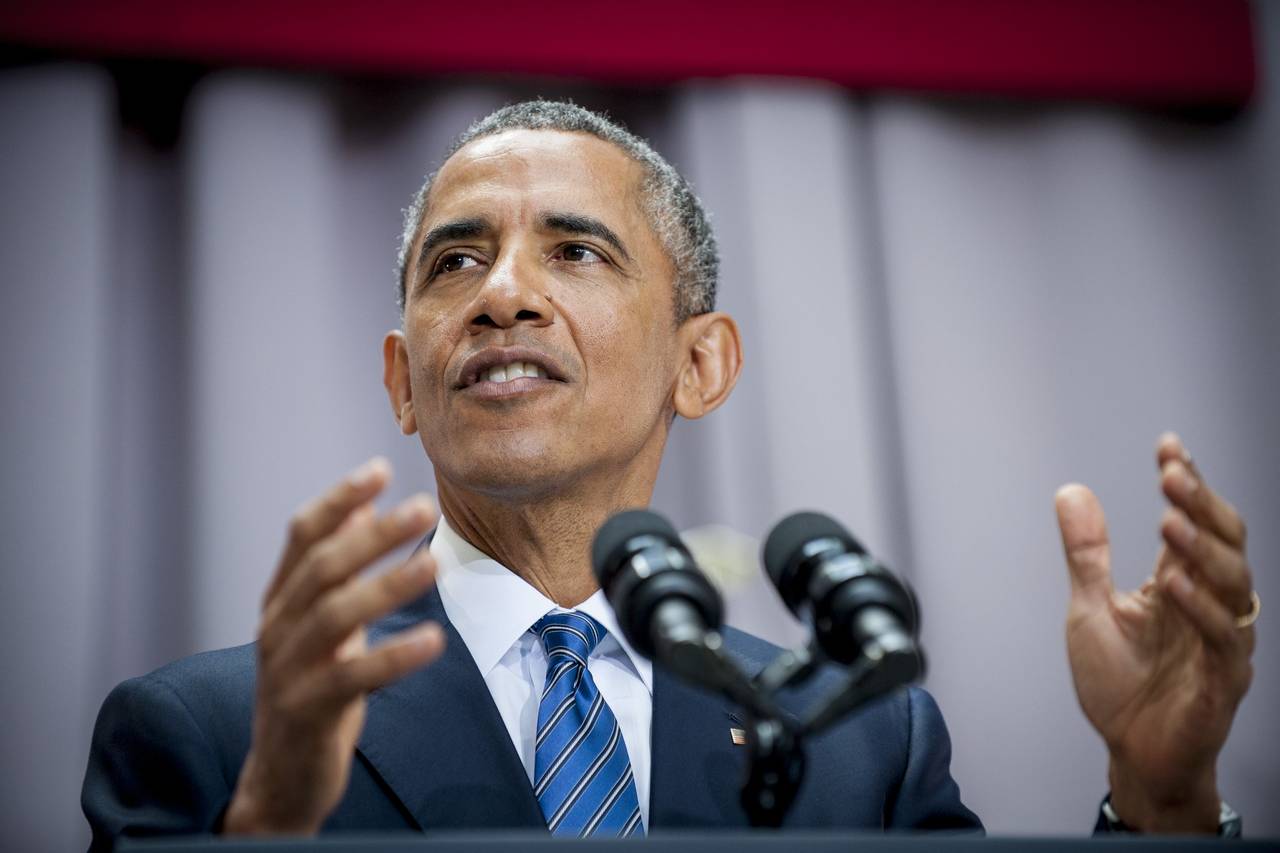
PHOTO: PETE MAROVICH/ZUMA PRESS
President Obama giving a speech at American University, August 5, Washington D.C..
Later this month, President Obama will travel to Alaska and shine a spotlight on what Alaskans in particular have come to know: Climate change is one of the biggest threats we face, it is being driven by human activity, and it is disrupting Americans’ lives right now. [White House]
Can A Global Warming Calamity Be Averted?

“Unless someone like you cares a whole awful lot,
Nothing is going to get better. It’s not.”
― Dr. Seuss, The Lorax
Global warming is often wrongly said to be a political issue. In fact, global warming is no more of a political issue than a tornado is a political issue, or an erupting volcano, or an earthquake or tsunami. These are factual occurrences that occur for known scientific reasons. As there is no debate on the existence or occurrence of these physical happenings nor should there be a need to debate the occurrence of human-caused global warming and climate change as these changes are, too, scientifically based and measured. In fact, sea level has already begun to rise from global warming, measurably. Migratory bird species are changing their patterns and timing of flight; temperature gradients for gardening around the world have changed; heat wave death tolls have risen; extreme weather has become more extreme; average monthly air temperatures at the surface have been steadily rising; dewpoint temperatures in the Midwest have exceeded precedence. Time is running out run out for acting responsibly to avert the worst outcomes possible from global warming. Alarm bells have rung. Action must be taken now, and on a grand scale, to prevent what scientists have been predicting for decades now – the catastrophic consequences of human fed global warming.
Longtime and well respected University of Wisconsin-Madison Chemistry Professor Bassam Shakhashiri recently summarized on Wisconsin Public Radio his own perceptions of the seriousness of the global warming threat and our collective responsibilities as citizens to work towards mitigating and adapting to this monumental threat as follows:
“We should have high expectation of all our government agencies and we should have high expectations of our elected officials and we should have high expectations of everyone who cares about the quality of life of where we live. We face grand challenges. Global warming is unequivocal. It’s not a matter of voting whether we will have global warming or not. It’s a matter of who we elect in the next election cycle to take responsible action to address and to solve this very, very serious and highly consequential question of climate change.
“We have elected officials from our state of Wisconsin who engage in conversations that label other people as deniers of climate change. I think it behooves us as learned individuals, as people who care about the quality of life that we have, to elect individuals to the U.S. Senate to the presidency, to our local government, who can take responsible action to mitigate and to address in responsible ways, and “responsible” is crucial, global warming. It’s not just local here. You can look at different displays of information. In the past 25 years, the plant hardening zones have been changing. Just in the past 25 years, the zone that we are in Wisconsin, is what it was 25 years ago in Florida. We have issues that relate to water quality. We have issues that relate to wellness, to health care.
“We have fabulous opportunities to make great progress in our society, and that’s why I have high expectations – always have high expectations – but I also live in the real world. We must, in the upcoming election cycle, be truly faithful to our core beliefs and to our values, so that our elected officials can act and can respond, in most good ways, to this one issue of climate change. There are other issues, too, but this is really a critical one.” [The Larry Meiller Show,Thursday, August 6, 2015, 11:00 am]
Global warming has all the marking of becoming a worldwide economic, environmental and human disaster. It could be a disaster that has no precedent in nature, at least during the time humans have been inhabiting Earth. Scientific models have demonstrated the inevitably of global warming due to our relentless burning of fossil fuels, in almost every device possible, and our continued deforestation practices, particularly in the tropics. Should global warming be allowed to continue at the current rates, the death toll from global warming effects could ultimately exceed the number of human losses from all wars, human atrocities, motor vehicle crashes, airplane crashes and worldwide epidemics.
History is repleat with examples of being “too little, too late”. U.S. President Hoover’s attempts to end the Great Depression by funding the construction of the Hoover Dam were believed by the American public as being “too little” to save the U.S. economy and “too late”. He was soundly defeated in the U.S. presidential election by Franklin Delano Roosevelt.
In medicine, if someone is sick and they do not get to a doctor until their sickness becomes fatal any remedy will be “too little, too late”.
The Obama administration’s Clean Power Plan to reduce global warming is also both too little and too late to prevent what scientists call a “runaway greenhouse effect”, as what happen on the planet Venus eons ago, making the planet’s former oceans of water boil away, due to surface atmospheric temperatures that continued to climb, unabated.
While the U.S. electrical energy power production may be the top emitting sector of greenhouse gases (GHGs) in the U.S. economy, timely and sufficiently large GHGs emissions reductions in the transportation and other GHG emitting sectors (construction industry sector, agriculture industry sector, consumer sector, export/import sectors, the military industrial complex) will nullify any gains made in the electricity production sector. This could leave the planet vulnerable for the positive GHG feedback mechanisms that contribute to more global warming to kick-in, which could cause a runaway greenhouse effect on Earth. Examples of positive feedback to more global warming of Earth include a reduced ability of the Arctic Ocean to reflect solar energy back into space (darker water absorbs more solar energy than snow and ice), causing additional heating of the oceans; melting of the permafrost region (1/5 of the earth’s surface) resulting in more methane gas (a much stronger GHG than carbon dioxide) production.
Albert Einstein once remarked: “We can’t solve problems by using the same kind of thinking we used when we created them.” Offering the public positive financial incentives to reduce actions that emit greenhouse gases, such as driving, flying and using fossil fuel created heat and electricity, could drastically reduce human caused climate change and as well as other problems created by our fossil fuel powered economy (such as oil spills, ground water pollution from petroleum waste, and natural gas explosions).
‘Godzilla El Niño’ Predicted for West Coast in Late Fall or Early Winter

The strengthening El Niño in the Pacific Ocean has the potential to become one of the most powerful on record, as warming ocean waters surge toward the Americas, setting up a pattern that could bring once-in-a-generation storms this winter to drought-parched California, the Los Angeles Times reported Thursday.
The National Weather Service’s Climate Prediction Center said Thursday that all computer models are predicting a strong El Niño to peak in the late fall or early winter. A host of observations have led scientists to conclude that “collectively, these atmospheric and oceanic features reflect a significant and strengthening El Niño.”
“This definitely has the potential of being the Godzilla El Niño,” said Bill Patzert, a climatologist with NASA’s Jet Propulsion Laboratory in La Cañada Flintridge.
Patzert said El Niño’s signal in the ocean “right now is stronger than it was in 1997,” the summer in which the most powerful El Niño on record developed.
“Everything now is going to the right way for El Niño,” Patzert said. “If this lives up to its potential, this thing can bring a lot of floods, mudslides and mayhem.”
“This could be among the strongest El Niños in the historical record dating back to 1950,” said Mike Halpert, deputy director of the Climate Prediction Center.
After the summer 1997 El Niño muscled up, the following winter gave Southern California double its annual rainfall and dumped double the snowpack in the Sierra Nevada, an essential source of precipitation for the state’s water supply, Patzert said.
The mass of warm water in the Pacific Ocean is also bigger and deeper than it was at this point in 1997, Patzert said.
Second, the so-called trade winds that normally keep the ocean waters west of Peru cool — by pushing warm water farther west toward Indonesia — are weakening.
That’s allowing warm water to flow eastward toward the Americas, giving El Niño more strength.
For this year’s El Niño to truly rival its 1997 counterpart, there still needs to be “a major collapse in trade winds from August to November as we saw in 1997,” Patzert said.
“We’re waiting for the big trade wind collapse,” Patzert said. “If it does, it could be stronger than 1997.”
There is a small chance such a collapse may not happen.
“There’s always a possibility these trade winds could surprise us and come back,” Patzert said.
Overall, the Climate Prediction Center forecast a greater-than-90% chance that El Niño will continue through this winter in the Northern Hemisphere, and about an 85% chance it will last into the early spring.
In California, officials have cautioned the public against imagining that El Niño will suddenly end the state’s chronic water challenges.
In fact, it would take an astonishing 2.5 to three times the average annual precipitation to make up for the rain and snow lost in the central Sierra mountain range over the last four years of drought, said Kevin Werner, the National Oceanic and Atmospheric Administration’s expert on climate in the western United States.
That amount far exceeds what happened in 1983, the wettest year on record for that region, when the area got 1.9 times the average annual precipitation, Werner said.
“A single El Niño year is very unlikely to erase four years of drought,” Werner said.
“The drought is not ending any time soon,” Halpert added.
California has been dry for much of the last 15 years. Even if California gets a wet winter this year, it could be followed by another severe multiyear drought.
Another problem is that the Pacific Ocean west of California is substantially warmer than it was in 1997. That could mean that though El Niño-enhanced precipitation fell as snow in early 1998, storms hitting the north could cause warm rain to fall this winter. Such a situation would not be good news “for long-term water storage in the snowpack,” said Daniel Swain, a climate scientist at Stanford University.
Drought officials prefer snow in the mountains in the winter because it slowly melts during the spring and summer and can trickle at a gentle speed into the state’s largest reservoirs in Northern California. Too much rain all at once in the mountains in the winter can force officials to flush excess water to the ocean to keep dams from overflowing.
Swain said it’s important to keep in mind that all El Niño events are different, and just because the current El Niño has the potential to be the strongest on record “doesn’t necessarily mean that the effects in California will be the same.”
“A strong El Niño is very likely at this point, namely because we’ve essentially reached the threshold already, but a wet winter is never a guarantee in California,” Swain said in an email.
“I think a good way to think about it is this: There is essentially no other piece of information that is more useful in predicting California winter precipitation several months in advance than the existence of a strong El Niño event,” Swain said. “But it’s still just one piece of the puzzle. So while the likelihood of a wet winter is increasing, we still can’t rule out other outcomes.”
A Record 988 Billion Miles Driven on U.S. Highways During First Four Months of 2015
Data from the U.S. Federal Highway Administration show Americans drove a record 988 billion miles during the first four months of 2015. Motor gasoline consumption, which rose by 80,000 barrels per day in 2014, will increase by a projected 170,000 barrels per day (1.9%) in 2015 as the effects of employment growth and lower gasoline prices outweigh increases in vehicle fleet efficiency.
Lower prices along with higher rates of road traffic and more demand for larger vehicles continue to push gas consumption higher.
As refiners continue to produce at a near-record pace, U.S. gasoline stockpiles have declined. Gasoline stockpiles are down 10% since February.
Demand for automotive-grade gasoline increased to 9.17 million barrels (385.14 million gallons) per day, according to information from the Energy Information Administration (EIA).
The Energy Information Administration estimates that for each gallon of gasoline burned in an internal combustion engine, 19.564 pounds of carbon dioxide (CO2) are emitted to the atmosphere, as well as smaller amounts of nitrous oxide and other gases. This calculates to 7.7 billion pounds CO2 per day from U.S. drivers. Carbon dioxide remains in the atmosphere from year to year, building to higher and higher levels of concentration, which is known to be causing warmer temperatures at lower altitudes, warmer ocean surface temperatures. In Wisconsin, nightly low temperatures have increased the most, as reported by the Weather Guys.
Yet nationally, only 63% of U.S. citizens believe global warming is occurring!
Cecil The Lion And The Debate Over Trophy Hunting

After Zimbabwe released the name this week of Walter Palmer, the hunter who killed Cecil the lion, the Minnesota dentist has faced intense backlash.
Those who still question the scientific validity of greenhouse gas warming causing more warming and rising sea levels, for pecuniary advantage, are a million times more unethical than Palmer and may be guilty of crimes against humanity.
10 Feet of Global Sea Level Rise Is Now Guaranteed

At least 10 feet of sea level rise is now guaranteed worldwide; it’s all but inevitable, a done deal. An ice sheet two miles thick has collapsed in West Antarctica. Glaciologists have been dreading this moment for decades, though in recent years, it was more of a question of when than if—and there is nothing that can stop it from melting now. Read more about it.
A new study finds that even if we slow rising temperatures now, we could still be in for higher seas.
 All Things Environmental
Recent Comments