
As Earth Warms, NASA Targets ‘Other Half’ of Carbon, Climate Equation in Advance of United Nations climate conference in Paris

Carbon dioxide emitted into the atmosphere by human activities influences the amount of the sun’s energy trapped by Earth’s atmosphere. These emissions are the subject of a United Nations climate conference in Paris later this month. To improve the information available to policymakers on this issue, scientists are grappling with the complex question of whether Earth’s oceans, forests and land ecosystems will maintain their capacity to absorb about half of all human-produced carbon dioxide emissions in the future.
“NASA is at the forefront of scientific understanding in this area, bringing together advanced measurement technologies, focused field experiments, and cutting-edge research to reveal how carbon moves around the planet and changes our climate,” said Michael Freilich, director of NASA’s Earth Science Division. “Understanding how the planet responds to human carbon emissions and increasing atmospheric CO2 levels will position our nation to take advantage of the opportunities and face the challenges that climate changes present.”
Atmospheric carbon dioxide levels recently surpassed a concentration of 400 parts per million (ppm) — higher than at any time in at least 400,000 years — and continue to increase at about 2 ppm per year. Levels of the even more potent heat-trapping gas methane — also carbon-based — now exceed pre-industrial amounts by about 2.5 times. Calculations show that, on average, only about half of the carbon emitted by human activities remains in the atmosphere.
This “other half” of the carbon problem — how and where it is absorbed on land and sea — is a priority for carbon cycle scientists at NASA and around the world. Scientists are investigating how Earth’s warming environment will affect the ability of ecosystems around the world to absorb carbon naturally, and what changes in those ecosystems could mean for future climate. It’s a major research question involving several NASA satellite missions, multi-year field campaigns and new instruments that will fly on the International Space Station in coming years.
Scientists discussed the ongoing analysis of the first year-plus of satellite data from NASA’s recently launched Orbiting Carbon Observatory-2 — the agency’s first satellite designed to measure carbon dioxide from the top of Earth’s atmosphere to its surface.
“As carbon dioxide is the largest human-produced driver of our changing climate, having regular observations from space is a major step forward for our ability to understand and predict climate change,” said Annmarie Eldering, OCO-2 deputy project scientist at NASA’s Jet Propulsion Laboratory (JPL) in Pasadena, California. “Precisely measuring carbon dioxide in the atmosphere has been one of the most difficult observations to make from space.”
OCO-2 already is demonstrating the accuracy, precision and coverage needed to provide the first complete picture of both human and natural sources of carbon dioxide and the places where they are being absorbed. While the mission gives scientists new, near-global data on atmospheric carbon dioxide, satellite data cannot directly observe the processes by which the gas is absorbed on the land and ocean. To better understand these processes, NASA scientists will use satellite data and detailed field experiments in concert with super-high-resolution computer models. Scientists need this integrated approach in order to continue to more accurately predict how carbon-absorbing ecosystems will respond to a warming climate.
“The land and the ocean are really doing us a big favor,” said Lesley Ott, an atmospheric scientist in the Global Modeling and Assimilation Office at NASA’s Goddard Space Flight Center in Greenbelt, Maryland. “Otherwise you would have carbon building up in the atmosphere twice as fast as it does now.”
Also causing concern is the potential for the ocean’s rate of carbon absorption to change as ocean temperatures rise and phytoplankton communities show signs of change. NASA’s North Atlantic Aerosols and Marine Ecosystems Study (NAAMES) launched ship and airborne studies last week to the North Atlantic Ocean, where satellites have documented surprising phytoplankton behavior in recent years.
“We will be studying an ocean region that every year exhibits one of the largest natural phytoplankton blooms on Earth,” said Mike Behrenfeld, NAAMES principal investigator from Oregon State University in Corvallis. “Phytoplankton are not only influenced by climate, but they also influence climate. That’s why we’re out here in the North Atlantic in the middle of November.”
Forest and other land ecosystems are also changing in response to a warmer world. Some ecosystems — such as thawing permafrost in the Arctic and fire-prone forests — could begin emitting more carbon than they currently absorb. Next fall, NASA’s Arctic Boreal Vulnerability Experiment will begin a 10-year investigation into the fate of carbon stores in rapidly warming regions of Alaska and Canada.
The scientists also outlined several other upcoming NASA carbon missions and field campaigns, including:
ACT-America, which will fly over the eastern U.S. beginning in 2016 to study the atmospheric movement of carbon emissions;
Coral Airborne Laboratory mission, which will fly over coral reefs around the world beginning in 2016 to observe how reefs are responding to changing ocean pH levels caused by the absorption of carbon dioxide;
The Pre-Aerosol, Clouds and Ocean Ecosystem satellite, now in early development, will provide a revolutionary way of measuring phytoplankton from orbit; and,
Two instruments that will fly on the International Space Station in coming years — Global Ecosystem Dynamics Investigation and ECOsystem Spaceborne Thermal Radiometer Experiment on Space Station, which will provide crucial observations of plants and forests.
Steve Cole
Headquarters, Washington
202-358-0918
stephen.e.cole@nasa.gov
Last Updated: Nov. 12, 2015
United Nations Climate Change Conference in Paris

The 2015 United Nations Climate Change Conference, COP 21 or CMP 11 will be held in Paris from November 30 to December 11. It will be the 21st yearly session of the Conference of the Parties to the 1992 United Nations Framework Convention on Climate Change (UNFCCC) and the 11th session of the Meeting of the Parties to the 1997 Kyoto Protocol. The conference objective is to achieve a legally binding and universal agreement on climate, from all the nations of the world.
The overarching goal of the Convention is to reduce greenhouse gas emissions to limit the global temperature increase to 2 °C above pre-industrial levels. However, Christiana Figueres, executive secretary of the UNFCCC, acknowledged in the closing briefing at the 2012 Doha conference “the current pledges under the second commitment period of the Kyoto protocol are clearly not enough to guarantee that the temperature will stay below 2 °C and there is an ever increasing gap between the action of countries and what the science tells us.”
The governments of more than 190 nations will gather in Paris to discuss a possible new global agreement on climate change, aimed at reducing global greenhouse gas emissions and thus avoiding the threat of dangerous climate change.
Current commitments on greenhouse gas emissions run out in 2020, so at Paris governments are expected to produce an agreement on what happens for the decade after that at least, and potentially beyond.
Growing Worries Over Global Climate Change Threaten Major Highway Expansions
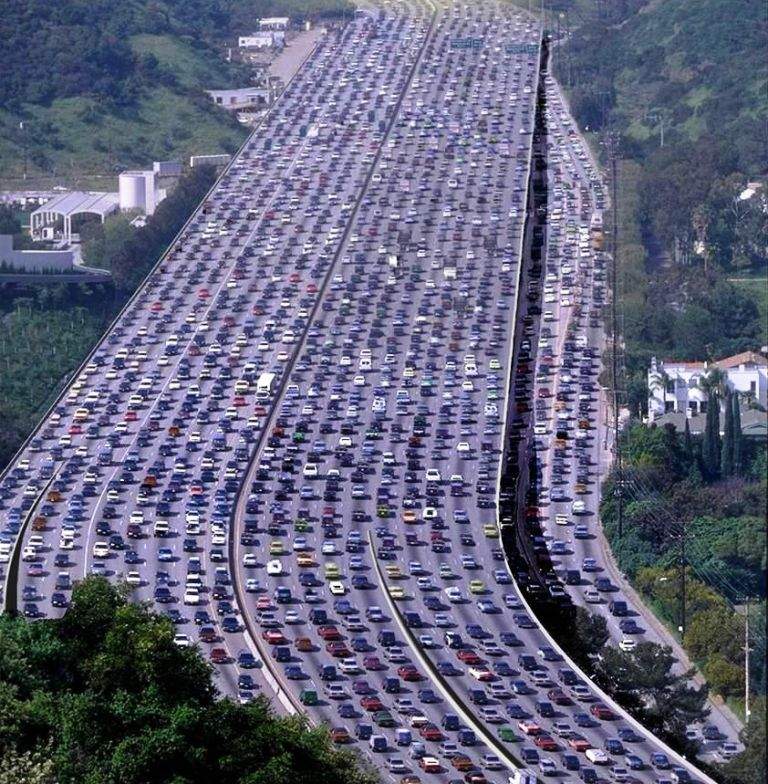
Some of the main contributors of greenhouse gases to the atmosphere from current society are cement making, paving the landscape and emissions from motor vehicle driving.
Last week,the Wisconsin Legislature’s Joint Finance Committee approved borrowing an additional $350 million to be paid later to put five major highway capacity expansion projects back on the schedule for road and bridge construction. The 5 major projects in Wisconsin include the following:
* the roadwork along Madison’s Beltline, Highway 12-18, at the Verona Road interchange;
* I-39/90 from the Illinois state line to Madison;
* Highway 10/441 in the Fox Valley;
* Highway 23 between Fond du Lac and Plymouth;
* Highway 15 near New London in Outagamie County.
Project completion dates for those project have been put off by two years, due to the lack of funds in the current Wisconsin state budget. The Wisconsin Department of Transportation (DOT) has already contracted for the start of work on these projects but because of the funding shortfall, the completion date for the projects was pushed later into the future.
The five major highway capacity projects are located throughout Wisconsin and their completion dates will be delayed pending full approval by the Wisconsin Legislature’s of the JFC’s ruling in a revised state budget signed by Governor Scott Walker. The bonding approval means the five projects will face delays of one year instead of two.
Meanwhile, the state of North Carolina and the Federal Highway Administration are reconsidering the widening an interstate highway through west Asheville to eight lanes. Highway builders want to complete the “missing link” of Interstate 26 running from Tennessee to Charleston. That missing link is actually already an interstate: I-240, built right though some of Asheville’s urban neighborhoods during the urban renewal era. The highway was a major dividing line between some of the black neighborhoods in west Asheville and some more affluent white neighborhoods.

Problem is, FHWA refuses to just rename it I-26 because the highway doesn’t meet some of the modern interstate standards. The DOT is exploring its options for a $600 million widening and “upgrade.”
The state recently released its draft environmental impact statement. The document seems to favor a design that would widen the highway from four lanes to eight — a plan many local residents say is unnecessary and potentially damaging. Last year, the U.S. Public Interest Research group named the project one of its top “highway boondoggles.”
Groups such as “Mountain True”, the Asheville Design Center and a number of community groups had been pushing for a more city-friendly approach. They wanted a design that would preserve urban land for development, minimize air pollution, and provide additional multi-modal connections for neighborhood residents.
“I keep seeing this stuff from U.S. DOT about ‘beyond traffic’ and moving beyond the old paradigm but we’re sort of having the old paradigm forced on us in Asheville”, said Don Kostelec, a local advocate and independent planner skeptical of the project.
Alternative to Verona Road/Beltline Highway Expansion
Obama and Nebraska Residents, Assisted by Neil Young and Willie Nelson, Reject Keystone Tar Sands Crude Oil Pipeline

By New York Times Writer Chas Danner
Nov. 9, 2015
Following a seven-year stint in political and regulatory purgatory, the Keystone XL project finally met its end last week when President Obama, eyeing the upcoming U.N. climate talks in Paris, formally rejected TransCanada’s request to build the cross-border oil pipeline. Climate activists [with help from two longtime progressive American artists/musicians who didn’t really need the exposure – Neil Young and Willie Nelson and who also opposed the plan] are celebrating their victory and already attempting to parlay the momentum into more wins. Proponents of the pipeline — a group that at this point consists mainly of Republicans and Republican presidential candidates, energy-industry lobbyists, and some labor unions who were looking forward to tens of thousands of temporary construction jobs — are decrying Obama’s decision and writing the whole thing off as a hallmark of irresponsible political capitulation….
Meanwhile, Bill McKibben, one of the central leaders of the anti-KXL fight, writes in The New Yorker that he now believes he and his allies, because of their new tactics, finally have fossil-fuel companies on the defensive:
[T]he Keystone rallying cry [has] quickly spread to protests against other fossil-fuel projects. One industry executive summed it up nicely this spring, when he told a conference of his peers that they had to figure out how to stop the “Keystone-ization” of all their plans. … [And] this fall, the governor of the Bank of England, Mark Carney, speaking to members of the insurance industry at Lloyds of London, used [“leave it in the ground“] language to tell them that they faced a “huge risk” from “unburnable carbon” that would become “stranded assets.” No one’s argued with the math, and that math indicates that the business plans of the fossil-fuel giants are no longer sane. Word is spreading: portfolios and endowments worth a total of $2.6 trillion in assets have begun to divest from fossil fuels. The smart money is heading elsewhere.
We won’t close that gap between politics and physics at the global climate talks next month in Paris. […] In many ways, the developments of the past two days are more important than any pledges and promises for the future, because they show the ways in which political and economic power has already started to shift. If we can accelerate that shift, we have a chance. It’s impossible, in the hottest year that humans have ever measured, to feel optimistic. But it’s also impossible to miss the real shift in this battle. [End of Danner text]
The nearly 1,200-mile (2,000-km) pipeline would carry 830,000 barrels a day of mostly Canadian oil sands crude to Nebraska en route to refineries and ports along the U.S. Gulf Coast.
Read more at Reutershttp://www.reuters.com/article/2015/11/05/us-transcanada-keystone-state-idUSKCN0ST2VX20151105#PXYjkPeuAjeDlY1G.99However, Enbridge Company pipeline projects permitted by Wisconsin Governor Scott Walker’s Department of Natural Resources, are planning on pumping 1.2 million barrels of tar sands crude across Wisconsin for processing into gasoline, diesel fuel and jet fuel, soon, and are planning on pumping another 600 million barrels of tar sands crude oil through a second parallel pipe from Alberta to Illinois in the not too distant future. Burning that much fuel will certainly add to the planet’s global warming troubles, probably sooner than most of us earthlings burning all those fossil fuels had anticipated.
Also see: Obama Urged to reject Keystone XL
Carl Sagan, John Lennon and Israel “Iz” Kaʻanoʻi Kamakawiwoʻole’s Advocacy More Relevant Today than Ever

Carl Sagan in 1980
The world renown American science communicator in astronomy and other natural sciences, and author of the book Pale Blue Dot: A Vision of the Human Future in Space, Carl Sagan, was born November 9, 1934, in Brooklyn, New York. The book examines the claims made throughout history that Earth and the human species are unique.
He published more than 600 scientific papers and articles and was author, co-author or editor of more than 20 books. He
co-wrote the award-winning 1980 television series Cosmos: A Personal Voyage. The most widely-watched series in the history of American public television, Cosmos has been seen by at least 500 million people across 60 different countries. The book Cosmos was published to accompany the series. Sagan died of pneumonia at the age of 62 on December 20, 1996.
…”Nothing’s gonna change my world…” – John Lennon
John Lennon was a peace activist and leader of the 1960’s to early 1970’s rock band “The Beatles”. After The Beatles broke up, Lennon continued writing and recording songs including such notable songs as “Give Peace a Chance”, “Power to the People” and “Imagine”.
John Lennon was shot dead by a deranged fan in the archway of the building where he lived in New York City on 8 December 1980. He had just returned from the recording studio with his wife, Yoko Ono. He was just 40 years old. Had he lived, he would have been 75 years old this year..
Israel “Iz” Kaʻanoʻi Kamakawiwoʻole (May 20, 1959 – June 26, 1997), was a Hawaiian musician, entertainer and sovereignty activist.
His voice became famous outside Hawaii when his album Facing Future was released in 1993. His songs include “Somewhere Over the Rainbow” and “What a Wonderful World”.
Kamakawiwoʻole remains a very strong influence on Hawaiian music today.
Souls of the Dead Speak Out: “Americans Should Not Have Anymore Children”

© Tomas Castelazo, www.tomascastelazo.com / Wikimedia Commons. Licensed under CC BY-SA 3.0 via Commons.
Celebrating The Day of the Dead has a long history in Mexican tradition. The Day of the Dead is celebrated on November 2nd. The Days of the Dead are October 31 – November 2. During the Days of the Dead, some believe that the souls of the departed return to earth to visit with and to provide council or give advice to family and loved ones.
Souls of the Dead Speak Out: “Americans Should Not Have Anymore Children”
NOAA: 2015 Global Average Temperatures for Oceans and Land Highest on Record for September and January–September


The National Oceanic and Atmospheric Administration (NOAA) reports that the September average temperature across global land and ocean surfaces was 1.62°F (0.90°C) above the 20th century average, and that this was the highest September temperature on record, surpassing the previous record set last year by +0.12°F (+0.19°C).
September’s high temperature was also the greatest rise above average for any month in the 136-year historical record, surpassing the previous record set in both February and March this year by 0.02°F (0.01°C), NOAA states.
The September globally-averaged land surface temperature was 2.09°F (1.16°C) above the 20th century average which was also the highest for September in the 1880–2015 record, surpassing the previous record set in 2009 by +0.16°F (+0.09°C), according to NOAA. Record warmth was observed across much of South America and parts of Africa, the Middle East, Europe, and Asia.
The September globally-averaged sea surface temperature was 1.46°F (0.81°C) above the 20th century average, which was the highest temperature for September in the 1880–2015 record, surpassing the previous record set in 2014 by +0.13°F (+0.07°C), NOAA reports.
The year-to-date temperature across global land and ocean surfaces was 1.53°F (0.85°C) above the 20th century average, which was the highest for January–September in the 1880–2015 record, surpassing the previous record set in 2014 by 0.19°F (0.12°C).
The year-to-date globally-averaged land surface temperature was also the highest for January–September in the 1880–2015 record at 2.32°F (1.29°C) above the 20th century average, surpassing the previous record of 2007 by 0.31°F (0.17°C).
The year-to-date globally-averaged sea surface temperature was 1.24°F (0.69°C) above the 20th century average and the highest for January–September in the 1880–2015 record, surpassing the previous record of 2010 by +0.11°F (+0.06°C).
Weather Channel: Hurricane Patricia Most Powerful Tropical Cyclone Ever Measured in the Western Hemisphere
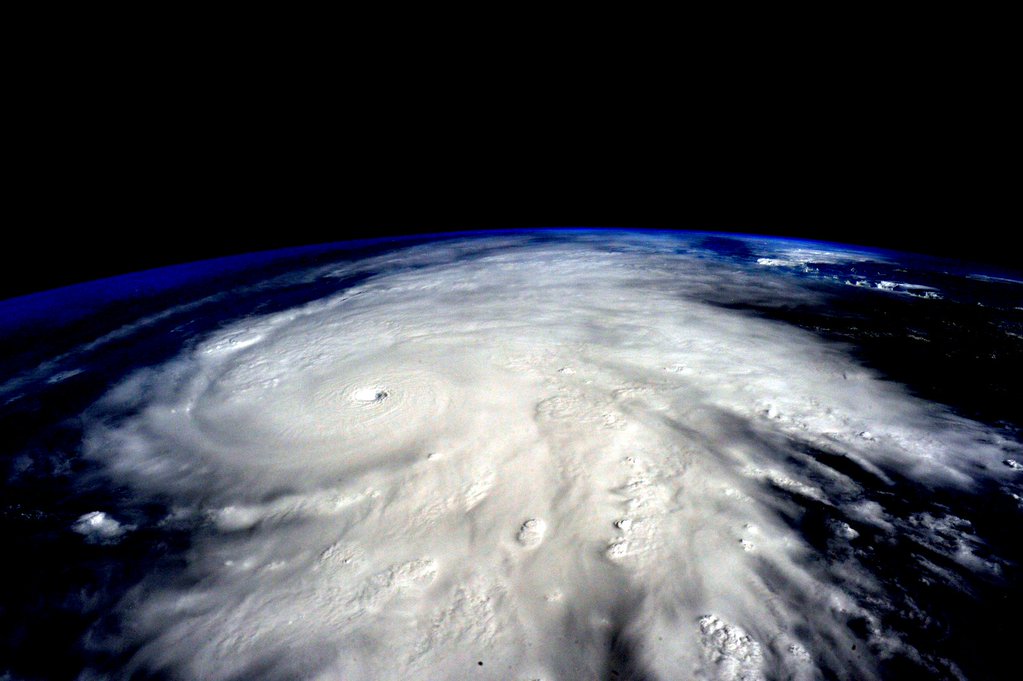
Hurricane Patricia became the strongest Pacific hurricane on record shortly after midnight CDT early on Oct. 23, 2015. The Weather Channel reported Patricia rapidly organized and intensified as maximum sustained winds with the storm increased 115 mph in a 24-hour window from 85 mph at 4 a.m. CDT on Oct. 22 to 200 mph at 4 a.m. CDT Oct. 23.
During that same time, the minimum central pressure of Patricia also decreased 100 millibars, from 980 millibars to 880 millibars.
This places Patricia among the most rapidly intensifying tropical cyclones ever witnessed anywhere in the world since the advent of modern meteorology.
White House Announces Commitments to the American Business Act on Climate Pledge
The White House Monday announced new commitments from companies from across the American economy. With this announcement, 81 companies will have signed the American Business Act on Climate Pledge to demonstrate their support for action on climate change and the conclusion of a climate change agreement in Paris that takes a strong step forward toward a low-carbon, sustainable future. The release says the 81 companies who signed the pledge have operations in all 50 states, employ over 9 million people, represent more than $3 trillion in annual revenue, and have a combined market capitalization of over $5 trillion.
From the White House release: By signing the American Business Act on Climate pledge, these companies are:
Voicing support for a strong Paris outcome. The pledge recognizes those countries that have already put forward climate targets, and voices support for a strong outcome in the Paris climate negotiations.
Demonstrating an ongoing commitment to climate action. As part of this initiative, each company is announcing significant pledges to reduce their emissions, increase low-carbon investments, deploy more clean energy, and take other actions to build more sustainable businesses and tackle climate change.
These pledges include ambitious, company-specific goals such as:
Reducing emissions by as much as 50 percent,
Reducing water usage by as much as 80 percent,
Achieving zero waste-to-landfill,
Purchasing 100 percent renewable energy, and
Pursuing zero net deforestation in supply chains.
Setting an example for their peers. Today’s announcements builds on the launch of the American Business Act on Climate Pledge in July. This fall, the Obama Administration will release a third round of pledges, with a goal of mobilizing many more companies to join the American Business Act on Climate Pledge.
The impacts of climate change are already being felt worldwide. Nineteen of the 20 hottest years on record occurred in the past two decades. Countries and communities around the world are already being affected by deeper, more persistent droughts, pounded by more severe weather, inundated by bigger storm surges, and imperiled by more frequent and dangerous wildfires. Rising temperatures can lead to more smog, longer allergy seasons, and an increased incidence of extreme-weather-related injuries, all of which imperil public health, particularly for vulnerable populations like children, the elderly, the sick, the poor, and some communities of color. No corner of the planet and no sector of the global economy will remain unaffected by climate change in the years ahead.
Climate change is a global challenge that demands a global response, and President Obama is committed to leading the fight. The President’s Climate Action Plan, when fully implemented, will cut nearly 6 billion tons of carbon pollution through 2030, an amount equivalent to taking all the cars in the United States off the road for more than 4 years. The Clean Power Plan, the most significant domestic step any President has ever taken to combat climate change, will reduce emissions from the energy sector by 32% by 2030. And while the United States is leading on the international stage and the federal government is doing its part to combat climate change, hundreds of private companies, local governments, and foundations have stepped up to increase energy efficiency, boost low-carbon investing, and make solar energy more accessible to low-income Americans.
The measures taken by the public and private sectors enabled President Obama to set an ambitious but achievable goal of reducing greenhouse gas emissions economy-wide by 26-28% by 2025 last November. And in the eleven months since, we’ve seen unprecedented global momentum in the fight against climate change.
To date, 150 countries representing more than 85% of global carbon emissions have reported post-2020 climate policies to the United Nations. This includes the major economies like the U.S., China, the European Union and India and it includes a large number of smaller economies, developing nations, island states and tropical countries – some of whom are the most vulnerable to the impacts of climate change.
But these submissions are only the beginning of achieving a successful outcome in Paris this December that puts in place a transparent global framework for increasing ambition over time and continuing to drive down emissions over the course of this century. As the world looks toward Paris, President Obama is committed to building on this momentum, with American leadership at all levels – the federal government, state and local governments and the private sector.
Additionally, leading up to the White House Clean Energy Investment Summit on June 16, 2015, an independent consortium of long-term investors (“LTIs”), including sovereign development funds, pension funds, endowments, family offices, and foundations, committed to building a new investment intermediary that will identify, screen, and assess high-potential companies and projects for commercial investment that could also produce impactful and profitable solutions to climate change.
The consortium announced its founding CEO, interim board of directors, sponsors, and confirms the intention of the LTIs to deploy at least $1.2 billion of investment capital through an ‘aligned intermediary’, which they anticipate will be formally launched and branded in mid-2016.
The initial group of LTIs announcing financial commitments to work with the ‘aligned intermediary’ includes:
$500 million from University of California’s Office of the Chief Investment Officer;
350 million from the New Zealand Superannuation Fund;
$200 million from the Alaska Permanent Fund;
$100 million from TIAA-CREF; and
$10 million from Tamarisc.
The effort launches with research support from the Hewlett Foundation, ClimateWorks Foundation, and Planet Heritage Foundation, and a commitment of further operational support, pending final approval, from the MacArthur Foundation.
As President Obama said at the U.N. Climate Summit last September, “There’s one issue that will define the contours of this century more dramatically than any other, and that is the urgent and growing threat of a changing climate.” The American Business Act on Climate Pledge shows that the U.S. private sector, with its history of innovation and ingenuity, is committed to stepping up and doing its part in taking on this global challenge.
We applaud the growing number of countries that have already set ambitious targets for climate action. In this context, we support the conclusion of a climate change agreement in Paris that takes a strong step forward toward a low-carbon, sustainable future.
We recognize that delaying action on climate change will be costly in economic and human terms, while accelerating the transition to a low-carbon economy will produce multiple benefits with regard to sustainable economic growth, public health, resilience to natural disasters, and the health of the global environment.
The following companies have joined the pledge and their detailed commitments can be viewed at:
President Obama’s Speech at the GLACIER Conference, Anchorage, Alaska
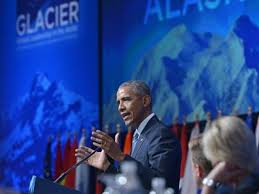
The full text of his speech to the Glacier Conference on 1 September 2015 follows:
I want to thank the people of Alaska for hosting this conference. I look forward to visiting more of Alaska over the next couple of days. The United States is, of course, an Arctic nation. And even if this isn’t an official gathering of the Arctic Council, the United States is proud to chair the Arctic Council for the next two years. And to all the foreign dignitaries who are here, I want to be very clear — we are eager to work with your nations on the unique opportunities that the Arctic presents and the unique challenges that it faces. We are not going to — any of us — be able to solve these challenges by ourselves. We can only solve them together.
Of course, we’re here today to discuss a challenge that will define the contours of this century more dramatically than any other — and that’s the urgent and growing threat of a changing climate.
Our understanding of climate change advances each day. Human activity is disrupting the climate, in many ways faster than we previously thought. The science is stark. It is sharpening. It proves that this once-distant threat is now very much in the present.
In fact, the Arctic is the leading edge of climate change — our leading indicator of what the entire planet faces. Arctic temperatures are rising about twice as fast as the global average. Over the past 60 years, Alaska has warmed about twice as fast as the rest of the United States. Last year was Alaska’s warmest year on record — just as it was for the rest of the world. And the impacts here are very real.
Thawing permafrost destabilizes the earth on which 100,000 Alaskans live, threatening homes, damaging transportation and energy infrastructure, which could cost billions of dollars to fix.
Warmer, more acidic oceans and rivers, and the migration of entire species, threatens the livelihoods of indigenous peoples, and local economies dependent on fishing and tourism. Reduced sea levels leaves villages unprotected from floods and storm surges. Some are in imminent danger; some will have to relocate entirely. In fact, Alaska has some of the swiftest shoreline erosion rates in the world.
I recall what one Alaska Native told me at the White House a few years ago. He said, “Many of our villages are ready to slide off into the waters of Alaska, and in some cases, there will be absolutely no hope -– we will need to move many villages.”
Alaska’s fire season is now more than a month longer than it was in 1950. At one point this summer, more than 300 wildfires were burning at once. Southeast of here, in our Pacific Northwest, even the rainforest is on fire. More than 5 million acres in Alaska have already been scorched by fire this year — that’s an area about the size of Massachusetts. If you add the fires across Canada and Siberia, we’re talking 300 [30] million acres -– an area about the size of New York.
This is a threat to many communities — but it’s also an immediate and ongoing threat to the men and women who put their lives on the line to protect ours. Less than two weeks ago, three highly trained firefighters lost their lives fighting a fire in Washington State. Another has been in critical condition. We are thankful to each and every firefighter for their heroism — including the Canadian firefighters who’ve helped fight the fires in this state.
But the point is that climate change is no longer some far-off problem. It is happening here. It is happening now. Climate change is already disrupting our agriculture and ecosystems, our water and food supplies, our energy, our infrastructure, human health, human safety — now. Today. And climate change is a trend that affects all trends — economic trends, security trends. Everything will be impacted. And it becomes more dramatic with each passing year.
Already it’s changing the way Alaskans live. And considering the Arctic’s unique role in influencing the global climate, it will accelerate changes to the way that we all live.
Since 1979, the summer sea ice in the Arctic has decreased by more than 40 percent — a decrease that has dramatically accelerated over the past two decades. One new study estimates that Alaska’s glaciers alone lose about 75 gigatons — that’s 75 billion tons — of ice each year.
To put that in perspective, one scientist described a gigaton of ice as a block the size of the National Mall in Washington — from Congress all the way to the Lincoln Memorial, four times as tall as the Washington Monument. Now imagine 75 of those ice blocks. That’s what Alaska’s glaciers alone lose each year. The pace of melting is only getting faster. It’s now twice what it was between 1950 and 2000 — twice as fast as it was just a little over a decade ago. And it’s one of the reasons why sea levels rose by about eight inches over the last century, and why they’re projected to rise another one to four feet this century.
Consider, as well, that many of the fires burning today are actually burning through the permafrost in the Arctic. So this permafrost stores massive amounts of carbon. When the permafrost is no longer permanent, when it thaws or burns, these gases are released into our atmosphere over time, and that could mean that the Arctic may become a new source of emissions that further accelerates global warming.
So if we do nothing, temperatures in Alaska are projected to rise between six and 12 degrees by the end of the century, triggering more melting, more fires, more thawing of the permafrost, a negative feedback loop, a cycle — warming leading to more warming — that we do not want to be a part of.
And the fact is that climate is changing faster than our efforts to address it. That, ladies and gentlemen, must change. We’re not acting fast enough.
I’ve come here today, as the leader of the world’s largest economy and its second largest emitter, to say that the United States recognizes our role in creating this problem, and we embrace our responsibility to help solve it. And I believe we can solve it. That’s the good news. Even if we cannot reverse the damage that we’ve already caused, we have the means — the scientific imagination and technological innovation — to avoid irreparable harm.
We know this because last year, for the first time in our history, the global economy grew and global carbon emissions stayed flat. So we’re making progress; we’re just not making it fast enough.
Here in the United States, we’re trying to do our part. Since I took office six and a half years ago, the United States has made ambitious investments in clean energy, and ambitious reductions in our carbon emissions. We now harness three times as much electricity from wind and 20 times as much from the sun. Alaskans now lead the world in the development of hybrid wind energy systems from remote grids, and it’s expanding its solar and biomass resources.
We’ve invested in energy efficiency in every imaginable way — in our buildings, our cars, our trucks, our homes, even the appliances inside them. We’re saving consumers billions of dollars along the way. Here in Alaska, more than 15,000 homeowners have cut their energy bills by 30 percent on average. That collectively saves Alaskans more than $50 million each year. We’ve helped communities build climate-resilient infrastructure to prepare for the impacts of climate change that we can no longer prevent.
Earlier this month, I announced the first set of nationwide standards to end the limitless dumping of carbon pollution from our power plants. It’s the single most important step America has ever taken on climate change. And over the course of the coming days, I intend to speak more about the particular challenges facing Alaska and the United States as an Arctic power, and I intend to announce new measures to address them.
So we are working hard to do our part to meet this challenge. And in doing so, we’re proving that there doesn’t have to be a conflict between a sound environment and strong economic growth. But we’re not moving fast enough. None of the nations represented here are moving fast enough.
And let’s be honest — there’s always been an argument against taking action. The notion is somehow this will curb our economic growth. And at a time when people are anxious about the economy, that’s an argument oftentimes for inaction. We don’t want our lifestyles disrupted. In countries where there remains significant poverty, including here in the United States, the notion is, can we really afford to prioritize this issue. The irony, of course, is, is that few things will disrupt our lives as profoundly as climate change. Few things can have as negative an impact on our economy as climate change.
On the other hand, technology has now advanced to the point where any economic disruption from transitioning to a cleaner, more efficient economy is shrinking by the day. Clean energy and energy efficiency aren’t just proving cost-effective, but also cost-saving. The unit costs of things like solar are coming down rapidly. But we’re still underinvesting in it.
Many of America’s biggest businesses recognize the opportunities and are seizing them. They’re choosing a new route. And a growing number of American homeowners are choosing to go solar every day. It works. All told, America’s economy has grown more than 60 percent over the last 20 years, but our carbon emissions are roughly back to where they were 20 years ago. So we know how to use less dirty fuel and grow our economy at the same time. But we’re not moving fast enough.
More Americans every day are doing their part, though. Thanks to their efforts, America will reach the emission target that I set six years ago. We’re going to reduce our carbon emissions in the range of 17 percent below 2005 levels by 2020. And that’s why, last year, I set a new target: America is going to reduce our emissions 26 to 28 percent below 2005 levels by 10 years from now.
And that was part of a historic joint announcement we made last year in Beijing. The United States will double the pace at which we cut our emissions, and China committed, for the first time, to limiting its emissions. Because the world’s two largest economies and two largest emitters came together, we’re now seeing other nations stepping up aggressively as well. And I’m determined to make sure American leadership continues to drive international action — because we can’t do this alone. Even America and China together cannot do this alone. Even all the countries represented around here cannot do this alone. We have to do it together.
This year, in Paris, has to be the year that the world finally reaches an agreement to protect the one planet that we’ve got while we still can.
So let me sum up. We know that human activity is changing the climate. That is beyond dispute. Everything else is politics if people are denying the facts of climate change. We can have a legitimate debate about how we are going to address this problem; we cannot deny the science. We also know the devastating consequences if the current trend lines continue. That is not deniable. And we are going to have to do some adaptation, and we are going to have to help communities be resilient, because of these trend lines we are not going to be able to stop on a dime. We’re not going to be able to stop tomorrow.
But if those trend lines continue the way they are, there’s not going to be a nation on this Earth that’s not impacted negatively. People will suffer. Economies will suffer. Entire nations will find themselves under severe, severe problems. More drought; more floods; rising sea levels; greater migration; more refugees; more scarcity; more conflict.
That’s one path we can take. The other path is to embrace the human ingenuity that can do something about it. This is within our power. This is a solvable problem if we start now.
And we’re starting to see that enough consensus is being built internationally and within each of our own body politics that we may have the political will — finally — to get moving.
So the time to heed the critics and the cynics and the deniers is past. The time to plead ignorance is surely past. Those who want to ignore the science, they are increasingly alone. They’re on their own shrinking island. (Applause.)
And let’s remember, even beyond the climate benefits of pursuing cleaner energy sources and more resilient, energy-efficient ways of living, the byproduct of it is, is that we also make our air cleaner and safer for our children to breathe. We’re also making our economies more resilient to energy shocks on global markets. We’re also making our countries less reliant on unstable parts of the world. We are gradually powering a planet on its way to 9 billion humans in a more sustainable way.
These are good things. This is not simply a danger to be avoided; this is an opportunity to be seized. But we have to keep going. We’re making a difference, but we have to keep going. We are not moving fast enough.
If we were to abandon our course of action, if we stop trying to build a clean-energy economy and reduce carbon pollution, if we do nothing to keep the glaciers from melting faster, and oceans from rising faster, and forests from burning faster, and storms from growing stronger, we will condemn our children to a planet beyond their capacity to repair: Submerged countries. Abandoned cities. Fields no longer growing. Indigenous peoples who can’t carry out traditions that stretch back millennia. Entire industries of people who can’t practice their livelihoods. Desperate refugees seeking the sanctuary of nations not their own. Political disruptions that could trigger multiple conflicts around the globe.
That’s not a future of strong economic growth. That is not a future where freedom and human rights are on the move. Any leader willing to take a gamble on a future like that — any
so-called leader who does not take this issue seriously or treats it like a joke — is not fit to lead.
On this issue, of all issues, there is such a thing as being too late. That moment is almost upon us. That’s why we’re here today. That’s what we have to convey to our people — tomorrow, and the next day, and the day after that. And that’s what we have to do when we meet in Paris later this year. It will not be easy. There are hard questions to answer. I am not trying to suggest that there are not going to be difficult transitions that we all have to make. But if we unite our highest aspirations, if we make our best efforts to protect this planet for future generations, we can solve this problem.
And when you leave this conference center, I hope you look around. I hope you have the chance to visit a glacier. Or just look out your airplane window as you depart, and take in the God-given majesty of this place. For those of you flying to other parts of the world, do it again when you’re flying over your home countries. Remind yourself that there will come a time when your grandkids — and mine, if I’m lucky enough to have some — they’ll want to see this. They’ll want to experience it, just as we’ve gotten to do in our own lives. They deserve to live lives free from fear, and want, and peril. And ask yourself, are you doing everything you can to protect it. Are we doing everything we can to make their lives safer, and more secure, and more prosperous?
Let’s prove that we care about them and their long-term futures, not just short-term political expediency.
I had a chance to meet with some Native peoples before I came in here, and they described for me villages that are slipping into the sea, and the changes that are taking place — changing migratory patterns; the changing fauna so that what used to feed the animals that they, in turn, would hunt or fish beginning to vanish. It’s urgent for them today. But that is the future for all of us if we don’t take care.
Your presence here today indicates your recognition of that. But it’s not enough just to have conferences. It’s not enough just to talk the talk. We’ve got to walk the walk. We’ve got work to do, and we’ve got to do it together.
So, thank you. And may God bless all of you, and your countries. And thank you, Alaska, for your wonderful hospitality. Thank you. (Applause.)
 All Things Environmental
Recent Comments