
Last Sunday’s (3/2/2014) Demonstrations of Civil Disobedience on Potential Approval of Keystone XL Tar Sands Crude Oil Pipeline to Enter U.S.
Several hundred people were arrested during a peaceful protest in Washington DC after they strapped themselves to the White House fence and laid out their demands on Pennsylvania Avenue in protest against the proposed Keystone XL oil pipeline.
More than 1,000 students from across the country signed up to take part in the march. They carried placards reading “climate justice now” and “don’t tarnish the earth” with the aim to convince President Obama to reject the pipeline saying it will have dire consequences for the environment if built.
Along their route, they made a stop outside the residence of US Secretary of State John Kerry to push him to recommend President Obama reject project of a 1,700-mile crude oil pipeline stretching from western Canada to the US Gulf Coast.
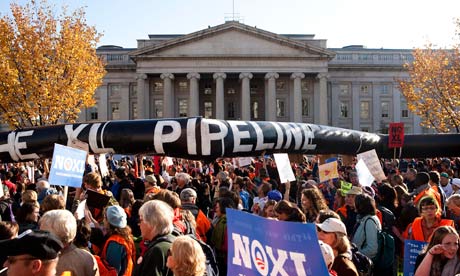
This protest took place a week ago today. I could find no Mainstream TV news on the action or arrests. WORT-FM carries Amy Goodman’s “Democracy Now” program so that’s where I first heard of it.
Police were waiting for them in front of the White House in their buses and vans. Around 450 people were arrested in this “largest youth act of civil disobedience at the White House in a generation,” according to the environmental organizers 350.org. Prior to the detentions authorities warned the activists that blocking the sidewalk or strapping themselves to the fence would lead to their arrest.

According to the Sierra Club, Keystone XL is the “keystone” to expanding the tar sands in Alberta, Canada. “This madness cannot continue. Treasured wild places, threatened wildlife, and the health of our climate are all at stake if the pipeline is built.”
“Our future is on the line. The climate is on the line,” said 20 year-old Aly Johnson-Kurts, from Smith College in Massachusetts. She said she had decided to get arrested on Sunday. “When do we say we’ve had enough?”
The $7 billion oil pipeline is destined to deliver high-carbon tar sands oil from the Western Canadian Sedimentary Basin in Alberta to a hub in Nebraska, where it would then connect with other existing pipeline networks to deliver 800,000 barrels of crude oil a day to refineries in Texas.
Critics of the project say that, in addition to the carbon-intensive impact that results from the extraction of tar sands that will only worsen the effects of climate change. The opponents also feel that the pipeline will also put communities nearby at risk of oil spills and their subsequent fallout.
Activists are also concerned that oil will go to growing economies overseas that have an increasing demand for more fossil fuels and is unlikely to lower the price of gasoline in the US.
In late January, the US State Department released a report on the project raising few objections to the environmental impact of the pipeline.
Obama blocked Keystone XL approval in January 2012, saying he needed more time for a fair review, pushing the decision to after his re-election campaign. Following the publication of the report Obama is expected to make a definitive decision on approval of Keystone XL in a matter of months.
Global Warming Likely to Hurt Wisconsin Agriculture

Agriculture has been a critical dimension of Wisconsin from early settlement and the logging era, through industrialization, and remains an important economic, social and cultural component of the Dairy State. Wisconsin ranks first nationally in cheese production, and second for milk and butter production. Yet Wisconsin is also second in milk cows, oats, carrots, and sweet corn used in processing. It remains the national leader in processed snap beans, cranberries, corn for silage, mink pelts and milk goats. It is also among the top five states for important agricultural commodities such as potatoes, maple syrup, mint for oil, and cucumbers for pickles.
Continue global warming is predicted to bring increases in both the frequency and the severity of droughts and floods, resulting in increased challenges for Wisconsin farmers and livestock operations. Warmer water temperatures are also likely to cause the habitat ranges of many fish species to shift and disruption of ecosystems already stressed by human activity. Overall, climate change in Wisconsin resulting from global warming will make it more difficult to grow crops, raise animals, and catch fish in the same ways and places as in the past.
Changes in the frequency and severity of droughts and floods could pose challenges for farmers and ranchers. Meanwhile, warmer water temperatures are likely to cause the habitat ranges of many fish species to shift, which could disrupt ecosystems. Overall, climate change could make it more difficult to grow crops, raise animals, and catch fish in the same ways and same places as we have done in the past.
Heat waves, which are projected to increase under climate change, could directly threaten livestock. A number of states have each reported losses of more than 5,000 animals from just one heat wave. Heat stress affects animals both directly and indirectly. Over time, heat stress can increase vulnerability to disease, reduce fertility, and reduce milk production.
Drought may threaten pasture and feed supplies. Drought reduces the amount of quality forage available to grazing livestock. Some areas could experience longer, more intense droughts, resulting from higher summer temperatures and reduced precipitation. For animals that rely on grain, changes in crop production due to drought could also become a problem.
Climate change may increase the prevalence of parasites and diseases that affect livestock.The earlier onset of spring and warmer winters could allow some parasites and pathogens to survive more easily. In areas with increased rainfall, moisture-reliant pathogens could thrive.
Increases in carbon dioxide (CO2) may increase the productivity of pastures, but may also decrease their quality. Increases in atmospheric CO2 can increase the productivity of plants on which livestock feed. However, studies indicate that the quality of some of the forage found in pasture lands decreases with higher CO2. As a result, livestock would need to eat more to get the same nutritional benefits.
The negative effects of climate change will be exacerbated by continuing declines in the acreage of Wisconsin farmland. Wisconsin lost more than 620,000 acres of farmland from 2007 to 2012, a 4% decrease according to the Census of Agriculture, which is conducted every five years by the U.S. Department of Agriculture. Likely causes of these declines are urban sprawl development, enabled by federal, state and local highway expansions which replace vegetation and topsoil with heat-absorbing Portland cement or asphalt in order to facilitate continued growth in motor vehicle driving (more fossil fuel burning) and more employment and profits for the construction and bridge building industry.
Sources: U.S. EPA; U. S. Department of Agriculture; Wisconsin Initiative on Climate Change Impact
Pope Francis: People and Political Leaders Have Responsibility to Protect the Earth, Including the Natural and Human Environment

Pope Francis is presently the official head of the Roman Catholic Church. He chose to name himself “Francis”, after St. Francis of Assisi, the patron saint of the environment. Pope Francis states that protecting creation is a fundamental part of the Catholic church’s mission. He elaborates on the responsibility of people and political leaders having the responsibility protect the earth, including reducing emissions that cause climate change, poverty and destruction of the natural and human environment. See quoted material below. Also provided below are quotes from Pope Francis’s two immediate predecessors, Pope Benedict XVI, who served as Pope from 2005 to 2013, and Pope John II, who was the pope for 27 years and who died in 2005. political leaders to meet their responsibilities on the climate change challenge:
“Even if ‘nature is at our disposition’, all too often we do not ‘respect it or consider it a gracious gift which we must care for and set at the service of our brothers and sisters, including future generations’. Here too what is crucial is responsibility on the part of all in pursuing, in a spirit of fraternity, policies respectful of this earth which is our common home. I recall a popular saying: ‘God always forgives, we sometimes forgive, but when nature – creation – is mistreated, she never forgives!’. We have also witnessed the devastating effects of several recent natural disasters. In particular, I would mention once more the numerous victims and the great devastation caused in the Philippines and other countries of South-East Asia as a result of Super Typhoon Haiyan.”
 a
a
Super Typhoon Haiyan was the deadliest storm in modern meteorological record keeping, killing 6,000 people, with 2,000 people still missing. It was the strongest tropical cyclone ever recorded as making landfall as it crossed land directly at the Central Philippines on November 7-8, 2013, and proceeded to create havoc on the other S-E Asia countries. Three months after Super Typhoon Haiyan devastated the Philippines, the destruction and relief struggles are still apparent for the Filipinos. With media coverage having proceeded on to other issues, the Philippine community still needs massive financial help from the outside world.
According to the United Nations Office for the Coordination of Humanitarian Affairs, $78.7 million is still needed in food security assistance and more than $132 million is needed for emergency shelter. 100% of a donation to the Salvation Army for the relief effort in Tacloban goes directly to the people of Philippines.
Super Typhoon Haiyan displaced an estimated four million people in the Philippines. The problems actually get worse for many people, they don’t get better.
A documentary is available online. Watch it here: http://www.savn.tv/campaign/view/1150
“Man is not in charge today, money is in charge, money rules. God our Father did not give the task of caring for the earth to money, but to us, to men and women: we have this task! Instead, men and women are sacrificed to the idols of profit and consumption: it is the “culture of waste.” If you break a computer it is a tragedy, but poverty, the needs, the dramas of so many people end up becoming the norm… in so many parts of the world there are children who have nothing to eat, that’s not news, it seems normal. It cannot be this way! Yet these things become the norm: that some homeless people die of cold on the streets is not news. In contrast, a ten point drop on the stock markets of some cities, is a tragedy”.
“We are called not only to respect the natural environment, but also to show respect for, and solidarity with, all the members of our human family. These two dimensions are closely related; today we are suffering from a crisis which is not only about the just management of economic resources, but also about concern for human resources, for the needs of our brothers and sisters living in extreme poverty, and especially for the many children in our world lacking adequate education, health care and nutrition. Consumerism and a “culture of waste” have led some of us to tolerate the waste of precious resources, including food, while others are literally wasting away from hunger. I ask all of you to reflect on this grave ethical problem in a spirit of solidarity grounded in our common responsibility for the earth and for all our brothers and sisters in the human family.”
“Please, I would like to ask all those who have positions of responsibility in economic, political and social life, and all men and women of goodwill: let us be “protectors” of creation, protectors of God’s plan inscribed in nature, protectors of one another and of the environment. Let us not allow omens of destruction and death to accompany the advance of this world!”
POPE BENEDICT XVI
“I wish to reflect today upon the relationship between the Creator and ourselves as guardians of his creation. In so doing I also wish to offer my support to leaders of governments and international agencies who soon will meet at the United Nations to discuss the urgent issue of climate change. The
Earth is indeed a precious gift of the Creator who, in designing its intrinsic order, has given us guidelines that assist us as stewards of his creation. Precisely from within this framework, the Church considers that matters concerning the environment and its protection are intimately linked with integral human development. [There is] a pressing moral need for renewed solidarity not only between countries but also between individuals, since the natural environment is given b God to everyone, and so our use of it entails a personal responsibility towards humanity as a whole, particularly towards the poor and towards future generations…How important it is then, that the international community and individual governments send the right signals to their citizens and succeed in countering harmful ways of treating the environment! The protection of the environment, and the safeguarding of resources and of the climate, oblige all leaders to act jointly, respecting the law and promoting solidarity with the weakest regions of the world.” (December 8, 2007)
“My dear friends, God’s creation is one and it is good. The concerns for non-violence, sustainable development, justice and peace, and care for our environment are of vital importance for humanity.” (Speaking at World Youth Day, June 2008)
“At a time of world food shortage, of financial turmoil, of old and new forms of poverty, of disturbing climate change, of violence and deprivation which force many to leave their homelands in search of a less precarious form of existence, of the ever-present threat of terrorism, of growing fears over the future, it is urgent to rediscover grounds for hope. Let no one draw back from this peaceful battle that has been launched by Christ’s Resurrection. For as I said earlier, Christ is looking for men and women who will help him to affirm his victory using his own weapons: the weapons of justice and truth, mercy, forgiveness and love”. (Easter 2009)
POPE JOHN PAUL II
“The gradual depletion of the ozone layer and the related ‘greenhouse effect’ has now reached crisis proportions as a consequence of industrial growth, massive urban concentrations and vastly increased energy needs. Industrial waste, the burning of fossil fuels, unrestricted deforestation, the use of certain types of herbicides, coolants and propellants: all of these are known to harm the atmosphere and environment. The resulting meteorological and atmospheric changes range from damage to health to the possible future submersion of low-lying lands.”
“Faced with the widespread destruction of the environment, people everywhere are coming to understand that we cannot continue to use the goods of the earth as we have in the past. The public in general as well as political leaders are concerned about this problem, and experts from a wide range of disciplines are studying its causes. Moreover, a new ecological awareness is beginning to emerge which, rather than being downplayed, ought to be encouraged to develop into concrete programs and initiatives.
“The most profound and serious indication of the moral implications underlying the ecological problem is the lack of respect for life evident in many of the patterns of environmental pollution. Often, the interests of production prevail over concern for the dignity of workers, while economic interests take priority over the good of individuals and even entire peoples. In these cases, pollution or environmental destruction is the result of an unnatural and reductionist vision which at times leads to a genuine contempt for man.
“On another level, delicate ecological balances are upset by the uncontrolled destruction of animal and plant life or by a reckless exploitation of natural resources. It should be pointed out that all of this, even if carried out in the name of progress and well-being, is ultimately to mankind’s disadvantage.”
“Respect for life, and above all for the dignity of the human person, is the ultimate guiding norm for any sound economic, industrial or scientific progress.”
“The complexity of the ecological question is evident to all. There are, however, certain underlying principles, which, while respecting the legitimate autonomy and the specific competence of those involved, can direct research towards adequate and lasting solutions. These principles are essential to the building of a peaceful society; no peaceful society can afford to neglect either respect for life or the fact that there is an integrity to creation.
“Theology, philosophy and science all speak of a harmonious universe, of a “cosmos” endowed with its own integrity, its own internal, dynamic balance. This order must be respected. The human race is called to explore this order, to examine it with due care and to make use of it while safeguarding its integrity.
“On the other hand, the earth is ultimately a common heritage, the fruits of which are for the benefit of all. In the words of the Second Vatican Council, “God destined the earth and all it contains for the use of every individual and all peoples”. This has direct consequences for the problem at hand. It is manifestly unjust that a privileged few should continue to accumulate excess goods, squandering available resources, while masses of people are living in conditions of misery at the very lowest level of subsistence. Today, the dramatic threat of ecological breakdown is teaching us the extent to which greed and selfishness – both individual and collective – are contrary to the order of creation, an order which is characterized by mutual interdependence.
“The concepts of an ordered universe and a common heritage both point to the necessity of a more internationally coordinated approach to the management of the earth’s goods. In many cases the effects of ecological problems transcend the borders of individual States; hence their solution cannot be found solely on the national level. Recently there have been some promising steps towards such international action, yet the existing mechanisms and bodies are clearly not adequate for the development of a comprehensive plan of action. Political obstacles, forms of exaggerated nationalism and economic interests – to mention only a few factors – impede international cooperation and long-term effective action.
“The need for joint action on the international level does not lessen the responsibility of each individual State. Not only should each State join with others in implementing internationally accepted standards, but it should also make or facilitate necessary socio-economic adjustments within its own borders, giving special attention to the most vulnerable sectors of society. The State should also actively endeavur within its own territory to prevent destruction of the atmosphere and biosphere, by carefully monitoring , among other things, the impact of new technological or scientific advances. The State also has the responsibility of ensuring that its citizens are not exposed to dangerous pollutants or toxic wastes. The right to a safe environment is ever more insistently presented today as a right that must be included in an updated Charter of Human Rights.
“Modern society will find no solution to the ecological problem unless it takes a serious look at its life style. In many parts of the world society is given to instant gratification and consumerism while remaining indifferent to the damage which these cause. As I have already stated, the seriousness of the ecological issue lays bare the depth of man’s moral crisis. If an appreciation of the value of the human person and of human life is lacking, we will also lose interest in others and in the earth itself. Simplicity, moderation and discipline, as well as a spirit of sacrifice, must become a part of everyday life, lest all suffer the negative consequences of the careless habits of a few.
“An education in ecological responsibility is urgent: responsibility for oneself, for others, and for the earth. This education cannot be rooted in mere sentiment or empty wishes. Its purpose cannot be ideological or political. It must not be based on a rejection of the modern world or a vague desire to return to some “paradise lost” . Instead, a true education in responsibility entails a genuine conversion in ways of thought and behavior. Churches and religious bodies, non-governmental and governmental organizations, indeed all members of society, have a precise role to play in such education. The first educator, however, is the family, where the child learns to respect his neighbor and to love nature….The relationship between a good aesthetic education and the maintenance of a healthy environment cannot be overlooked.
“Today the ecological crisis has assumed such proportions as to be the responsibility of everyone. As I have pointed out, its various aspects demonstrate the need for concerted efforts aimed at establishing the duties and obligations that belong to individuals, peoples, States and the international community. This not only goes hand in hand with efforts to build true peace, but also confirms and reinforces those efforts in a concrete way. When the ecological crisis is set within the broader context of the search for peace within society, we can understand better the importance of giving attention to what the earth and its atmosphere are telling us: namely, that there is an order in the universe which must be respected, and that the human person, endowed with the capability of choosing freely, has a grave responsibility to preserve this order for the well-being of future generations. I wish to repeat that the ecological crisis is a moral issue.
“Even men and women without any particular religious conviction, but with an acute sense of their responsibilities for the common good, recognize their obligation to contribute to the restoration of a healthy environment. All the more should men and women who believe in God the Creator, and who are thus convinced that there is a well-defined unity and order in the world, feel called to address the problem. Christians, in particular, realize that their responsibility within creation and their duty towards nature and the Creator are an essential part of their faith. As a result, they are conscious of a vast field of ecumenical and inter-religious cooperation opening up before them.
“At the conclusion of this Message, I should like to address directly my brothers and sisters in the Catholic Church, in order to remind them of their serious obligation to care for all of creation. The commitment of believers to a healthy environment for everyone stems directly from their belief in God the Creator, from their recognition of the effects of original and personal sin, and from the certainty of having been redeemed by Christ. Respect for life and for the dignity of the human person extends also to the rest of creation, which is called to join man in praising God.
“In 1979, I proclaimed Saint Francis of Assisi as the heavenly Patron of those who promote ecology. He offers Christians an example of genuine and deep respect for the integrity of creation. As a friend of the poor who was loved by God’s creatures, Saint Francis invited all of creation – animals, plants, natural forces, even Brother Sun and Sister Moon – to give honor and praise to the Lord. The poor man of Assisi gives us striking witness that when we are at peace with God we are better able to devote ourselves to building up that peace with all creation which is inseparable from peace among all peoples.
“It is my hope that the inspiration of Saint Francis will help us to keep ever alive a sense of “fraternity” with all those good and beautiful things which Almighty God has created. And may he remind us of our serious obligation to respect and watch over them with care, in light of that greater and higher fraternity that exists within the human family.”(8 December 1989 – from the Vatican, Rome – World Day of Peace Message, January 1990)
Source: http://catholicclimatecovenant.org/
”
California May Finally Get Rain
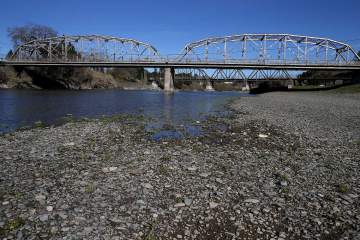
The National Weather Service (NWS) reports that every square mile of California is in some state of drought, and almost 15% of the state, mostly in central California’s agricultural heartland, is in the most extreme state of exceptional drought. Rainfall in some of the most populated parts of the state has been all but nonexistent since July 1; San Francisco had just 5.85 inches of rain, about 35% of what’s normal for that location, and Los Angeles had just 1.2 inches of rain, less than 10% of what it normally gets for that period of the year.
Snowpack in the Sierra Nevada basin – the water bank for much of California – is way below average. By every count, California is in a truly historic drought that will cost the state and the country billions of dollars. Food prices are beginning to rise across the U.S., reflecting the effects of California’s drought.
The NWS projects that this week a pair of Pacific storms are expected to bring as much as 2 inches of rain to the coast, and several feet of snow to the Sierra Nevadas.
Still, despite the fact that Los Angeles could receive more rain this week than it has in nearly eight months, the drought will be far from over. Even with the storms that are predicted, much of California will still be way below average for precipitation this time of year.
Alaska Unseasonably Warm in January 2014
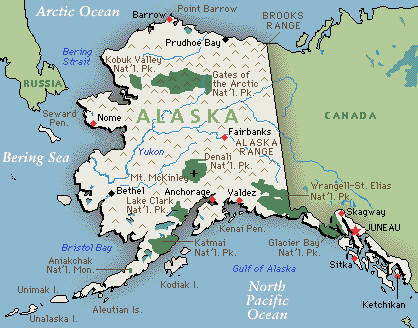
January 2014 was remarkably mild across nearly all of Alaska, according to the National Oceanic and Atmospheric Administration (NOAA). The same high-pressure system responsible for the intensification of drought in California kept southerly winds aloft for most of the month. This influx of warm air kept temperatures above normal across all of Alaska, resulting in a January average temperature ranking among the “top ten” warmest on record for many Alaskan communities.
January 2014 was Alaska’s warmest January since 1985, and the fourth warmest in the past seven decades, according to NOAA’s analysis of temperature data from 14 geographically widespread weather stations across the state. Several long-term climate stations in southern and southwest Alaska recorded their warmest January ever. At Anchorage the average temperature for January 2014 was warmer than the average January temperature in Philadelphia and New York City this year!
Alaska locations registering the warmest average temperature ever recorded in January at those locations included Seward (61ºF), Homer (57ºF) and Kotzebue (40ºF). The high temperature measured at Alaska’s Palmer Airport of 58ºF far exceeded any reliable temperatures ever recorded in January in that area, according to NOAA.
The Climate Reference Station at Port Alsworth registered a high temperature of 62ºF on January 27, tying the record for the highest temperature ever reported in Alaska in any January.
The warm temperatures caused snow cover to dwindle across the state. In parts of the Matanuska Valley north of Anchorage, snow cover disappeared by late January, exposing dry vegetation that posed a very unseasonable risk of wildfire. Warm, wet chinook winds also wiped out snow cover near Healy and south of Delta Junction in Interior Alaska. In southern Southeast Alaska, the snowline was high up the mountains—a sign of low snowpack that could lead to water shortages for hydropower electric production by late spring.
January rains November, December and January marked the first time Fairbanks had ever received measurable rain in three consecutive winter months in more than a century of observations, NOAA reported.
New Study Finds Greenland’s Jakobshavn Glacier Moving Faster into Ocean

New research out of the University of Washington and German Aerospace Center report Greenland’s massive Jakobshavn Glacier is moving four times faster to the Arctic Ocean as it did in the 1990s. The study reported the glacier as moving at 10.5 miles per year, or about 150 feet per day. The study also says the glacier is believed to have produced the infamous iceberg that led to the sinking of the Titanic., and that it contributed at least one millimeter to global sea level rise between 2000 and 2011.
The study attributes the faster rate that the glacier is moving to the ocean to the widespread warming in the Arctic since the 1990s, which has caused the glacier to thin and produce more and more icebergs that threaten shipping routes. The study was published in February 2014 in the journal The Cryosphere, published by the European Geosciences Union.
The Jakobshavn Glacier is reported to be 4 miles wide and over 1,000 feet thick.
Testimony on AB 1 to Assembly Jobs, Economy and Mining Committee, Regarding Governor Walker’s Proposed State Income and Property Tax Cuts

Following is the text of my public testimony for the Wisconsin Assembly’s Jobs, Economy and Mining Committee on Assembly Bill 1. AB 1 is Wisconsin Governor Scott Walker’s proposed $406 million in property tax cuts and $98 million in state income tax cuts, which would both be returned to Wisconsin’s tax payers with passage of the bill.
I, Michael Neuman, attended the public hearing, held in room 417 of the State Capitol building, Madison, on February 5, 2014. The text of my testimony published below is intended to accompany the three documents I delivered for the committee at the hearing. This testimony also supports my statement of opposition to AB 1, which I submitted immediately prior to the hearing.
DOCUMENTS
A. “Financial Incentives to Reduce Total Driving, Flying and Home Energy Use”, by Michael T. Neuman, May 2000 (25 pgs);
B. Letter “To My Elected Governmental Officials RE: “PROTECTION FROM GLOBAL WARMING”, by Michael T. Neuman, Madison, Wisconsin, May 26, 2000 (1 pg. – cover letter attached to , above);
C. “EXECUTIVE SUMMARY, Conserve, NOW!, Reducing Greenhouse Gas Emissions and Other Environmental Costs by Offering Financial Incentives that Reward Less Driving, Flying and Home Energy Use”, by Michael T. Neuman, August 1, 2001 (6 pgs.).
TEXT OF TESTIMONY
Good afternoon. My name is Michael Neuman. Thank you for the opportunity to testify on this bill, which would turn over hundreds of millions of state dollars to state taxpayers. The reason I oppose this action is because it simply gives the money to Wisconsin taxpayers rather than them having to earn the money back. A far better approach to returning this money to Wisconsin residents would be to create and fund a state program to offer the money back in the form of “positive financial incentives” which encourage state residents to DRIVE LESS ANNUAL MILES than the average miles driven (by individual or family) in the state; to avoid flying due to the massive volumes of jet fuel burned in flying; and to encourage household consume less fossil fuel energy that is derived from fossil fuels, such as coal and natural gas, compared to the average amount of energy used over the previous year by similar sized household.
The primary aim of this program, called “Conserve, NOW, Conserve Now ex sum is to substantially reduce Wisconsin’s annual quantities of greenhouse gases emitted from Wisconsin’s transportation and energy production sectors, which account for the two largest quantities of anthropogenic (human caused) greenhouse gas tons emitted on an annual basis.
Few people question that global warming is occurring anymore, and just as few still question if we humans could be causing it, despite that nine-eight percent of global warming scientists surveyed now say it is, that we are primarily responsible for the warming that has occurred so far. The reason is our burning of way too much fossil fuels for energy, particularly around the beginning of the 19th century. That is when human began relying on motor vehicle driving, flying by airplane, shipping, and the use of electricity in a big way, and these are all continuing to grow, worldwide.
Some cities, counties and states have already begun to plan for the changes in the climate that lies ahead, and the predicted potential for more dangerous extreme weather continues to be realized around the planet, and the potential for even worse weather extremes grows as the planet warms, the arctic ice shrinks, the permafrost regions thaw, glaciers recede, oceans levels rise, the destruction of the world’s carbon dioxide using tropical forests continue, while more people throughout world burn more and more fossil fuels, adding to the accumulation of more and more millions of tons of greenhouse gases to the atmosphere that surrounds the planet.
Many communities have already begun planning their infrastructure to accommodate “new normals” with global warming built into the assumptions. Dane County and Madison in Wisconsin both have begun that planning process. So has New York City and a number of other cities, counties and states in the U.S. The state of California has been also been engaged heavily in mitigation by actively attempting to reduce their greenhouse gases and rely more on solar and wind energy and mass transit.
Changes in Wisconsin’s climate are also inevitable, with heavier early winter and fall rains which tend to cause more flooding and hotter, more drought-like condition in summer (as in 2012). Our current and projected future greenhouse gas emissions under a “business as usual” economy and way of life are unsustainable. Current levels levels of fossil fuel burning have already led to more instability in the climate which leads to more dangerous, less hospitable environmental conditions for humans as well as animal life. The financial and human burdens and potential for loss of life will grow and become more threatening unless we invest in major mitigation that results in meaningful worldwide reductions of greenhouse gases and investments are made to adapt to the changes in climate today, rather than waiting for more weeks, months and years to pass, as has been done since 2000 when I first proposed “Concern NOW”, or “Positive Financial Incentives: An Environmentally Just Approach for Reducing Greenhouse Gas Emissions” (blog post #7).
Despite that fact that 98% of the world’s scientists who have studied global warming conclude that it is, that the rise in greenhouse gas concentrations in the atmosphere is already documented, and that global warming and extreme weather events have already has been occurring (Super Typhoon Haiyan; Super Storm Sandy, …) as well as disruptive changes to the climate (Southern California drought; Australia’s long heatwaves) have already been registered throughout the planet due to warming which threatens to worsen, further warming the earth’s atmosphere and added ocean warming and “acidification” (A certain percentage of the carbon dioxide that is emitted to the atmosphere gets assimilated by the oceans, making the oceans’ waters more acidic.) The combination of the warmer and more acidic ocean water is already destroying coral reef in many areas and depleting many other ocean species in various parts of the world.
The proposed financial incentives program, also called “Conserve NOW”, would not only lead to Wisconsin’s reduction of annual greenhouse gas emissions from the state, it would also lower the needs for capacity expansion of Wisconsin’s highway, airport, and utility infrastructure expansions, which would save billions of transportation and energy production dollars, in addition to reducing other pollutant emissions from fewer motor vehicles operating on the system and the avoidance of otherwise unavoidable impacts of infrastructure expansion construction and maintenance.
Because of the growing threats now being realized throughout the world as a result of global warming, I am proposing the financial incentives for driving less, or not at all, not flying, and using less than average fossil fuel derived energy in the home be TRIPLE the incentives proposed in my 2000 proposal, that the federal government fund two-thirds of the annual cost of the program, and that the state of Wisconsin fund the remaining third of the porogram, which I now call “Conserve NOW X3”.
We can ill afford to continue with “business as usual” as regards fossil fuel burning if we want to be assured that today’s children and children of the future living on this planet will not have to live with a growing fear of evermore probable and calamitous natural disasters. Instead of a maximum total of $7,600 for those who don’t drive, fly or use fossil fuel derived energy in their home, a maximum of $22,800 (3 times the previous maximum) could be earned by those who do the same (the amount get progressively less for those who do).
The $406 million the governor of Wisconsin proposes to return to state property taxpayers would be an ample amount to begin offering these incentives as not everyone who enrolls in this financial incentives program will earn the maximum amount.
For the federal share of this program, a good amount could come from the savings in avoiding sinking more federal funds in continuing to expand the state highway system in Wisconsin. Other funds could come from not continuing to exempt the airline industry from paying jet fuel taxes, and from having the airline industry fund federal aviation control employees (rather than the current system of having the U.S. taxpayers pay the salaries of 15,000 FAA flight controllers). Finally, an increase in federal gasoline and diesel taxes should also be considered to fund financial incentives for the American public to drive less. Until this type of program is enacted, Americans should consider voluntarily driving and flying less, and conserving on energy derived from burning fossil fuels, in addition to taking other steps they might consider that will help maintain and preserve the earth as a safe and hospitable place to live.
Songs Played on WORT – FM’s “Access Hour” Show on Financial Incentives Proposal to Reduce Global Warming and Income Inequality in Wisconsin
Conserve Now ex sum Conserve NOW!1.doc; Final
As promised to the listeners of WORT – FM”s Monday, January 13, 2014 “Access Hour” show on my proposed “positive financial incentives approach” to reducing greenhouse gas emissions from Wisconsin sources (also called “Conserve, NOW” ), listed below are the titles of the songs that were played during the program and their artists or performers. They are listed in the order played during the hour. I gave summary of the Conserve NOW proposal after the first song,”What’s Going On”, by Marvin Gaye, played.
As also promised, I will also post a transcript of what I said during the show, along with addition supporting information, in a subsequent post.
I am proposing to substantially increase the positive financial incentives for reducing annual miles driven, flying trips made during the year (none), and reduced annual heating and electricity consumption that is obtained from burning fossil fuels. When I first made this proposal to my elected federal and state representatives in May 2000, individuals or families could earn up to a maximum sum of $8,400 by conserving energy. Because of the lack of substantive action in Wisconsin and elsewhere to reduce annual greenhouse gas (GHG) emissions – GHGs accumulate in the atmosphere and oceans over time – and the growing poverty in Wisconsin, due to continuing unemployment, as well as underemployment (low wages) which has caused gross income inequality, yet (outrageously) continued reductions in government financial assistance. Therefore, it has become necessary to triple the maximum amount that can be earned by individuals and families living in Wisconsin under Conserve NOW to $25,200.
Songs played on January 13th Access Hour – wortfm.org/archives:
1. What’s Going On, by Marvine Gaye.
2. Crazy World, by Lucky Dube.
3. “The Last Resort, by Eagles (written by Don Henley.
4. Lives in the Balance, by Jackson Brown.
5. Sun Green, by Neil Young.
6. Be the Rain, by Neil Young.
7. Not of Seasons, by Mississippi Charles. Bevel.
Email Message Sent September 8, 2013 to: Editor, Wisconsin State Journal (Not Published by Wis. State Journal)

Dear editor,
What more could our congressional and state representatives possibly be waiting for that would convince them global warming is a threat to our future? It is becoming a far greater threat than most people had first imagined, and it’s pace is accelerating by the degree that we all are adding to the increased build up greenhouse gases in the atmosphere.
It is critical they take major actions now or it will be too late? The AP report published in the WSJ last Thursday summarized a just released joint National Oceanic and Atmospheric Administration (NOAA) and British meteorology office report that used thousands of runs of computer simulation of last year’s wildest weather events and reports that man-made global warming made U. S. heat waves and Superstorm Sandy flooding more likely, caused further shrinkage of Arctic sea ice, increased the likelihood of drought in Europe’s Iberian peninsula and flooding in Australia and New Zealand.
NOAA: 2013 November Average Global Temperature was the 345th Straight Month of Above Average Global Temperatures and Earth’s Warmest November of Record
November was a hot month for planet Earth. Government scientists reported Tuesday, December 18, that last month was the warmest November on record, across Earth, since record-keeping began in 1880.
In 2010, the United States emitted over 6.8 billion metric tons of greenhouse gases (CO2e). Greenhouse gases are emitted by all sectors of the economy, including electric power (34% of total), transportation (27%), industry (21%), residential & commercial (11%), and agriculture (7%).
The growing demand for air travel has resulted in increasing levels of greenhouse gas (GHG) emissions from the aviation sector, despite efficiency improvements. Compared to driving, traveling by bus or taking the train, flying has a greater climate impact per passenger mile, even over longer distances. It’s also the mode of freight transport that produces the most emissions.
A special characteristic of aircraft emissions is that most of them are produced at cruising altitudes high in the atmosphere. Scientific studies have shown that these high-altitude emissions have a more harmful climate impact because they trigger a series of chemical reactions and atmospheric effects that have a net warming effect. The IPCC, for example, has estimated that the climate impact of aircraft is two to four times greater than the effect of their carbon dioxide emissions alone.
The National Oceanic and Atmospheric Administration says average global temperature, for water and land surfaces combined, was 56.6 degrees (13.7 Celsius). That’s 1.4 degrees (0.78 degrees Celsius) above the 20th century average. It was the 37th consecutive November with above-average temperatures. The last below-average November was in 1976.
It was also the 345th straight month with above-average temperatures. That’s almost 29 years. Among the November hot spots: much of Eurasia, Central America and the Indian Ocean. In Russia, it was the warmest November on record. But parts of North America were cooler than average.
The Intergovernmental Panel on Climate Change (IPCC) states that “the atmospheric concentrations of carbon dioxide, methane, and nitrous oxide [greenhouse gases] have increased to levels unprecedented in at least the last 800,000 years. Carbon dioxide (CO2) concentrations have increased by 40% since pre-industrial times, primarily from fossil fuel emissions and secondarily from net land use change emissions [deforestation]. The ocean has absorbed about 30% of the emitted anthropogenic carbon dioxide, causing ocean acidification”.
“Global mean sea level will continue to rise during the 21st century. The rate of sea level rise will very likely exceed that observed during 1971 to 2010 due to increased ocean warming and increased loss of mass from glaciers and ice sheets.”
“It is extremely likely that human influence has been the dominant cause of the observed warming since the mid-20th century”, the IPCC report states, and ” cumulative emissions of CO2 largely determine global mean surface warming by the late 21st century and beyond. Most aspects of climate change will persist for many centuries even if emissions of CO2 are stopped” and that “this represents a substantial multi-century climate change commitment created by past, present and future emissions of CO2.
Sources: IPCC, “Summary for Policymakers, Climate Change 2013”, October, 2013; Huffington Post Green, “2013 Brings Warmest November Since at Least 1880”, December 18, 2013; Center for Climate and Energy Solutions
 All Things Environmental
Recent Comments