
Pope Calls for Swift Actions to Save the Planet from Environmental Ruin

“The pace of consumption, waste and environmental change has so stretched the planet’s capacity that our contemporary lifestyle, unsustainable as it is, can only precipitate catastrophe”.
Pope Francis, June 18, 2015
In his long-awaited encyclical on the environment and climate change publicly released last week, Pope Francis called for swift action to save the planet from environmental ruin, urging world leaders to hear “the cry of the Earth and the cry of the poor.” He called for a change of lifestyle in rich countries steeped in a “throwaway” consumer culture, and an end to “obstructionist attitudes” that sometimes put profit before the common good. Pope Francis said protecting the planet is a moral and ethical “imperative” for believers and nonbelievers alike that should supersede political and economic interests.
A major theme of the encyclical is the disparity between rich and poor. “We fail to see that some are mired in desperate and degrading poverty, with no way out, while others have not the faintest idea of what to do with their possessions, vainly showing off their supposed superiority and leaving behind them so much waste which, if it were the case everywhere, would destroy the planet,” he said.
“Our house is going to ruin, and that harms everyone, especially the poorest. Mine is therefore an appeal for responsibility, based on the task that God has given to man in creation: “till and keep the garden” in which he was placed. I invite everyone to accept with open hearts this document, which follows the church’s social doctrine”, the pope said.
In a transcript of the pope’s encyclical on the DemocracyNow.org website, Pope Francis said protecting the planet is a moral and ethical imperative, for believers and nonbelievers alike, that should supersede political and economic interests. He also dismissed those who argue that technology will solve all environmental problems and that global hunger and poverty will be resolved simply by market growth.
A major theme of the encyclical is the disparity between rich and poor. “We fail to see that some are mired in desperate and degrading poverty, with no way out, while others have not the faintest idea of what to do with their possessions, vainly showing off their supposed superiority and leaving behind them so much waste which, if it were the case everywhere, we destroy the planet.”
Climate change is already happening, and its effects have already been disastrous on the poorest countries and the poorest people, who don’t have the means to defend themselves from it. They are also part of the human population who have the least responsibility for what is happening, being that they consume less fossil fuels.
Author Naomi Klein said on Democracy Now Thursday that “this encyclical, we can’t overstate the importance of it, the impact that it will have. It’s hard to respond to a document that runs close to 200 pages, when it was just released in non-draft form a few hours ago. We’re all still digesting it, Amy. But it is very clear that a door has just been opened, and a gust of wind is blowing through, where it is now possible to say some very powerful truths about the real implications of climate change, really the root causes.”
“And I think a lot of the discussion about the encyclical in the U.S. media cycle has focused and will continue to focus on the impact on Republicans and on climate deniers, many of whom are Catholic. And it is certainly a challenge to that demographic in the United States, because the pope is coming out so clearly on the side of climate science in saying this is real and this is happening. But I think that it’s too easy to say that this is just a challenge to Rick Santorum and Jeb Bush. Frankly, it is also a challenge to Hillary Clinton and Barack Obama and to large parts of the green movement, because it is a rebuke of slow action. It very specifically says that climate denial is not just about denying the science, it’s also about denying the urgency of the science. The document is very strong in condemning delays, half-measures, so-called market solutions. It very specifically criticizes carbon markets, the carbon offsetting, as an inadequate measure that will encourage speculation and rampant consumption.
“And I think probably the most significant part of it, the big picture, is the foregrounding of the culture of frenetic consumption in the wealthy world and among the wealthy. And this is really significant, because I think large parts of the climate change discussion tries to have it all ways and say, “No, we’ll just have green growth. We’ll just have—we’ll consume green products.” And, you know, this goes a lot deeper than that and says, no, we need to get at the underlying values that are feeding this culture of frenetic consumption that is entirely unsustainable.”
In the encyclical, the pope states that: “In a corrupt culture, we can’t believe that laws will be enough to change behaviors that affect the environment.” Naomi Kline responds: Well, I think, when he’s referring to corruption, I believe he’s referring to the influence of polluting companies, of multinational corporations, which he also goes after in the encyclical. And I think this is one of the most significant things about the document. One might expect of a religious document about climate change to erase difference, right? to say, “Well, we’re all in this together,” and certainly it talks about the Earth as our common home. But it also recognizes explicitly the power dynamics in capitalism, which is to say that there are forces within the system that are actively working against change. And that is probably what he’s referring to when he’s talking about how there may be laws, but the laws aren’t enforced. And, you know, indeed the laws are also inadequate, which is also addressed in the document, and it has some very specific calls for another level of environmental law, which is a part of the document that I haven’t been able to look at, you know, closely enough.
And another thing I have to say is, you know, I am—I have accepted this invitation to speak at a conference which is about digging more deeply into the document, because there’s an understanding that it does take time to digest a document of this length, this multilayered, and it requires that kind of deeper analysis. And I think that this intervention, five months ahead of U.N. climate conference in Paris, is tremendously significant. It’s going to push political leaders to go further. It’s going to be a tool for social movements.
A lot of the language of the climate justice movement has just been adopted by the pope—I mean, even of phrases like “ecological debt.” The pope is talking about the debt that the wealthy world owes to the poor. I mean, this is a framing that comes originally from Ecuador, from the movement against drilling in the Amazon. And, you know, this is a phrase that was never heard in mainstream circles until just now, actually. I mean, I’ve never seen such a mainstream use of that term.
So, it is very important in that way. But, I mean, I have to say, on a personal level, that as thrilled as I am that the Vatican is leading in this way and that this pope is leading in this way and bringing together the fight against poverty with the fight to act on climate change, that doesn’t mean that there’s a complete merger between the climate justice movement and the Vatican here. I mean, obviously there are huge differences that remain over issues like marriage equality, reproductive rights and freedom, to name just a few.”
Nathan Schneider, columnist with the Catholic weekly, America, who has been covering Catholic engagement with climate change, talks about what the encyclical means for the Catholic community and the number of languages it’s been released in and how large the document is: “Well, this is really the first Third World encyclical. You know, this is coming from a pope who was shaped in really significant ways by economic crises during the Cold War in Argentina and being in the middle of a battleground between the First and Second World powers. It was drafted by a cardinal from Ghana. So this is coming from the side of the world that we don’t normally hear from. And it’s very much in line with things that popes have been saying for decades, you know, going back to Paul VI, then John Paul II, Benedict XVI. So, a lot of the content is actually not so new for Catholics, but the emphasis and that—the language of climate debt, the language—the recognition that there is a divide here between the rich countries and the poor. And this is a cry from the developing world, from what has been labeled the Third World, for change.”
“The pope is calling here for us to change how we live, how we—what we do with our resources. You know, this is not just moving from one kind of consumerism to another. This is a kind of spiritual renewal and also a material renewal, that—in which we turn ourselves toward an economy that’s sustainable, that’s life-giving, both for humanity and the rest of the world.”
Source: Democracynow.org
Saint Francis of Assisi

Pope Francis is expected to take a provocative stance on global climate change Thursday, releasing an encyclical — a teaching letter addressed to Catholic bishops — that not only affirms the reality of man-made warming but issues a moral call for changes in lifestyle, consumption and policy to stave off environmental disaster.
The pope appears to have chosen the name “Francis” – after Saint Francis of Assisi – for good reason: Saint Francis of Assisi is not only known as the patron saint of animals and the environment; he also changed his own lifestyle from a life of wealth and over consumption to a life of bare subsistence in service of the poor.
His father was Pietro di Bernardone, a prosperous silk merchant. Francis lived the high-spirited life typical of a wealthy young man, even fighting as a soldier for Assisi. While going off to war in 1204, Francis had a vision that directed him back to Assisi, where he lost his taste for his worldly life. On a pilgrimage to Rome, he joined the poor in begging at St. Peter’s Basilica. The experience moved him to live in poverty.Francis returned home, began preaching on the streets, and soon gathered followers.
Francis preached the teaching of the Catholic Church, that the world was created good and beautiful by God but suffers a need for redemption because of the primordial sin of man. He preached to man and beast the universal ability and duty of all creatures to praise God (a common theme in the Psalms) and the duty of men to protect and enjoy nature as both the stewards of God’s creation and as creatures ourselves. On November 29, 1979, Pope John Paul II declared St. Francis the Patron Saint of Ecology. Many of the stories that surround the life of St. Francis say that he had a great love for animals and the environment.
Perhaps the most famous incident that illustrates the Saint’s humility towards nature is recounted in the “Fioretti” (“Little Flowers”), a collection of legends and folklore that sprang up after the Saint’s death. It is said that, one day, while Francis was travelling with some companions, they happened upon a place in the road where birds filled the trees on either side. Francis told his companions to “wait for me while I go to preach to my sisters the birds.” The birds surrounded him, intrigued by the power of his voice, and not one of them flew away. He is often portrayed with a bird, typically in his hand.
Another legend from the Fioretti tells that in the city of Gubbio, where Francis lived for some time, was a wolf “terrifying and ferocious, who devoured men as well as animals.” Francis had compassion upon the townsfolk, and so he went up into the hills to find the wolf. Soon, fear of the animal had caused all his companions to flee, though the saint pressed on. When he found the wolf, he made the sign of the cross and commanded the wolf to come to him and hurt no one. Miraculously the wolf closed his jaws and lay down at the feet of St. Francis.
“Brother Wolf, you do much harm in these parts and you have done great evil,” said Francis. “All these people accuse you and curse you…But brother wolf, I would like to make peace between you and the people.” Then Francis led the wolf into the town, and surrounded by startled citizens made a pact between them and the wolf. Because the wolf had “done evil out of hunger, the townsfolk were to feed the wolf regularly. In return, the wolf would no longer prey upon them or their flocks. In this manner Gubbio was freed from the menace of the predator. Francis even made a pact on behalf of the town dogs, that they would not bother the wolf again. Finally, to show the townspeople that they would not be harmed, Francis blessed the wolf.
Then during the World Environment Day 1982, John Paul II said that St. Francis’ love and care for creation was a challenge for contemporary Catholics and a reminder “not to behave like dissident predators where nature is concerned, but to assume responsibility for it, taking all care so that everything stays healthy and integrated, so as to offer a welcoming and friendly environment even to those who succeed us.” The same Pope wrote on the occasion of the World Day of Peace, January 1, 1990, the saint of Assisi “offers Christians an example of genuine and deep respect for the integrity of creation…” He went on to make the point that: “As a friend of the poor who was loved by God’s creatures, Saint Francis invited all of creation – animals, plants, natural forces, even Brother Sun and Sister Moon – to give honor and praise to the Lord. The poor man of Assisi gives us striking witness that when we are at peace with God we are better able to devote ourselves to building up that peace with all creation which is inseparable from peace among all peoples.”
Pope John Paul II concluded that section of the document with these words, “It is my hope that the inspiration of Saint Francis will help us to keep ever alive a sense of ‘fraternity’ with all those good and beautiful things which Almighty God has created.”
The Children of Today and Tomorrow are in for a Rude Awakening

The global warming genie has escaped his bottle! He has begun to show his wrath, which is only likely to worsen in the coming years, decades and centuries, and there is presently no end in sight!
He’s leaving plenty of evidence. The only way we can all help weaken him is by stopping our nonessential burning of fossil fuels, stopping deforestation especially of the tropics, and doing things which naturally result in more greenhouse gases being added into the earth’s atmosphere and oceans (such as overeating, wasting food, not recycling, not reusing things whenever possible, running our air conditioning and furnaces needlessly, using energy derived from tar sands industry, doing other things that frivolously burn fossil fuels such as going for joy rides, cruising, etc.. Because our atmosphere is where Global Warming lives and breathes (now that he’s escaped the bottle) and because he gets his tremendous strength to wreak havoc on the world by his breathing in greenhouse gases that have been accumulating to record high concentrations in the earth’s atmosphere (as a by-product of our burning carbon-based fuels in our cars, trucks, airplanes, power plants, ships, boats, trains, machinery, recreational products and the like) we need to all put him on a crash diet, NOW!
According to David Owen, author of Green Metropolis and The Conundrum: How Scientific Innovation, Increased Efficiency, and Good Intentions Can Make Our Energy and Climate Problems Worse, the proportional share of the fuel burned during a round trip from New York City to Melbourne, Australia, is greater than the total amount of energy that the average resident of the earth uses, for all purposes, in a year. Forestalling global calamity is a preemptively worthy, ethically justifiable and economically achievable goal for everyone on the planet, especially in this era of television, radio, computers, Skype, the iPhone and virtual reality. Climatologists, environmentalists, CEOs, religious leaders, students and tourists seeking entertainment or to broaden their horizons, and government officials ought use the least greenhouse gas emitting technologies available to them to accomplish their objectives; they should not have to cross the oceans and great land masses of world (requiring vast burning fossil fuels) just to be present in person. Likewise, our government leaders and business people ought minimize the amount of products traded with distant countries, so as to minimize the amount of fuel burning required in the shipment of goods by air, sea and over miles and miles of terrain. Transportation of billions of tons of goods along with extensive long distance vacationing and business trips by millions of people every year is simply no longer sustainable. Such activities are becoming ethically wrong because they are unquestionably harming the planet and all the living things it is home to, both now and in the future.
We cannot and must not wait for technology to bail us out. Scientists the world over say it is now paramount that all humans begin acting in significant ways to reduce their annual greenhouse gas emissions. Otherwise, we will never get Global Warming to go back into his bottle – where he belongs! Greenhouse gases accumulate atmospherically over time – they build up in the atmosphere and oceans from year to year. Their volume is accelerating in earth’s atmosphere and as well as in its oceans, and the total volume will likely keep accelerating for some time due to compounding factors (positive feedbacks) of the earth’s natural systems. That’s why it’s of the utmost importance – paramount – that everyone act in ways to reduce their annual carbon footprint, immediately, before Global Warming becomes all to powerful, uncontrollable and for generations, a tragedy for civilization.
A Memorial Day Salute and Promise for the Future

Today is the day to pause and show our respect to those who, regardless of race, religion, gender, national origin or sexual orientation, served, fought and died to protect our country and all Americans, those living now or in the future from enemy harm. Those who have given the ultimate sacrifice to protect our country and its people deserve the highest honor possible, to be sure. And I believe those who have been maimed by war, physically or mentally, should be equally honored. One such victim I’m proud to have as friend and former high school classmate. His name is Jim Walktendonk, and he and family suffered greatly from the ill effects of U.S. war planes spraying what was called “agent orange” to defoliate the greenery the enemy hid in and expose them to U.S. fire power. Unfortunately, the chemicals in the agent orange also had adverse impact on our troops as well. I’ll let Jim Walktendonk tell the complete story.
One way we can give honor and respect to those who died to protect our freedom is by working, individually or in groups, to build a healthier and more peaceful world. Unfortunately, the world we share is not getting any any healthier nor any more peaceful, but just the opposite.
With a population of over 7 billion people we must find ways to live more peacefully with one another and be more protective of our finite earth. We elect our political leaders to keep us out of wars and our economy strong but they are seldom successful at doing either
We now face the biggest threat to humanity of all time in rapid global warming, due primarily to: our excessive fossil fuel burning in cars, homes, businesses and airplanes; in production of an excessive amount of consumer goods for many individuals and a dearth of such goods for others, and in shipment of those goods; in military exercises around the world; in the type of foods we eat and the methods of its production; in our use of water and by a myriad of other sources and by deforestation, especially in the tropical area of the world considered by many to be the lunges of the planet. Along with warming temperatures caused by a thickening greenhouse atmosphere around our planet comes more extreme weather, warming and rising seas, a changing climate and how that changes the supporting biodiversity. Although too difficult to separate out from other weather extreme events, global warming has now without a doubt become the greatest killer of American and other peoples ever, of the earth’s animal populations, and the number of deaths linked to it each year will likely grow significantly, without major and swift action taken by our governments, commerce and you and I.
Public officials, state and federal lawmakers, and many members of the media who continue to cite uncertainty and spurious research as reason not for people not to take serious action now to reduce all sources of greenhouse gas emission should be judged harshly; their actions (or inaction) are crimes against humanity of the highest order. The people we honor today would likely agree, wholeheartedly.
We do not need a war to rise to the occasion and join the fight against global warming. To do that, we must all hop on the peace train, put down our gun, and fight the fight of our life for the living planet, OUR EARTH.
U.S. Congress and President Obama Derelict for Not Considering Global Warming Effect of Proposed TPP Agreement

The Trans-Pacific Partnership (TPP) is a massive new international trade pact being pushed by the U.S. government at the behest of transnational corporations. The TPP is already being negotiated between the United States, Australia, Brunei Darussalam, Canada, Chile, Malaysia, Mexico, New Zealand, Peru, Singapore, Vietnam, and most recently, Japan — which together cover approximately 40% of the global economy. But it is also specifically intended as a “docking agreement” that other Pacific Rim countries would join over time, with the Philippines, Thailand, Colombia and others already expressing interest. It is poised to become the largest Free Trade Agreement in the world.
Governments intending to sign on to TTP must take into consideration that international trade generates greenhouse gas (GHG) emissions, not just from the production of traded goods, but perhaps more importantly from the fossil fuel burning required transport required between trading partners and their goods. Studies show that the greenhouse gas emissions generated by international transportation are substantial yet widely overlooked, both in regulations and in data collection efforts.
Those presently pushing for governmental support of the trading of products between the 27 countries listed in the TPP are derelict in not considering the added quantities of greenhouse gases that would be added to the global stockpile of greenhouse gases in the atmosphere as a result of implementing the TTP.
Climate Change: Are We Doing Enough?
Was the Titanic Unsinkable? Earth Day 2015 has come and gone. There was no reason to post anything to celebrate it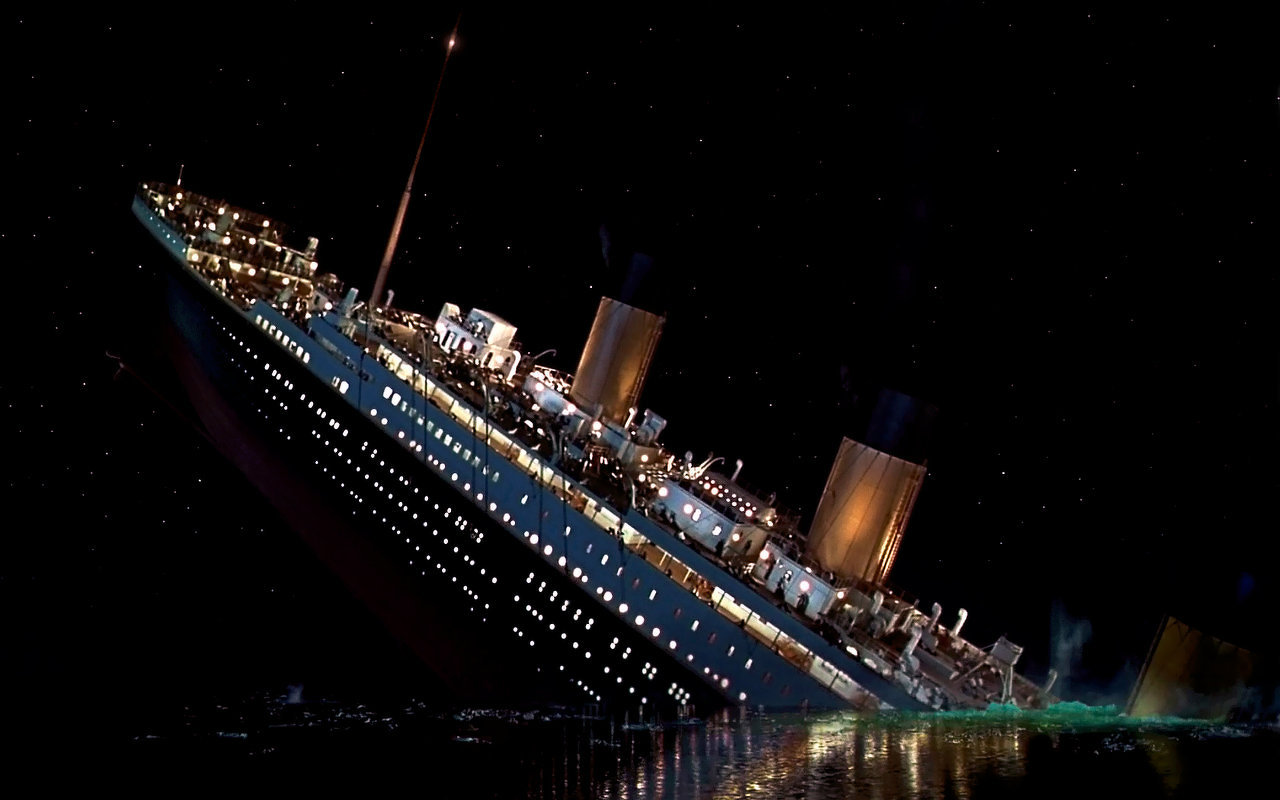 .
.
Scientists: Long-Awaited “Jump” in Global Temperatures Now Appears “Imminent”

The National Center for Atmospheric Research’s leading climatologist Kevin Trenberth said this week that he believes “a jump [in global temperatures] is imminent”, according to article posted April 2 on Climate Progress.
New research from a major national lab projects that the rate of climate change, which has risen sharply in recent decades, will soar by the 2020s, with the Arctic warming by 1 degree Fahrenheit per decade.
The speed with which temperatures change will continue to increase over the next several decades, intensifying the impacts of climate change, according to the U.S. Department of Energy.
New research documents evidence that global warming causes more global warming and that, as Earth warms, the warmer temperatures correspond with an increase in greenhouse gases, which means the earth warms the earth even more. “We discovered that not only does thickening the blanket of heat-trapping gases around our planet cause it to get warmer, but also, crucially, when it gets warmer this increases thickens the blanket of heat-trapping gases,” scientist Tim Lenton said.
While previous studies have suggested a correlation between warming temperatures and an increase in greenhouse gas, Lenton’s team is the first to prove the relationship using direct evidence, taken from ice cores nearly one million years old. The team — comprised of scientists from the University of Exeter, the Scripps Institution of Oceanography, and Wageningen University in the Netherlands — analyzed Antarctic ice core data from the end of ice age cycles 400,000 and 800,000 years ago. That ancient ice is important, because it offers an extremely large amount of historical global temperature and greenhouse gas concentration data, which the scientists were able to analyze to figure out how the two interact.
The findings provide even more support to the overwhelming evidence that humans are causing global warming by pumping greenhouse gases into the atmosphere. The surprise, Lenton explained, is that the findings also show that increasing temperature eventually increases greenhouse gases.
“It implies that we should expect the ‘Earth system’ to respond to anthropogenic global warming by amplifying it with the release of additional greenhouse gases,” Lenton said.
Preserve Our Climate Petition to Protect U.S. Citizenry from Runaway Greenhouse Effect

Petition requesting the U.S. Congress members and President Barack Obama to adopt the proposal called “Conserve, NOW” which would reduce greenhouse gas emissions from the United States and create jobs in the areas of adding to and reconstructing infrastructure in cities and counties of the U.S. to accommodate and encourage less fossil fuel burning in transportation and fossil fuel derived energy presently used in homes.
U.S. Officially Submits Its Target 2025 Annual Greenhouse Gas Emissions to the United Nations, as Called for by the Framework Convention on Climate Change
WASHINGTON – The United States officially submitted its emissions-cutting target to the United Nations on Tuesday morning, formalizing its commitment to reducing emissions 26 to 28 percent below 2005 levels by 2025.
The Obama administration had previously announced the goal in its work with China on a bilateral climate agreement. The Tuesday submission makes the pledge official.
“With today’s submission of the U.S. target, countries accounting for more than half of total carbon pollution from the energy sector have submitted or announced what they will do in the post-2020 period to combat climate change,” wrote Brian Deese, senior adviser to the president, in a blog post Tuesday morning.
Under a system established through the United Nations Framework Convention on Climate Change, individual countries are putting forward their own emissions commitments, referred to as Intended Nationally Determined Contributions, or INDCs. Countries are supposed to submit their INDCs to the U.N. by March 31. The submissions will be the basis for an international climate agreement, which leaders expect to reach at the upcoming negotiation session in Paris at the end of 2015.
The U.S. described its target as “fair and ambitious” in the U.N. document, and said that the country has already undertaken “substantial policy action to reduce its emissions.” The submission says that the U.S. is already on a path to reach its previously submitted goal of cutting emissions 17 percent by 2020, and the new commitment will require the country to speed up its rate of emissions reduction.
The European Union, Norway and Mexico submitted their commitments last week.
The Bicameral Task Force on Climate Change, which includes 34 Democratic senators and 83 Democratic House members, sent a letter to President Barack Obama on Tuesday praising the commitment. “One of the three pillars of the Climate Action Plan is to lead international efforts to address global climate change. As a nation that has contributed more than a quarter of all global carbon pollution, it is our responsibility to lead,” they wrote. “As a nation already feeling the effects and costs of climate change, it is also in our national interest to do so.”
Jennifer Morgan, global director of the climate program at the World Resources Institute, called the U.S. target “a serious and achievable commitment” in a statement. Based on WRI’s research, the U.S. can meet the goal by using existing federal authority, and make even further reductions as technology advances, Morgan said.
Other environmental groups were more critical of the submission, arguing that the U.S. could make a more ambitious commitment. Greenpeace legislative representative Kyle Ash said in a statement that the pledge “begins to treat the wound, but does not stop the bleeding.” “As the world’s second largest emitter, the US must strengthen its commitment to climate solutions before Paris to ensure an agreement that immediately spurs the necessary transition away from fossil fuels and towards 100 percent renewable energy,” said Ash.
The Obama administration is expected to face staunch opposition from the Republican-led Congress to any sort of international climate agreement. It remains unclear at this point whether the international agreement will be finalized as a treaty, which would require Senate approval, or take some other legal form that does not require approval. The Obama administration has long sought an alternative format to try to avoid a battle with the Senate.
By: kate.sheppard@huffingtonpost.com
Antarctica Records Hottest Day Ever, New Study Published in SCIENCE Finds Rapid Acceleration of Ice Melt
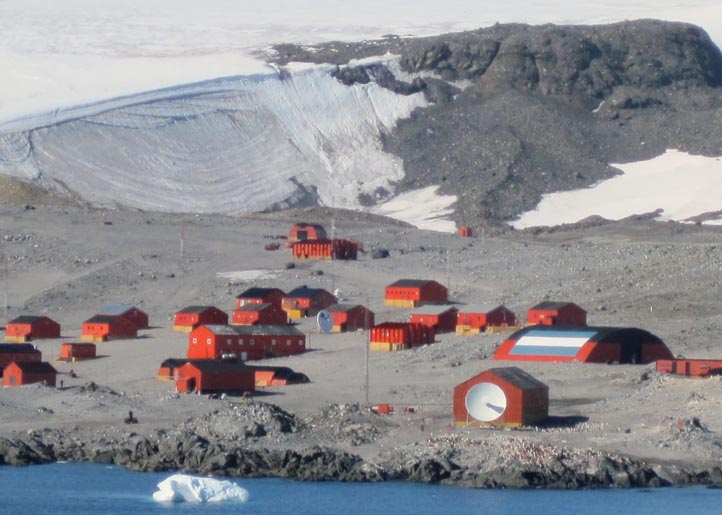
The warmest temperature ever recorded on the continent of Antarctica may have occurred on Tuesday, March 24, 2015, when the mercury shot up to 63.5°F (17.5°C) at Argentina’s Esperanza Base on the northern tip of the Antarctic Peninsula. According to weather records researcher Maximiliano Herrera, the previous hottest temperature recorded in Antarctica was 63.3°F (17.4°C) set just one day previously at Argentina’s Marambio Base, on a small islet just off the coast of the Antarctic Peninsula. Prior to this week’s remarkable heat wave, the hottest known temperature in Antarctica was the 62.8°F (17.1°C) recorded at Esperanza Base on April 24, 1961. (The World Meteorological Organization—WMO—has not yet certified that this week’s temperatures are all-time weather records for Antarctica, though the Argentinian weather service has verified that the temperatures measured at Esperanza Base and Marambio Base were the highest ever measured at each site.) A new all-time temperature record for an entire continent is a rare event, and Weather Underground’s weather historian, Christopher C. Burt, has full details in his latest post.
The record heat coincides with the release of a new study from Science that finds “ice shelves in West Antarctica have lost as much as 18 percent of their volume over the last two decades, with rapid acceleration occurring over the last decade. The study found that from 1994 to 2003, the overall loss of ice shelf volume across the continent was negligible, but over the last decade West Antarctic losses increased by 70 percent,” says Think Progress.
The heat wave also coincides with Robert Swan and his 2041 team’s Antarctic Expedition, which wrapped up last week. The point of the trip was to document the firsthand effects of climate change, which was obviously very apparent.
The Antarctic Peninsula is one of the fastest warming spots on Earth. A 2012 Climate Central post by Michael Lemonick documented how while the Earth as a whole warmed up by 1.3°F between 1900 and 2011, the Antarctic Peninsula warmed by 5°, forcing massive ice shelves to disintegrate and penguin colonies to collapse. A 2012 paper in Nature found that the recent warming is faster than 99.7% of any other given 100-year period in the last 2000 years.
In May 2014, a study by researchers at NASA and the University of California, Irvine, found a rapidly melting section of the West Antarctic Ice Sheet to be in an irreversible state of decline, with nothing to stop the glaciers in this area from melting into the sea.
The study presents multiple lines of evidence, incorporating 40 years of observations that indicate the glaciers in the Amundsen Sea sector of West Antarctica “have passed the point of no return,” according to glaciologist and lead author Eric Rignot, of UC Irvine and NASA’s Jet Propulsion Laboratory in Pasadena, California. The new study has been accepted for publication in the journal Geophysical Research Letters.
These glaciers already contribute significantly to sea level rise, releasing almost as much ice into the ocean annually as the entire Greenland Ice Sheet. They contain enough ice to raise global sea level by 4 feet (1.2 meters) and are melting faster than most scientists had expected. Rignot said these findings will require an upward revision to current predictions of sea level rise.
“This sector will be a major contributor to sea level rise in the decades and centuries to come,” Rignot said.
Three major lines of evidence point to the glaciers’ eventual demise: the changes in their flow speeds, how much of each glacier floats on seawater, and the slope of the terrain they are flowing over and its depth below sea level. In a paper in April, Rignot’s research group discussed the steadily increasing flow speeds of these glaciers over the past 40 years. This new study examines the other two lines of evidence.
The glaciers flow out from land to the ocean, with their leading edges afloat on the seawater. The point on a glacier where it first loses contact with land is called the grounding line. Nearly all glacier melt occurs on the underside of the glacier beyond the grounding line, on the section floating on seawater.
Just as a grounded boat can float again on shallow water if it is made lighter, a glacier can float over an area where it used to be grounded if it becomes lighter, which it does by melting or by the thinning effects of the glacier stretching out. The Antarctic glaciers studied by Rignot’s group have thinned so much they are now floating above places where they used to sit solidly on land, which means their grounding lines are retreating inland.
“The grounding line is buried under a thousand or more meters of ice, so it is incredibly challenging for a human observer on the ice sheet surface to figure out exactly where the transition is,” Rignot said. “This analysis is best done using satellite techniques.”
The team used radar observations captured between 1992 and 2011 by the European Earth Remote Sensing (ERS-1 and -2) satellites to map the grounding lines’ retreat inland. The satellites use a technique called radar interferometry, which enables scientists to measure very precisely — within less than a quarter of an inch — how much Earth’s surface is moving. Glaciers move horizontally as they flow downstream, but their floating portions also rise and fall vertically with changes in the tides. Rignot and his team mapped how far inland these vertical motions extend to locate the grounding lines.
The accelerating flow speeds and retreating grounding lines reinforce each other. As glaciers flow faster, they stretch out and thin, which reduces their weight and lifts them farther off the bedrock. As the grounding line retreats and more of the glacier becomes waterborne, there’s less resistance underneath, so the flow accelerates.
Slowing or stopping these changes requires pinning points — bumps or hills rising from the glacier bed that snag the ice from underneath. To locate these points, researchers produced a more accurate map of bed elevation that combines ice velocity data from ERS-1 and -2 and ice thickness data from NASA’s Operation IceBridge mission and other airborne campaigns. The results confirm no pinning points are present upstream of the present grounding lines in five of the six glaciers. Only Haynes Glacier has major bedrock obstructions upstream, but it drains a small sector and is retreating as rapidly as the other glaciers.
The bedrock topography is another key to the fate of the ice in this basin. All the glacier beds slope deeper below sea level as they extend farther inland. As the glaciers retreat, they cannot escape the reach of the ocean, and the warm water will keep melting them even more rapidly.
The accelerating flow rates, lack of pinning points and sloping bedrock all point to one conclusion, Rignot said.
“The collapse of this sector of West Antarctica appears to be unstoppable,” he said. “The fact that the retreat is happening simultaneously over a large sector suggests it was triggered by a common cause, such as an increase in the amount of ocean heat beneath the floating sections of the glaciers. At this point, the end of this sector appears to be inevitable.”
Because of the importance of this part of West Antarctica, NASA’s Operation IceBridge will continue to monitor its evolution closely during this year’s Antarctica deployment, which begins in October. IceBridge uses a specialized fleet of research aircraft carrying the most sophisticated suite of science instruments ever assembled to characterize changes in thickness of glaciers, ice sheets and sea ice.
For additional images and video related to this new finding, visit:
For additional information on the West Antarctic Ice Sheet and its potential contribution to sea level rise, visit:
For more information on Operation IceBridge, visit:
 All Things Environmental
Recent Comments